
A family farm in Dorset with a series of dreamy shepherd's huts you can stay in

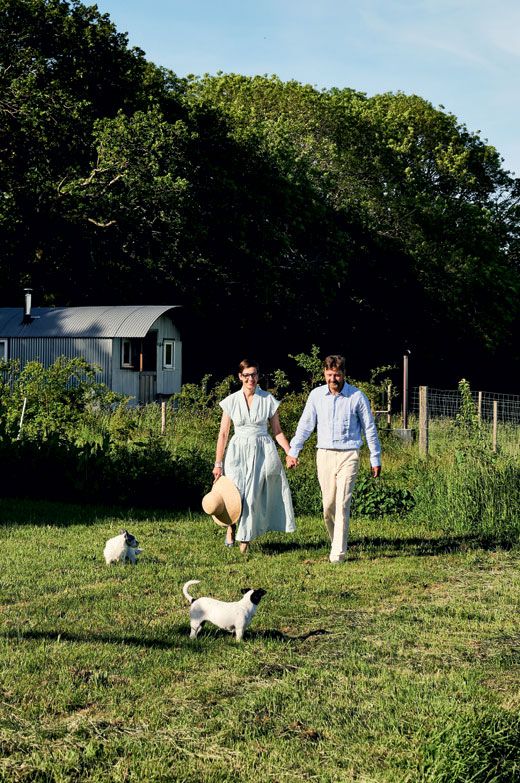
When building work started for the new house on their Dorset farm in 2014, Adam and Ali Russell, along with their then-teenage daughter Eden, packed up their things and took up residence on site in a shepherd’s hut, where they lived for two and a half years. For most of us, the idea of living, sleeping and even working in one small room with our partner and children is almost unfathomable. But Ali talks about this time with fondness and enthusiasm. ‘Thankfully Eden and Adam like reading on a Kindle,’ she says, adding that their clothes were boxed up and rotated every few months, and that they even hosted 12 people for Christmas dinner, serving a turkey cooked on the barbecue.
They had designed and also built the shepherd’s hut themselves, based on the local Dorset vernacular, so not only was it a lovely place to be but it was tailored to their needs, too. Now, anyone can stay in Murgatroyd (named after Ali’s mother’s expression of disbelief – ‘Heavens to Murgatroyd’– at the idea of them living in it), because it forms part of a thriving shepherd’s hut business on their glorious patch of land, Ash Farm. Adam studied languages at university and, after spending only 36 hours in London attempting to follow the usual route of finding a job in the City, fled back to Dorset. He has been farming ever since.
The family farm Adam took on in the early Eighties looked very different to the one we see now: it was, as he describes, ‘wall to wall arable’, with hedges ripped out to increase efficiency – a practice typical of the time. ‘I was perplexed by the fact that, at the end of summer, the soil always looked like sand,’ Adam explains. When he queried the absence of any crop rotation or animal grazing to enrich the soil, he was told by the family’s adviser, ‘This is modern farming – everything we need comes in a bag.’
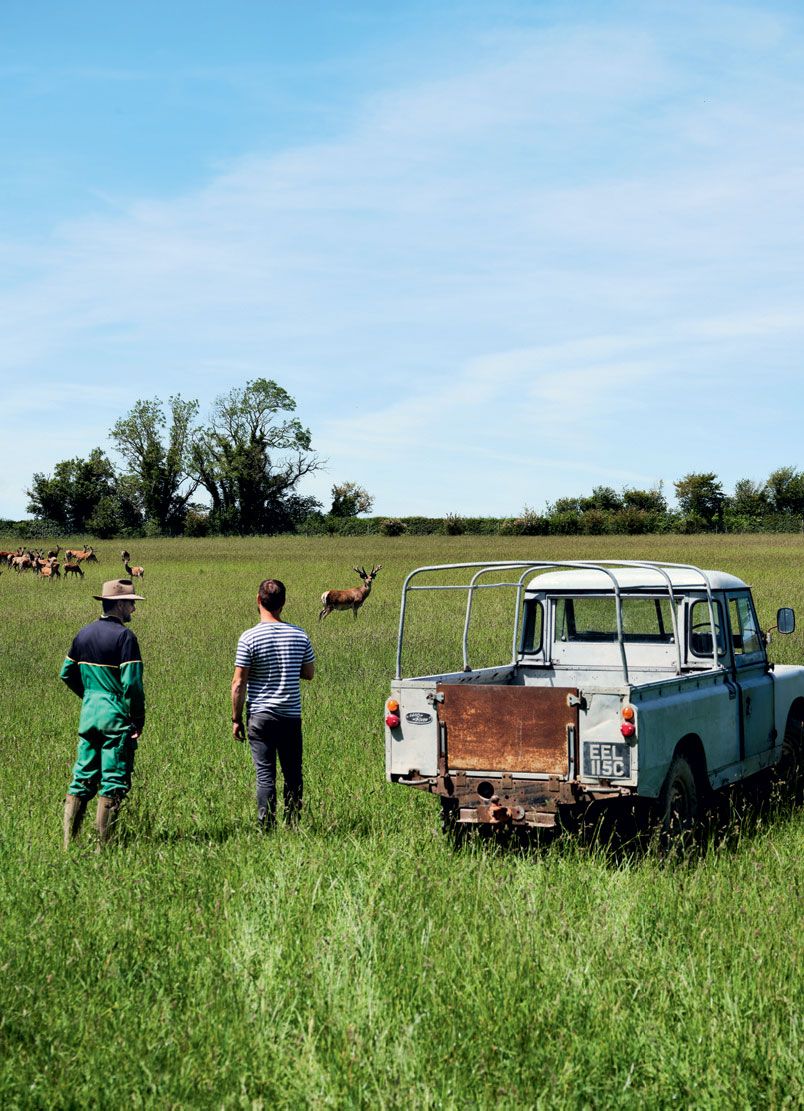
Nevertheless, on New Year’s Day 1984, 25 hinds (female red deer) arrived on the farm to begin the vital process of enriching the land – the first step towards a new way of farming. By the mid Nineties, the farm was completely organic thanks to Adam’s determination. Gradually the whole farm was fenced for deer, a species that thrives on the herb- and clover-rich grass that is so important to organic farming, as it locks in nitrogen naturally without the need for chemical fertilisers.
There is now an incredible ecosystem here; birds of prey, flocks of goldfinch, redwings in the winter, voles and mice that feed on the bugs in the fields are all common. Swathes of grass along the hedgerows are left unmown to allow wildflowers and herbs to grow. Guests staying in the huts often wake to see hares leaping through the grass and the heads of the deer, now a herd of 120, peeping out above it. The joy of the deer is that they look after themselves and, with the soil and grass as healthy as possible, they need little veterinary intervention, explains Adam, ‘Farmers need to understand that you can take your foot off the accelerator a little and still do OK.’

Ali and her daughter Eden came into Adam’s life 17 years ago. Ali was a successful garden designer until only a few years ago, when she felt it was time to find work that would keep her at home on the farm more, as her garden projects often took her to Italy and elsewhere for long periods. It was only when friends started to ask to stay in Murgatroyd that she realised people might actually pay for the privilege. ‘We think we live a dream life and we want our guests to be able to experience it,’ she enthuses.
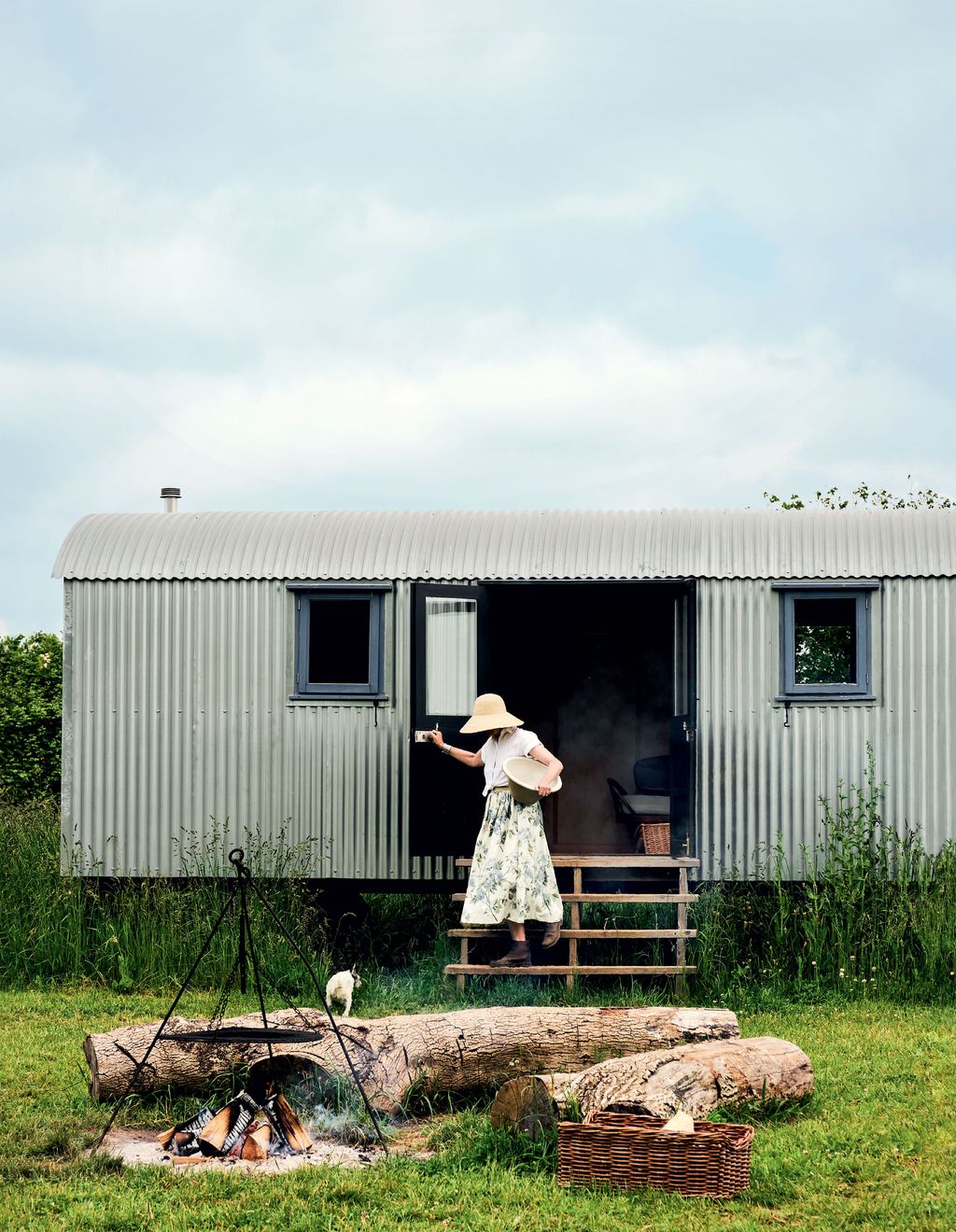
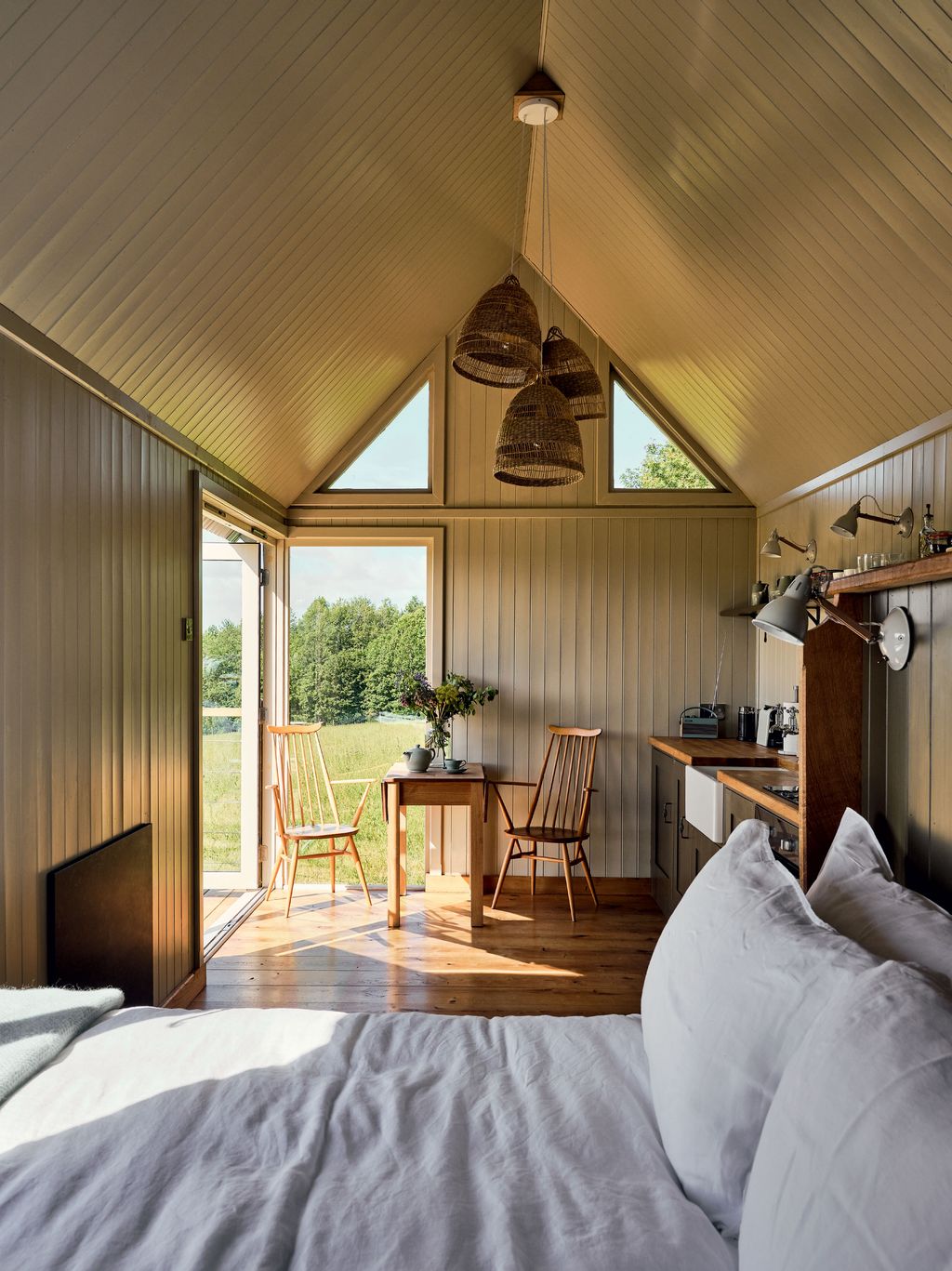
There are now three huts on the farm, available to rent – each in its own site with views of the rolling Dorset countryside – plus The Gathering Camp, which sleeps six in three huts. This has a bathroom in a horsebox and a covered outdoor kitchen around a central firepit (as well as an indoor kitchen in the largest hut). Ali designed the huts herself and she and Adam, together with a local carpenter and a blacksmith, built them. They have plenty of insulation and height, and space for a king-size bed. The tiniest of the huts, where Eden was home educated as a child, is now an honesty shop selling local produce – guests are billed at the end of their stay. They also have the run of the farm and get a copy of Ali’s thoughtful manual, which points out what to do and look out for during their stay – from the Antler Walk that runs along the perimeter of the farm to watching the sun set over Hod Hill, or feeding the deer with Adam.
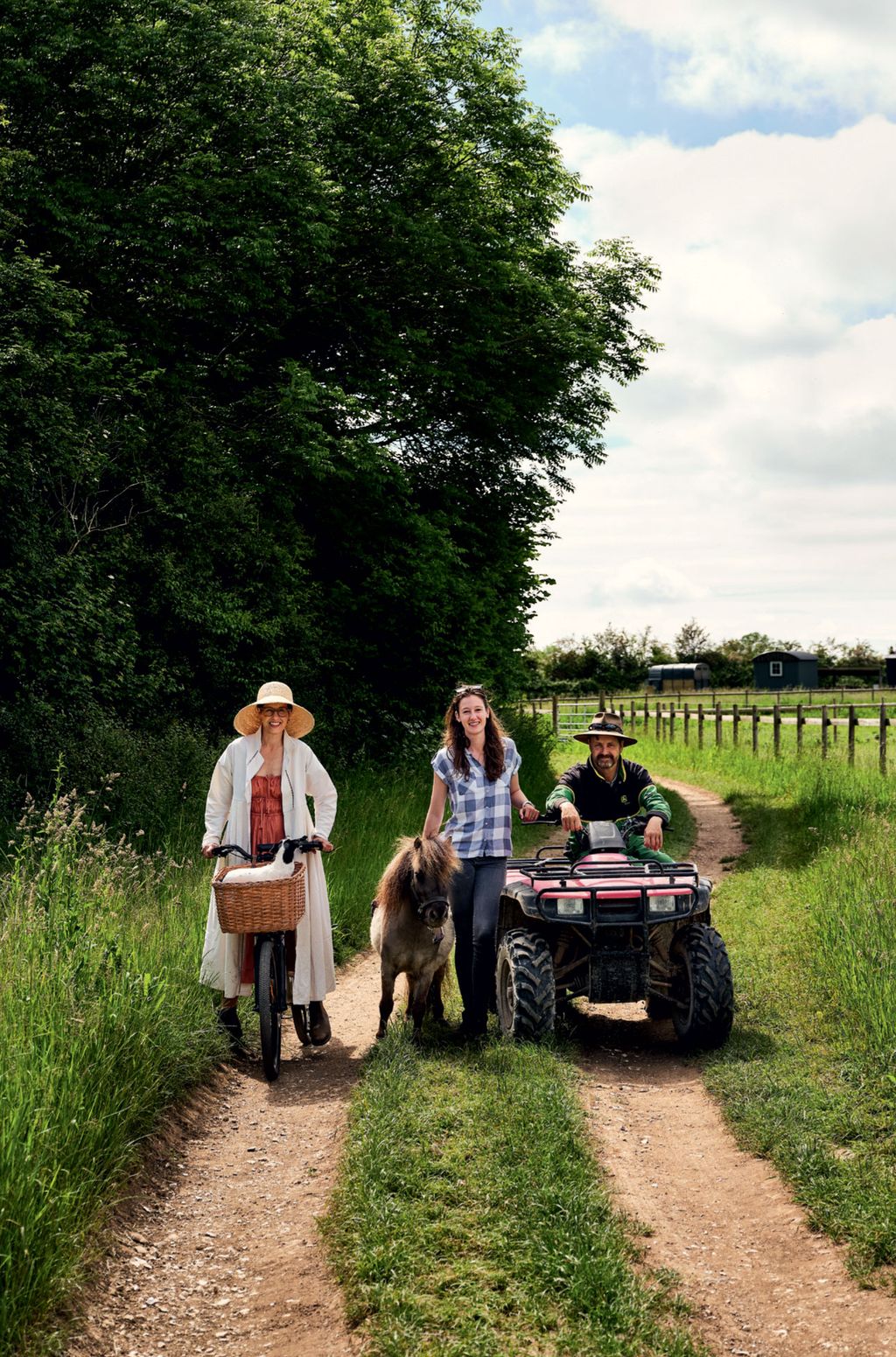
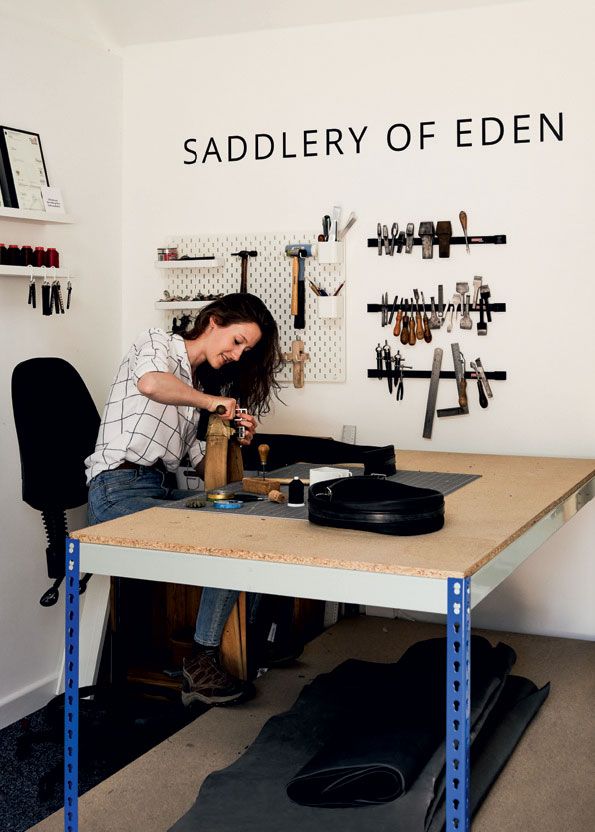
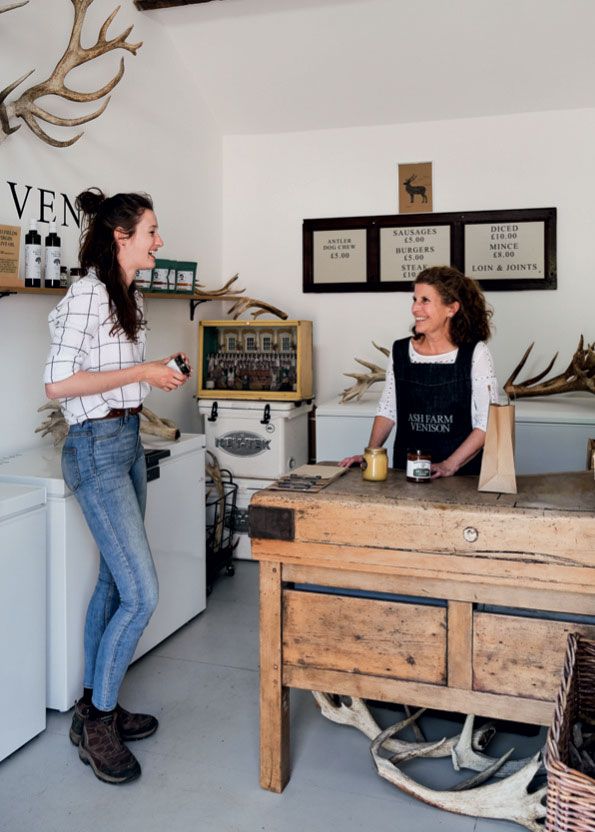
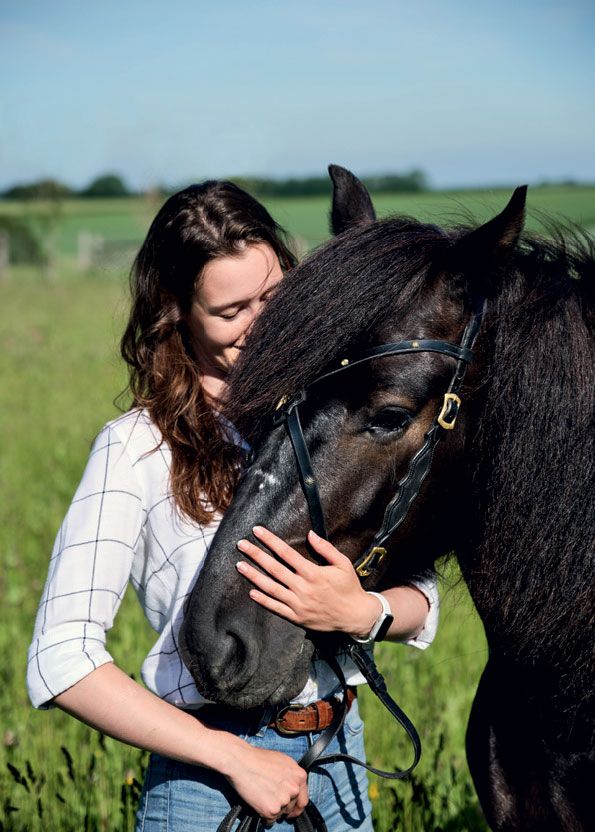
Eden, 21, is a trainee master saddler and now runs the honesty shop and on-site venison shop as well as looking after her horses. Carriage driving is her passion and she hopes to do it competitively. Zeus, her gypsy cob, is a trained farm horse and can haul logs and pull a harrow, as well as a carriage. Odysseus is a rare Dales pony, and two Shetland ponies – Merle and Hotwash – keep them company and can be found alongside them on walks.

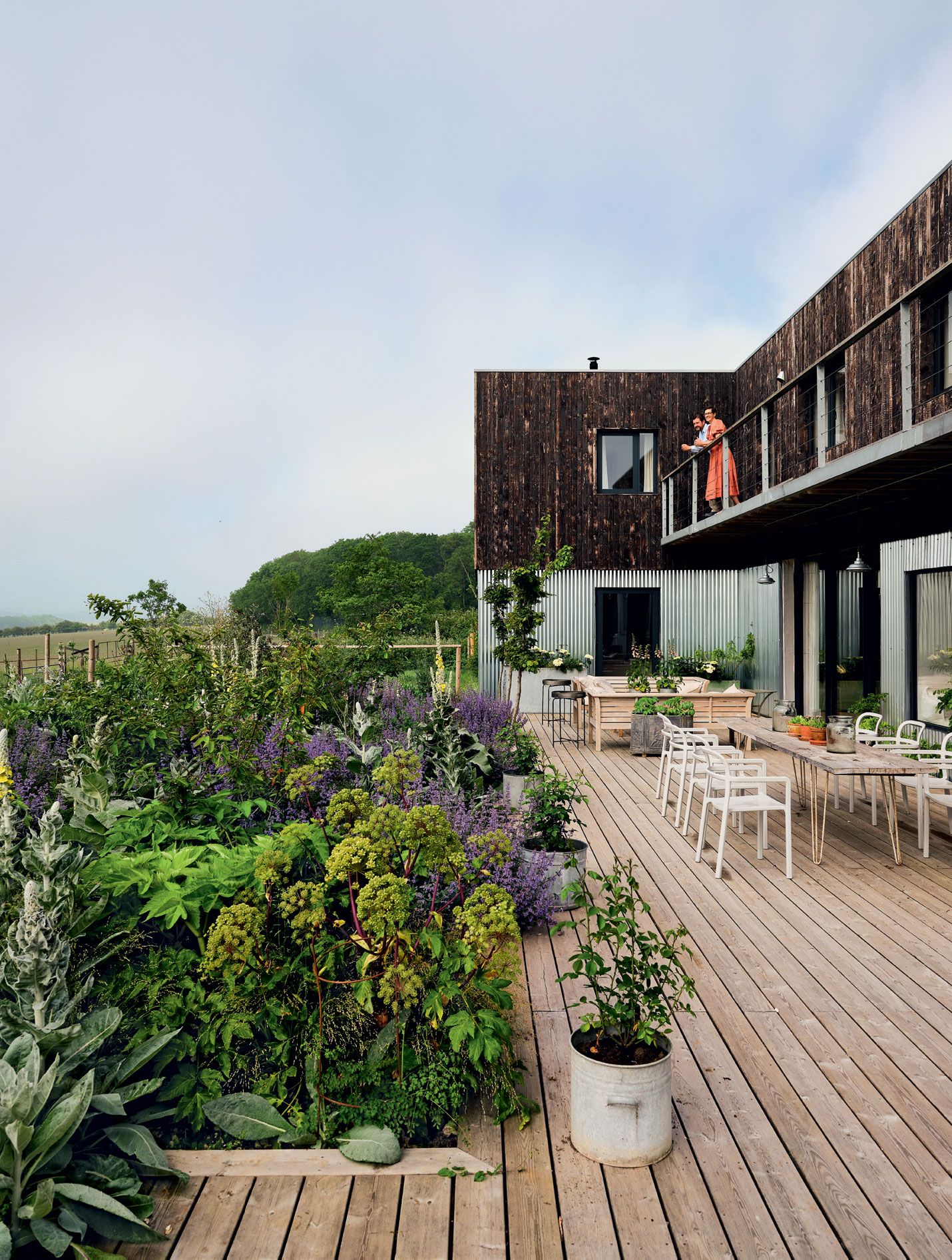
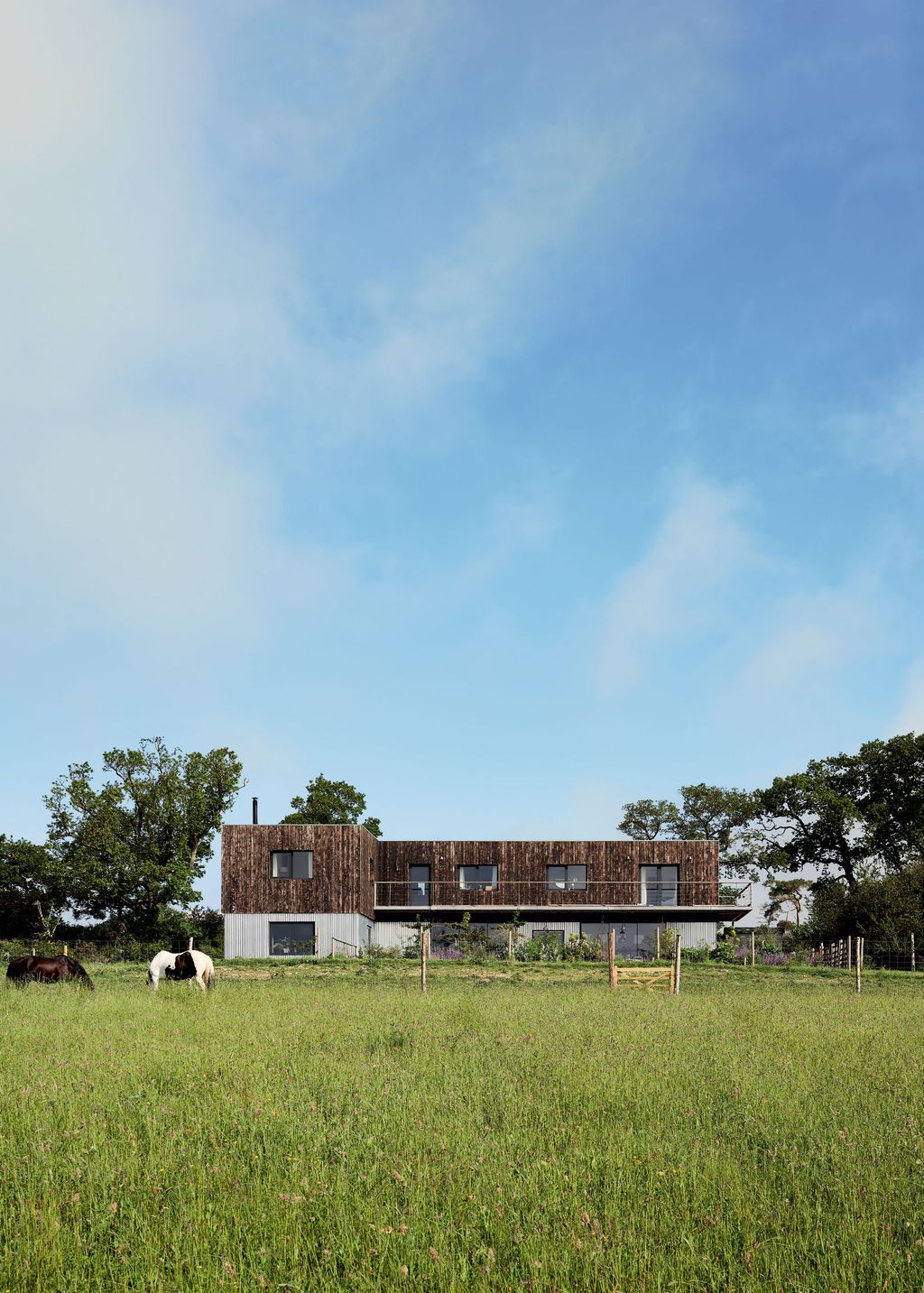
Until 2014, Adam and Ali lived at the bottom of the valley next to Adam’s mother. But keen to make a new start, they took the decision to build a contemporary house a mile and a half up the track at the top corner of the farm, replacing two neglected cottages. As a landscape designer, Ali had worked on many projects with architect Mike Rundell, an old friend of Adam’s, so he was the obvious choice for a house that was to be ‘site specific’ and sit within the landscape. The exterior took its cue from agricultural buildings, featuring the same steel frame that they used for the barn behind the house. It is clad in crinkly tin and Shou Sugi Ban charred timber.
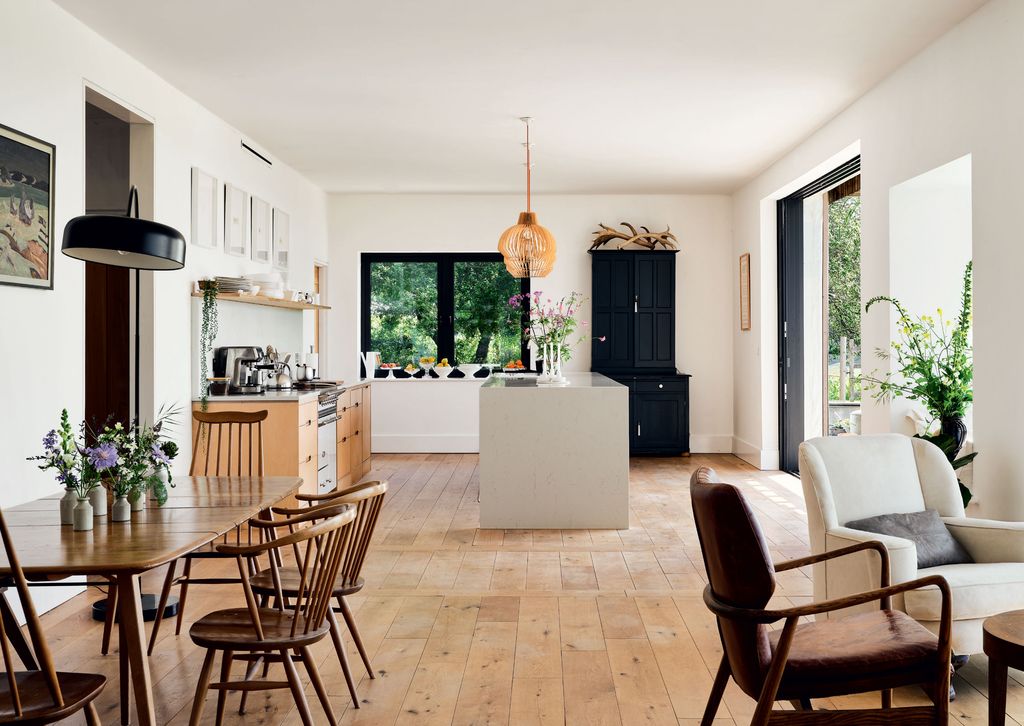
For Adam and Ali, it was important that the house was light filled, made the most of the views and was a place where they could entertain. So one large space, including a kitchen with a long island, caters as easily for everyday life as for hosting up to 50 people for New Year. Upstairs, there are three generous bedrooms with their own bathrooms. Ali describes building a house as ‘a wonderful, selfish process – it was just for us and we didn’t need to think about selling it’. There is also a beautifully organised laundry, which is the domain of housekeeper manager Siobhan Daniels, who runs the shepherd’s huts with Ali.

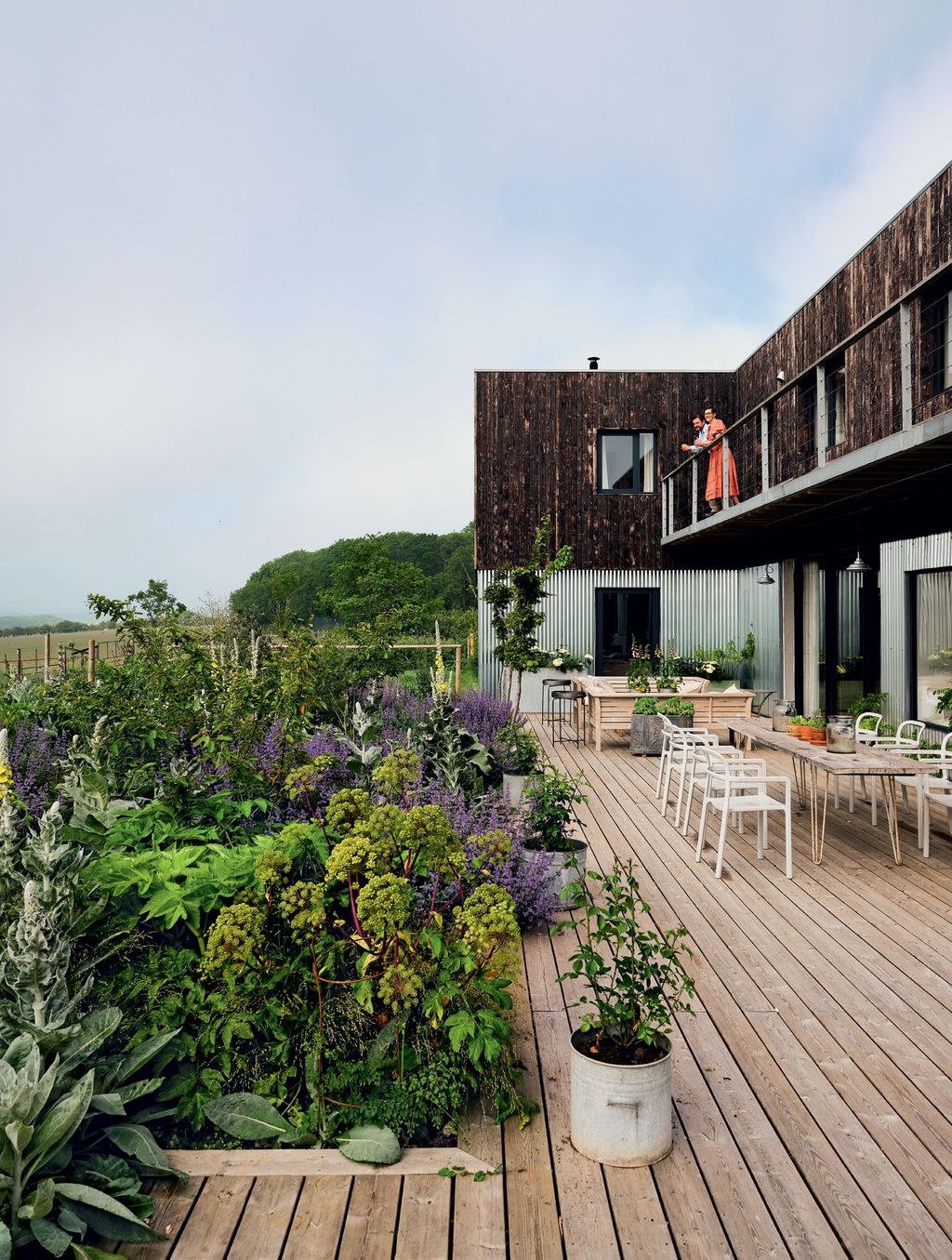
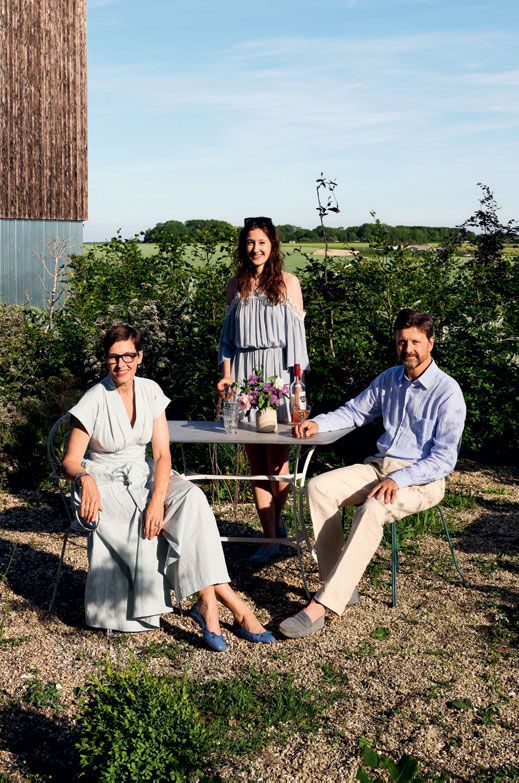
Ali describes planning her own garden as ‘heaven’. She was determined not to design something that could easily get out of control. She has created a big border to the south side of the house, all blues and lime greens, using plants that ‘work hard, grow anywhere, smell wonderful, self seed and are loved by bees’. A deck, which is the same size as the large inside space, invites you out. Espaliered hornbeams create a sense of an outside room that makes you feel cocooned without blocking the view, and there is a table built by Adam from scaffolding planks. To the side is a gravel garden, with a more ‘carefree, loose feel’.
Ali is right – it is a rural idyll that this effortlessly stylish family has created and lovingly nurtured. They work hard but life is fulfilling; they have followed their passions and allow others to benefit from them, as well as creating a house where they can surround themselves with family and friends. Achieving a proper work/life balance is something we all grapple with, but it seems the Russells may have got this about as perfect as is possible.
Ash Farm: ashfarm.org | @ash_farm_dorset
 Dean Hearne1/19
The ground floor consists of a large openplan space, which provides ample room for entertaining – ‘There’s enough space for three eightsome reels,’ Ali points out
 Dean Hearne2/19
The couple on their balcony, looking out over Ali’s beautiful garden on the south side of the house
 Dean Hearne3/19
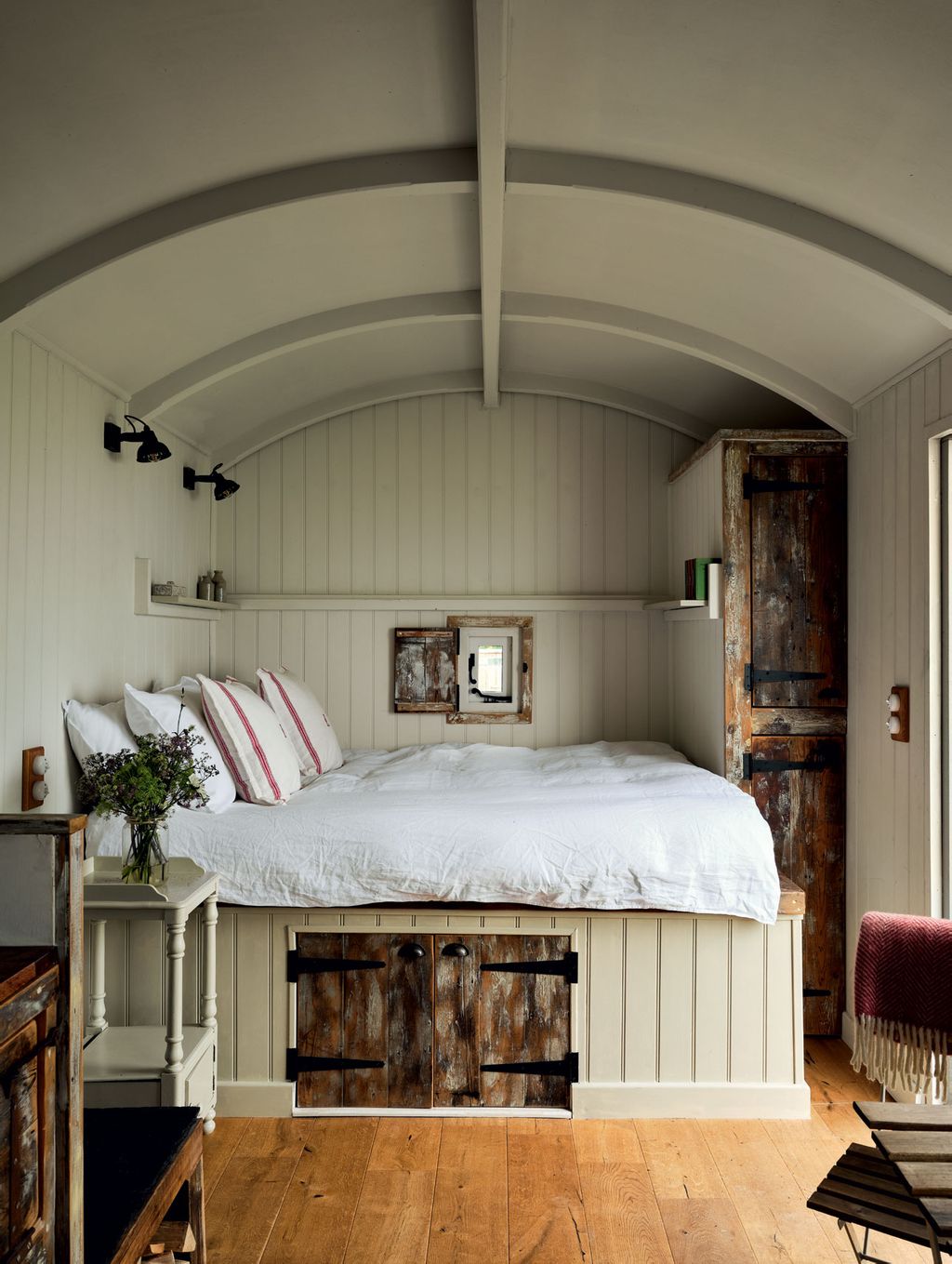
Leonora is decorated in a refined country style
 Dean Hearne4/19
Adam and Ali with their two Jack Russells, Bisou and Malinki, enjoy a stroll close to Murgatroyd, the shepherd’s hut in which the family lived for two and a half years


 Dean Hearne5/19
Ali, Eden and Adam relaxing in their more informal gravel garden
 Dean Hearne6/19
Ali, Eden, Adam and Shetland pony Merle on the farm, not far from The Gathering Camp. Adam with George Wissett
 Dean Hearne7/19
Warner, who assists him with the deer handling
 Dean Hearne8/19
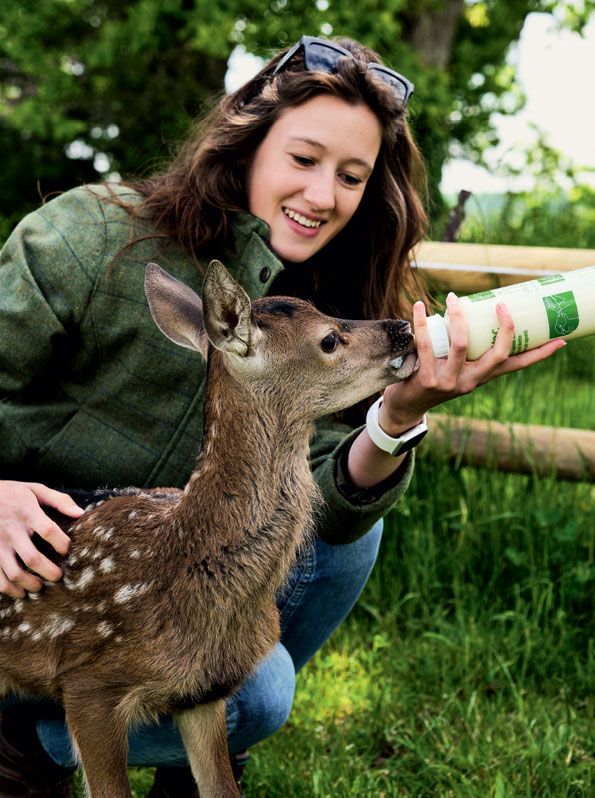
Feeding Luna the calf


 Dean Hearne9/19
Eden has her own saddlery workshop on the farm
 Dean Hearne10/19
Eden in the venison shop with Siobhan Daniels
 Dean Hearne11/19
With rare Dales pony, Odysseus, who is wearing one of her bridles
 Dean Hearne12/19
Located a mile and a half along the farm track, the Russells’ newbuild house was designed with their friend and architect Mike Rundell, of Rundell Associates in London, to be at one with the Dorset landscape. Eden’s horses, Odysseus and Zeus, graze in the meadow in front of the house.


 Dean Hearne13/19
Ali outside Delilah, The Gathering Camp’s living hut with bunk beds, a kitchen and a spacious communal area that opens out onto the central firepit.
 Dean Hearne14/19
Lady Betty is the loftiest cabin on Ash Farm, and has a stylish modern rustic interior
 Dean Hearne15/19
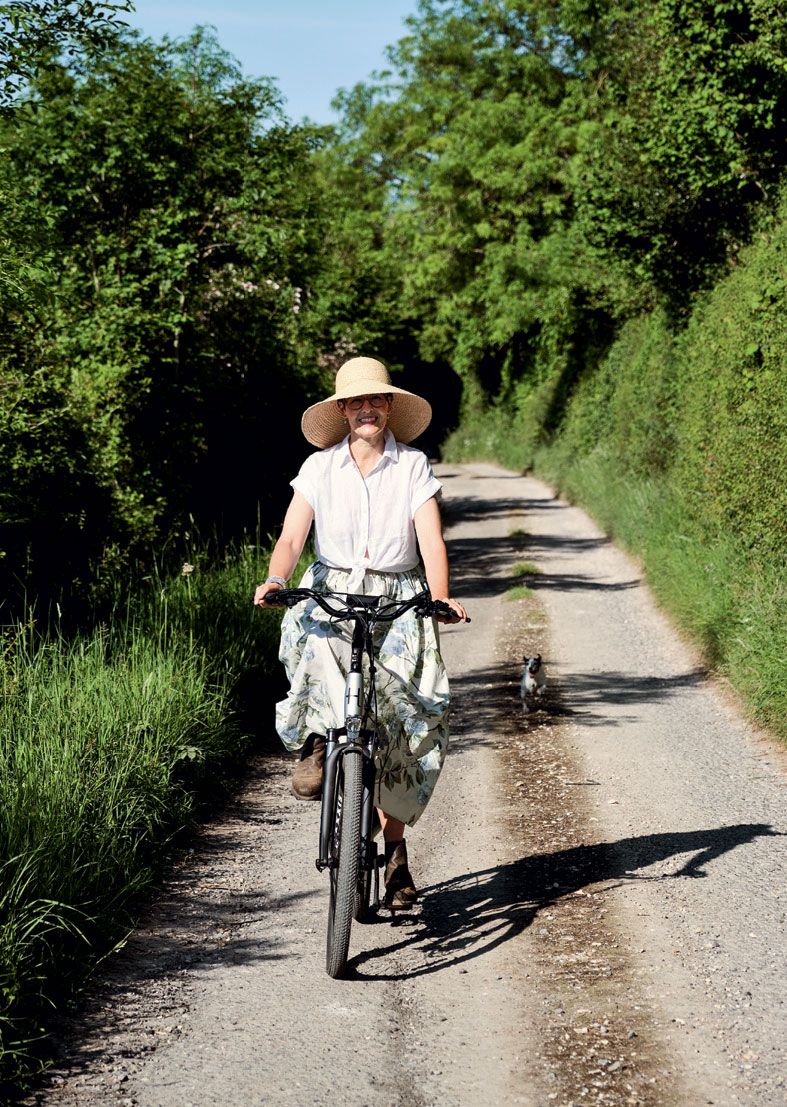
Ali cycles along the track to the house
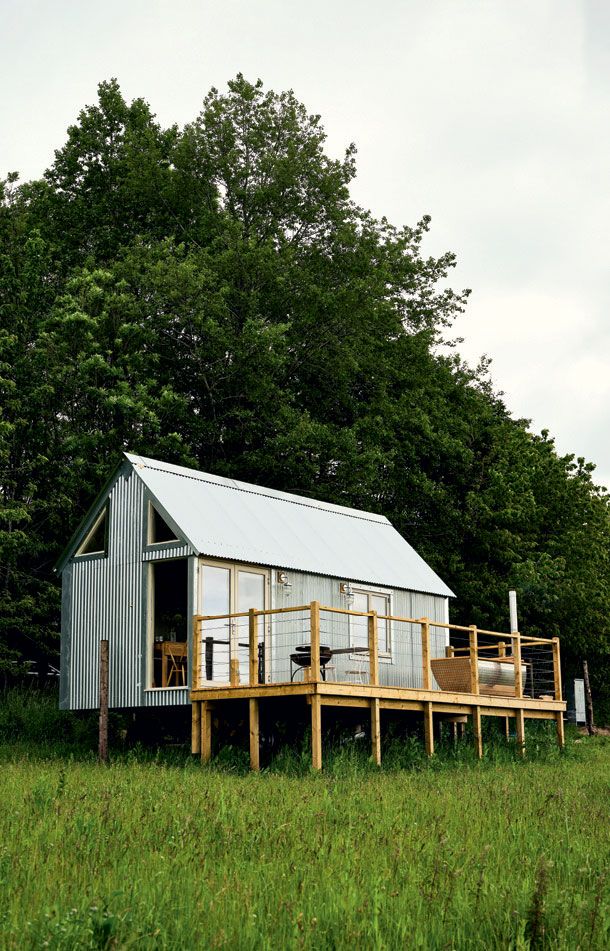 Dean Hearne16/19
The raised deck outside Lady Betty offers incredible views from a wood-fired hot tub


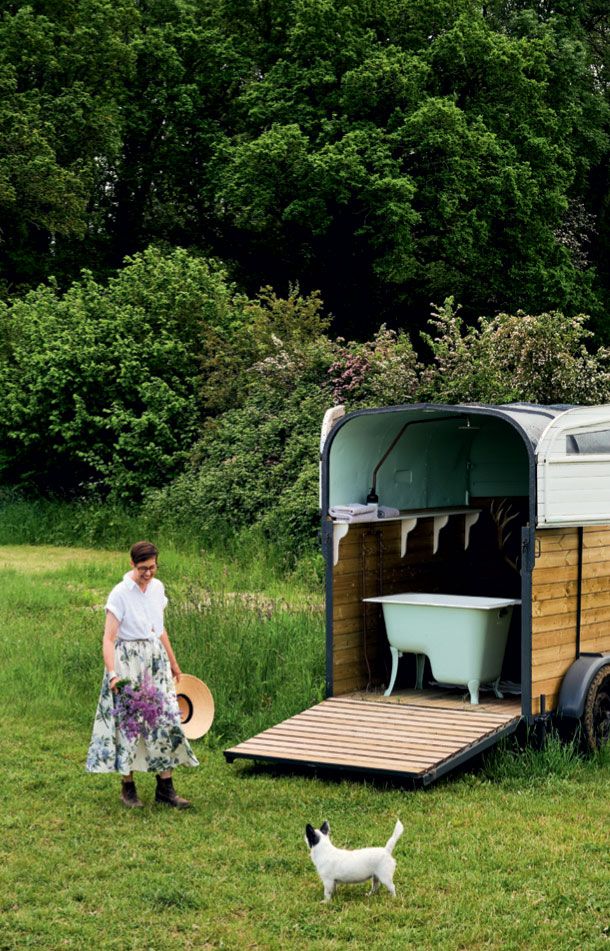 Dean Hearne17/19
At The Gathering Camp, guests bathe in a converted horsebox named Ophelia
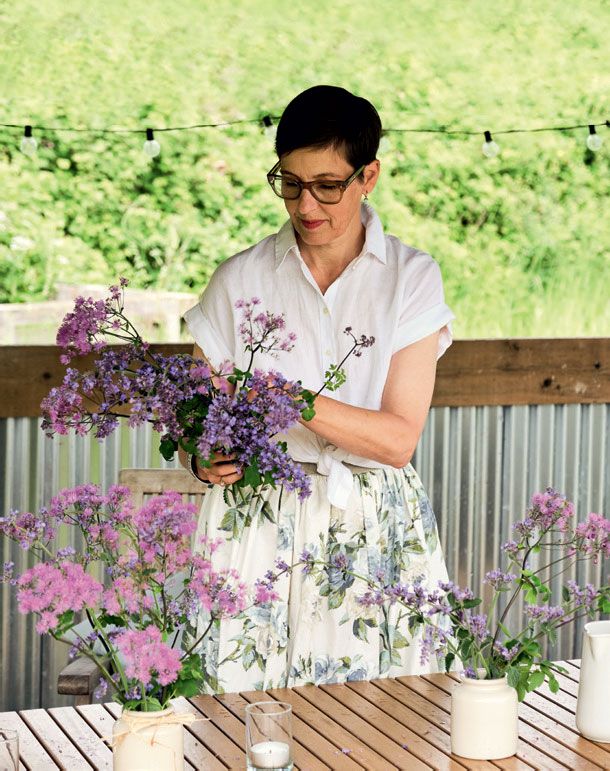 Dean Hearne18/19
Ali arranges thalictrum from her cutting garden, where guests can also pick flowers.
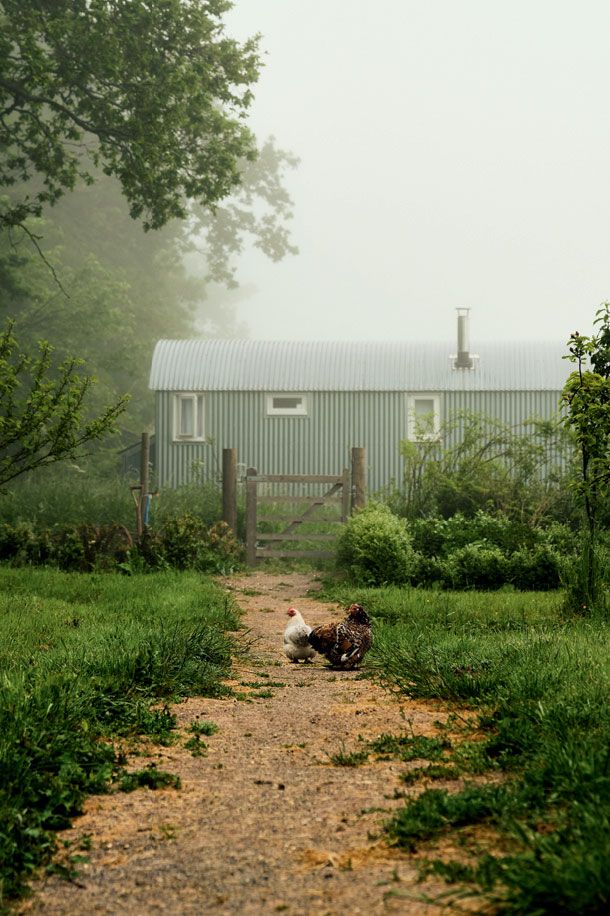 Dean Hearne19/19
The Russells keep about a dozen chickens on the farm; their eggs are available to guests.


