The castles you need to see in the UK and Ireland, from royal residences to ruined strongholds

The castles of the British Isles are full of the kind of history that's worthy of a Shakespearean tragedy: epic battles, imprisoned monarchs and political intrigues. Across the United Kingdom and Ireland, it is possible to find a huge variety of castles, from ruined beauties to those which have stood the test of time and are still inhabited. Whichever one you choose, you're certain to find drama, history and stories lurking around every corner. We've rounded up the most impressive in the group, each a worthwhile addition to any UK itinerary.
 Getty Images1/12
Windsor Castle, Windsor, England
The oldest and largest inhabited castle in the world and longest-occupied palace in Europe, Windsor Castle has been the family home of British kings and queens for nearly a millennium. Since its establishment by William the Conqueror (r. 1066-1087) in 1070 and completion by 1086, Windsor has been a colossal presence in British history: the Order of the Garter was created here in 1348, Oliver Cromwell used Windsor as his headquarters (and as a prison for Royalists, including Charles I) in 1642 and, under the reign of Queen Victoria (r. 1837-1901), the castle received countless ambassadors, dignitaries and other royals, including Napoleon and Tsar Nicholas II. Today, it is one of the official residences of Charles III.
Certain parts of the castle remain open to the public, including the magnificent State Apartments, home to some of the greatest treasures in the Royal Collection and St George's Chapel, host to many royal weddings (including Prince Harry and Meghan Markle's), as well as the Queen's funeral.
Address: Castle Hill, Windsor, Berkshire, SL4 1PD.
 JOHN BRACEGIRDLE / Alamy Stock Photo2/12
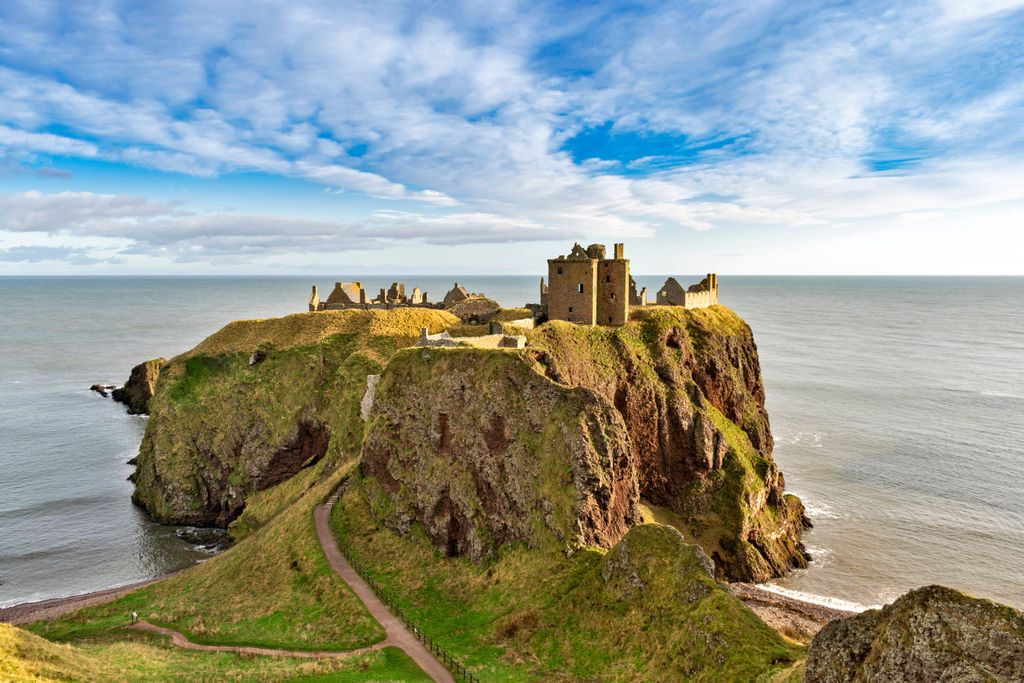
Dunnottar Castle, Stonehaven, Scotland
Perched on a rocky cliff above the North Sea is the spectacular Dunnottar Castle. It was at Dunnottar where King Donald II of Scotland was killed by invading Vikings in 900, where the first Earl Marischal built his unassailable fortress in 1392 and where Mary Queen of Scots visited in the 1560s. Indeed, the castle harbours aeons of history, well-guarded by the family of Lord and Lady Cowdray, who purchased the castle in 1919 and soon after opened it to the public. Those following the Aberdeenshire Trail should include a visit to Dunnottar on their itinerary, weaving themselves into the castle's magnificent tapestry of stories.
Address: Dunnottar Castle, Stonehaven, AB39 2TL.
MAY WE SUGGEST: Glorious Scottish castles to rent for holidays
 Joana Kruse / Alamy Stock Photo3/12
Tintagel Castle, Cornwall, England
Tintagel Castle has an unforgettable location, built into the jagged cliffs overlooking the Cornish sea. Legend has it that this was the birthplace of King Arthur; below the castle is Merlin's Cave, immortalised by Tennyson in his Idylls of the King. Whilst the castle is no longer the imposing militarised fortress it once was, it is still well worth a visit, both for its history and its romantic location on the rocky Cornish coast.
Address: Castle Road, Tintagel, Cornwall, PL34 0HE.
 Stephen Emerson / Alamy Stock Photo4/12
Dunluce Castle, County Antrim, Northern Ireland
Now abandoned, the medieval castle of Dunluce stands high above the crashing waves and rocks of the north coast of Ireland. Only accessible by a rickety bridge, this extremely remote castle is certainly one of the most beautiful in the UK. The steep drops on either side into the sea make it a showstopping location; it's not difficult to see why enemies might have hesitated before attacking, and indeed a galleass from the Spanish Armada was wrecked on the rocks below the castle in 1588. For fans of Game of Thrones, a visit is a must: the series featured Dunluce many times throughout its run. Built in the early 1500s by the MacQuillan family, the castle was seized by the rival MacDonnells in the 1550s, and as the Earls of Antrim the family held onto it until 1690, when it was left to crumble.
Address: 87 Dunluce Road, Bushmills BT57 8UY.


 : : David Taylor Photography : : / Alamy Stock Photo5/12
Alnwick Castle, Northumberland, England
Alnwick Castle is one of the best-known castles in England, both because of its long and impressive history, and also for its regular appearances in films and TV. You can see the castle in the Harry Potter series of movies (watch out for Harry's first flying lesson in Harry Potter and the Philosopher's Stone), in the beloved Downtown Abbey period drama and in the biopic Elizabeth. In real life, the castle is as magnificent as you'd expect, overlooking the endless Northumbrian coast. Alnwick has been the residence of the Percy family for over 700 years and is still today the family home to the 12th Duke and Duchess and their children. Film buffs and aspiring historians alike will want to make a special visit to the splendid castle, open to visitors from March through the end of October.
Address: Alnwick, Northumberland, NE66 1NG.
 Stephen Long / Alamy Stock Photo6/12
Blarney Castle, County Cork, Ireland
Built by Gaelic lords and Anglo-Irish dignitaries between the 15th and 17th centuries, Blarney Castle is an unusually large tower house famed for its impregnability (in part thanks to its walls, 18 feet thick) as well as its role in Anglo-Irish history. Following the generous supply of men from the castle's owner, Cormac McCarthy, King of Munster, to Robert the Bruce during the Battle of Bannockburn in 1314, Robert gifted Cormac the Stone of Scone, now known as the ‘Blarney Stone’, a relic shrouded in Irish lore. During the reign of Elizabeth I, the Queen commanded the Earl of Leicester to take possession of the castle; when he failed to do so, it is said that she remarked his efforts and missives were all ‘blarney’, hence the castle's name. Further down the castle's timeline is the building of the High Victorian Blarney House, designed by John Lanyon for the following the castle's desertion for over 50 years. Today, the castle is one of County Cork's most sought-after destinations, with many luck-chasers hoping to kiss the Blarney Stone.
Address: Blarney, Cork, Ireland.
 robertharding / Alamy Stock Photo7/12
Tower of London, London, England
Although it is called a ‘Tower’, this flamboyant fortress is most certainly a castle. Dating back to the 11th century, the Tower of London has been a constant and prominent presence in the capital, serving as a fortress, royal palace, infamous prison and zoo. It is here that the Crown Jewels are kept (some on display) and where King John's lions and Henry III's leopards, polar bear and African elephant were housed. Many enemies of British monarchs have been tortured and murdered here, with one part continuing to operate as a prison until the 1950s. Today, visitors can take a tour with one of the Yeoman Warders (or Beefeaters), dressed in full costume, to learn more of the castle's always entertaining and sometimes gory history.
Address: Tower Hill, London, EC3N 4AB.
 Rihardzz / Alamy Stock Photo8/12
Ashford Castle, County Mayo, Ireland
Whilst the rest of the castles on this list are open to visitors, the spectacular Ashford Castle takes things to the next level: you can spend the night. Now a five-star hotel, the castle is one of the finest in Ireland, sumptuous, welcoming and downright regal. Having played host to over 800 years of visiting notables (as well as serving as the filming location for John Ford's The Quiet Man), a visit or stay at the magical Ashford Castle is one of the most perfect ways through which you can write yourself into its never-ending history.
Address: Cong, County Mayo, Ireland, F31 CA48.


 paul weston / Alamy Stock Photo9/12
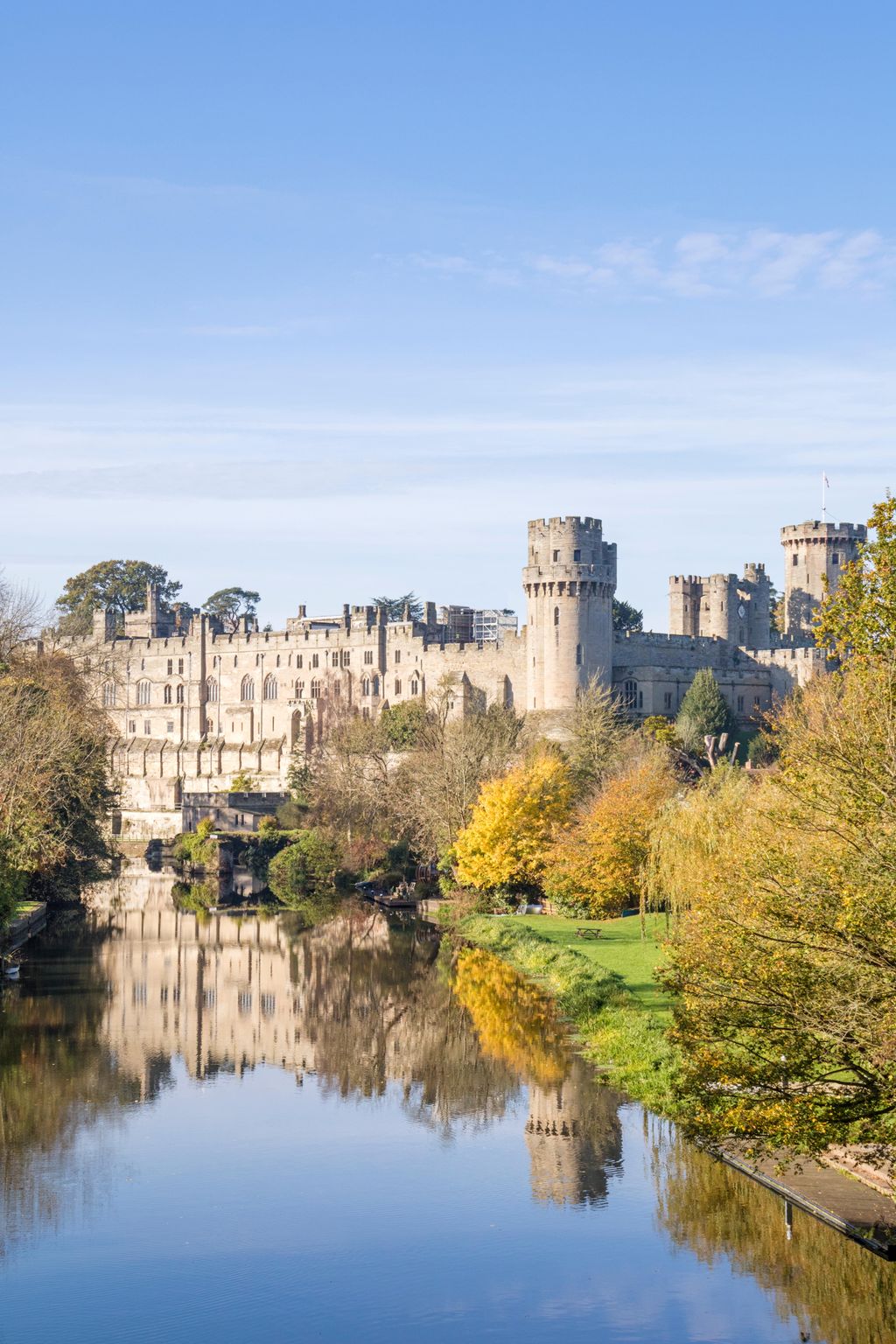
Warwick Castle, Warwick, England
With a beautiful site on the Avon River in the Midlands, Warwick Castle has a positively fairytale appearance. Originally built by William the Conqueror in 1068, the medieval castle was passed from generation to generation of English nobility before being acquired by the Tussauds Group (that's Madame Tussauds to you) in 1978 and later Merlin Entertainments. Today, Warwick's primary concern is to make history come to life, whether by hosting its annual midsummer Renaissance fair and royal-themed sleepovers to tours of the Princess Tower and castle's dungeons, as well as lessons at the Knight School. The perfect foray into English history for the entire family, a visit to this grand castle is well worth the trip.
Address: Warwick, CV34 4QU.
 robertharding / Alamy Stock Photo10/12
Cawdor Castle, Nairn, Scotland
Built first as a tower-house in the 15th century, the sprawling Cawdor Castle was soon afterwards transformed and shaped into what it is today by 23 generations of the Campbell family (headed by the Earls of Cawdor). Its biggest claim to fame of course, is its appearance in Shakespeare's Macbeth, where King Duncan of Scotland names the general Macbeth the Thane of Cawdor to reward him for his valour in battle (what happened afterwards, however, is another story… or act, if you will).
With its iron portcullis, moat & drawbridge, turrets, turnpike stairs and vaulted 16th-century kitchen, the castle is splendid for exploring. There are plenty of treasures to look at too: Cawdor's principal rooms contain the Campbell family's collections of rare tapestries, fine art and furnishings, ceramics and sculpture. And if you come on a fine day, the gardens are a charming place to stroll.
Address: Cawdor, Nairn, IV12 5RD.
 Andrea Jones11/12
Lismore Castle, County Waterford, Ireland
Set among idyllic fields of clover and wildflowers is the Gothic Lismore Castle (Caisleán an Lios Mhóir). Built as the sister castle to Ardfinnan Castle in 1185 by Lord of Ireland, Prince John of England, the castle was soon after made home to the monks of Lismore Abbey. It served as a seat of education until it fell into the hands of the Earls of Desmond in 1583 and subsequently the controversial statesman Sir Walter Raleigh. Upon Raleigh's imprisonment for treason, the self-made 1st Earl of Cork, Richard Boyle snapped up the property.
Over the subsequent centuries, Boyle's descendants added to the castle. In the 19th century, the architects Sir Joseph Paxton (designer of London's Crystal Palace) and J.G. Crace came along to add Gothic Revival flourishes to the structure and furnishings.
Today, the castle is mostly closed to the public except for private rentals; however, its ancient yew gardens and 17th-century walled garden are free to visit, the latter filled with contemporary sculpture from a range of artists including Sir Antony Gormley, Marzia Colonna and Eilís O'Connell.
Address: 43R9+44 Lismore, County Waterford, Ireland.
 Richard Bloom12/12
Longford Castle, Wiltshire, England
With the sparkling Avon River to the east and rolling pastures to the west, Longford Castle is set in the middle of English countryside at its most lovely. Dating back to the 16th century, the castle combines aspects of Elizabethan, Renaissance, Georgian and Victorian architectural styles. The castle's gardens are also fascinating, featuring what were once very avant-garde, modern sunken garden designs from France. Indeed, a visit to Longford is ideal for architectural history buffs, regardless of their favoured time period, as well as those interested in art history (the castle displays a covetable collection of Old Masters paintings).
Address: Bodenham, Salisbury SP5 4ED.