
The founders of London institutions Ducksoup on opening an osteria in Devon

About this time last year, waves of excitement began to ripple outwards from a quiet corner of southern Devon. News of a tiny osteria opening on the edge of Dartmoor was spreading and the rumour was that it was going to be run by restaurateur Clare Lattin and chef Tom Hill, the founders of London institutions Ducksoup and Little Duck The Picklery. Anyone familiar with those restaurants – known for their cosy neighbourhood vibes and simple, delicious food – will appreciate why this was causing a buzz.
Roll back a few years and Londoner Clare had found herself in a situation that looked fabulous on paper. She was running two celebrated restaurants, living in a great warehouse flat in east London and in a very happy relationship. However, she was also experiencing a huge desire for change. Not just of location, but a whole way of life: ‘Having lived and worked in the capital for over 25 years, I kept thinking, what next? I was looking for a new chapter. I’d fallen in love with plants and growing and I couldn’t ignore this desire to nurture a proper garden of my own.’
Clare was taken with the wild landscape of Dartmoor on a camping trip with her boyfriend, filmmaker Mark Harbour. ‘It was a bit mad,’ she says. ‘But we thought, let’s do it, let’s move to Devon and see what happens.’ They fell for Chagford, a moorland town of pretty granite cottages, where wild ponies roam the single-track lanes.
After a few false starts, they found their new home – an Edwardian villa set on the side of a tor, having first viewed it on a snowy December day in 2018. Although the house was bigger than they wanted, the amount of land – three acres – was perfect. The year before, Clare had attended Martin Crawford’s course on edible forest-garden planting at his farm in Dartington, learning how to create a self-sufficient garden where nature does all the work. She had come away inspired and determined to put his lessons on permaculture into practice. Their 1.5-acre paddock is now home to a variety of edible trees and shrubs; with birch, hazel, rowan and szechuan-pepper trees and plenty of low-growing fruit bushes, and perennial vegetables for ground cover. The ethos has been much the same in the vegetable garden, where chickens peck their way around self-seeded salad leaves, herbs and wonderful drifts of flowers, which are picked for the restaurant tables.
The move was gentle to begin with. Clare spent weekdays in London working at her restaurants and then escaped to Devon every weekend, but, as she explains, ‘It became harder and harder to go back to the city – I completely fell in love with the land, the gardening.’ Then, of course, the pandemic hit and everything changed. Clare spent lockdown in Devon and, by the time things had returned to normal, the restaurants were running themselves. ‘We’re very lucky to have the most fantastic teams,’ she says. Suddenly, there was no need to return to London.
I visit Clare in Chagford, on the cusp of a summer heatwave: the house is bathed in a beautiful play of shadow and light from the large windows. Rooms are painted in quiet colours and furnished with antiques, many from local dealer Catherine Waters. ‘The more modern things from my London flat didn’t work here at all – and you live so differently in the country,’ Clare explains before adding, with a touch of the confessional, ‘I’ve fallen in love with curtains for a start, because they’re bloody well needed.’
Opening another restaurant was not necessarily part of the plan to begin with and, while there was no doubt in Clare’s mind that she wanted her next project to be connected to food, how this would manifest itself was yet to be realised. The decision came when Tom, her business partner, also made the move south. ‘We wanted the same things,’ says Clare. ‘To have our hands in the soil, to learn about the land and to build proper working relationships.’ They set about creating a brief for themselves, which Clare describes with characteristic energy: ‘We had a crazy idea to find a tiny village – dead as a doornail – and make an incredible restaurant there, as you would in France or Italy.’
After a small bite of reality (off-the-beaten-track turned out to be rather less appealing without the Mediterranean heat), they decided that somewhere slightly busier was a better bet. Ashburton, on the southern edge of Dartmoor, with a distinctly independent spirit, fitted the bill. When they viewed the building that was to become Osteria Emilia, it was an antique shop but, as they looked past the piles of furniture to the high ceiling, old terracotta floor and ‘slightly cool feeling’, as Clare describes it, they sensed the setting was perfect for their little restaurant.
Finding suppliers was tricky at first – especially as the restaurant was so small with only 22 covers. But once word got round, local farmers would get in touch to say, ‘We’ve got a glut of this’ or ‘We’re taking a pig to the abattoir on Monday’. In this way, they began to build the local connections that they had been searching for. Fruit and vegetables come from the Apricot Centre, a biodynamic farm in nearby Dartington. ‘Not only does everything look and taste spectacular, but there is also a beautiful spiritual energy to the farm,’ says Clare. Across Devon, they have discovered a brilliant community of breeders, growers, brewers and bakers, all with a shared belief in honest, excellent produce. Tom and Clare even practised their own rare-breed pig rearing last year with friends Roly and Susan Chambers at Yellands Farm. Tom cured much of the pork to satisfy the demand for house-made charcuterie, which always features on the menu.
While the flavours at the London restaurants are modern European with Middle Eastern influences, at Emilia they are Italian, inspired by memories of meals they have had in Italy – seasonal and delicious with no fixed menu and a daily pasta and offal dish. ‘Simplicity always,’ Clare says, matter of factly. Osteria Emilia will have its one year anniversary in June. ‘People have been so supportive and they keep coming back,’ she says happily. ‘I think it’s the honesty. We’re just doing simple stuff as well as we possibly can and who doesn’t want to eat a delicious plate of pasta with a great glass of wine?’ Who indeed.
Osteria Emilia: emiliaashburton.co.uk
 MAUREEN M EVANS1/22
Clare Lattin at her restaurant Osteria Emilia in Ashburton, Devon, where the focus is on fresh, locally sourced produce
 MAUREEN M EVANS2/22
The weekly changing menu includes vegetable dishes, such as this locally grown braised courgette with farro, salted ricotta and basil, alongside the fresh pasta, meat and offal, served with predominantly Italian and French wines
 MAUREEN M EVANS3/22
Clare and Tom cook regularly in the restaurant’s open kitchen
 MAUREEN M EVANS4/22
Clare and Tom enjoy a glass of wine


 MAUREEN M EVANS5/22
Kate Marton from Hylsten Bakery delivers bread to the restaurant daily
 MAUREEN M EVANS6/22
Its interior has an authentic look
 7/22
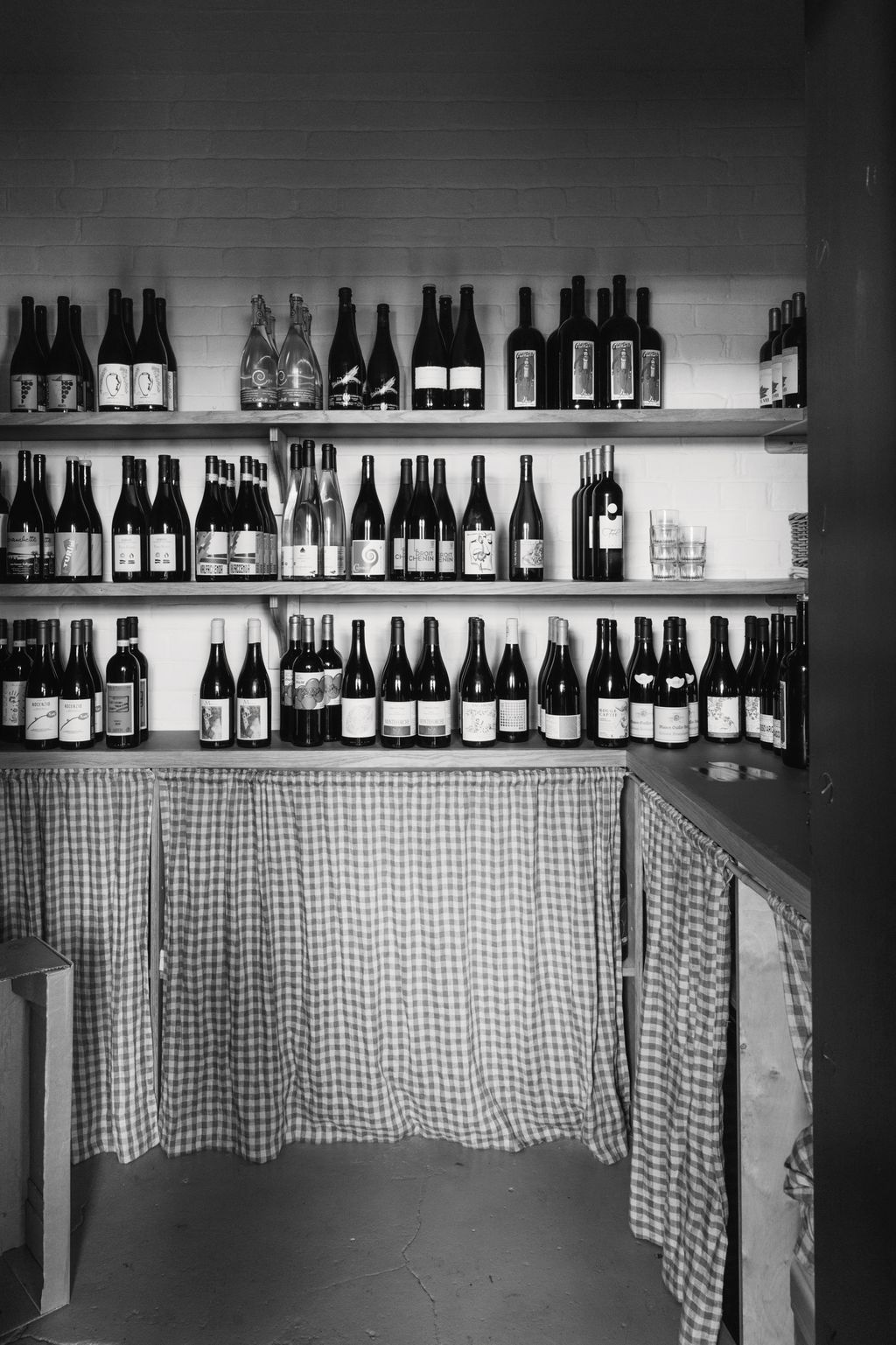
7/22Some of the wine comes from local importers through Alex Fitton at Pullo, who also connected them with Mat and Polly Hilton of Find & Foster cidery
 MAUREEN M EVANS8/22
Trippa alla Romana


 MAUREEN M EVANS9/22
With just 22 covers, the osteria has an intimate feel
 MAUREEN M EVANS10/22
Clare with Rachel Phillips at the Apricot Centre, which provides much of their fruit and vegetables
 MAUREEN M EVANS11/22
 MAUREEN M EVANS12/22
Antique dealer Catherine Waters outside her shop, where Clare has sourced many interesting pieces for the restaurant and her own house


 MAUREEN M EVANS13/22
Clare at one of the traditional Devon orchards managed by Find & Foster founders Mat and Polly Hilton (pictured bottom right with Clare and Tom). They work with local farmers to cultivate and nurture the land while creating their range of fine ciders
 MAUREEN M EVANS14/22
Clare and Tom in her kitchen at home
 MAUREEN M EVANS15/22
Tom rolls out fresh pasta dough
 MAUREEN M EVANS16/22
Tom seen exploring accompanied by one of her chickens – she keeps between five and nine at a time.


 MAUREEN M EVANS17/22
Tom prepares tomatoes grown in Clare’s vegetable garden
 MAUREEN M EVANS18/22
This is one of her Polish Bantams, White Fly.
 19/22
19/22The restaurateurs host lunch in Clare’s garden for Pullo owners Alex Fitton and Mirjam Nymalm and their son, together with Mat and Polly Hilton from Find & Foster
 MAUREEN M EVANS20/22
Clare’s sitting room is furnished with an appealing mix of pieces, including a Loaf sofa with Kirsten Hecktermann velvet cushions and a wall-hung cabinet from Catherine Waters


 MAUREEN M EVANS21/22
Leading off the kitchen, the conservatory is painted in Farrow & Ball’s ‘Green Smoke’
 MAUREEN M EVANS22/22
A jug of homegrown flowers and a lampshade from the Artisan makers’ shop in Chagford draw the eye towards the garden


