
A history of cottage gardens and how to plant one
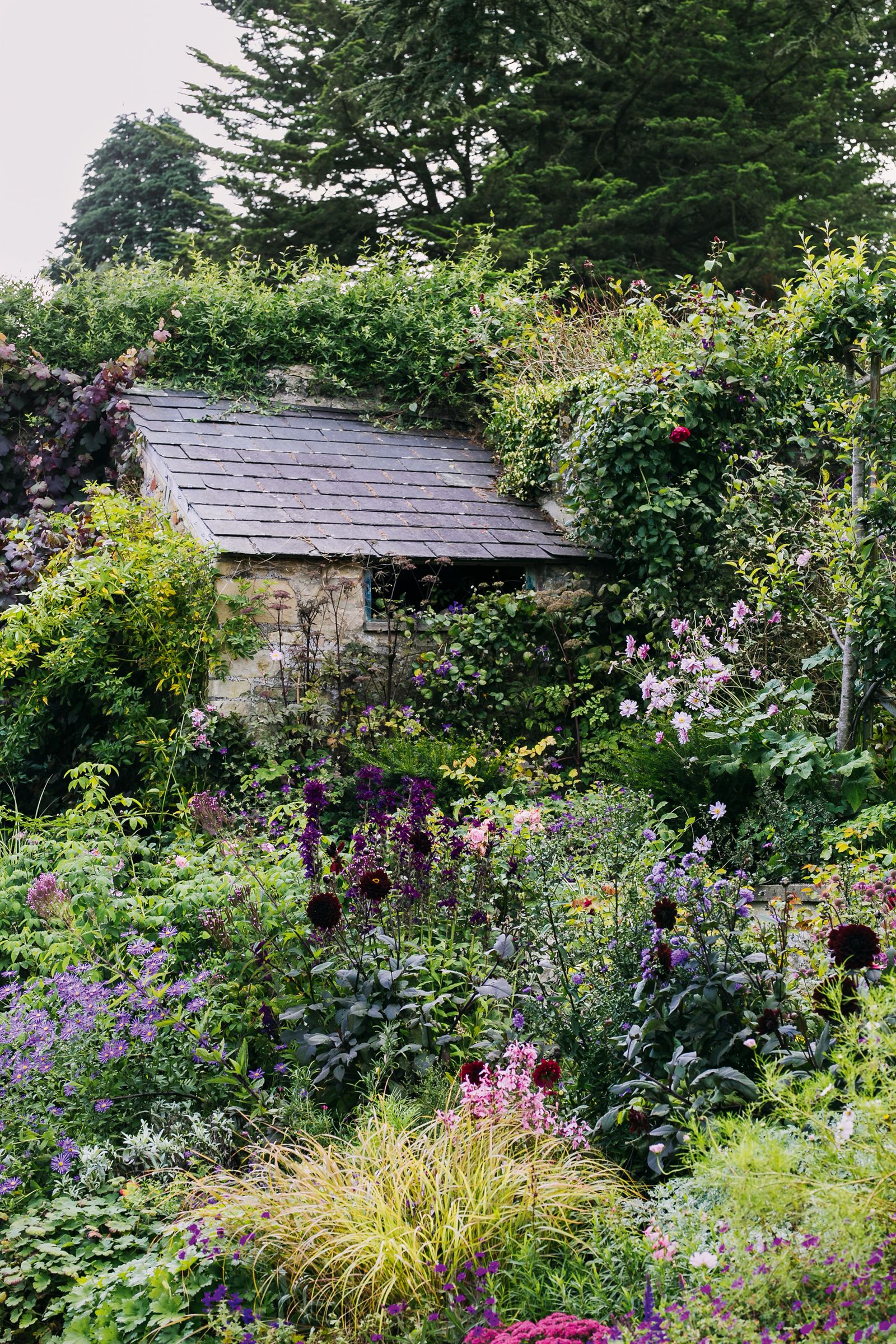
Over the last couple of centuries, the evolution of the English cottage garden has revolutionised the way we garden today. Even so, the term has an old-fashioned, rural ring to it – it conjures up romantic images of hollyhocks and delphiniums; stocks and rambling roses ascending quaint thatched roofs; and even gatherings around the Maypole and milk maids-a-milking.
Medieval cottage gardens grew out of a necessity for self-sufficiency, but their informal and slightly haphazard aesthetic has seen many a renaissance over the last two centuries. From the heyday of the Arts and Crafts movement to the Chelsea Flower Show in recent years, the cottage garden is constantly being reinvented, and it could arguably be seen as an important foundation of modern, naturalistic planting design.
MAY WE SUGGEST: Caroline Holdaway's dream Cotswold cottage
Although its origins were humble, the cottage garden became stylised in the nineteenth century, as flowers became more of a dominant force within the old wild framework. The gardener and journalist William Robinson – an early advocate of the style – saw the artistic merits, declaring the cottage garden to be ‘often far more beautiful than the gentleman's garden near it'. Writing in his iconic 1883 book The English Flower Garden, he believed that it was more than just the favourable compact microclimate created by the proximity of a cottage. Instead, it was the ‘absence of any pretentious “plan”, which let the flowers tell their story to the heart’. Gertrude Jekyll agreed, writing in 1899 in Wood and Garden, ‘one can hardly go into the smallest cottage garden without learning or observing something new. It may be some two plants growing beautifully together by some happy chance, or a pretty mixed tangle of creepers, or something that one always thought must have a south wall, doing better on an east one’. With all of this in mind, we can breathe a sigh of relief: here there are no rules, and this should be embraced.
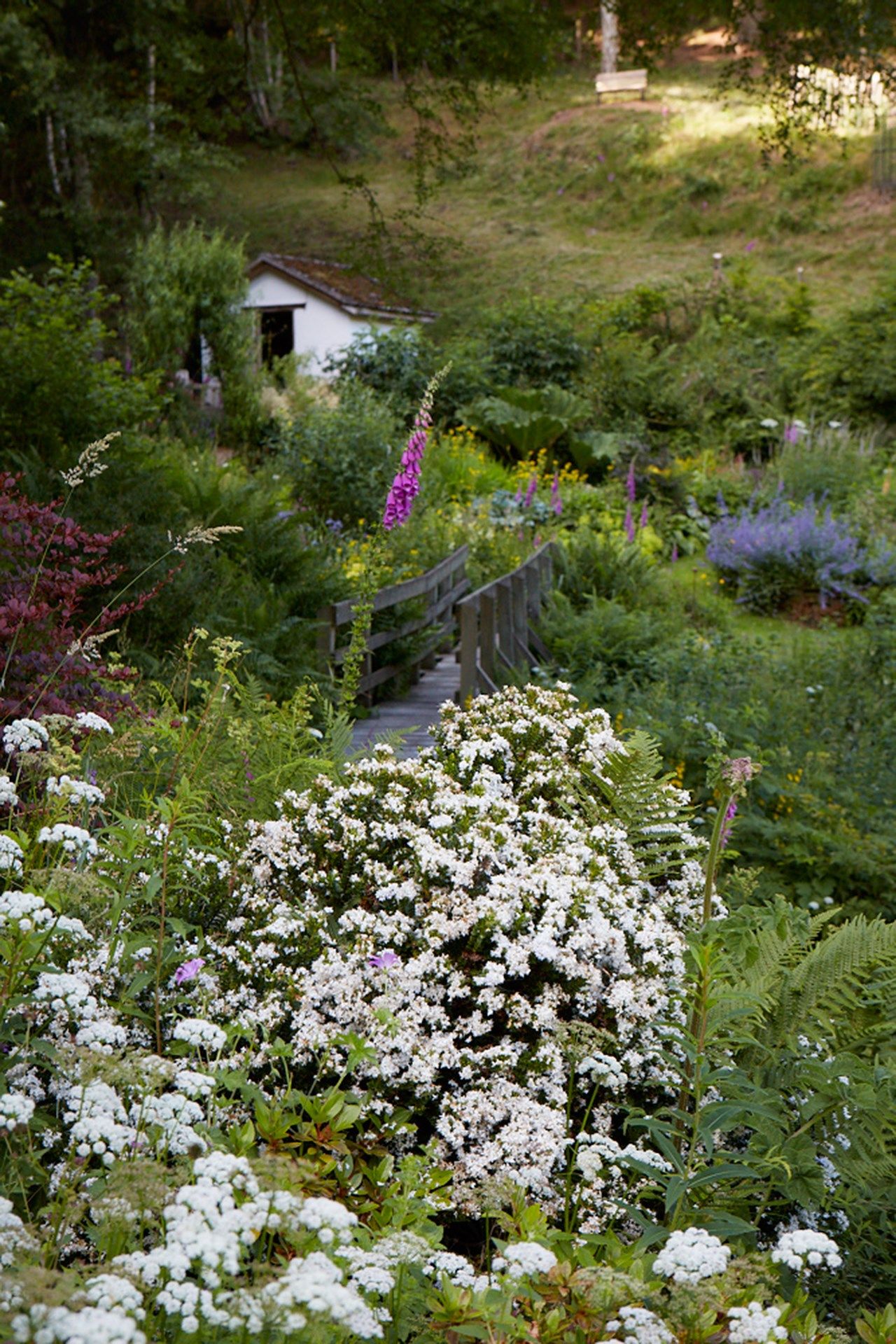
The modern cottage garden should celebrate this experimental spontaneity, but also acknowledge the increasingly important ecological role it can play. It should be seen as a living being, constantly changing and finding balance, with us intervening when needed. Let nature guide you, and tolerate (or even encourage) self-seeding, but be there to put a stop to the thugs.
A good place to start is to work with what you’ve got. You don’t need to live in a country cottage idyll. The style can suit urban environments too, as proven by cottage dwellers migrating to cities in the industrial revolution, bringing with them the colour, fragrance and spirit of their abodes to provide a nostalgic reminder of rural life. I even believe that I am capturing the ethos of the style using an edible and ornamental mix in pots on our small London roof. This is achieved with a trailing Jasminum officinale, towering Broad Bean ‘Martock’ (in place of the typical foxgloves), a peppering of Allium sphaerocephalon, cornflowers grown from seed, a prolific Anisodontea capensis and even a root-bound Gunnera manicata packed closely together to form an unusual but pleasing mix. Whatever your situation, a form of enclosure would help to create a suitably intimate space, be it from a hedge, fence or walls of the building.

When considering plants for your cottage garden, a good rule of thumb should be to think, ‘do I like it?’. Until we can visit classic examples such as the late Margery Fish’s East Lambrook Manor again, try to observe front gardens you pass and take note of combinations you believe to work well. I was stopped in my tracks on a recent evening’s jog, by a simple pairing of Rosa ‘Desdemona’ and Iris ‘Jane Philips’, for example. Get a balance of height (think Verbascum bombyciferum to Nepeta ‘Walkers Low’), colour (Delphinium ‘Pericles’ to Campanula lactiflora 'Loddon Anna'), and texture (Thalictrum delavayi ‘Splendide White’ to Iris ‘Benton Lorna’). Depending on space, add structure with crab apple Malus ‘Evereste’ or a fragrant climber such as Lonicera periclymenum 'Graham Thomas’, and consider effective self-seeders such as Hesperis matronalis, Cenolophium denudatum or Erigeron karvinskianus too.
Whatever you choose, plant them close together, bulking up the numbers of individuals in larger spaces to prevent them getting lost in the mix and staking those that need it. Packing them in not only creates the desirable wild aesthetic, but also provides habitat for birds and invertebrates. Above all enjoy the freedom, make it your own - and as Jekyll did - learn from the experience.
 Simon Brown1/19
Emma Burns has created a comfortable, charming retreat in her parents' converted stable block, giving it a cottage feel with the interiors. In the large garden, flagstones nestle among pebbles to provide a path through a rustic wooden gate to the outbuildings.
 Bill Batten2/19
Former House & Garden editor Wendy Harrop's cottage sits on the edge of the 1,000-acre West Woods. The rolling hills fall into the garden, which Wendy and her husband have kept natural, separating it from surrounding land with a simple farm-style wooden fence.
 Simon Brown3/19
In the Cotswolds, Caroline Holdaway's country cottage has only a front garden, but she has turned it into a beautiful space for sunny days. Simple paving stones lead to the front gate and lavender borders the front door.
 Simon Brown4/19
Low stone walls, post and rail fencing and old roses enclose the front garden.


 Michael Sinclair5/19
The kitchen extension of the Oxfordshire property has a traditional thatched roof above large sliding French windows framed with rough-hewn planks. The patio is edged with ferns, nepeta and rosemary, and dotted with erigeron.
 Simon Brown6/19
The courtyard garden at Prince Charles' Welsh home features planted sections on the lawn outside the house.
 Jan Baldwin7/19
No rural English garden is complete without a garden path. The stone walkway leading to Gipsy House, the cottage of the late Roald Dahl, was laid by the author himself. He was assisted in his efforts by a gentle giant of a local builder, Wally Saunders, who provided the inspiration for one of Dahl's most popular novels, The BFG.
 Jan Baldwin8/19
The onion garden bench at Gipsy House alludes to Roald Dahl's fondness for vegetables as well as his appreciation for moments of quiet contemplation. Where better to let your imagination run wild than surrounded by spring blooms?


 Jan Baldwin9/19
The bird house that sits at the bottom of the garden at Gipsy House was built by Road Dahl and Wally Simpson, the man who provided the inspiration for the BFG. Fitting then, that the window ledges are lined with 'dreamcatchers', the jars used by giants to catch dreams.
 Britt Willoughby Dyer10/19
A former forester's cottage in the Black Mountains in Wales boasts a magical garden. On the other side of the garden from the cottage, a forestry shed is surrounded by purple nepeta and foxgloves, and yellow mimulus.
 Britt Willoughby Dyer11/19
The back door of the cottage at Nant y Bedd is obscured by the blooming garden.
 Britt Willoughby Dyer12/19
The six-and-a-half-acre plot straddles the road up through the valley.


 Michael Sinclair14/19
Garden designer Butter Wakefield was drafted to breatje frest life into an Oxfordshire cottage and she kept a secluded feel with a large lawn and rustic path leading to the house.
 Michael Sinclair15/19
In his family home located between Ghent and Bruges, Arnaud Zannier has created an English cottage-style garden, with an immaculately kept lawn, in keeping with the thatched roof property.
 Ngoc Minh Mgo16/19
Harriet Anstruther's Sussex farmhouse is set amidst a large lawn, which she has kept natural and not landscaped. Blossom trees are the only thing planted on the green expanse.


 Ngoc Minh Mgo17/19
To the side of the house, there is a pretty plot of plants, which can be looked out onto from some rooms in the house. Having this small section allows the family to keep their interest in gardening without having to maintain the huge expanse that the garden covers.
 Paul Massey18/19
You would be hard pressed to find a more idyllic setting for a bolt-hole than a wildflower meadow in Gloucestershire complete with a babbling brook, grazing sheep and a resident horse, which is precisely where this cottage sits.
 Paul Massey19/19
In the warmer months, the meadow is in full bloom with wildflowers.


