
All about damasks and how to use them in any kind of interior

For the last decade or so, symmetrical, mirror-image foliate patterns known as ‘damasks’, have been notably absent in the new collections of big fabric houses. Perhaps this is because, in their purple or silver form, mica-beaded or flocked as wallpaper, they have been tainted by the ‘glam’ look of the early noughties. Think of the decor of the British high street beauty salon, all faux-Louis chairs and champagne-themed wall decals and you’ll be along the right lines. But in the last year, our editors have noticed that these patterns, reinterpreted and given a new lease of life, are curling and furling their way right back ‘in’.
Damasks are named after the city of Damascus in Syria, which is where the patterned fabrics were often produced and certainly traded from the mediaeval times onwards. They actually stem back to woven silk fabrics produced in China, where a design was woven in a monochrome silk, the pattern being picked out between darker, duller threads and brighter, shinier threads. The patterns that gained huge popularity in Europe and so spread along the ‘silk route’ to Damascus were often medallion-esque repeats that used curved foliage and fruit motifs and relied on mirror-image symmetry. In fact, symmetry and the use of foliage are the features that define damasks to this day, although some purists might demand that one ought to be woven in two-toned silk in order to really ‘count’.

Expensive and beautiful, damasks became associated with a grand style of decorating, and they grace many of Europe's most beautiful houses, from Venetian palazzos (Venice was famous for its silk production in the 16th and 17th centuries) to English country manors. These days they're enjoying something of a revival, with fabric houses from Zoffany to Designers Guild adding them to their collections – sometimes in traditional formal style, while others are taking on a looser, more modern aesthetic.
Chelsea Textiles’ Venetian Damask uses faded colours and a distressed finish to create a timeless damask paper, reminiscent of the silk-covered walls of grand Venetian homes, and Dedar have also stayed fairly true to the traditional damask look with their wonderful ‘Pure Damask’. Their colour palette, however, is perfect for now, with pale, powder tones and one emerald, and the combo of matt wool yarns and shiny silk ones is just dazzling.

On the more playful end of the spectrum, the Rubelli family (weavers of silk in Venice since 1835), have recently a whole series of re-invented damasks, the boldest being Damasco Pop. This design relies on vivid, bold colours, and waves of colour that undulate back and forth, for a positively futuristic take on damask. For an even more modern look, Totty Lowther’s Damaskus wallpaper either uses a very matt ‘parchment’ paper or grasscloth, immediately moving the motif away from the ‘glam’ look. British textile company Fermoie have worked from huge-scaled damasks from the mid-eighteenth century, and have modernised it by printing it in one colour on a nice, rough, linen. The ‘Hackford’ design is rendered in zig-zaggy lines, reminiscent of rustic embroidery, which rids the damask of its somewhat uptight connotations.
In perhaps the furthest departure from the traditional damask, Designers Guild offer us a daubed riot of painterly blue swirls printed on linen. Leaving behind even the slightest reference to woven silks - but retaining the mirrored foliage, this is a damask as if imagined by a post-impressionist painter. Whichever you choose – or whether you go for more traditional versions by makers such as Claremont, Zoffany or Watts 1874 – damasks are sure to add a layer of texture and elegance to your interiors. Scroll down for more examples from the House & Garden archive.
 Simon Brown1/11
Damasks are something of a signature of Alidad's sumptuous, elegant interiors, including his Mayfair flat, shown here. The William IV rosewood bergère armchair in his library adds depth and texture to the scheme, upholstered in ‘Memlinc Chenille’ damask by Watts 1874.
 Paul Massey2/11
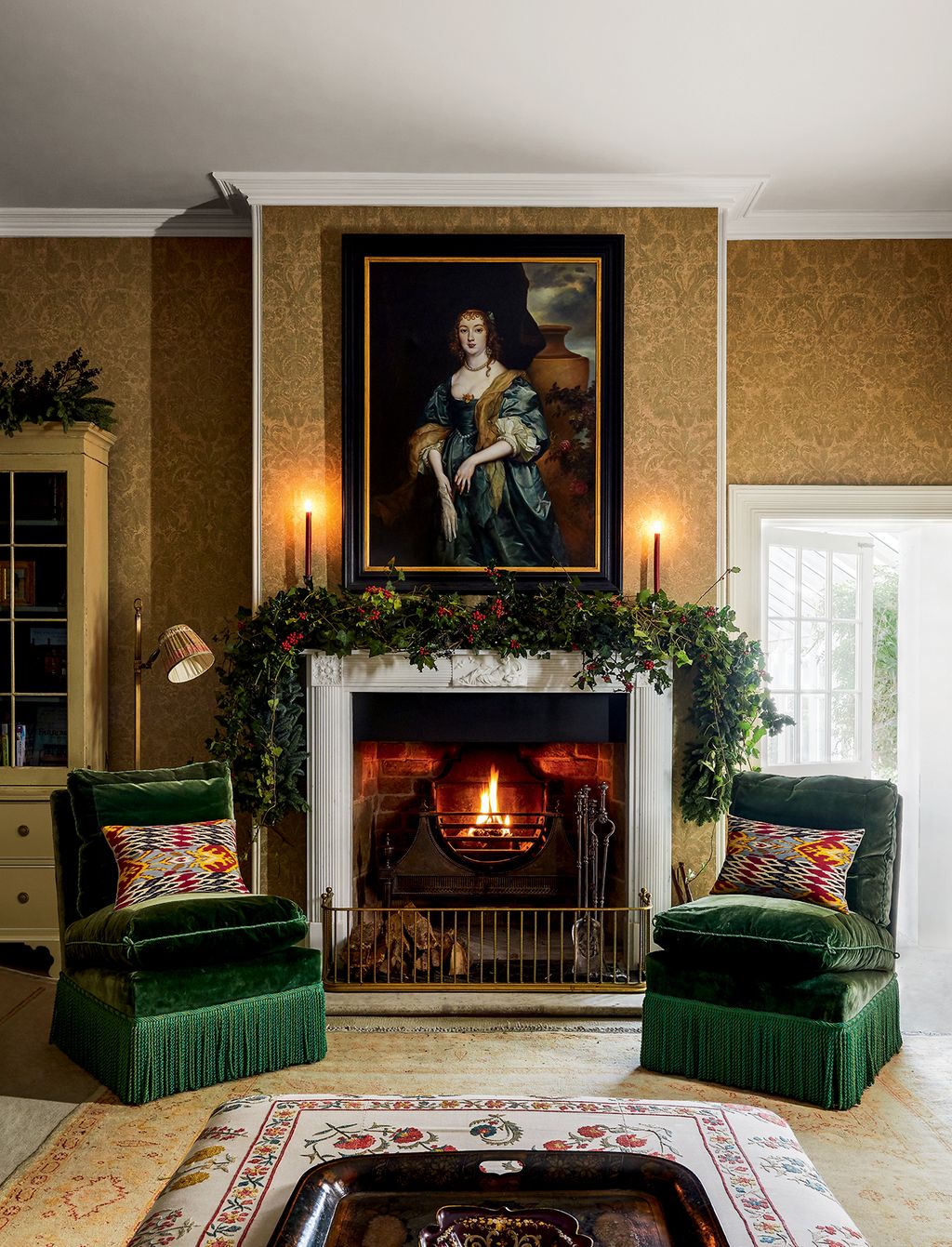
In this Regency house in the West Country, Henriette von Stockhausen of VSP Interiors has created a rich interior with the use of a golden damask wallpaper, in this case Robert Kime's ‘Opera’ design.
 Michael Sinclair3/11
In this bedroom at his country house, Ven House, Mike Fisher of Studio Indigo has created a seriously grand scheme using ice blue ‘Colette’ silk damask by Schumacher, from Turnell & Gigon.
 Andrew Wood4/11
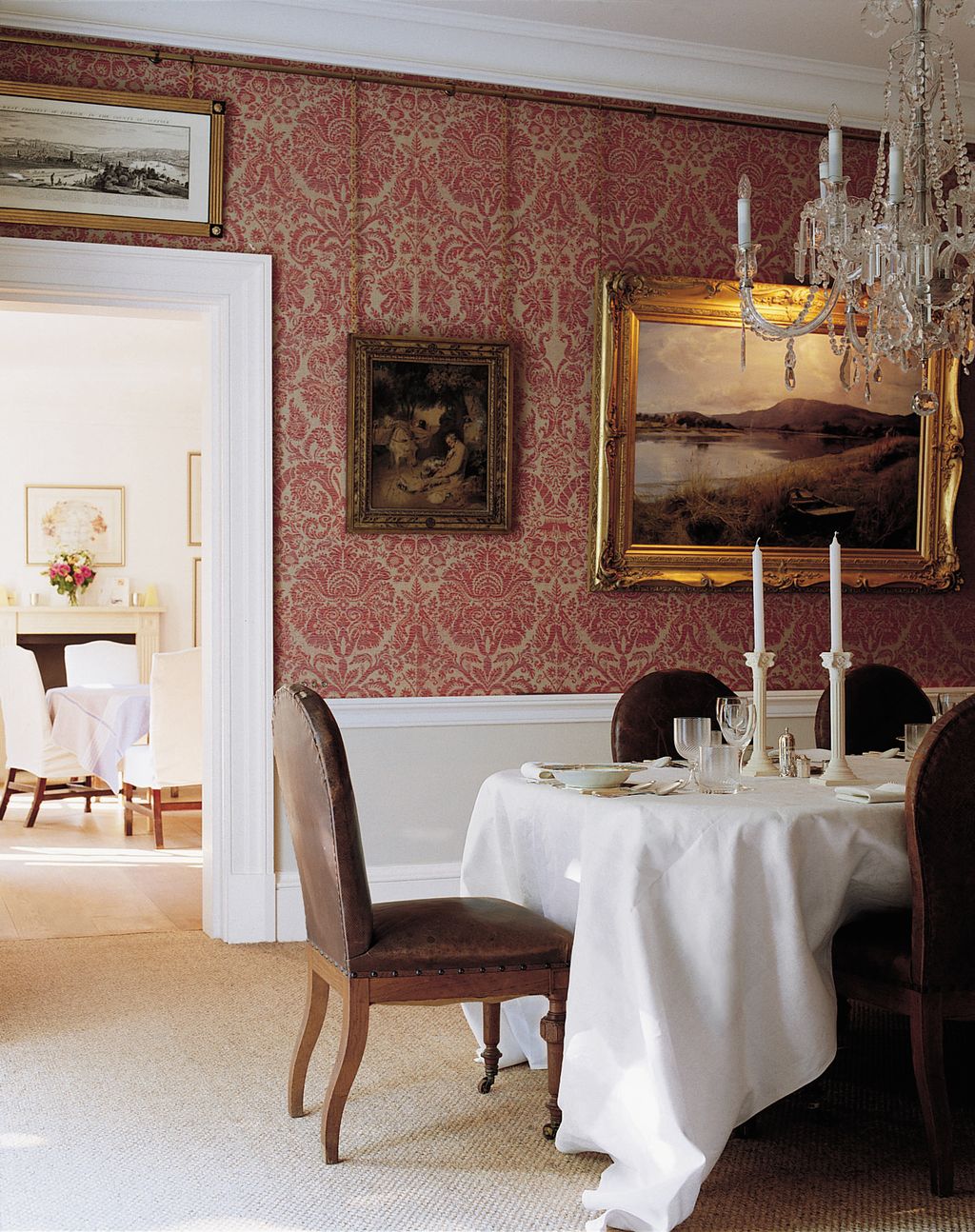
Damasks and dining rooms go perfectly together, since the formality of the pattern makes a good accompaniment to these often rather formal rooms. In this lovely London house by Robert Kime, the walls of the dining room are hung with the brand's ‘Lampas’, a hand-blocked, red damask wallpaper.


 5/11
5/11Damasks can also make an appealing addition to a simpler interior. In this hallway of a house decorated by Ben Pentreath, a pair of Queen Anne wing chairs upholstered in a rich damask-embossed bottle-green ‘Beaufort’ mohair velvet from Claremont stand out jewel-like against the white-painted panelling on the walls.
 Simon Upton6/11
Antique damasks can make for wonderful wall hangings. In her cottage in Dorset, designer Flora Soames has used a pair of antique Fortuny panels in the alcoves on either side of the fireplace in the dining room.
 Paul Massey7/11
This classical newbuild in the Home Counties has wonderfully elegant interiors by Henriette von Stockhausen, who has shown here how damask does not have to be opulent and heavy in its look. She has used Farrow & Ball’s ‘Lamp Room Gray’ and curtains in a Claremont silk damask to create a graceful, airy scheme in the drawing room.
 Simon Upton8/11
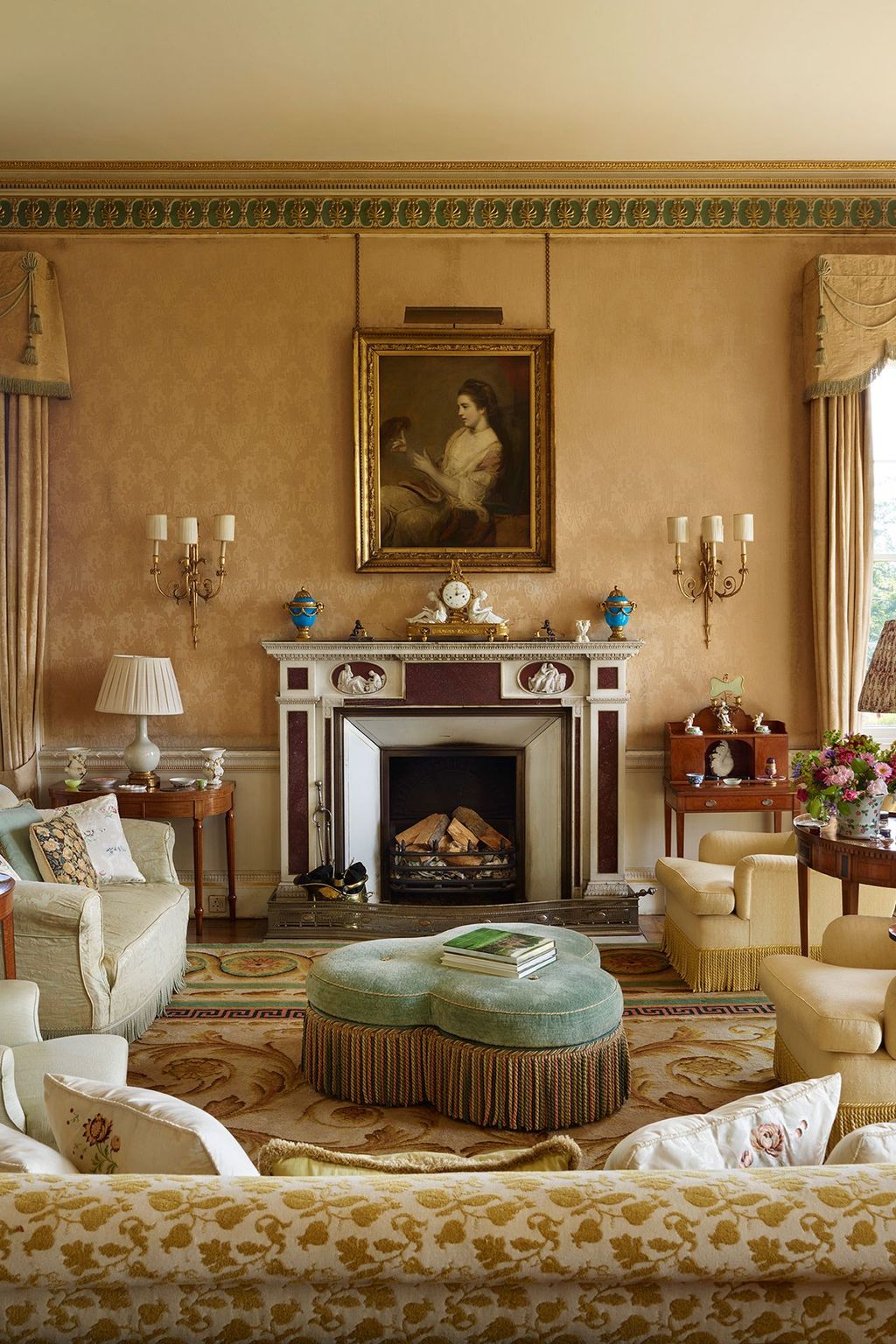
At Bowood in Wiltshire, one of England's finest country houses, the drawing room was decorated in the 1950s by John Fowler. His scheme remains almost unaltered, including the cream cotton damask used for the curtains and pelmets and to cover the walls.


 Simon Brown9/11
The lovely Georgian house Williamstrip in the Cotswolds underwent an extensive restoration a decade ago with the help of architect Craig Hamilton and decorator Mark Gillette. Beautiful damasks feature throughout the house, giving it a classical feel. A set of seat furniture by John Vardy (1718-65), reupholstered in 'Palma Damask' from Claremont, stands in a corner of the drawing room, while the walls are covered in 'Athenais' silk damask from Lelièvre.
 Dean Hearne10/11
A Venetian palazzo is undoubtedly the right place for damasks, and this spectacular one on the Grand Canal has a heavenly suite of furniture made bespoke by interior designer Jacques Grange for the piano nobile.
 Simon Upton11/11
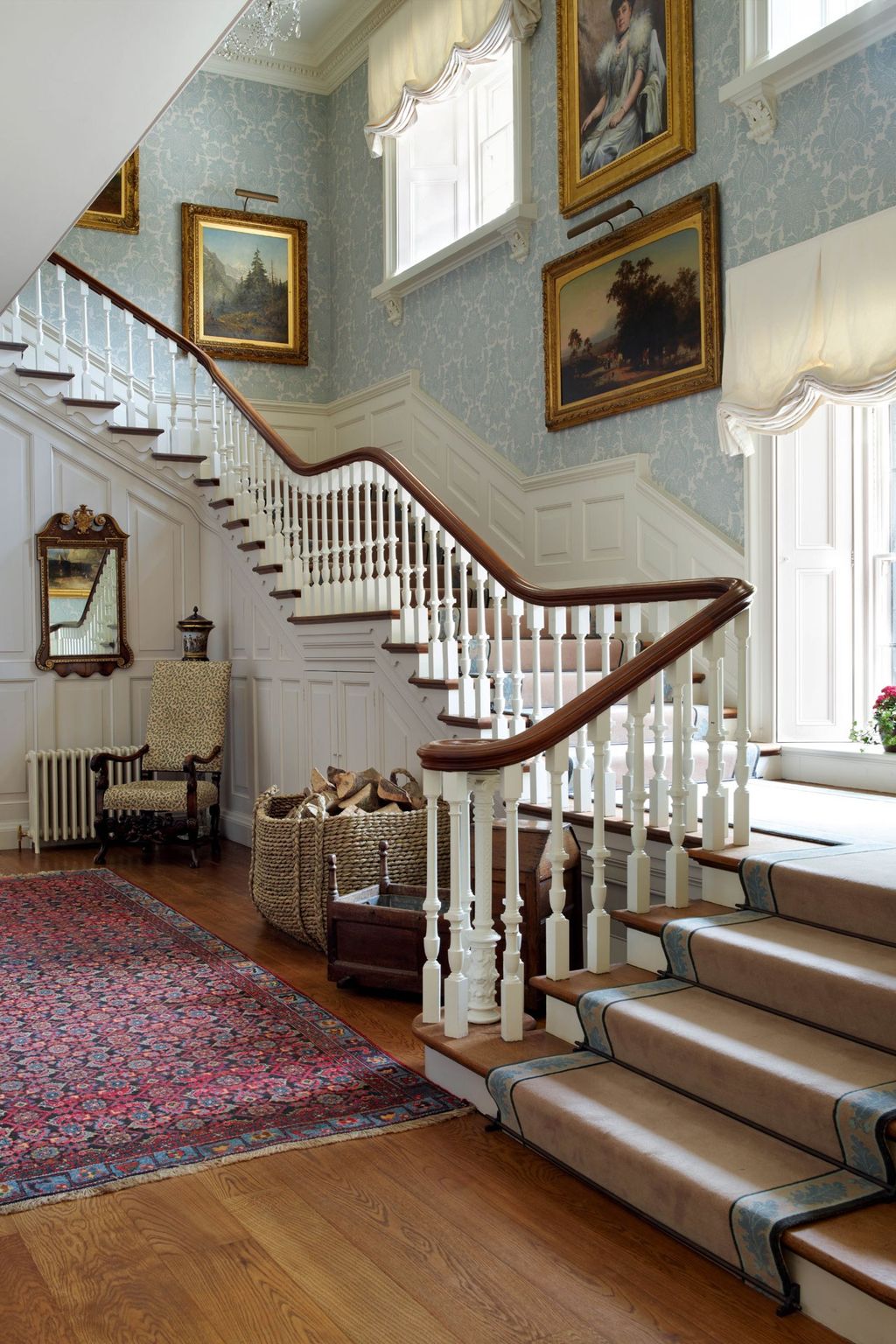
Designer Hugh Henry was called in to create new schemes for this 18th-century country house in Wiltshire, including the pretty blue and white one in the grand entrance hall. The damask wallpaper here takes on a pretty, delicate look, almost vanishing in the lofty space.


