
Discover the spectacular Himalayan landscape from the mountain village of Ladakh

As I leave the swelter of monsoon-drenched Delhi behind, the transition to the cooler climes of Ladakh’s mountains comes as a relief. Colour and confusion are exchanged for the monochrome palette and empty silences of high-altitude desert; heady smells and smog-filled skies for a clarity of light and air.
The plane’s dramatic descent into Ladakh’s capital, Leh (eyes wide open where others might like to keep them firmly shut), reveals a bird’s eye sweep of landscape on an epic scale. The terrace of Indus House, my first lodging, reveals the depth and detail: the stands of tall willows whipped by the customary afternoon breeze, the mighty Indus river rolling past in a brown torrent of silt and snowmelt, the slow, upward progression of green field to barren mountainside to savage, snowy peak. If my head is confused by the altitude – which, at 3,500 metres, is no surprise – the rest of me is engulfed in the satisfaction of having truly arrived in the back of beyond.
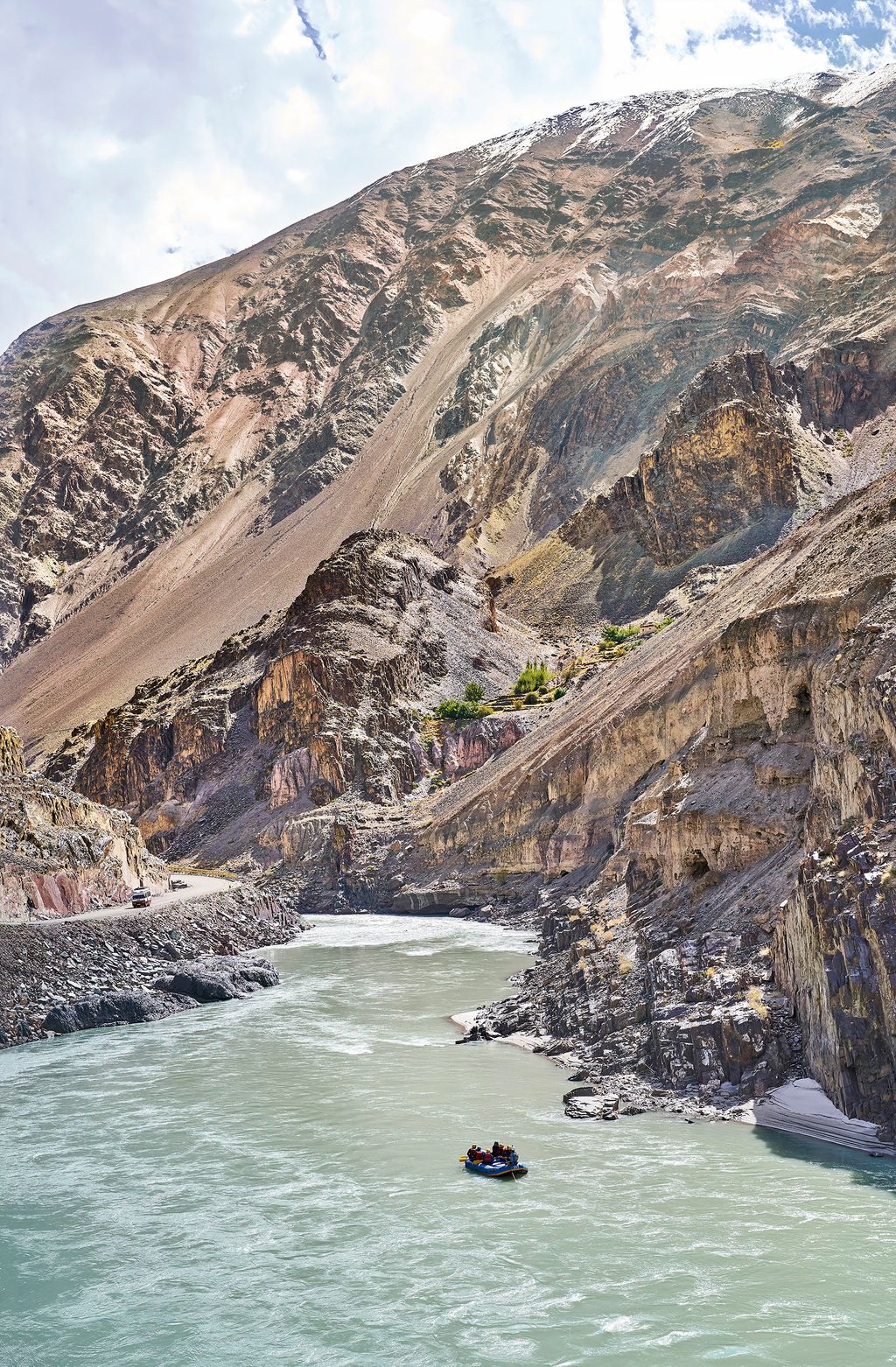
This same sense of isolation is what drew Shakti Travels, a small, highly exclusive Himalayan travel company, to Ladakh some 10 years ago and led them on a mission to lease, restore and transform a handful of traditional Ladakhi houses into a series of exquisite guesthouses. Shakti clients are invited to travel from one to the next in the company of expert guides and drivers, linking each stay with specifically tailored experiences – a trek, perhaps, a bicycle ride, a river-rafting escapade, a prayer-flag blessing, a monastery tour, a picnic – lots of picnics, in fact, each one laid out in a surprise location with food by the village house chefs. The whole experience comes together as one breathtaking (literally), top-of-the-world adventure in a far-flung Himalayan corner where India, Tibet and Pakistan collide.
Of the six houses in total, I visit five and stay in three, starting – like all guests – in the low (relatively speaking, of course) village of Nimoo, for slow, essential acclimatisation. That means plenty of rest, minimal exertion, no coffee or alcohol, and regular oxygen-level tests. Indus House sets the tone perfectly, its three bedrooms, sitting room and dining room becoming the template for all the other houses – warm, earthy colours and a style of decoration based on natural textures and materials that begs the clichéd description of rustic chic. Nearby Village House, reached by an amble through apple and apricot orchards, has wonky charm in its crooked floors and low-slung doorways, yet sophistication in its four-poster beds slung with white muslin.
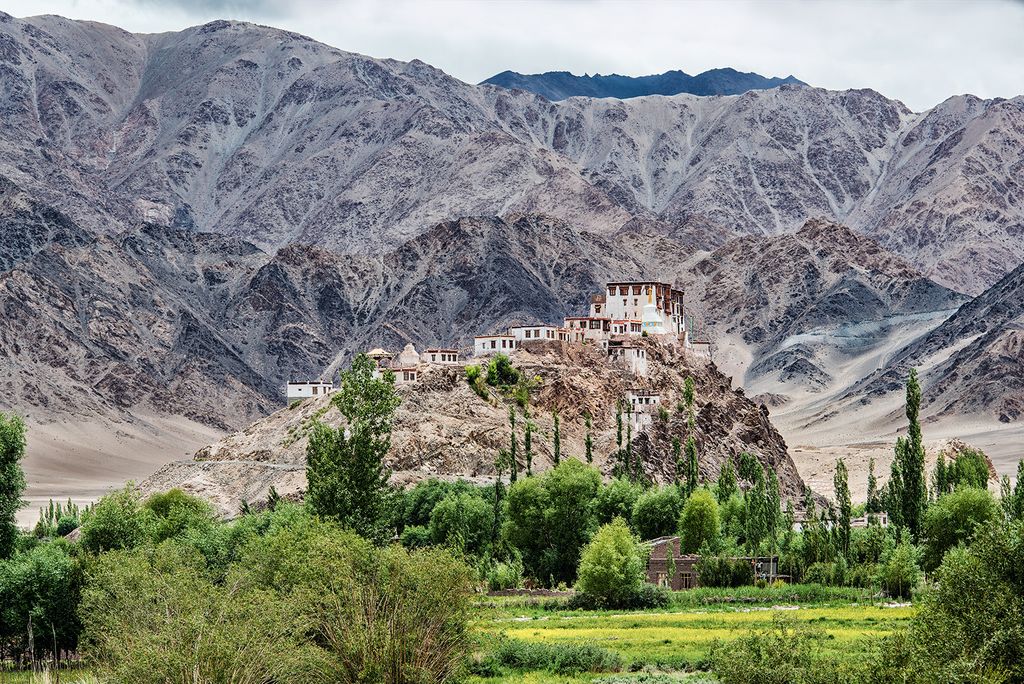
My favourite? It is hard to tell. The house in the village of Stok is arguably the best located for trekking in the eponymous valley, which rises in a long, starkly beautiful ascent towards Ladakh’s highest mountain, Stok Kangri; and River House at Stakna, the most recent addition to the Shakti fold, feels the most bucolic, set in a ribbon of lush greenery on the banks of the Indus with Stakna Monastery perched on its rocky outcrop just beyond. But I find the house at Egoo casts the most abiding spell.
With the commanding mud-brick fortress of Basgo and further monasteries at Likhir, Thiksey and Alchi ticked off the list of wondrous Buddhist highlights, my journey veers from Ladakh’s regular tourist trail to follow a narrow road that twists and turns through a river valley flanked by ever-higher mountains, to a point where the temperature plummets with the sun and the air is so thin that heart and lungs are pitched into overdrive.
At some 4,000 metres, Egoo is the highest of Shakti’s village houses and the oldest, too – its traditional mud-brick construction, wrap-around corner windows and wobbly wooden balconies now so exquisitely restored that I struggle to imagine the hardship of real life here. My scramble to a lone stupa at the valley’s head takes me through a small village where skinny cows and wide-eyed children watch my progress with shy curiosity and where every drop of precious water is channelled into conjuring miraculous green from a stony wasteland of overriding brown. As the evening chill sets in, the woodburning stoves at Egoo House are ramped up, hot-water bottles are stuffed up jumpers, and dwindling energy levels are revitalised with ginger tea and bowls of steaming curry.
Two days later and back down in the Indus Valley, I pass through the heavily fortified military town of Karu en route to the fabled monastery at Hemis. This journey, from soldier to monk, perfectly encapsulates the dichotomy currently overwhelming Ladakh: the profound gentleness of Buddhist culture and heritage on the one hand; the renewed tension between India and Pakistan, unravelling less than 200 miles away in and around Srinagar, on the other. It should be noted, though, that as I write this, the Foreign Office advice warning against travel to the state of Jammu and Kashmir specifically does not include Ladakh, which maintains a separate, distinct identity within the region. Nonetheless, perhaps it is only right to draw attention to Shakti’s two similar village-house experiences in the less contentious Indian regions of Kumaon and Sikkim. I can’t vouch for either, but I’m confident that if the expertise of the operation in Ladakh is replicated there, a grand Himalayan adventure, Shakti-style, is still on the cards.
Ways and means: Pamela Goodman visited Ladakh as a guest of Shakti Himalaya (shaktihimalaya.com), which offers an eight-day trip, including three nights at Nimoo, two nights at Egoo and two nights at The River House from $7,159 per person, including all meals and drinks, a guide, a private chef, porters and a car with a driver, but excluding flights. The season runs from May to the end of September.
 1/6
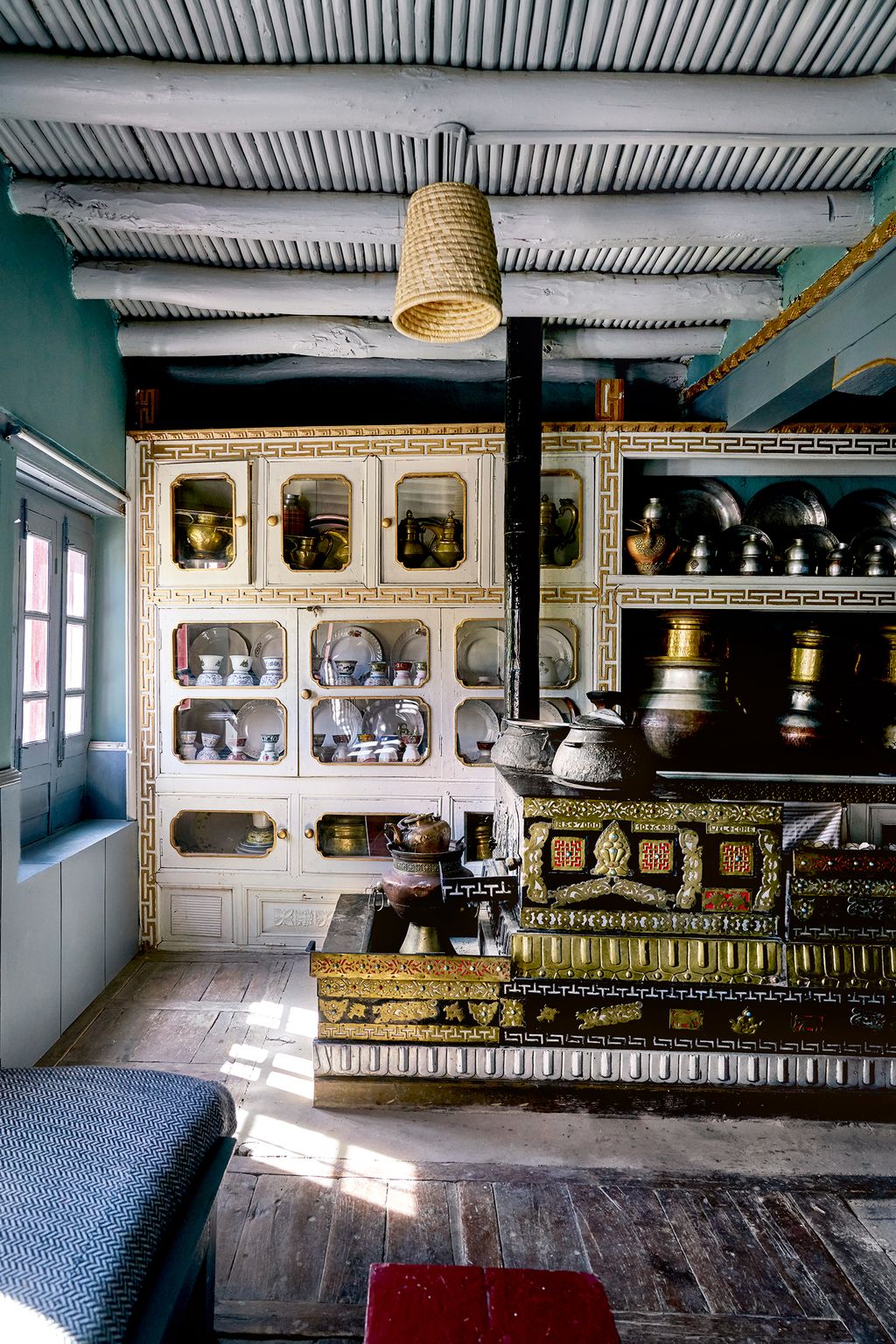
1/6The interior of the Stok village house – one of the lodgings on the Shakti Himalayas itinerary, all of which have old traditional kitchens.
 2/6
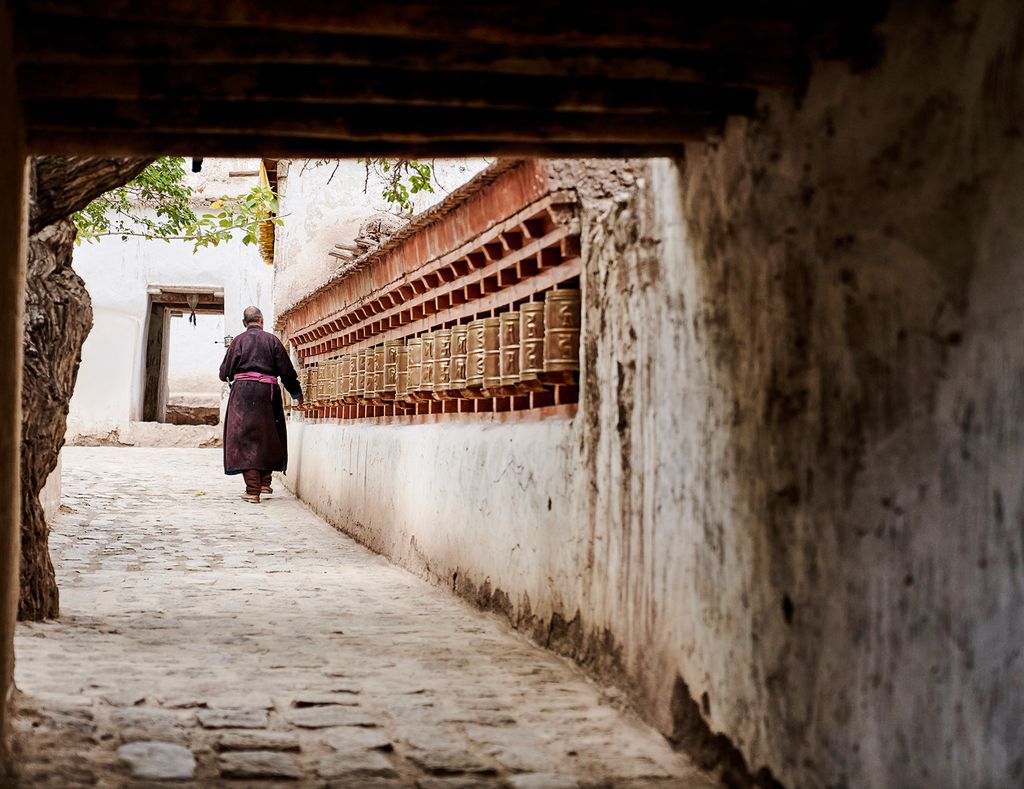
2/6A Buddhist monk turns the prayer wheels set into the wall at Alchi Monastery.
 3/6
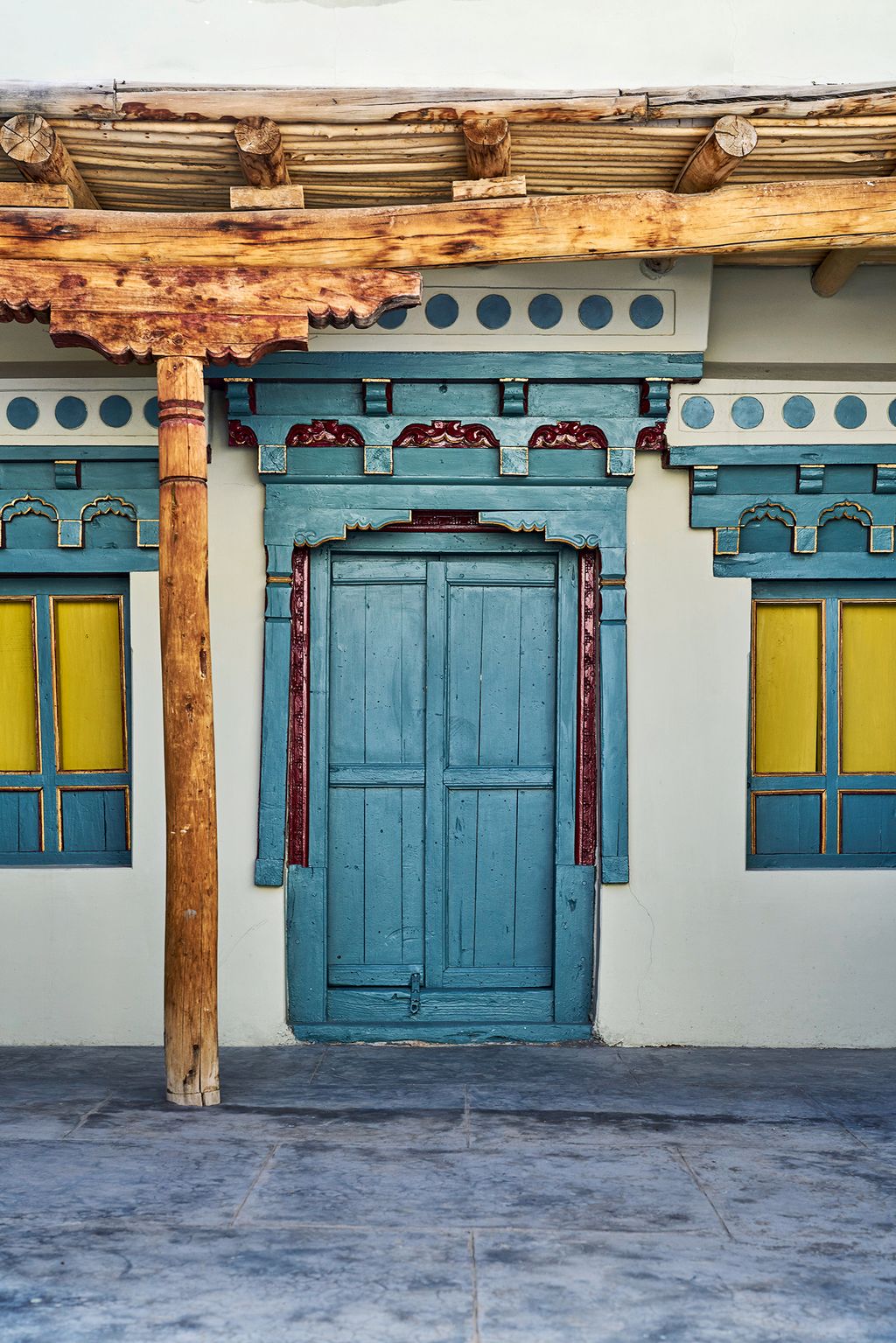
3/6A mix of decorative carving and colourful paintwork around the door of the Egoo village house makes an inviting first impression.
 4/6
4/6Rafting on the fast-flowing River Indus offers an exhilarating way to take in Ladakh’s dramatic scenery.


 5/6
5/6Stakna monastery is perched on a rocky outcrop above the banks of the River Indus.
 6/6
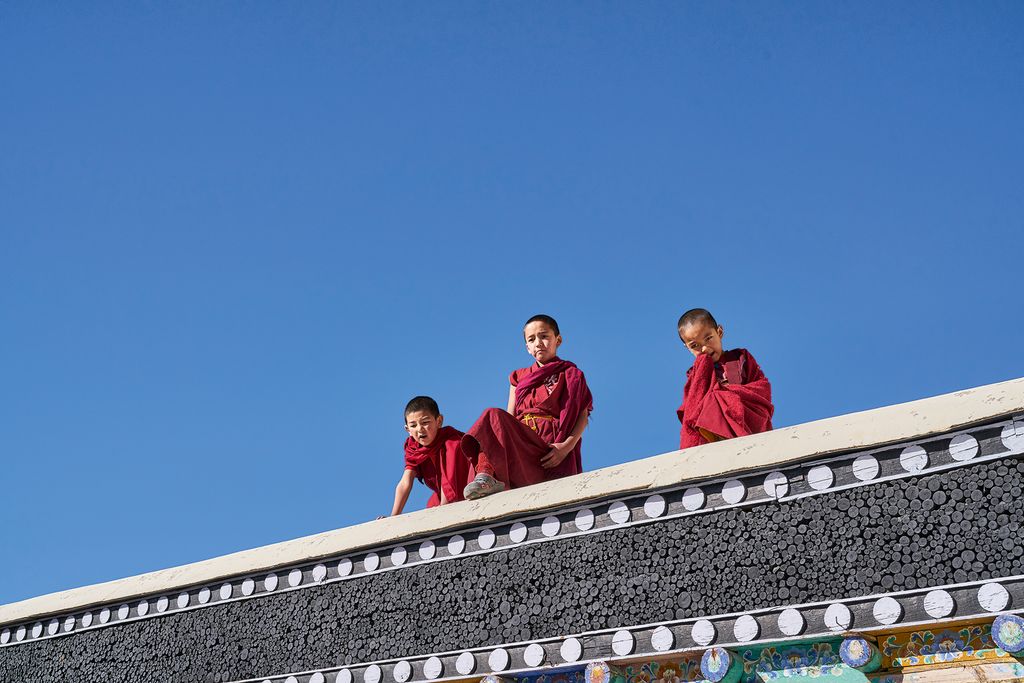
6/6Young novice monks on the roof of the 15th-century Buddhist monastery at Thiksey.


