
A rambling, romantic garden border scheme for early summer using just five plants
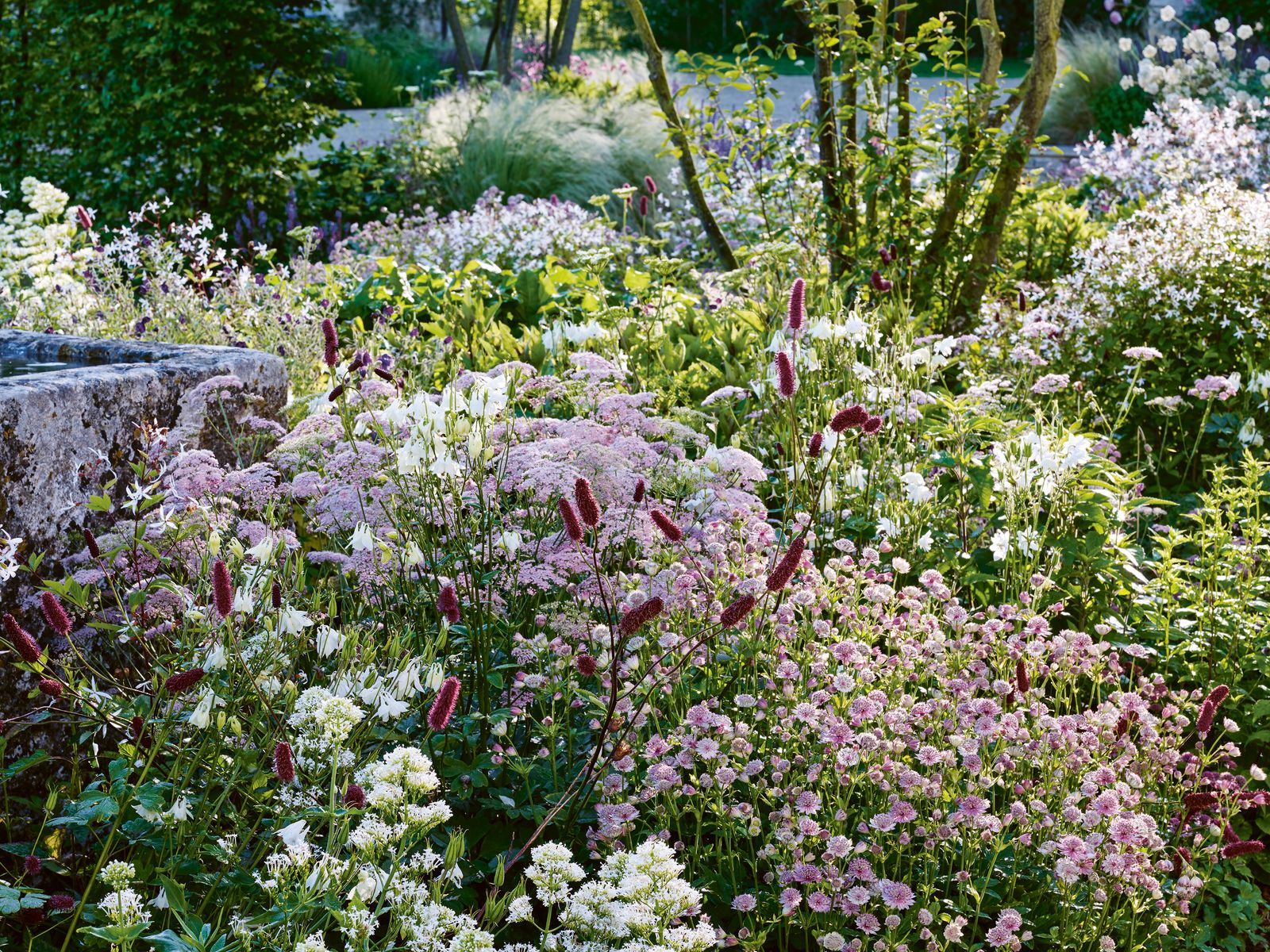
In nature plants position themselves in response to subtle changes in the levels of moisture and light, the soil and topography of their location. This planting scheme reflects that, as Pimpinella major ‘Rosea’, Astrantia ‘Roma’, Centranthus ruber ‘Albus’ and Aquilegia vulgaris ‘Munstead White’ grow cheek by jowl and repeat, as if they have each chosen their own ideal spot. Umbels are the dominant flower shape in the wild, and here the chalky tones and delicate textures of the umbellifers Pimpinella major ‘Rosea’ and Astrantia ‘Roma’ are enlivened by Sanguisorba menziesii in jolting red. In the unexpected setting of a small space – this garden border is next to a driveway – a looser planting inspired by nature has even greater impact. This scheme works well under a small tree such as a snowy mespilus (Amelanchier x lamarckii).
Garden border method…
- Use a spade to dig over the soil to a crumbly consistency, breaking up any big lumps.
- Gather together all the plants.
- Start with the Centranthus ruber ‘Albus’, arranging the plants on the soil, still in their pots, and spacing them fairly far apart.
- Add the Astrantia ‘Roma’, Pimpinella major ‘Rosea’ and Sanguisorba menziesii in ones and twos, letting the different plants nudge each other at their tips.
- Finally, use the Aquilegia vulgaris ‘White Munstead’ to fill any occasional gaps.
- When each plant has a spot, tap them out of their pots and loosen a few of the roots with your fingertips. Dig a hole for each plant to the same depth it was in its pot, then plant and gently firm the soil down using your hands. Water all the plants thoroughly.
Note: Aquilegias will self-sow readily, filling any spaces the following year.
Good for...
- bumblebees
- solitary bees
- hoverflies
- beetles
- butterflies
- ladybirds
- lacewings and their hibernating larvae

 Jason Ingram1/6
Aquilegia vulgaris ‘Munstead White’ (common columbine)
- Pale, angular, bell-shaped flowers. A popular plant with garden designers. An excitable self-seeder.
- perennial
- height 60cm (24in)
- 2 per m2 (10ft2)
- flowers from early summer to late summer
 Jason Ingram2/6
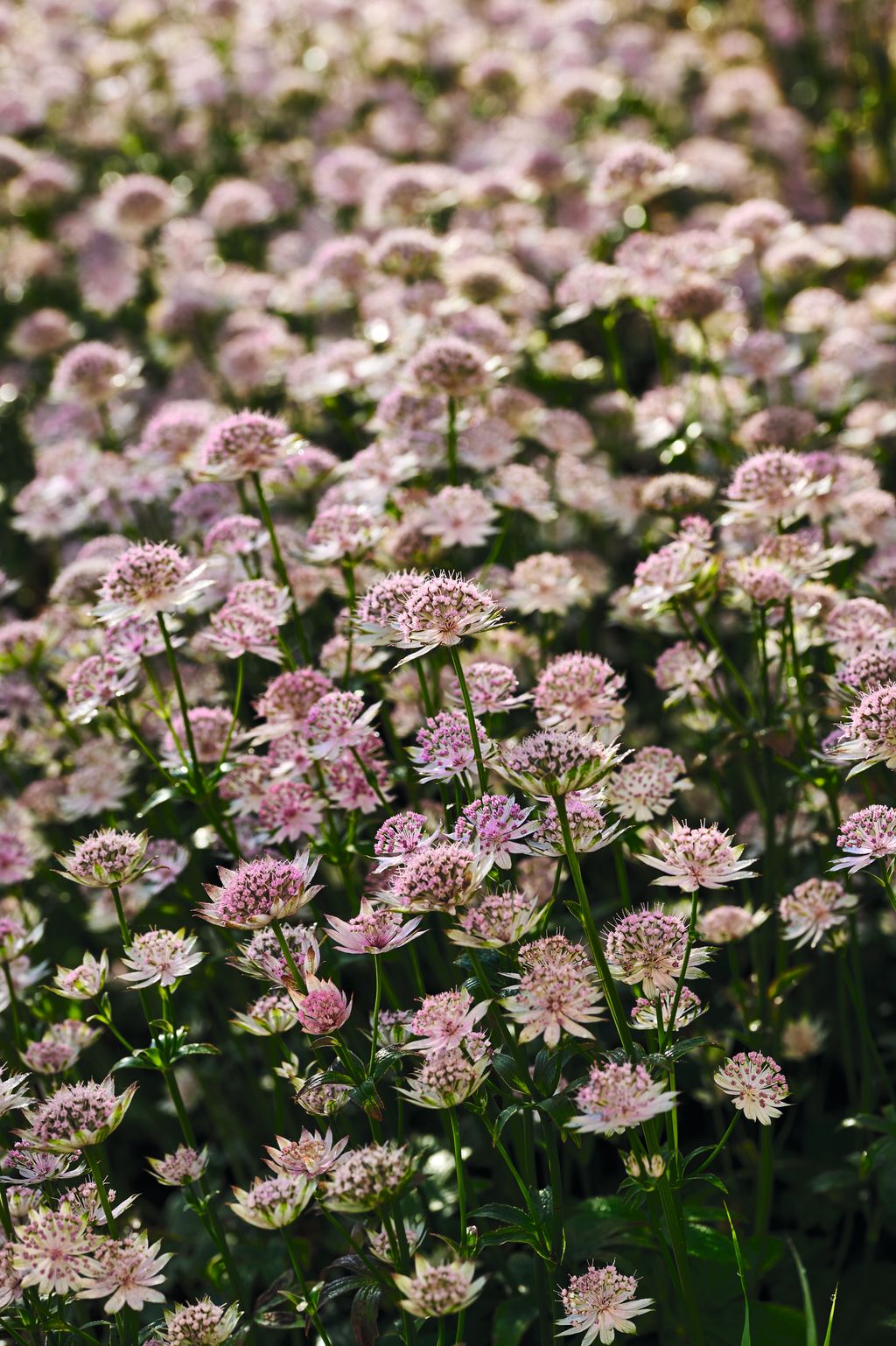
Astrantia ‘Roma’ (masterwort)
- Papery flowers in dusky pink with delicate seedheads that last throughout winter. Astra translates from the Latin as ‘star’, reflecting the shape of the flowers.
- perennial
- height 60cm (24in)
- 3 per m2 (10ft2)
- flowers from late spring to early autumn
.jpg) Jason Ingram3/6
Jason Ingram3/6Centranthus ruber ‘Albus’ (valerian (white form))
- Pale but resilient flowers on sturdy stems. Sweet, subtle scent.
- perennial
- height 80cm (32in)
- 1 per m2 (10ft2)
- flowers from early summer to mid-autumn
 Jason Ingram4/6
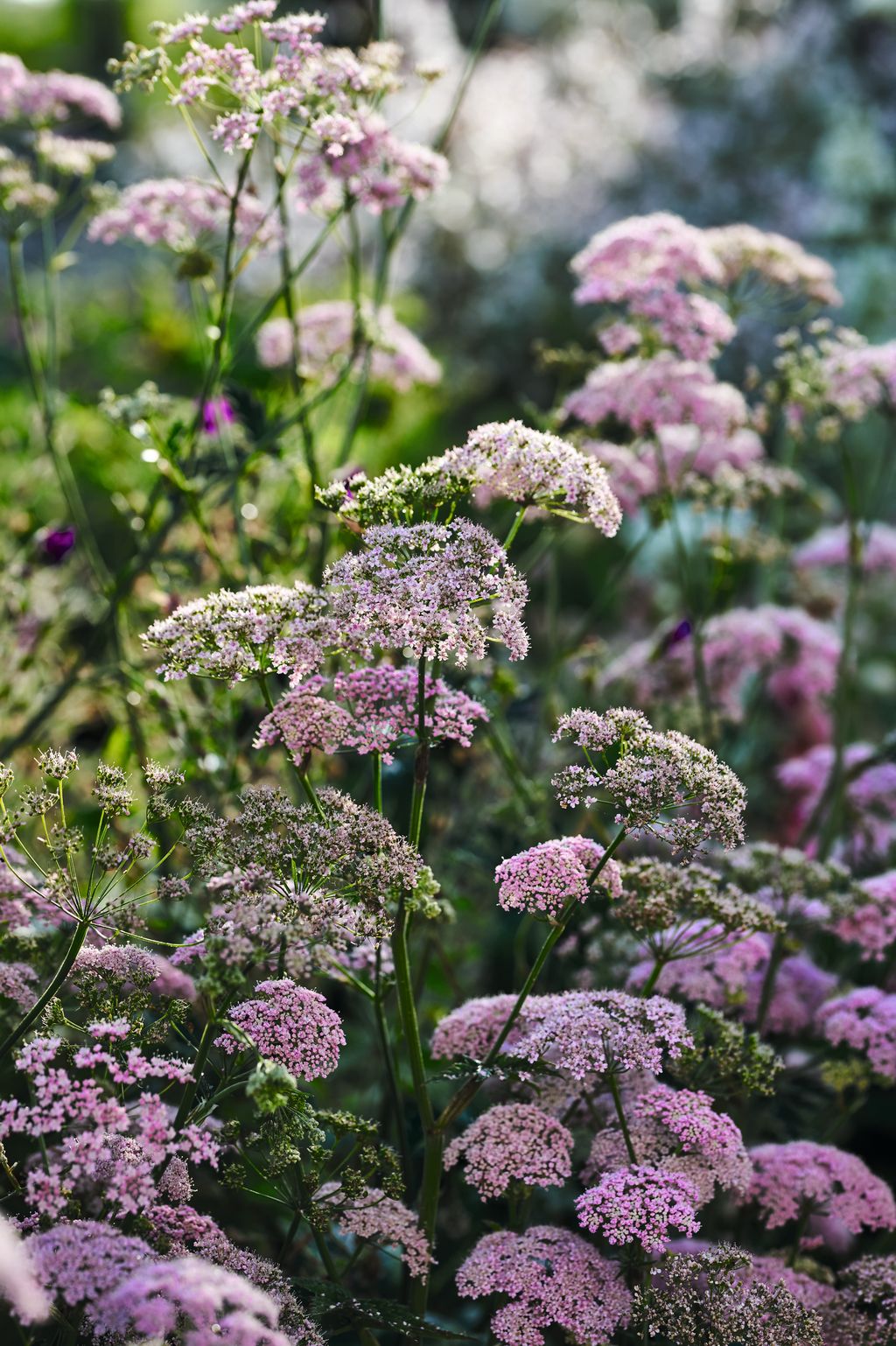
Pimpinella major ‘Rosea’ (pimpinella)
- Sugar-pink, airy umbels. Popular with small pollinators that have smaller mouthparts.
- perennial
- height 90cm (36in)
- 3 per m2 (10ft2)
- flowers from early summer to late summer


.jpg)

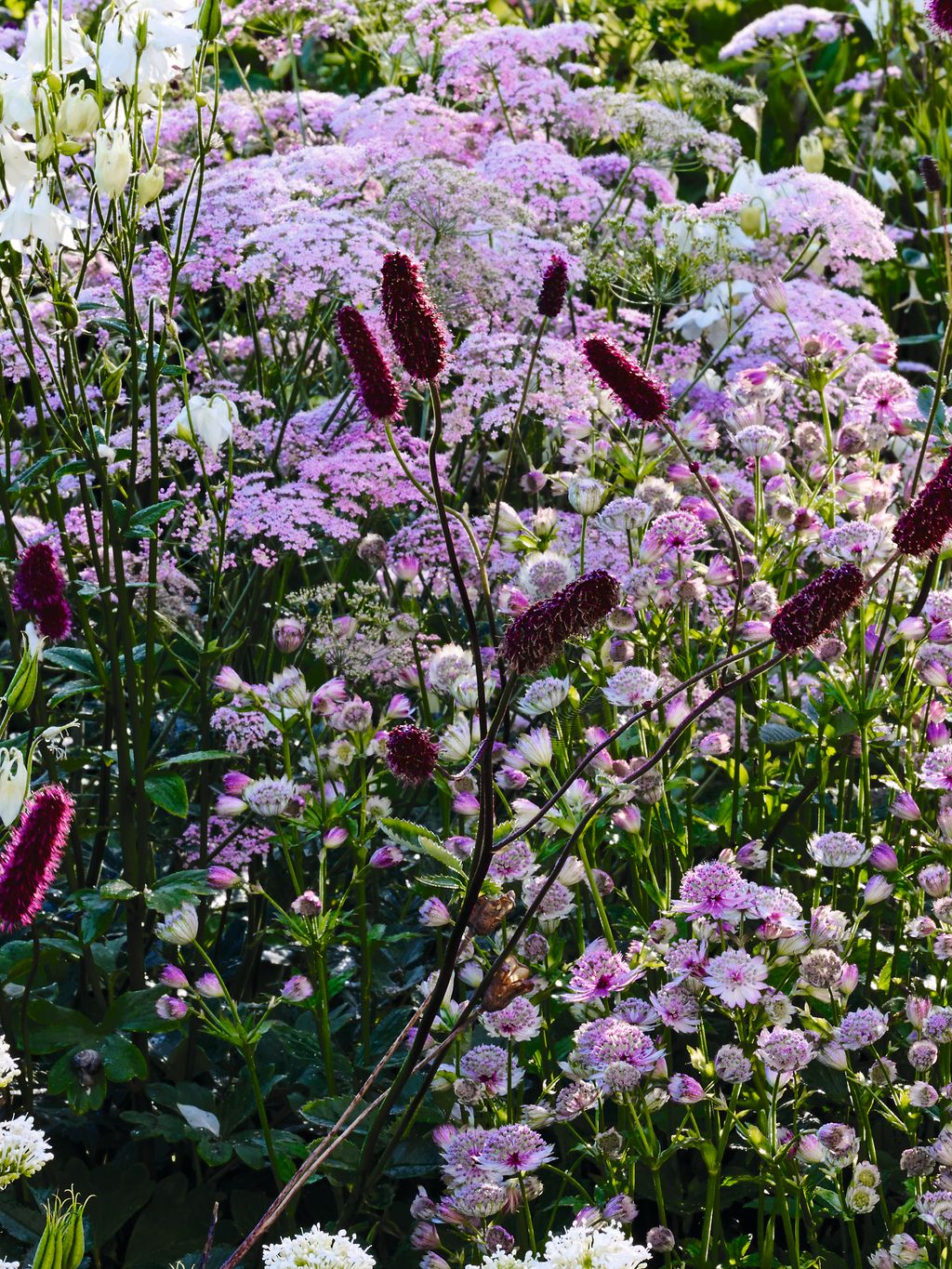 Jason Ingram5/6
Sanguisorba menziesii (Menzies’ burnet)
A fuzz of bright ruby-coloured burrs on tall, wiry stems.
- perennial
- height 80cm (32in)
- 1 per m2 (10ft2)
- flowers from early summer to early autumn
.jpg) 6/6
6/6Grow 5: Simple seasonal recipes for small outdoor spaces with just five plants by Lucy Bellamy with photography by Jason Ingram, is out now, published by Mitchell Beazley

.jpg)


