
From the archive: Nicky Haslam conjures up 18th-century grandeur in the old quarter of New Orleans (2000)

In 1682, a French fur trader from the North American frontier sailed the length of the Mississippi to its delta. There he erected a commemorative column and claimed, 'in the name of the most high, mighty, invincible and victorious Prince Louis the Great, the vast wilderness he had traversed. Thus Louis XIV, far away in his glittering palaces, gave his name to the Louisiana Territory, three times the size of his own country. This untamed and far flung region, and its eventual major city, New Orleans, would be successively French, Spanish and briefly French again, until in 1803 it was sold to a fledgling United States of America.
That proud column no doubt sank into the swamps on which New Orleans was so ingeniously built, but the Bourbon dynasty is indelibly stamped on the city. The rues Royale, Dauphine, St Antoine, St Louis, Chartres and Bourbon define the French Quarter, or vieux carré, which even has its own Elysian Fields, a boulevard as wide as its Parisian namesake, whizzing grandly off towards Texas.
Distinct from the mint-julep, southern-belle gentility of cities such as Natchez and Monroe, and the Anglophile aristocracy of Charleston and Atlanta, New Orleans was a potpourri of European nationalities – French, Spanish, German, Italian and Slav, as well as the enslaved Africans and the watchful Native Americans. For all its fabled atmosphere of laissez-faire, it was a city built on commerce, chiefly cotton - diamond hard beneath the magnolia skin, knife-sharp under the languor. New Orleans looked to Europe, rather than the States, for its culture - the surest proof of which is the vast, Parisian- style hôtel-particulier of Madame de Pontalba, eighteenth-century New Orleans's richest heiress.
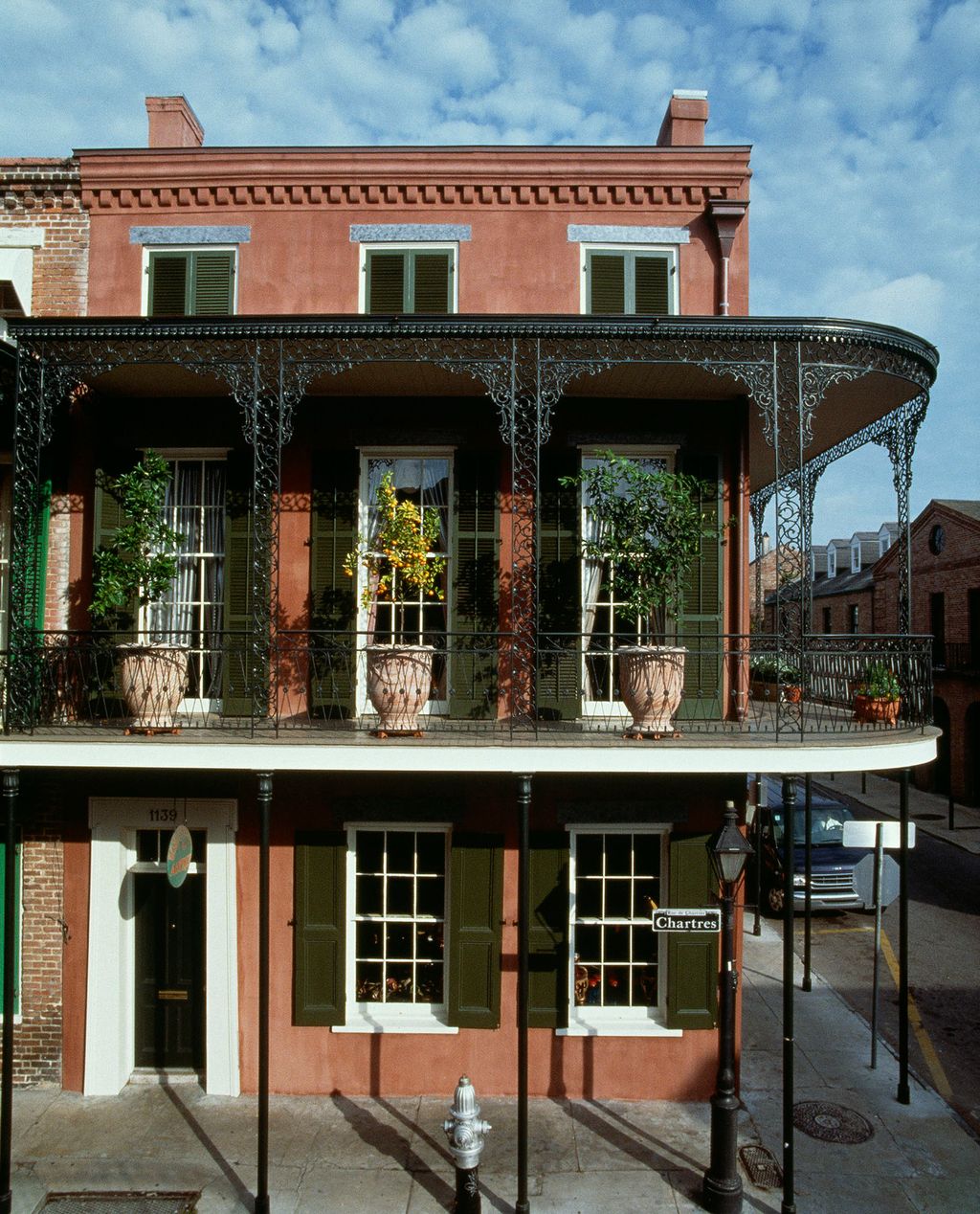
Thus the grid of the French Quarter teemed with tapissiers, ébénistes, herreros, Porzellanhersteller, kozhevnik, sklárskatvorba, painters of trompe l'oeil and architects. Many of these former ateliers have since declined; in the heart of the Quarter, how ever, they have become residential, with wide verandas shading luscious courtyards. One such courtyard, on Chartres Street, lies behind the balconied façade of The Soniat House, the French Quarter's most distinguished and tranquil hotel.
Rodney and Frances Smith, whose 1860s mansion in the Garden District I helped decorate some fifteen years ago, moved into the house next door to the hotel and once more asked me to redesign, specifying only that the main space on the ground floor was to be the showroom for the stylish antique furniture and objects Rodney and Frances buy on their trips to Europe; otherwise the house could be rearranged to have a grander staircase hall and fewer, better-proportioned rooms.
With the help of brilliant young architect Frank Masson, the enlarged spaces were established: once higher ceilings were conjured out of thin air and huge bathrooms and dressing rooms coaxed from seemingly minute nooks, we started planning the interior design. The eighteenth century was our watchword - not too strict or raffiné, but newer, given élan, glamour, drama.
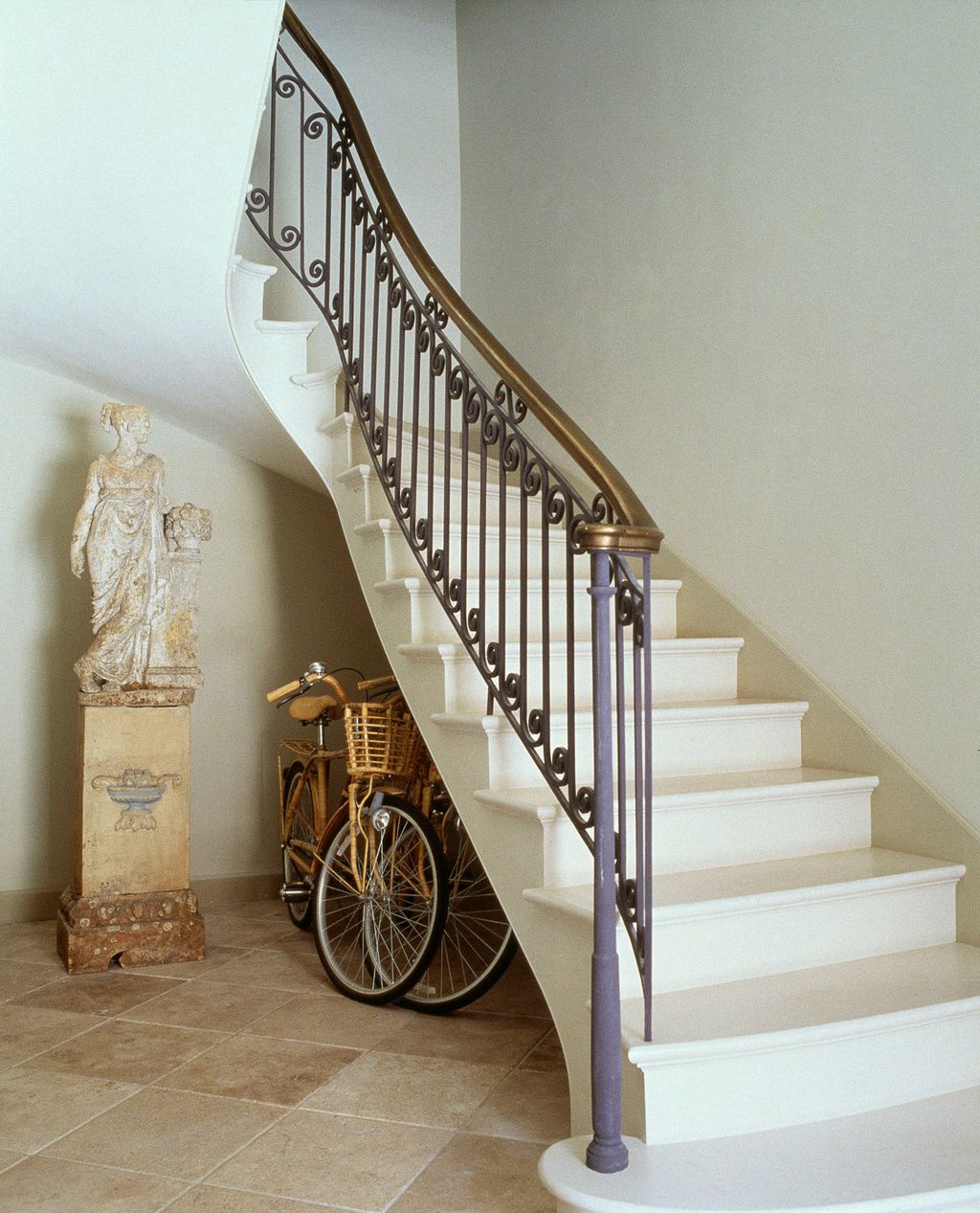
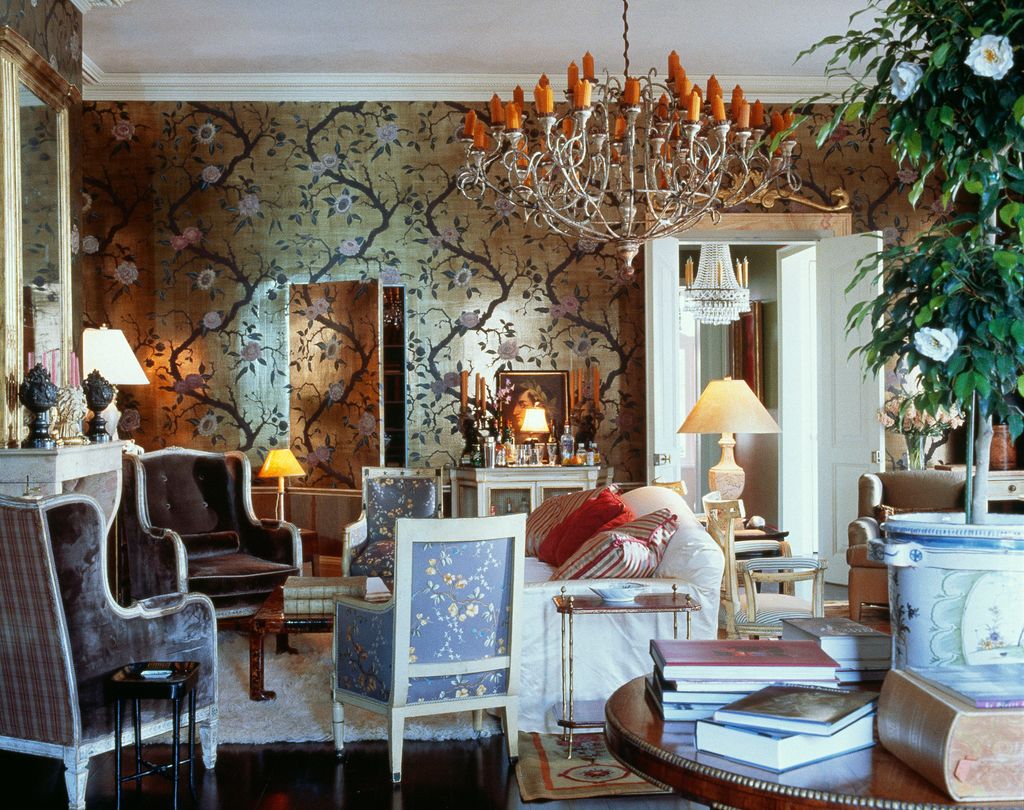
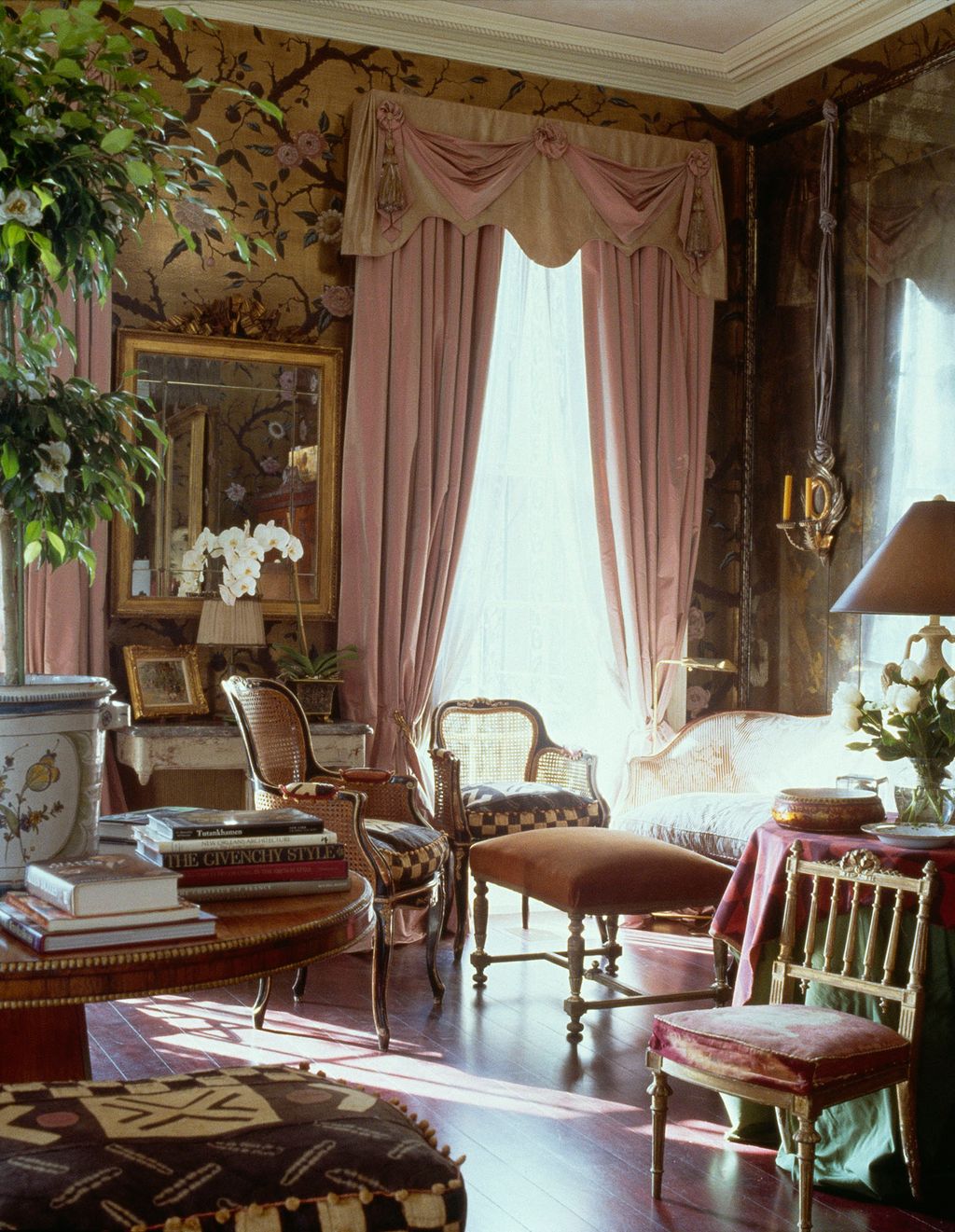
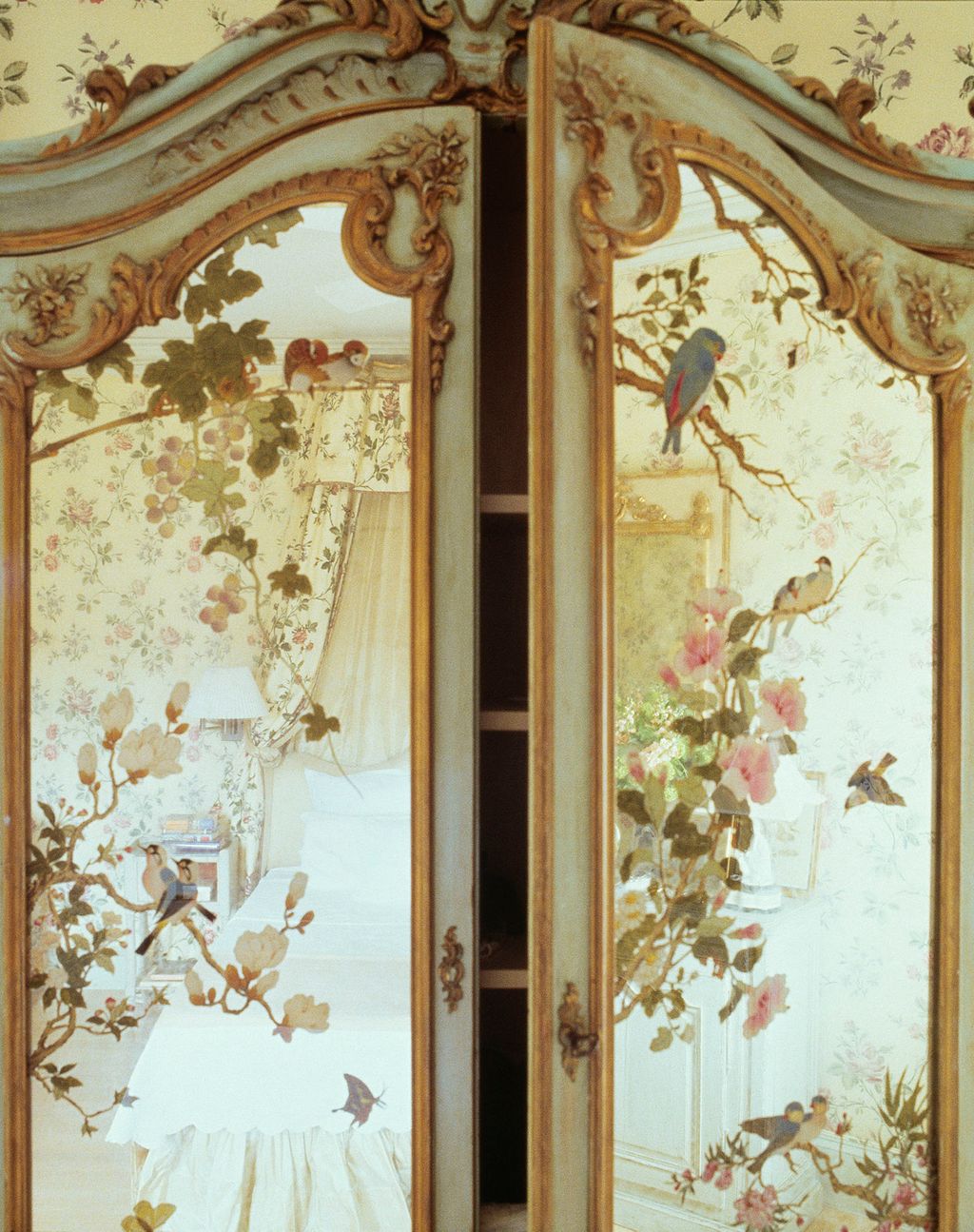
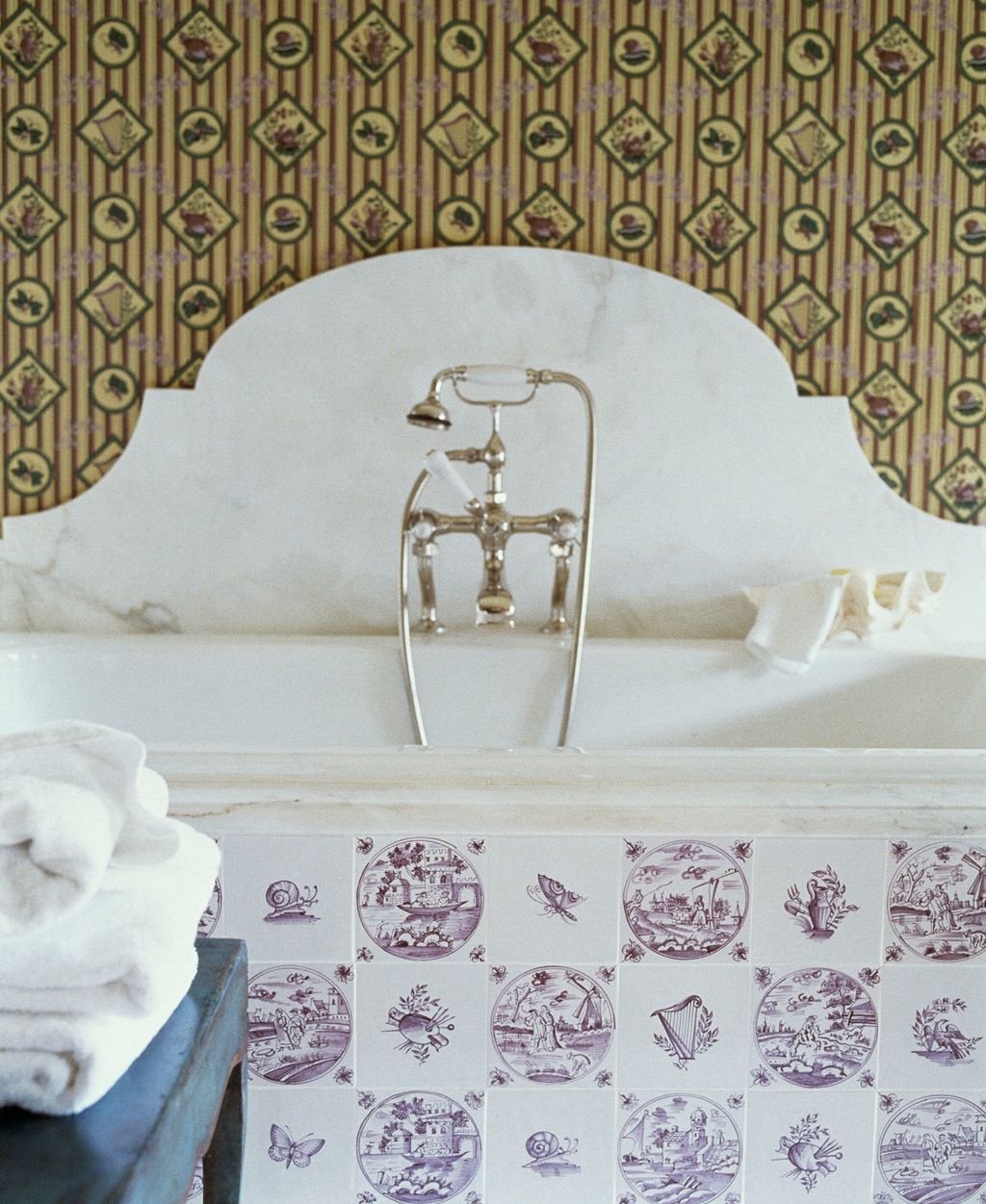
The nationalities of those bygone craftsmen seemed a perfect source to draw on. From the Schloss Phauneninsel, outside Berlin, came the idea of gilded and painted chinoiserie style wallpaper for the salon, where the columned recesses were filled with three-and-a-half-metre high verre églomisé panels by the talented, Czech-born Nominka d'Albanella. From Italian palazzi came the stone-white staircase hall with scarlet curtains, while French ironwork inspired the blue-black balustrade. Russia was represented in the small, book-lined dining room, its ceiling painted with clouds and its narrow columns based on those taken from the tsar's bedroom at the Catherine Palace; tiles for the bathroom came from the St Petersburg factory used by Peter the Great. From Sweden came the idea of cool, reversed, hand-printed cotton for the walls of the main bedroom. The decoration of Capo di Monte's Wood-grain service - scaled-up-was the inspiration for the walls of the lift, and tough English trelliswork lines the entrance-hall walls.
Two New Orleans builders (called, I kid you not, Swampy and Smokey) helped with the structural work; local craftsmen undertook the plastering and installed the purplewood flooring. Paul and Janet Czainski flew out to do the specialist painting in the drawing and dining rooms, and Nominka oversaw the installation of her fragile verre églomisé. Jansen van der Veer and Helen Anderson, both from New Orleans, stippled the spinach-green walls in the corridors, subtly picked out in gilt the details of the dining-room columns and wood-grained the lift prior to attaching Delafosse engravings. These prints are held in each corner by Nominka's seals (she even made her own sealing wax, saying 'bought stuff is too burgundy). Alain Simard cut curtains with exactly the crisp ‘carved' folds I wanted and the local upholsterers didn't baulk at covering period chairs with scraps of African fabric found at a local market. While the Smiths had many ravishing pieces, both inherited and collected, much of the new furniture was supplied by the Nicholas Haslam showroom in London.
Perhaps the greatest bonus was having Rodney's Soniat House Antiques Gallery to draw on. No sooner would a new shipment come in than I'd say, We want that, and that, and that.' As I depleted his stock, Rodney would smile sweetly and say, "Well, I suppose there's always more in France to buy.' There was a momentary tug of war, though, before the huge, sixty-candled Italian chandelier, destined for a Californian lobby, was hung in the sitting room.
I was last at the house, with the Smiths, two nights before the opening party, for their daughter's wedding. We lit all the lamps and all the sixty candles, fiddled with flowers and opened the casement windows on to the balconies. We drank Grey Goose vodka martinis, and ate shrimp gumbo and soft-shelled crabs. Frances said, "Well, there ain't nothing like this in the Quarter.' If there isn't, I'm flattered and proud. I may just go back and erect a commemorative column.
 Andrew Wood1/12
A classical figure stands beneath the elegant ironwork staircase.
 Andrew Wood2/12
English trelliswork in the entrance hall.
 Andrew Wood3/12
The stucco-fronted house sports elaborate wrought-iron balconies.
 Andrew Wood4/12
Eighteenth-century faux-tortoiseshell Italian chairs sit in the Russian-inspired library-cum-dining room.


 Andrew Wood5/12
The chinoiserie inspired wallpaper in the salon was painted by Paul and Janet Czainski; it provides a ravishing backdrop for an extravagant arrangement of furniture and objects.
 Andrew Wood6/12
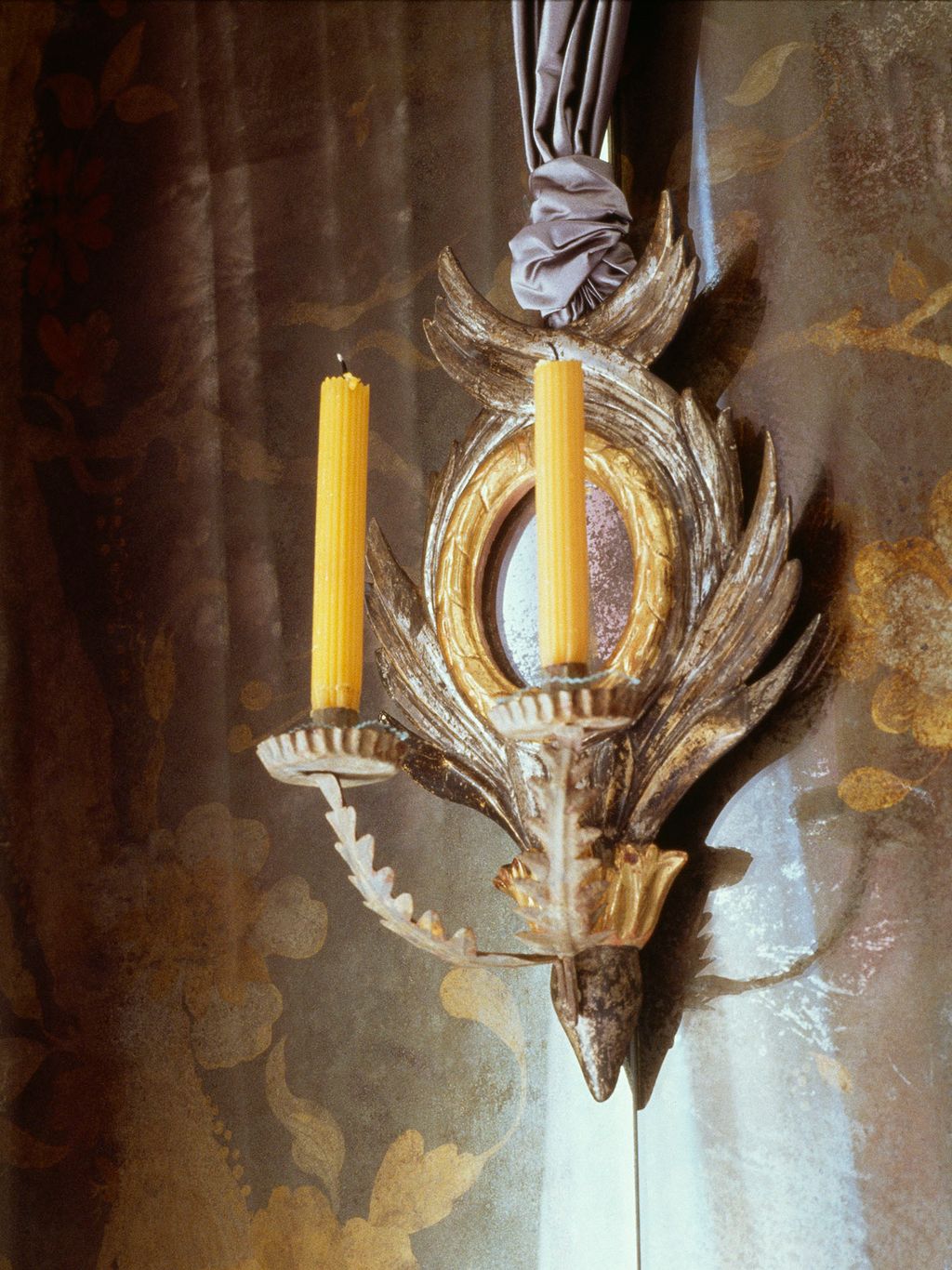
An eighteenth-century, neoclassical-style silver-leaf and parcel-gilt sconce in the salon was spotted by Nicholas Haslam in Rodney Smith's Soniat House Antiques Gallery.
 Andrew Wood7/12
In the salon, a seating area is arranged around a gilt-wood footstool on a Savonnerie carpet. Ashes-of-roses silk curtains are pretty and elegant.
 Andrew Wood8/12
The mirror is one of a pair from the collection of Jacques Fath. Behind the sofa is one of the verre églomisé panels.


 Andrew Wood9/12
In the main bedroom, bed hangings and wall hangings are made from the same fabric, a hand-printed cotton by Georges LaManach, used
reversed on the walls.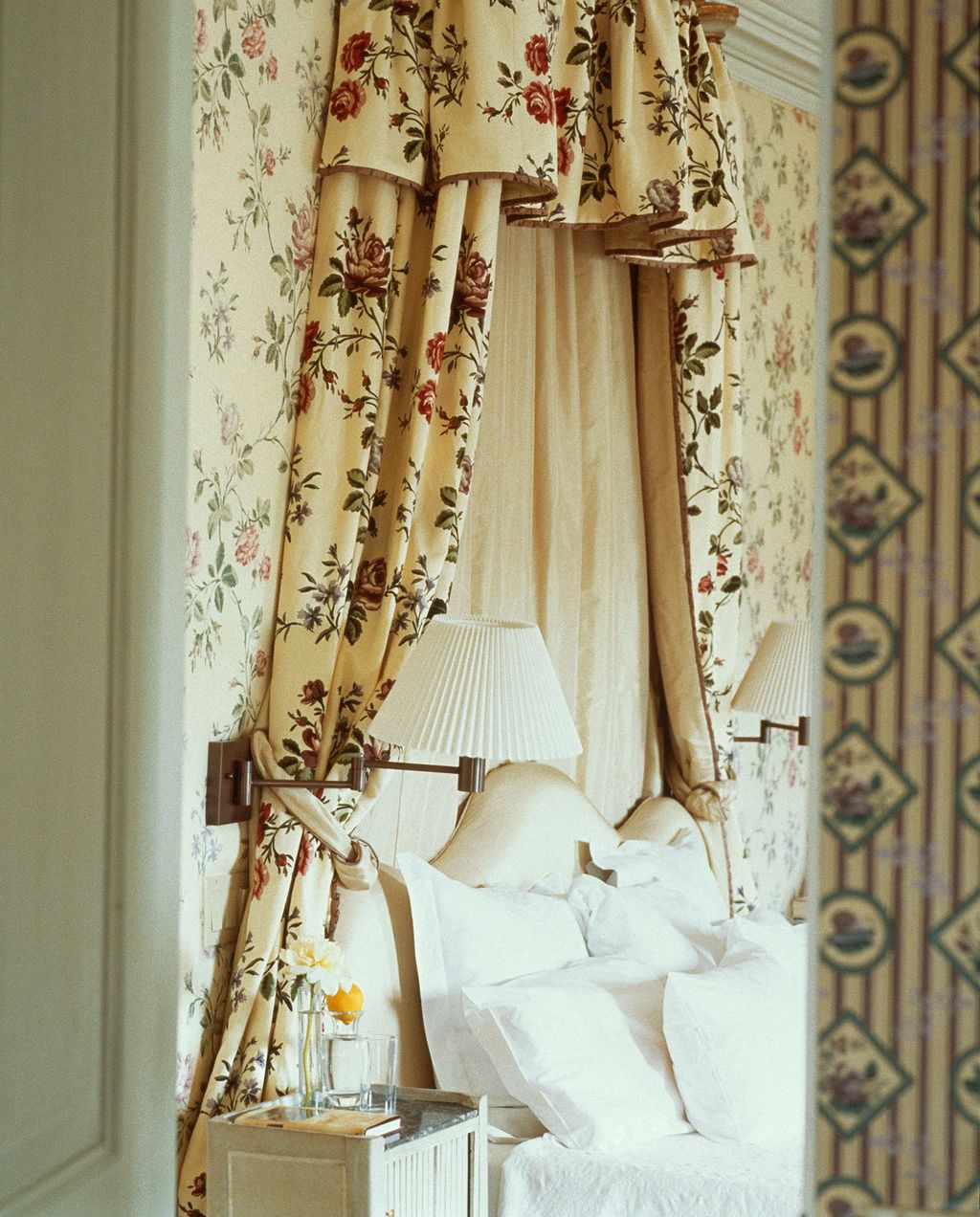 Andrew Wood10/12
 Andrew Wood11/12
Walls of the en-suite bathroom are covered with hand-printed wallpaper by Mauny. The manganese tiles are from St Petersburg.
 Andrew Wood12/12
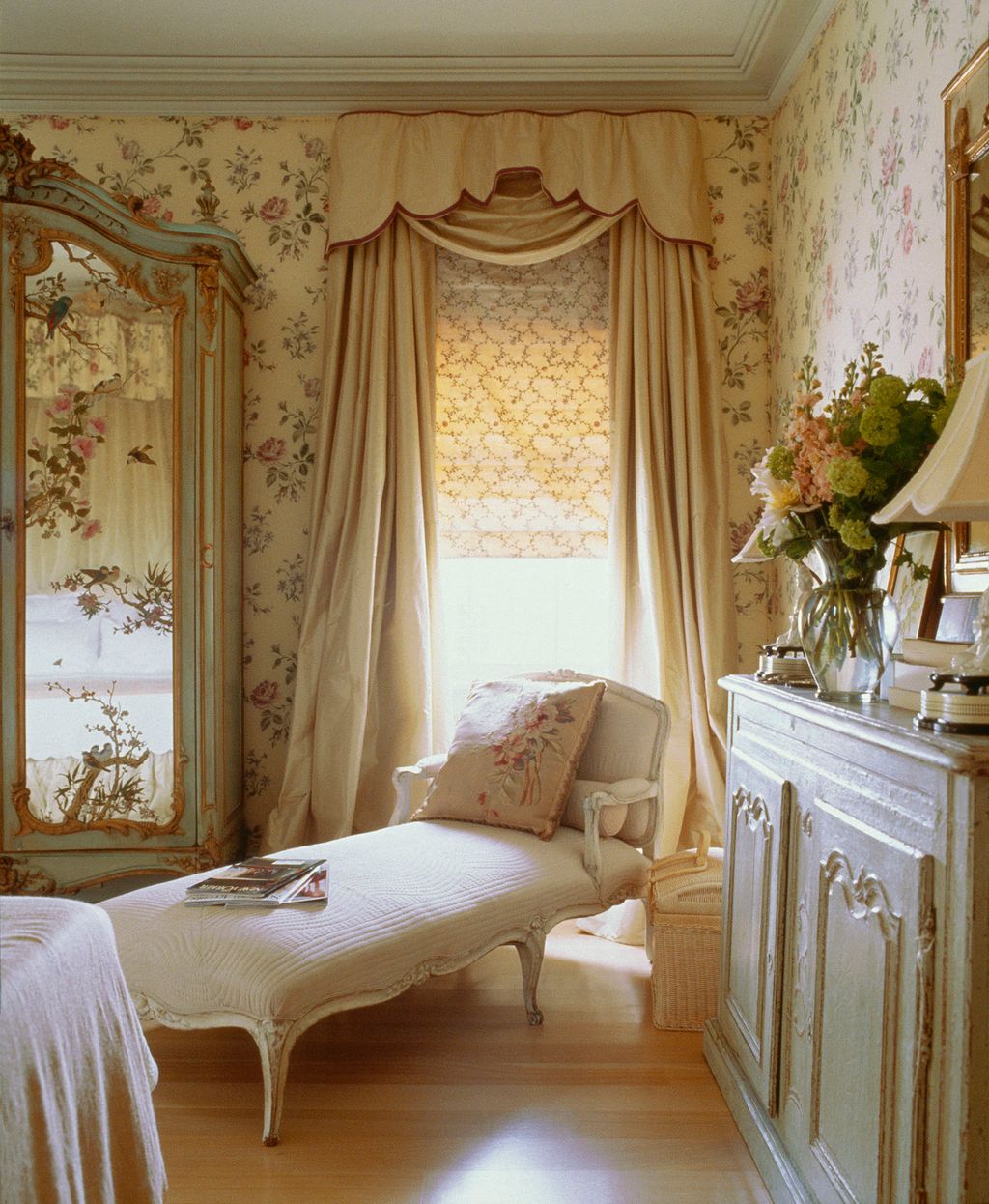
A French day bed and painted wardrobe, with painted mirror panels, are elegant and feminine.


