

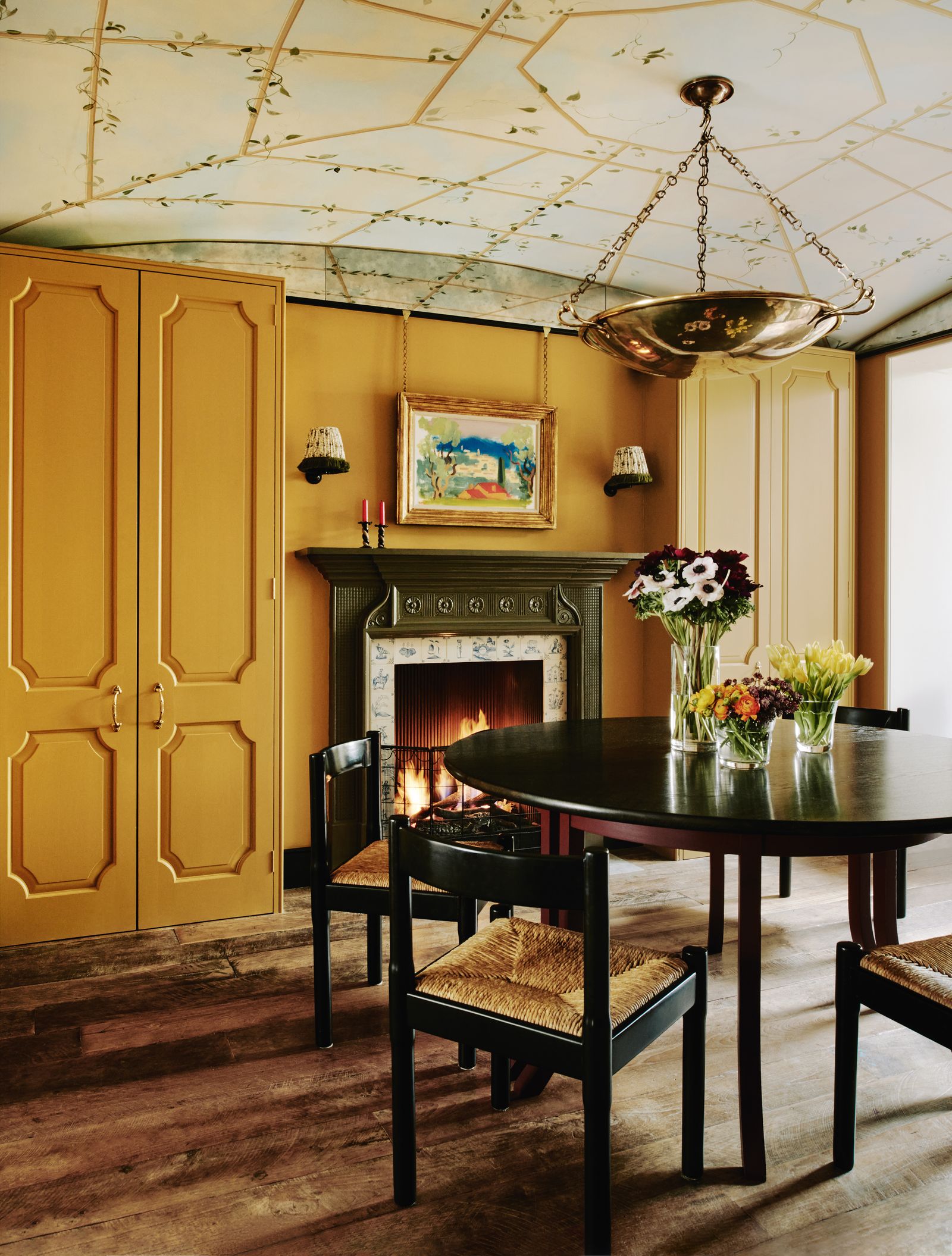
Fantasy, Martin Brudnizki once said, ‘lifts an interior.’ Renowned as a designer of exquisite and transportive interiors – and some of the world’s most glamorous restaurants, hotels, and private clubs – Martin recently wrote an essay for this magazine in favour of it, explaining ‘[fantasy] is about taking you into a happy realm’. He mentioned the inspiration he finds in Russian artist Leon Bakst’s extraordinary set and costume designs for 1910’s Scheherazade, one of the earliest of Serge Diaghilev’s Ballets Russes productions, and the work of other notable designers of that genre. His disclosure suggests it’s worth our looking again at the entwined history of theatrical spectacle and interiors – and paying attention while watching The Nutcracker, The Snowman, or anything else we’re seeing on stage this season. For fantasy can be scaled up and down, is equally applicable in the country as in town - and joy is something we all aspire to.

Let’s begin with a brief rewind. The Ballets Russes had their first London season in 1911, performing The Firebird, Petrushka, and more. Audiences, who included royals, notable artists and very young Cecil Beaton, were dazzled by the new, more emotional style of choreography, and costumes and sets designed by Russian artists Nicholas Roerich, Alexandre Benois, and Leon Bakst. Bright bold hues in combinations no one had seen before incorporated Orientalism and Russian folk art, along with elements from the new continental art movements of cubism and futurism. An interpretation danced straight off the Royal Opera House stage and onto the muralled walls of an exclusive and decadent new nightclub, The Cave of the Golden Calf. In 1913 two of the artists responsible, Spencer Gore and Wyndham Lewis, joined Bloomsbury Group artists Roger Fry, Vanessa Bell and Duncan Grant at their new venture, the Omega Workshops, which provided a radical new look for interiors. In vibrant contrast to the widely accepted gloomily ornate Victoriana, or pale Edwardian pastels, at the Omega there were bright, strong colours, screens painted with balletically-inspired bodies, and abstract-patterned textiles. Clients came from the wider Bloomsbury circle and the aristocracy, and included Lady Ottoline Morrell, Edith Sitwell, Gertrude Stein (who took pieces to Paris) - and Sibyl Colefax (who had not yet opened her own famous decorating business). The style disseminated, also because the Workshops put together a model room at an early iteration of the Ideal Home Show, and, during the war, Roger Fry used Omega creations, including a screen painted by Vanessa Bell, for set designs he created for a play by Israel Zangwill.

The post-war years proved even more exciting within the Ballets Russes, despite the shortages of materials and labour, which caused the Omega Workshops to close (though the ethos and style continued at Charleston Farmhouse.) For Diaghilev added to his already impressive roster of artists and designers, commissioning Picasso, André Derain, Coco Chanel (who had an affair with his composer, Igor Stravinsky), Natalia Goncharova, Mikail Larionov, and Matisse to create fantastical environments for his ballets. Cecil Beaton had a meeting with him, though was disappointed. However, in 1925 Diaghilev employed another Bright Young Thing, Oliver Messel, launching Messel’s career.

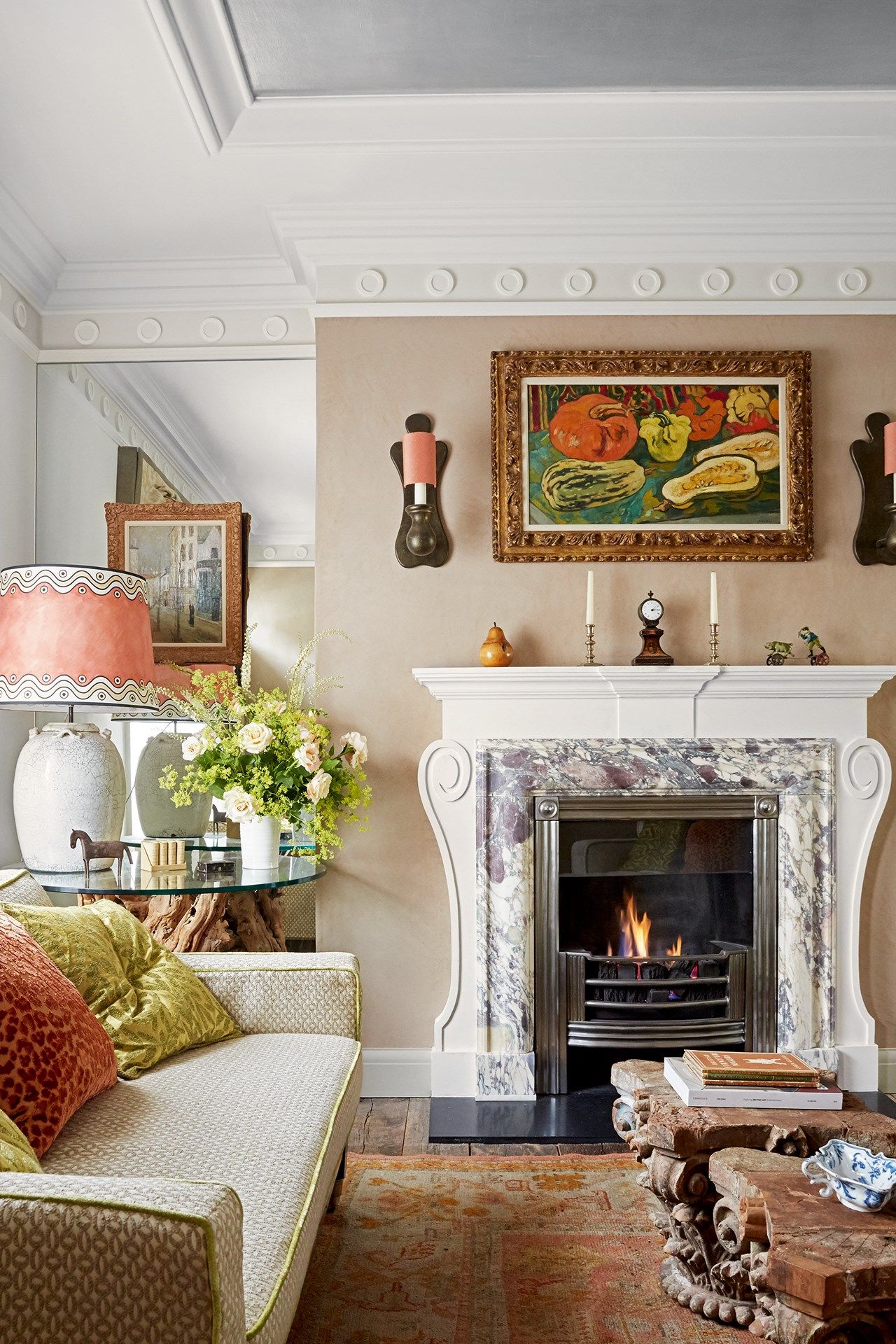
Stylish interiors – from Syrie Maugham’s to Cecil Beaton’s – gained a ‘theatricality’: Syrie commissioned Messel to create decorative plasterwork for her rooms and projects that served solely a dramatic purpose, and in her own home famously went all-white everything, including flowers. Cecil, with his love of studied artifice, embraced rococo and ‘empty columns’. Fast forward to today, and Benedict Foley speaks in favour of ‘creating a sense of place that is intimated rather than thick-set literal, setting the scene, suspending disbelief. Interiors at their best should be a sort of practical magic.’ And Tiffany Duggan of Studio Duggan, who began her career as a scenic artist painting sets and backdrops for theatre, describes her desire to create a ‘mis-en-scene, an immersive experience. We go into a lot of detail in our design projects; we choose scents, flowers, glassware and crockery – and even playlists - all carefully selected to feed the narrative.’
.jpg)
Oliver Messel’s set designs continued, with some of his most remarkable efforts dating to the 1950s and 60s and Glyndebourne’s opera house in East Sussex, when he dispelled the memories of rationing and the depressing reality of the country house crisis with a lavishly romantic and ornate aesthetic that took from the glories of the past. Alongside, he began taking on interior design projects: his suite at The Dorchester, designed in 1953, is due to re-open imminently – but it’s also worth looking at other projects, for ideas that we can ‘quote’ (or, as Nicky Haslam puts it, ‘steal’).
There was a house in Montecito, California, that featured a bedroom Messel transformed into a Roman tent within a military encampment by way of trompe l’oeil. And that leads us to Renzo Mongiardino, another master of illusion, who could use paint effects to turn any empty room into a fairy tale palazzo – while his sets for Franco Zeffirelli’s production of Tosca spent four decades travelling the world from the Royal Opera House to La Scala to New York’s Met. Mongiardino also helped design the great ballet dancer Rudolf Nureyev’s homes in New York and Paris, which former Royal Ballet ballerina Lynn Seymour described Nureyev dressing ‘like a set’, with exquisite art and antiques he spotted late at night in the windows of galleries and, once acquired, would move around at whim. ‘Rooms should never look stuck,’ says Nicky – and for those who aspire to some of the Nureyev fantasy, know that Soane Britain has reproduced the glamorous drinks trolley, on wheels, that he had in his Paris drawing room.
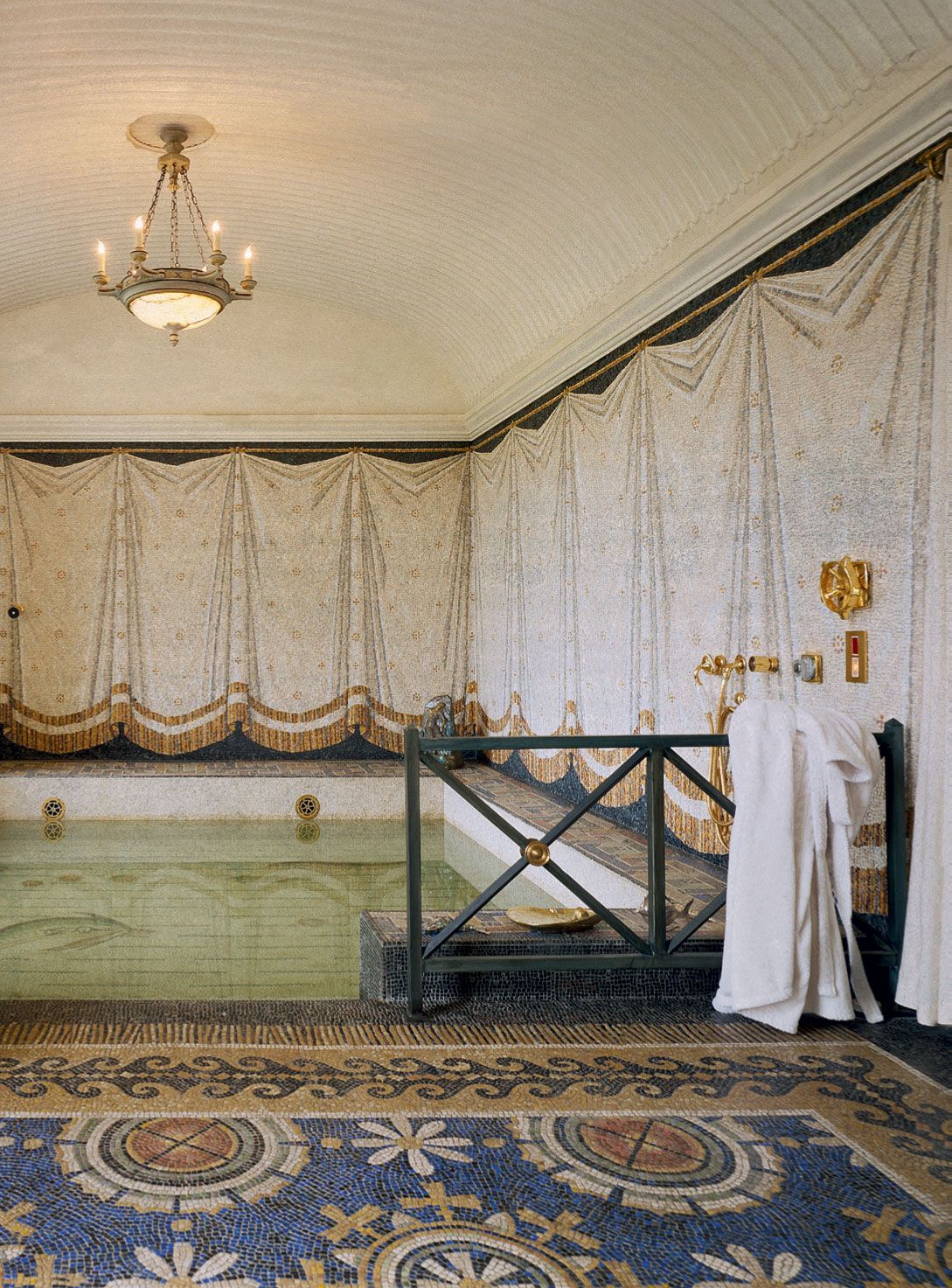
It brings us on to the less static elements of a set. Messel used drapery to evoke mood and lavishness and suggest movement. Its poeticism was also employed by John Fowler, who, like Messel, would use curtains to frame apertures and vignettes. And Lucy Hammond Giles, Associate Director at Sibyl Colefax & John Fowler reminds us of the continued existence of ‘lines of sight,’ both in the theatre and our homes. ‘It is important to consider what you see beyond the immediate and think about where the eye travels. Interior spaces have doors and windows which can both reveal and conceal adjacent rooms. Whether unified or contrasting, they have a dialogue, or, if you will, a play of their own.’ With that dialogue, and the concept of reveal or conceal, comes lighting – another crucial element of our interiors, for it too expresses emotion and defines an atmosphere – and ‘some of the best and most technically accomplished lighting professionals work in the world of theatre, ballet and opera,’ points out Andrew Molyneux, Founder and Director of TM Lighting, who specialises in lighting art in all its guises. ‘I often draw from how they illuminate three-dimensional forms, using shadows to create mood and drama.’

What is particularly pertinent to Andrew’s point about lighting is that he’s looking more at contemporary designs than at the historical; firstly, because early films from the Ballets Russes are black-and-white, secondly, because technical advances have improved the possibilities. And there is much else of worth in what we see now - from unusual colour combinations to decorative details - while great artists are ever involved: David Hockney has designed sets and costumes for numerous ballets and operas (including at Glyndebourne); Jock McFadyen designed the set for Kenneth MacMillan’s The Judas Tree, and Erdem and Daniel Lee are just two of the recent fashion designers who have recently worked with the Royal Ballet.

But, with all this encouragement to go in search of fantasy - via colour, murals, trompe-l’oeil, lavish drapery and dramatic lighting - comes a cautionary codicil. Brandon Schubert, who was less enthusiastic about looking to set design than other interior designers I approached, points out that ‘interior design should require creativity plus technical skill that leads to durability, function, and fitness-for-purpose. Whereas stage design is by its very nature function-less and temporary.’ Indeed, Martin concedes that there can be an issue of quality with interiors that have fantasy at their heart – and, looking backwards once again, it should be acknowledged that lovely as those Omega Workshops Ballet Russes-inspired products were, their robustness was not absolute. There were issues of glazes crackling, and even of legs falling off chairs. Some of us mind less about such things, and welcome an opportunity for creative budgeting: Denis Severs turned his house in Spitalfields into a sort of performance space, conducting tours akin to immersive theatre, and there’s an approximation of an 18th century four-poster bed held together with glue-soaked loo rolls and Polyfilla. But it can lose its allure, as Cecil Beaton discovered: post-World War Two, he threw out his papier maché grotto-rococo assemblages. And Martin recommends investing ‘in the physical touch points, the floors, walls, and seating.’ He cites the charm that comes with ‘combining good bones with more ephemeral accents’, which is undoubtedly the crux of establishing fantasy at home - and finding lasting happiness within it.


