
Inside the late British football star George Best's Manchester house

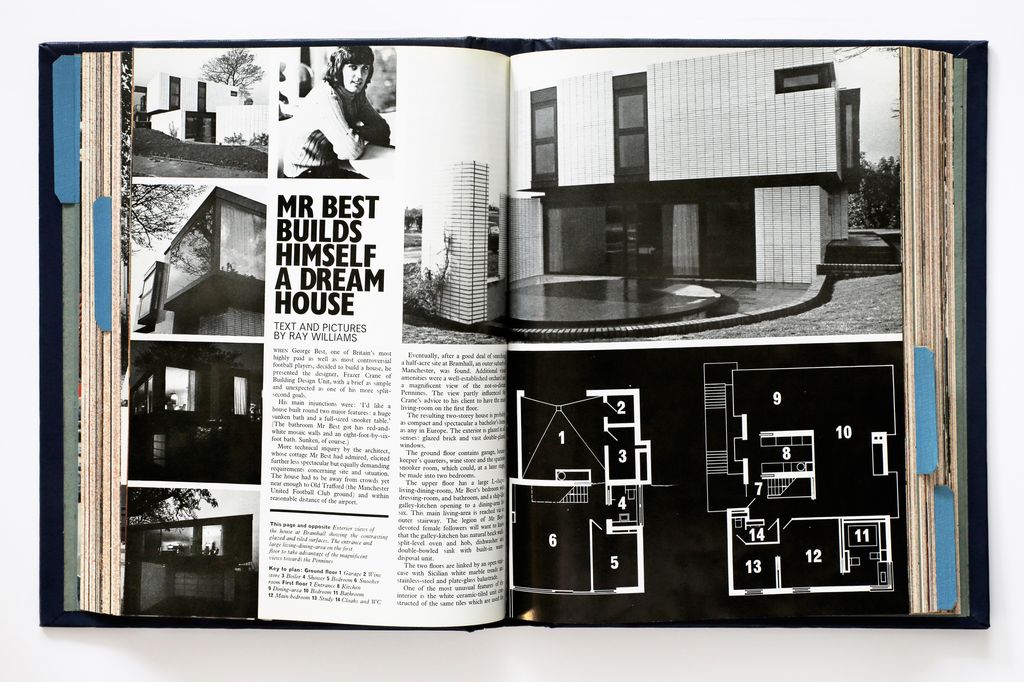
When George Best, one of Britain’s most highly paid as well as most controversial football players, decided to build a house, he presented the designer, Frazer Crane of Building Design Unit, with a brief as simple and unexpected as one of his more split-second goals.
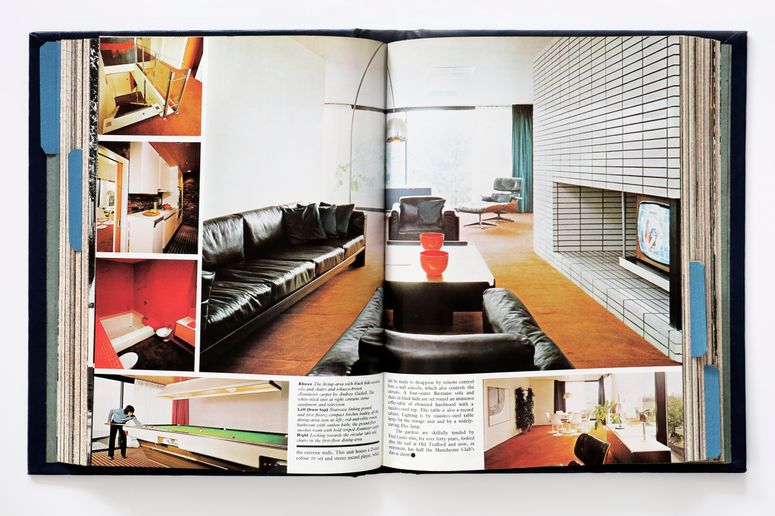
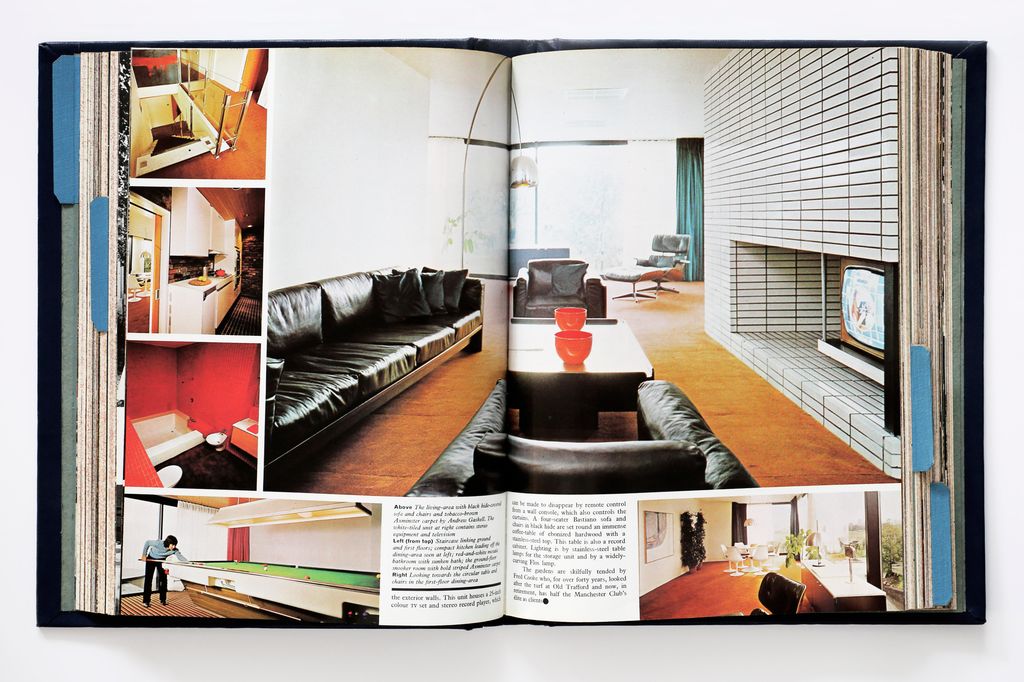
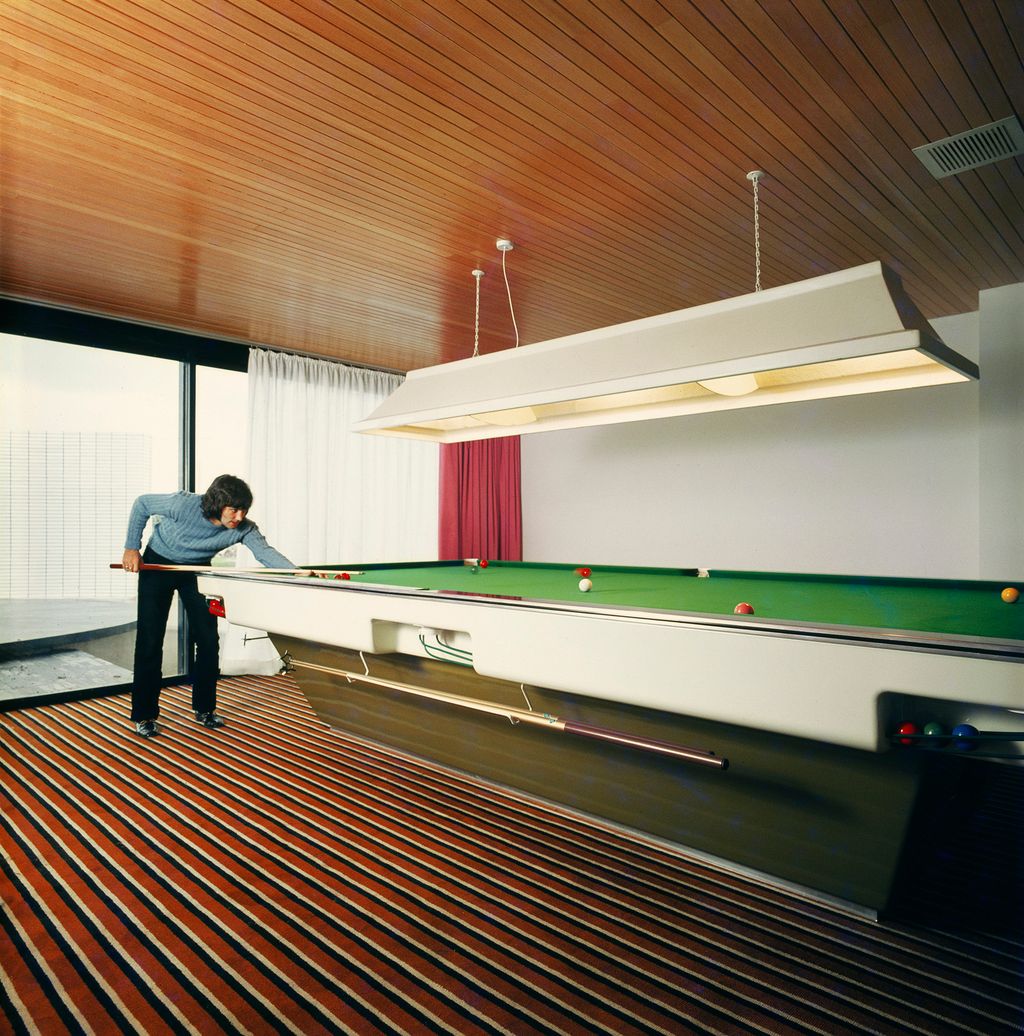
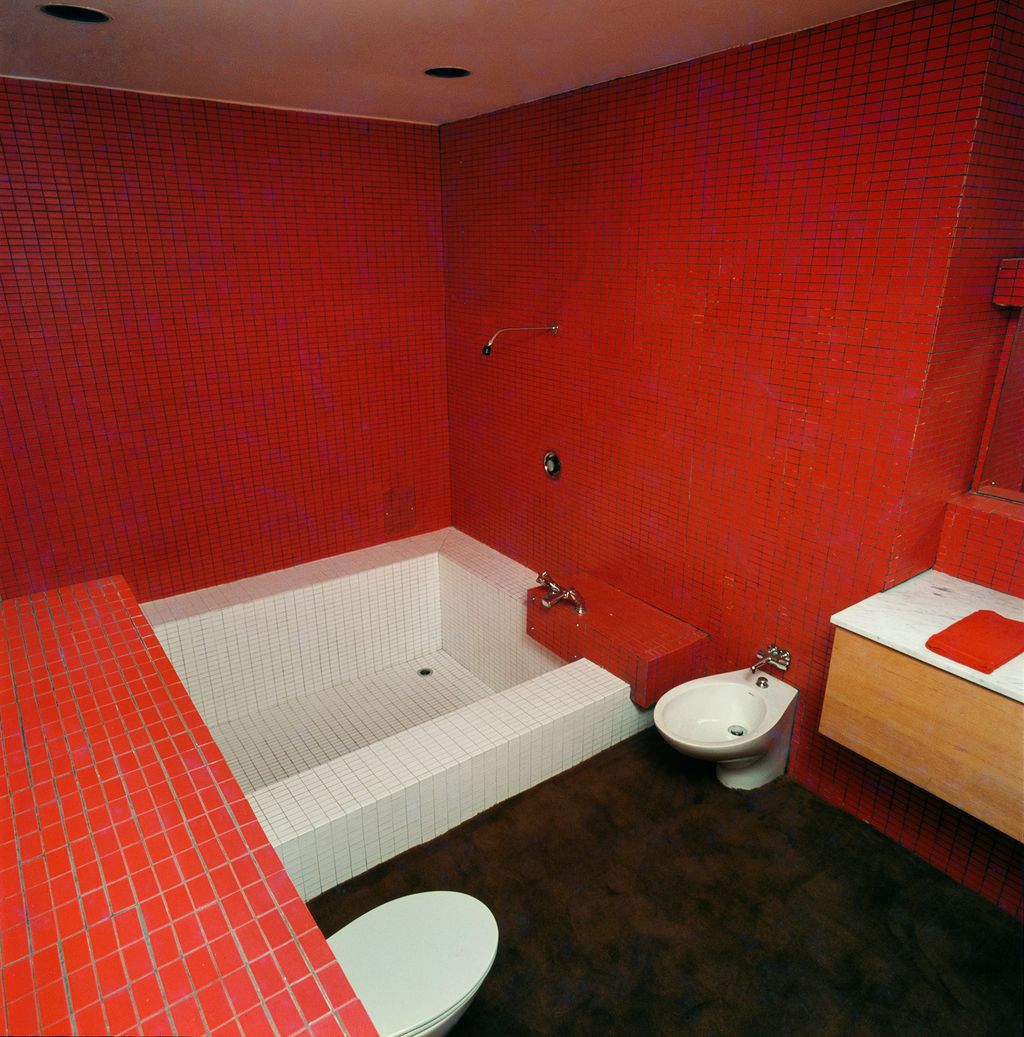
His main injunctions were: I’d like a house build round two major features: a huge sunken bath and a full-sized snooker table’. (The bathroom Mr Best got has red and white mosaic walls and an eight foot by six foot bath. Sunken, of course.)
More technical inquiry by the architect , whose cottage Mr Best had admired, elicited further less spectacular but equally demanding requirements concerning site and situation. The house had to be away from crowds yet near enough to Old Trafford (the Manchester United Football Club ground) and within reasonable distance of the airport.
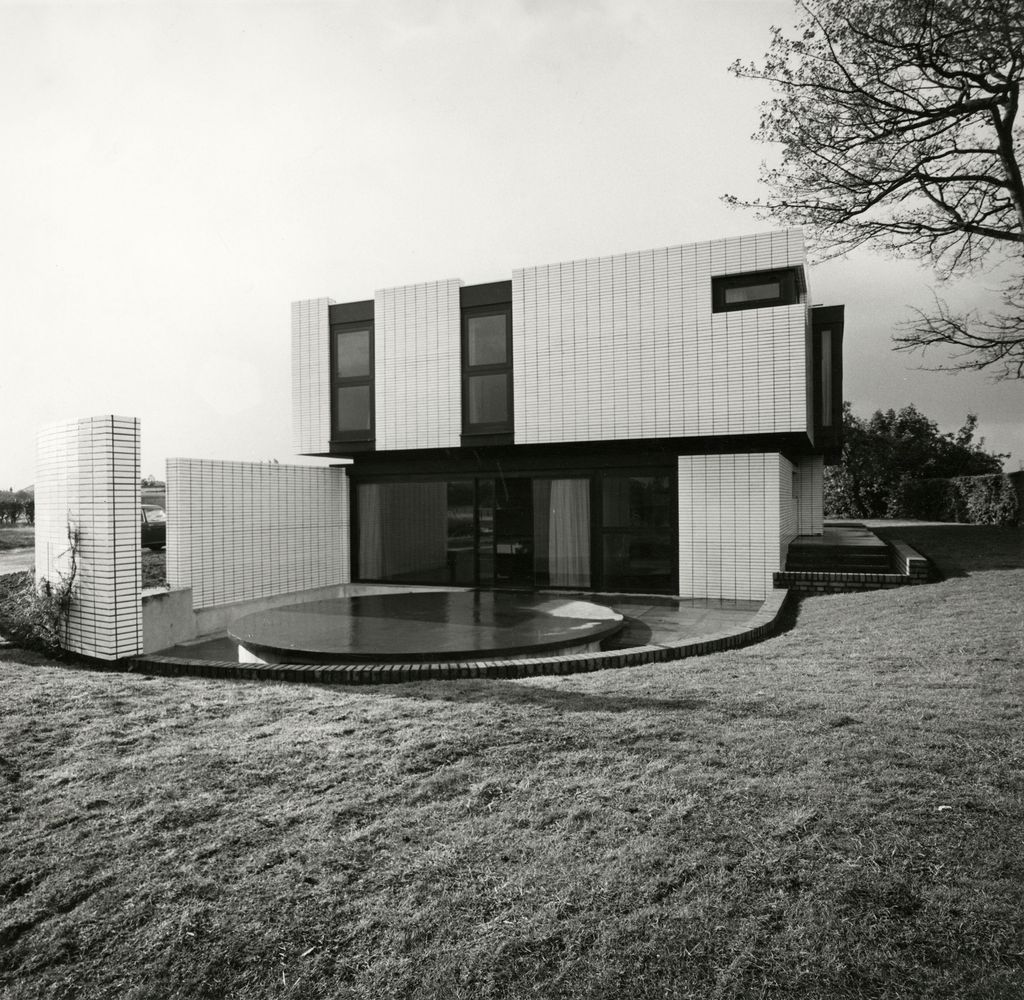
Eventually, after a good deal of searching a half-acre site at Bramhall, an outer suburb of Manchester, was found. Additional visual amenities were a well-established orchard and a magnificent view of the not-so-distant Pennines. The view partly influenced Mr Crane’s advice to his client to have the main living-room on the first floor.
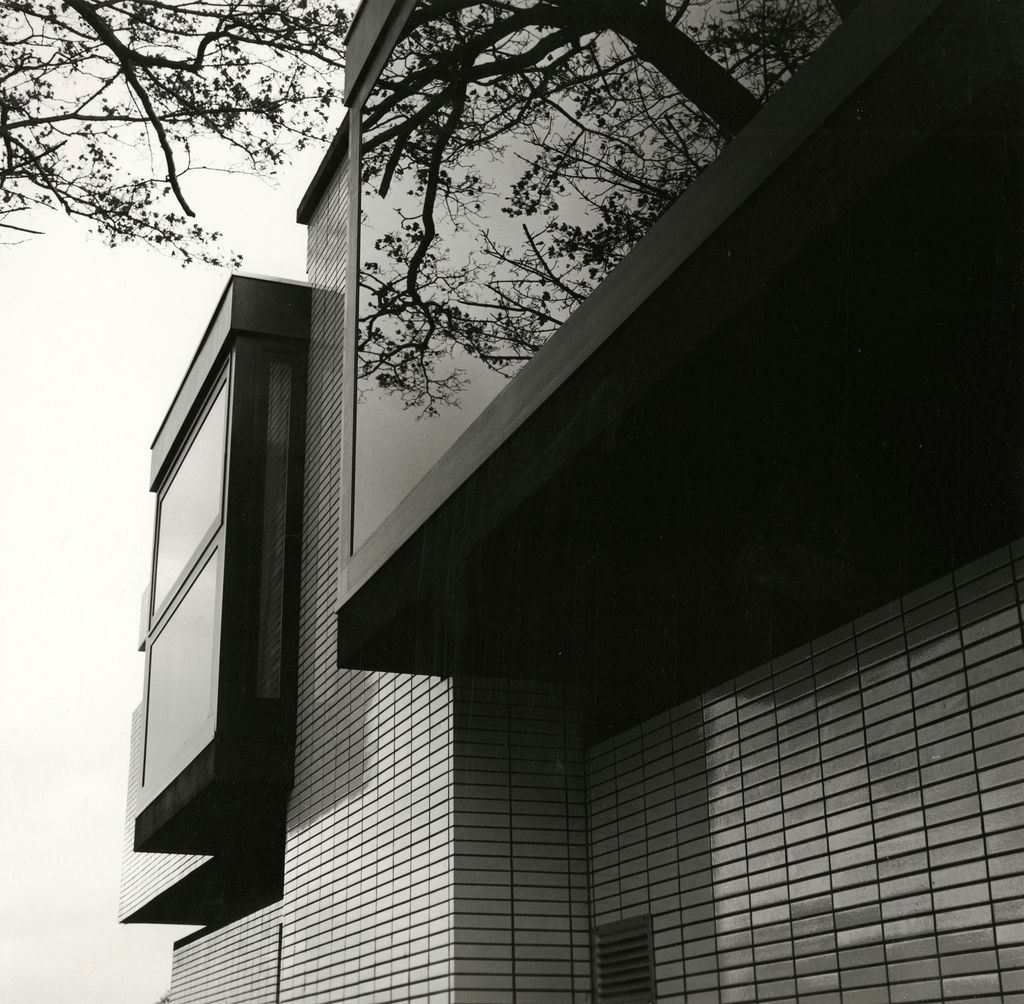
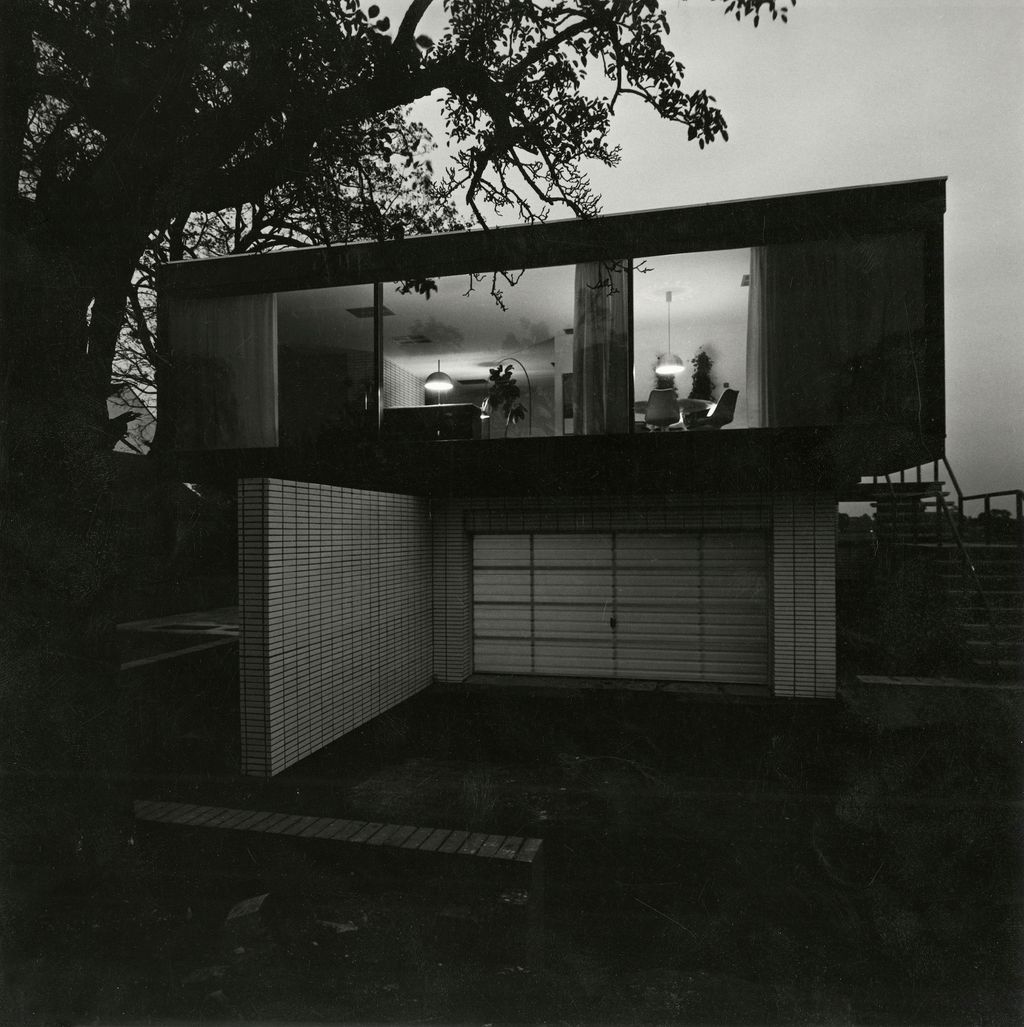
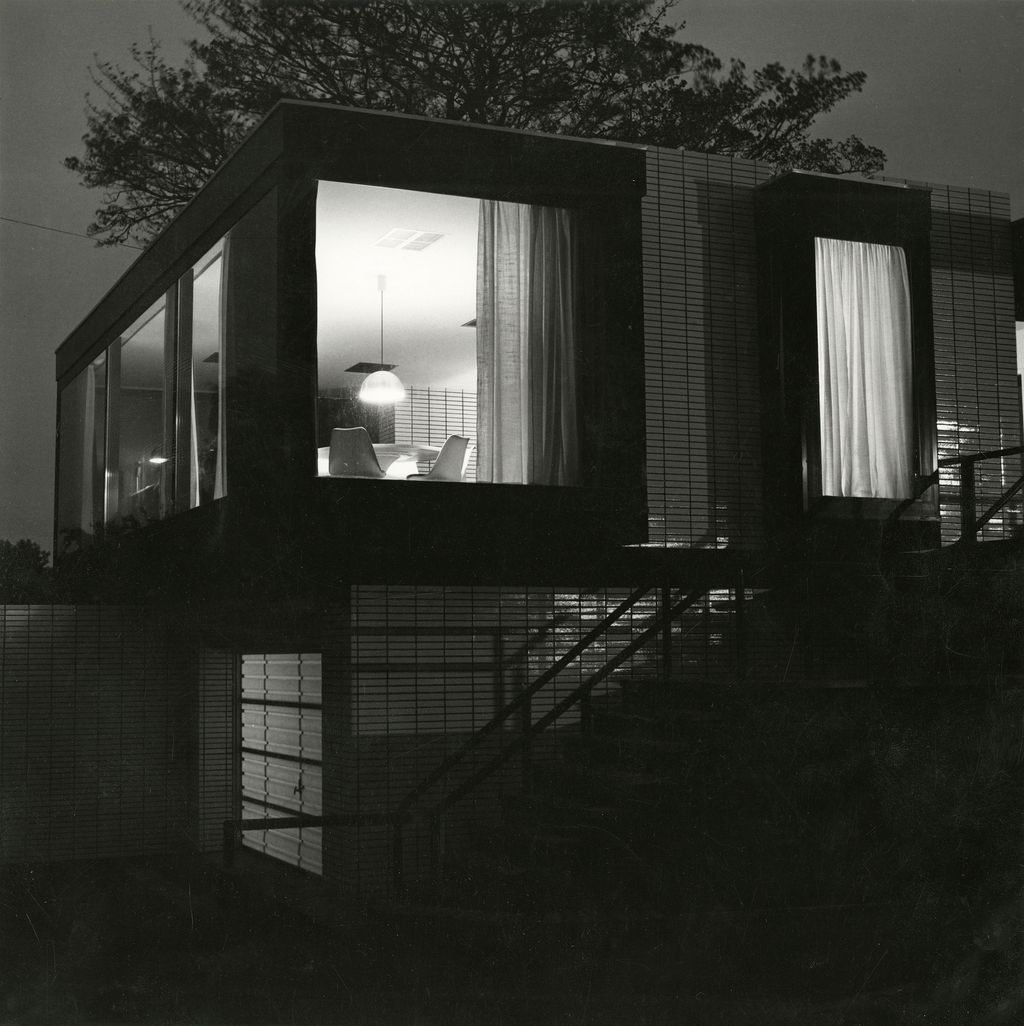
The resulting two-storey house is probably as compact and spectacular a bachelor’s come as any in Europe. The exterior is glazed in all senses: glazed brick and vast double-glazed windows.
The ground floor contains garage, housekeeper’s quarters, wine store and the spacious snooker room, which could, at a later stage, be made into two bedrooms.
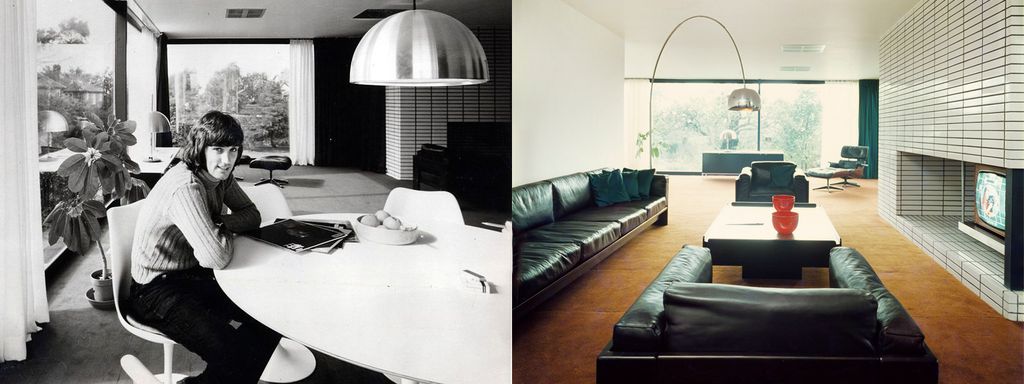
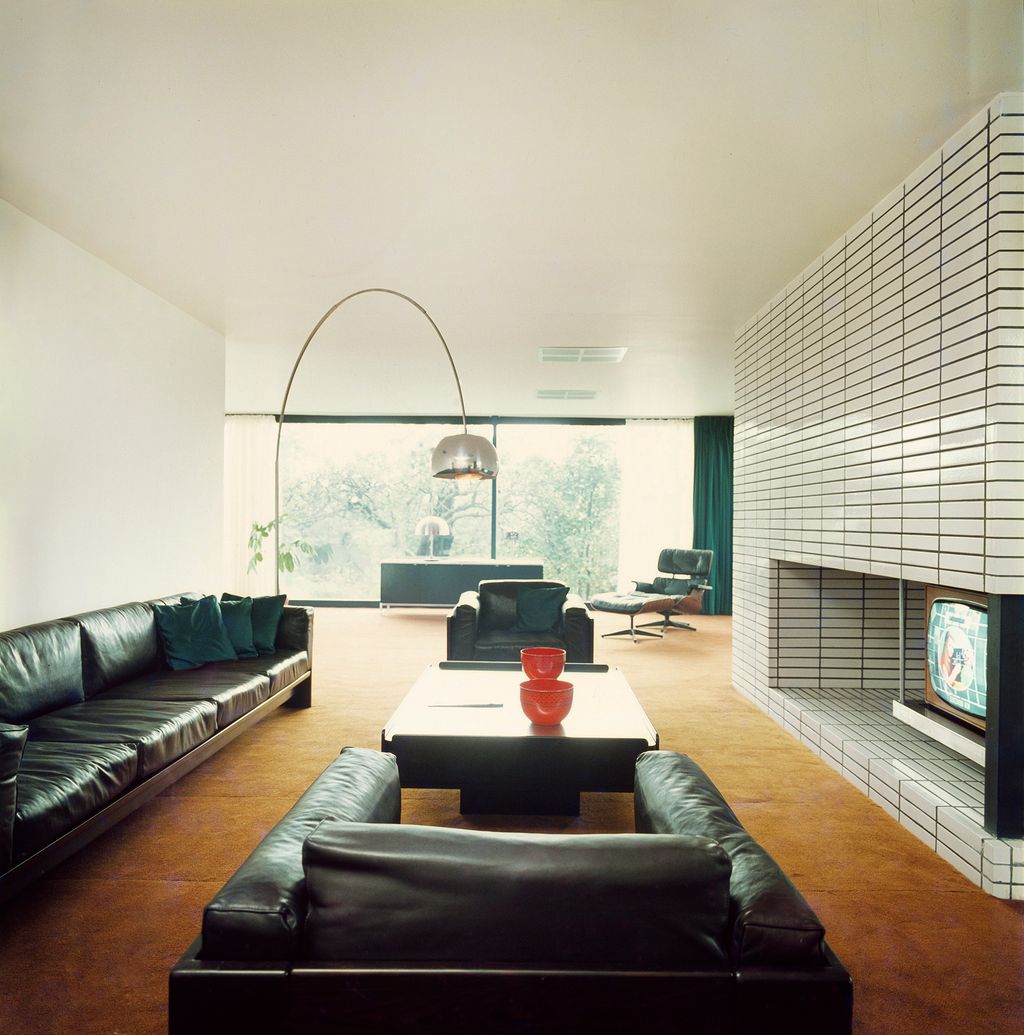
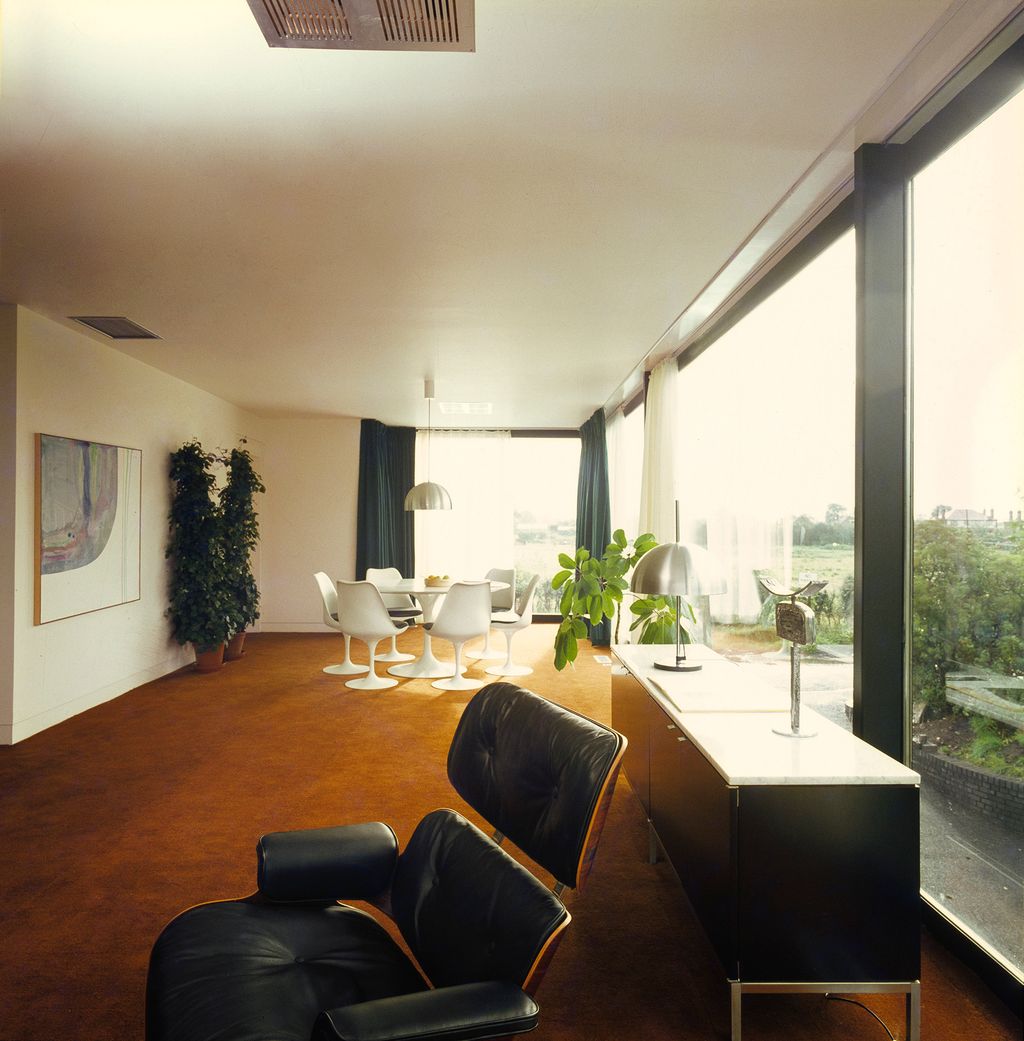
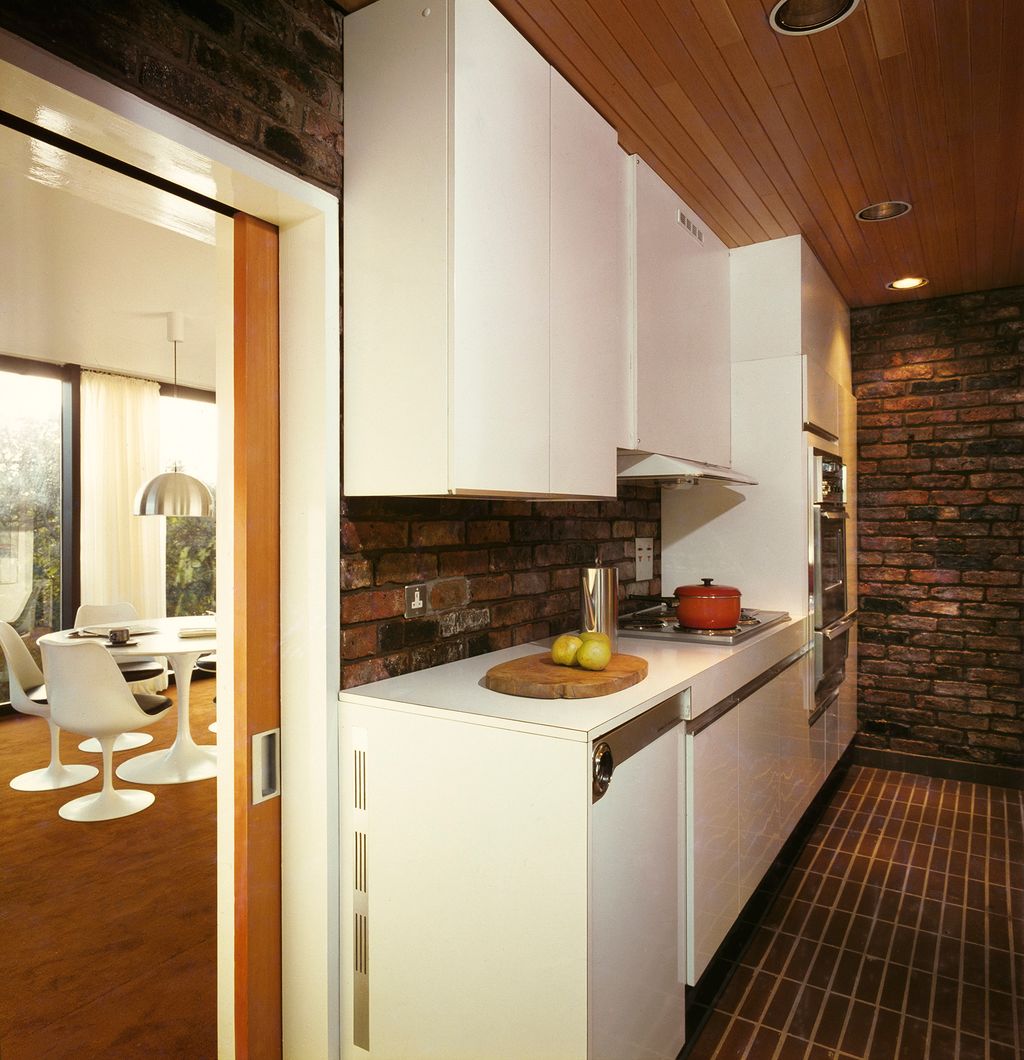
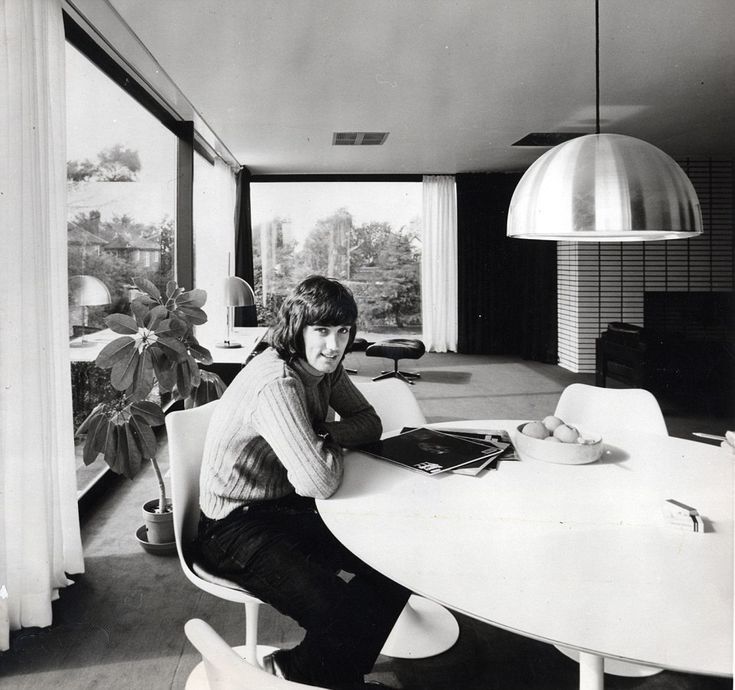
The upper floor has a large L-shaped living-dining-room, Mr Best’s bedroom with dressing-room, and bathroom, and a ship-like galley-kitchen opening to a dining-area for six. The main living-area is reached via an outer stairway. The legion of Mr Best’s devoted female followers will want to know that the galley kitchen has natural brick walls, split-level oven and hob, dishwasher and double-bowled sink with built-in waste disposal unit.
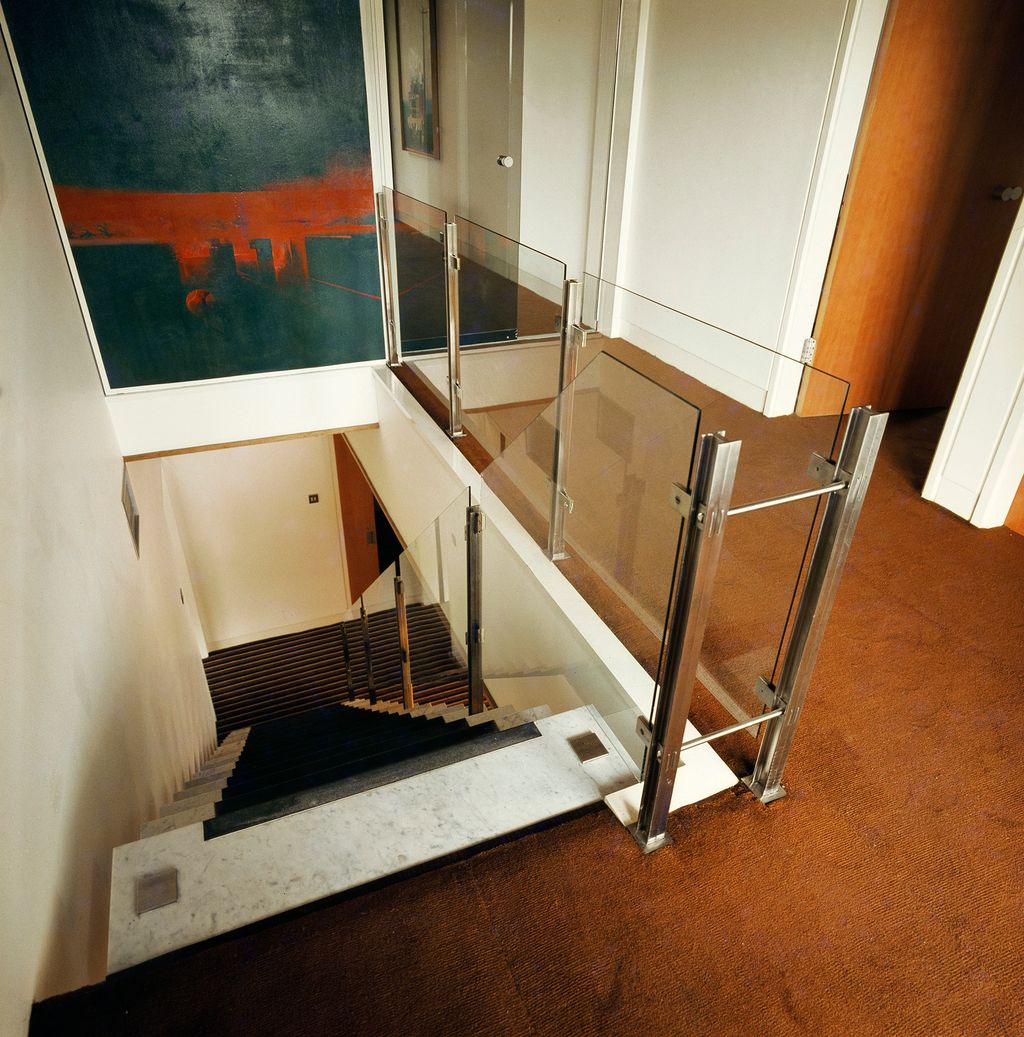
The two floors are linked by an open staircase with Sicilian white marble treads and stainless steel and plate glass balustrade.
One of the most unusual features of the interior is the white ceramic tiled unit constructed of the same tiles which are used for the exterior walls This unit houses a 25-inch colour TV set and stereo record player, which can be made to disappear by remote control from a wall console, which also controls the curtains. A four-seater Bastiano sofa and chairs in black hide are set round an immense coffee-table top. This table is also a record cabinet. Lighting is by stainless steel table lamps for the storage unit and by a widely curving Flos lamp.
The gardens are skilfully tend by Fred Cooke, who, over 40 years, looked after the turf at Old Trafford, and now, in retirement, has half the Manchester Club’s elite as clients.
 Ray Williams1/14
 Ray Williams2/14
 Ray Williams3/14
 Ray Williams4/14


 Ray Williams5/14
 Ray Williams6/14
 Ray Williams7/14
 Ray Williams8/14


 Ray Williams9/14
 RAY WILLIAMS10/14
 RAY WILLIAMS11/14
 RAY WILLIAMS12/14


 RAY WILLIAMS13/14
 RAY WILLIAMS14/14


