
A writer's hidden Notting Hill cottage with a wonderfully pretty interior

‘We bonded immediately with the character of the house,’ explains writer Jane Moore of her Notting Hill home. ‘It felt oddly familiar, with its curious blend of country charm and urban grit, industrial remnants of its Victorian past, and the old wall enclosing a not-quite secret garden.’ The house sits at the end of a Victorian terrace tucked down a leafy passage just off Harrow Road. Neighbouring the Westway, its surreal placement only adds to its magic – like stumbling across a doll’s house in a box of Scalextric.
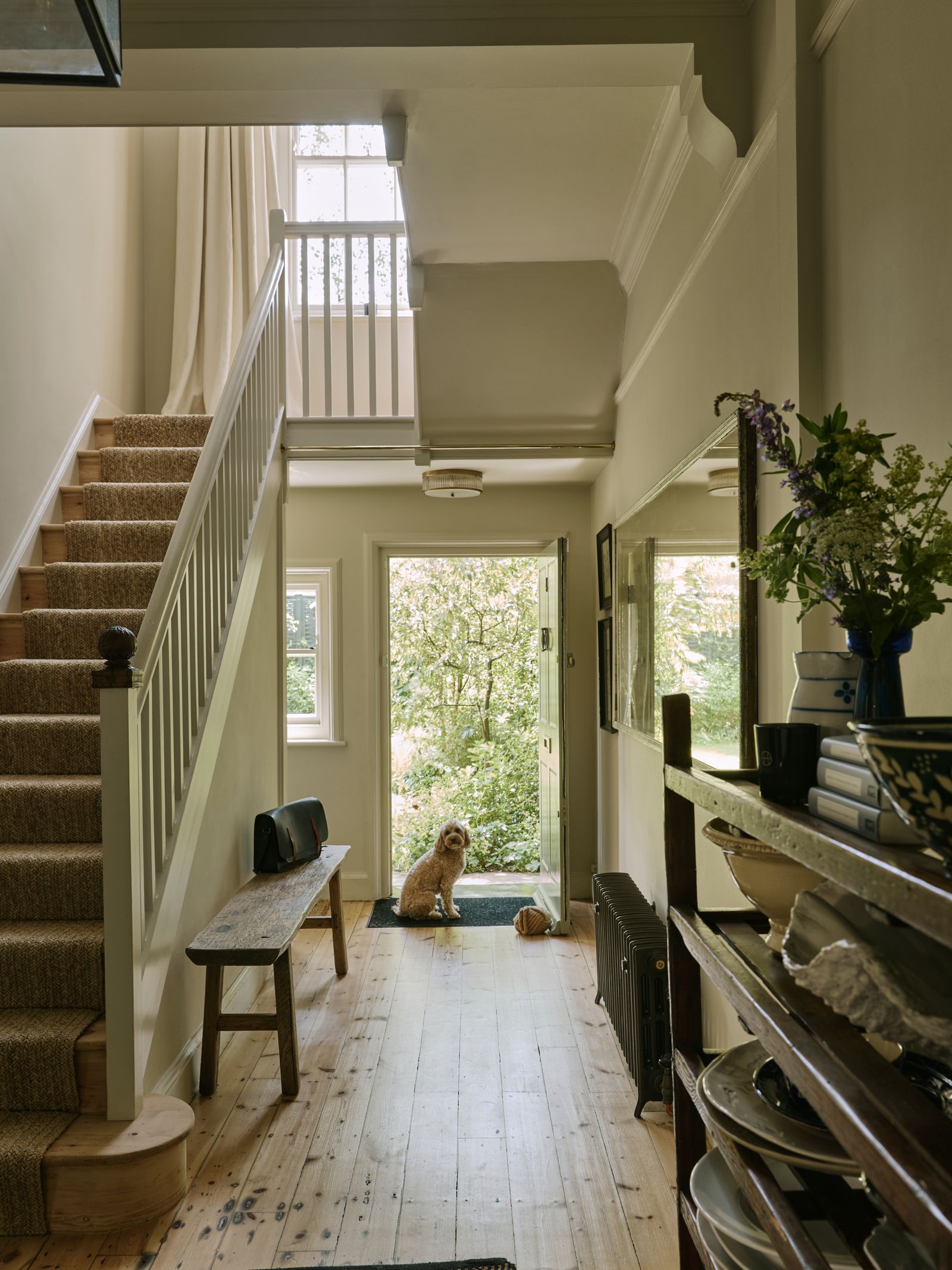
‘We moved in during a heatwave,’ explains Jane. ‘All our friends came to visit and said it reminded them of Italy or France, but also of our previous houses in Ladbroke Grove and Holland Park,’ she adds. ‘Nobody could quite place it. One even said it reminded him of our beloved old home in Santa Monica that we lived in years ago.’ Originally built during the Victorian period for doctors at the Paddington Hospital for the Poor (which remains an NHS practice today), the house’s elegant proportions and symmetry hint at Georgian influence, as do the attractive hardwood floors and tall sash windows.
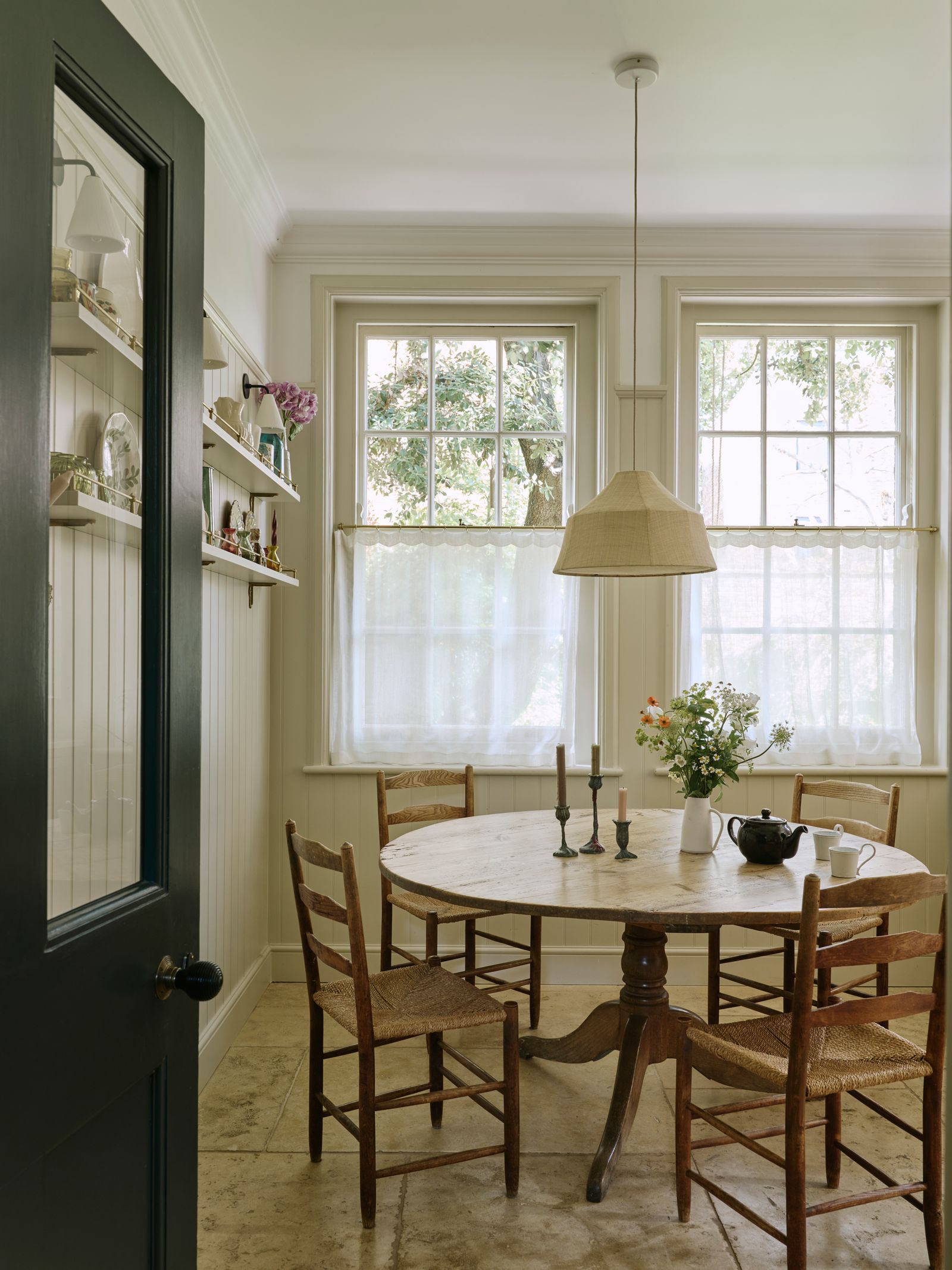
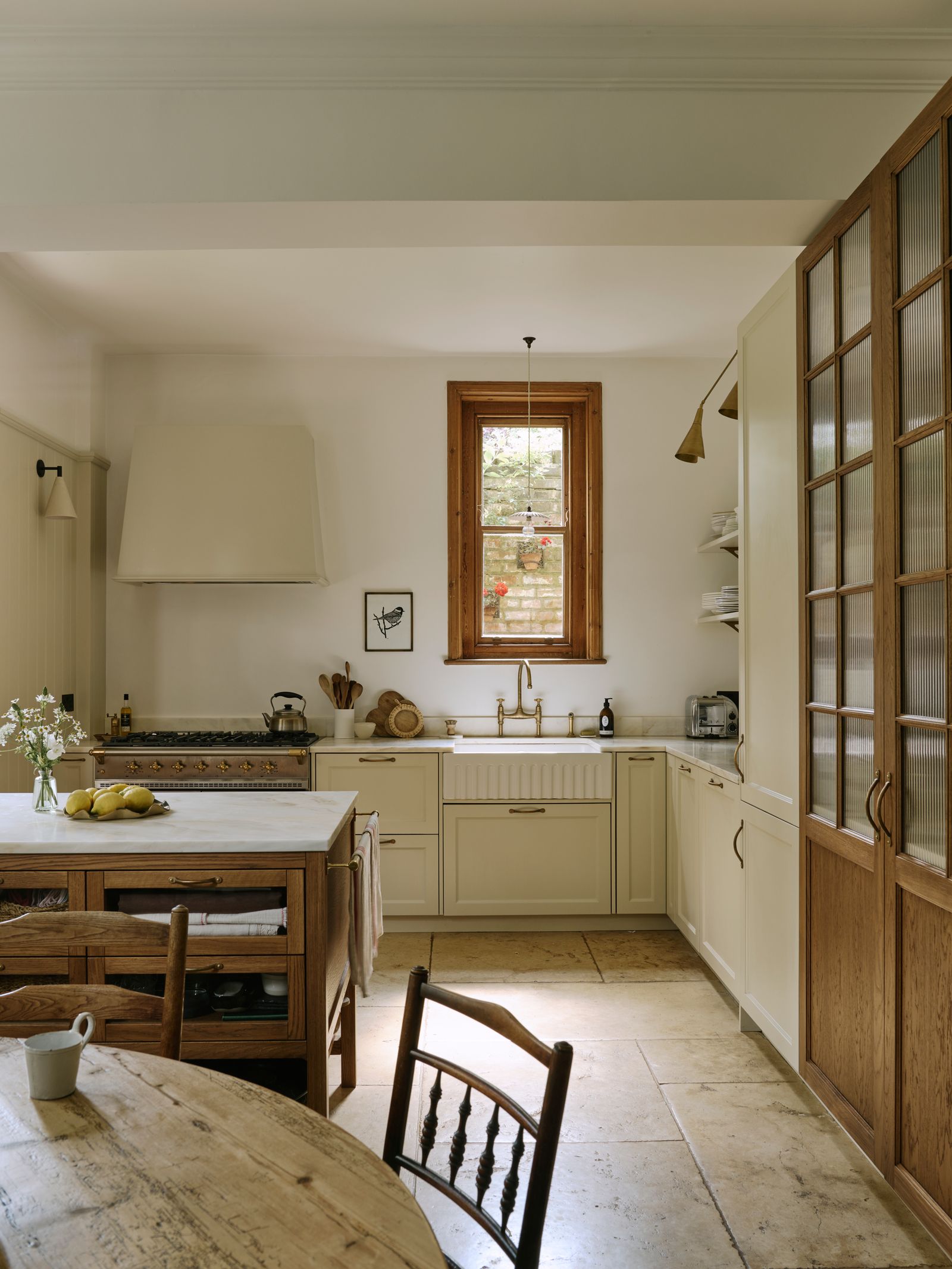
When Jane and Stephen came to it three years ago, what had once been a utilitarian building had been transformed by previous owners into a three bedroom house, arranged over two main floors, with a neat attic extension. ‘We liked that we didn’t have to change anything structurally, apart from a bathroom wall upstairs,’ says Stephen. They particularly appreciated the layout: ‘we didn’t want to go with the trend to have everything open plan,’ explains Stephen. Jane agrees: ‘it’s private and cosy for writing in the study or dinners around the table, but becomes communal when the doors are thrown open.’ This openness is aided by the gallery landing on the first floor – look up from the hallway and you can see all the way to the top of the house. ‘It felt familiar, reminding us of the open landing in our colonial-style house in LA,’ says Jane.
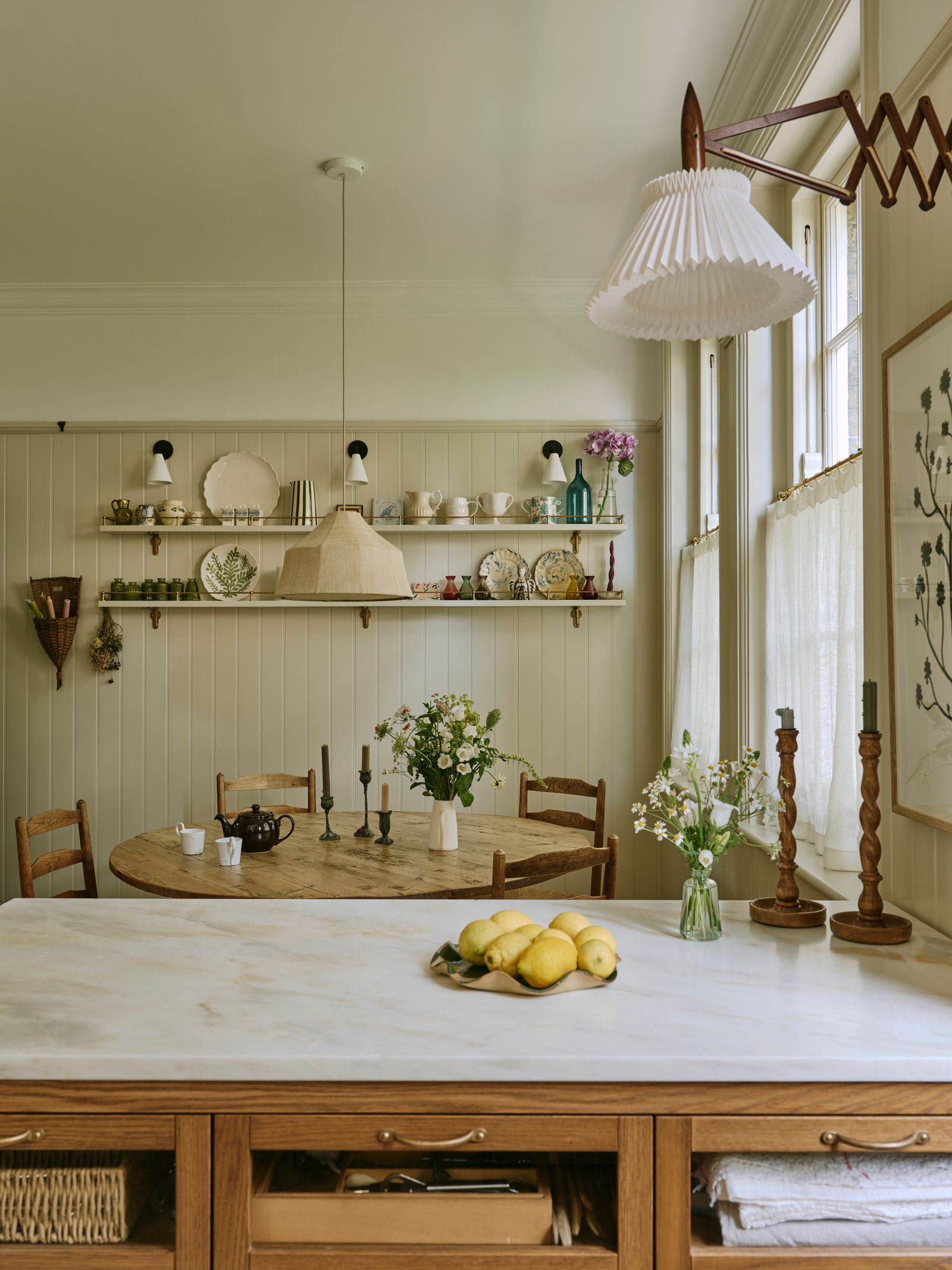
The interiors are calm and pretty as a country cottage, but with the lofty proportions of a London townhouse. Jane and her husband Stephen, whose tastes are ‘largely quite different’ achieved the balance naturally. Stephen, who now runs flourishing cocktail company Moore House Cocktails, favours stylish practicality. Jane, a former teacher, is a more fanciful, detail-oriented collector. ‘She’s a uniquely talented curator of beautiful vignettes,’ says friend and garden designer Butter Wakefield, who they called on to help overhaul the charming garden. Where the dynamic couple needed some balance, help came in the form of interior consultant Martina Casonato at The Venetian Pantry. ‘We were particularly inspired by her Italian aesthetic and appreciation of natural light.’
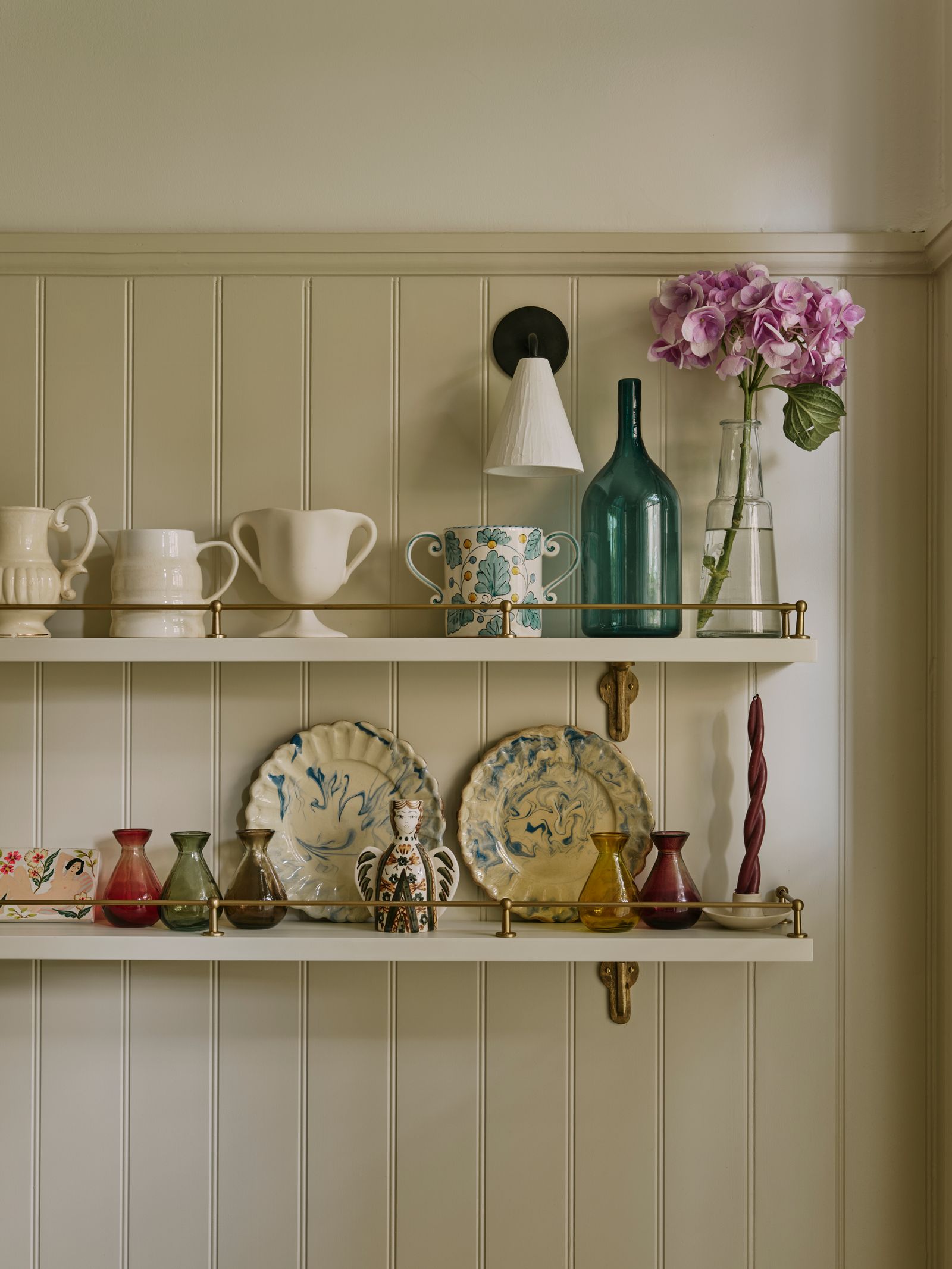
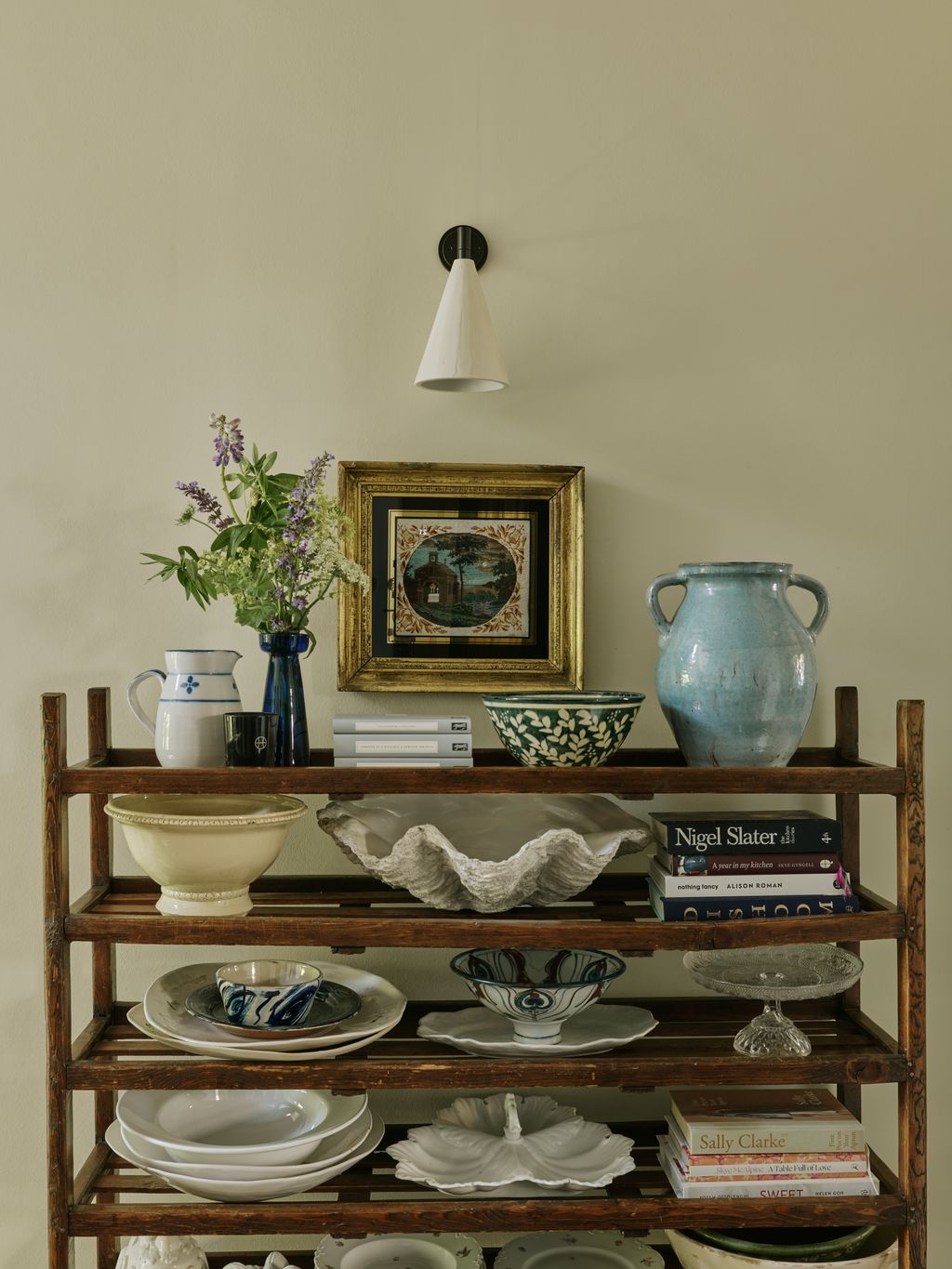
‘You think you’ll want somewhere smaller once the children leave, but with three adult children, their partners, and two grandchildren, we needed a proper hub,’ explains Jane. The kitchen is the heart of the home, centred around a well-worn antique table and a moveable marble island. ‘The best bit is the Italian larder,’ says Stephen of the reeded-glass cupboard concealing a coffee machine and essential cocktail kit. Open shelves are filled with beautiful, useful things, including candlesticks, vases and finds from LA and the South of France. ‘I’m always rearranging them like it’s a doll’s house,’ remarks Jane.
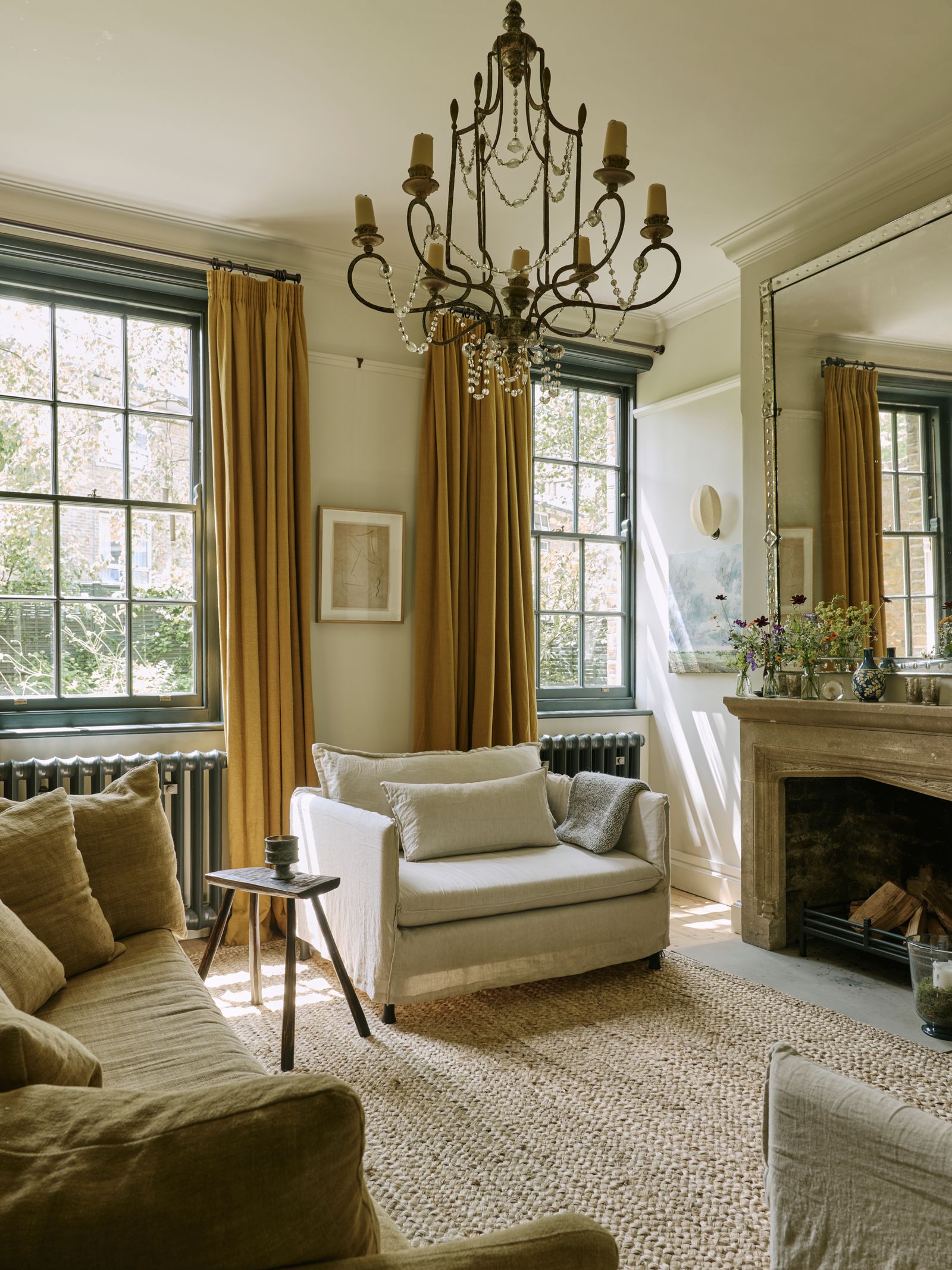
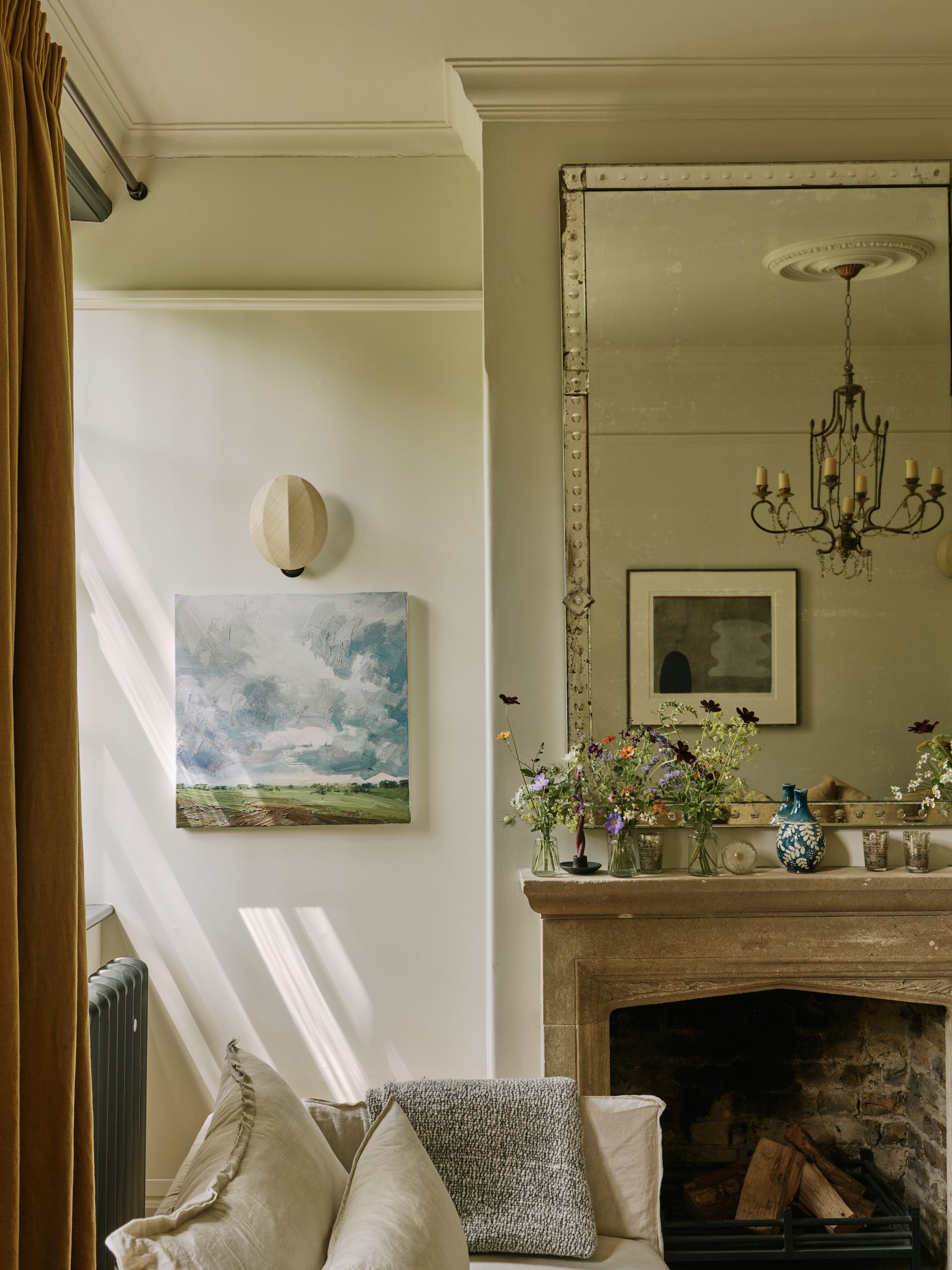
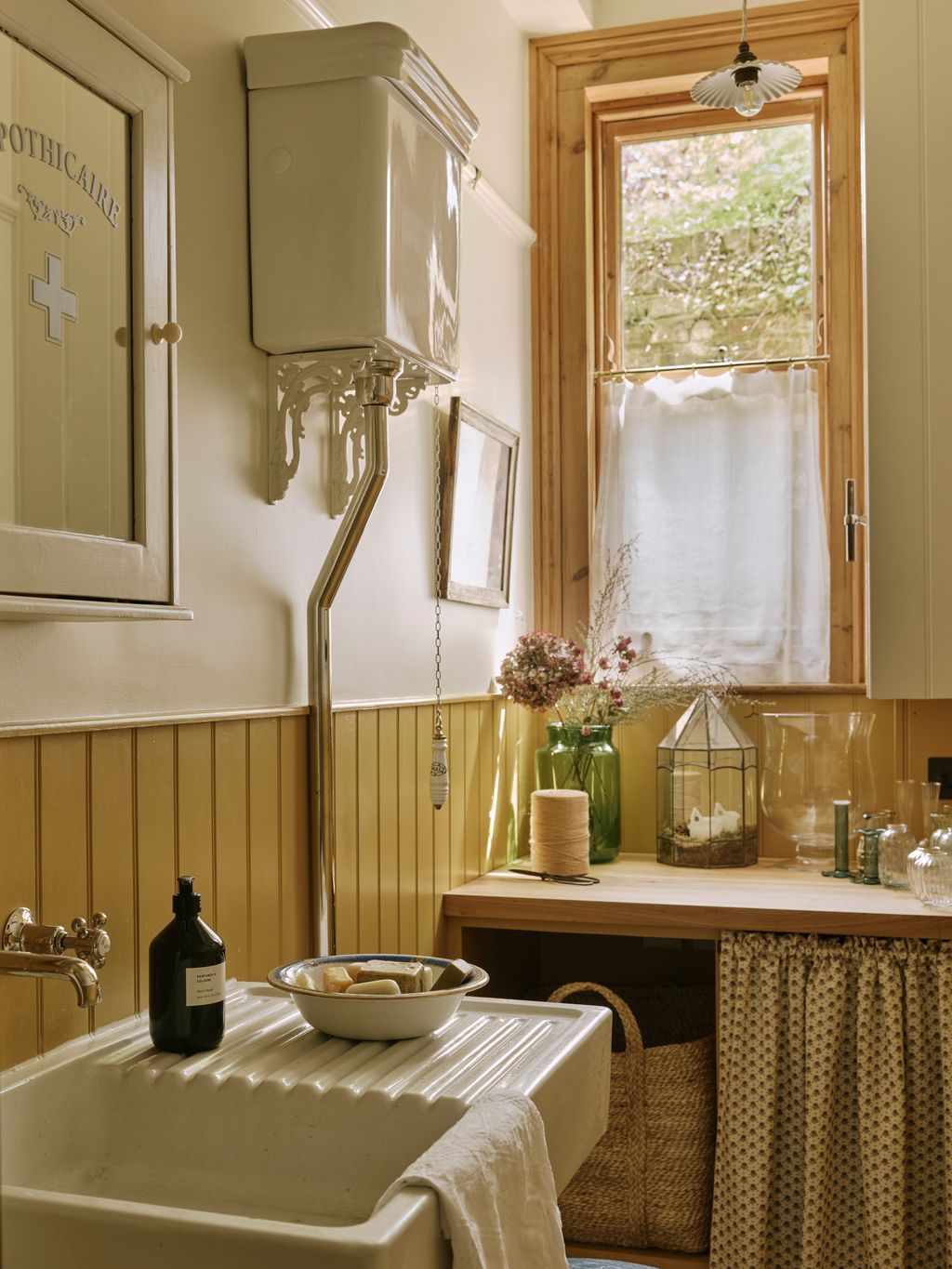
Jane prefers not to play with her doll’s house alone, though. ‘I am famously indecisive and turned, as I always do, to bothering my friends and family for advice.’ Her granddaughter told her to get a swing in the garden and she duly did. Equally essential was designer Sarah Delaney, Jane’s best friend of 35 years. ‘She arrived like the cavalry and walked through the house with us, helping with everything from big building timelines to laundry baskets,’ says Jane. The partnership is most evident in the characterful downstairs laundry room and loo, painted in Farrow & Ball’s ‘School House White’ with tongue-and-groove panelling in ‘India Yellow’. Sarah also helped to make the living room feel cocooning and soft, adding thick curtains from Lizzo and Caravane sofas.
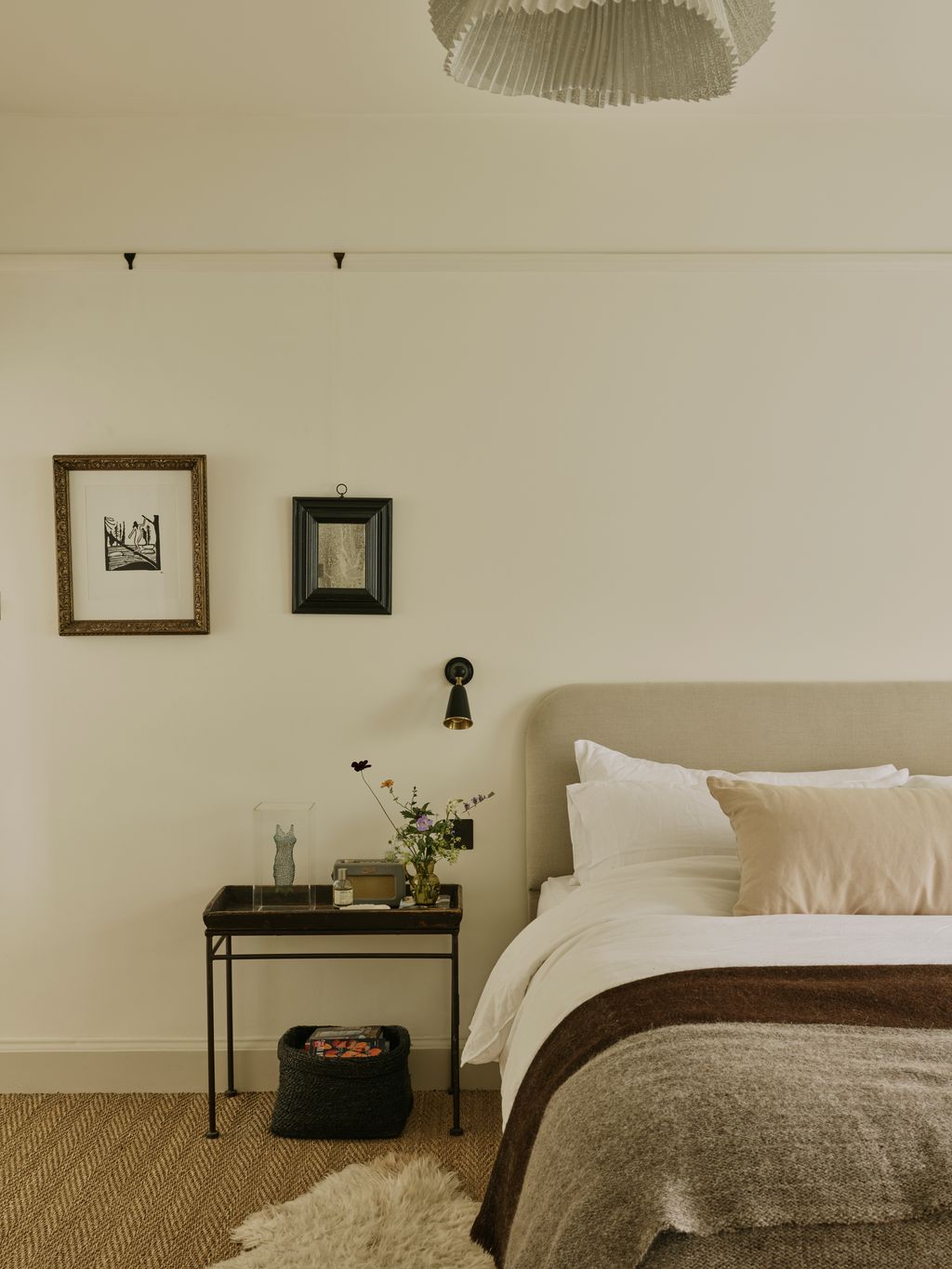
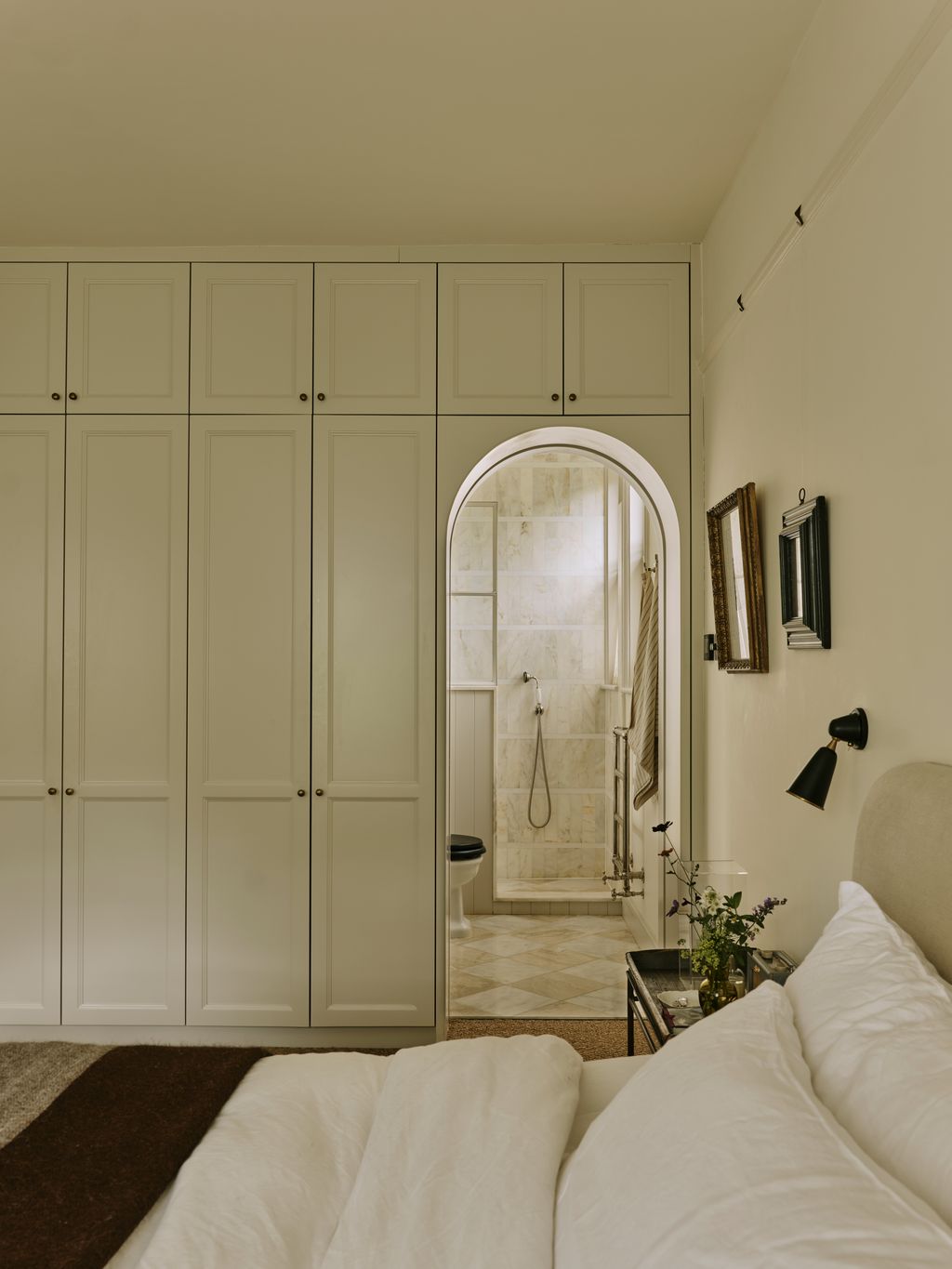
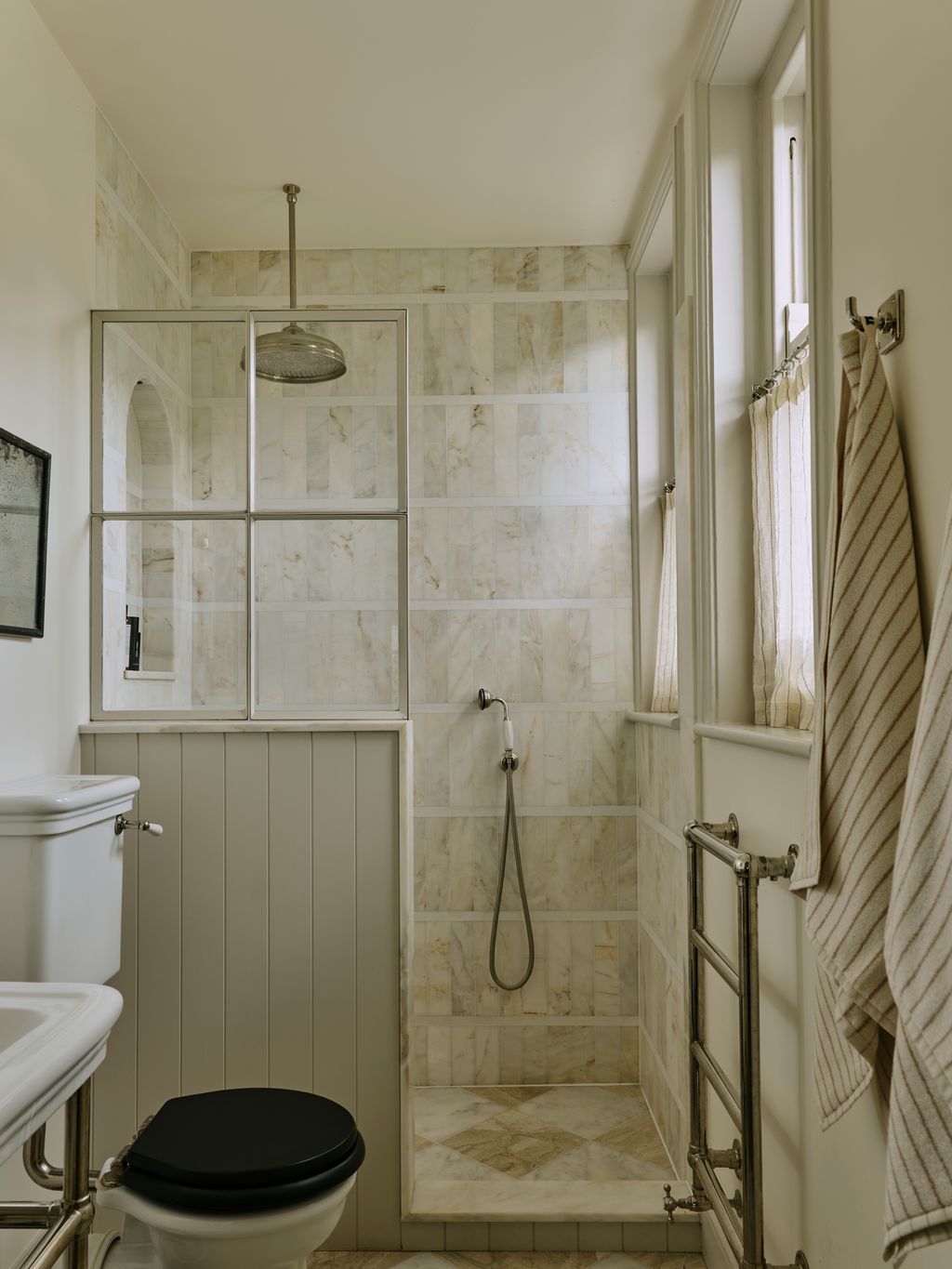
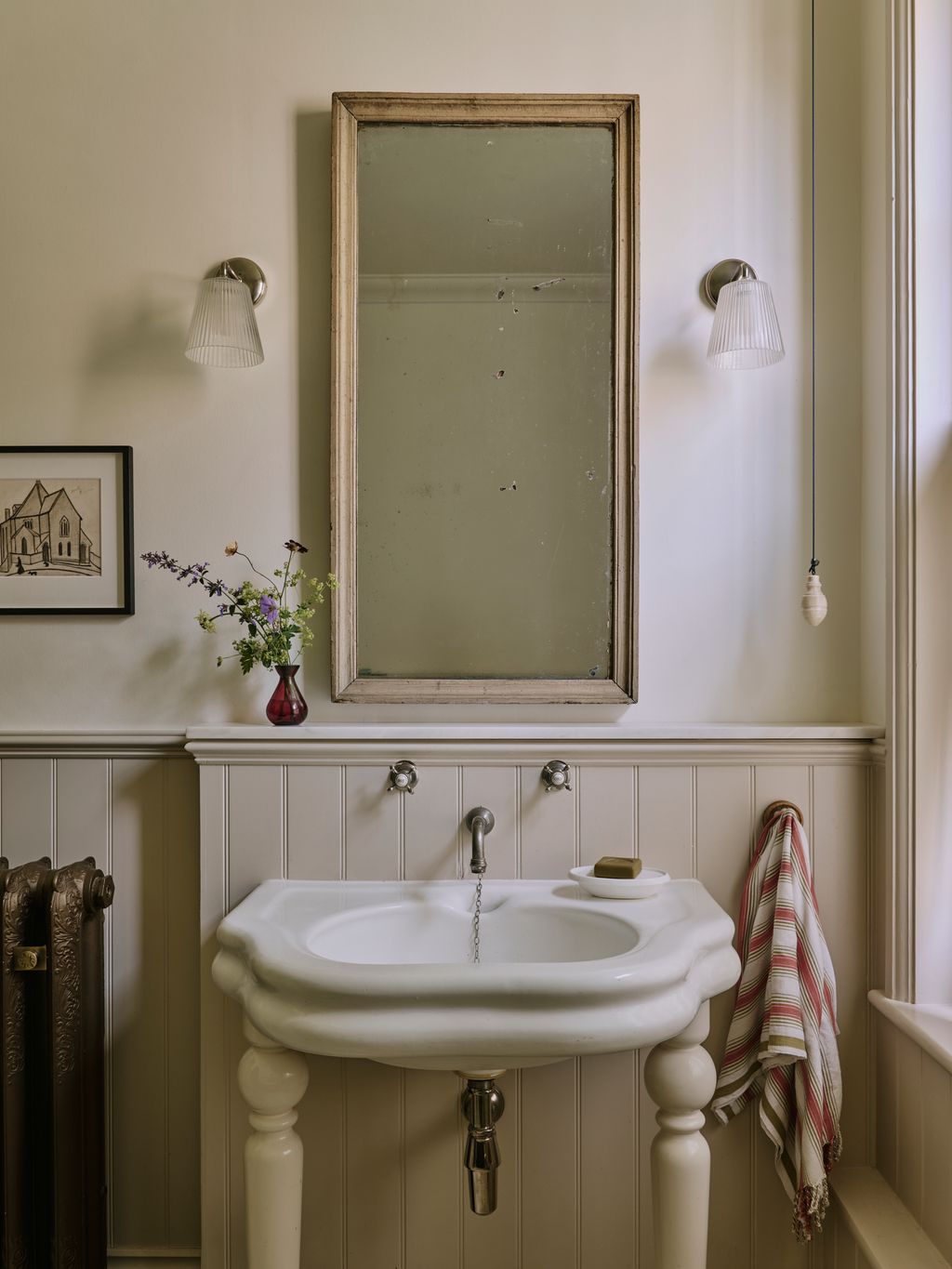
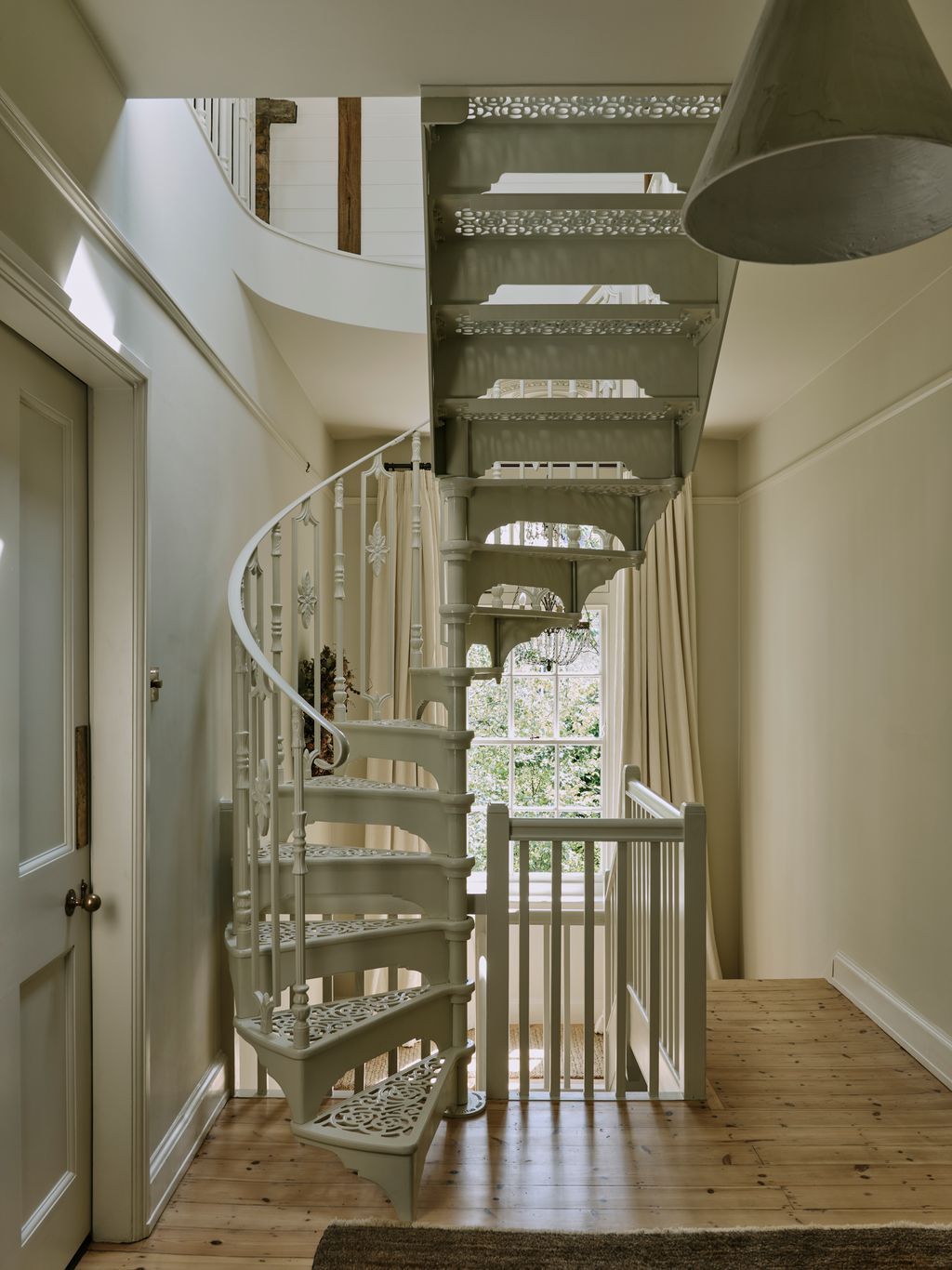
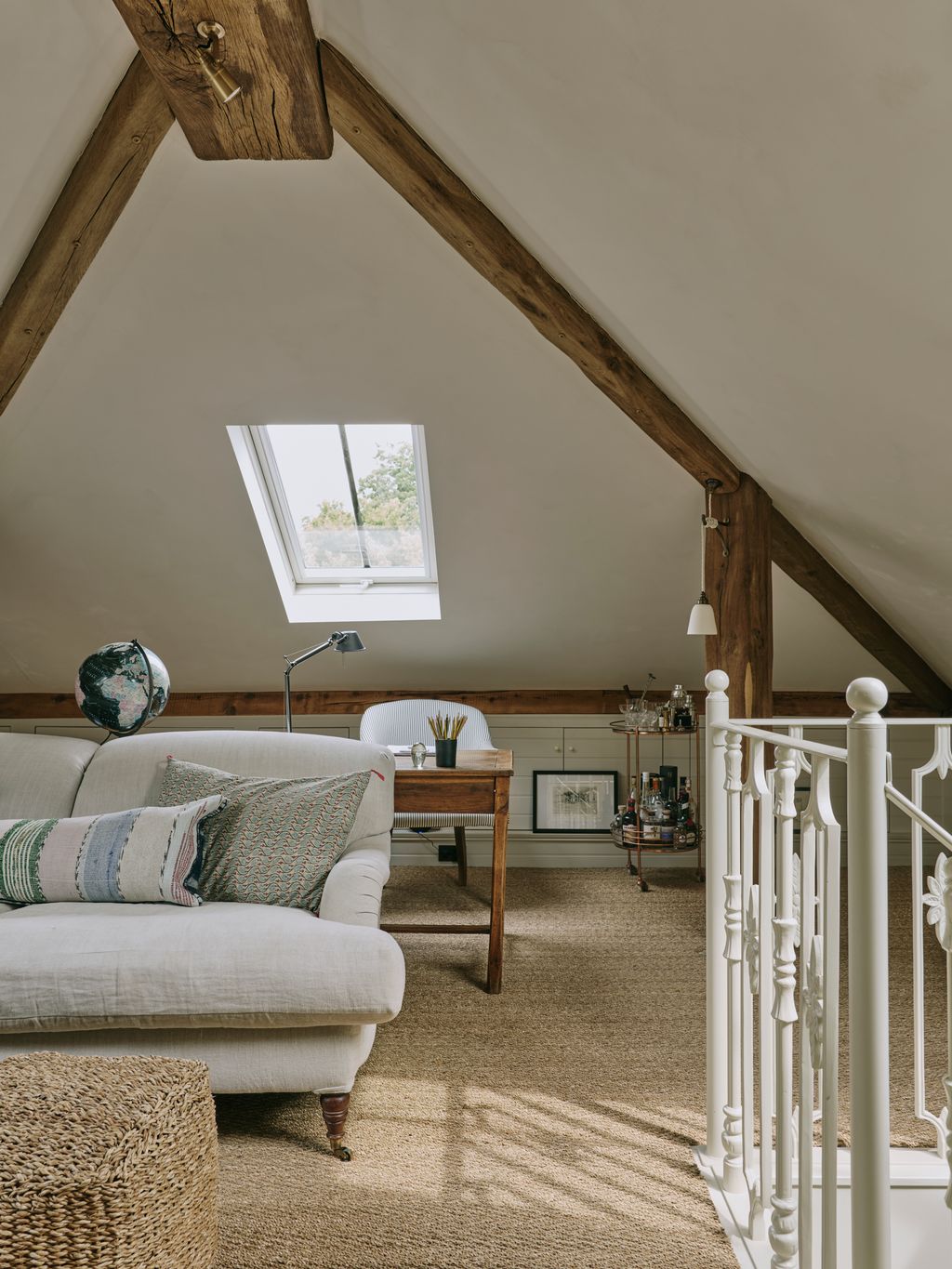
Upstairs, sisal carpets fill the house with a familiar, woody smell that the couple have had in all of their houses. The spare bedrooms are warm but neutral enough to be guest rooms, while the main bedroom is clean and serene, leading to a marble-clad bathroom through an arched doorway, complete with antique muslin café curtains. Perhaps the house’s most unexpected feature is the spiral staircase – sourced in Derbyshire from British Spirals and Castings – which stands in the middle of the landing like a petrified tree and leads up to a den-like office and guest room in the attic. ‘Our builders thought we were mad,’ says Stephen, ‘but it’s a perfect solution for the space and looks so special.’
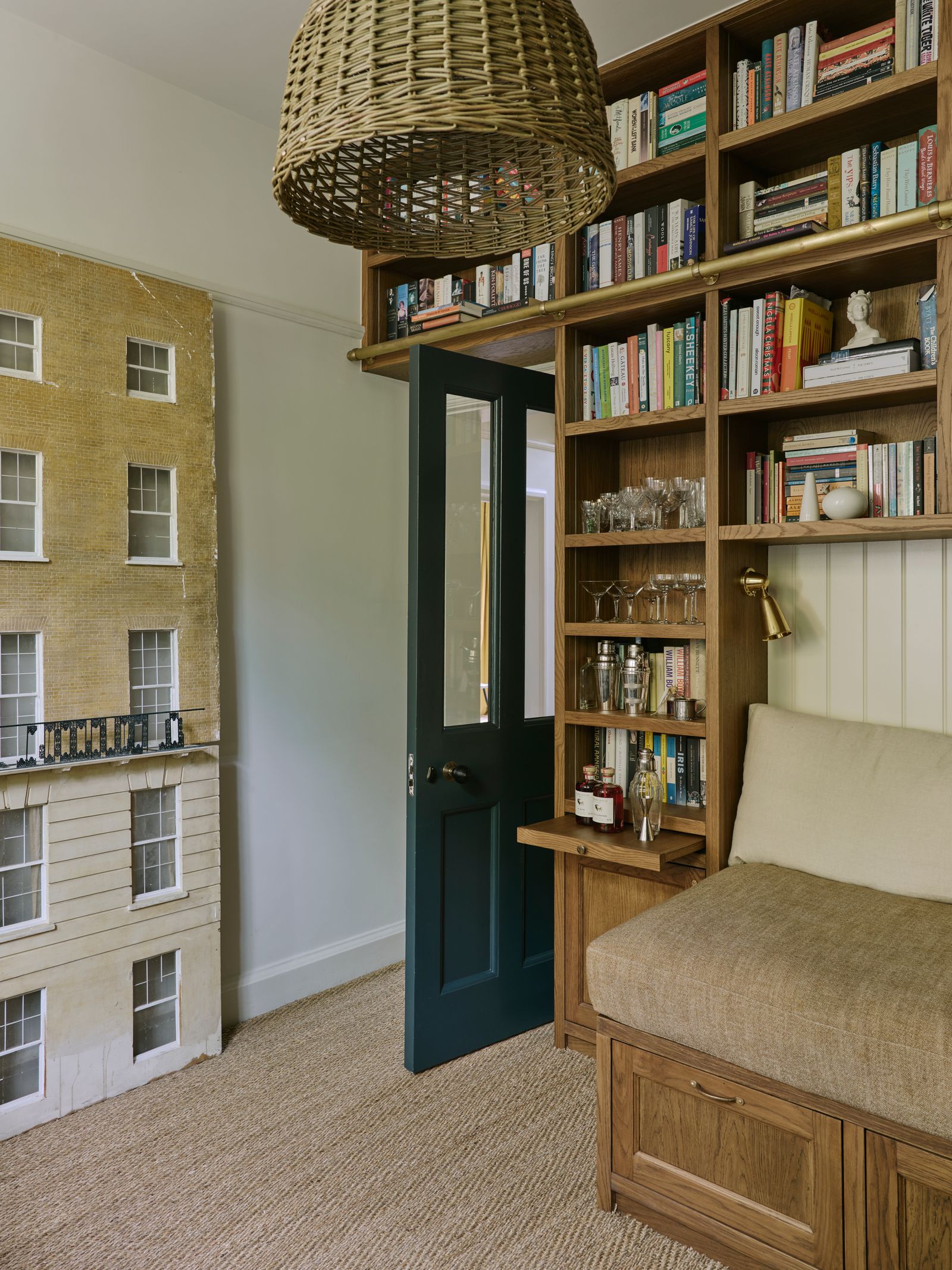
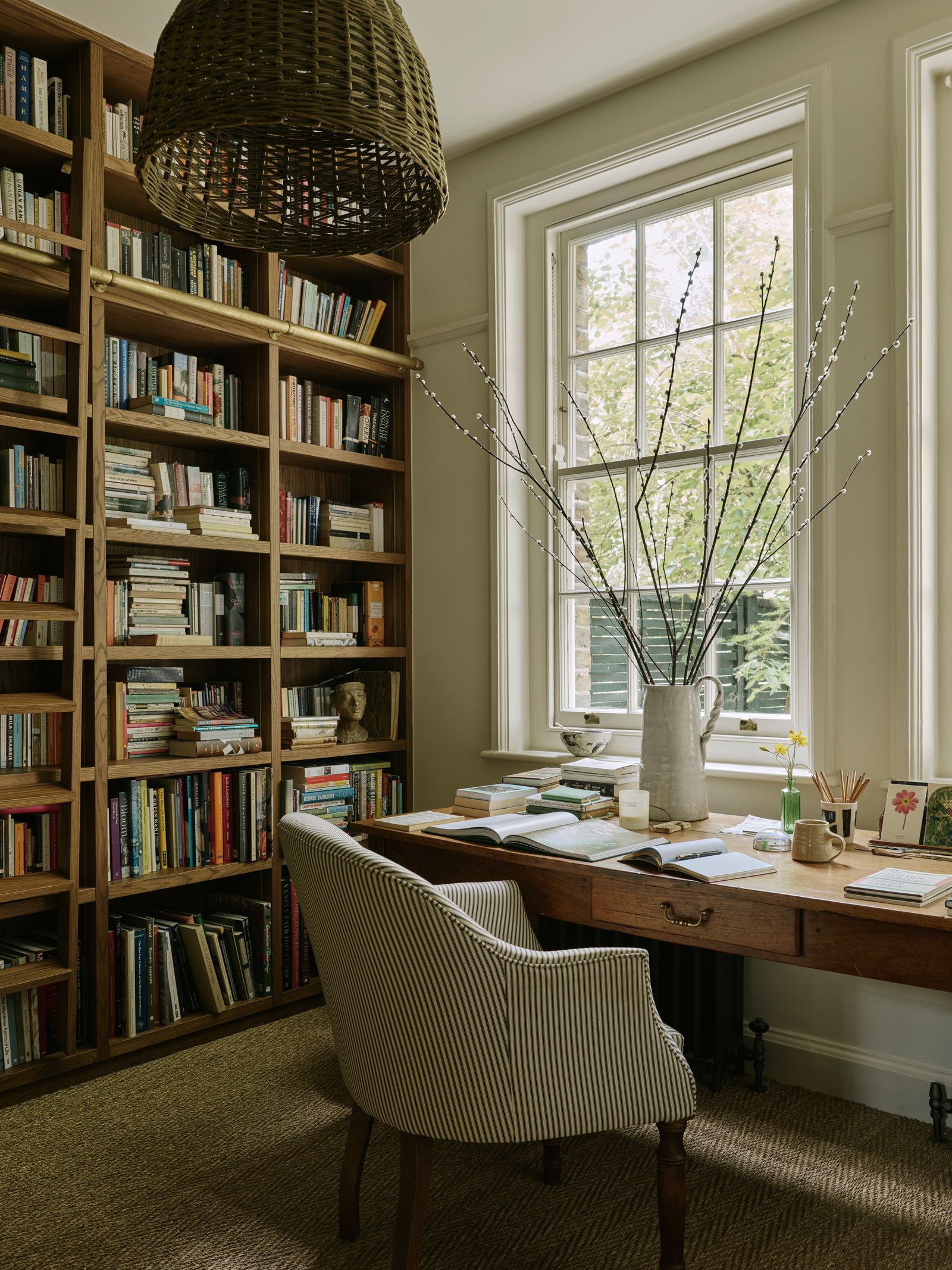
The doll’s house metaphor particularly comes to life downstairs in Jane’s study, where a Georgian façade leans against the wall. On the adjacent wall, a reading nook with a squishy banquette has been built into a wall of shelves. Jane’s desk is a writer’s dream, overlooking the garden, its ancient oak tree, and that essential swing. ‘It feels like the garden is in constant conversation with the house,’ explains Jane.
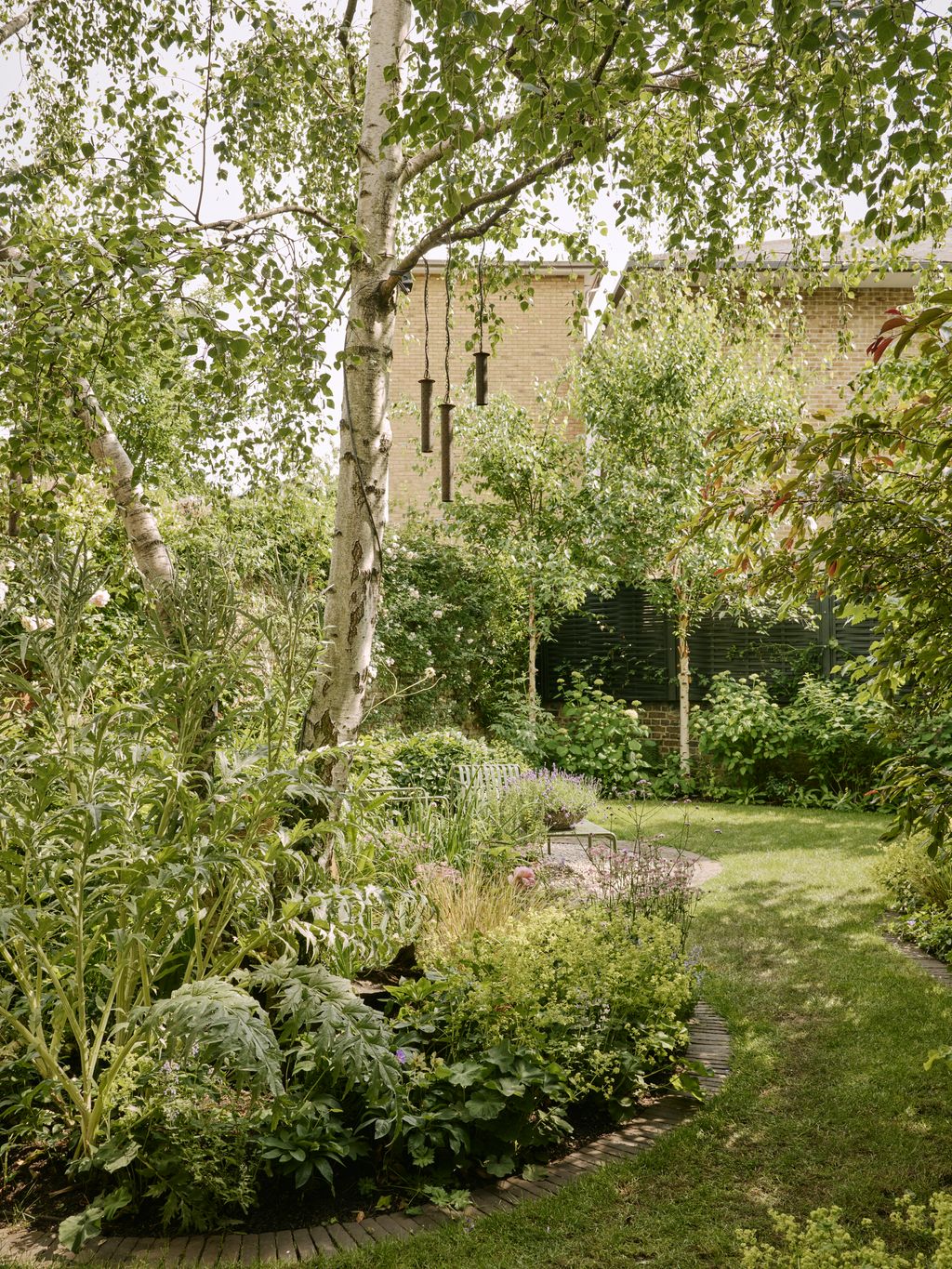
‘When you walk down the path to the garden and the house, you’re totally in another world,’ says Butter. It really feels like the countryside in the middle of west London.’ Butter explains that lots of the ‘country garden feel’ comes from the ‘magnificent brick wall’, which she worked to soften: ‘it already had a jasmine growing up it, but we softened it further with climbing roses and wisteria,’ she explains. ‘We also wanted to lean into the circularity of the garden, with curved beds creating a flow between the front and back gardens, which are so neatly joined by a side passage,’ says Butter. They removed an existing pond, which broke up the continuity of the garden, and instead added stepping stones, which move you through the immersive planting.
‘Really, it’s hard to convey the specialness of it all,’ Butter muses. ‘It’s wild and overgrown and fun, but with moments of structure amongst all the wildness.’ As Jane puts it, the garden has ‘some structure for Stephen, and some bee-loving wildness for me.’ It's an analogy well suited to their whole magical home.
 Christopher Horwood1/17
The laundry room and loo, with woodwork painted in Farrow & Ball's ‘India Yellow’ is 'everyone’s favourite part of the house’, explains Jane.
 Christopher Horwood2/17
A set of shelves in the hallway on the ground floor holds more of Jane's collections of ceramics and dishes.
 Christopher Horwood3/17
Upstairs, the main bedroom is a vision in soothing neutrals.
 Christopher Horwood4/17
The arched doorway into the adjoining bathroom hides a pocket door.


 Christopher Horwood5/17
 Christopher Horwood6/17
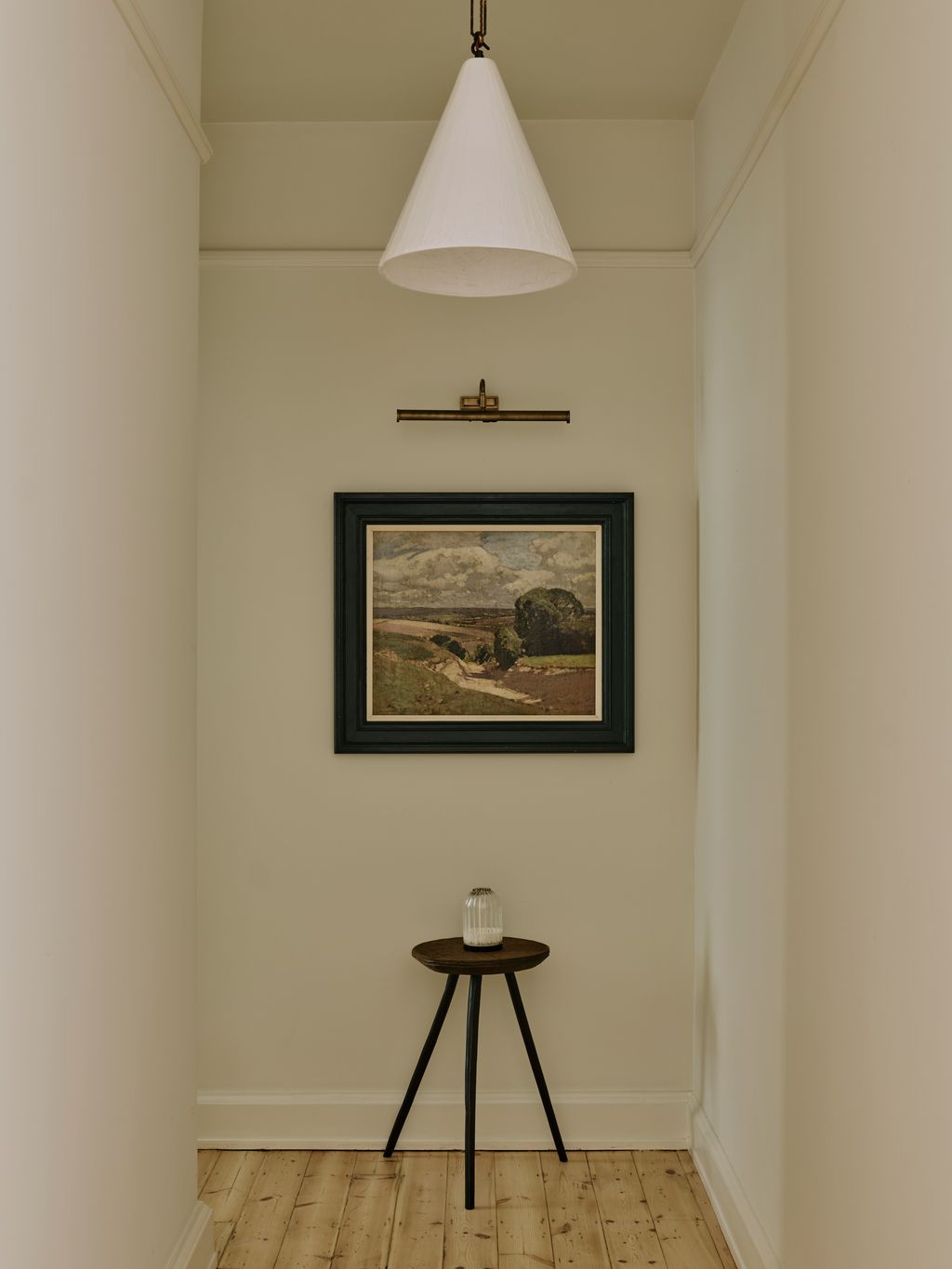
The quilt in the spare bedroom is from Caravane and the pendant lamp is from deVOL.
 Christopher Horwood7/17
 Christopher Horwood8/17


 Christopher Horwood9/17
The wrought iron spiral staircase is a bespoke design from British Spirals & Casting, and leads up to the attic study and sitting room.
 Christopher Horwood10/17
Stephen's desk occupies the back of the attic space. Stephen went to great efforts to restore as many of the original beams as possible with his builder, any gaps were filled with a sympathetic match.
 Christopher Horwood11/17
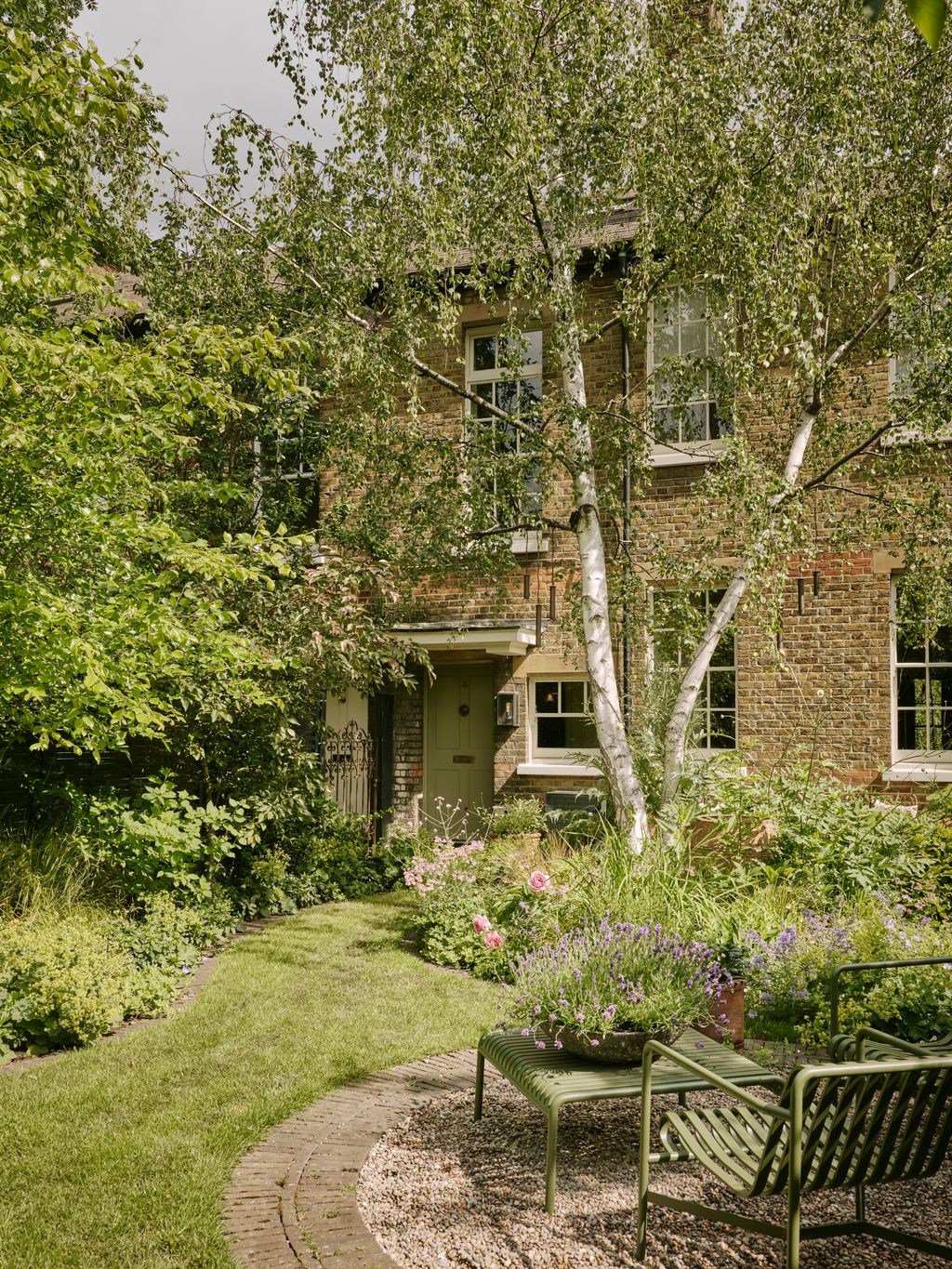
In the front garden, designed by Butter Wakefield and her senior designer Tilly Dallas and built by Bujar Pasha, an existing silver birch tree is hung with lanterns by John Cullen. Rosa ‘Princess Alexandra of Kent’ and pale yellow Cephalaria gigantea stand out in the beds below.
 Christopher Horwood12/17
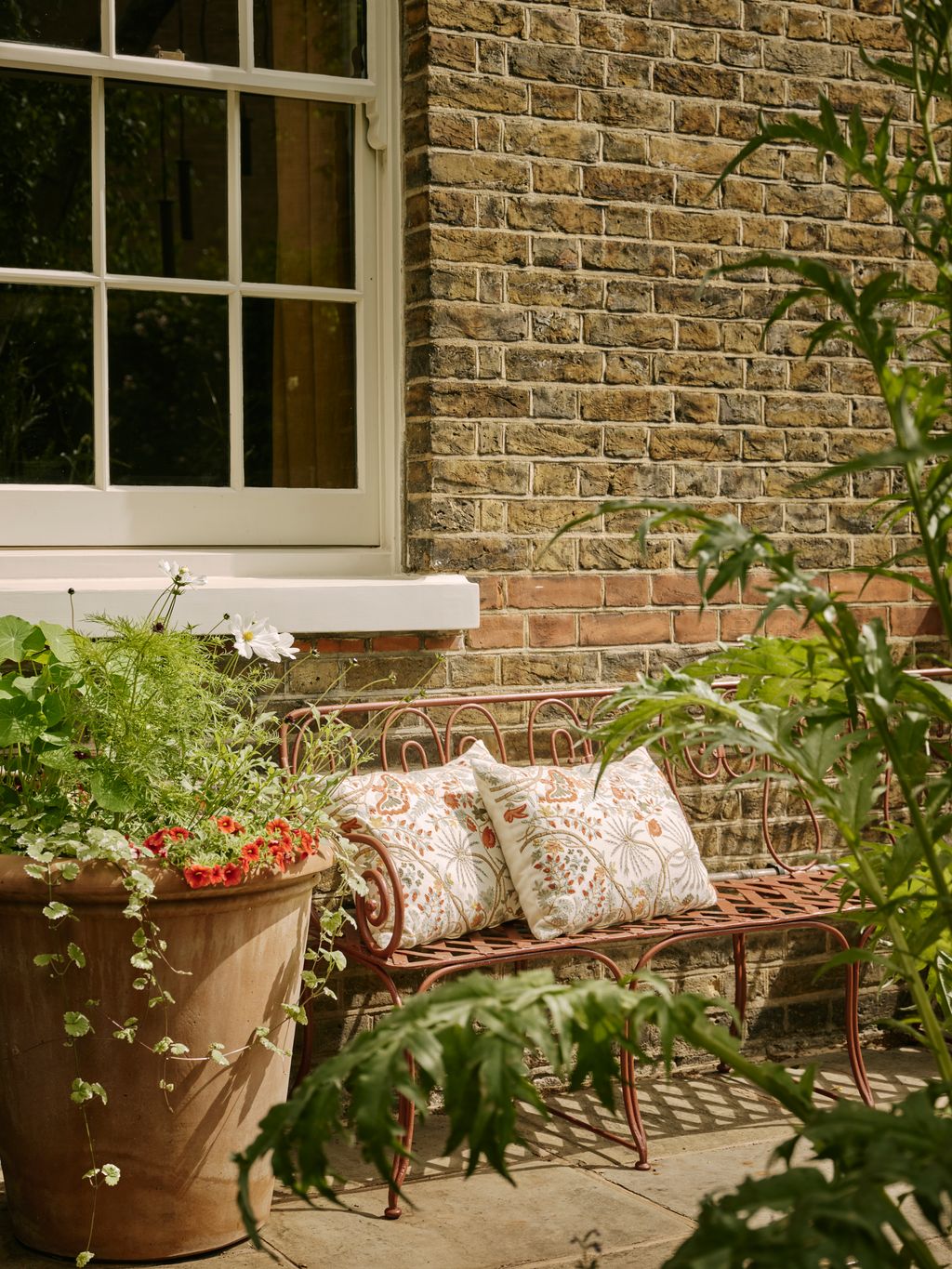
Jane repainted a white bench from Lichen Antiques in Scarlet ‘n’ Rust by Paint and Paper Library. The pots were sourced from Italian Terrace.


 Christopher Horwood13/17
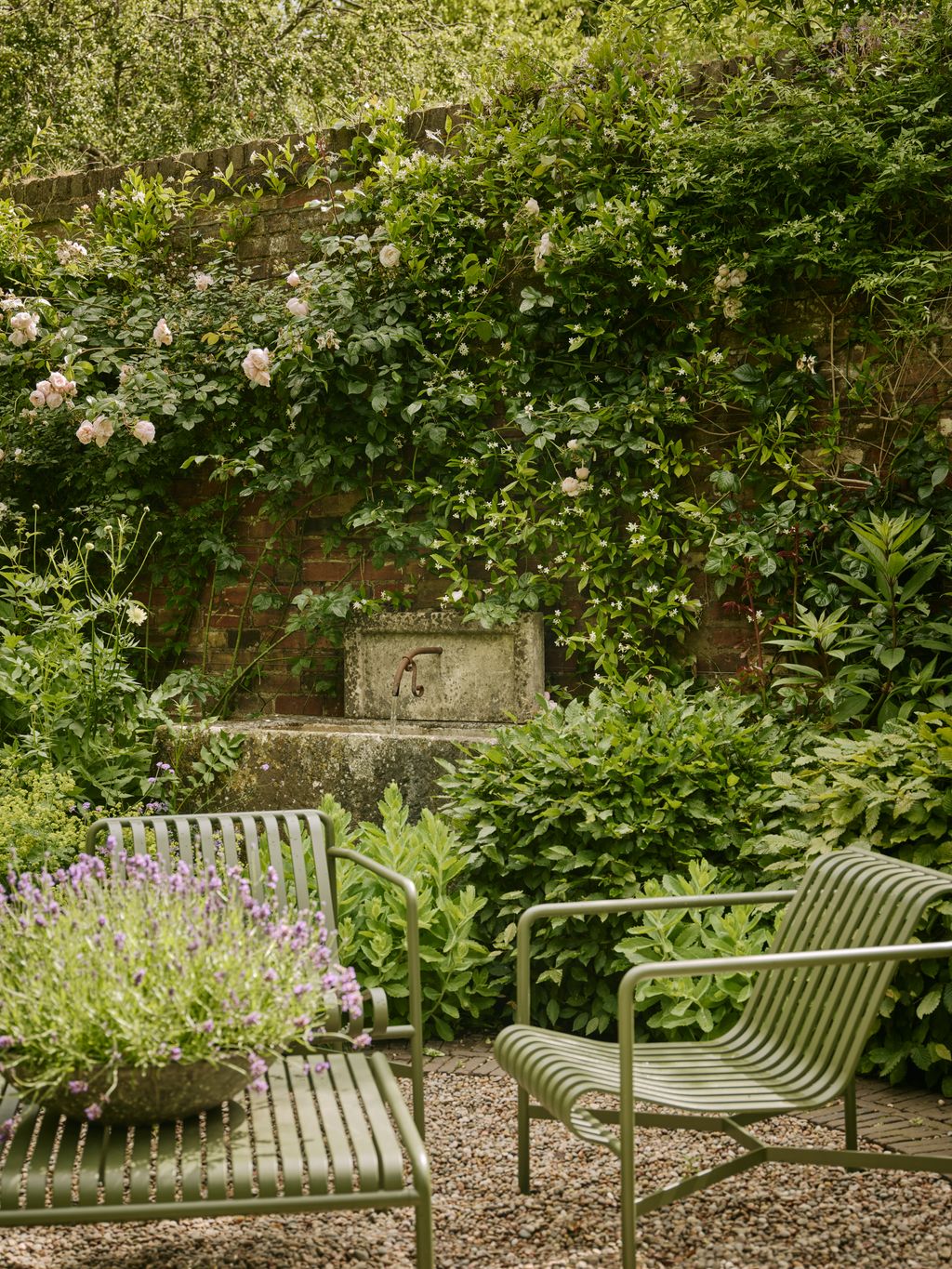
The garden furniture is from Hay in ‘Olive’, which camouflages into the greenery of the garden. Against the back wall several clipped Carpinus betulus balls provide winter structure and form. The rose ‘Albrighton Rambler’ and the highly scented evergreen Trachelospermum jasminoides climb up the wall behind.
 Christopher Horwood14/17
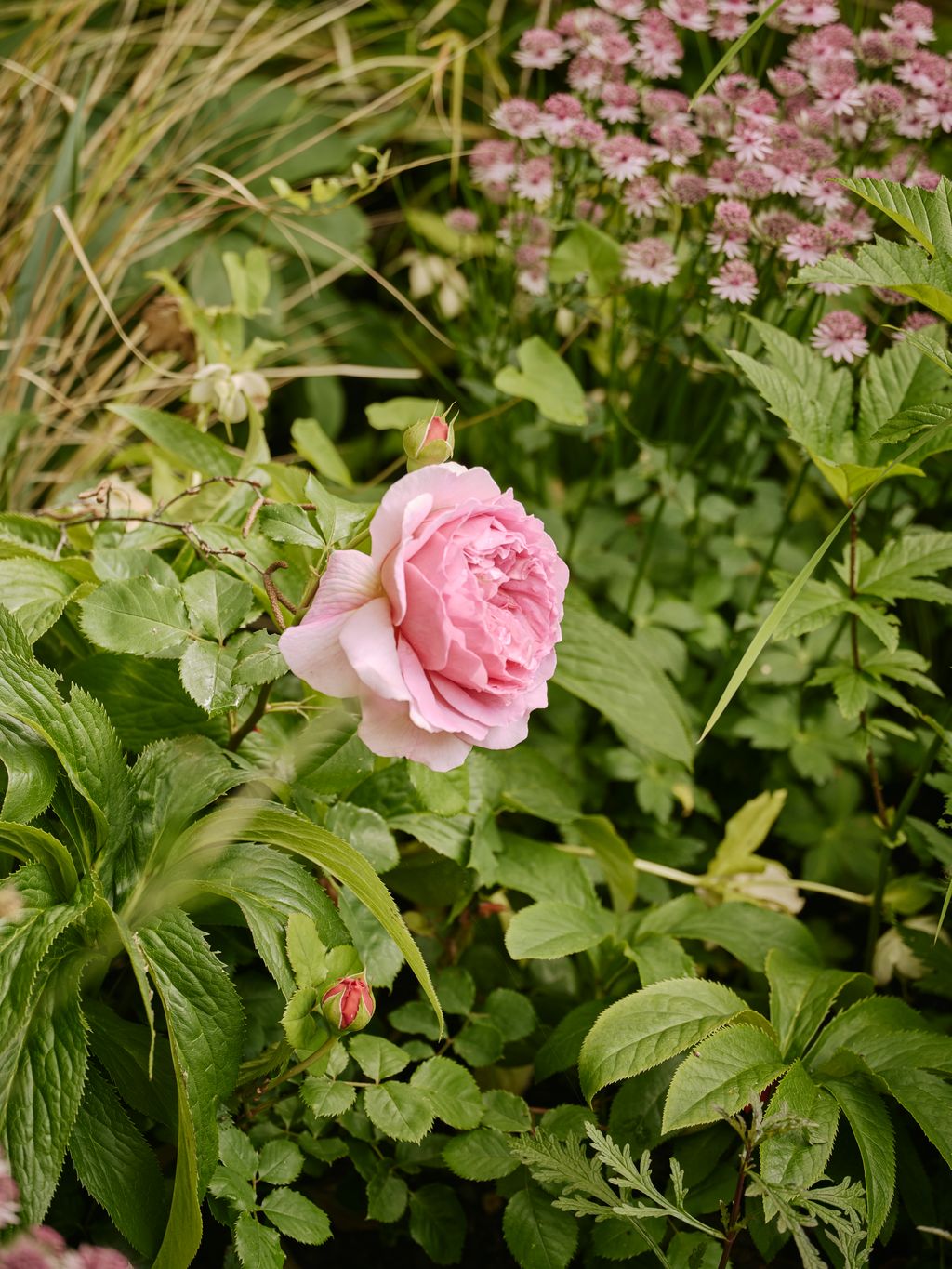
Rosa ‘Princess Alexandra of Kent’.
 Christopher Horwood15/17
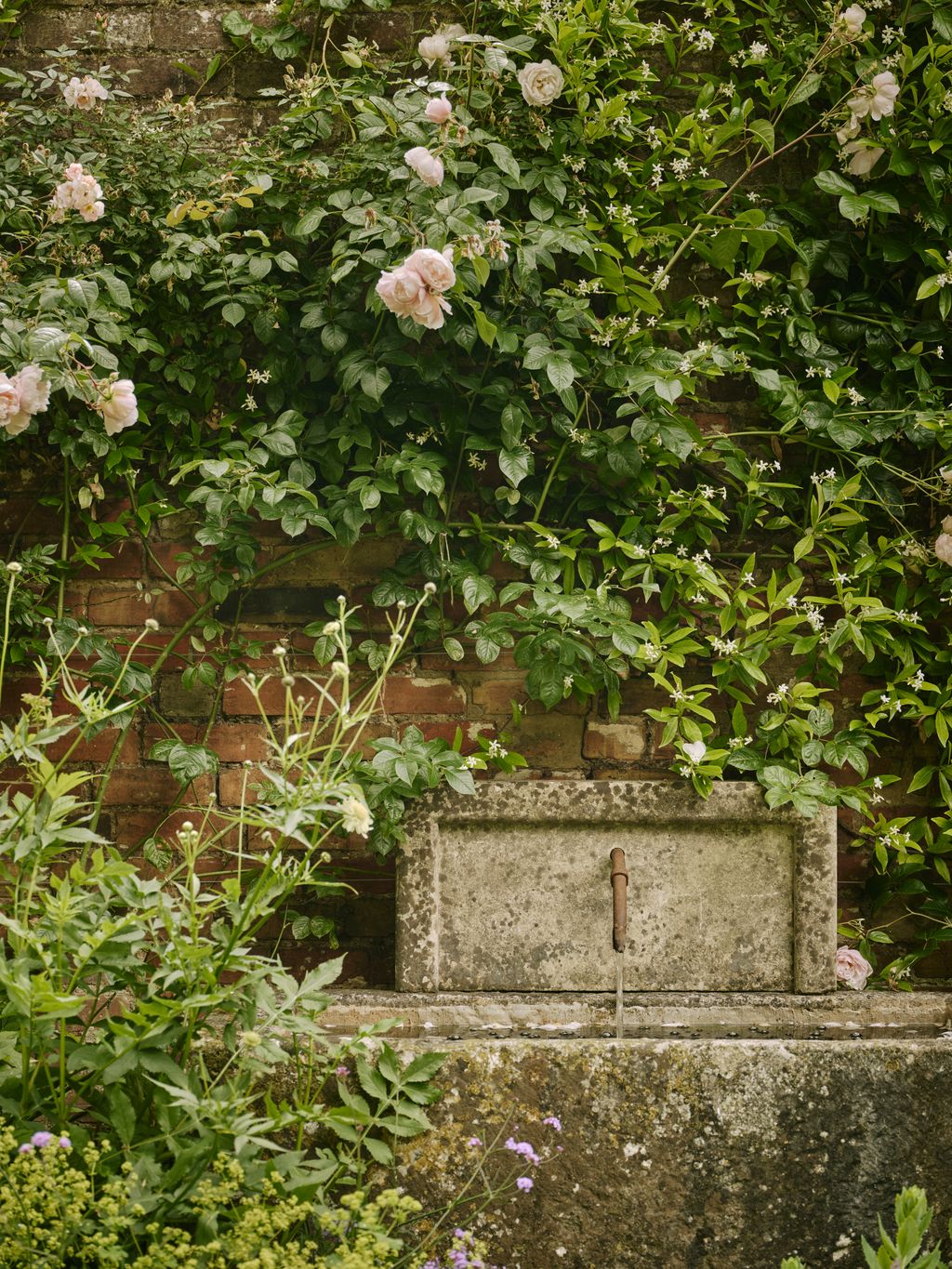
The water feature is an old reclaimed stone trough from Lichen Garden Antiques, plumbed in by DLX Lighting, who also installed the garden lighting.
 Christopher Horwood16/17
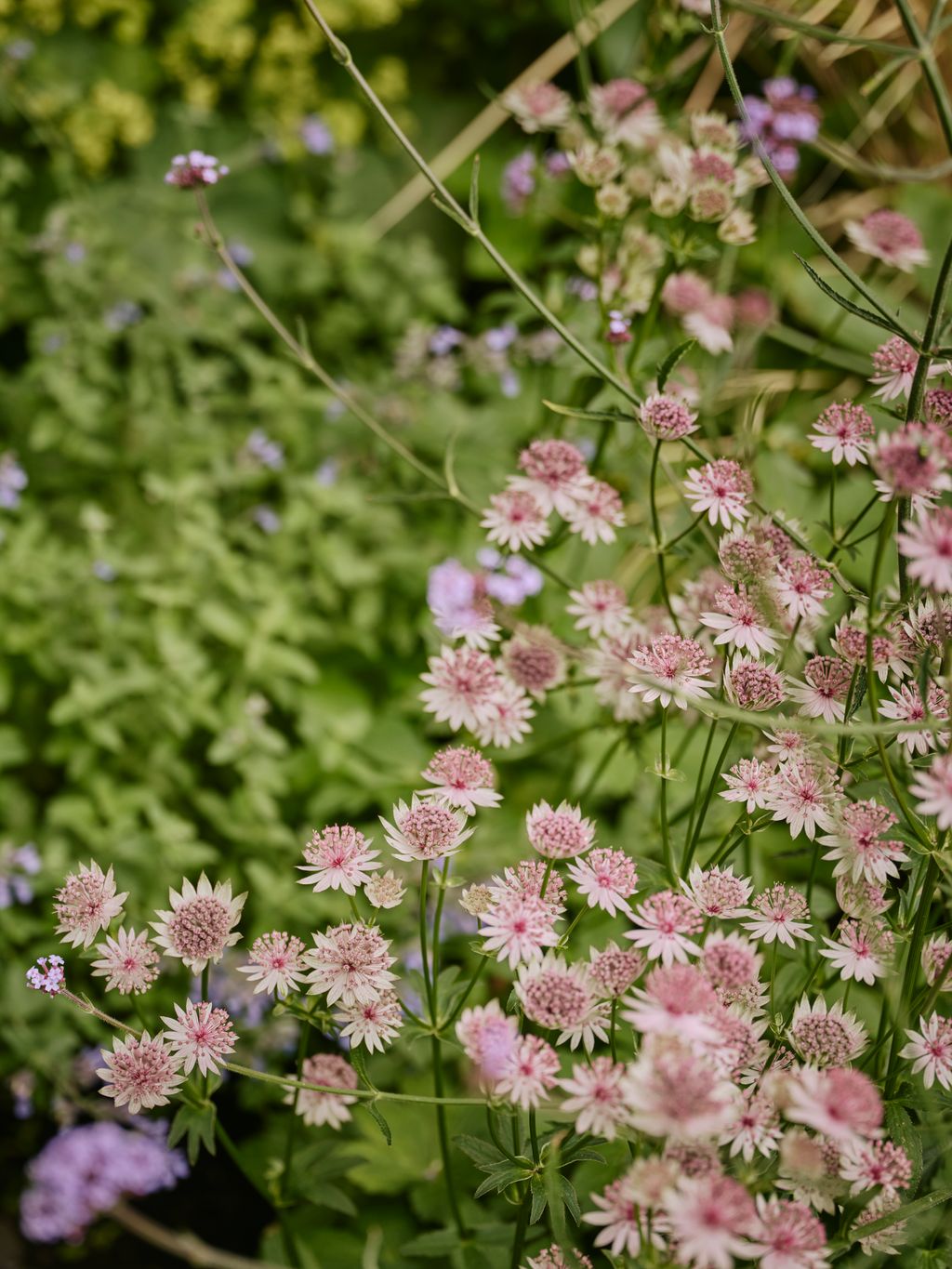
Astrantia major ‘Roma’.


 Christopher Horwood17/17
Looking out from the house over the front garden.


