
A 16th-century barn in Somerset converted into an austerely beautiful home by Jonathan Tuckey
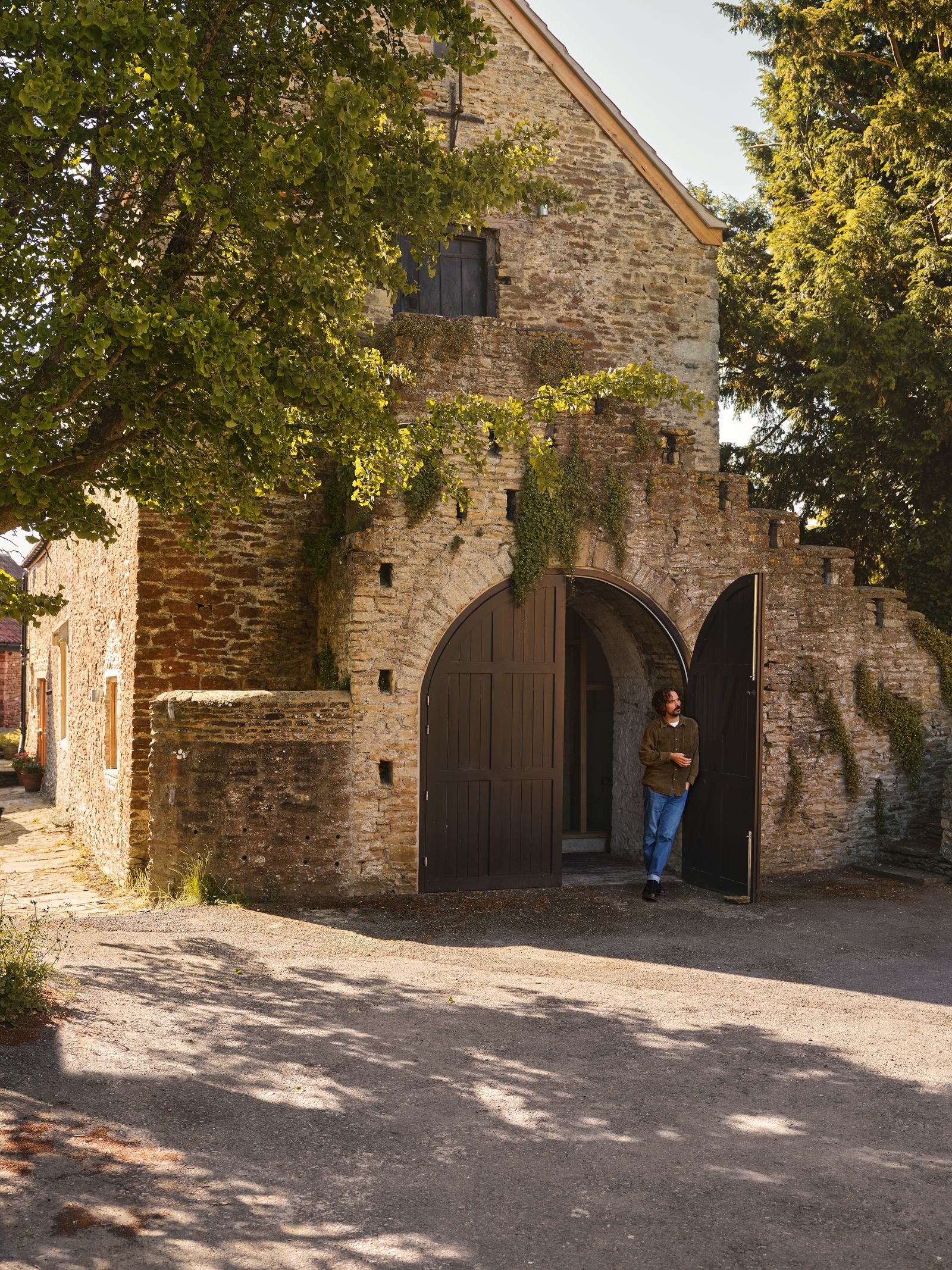
In a village in rural Somerset stands an unassuming yet intriguing 16th-century building. Reminiscent of a primitive chapel, with its entrance crowned by an extended arch, it was built as a meeting place for the local wool trade and still bears the name The Wool Hall. In the 1980s, the building was converted into a recording studio by the band Tears for Fears and there began its next incarnation as the birthplace of some of the most seminal music of the next two decades. Van Morrison, who recorded many albums there, later owned it for almost 10 years. Joni Mitchell, Annie Lennox, The Cure, Paul Weller and The Smiths all recorded there. By 2019, with its glory days behind it, the building had fallen into disrepair and was bought by music producer Luke Potashnick and his wife Zoë, a lawyer.
For the couple, who now live there with their three young daughters, the idea for a restoration project started long before they had even begun the search for the property. Keenly interested in architecture and design, they were already admirers of the work of Tuckey Design Studio when they had a chance meeting with its founder Jonathan Tuckey in Andermatt, Switzerland, where they were visiting family and he was working on a property. It was Jonathan's aesthetic, use of natural materials and sensitive approach to the restoration and enhancement of historical buildings that inspired Luke and Zoe. They knew they wanted to work with him before they had viewed a single property.
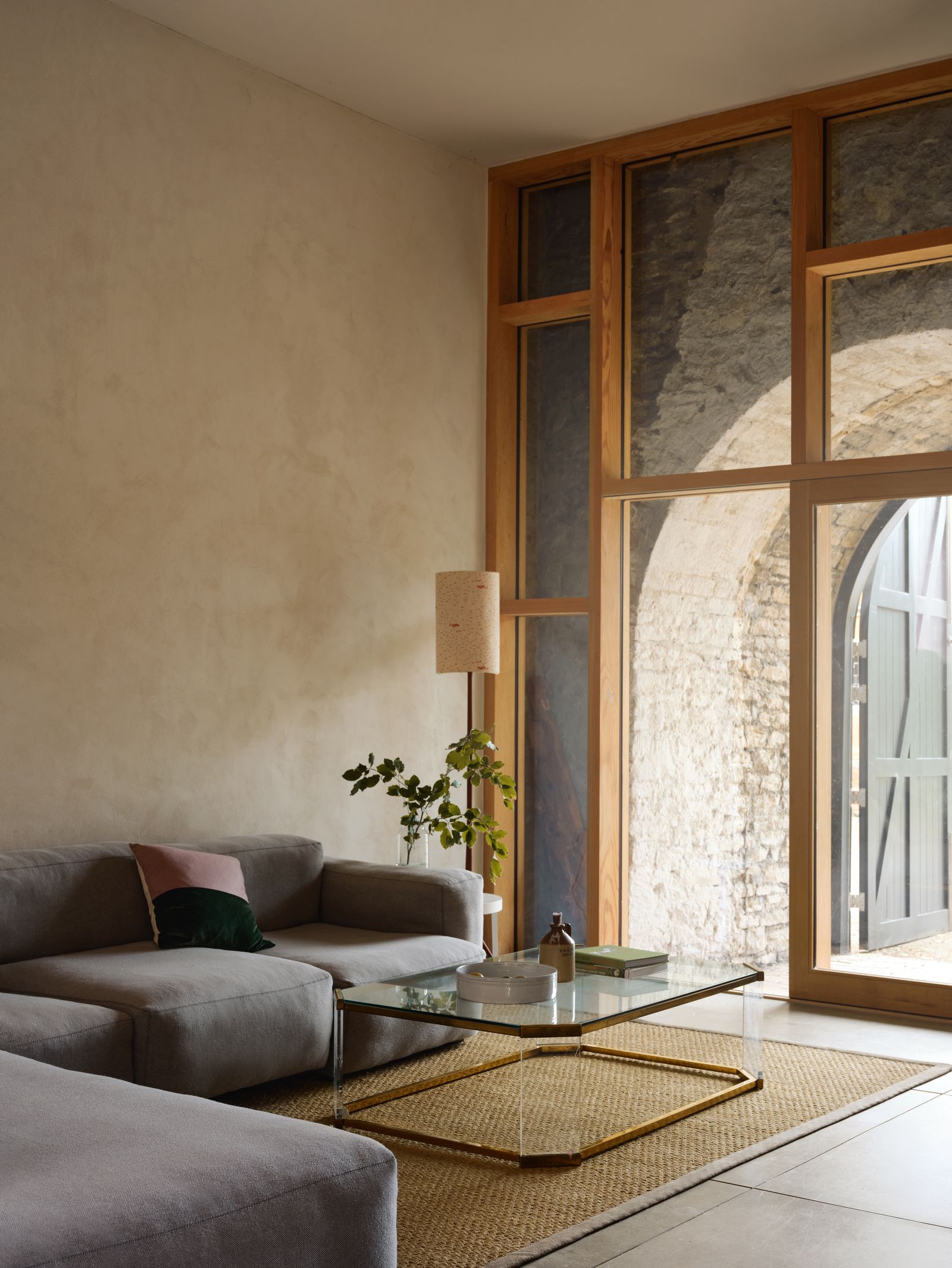
Back in the UK, they began their search for the right house to buy. They had a clear wish list: historic and characterful; a large space for entertaining; not too many stairs; a good local school; and proximity to a fast train service to London. 'We wanted a project that needed significant renovation work so we could make the space our own,' Luke recalls. 'We weren't keen to take on a property already so extensively redesigned that it would feel like ripping out someone else's dreams.' After six months of looking, they came across The Wool Hall. 'You can feel creativity in the bones of the space,' says Luke. 'That was clear to us from our first visit.' Yet, at the time of purchase, the property was, as Jonathan recalls, 'an amalgamation of differing styles, eras and scales that had been cobbled together'.
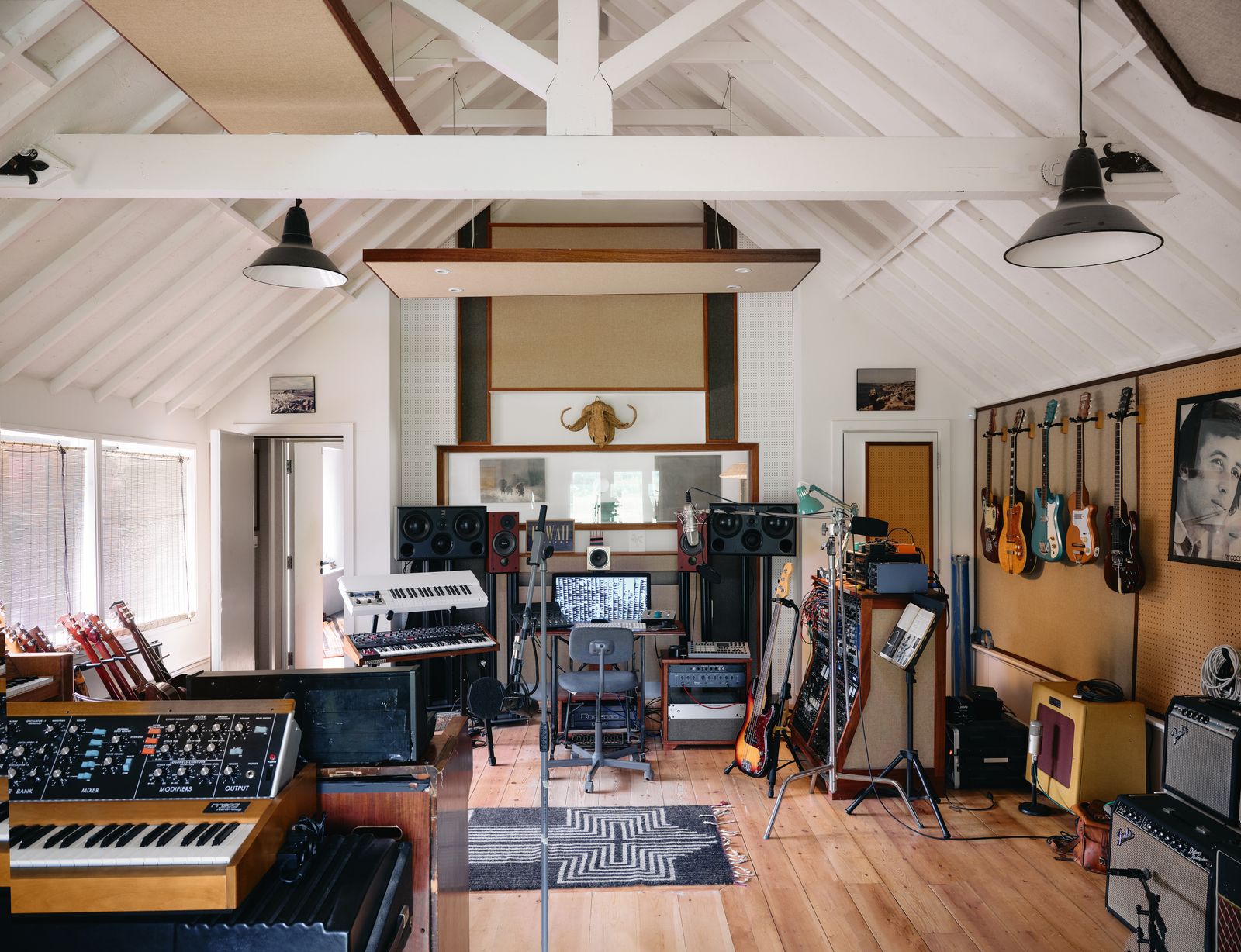
It consisted of three parts: the original hall, which had been used as the recording studio and was in a poor state of repair; a further outbuilding that had been the rehearsal studio and which is now Luke's main recording studio; and the old residential section that was constructed in the 1980s as a makeshift home. 'This was just one long, narrow, L-shaped space, with low ceilings and door after door,' remembers Zoë. 'We had a great feeling about it, but it took a few visits from Jonathan for us to really understand its full potential to become a family home.'

'The site's historic wool-trade use was integral to the design and a constant point of reference throughout the development,' says Jonathan. The couple did not want to interrupt the architect's creative process, so opted to take a hands-off approach. Once the first draft of plans was approved, they left Tuckey Design Studio to work collaboratively with local contractor Emery and quantity surveyor Andy Allsopp-Jones.
'The first briefing was so thorough you could tell every detail had been carefully considered before being presented to us,' say Luke. 'We fully trusted the shared vision for the space. We wanted it to have the identity of a Jonathan Tuckey-designed home, which was clear from the plans. I know from my own experience as a music producer that interrupting the process and questioning everything never achieves the best results.'

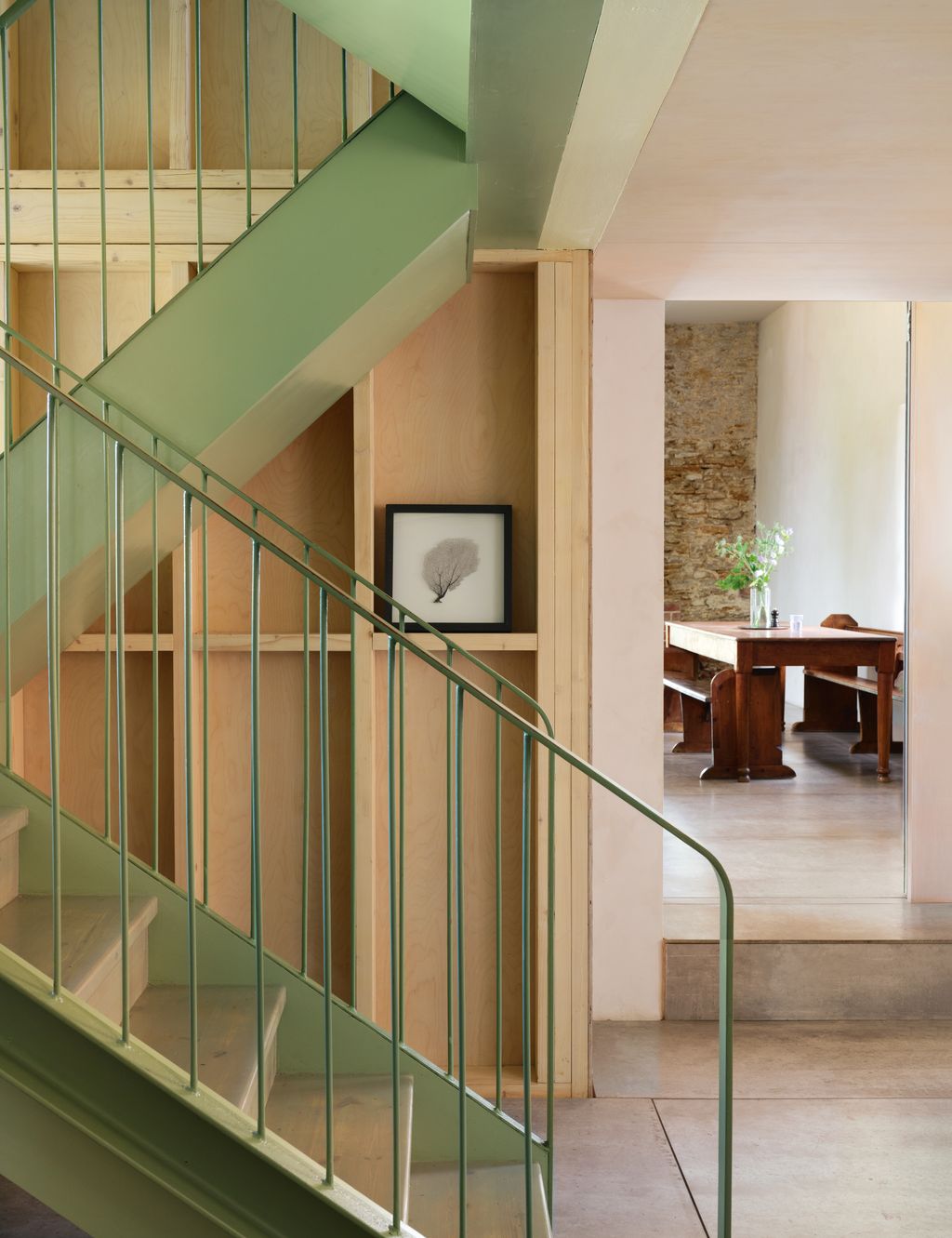
The project began with installing an industrial-style staircase weaving up through the three floors from the newly created main entrance at the side of the building. 'Stepping into this space gives an immediate impression of the home's new configuration - it is the area that pulls all the components together,' explains Jonathan. 'From here, you can look upwards through a three-tier atrium, with the upper bedrooms on the top level. On the ground floor, you now turn left from the hallway into the study and the snug - both in the redesigned 1980s extension - and you turn right into the kitchen, which occupies the original 1580s hall.'
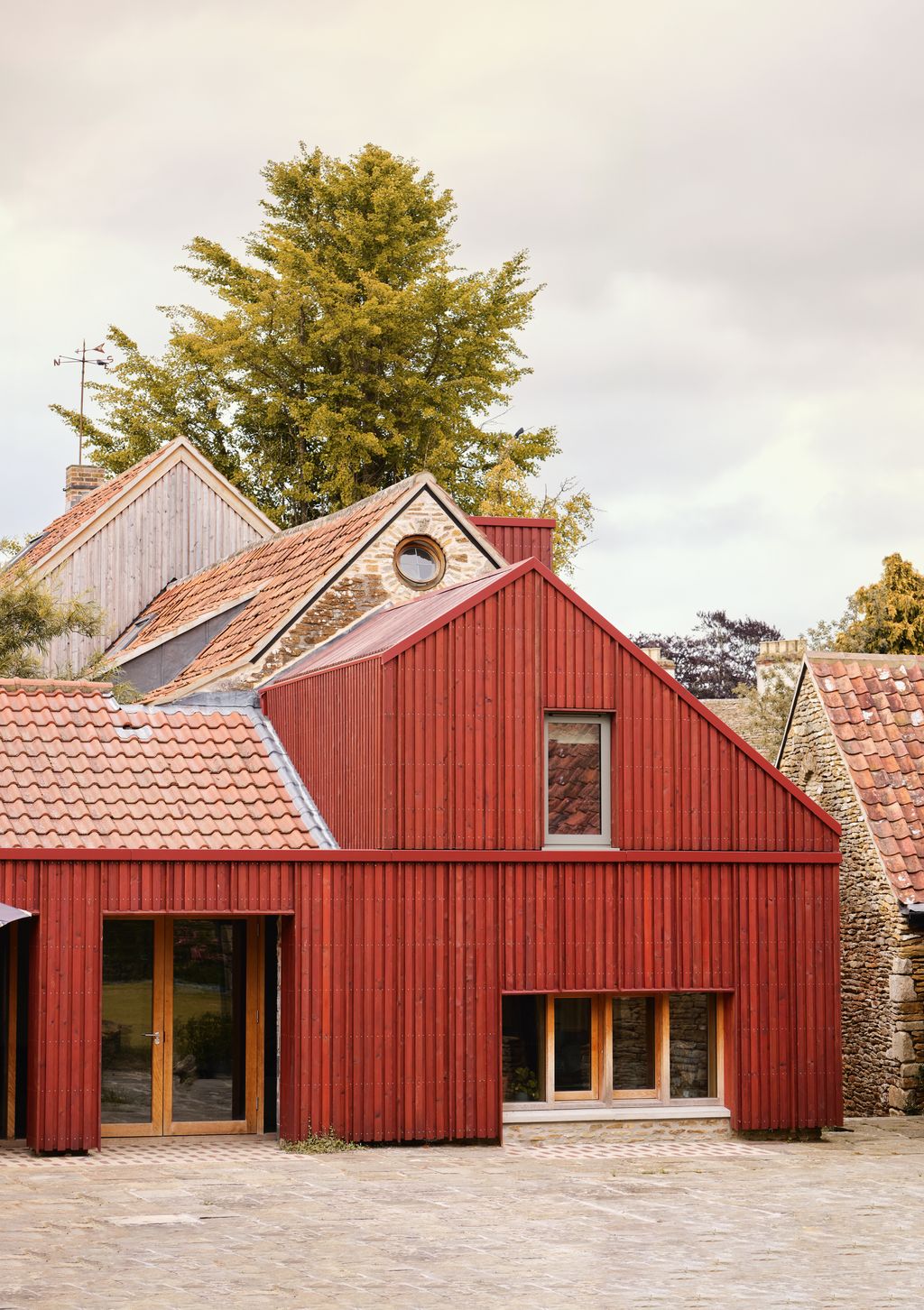
Dilapidated areas of the cavernous 1980s residential extension were removed; double glazing and a new crimson-stained, timber framed extension were added; and a courtyard was created at the back of the house. 'This has alleviated the overheating that was a problem in this part of the property in summer,' says Jonathan. 'It had low ceilings and sealed glazing, but we opened up the plan and then added windows and doors for ventilation. Alongside this, lime plaster and breathable insulation have improved the air quality.'
The original hall was brought up to modern insulation standards by spraying Diathonite plaster on the historic stone walls: 'This insulates and allows them to breathe without losing their character and uneven texture.' Viroc flooring, a non-toxic composite board of cement-bonded wood particles, was laid throughout.
As for the decoration, the couple have embraced a less-is-more approach. "There is a certain modesty to Jonathan's work,' says Luke. 'We love the fact that the building itself does the talking and isn't cluttered by belongings. We invested our budget in the beauty of the structure rather than the things inside it. After two years of living here, we're still embracing this'.
Tucker Design Studio: tuckeydesign.com
 Simon Bevan1/7
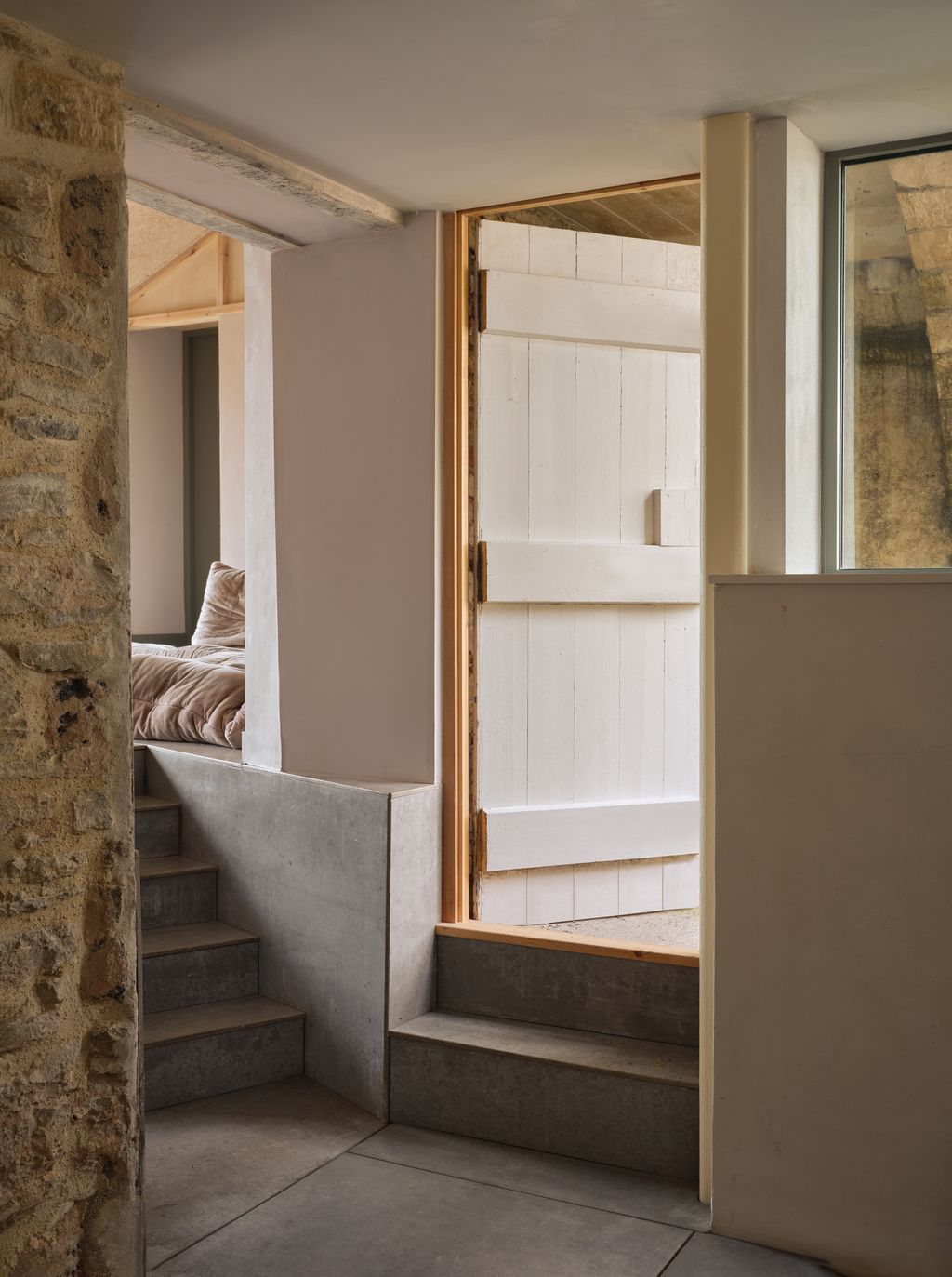
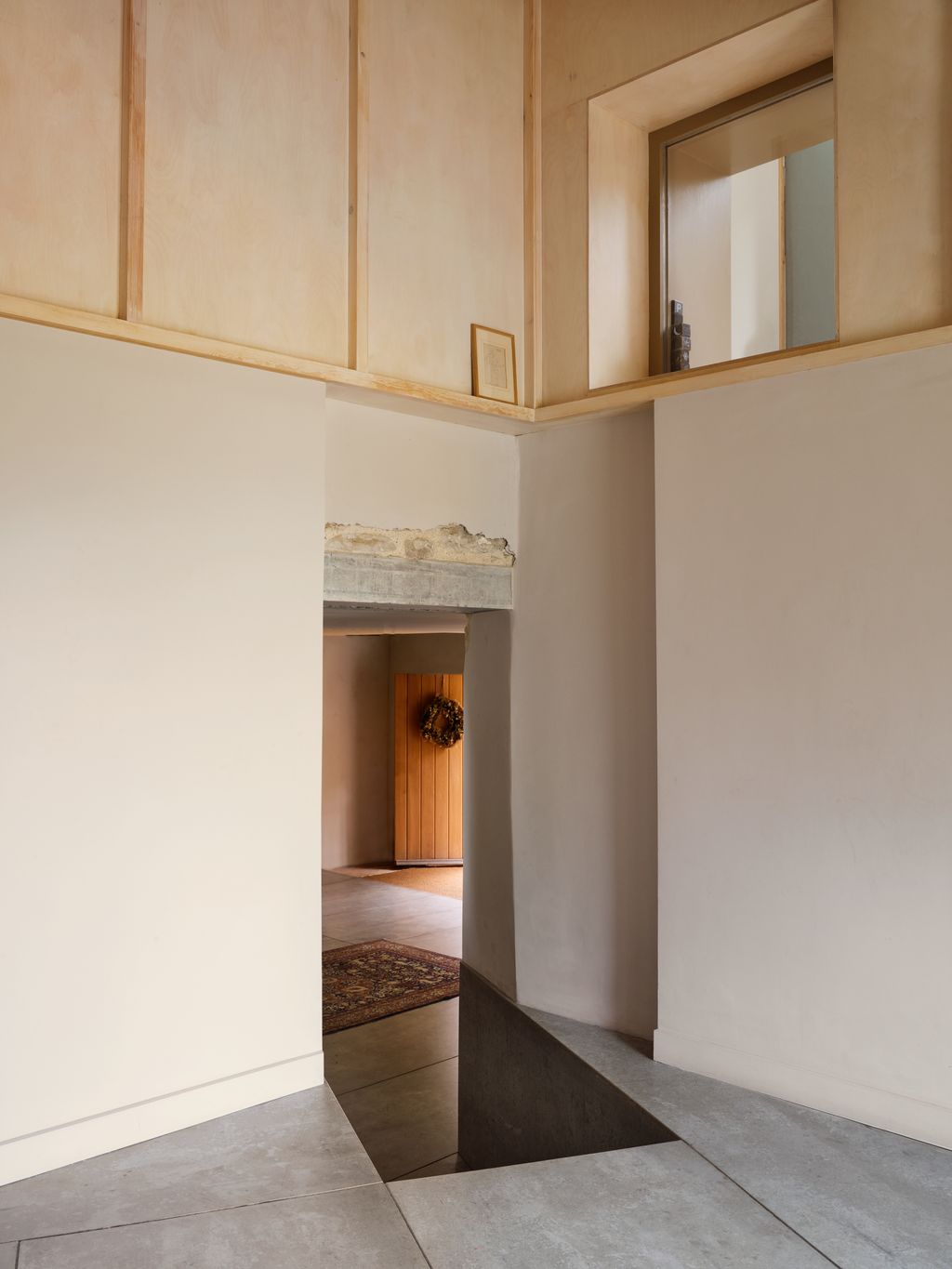
In the hall. viroc clads the lower wall and steps leading to the side entrance and snug.
 Simon Bevan2/7
 Simon Bevan3/7
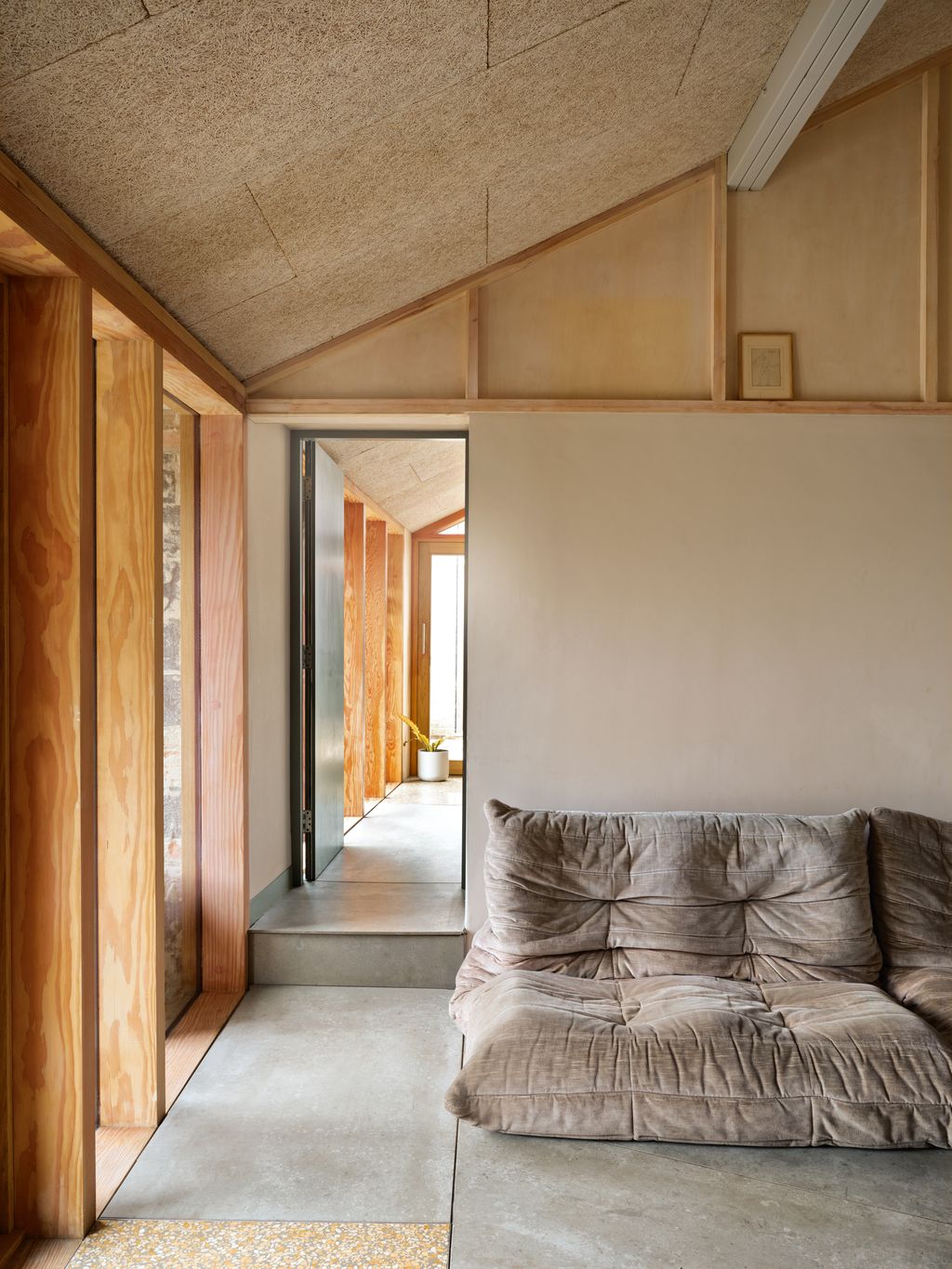
A diagonal stepped threshold leads to the stairwell and main entrance. Above a concrete lintel supporting the original masonry are birch ply panels and what Luke calls a 'Weetabix ceiling' - thermally efficient wood wool boards. The Ligne Roset 'Togo' sofa in the snug was found on eBay.
 Simon Bevan4/7
This new entrance space brings cohesion to the different elements of the building, with an industrial-style steel staircase connecting all three floors; the floorboards on the top level, which holds the upper bedrooms, are painted the same restful 'Sepal' green by Tikkurila.


 Simon Bevan5/7
 Simon Bevan6/7
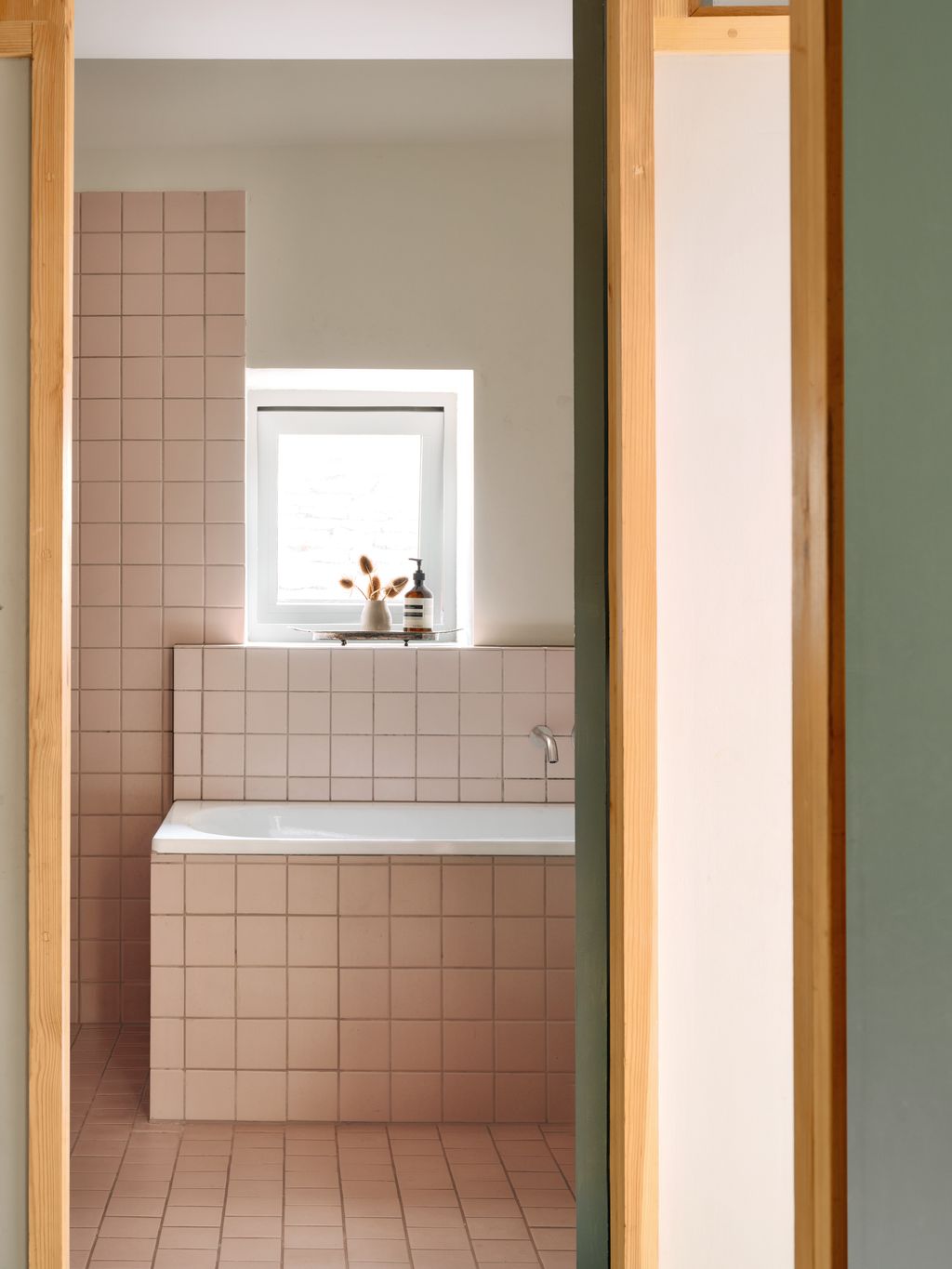
Tiles from Grestec, which pick up on the soft pink of the limewash and stone used throughout the house, unify the walls and floor with a simple, utilitarian look.
 Simon Bevan7/7
To complement the colour of its existing terracotta roof tiles, the 1980s extension was clad in larch batons, stained in a tonally similar deep red.


