
A Florentine villa grounded in a love of collecting and respect for tradition
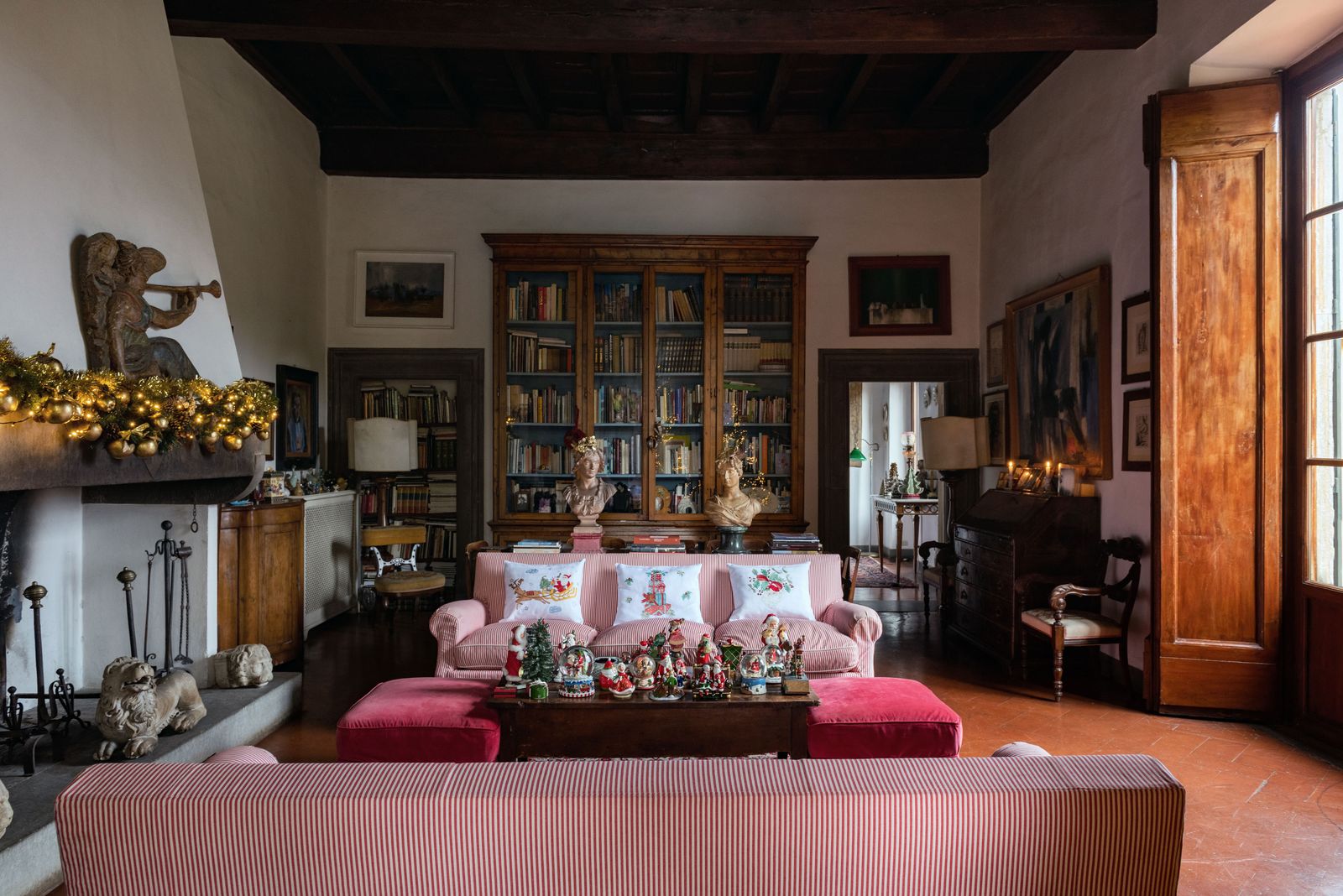
The best interiors tell a story about the people who live in a house from the moment you step across the threshold. Walk into this Florentine villa in December and two things quickly become apparent: this is the home of collectors, and also the home of a serious lover of Christmas. Belonging to the Caponi family, the 15th- and 19th-century house sprawls over a hillside overlooking Florence. Loretta Caponi, the founder of an eponymous fashion and homeware brand, bought the house in the 1970s, along with her daughter Lucia. Built in the 1400s, it had sadly been carved up into ten apartments when the family bought it. Now restored to its original state as a single house, it serves as a base for the family at large and their successful business.
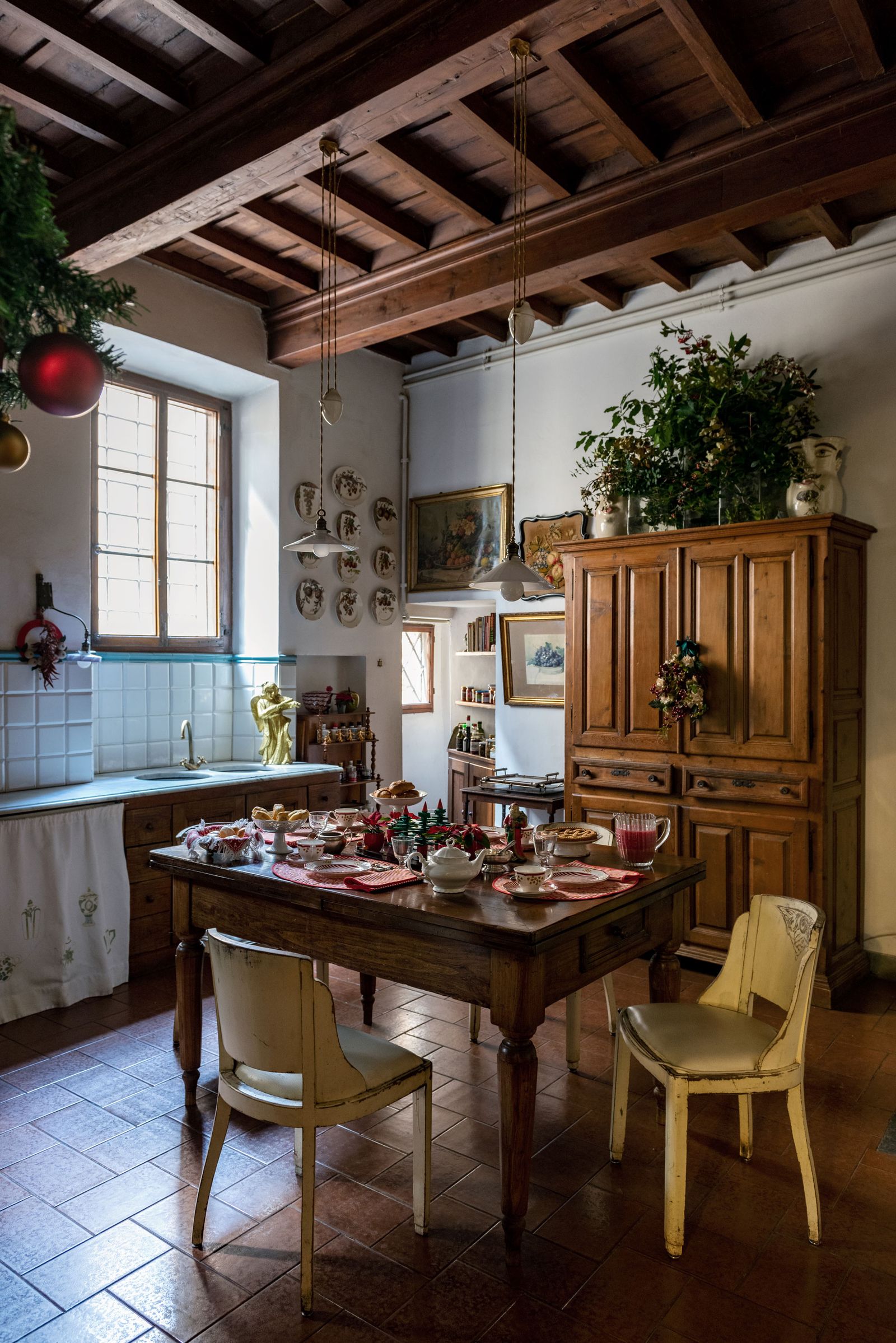
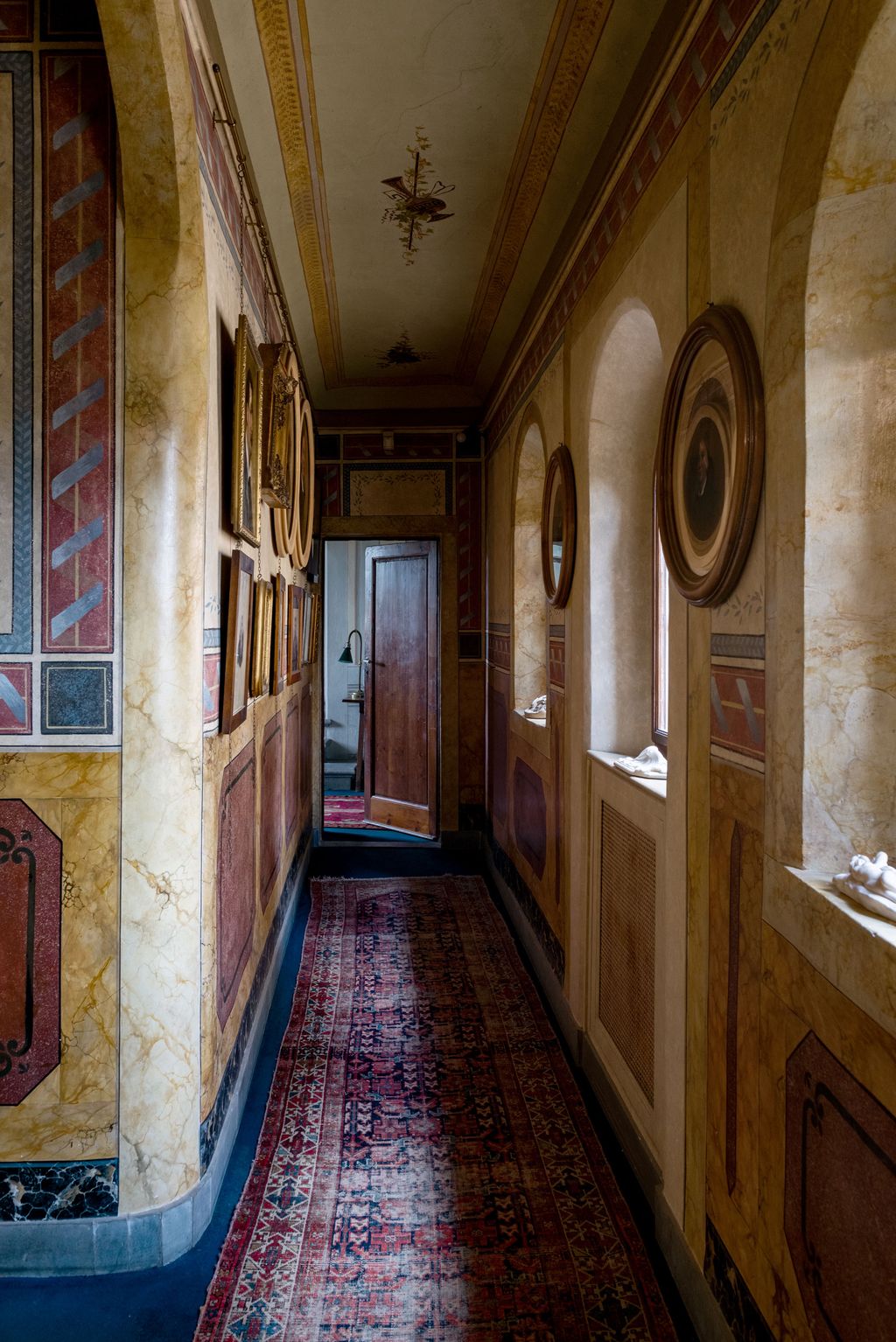
The villa was intended as a place where the Caponis could live as a family, so the ten apartments had to go. Although they were unfinished, it still took a good few years to restore the layout and character of the building. ‘My family has tried to bring the original details back’ explains Lucia’s son Guido, who now also works in the family business, ‘and put in things that were proper for a Renaissance villa.’ This means the original, hefty stone fireplace in the main living room, the wonderfully traditional kitchen and perhaps the most intriguing hallway ever to grace House & Garden, covered in an intricate mural of varying patterns. There was not enough of a mural there for the family to restore, but they found a small patch of it and had a specialist recreate it. It now runs across the entire stairwell to the first floor and along the corridor that extends to Lucia and her husband Renato’s bedroom.
About five or so years after moving in, the adjoining part of the house, built in the 19th century, came up for sale and so that was bought too, to provide space for Lucia and Renato’s growing family. You’d never know now that the house is made up of different parts, except perhaps for the two front doors. Step inside, and the house has a distinctly compelling character. ‘Everybody in my family is a collector’ laughs Guido. ‘My parents have bought pieces from markets from all over Europe and America and from auctions and they were always looking for new pieces to add to the house.’ It got to the point that Renato, a neurosurgeon by profession, opened an antiques store in Florence – Casa Wolf – to be able to carry on collecting without overwhelming the house.
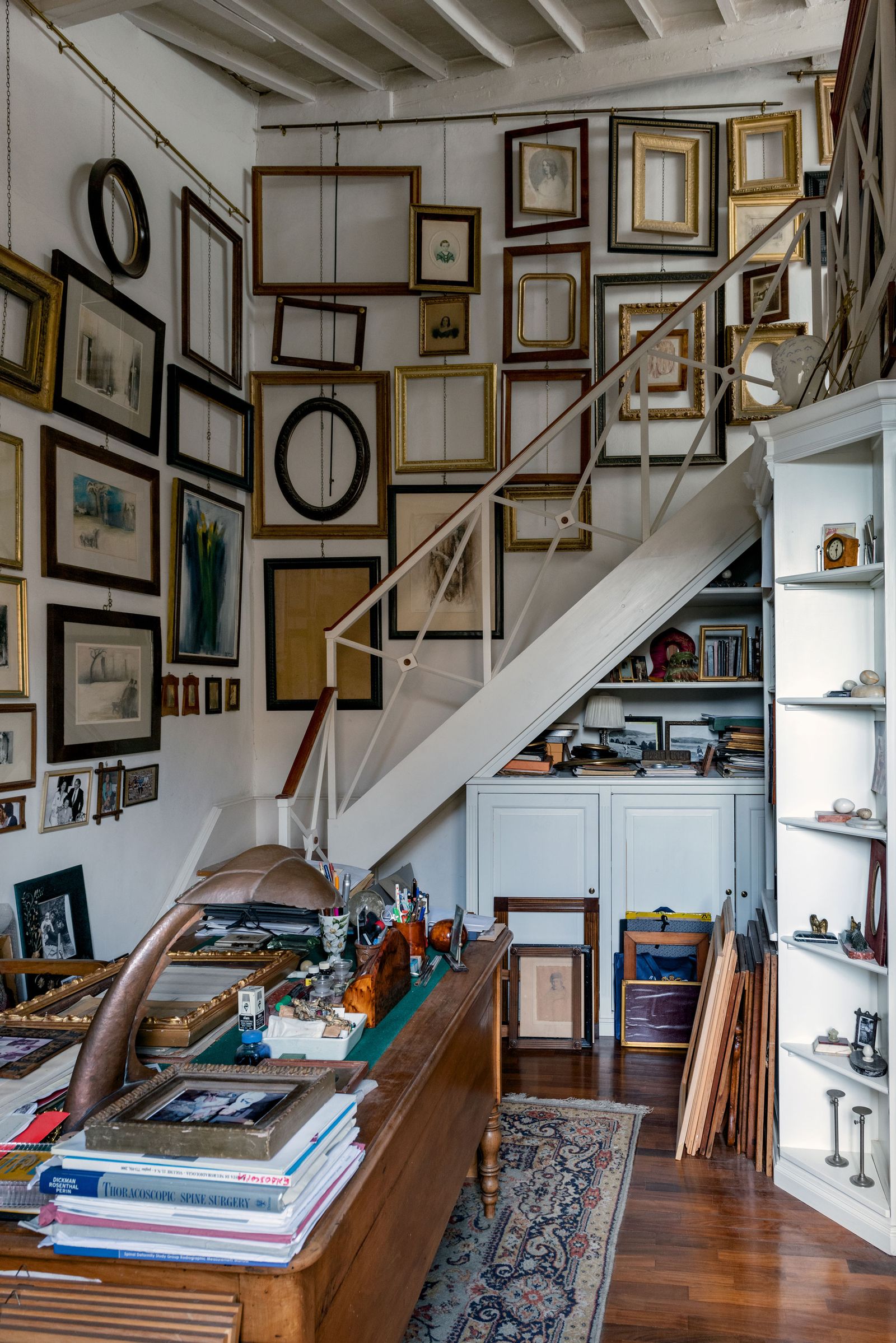
The size of the house and its particularly generous height has allowed Renato to fill the walls with art everywhere you look. Pieces by Lucia’s artist father, Dino Caponi, mix with those by 1920s Italian artist Rosai alongside works from every corner of Europe. An entire wall is dedicated to portraits. There are some frames that still have the auction house stickers on and you have to look hard in Renato’s study to discover he is a doctor and not, in fact, a professional framer, as it is filled with art and frames in every nook and cranny. He is passionate about framing, which makes sense when you consider the steady hand that his day job requires. ‘We love the curiosity and the discovery. You get a frisson of excitement,’ explains Lucia of their love of collecting.
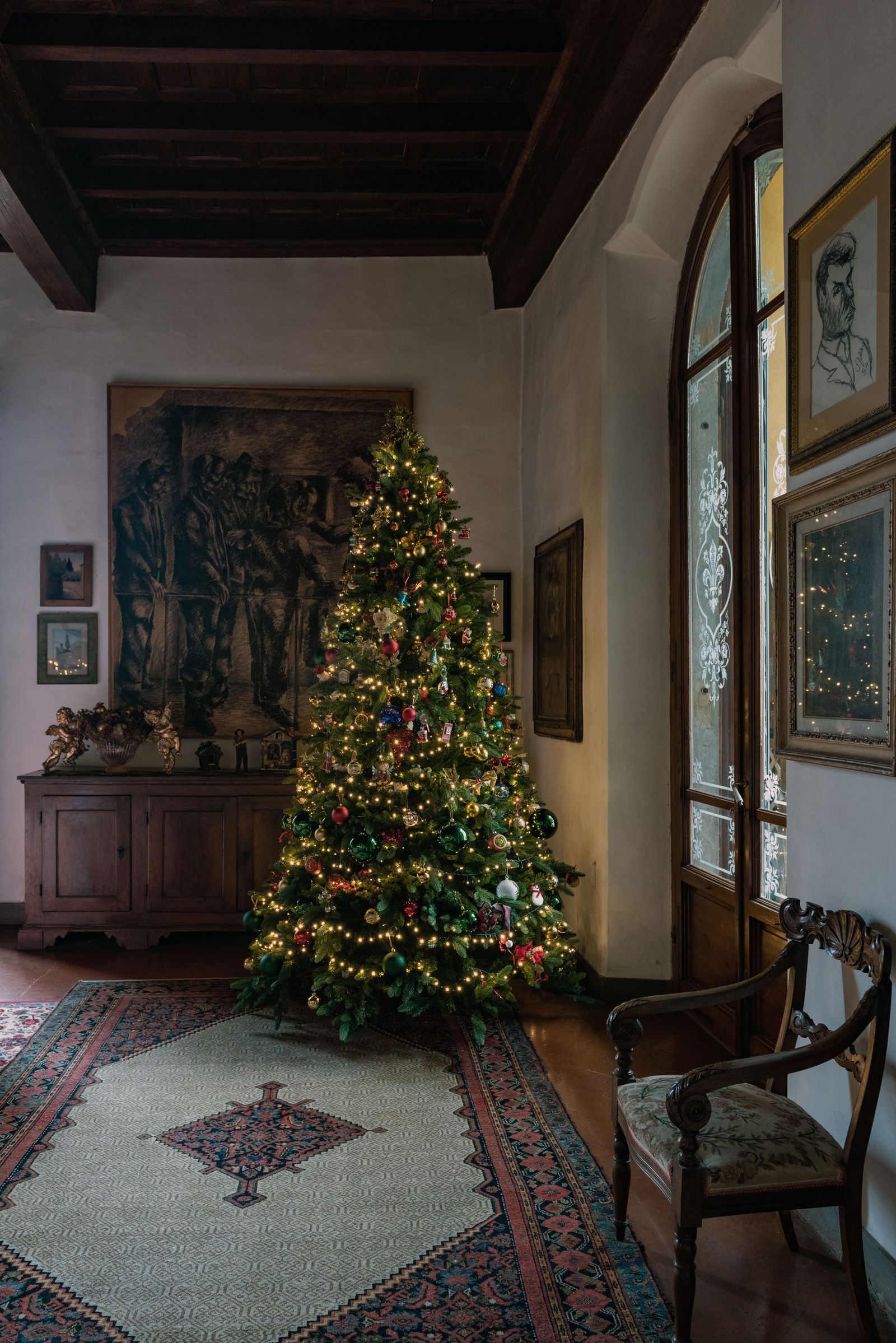
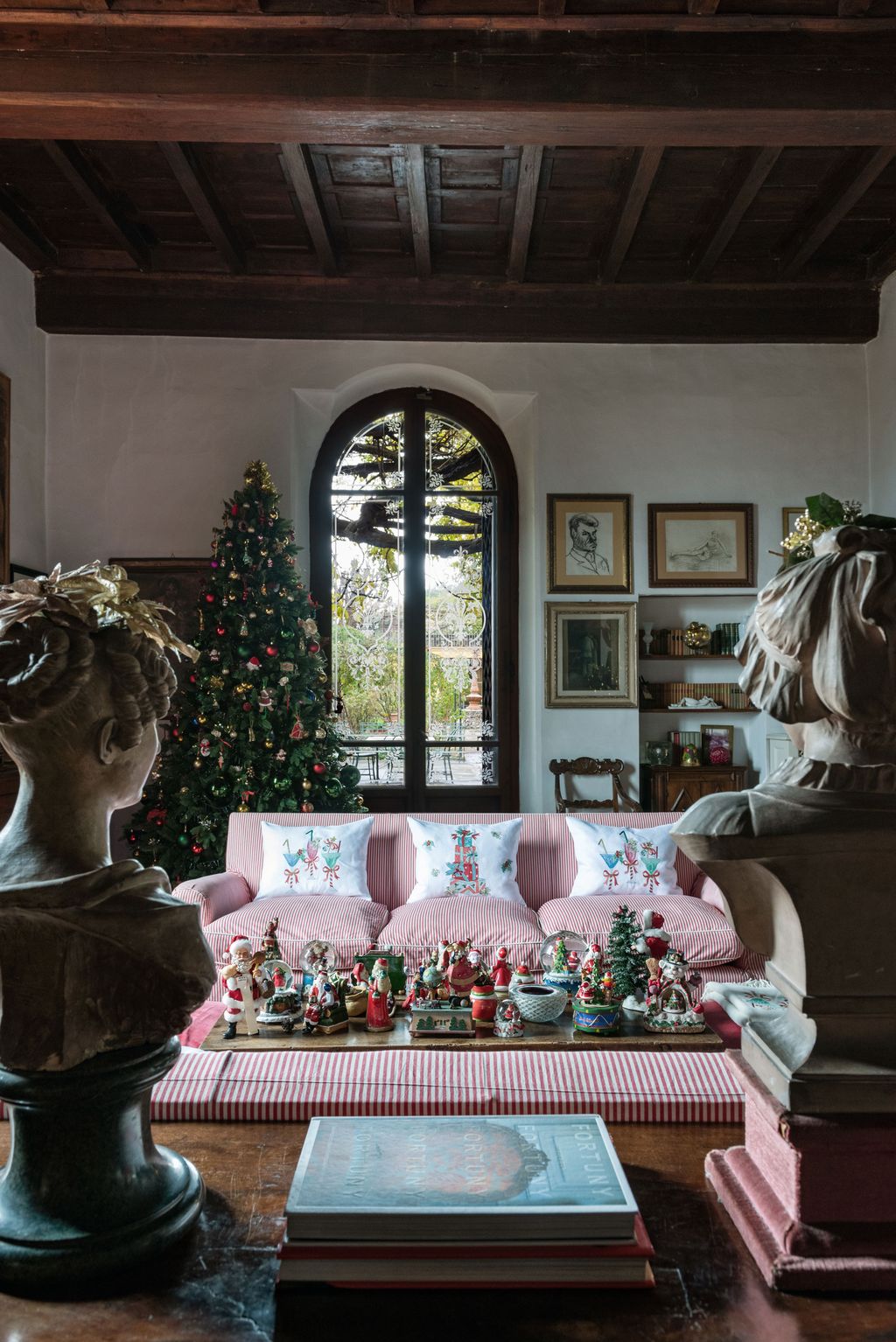
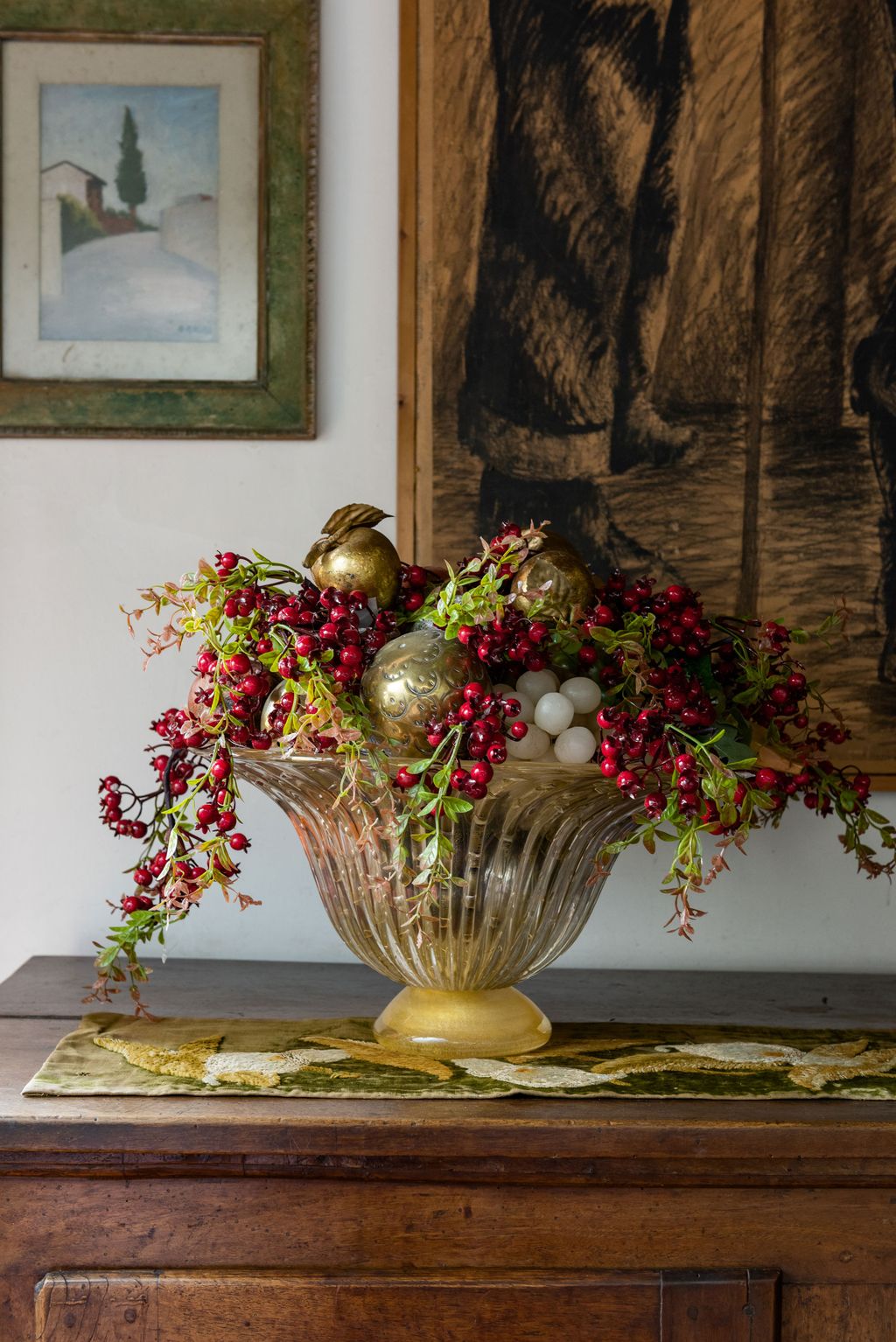
It’s very much a family house, however, rather than a museum of precious objects, and that’s never more evident than at Christmas. Although Lucia and Renato’s sons, Guido and Duccio, are adults now, that doesn’t mean it’s any less exciting for them all. When Guido proclaims, ‘We are all children when it comes to Christmas,’ Lucia chips in laughing ‘you particularly.’ Lucia decorates the house herself, using a lot of lights and plenty of colour, as well as pieces she saves from wrapped Christmas presents. For example, two busts in the living room have glittery flowers on their heads, taken from a present years ago. Lucia, Creative Director of Loretta Caponi, is the creative visionary of the family, and takes inspiration from everywhere. When a friend gave her a Christmas floral arrangement, she promptly took it apart and put it back together again in a much more stylish way.
‘The tree is decorated in a way that is very happy,’ says Guido, ‘full of colours, full of decorations that she’s collected. We all have this feeling that Christmas is for children, even if they’re grown up.’ The coffee table is covered in various Santa figurines from their travels and of course, Loretta Caponi’s Christmas collection is peppered throughout the house. There are cushions embroidered with Santas, presents and cocktails; throws with glittery scenes; bedding with intricate embroidery of a Christmas tree made of ribbons, and a spectacular tablecloth on the dining table to match, which would take one of the brand’s artisans at least 15 days to make, as Guido tells me.
If you spend any time with the Caponi family, it is easy to tell what a tight bond they have. This is the foundation of the company that bears their name and that has been going from strength to strength since it launched. ‘Everything starts with my grandmother Loretta,’ explains Guido, ‘but really the brand is made of two great souls, my grandmother and my mother.’ Just as Lucia grew up going to the shop and workshop on via delle Belle Donne after school, so too did Guido and Duccio. Duccio now runs an interior design and restoration practice under the family name – he is currently helping to renovate the family’s country house in Maremma – but is still integrally linked to the business, while Guido joined the business in 2015 and is looking to the future: ‘We’re bringing the brand to a wider audience and trying to make its image a little more contemporary without any compromise on the heritage.’ It’s evident from stepping into their house that everyone in the family has a deep respect for this heritage, and the home perfectly demonstrates how the generations of the Caponi family work together.
Loretta Caponi: @lorettacaponi | matchesfashion.com | netaporter.com
 Nathalie Krag1/26
The two busts are from 19th century; one was bought by bought by Loretta Caponi at an antiques shop in Florence, and the other one in a market in Belgium by Renato.
 Nathalie Krag2/26
A 20th-century Murano vase holds a Christmas display put together by Lucia.
 Nathalie Krag3/26
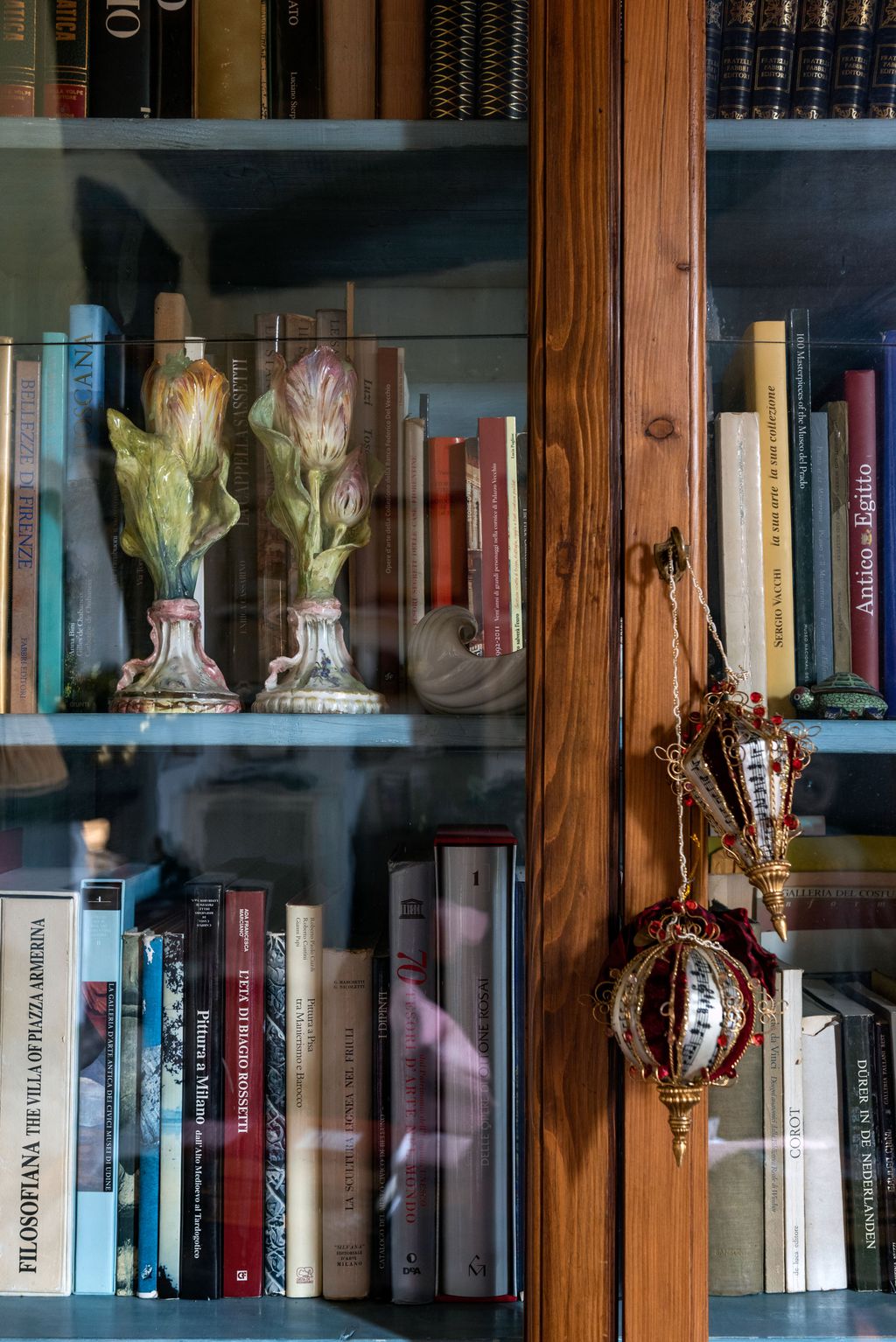
The tulip candlesticks in the bookcase were bought by Loretta as a gift for Lucia.
 Nathalie Krag4/26
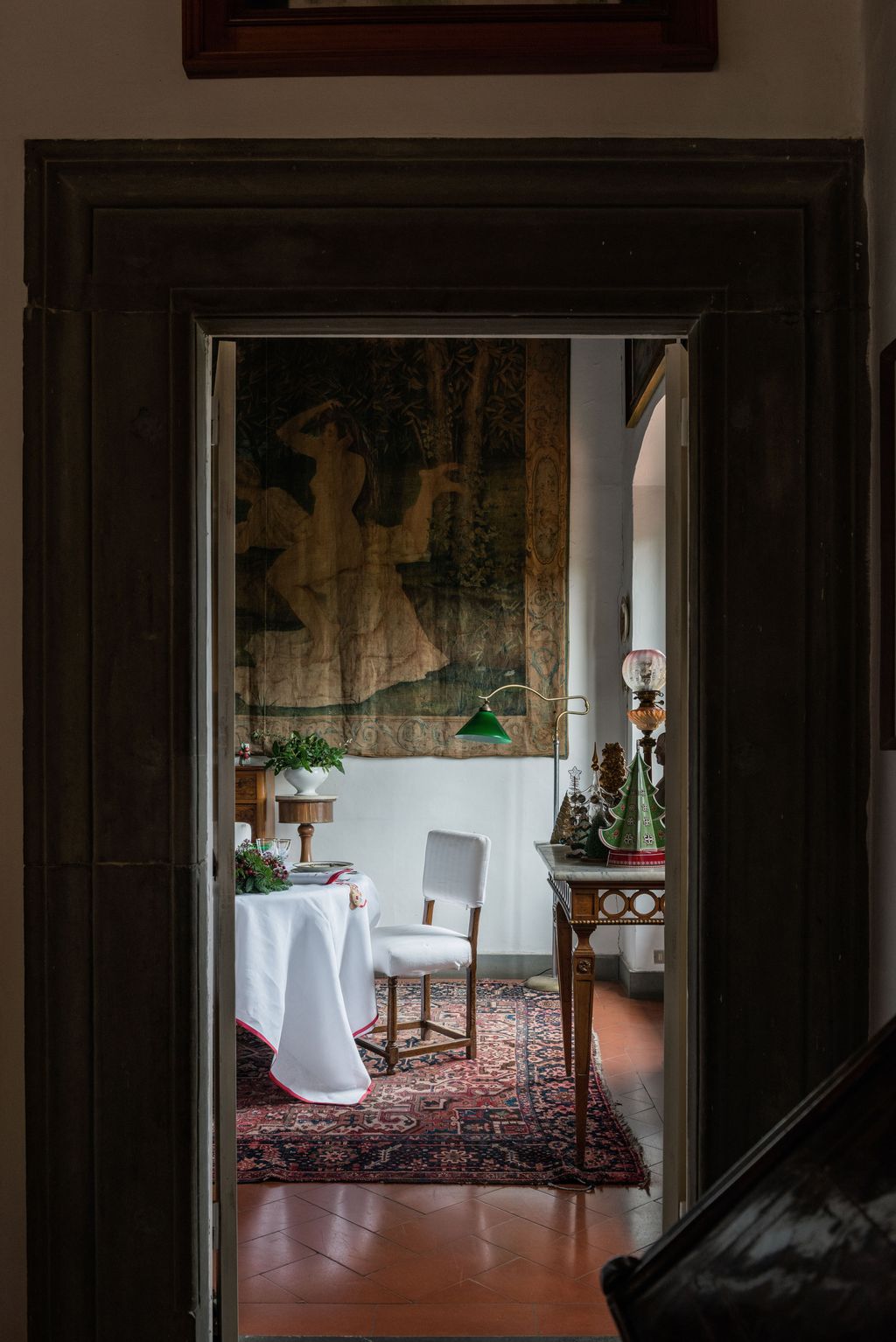
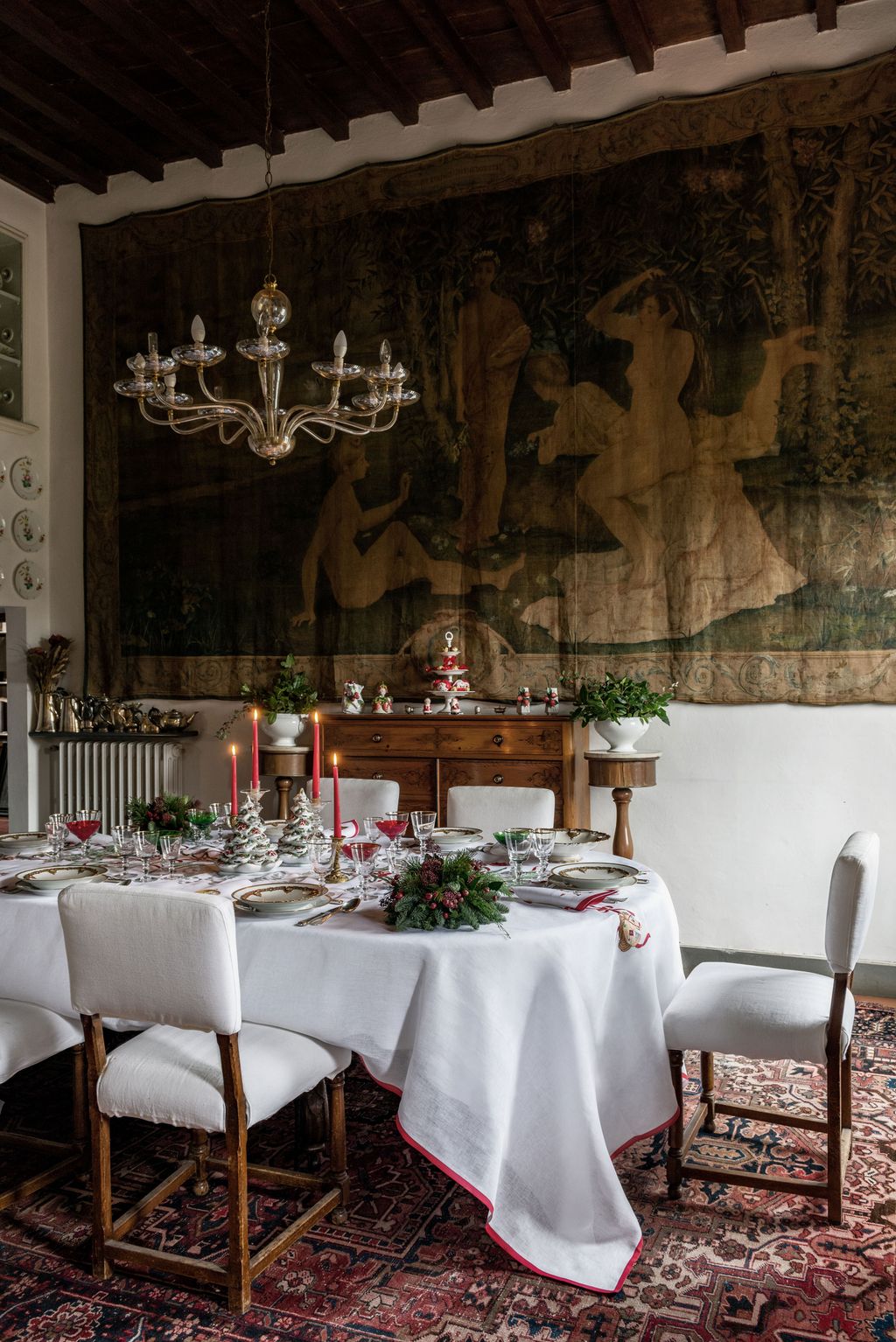
The living room leads into the dining room, where an early 19th-century tapestry called Succo d’erba hangs along one wall. Lucia and Renato bought it in a market in Avignon in the 1980s.


 Nathalie Krag5/26
A Venetian chandelier hangs over the table in the dining room. The table is set for Christmas, with a bespoke Loretta Caponi tablecloth taking centre stage, which takes more than 15 days to embroider by hand.
 Nathalie Krag6/26
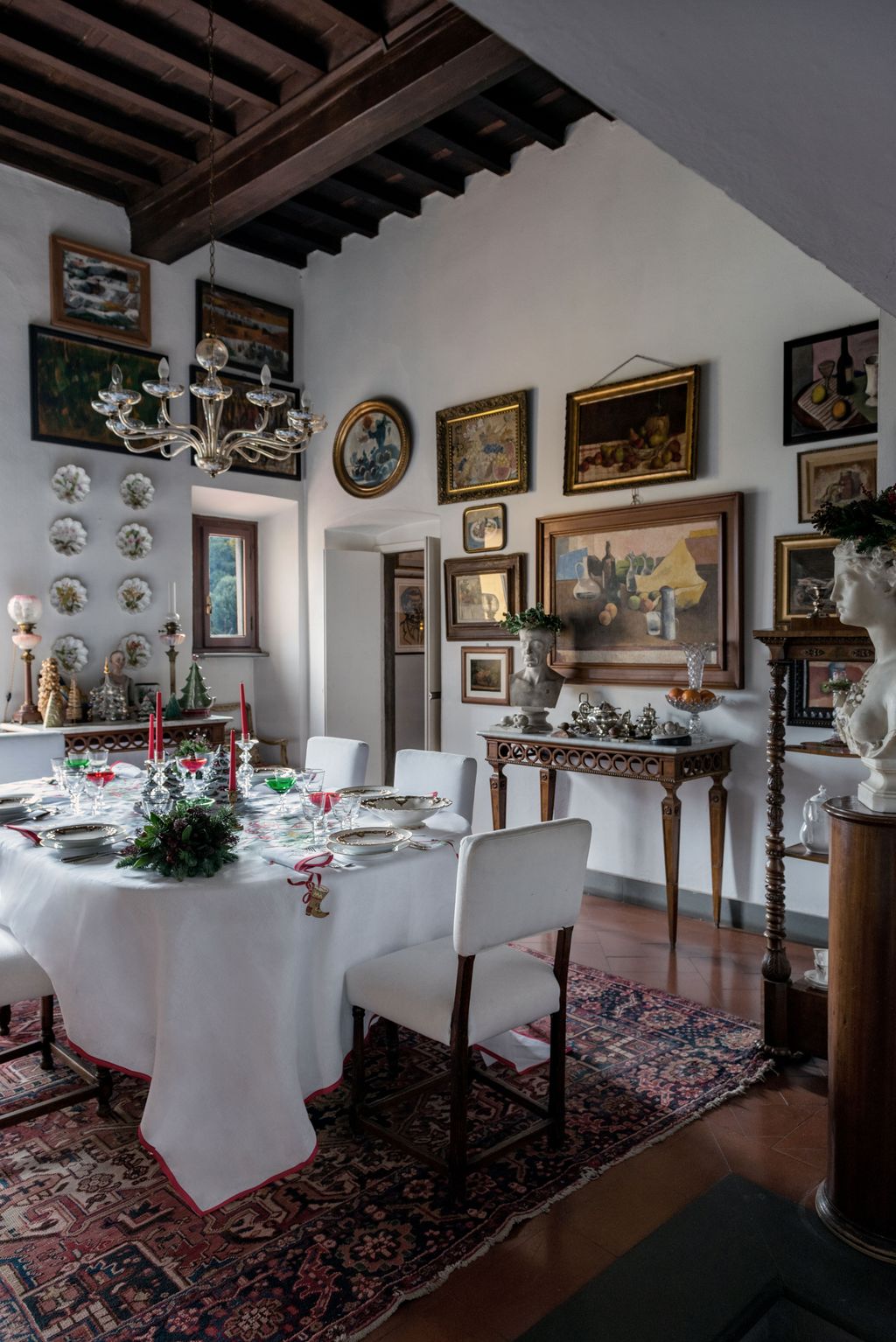
The console tables came from an auction in Florence and date to the 18th century. The large painting in the middle of the still life paintings is by Dino Caponi.
 Nathalie Krag7/26
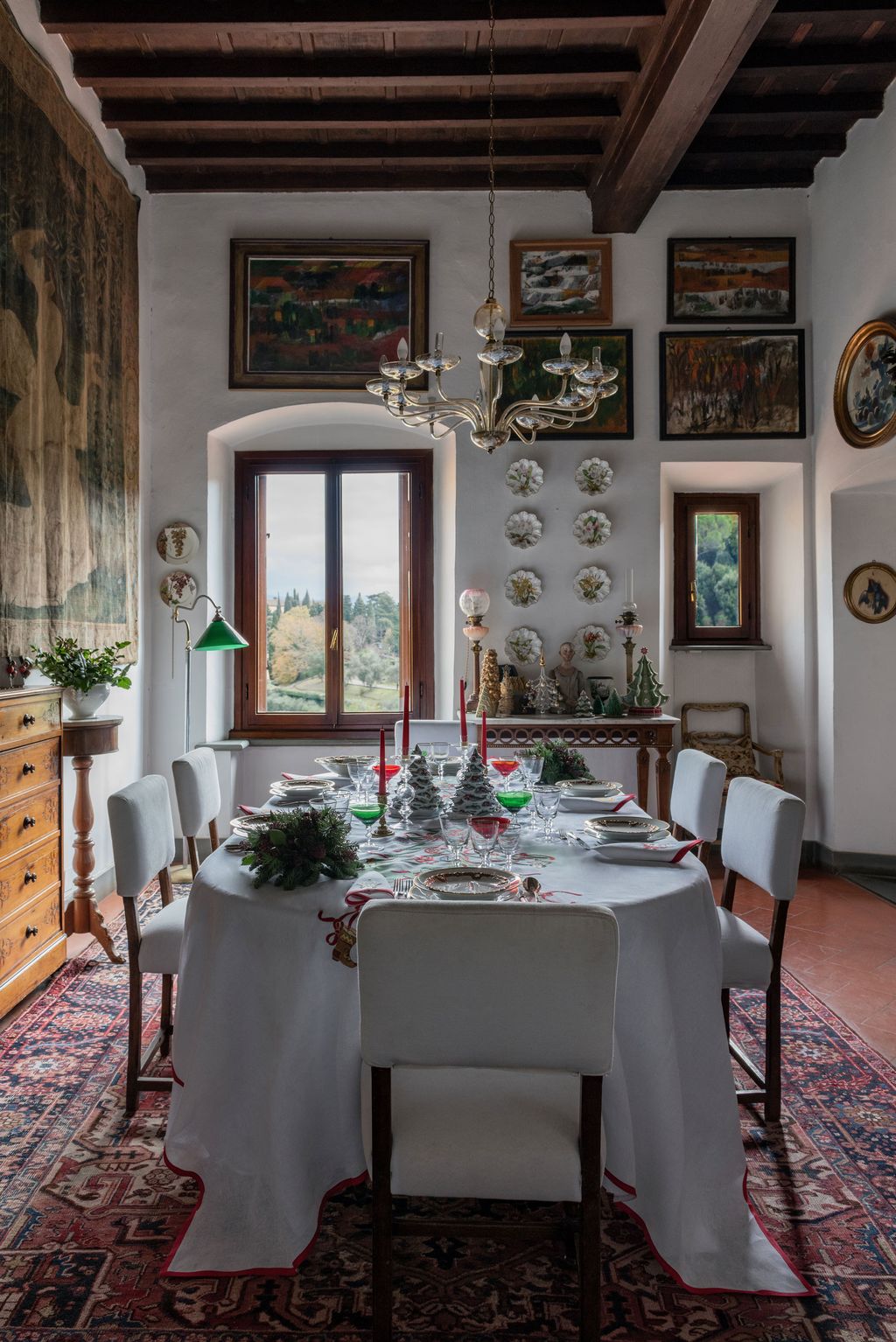
More Dino Caponi paintings hang on the other wall, with 19th-century Limoges dishes hanging below.
 Nathalie Krag8/26
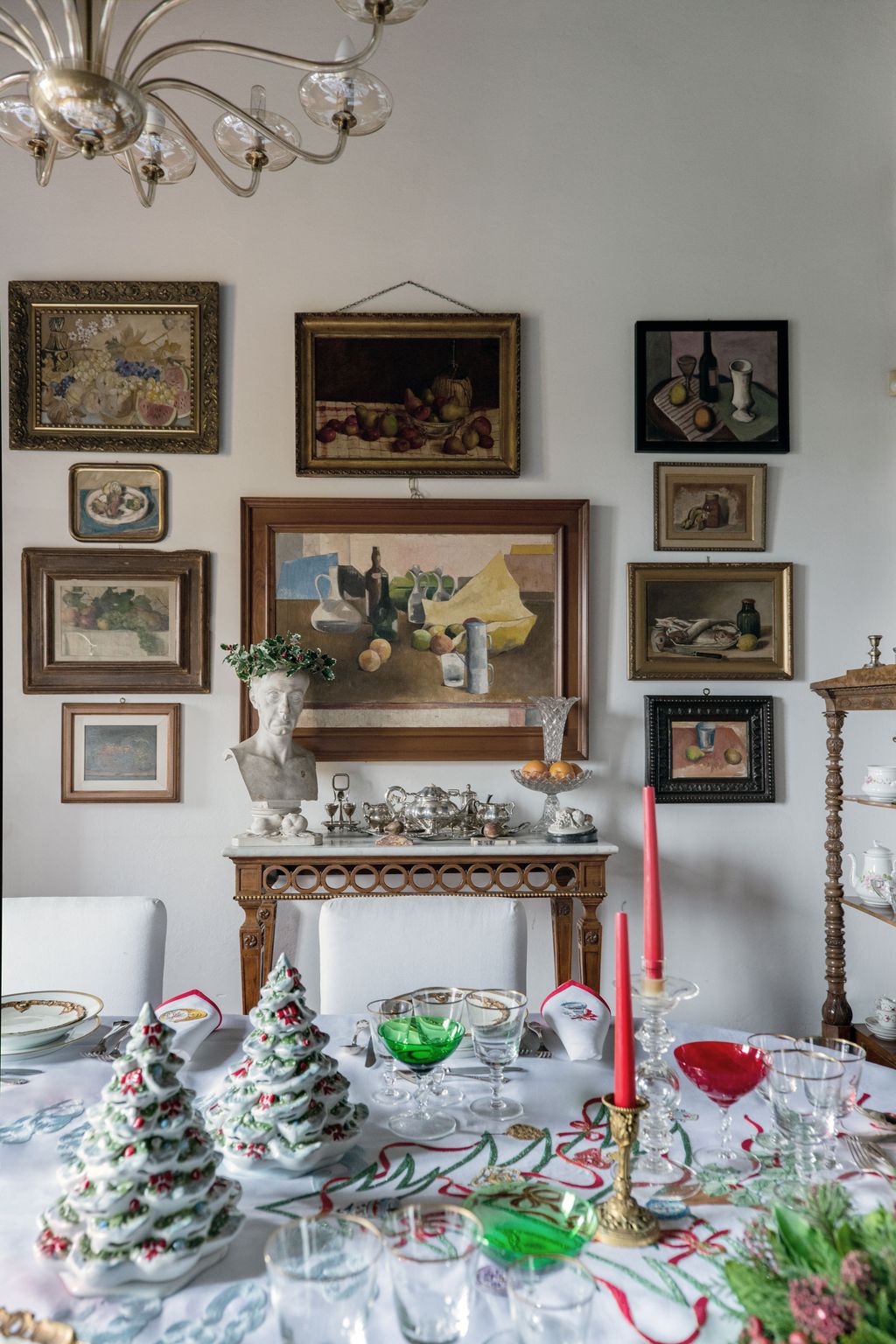
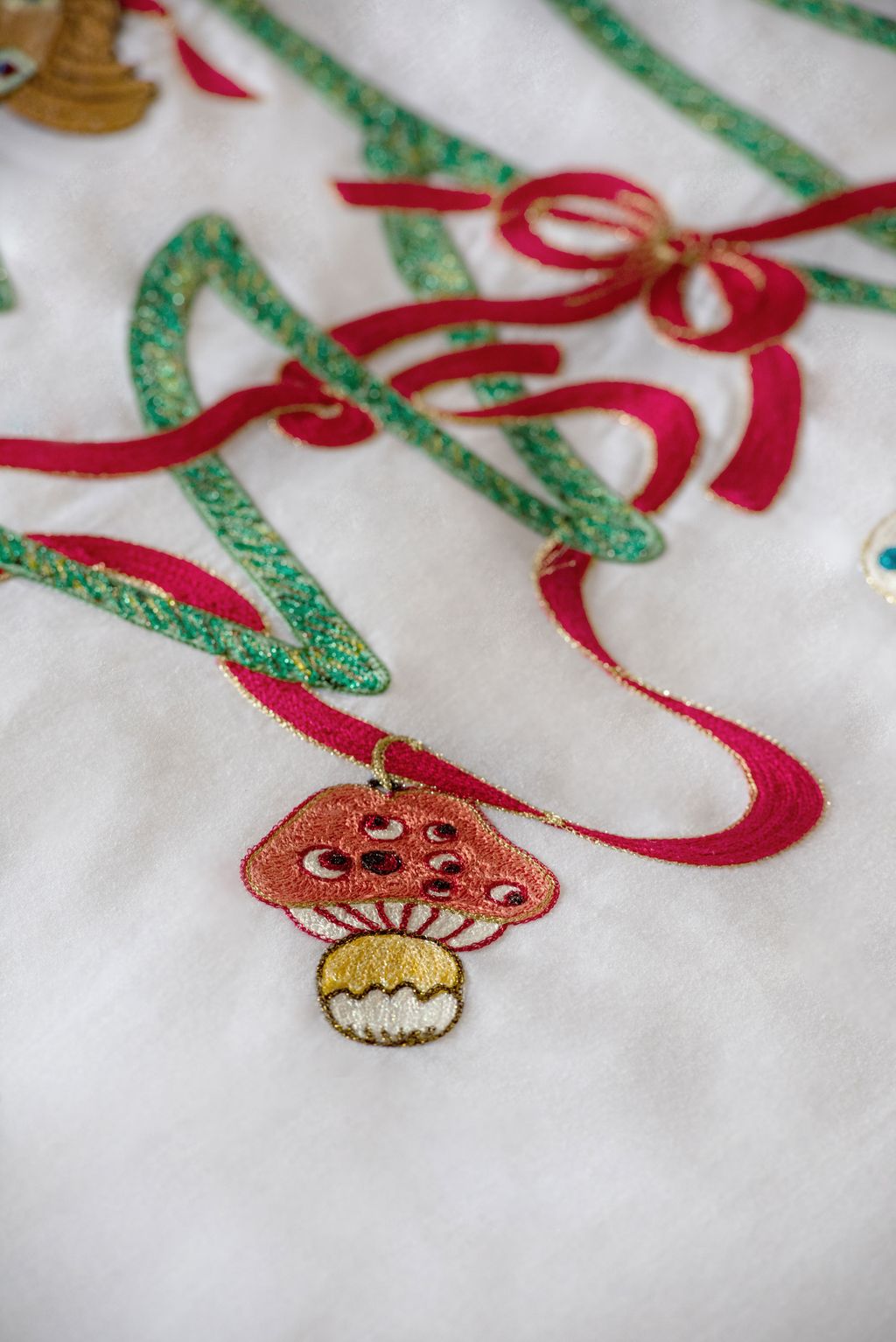
The tablecloth is embroidered with glittering ribbons that form a Christmas tree, strung with embroidered baubles. Lucia chooses glassware and decorations for Christmas that highlight the colours on the intricate tablecloth.


 Nathalie Krag9/26
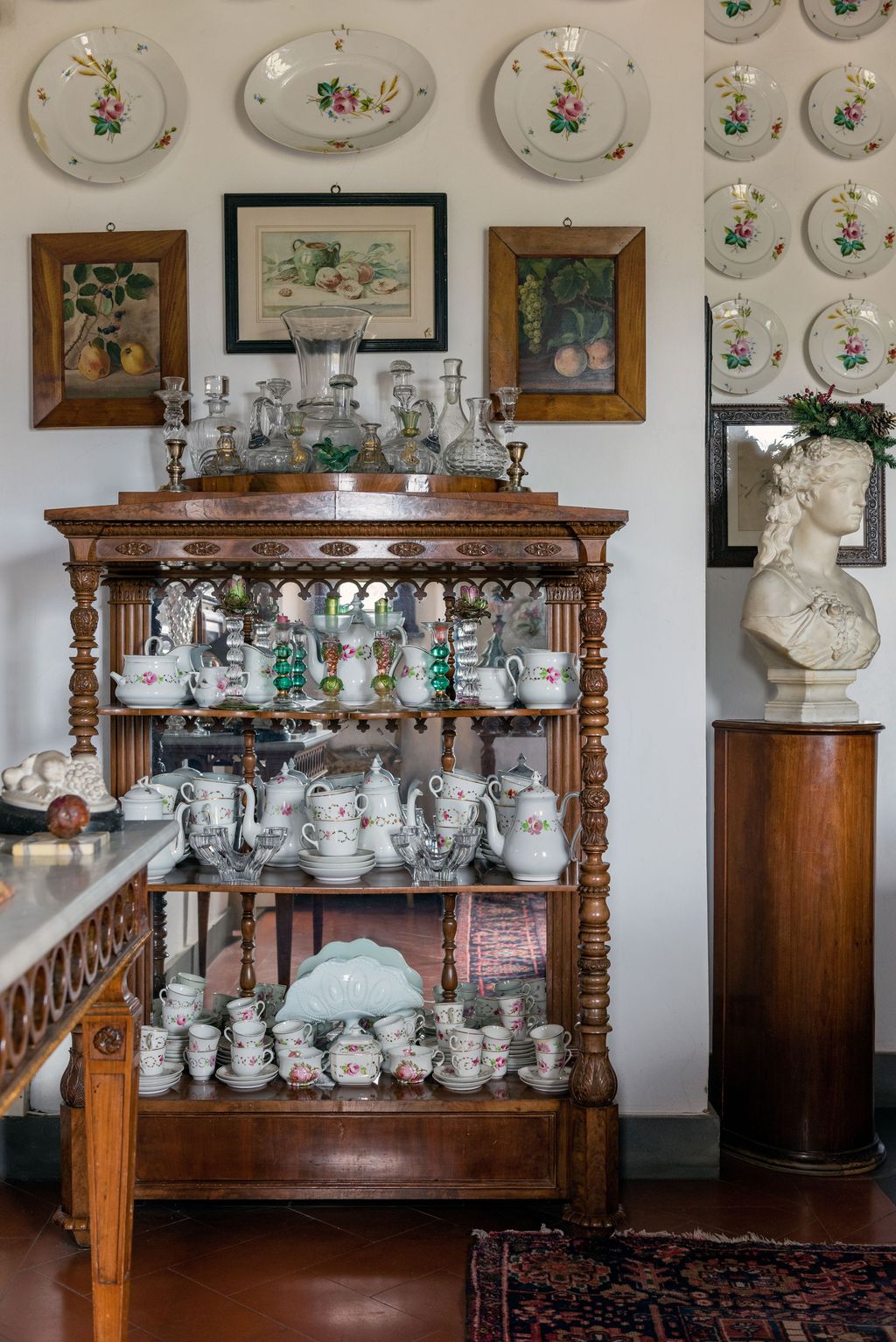
A 19th-century Richard Ginori china set of more than 80 pieces was bought in two different markets, one in Arezzo and one in Cortona.
 Nathalie Krag10/26
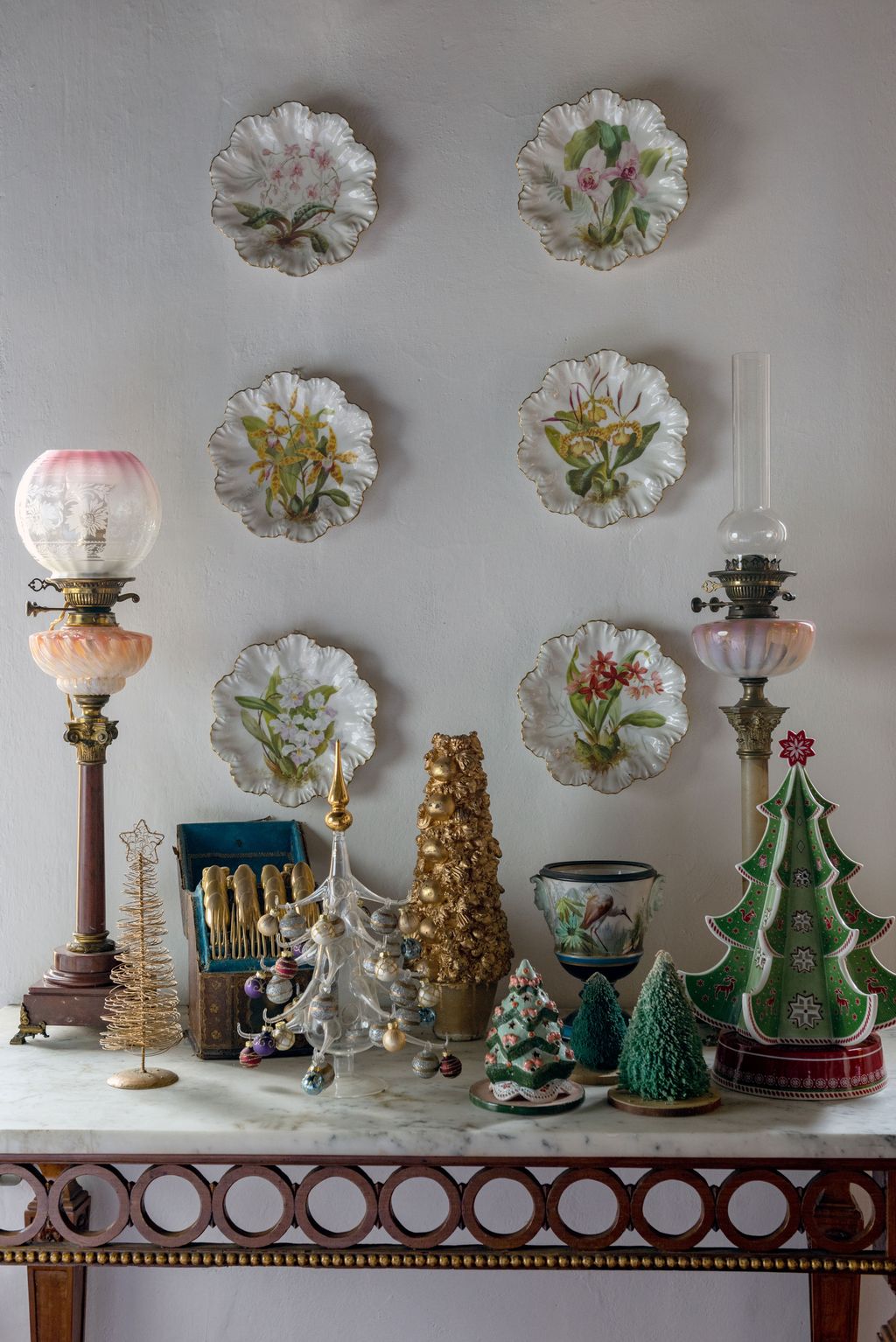
The set of forks, spoons and knives at the back were bought in an auction of an important Florentine palace by Lucia Caponi. It is surrounded by Christmas ornaments chosen by Lucia.
 Nathalie Krag11/26
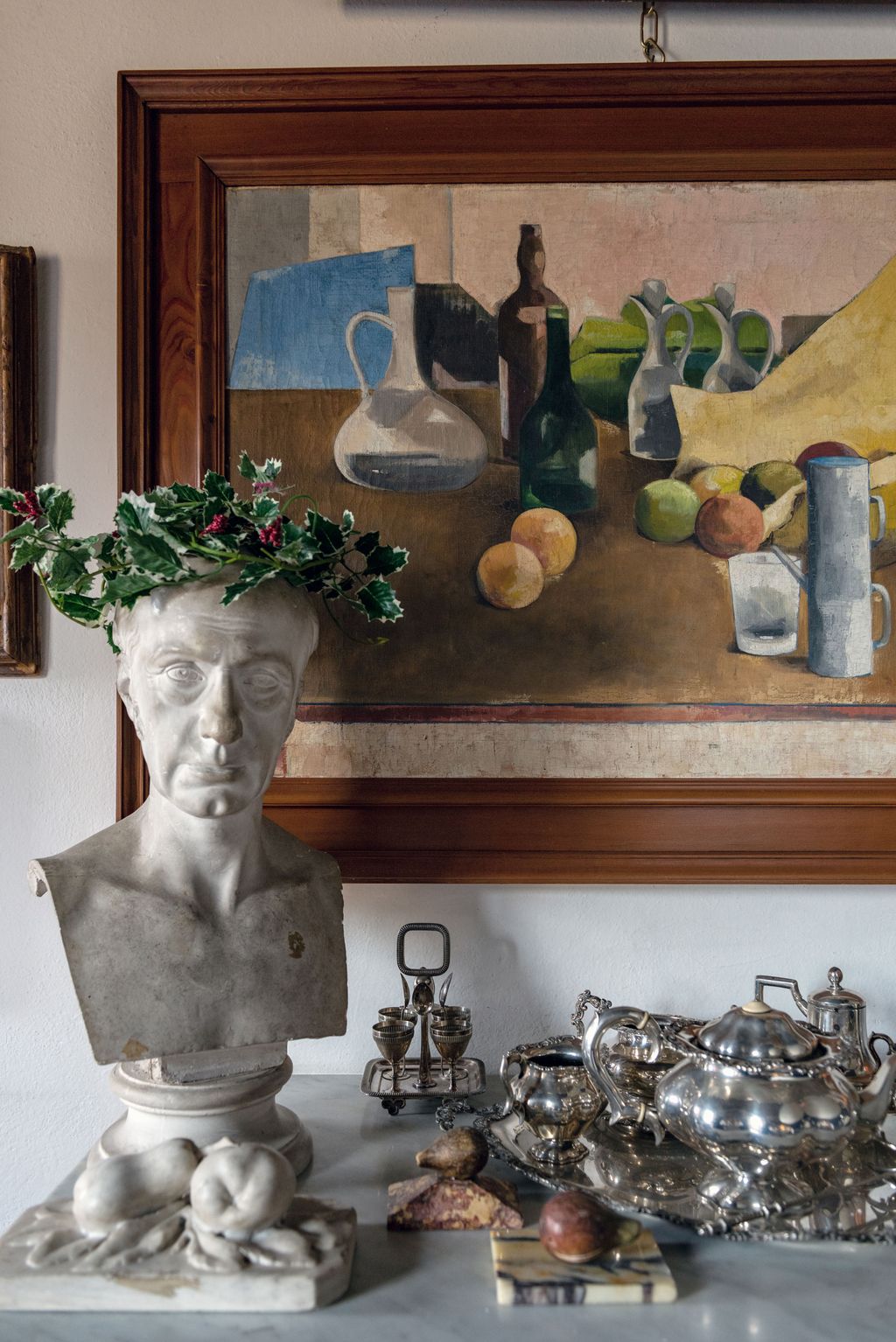
The preparatory bust of Grand Duke Leopold of Habsburg Lorraine is a plaster piece from the 19th century. Behind is a still life by Dino Caponi.
 Nathalie Krag12/26
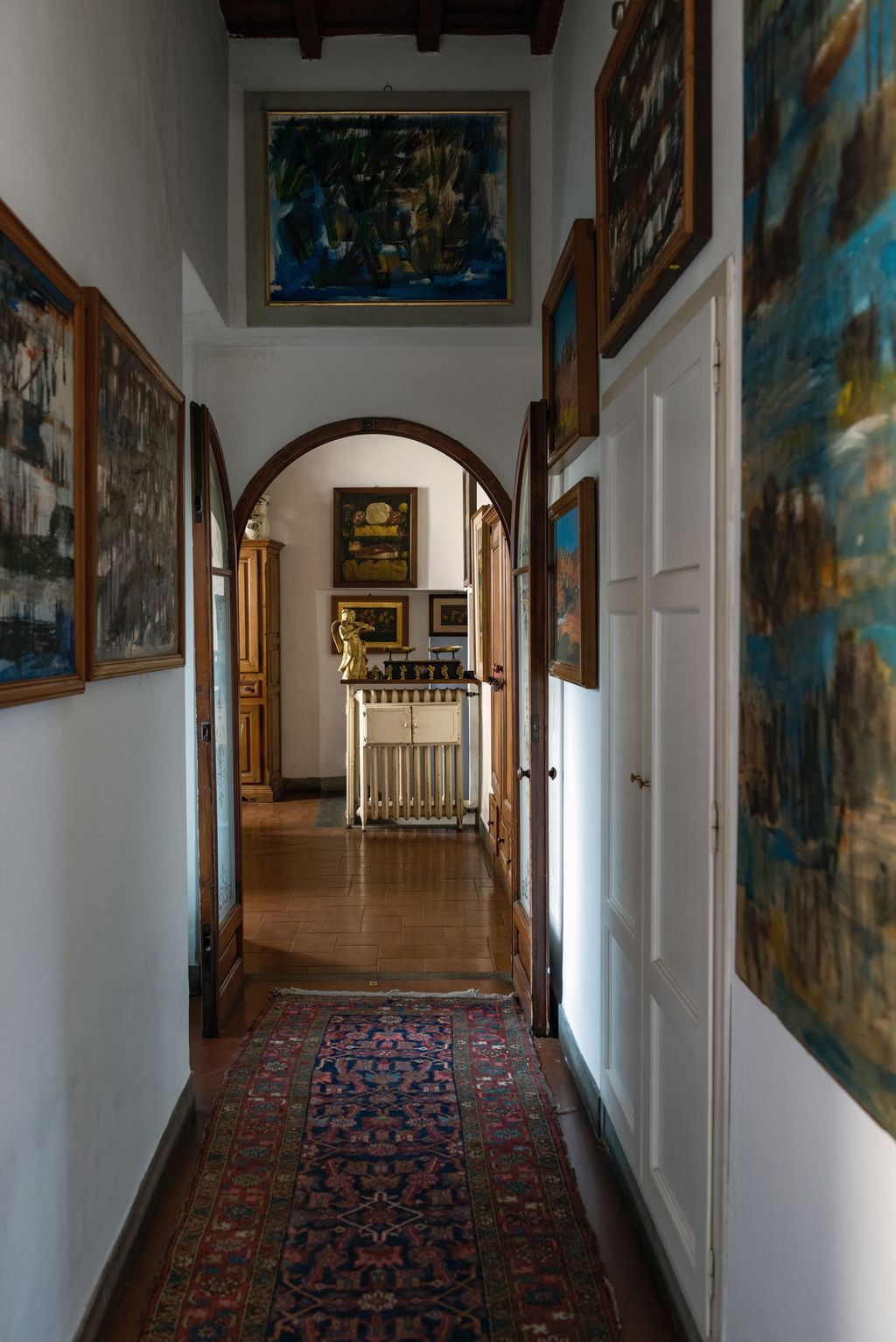
A series of naturalistic paintings by Dino Caponi hangs in the corridor that leads from the front door and living room into the kitchen.


 Nathalie Krag13/26
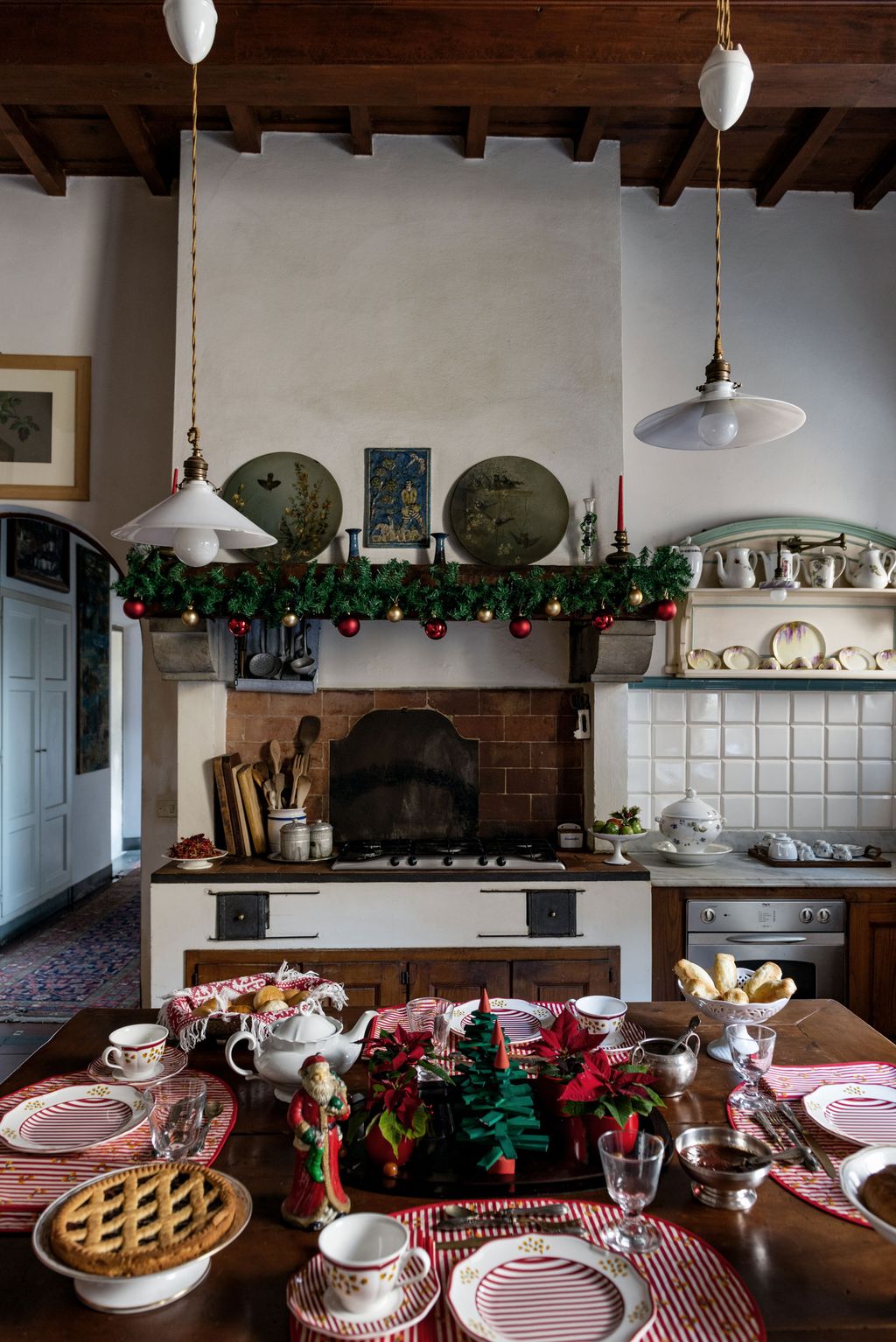
Christmas extends into the kitchen, with a garland of foliage, lights and baubles above the cooker and a festive tablescape, including Loretta Caponi's ceramic designs.
 Nathalie Krag14/26
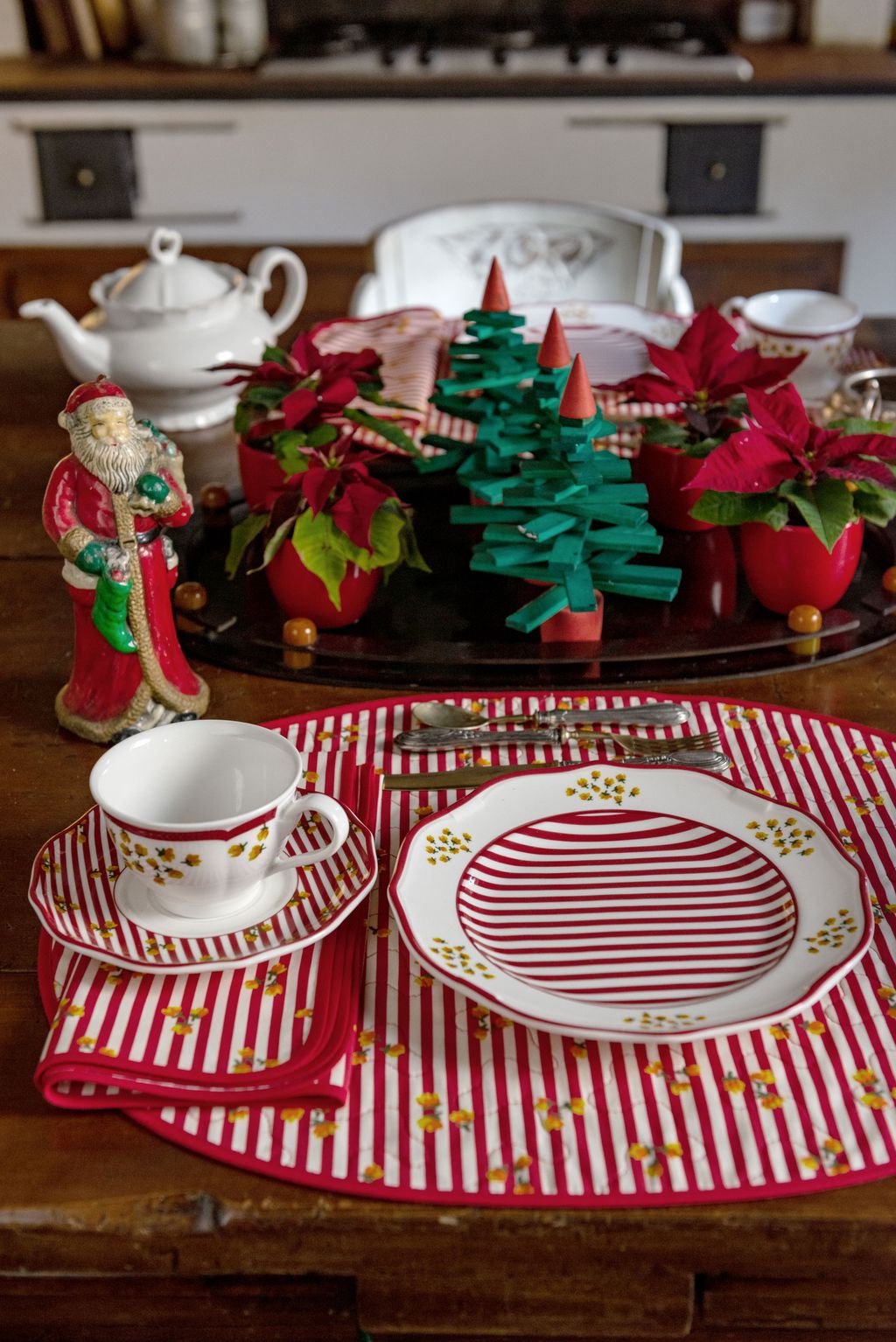
The design is called ‘Flowered Stripes’. The poinsettias were a present for Lucia from Renato.
 Nathalie Krag15/26
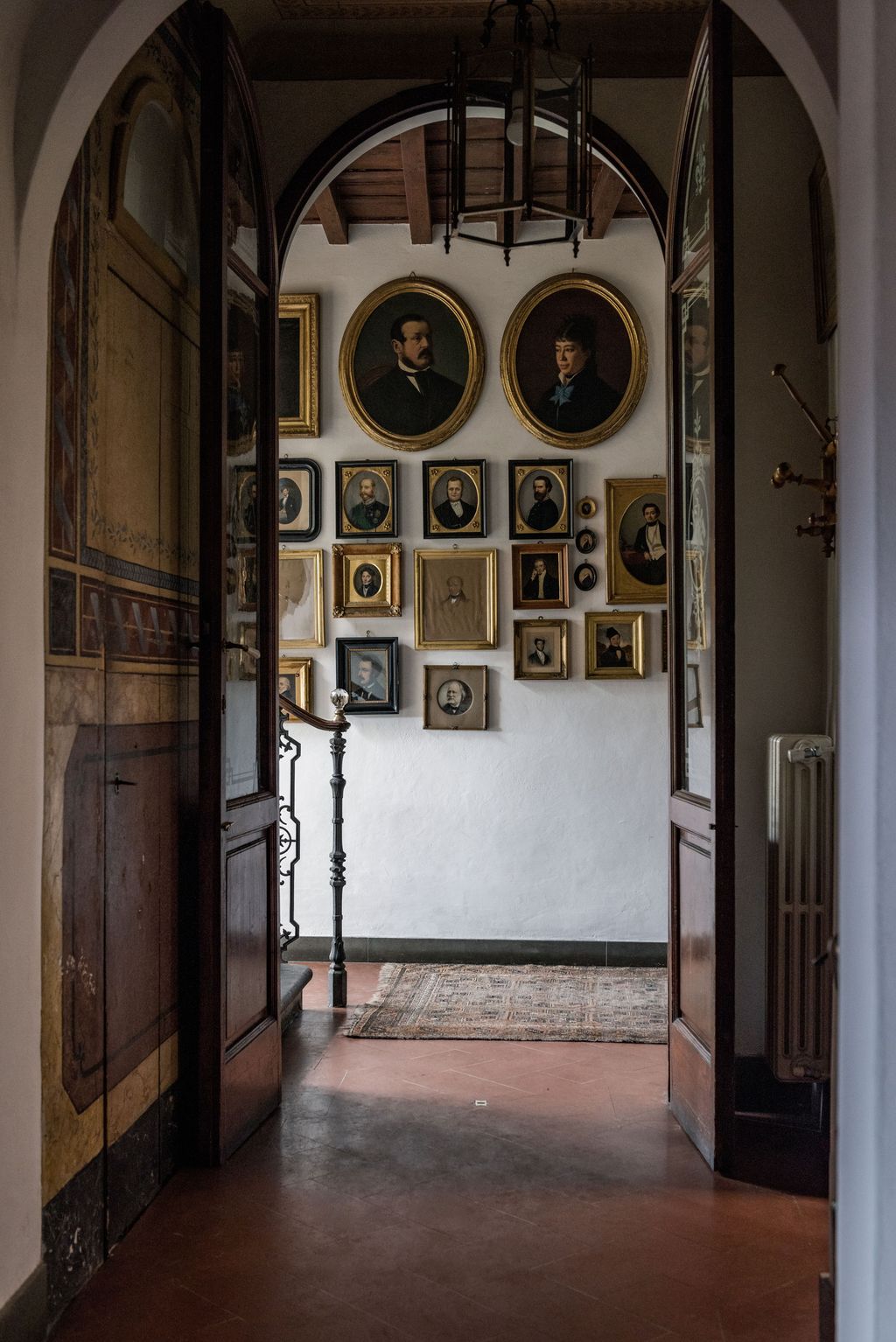
A series of 19th-century portraits hangs in the hallway at the other end of the house, leading up to the first floor and out to the garden. They were bought in different antique markets in Italy.
 Nathalie Krag16/26
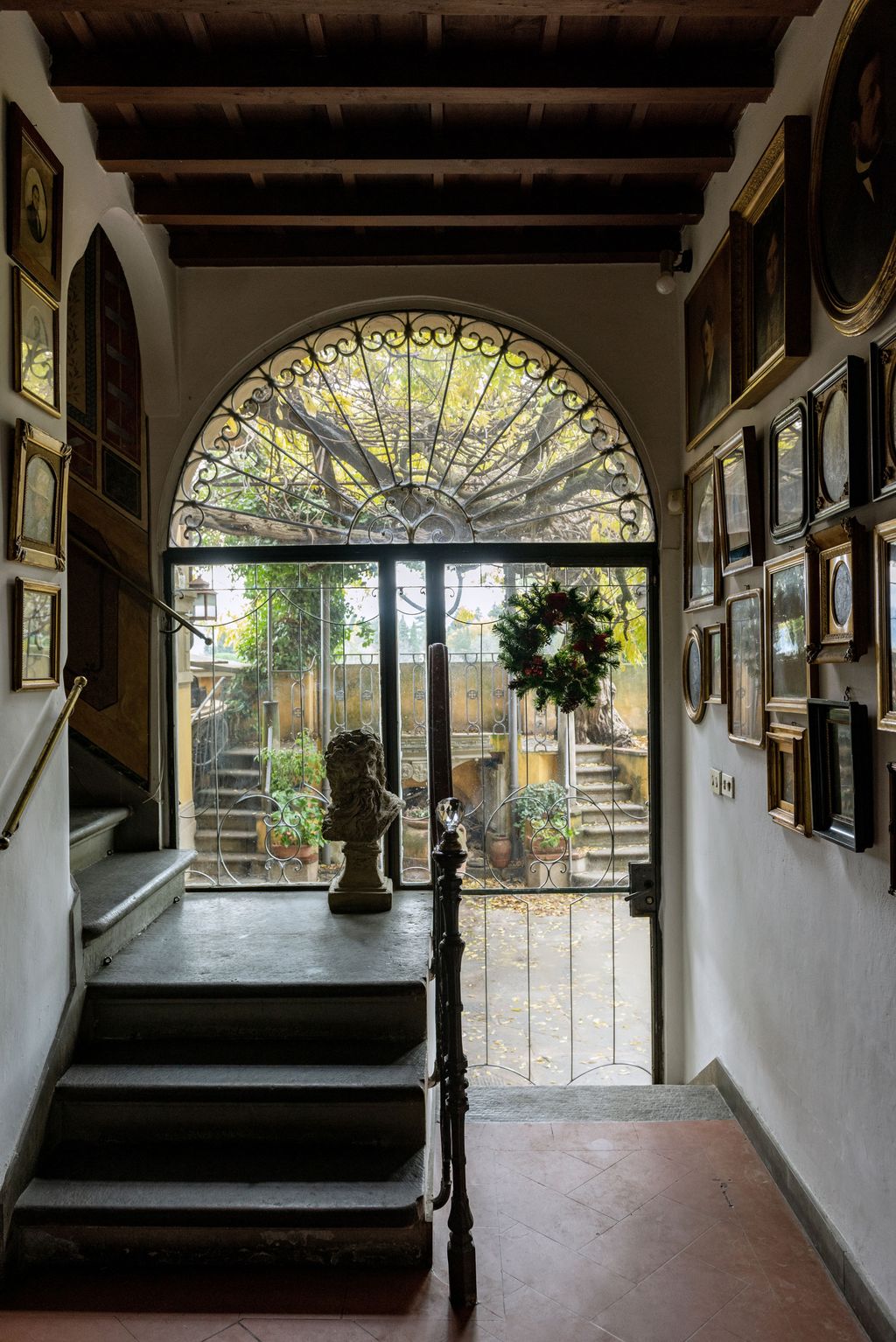
The garden is typical of the 19th-century part of the house, built when Florence was the capital of Italy (though the house was only finished when Florence was no longer the capital). On the stairs is a bust that Renato bought at a flea market in Le Mans.


 Nathalie Krag17/26
The hallway is covered in a mural that runs from the downstairs all the way to Lucia and Renato's bedroom. Portraits hang over it from a variety of places.
 Nathalie Krag18/26
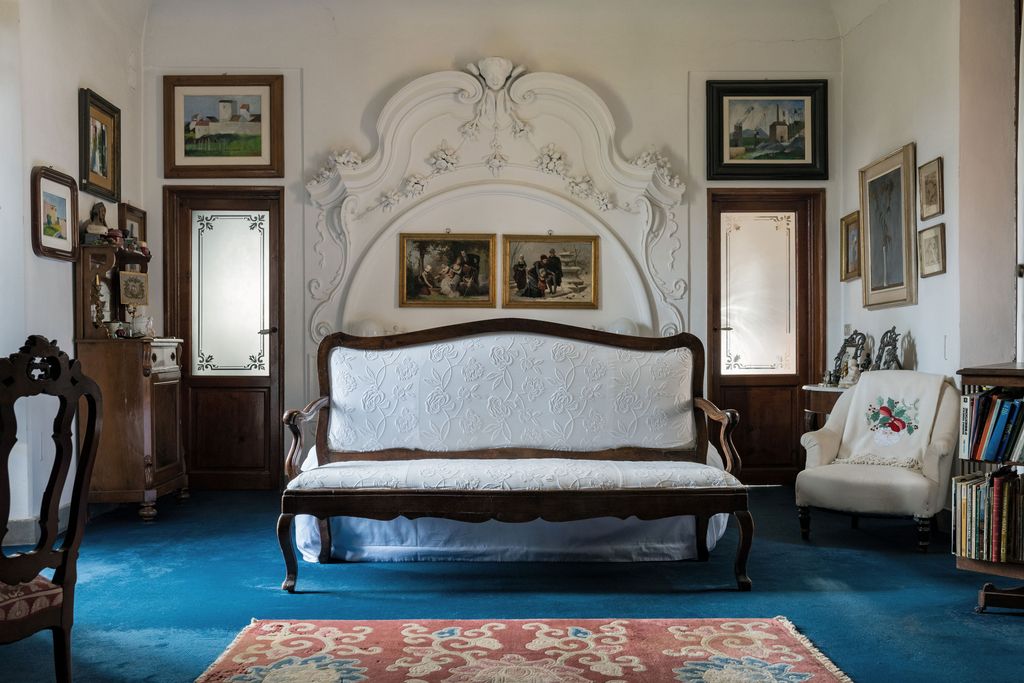
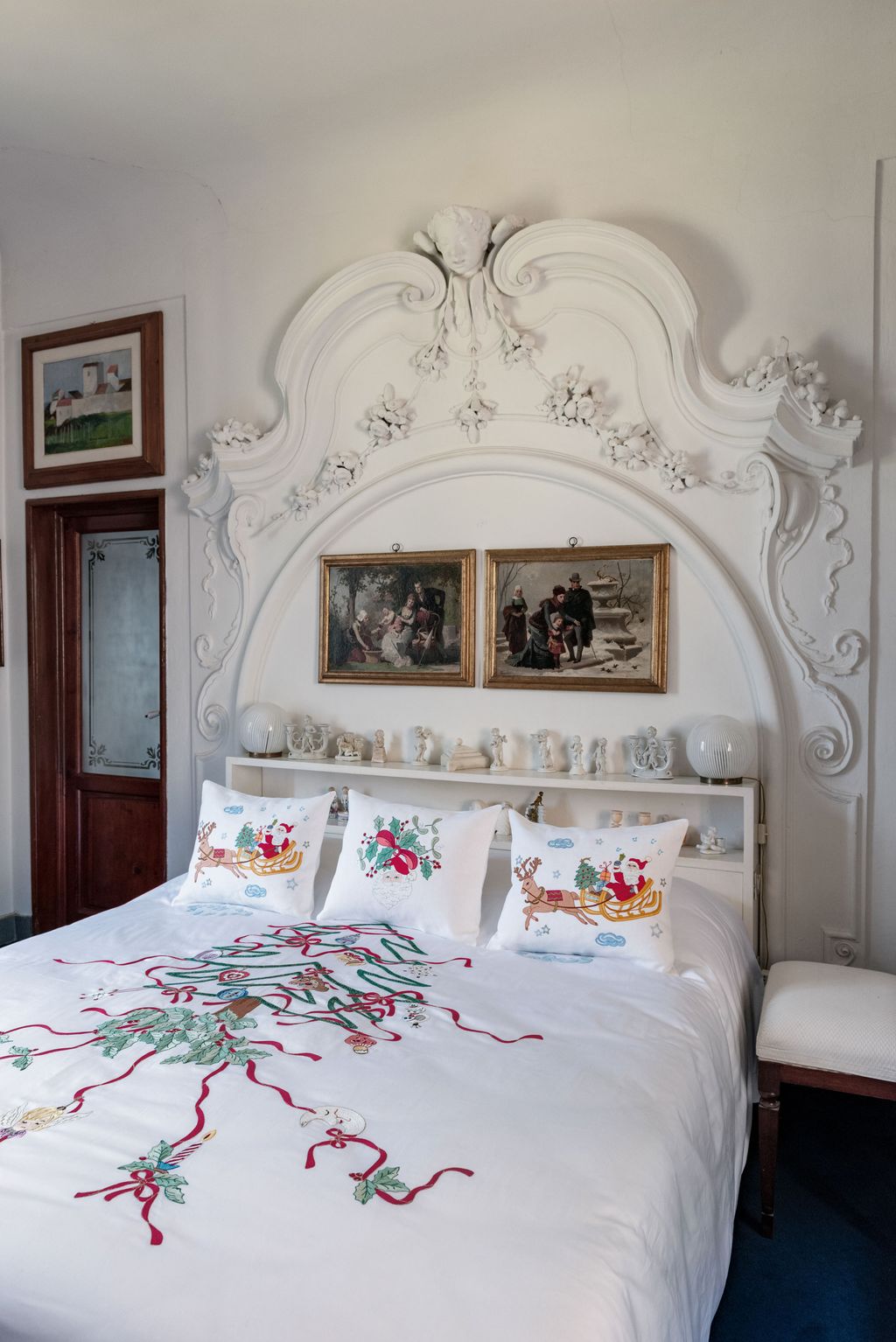
Lucia and Renato's bedroom is in the 19th-century part of the house and the family believe it was originally a church. The sofa at the end of the bed is from the 18th century and was bought in an antique shop in Florence. The paintings above the bed are favourites of Lucia's, found in Antwerp, while two of Dino Caponi's painting hang above the doors.
 Nathalie Krag19/26
The bedspread is a Loretta Caponi design for Christmas, and matches the tablecloth in the dining room. The three cushions are also Loretta Caponi designs.
 Nathalie Krag20/26
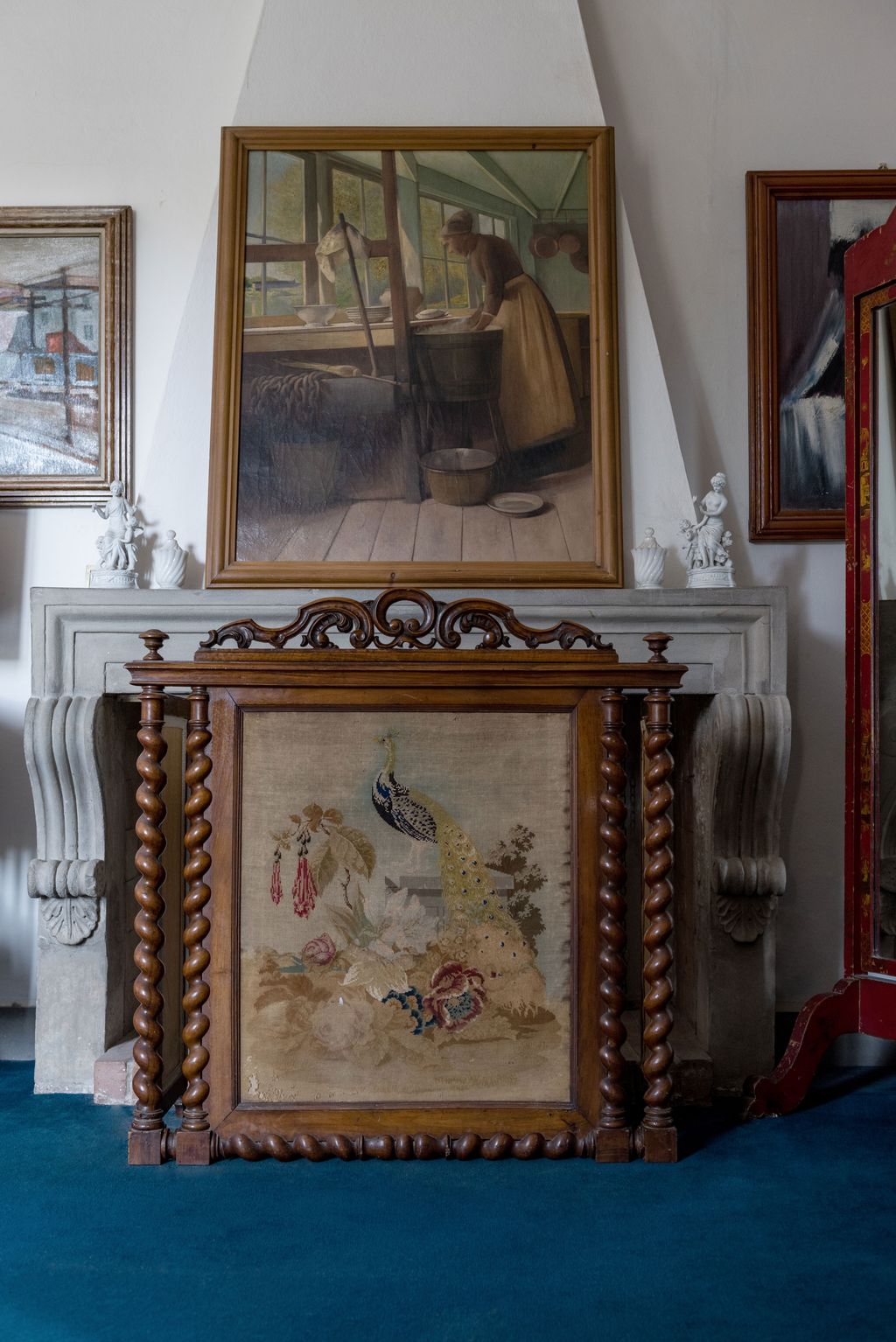
The bedroom has a fireplace in it, with a 19th-century fire screen that Renato bought at a flea market in London. The couple found the painting above the fireplace in New York.


 Nathalie Krag21/26
The embroidered bedspread and tablecloth is covered in intricate bauble details.
 Nathalie Krag22/26
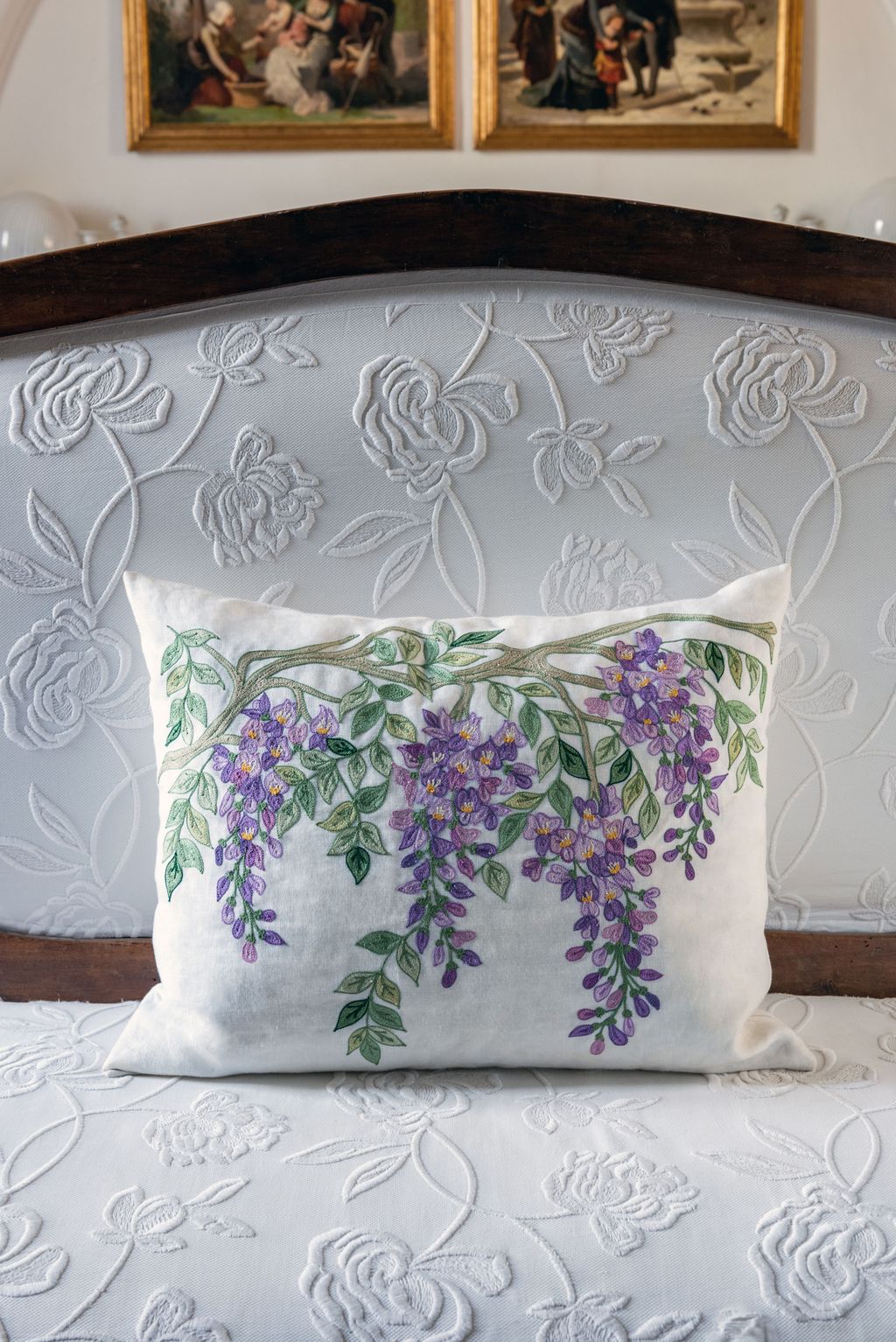
A Loretta Caponi embroidered cushion.
 Nathalie Krag23/26
On the other side of the study is a 19th-century archive cabinet, with four terracotta busts of athletes on top bought by Lucia for Renato in an antiques shop in Florence.
 Nathalie Krag24/26
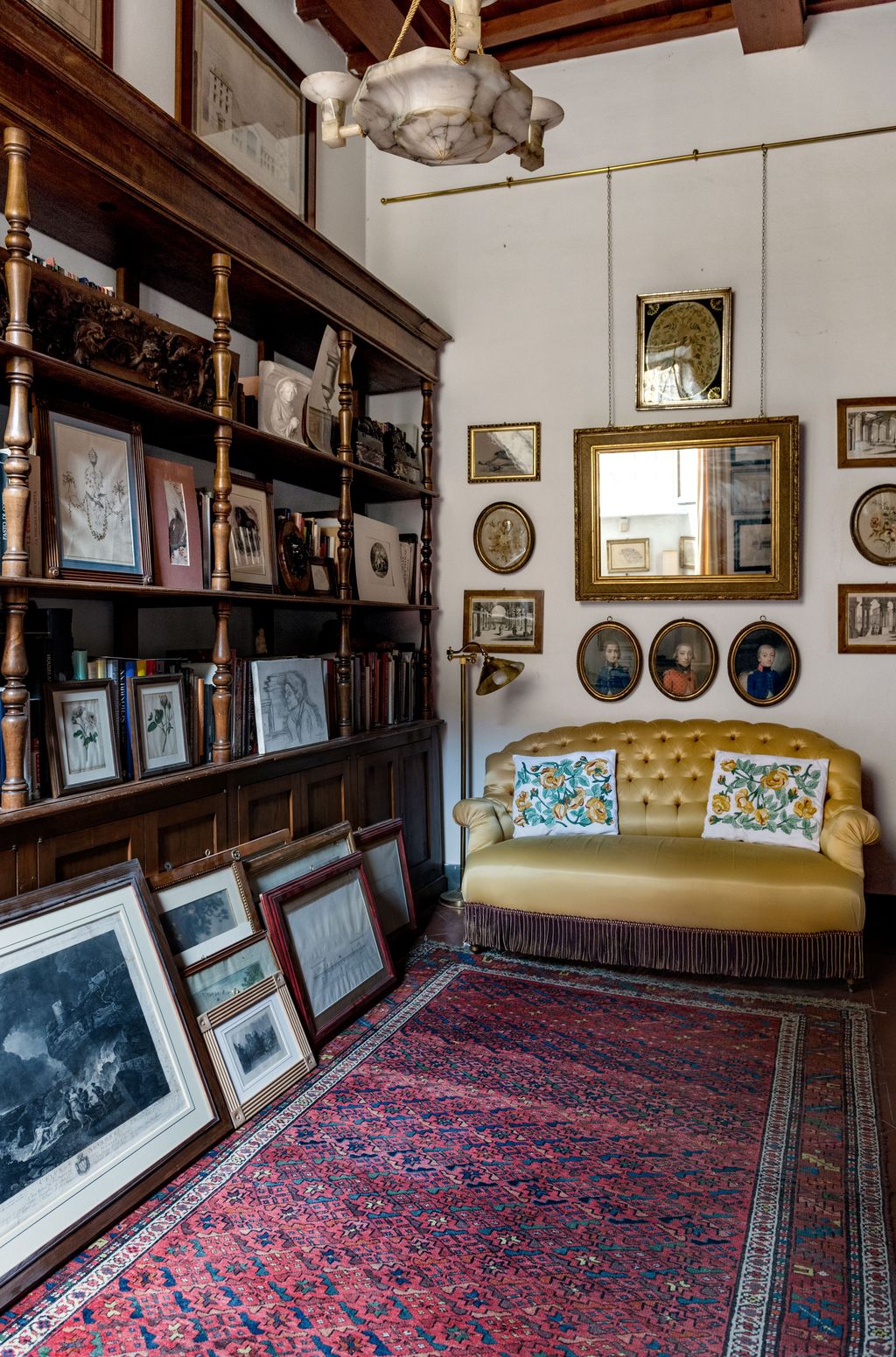
Duccio's study is on the ground floor. In it are a bookcase from a tailor's shop in Florence filled with art, design and architecture books, and a 19th-century sofa bought by Loretta and Lucia Caponi in an antiques shop in Florence.


 Nathalie Krag25/26
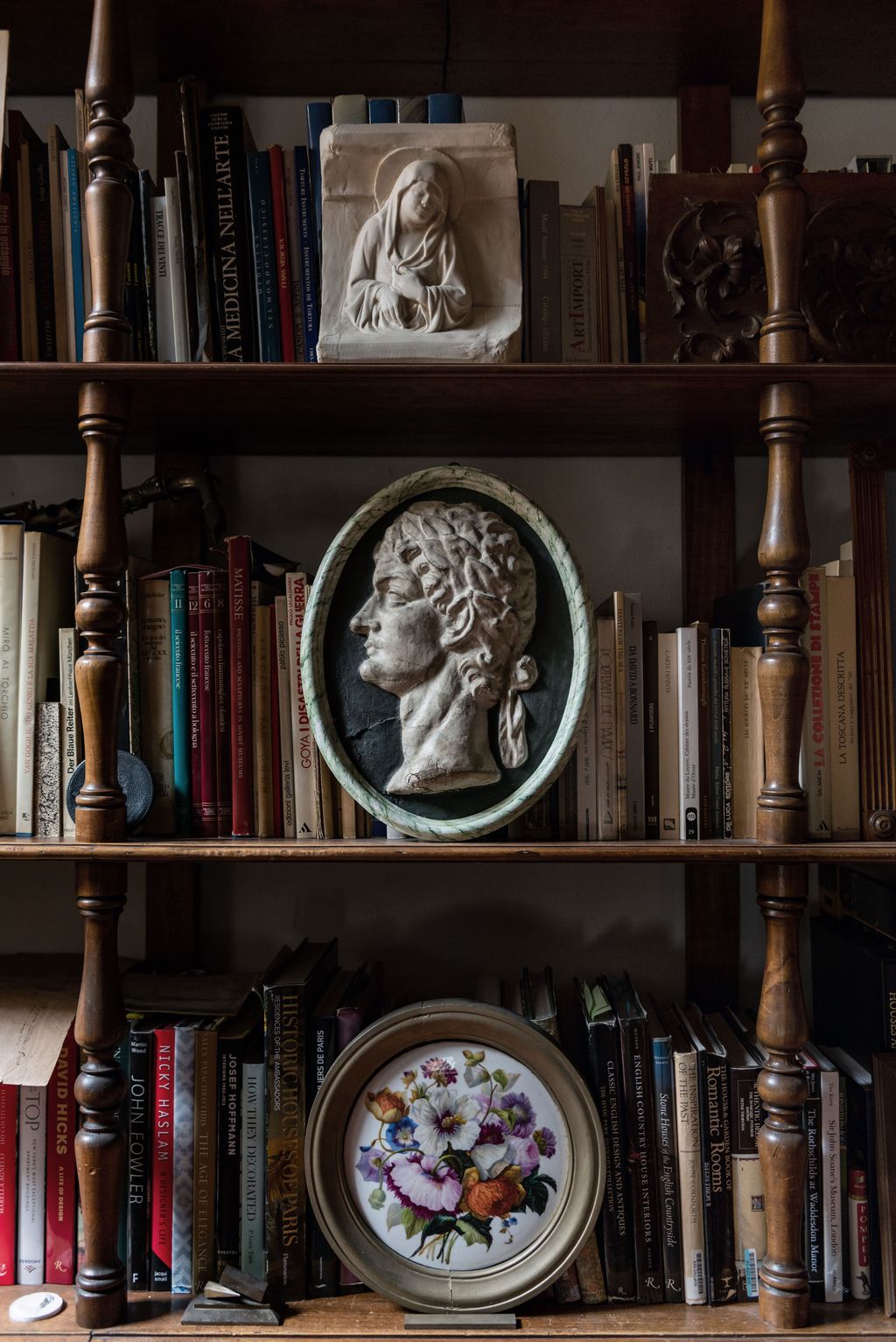
The bookcase is filled with art too.
 Nathalie Krag26/26
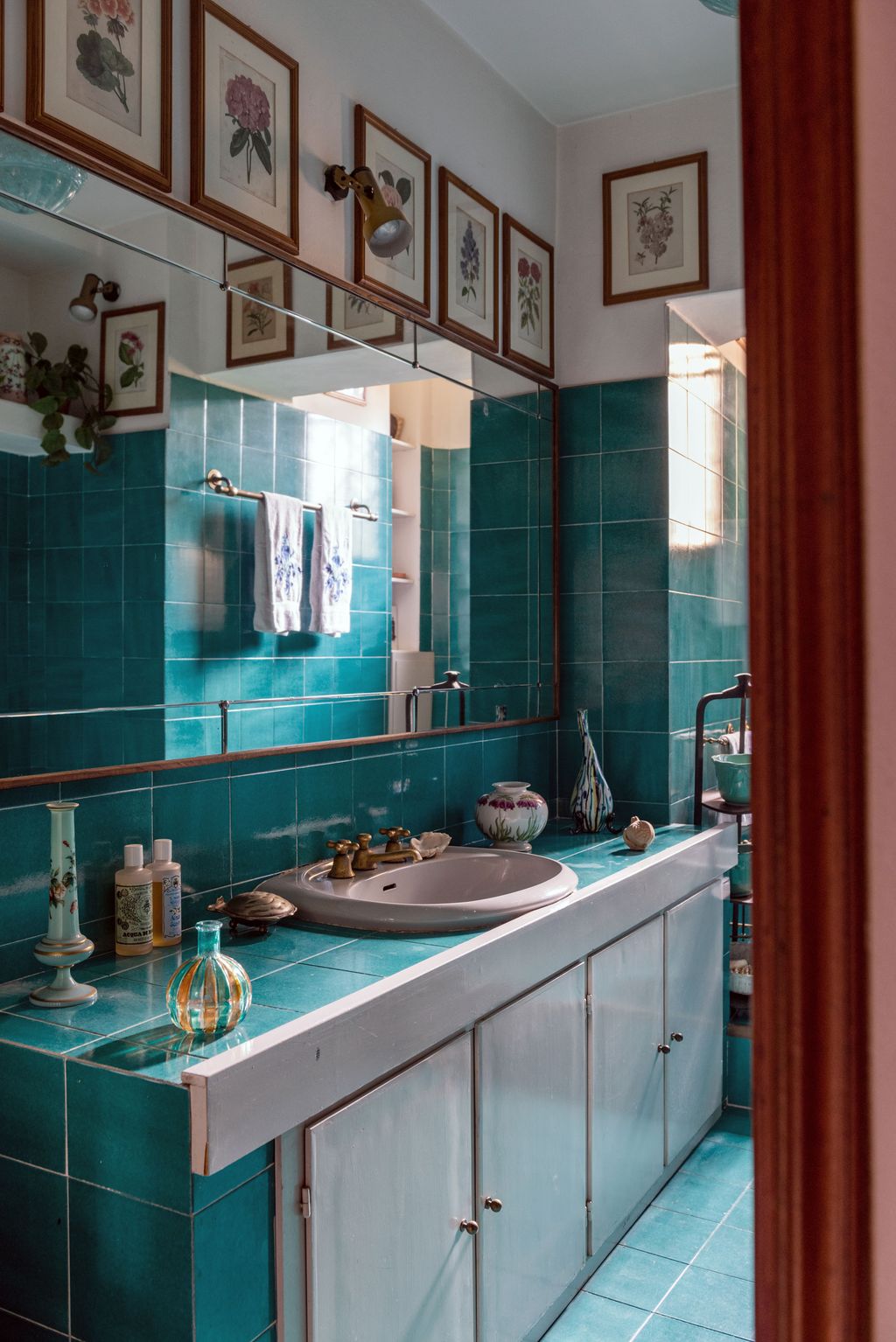
The house has six bedrooms and eight bathrooms, but the latter haven't been renovated since the family first moved into the house. One is covered in turquoise tiles and filled with Santa Maria Novella products.


