
A fantastical topiary garden deep in the Somerset countryside

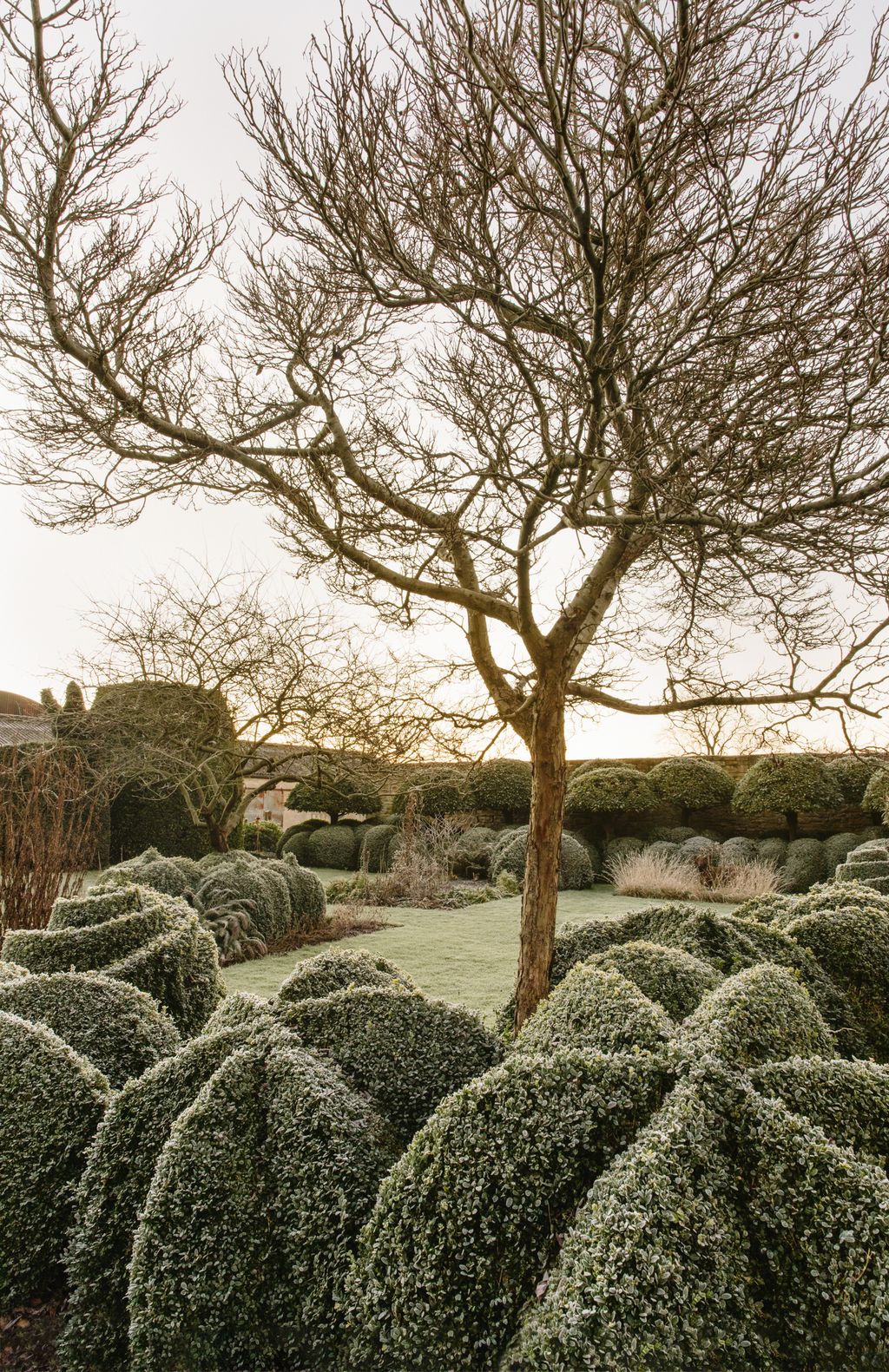
Louise Dowding and I are trying to find the correct description for the crisply cut topiary shapes that surround her garden terrace in the village of Martock in Somerset. I go for iced gem biscuits, but she settles on whipped cream, fresh from the can. Whatever they are, they join cinnamon buns, mushrooms and cherry liqueur chocolates among the array of delicious shapes in her quarter-acre former farmyard.
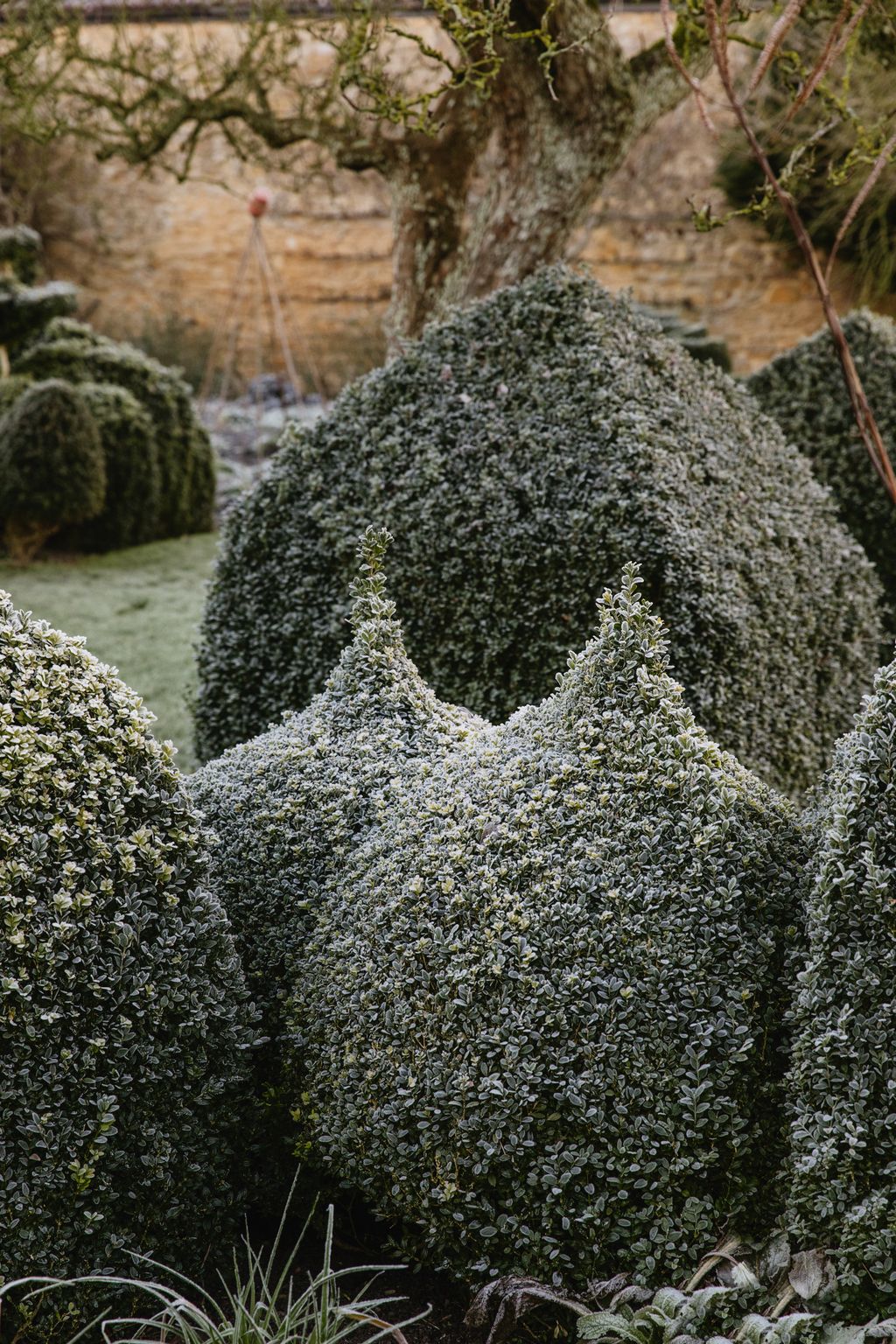
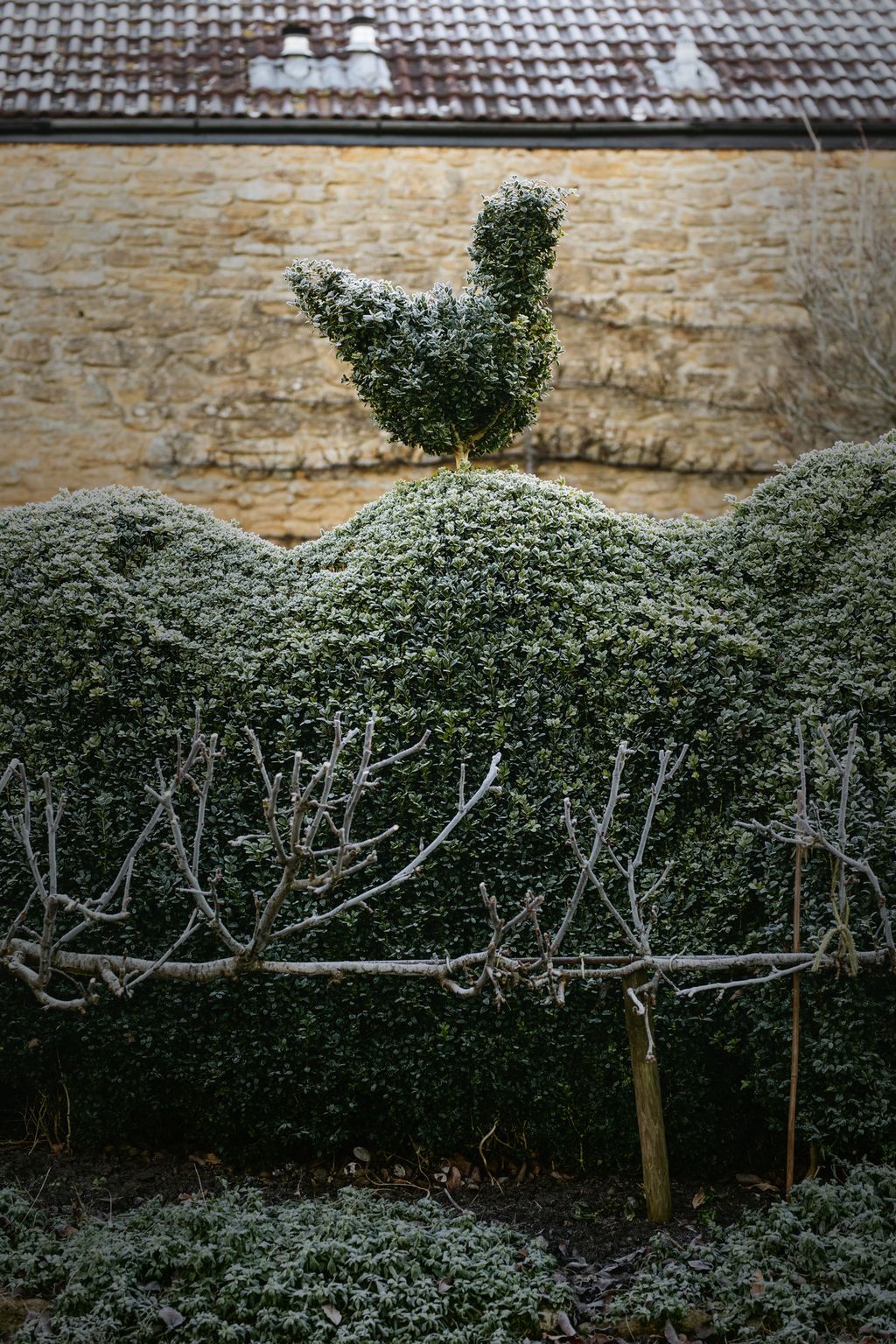
There are also balls and bishops’ mitres, busby hats and building blocks. Nothing is for ever and, next year, Louise and her husband Fergus might feel that the time has come to do something else with their box, yew and bay, should the mood and growth dictate. The box front hedge took its shape, for example, because some over-refreshed locals fell into it during a fight. ‘We clipped around the brawling and it led to cloud-pruning,’ says Fergus. ‘It was quite rude at first – lots of bums. People liked it.’ Louise recently had a go at the hedge that hides the vegetable patch with her battery trimmer, and giant snail shells and swirls now adorn the top, creating layers of contrasting growth. Above it, what were once ducks are morphing into dogs, in honour of Toto, the resident Cairn terrier.
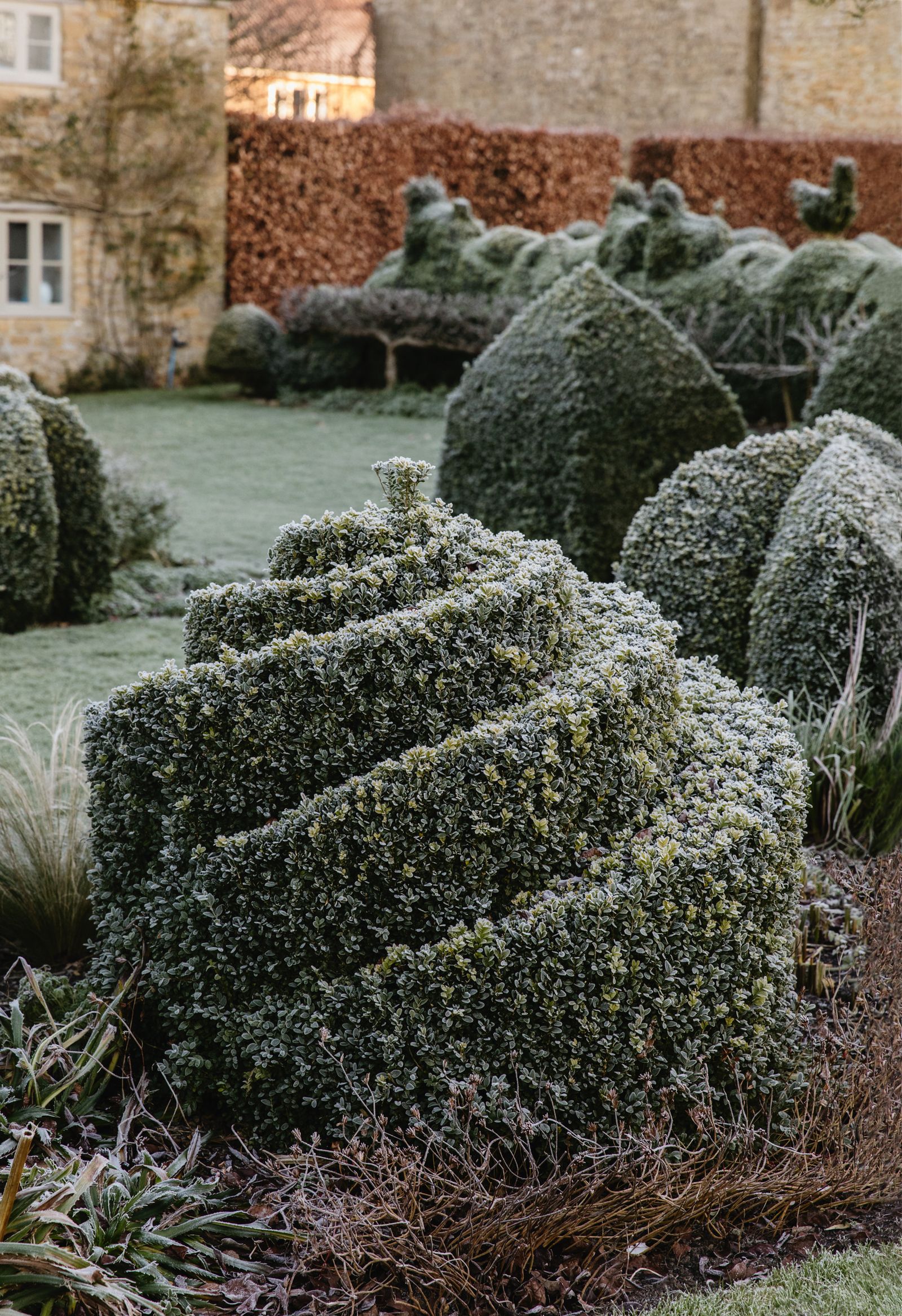
When the couple moved in 1996 to Yews Farm (so called, because of the two large yews everyone has to squeeze between to get to the front door), they had no thoughts of creating this Alice in Wonderland-style extravaganza on what was almost a tabula rasa. As the garden is walled, there are no long views. ‘For five months of the year, you are potentially looking out at brown, dead stuff,’ says Louise.
Her first thought for wintry drama was grasses, influenced by Piet Oudolf. ‘Three years later, we didn’t want them; by November, they are broken and brown. It’s too wet here – they were a depressing sight. Nothing really came through again until May. So they all went on the bonfire, except Calamagrostis ‘Karl Foerster’.

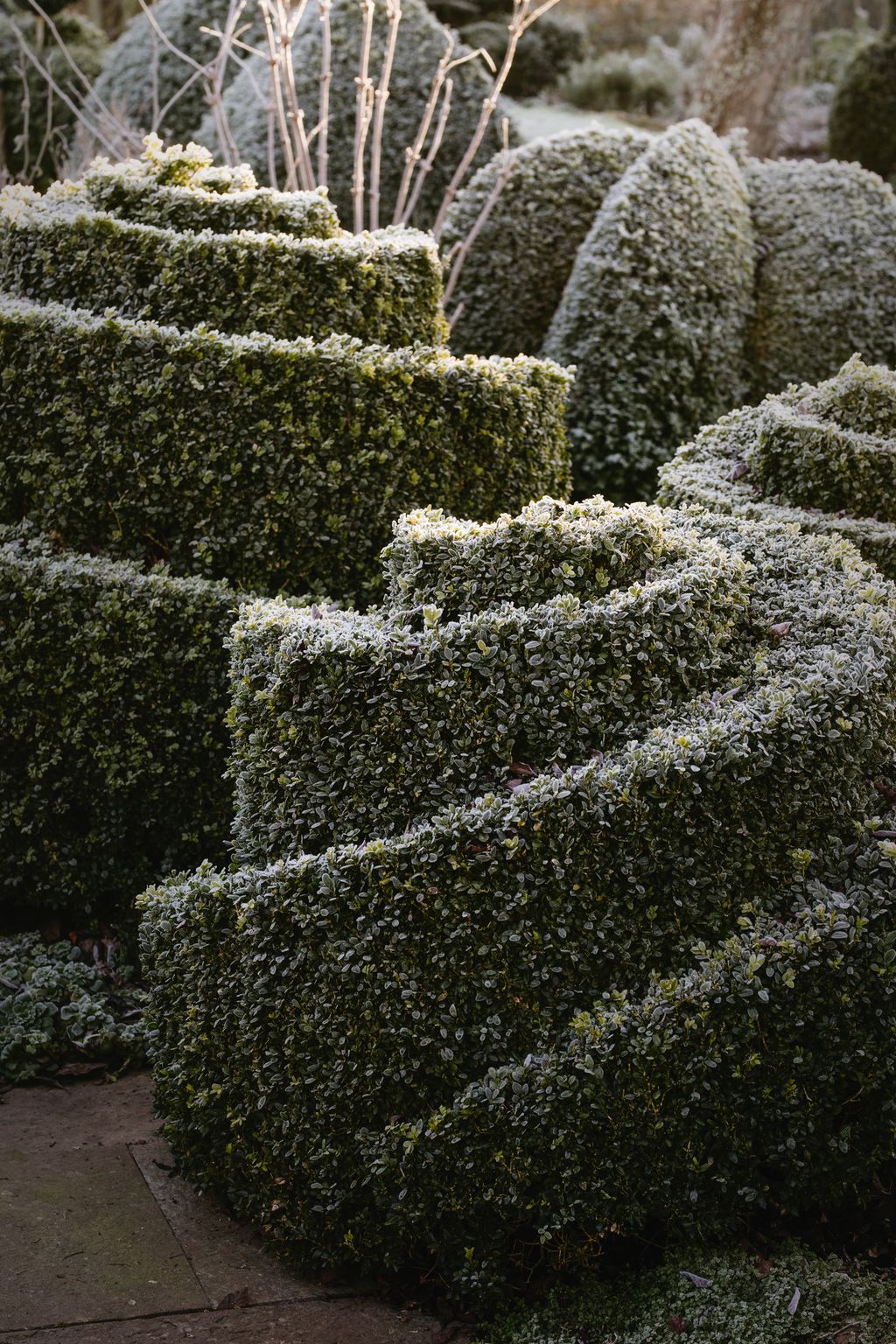
Louise turned instead to evergreens – largely box – although there is a line of mushroom/umbrella clipped bays at the back of the garden, along with tall yew hedging topped with more topiary birds. At first, the box was shaped into large balls, but Louise found that those in the borders were becoming overpowering. So, instead of just cutting them back, she started creating new forms. It took Fergus to persuade her to be more daring. ‘He has broken down the formality. He said my balls were boring,’ admits Louise. ‘I agreed as, otherwise, it would have looked quite military. I needed to cut horizontal and vertical lines into them, so that they are not so strong against the perennials.’ Now at nearly 1 metre tall, ‘they sit much better and are more fun’, she says.

The box is cut twice a year on a mild and dry day, in May and in September if they have a garden opening. Otherwise she leaves it until October, so that the shapes are even crisper over winter. Louise uses a 10 per cent diluted liquid seaweed to feed the box, applied after rain: ‘There is no point doing it when it is dry, as there is no moisture in the roots.’ She applies a layer of compost over the roots in winter after sprinkling and loosely forking in blood, fish and bone: ‘It’s a really good long-term food,’ she explains. She protects against blight by spraying once a month with a mixture of 100ml neem oil and 30ml castile soap for every 10 litres of water. This coats the leaves, so even if there is a little blight, new growth will come through uninfected. ‘Box is pretty robust,’ adds Louise. So far, box moth has not reached the locality, but the neem oil is an insecticide with such a foul smell, she challenges any insect to go near her plants.
And, if a bush dies, she is philosophical about it: ‘I welcome a death – it allows you to do other things.’ She was, however, not so happy when Fergus cut off Toto’s topiary tail by mistake. ‘It made me cry,’ she says. ‘But the lovely thing is that mistakes grow out’.
Follow Louise on Instagram @dowdinglouise for dates when Yews Farm, Martock, Somerset is open to the public.
 Eva Nemeth1/7
Saxifraga x urbium thrives below the topiary.
 Eva Nemeth2/7
Box is cut at an angle to catch the light.
 Eva Nemeth3/7
Bishops’ mitres box forms delineate the garden’s axes.
 Eva Nemeth4/7
Cutting pinnacles takes a steady hand.


 Eva Nemeth5/7
The squiggle hedge.
 Eva Nemeth6/7
Crataegus x lavalleei ‘Carrierei’.
 Eva Nemeth7/7
Dryopteris affinis ‘Cristata’.


