
A fabulously pretty rectory on the edge of a Dorset village

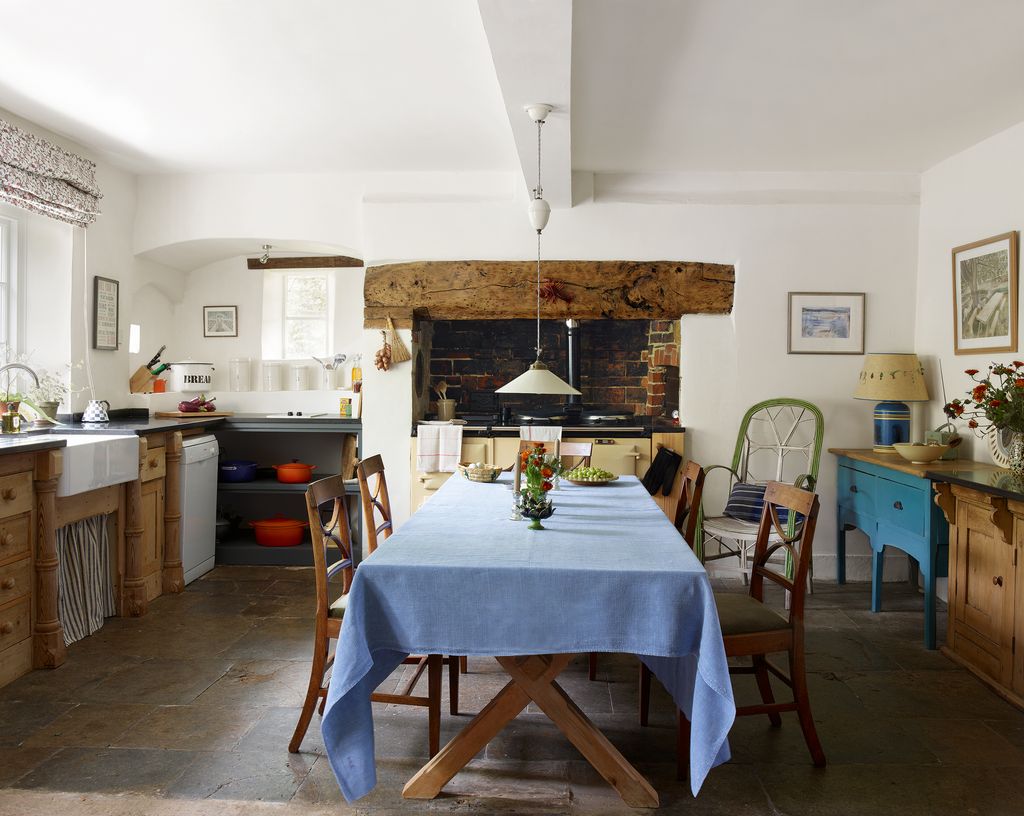
Miranda Alexander’s purchase of an old rectory on the edge of a Dorset village must be one of the shortest and sweetest. ‘Pure serendipity,’ she calls it. ‘I saw a picture the size of a postage stamp illustrating an article about unfitted kitchens and underneath it mentioned that the house was for sale. Something happened inside me – some intuition – and I contacted the agent, jumped in the car and hurtled down from London to see it. I knew I wanted to buy it the minute the back door opened.’ Five years later, here she sits, in the kitchen she spotted in that tiny picture, as happily at home as if her ownership of it had been meticulously planned half a lifetime ago.
The simplicity and spontaneity of Miranda’s story is due only in part to circumstance: her temperament, she says, is impulsive and intuitive. She knew very little of this area – ‘I was born and bred in London; I have Tarmac in my veins,’ she says. ‘But the countryside has always exerted a pull. My grown-up children and my granddaughter love coming here; it’s a wonderful antidote to city life. I discovered after the event that the village is on the edge of some of the most beautiful countryside in England.’ She also realised that a friend lived nearby, through whom she has since made many more. Miranda still has a house in London, but she now lives here more than half the year. ‘I’ll always be a “blow-in”, but people have been open and welcoming. I feel very lucky.’ She is currently helping to run the Bridport Literary Festival.
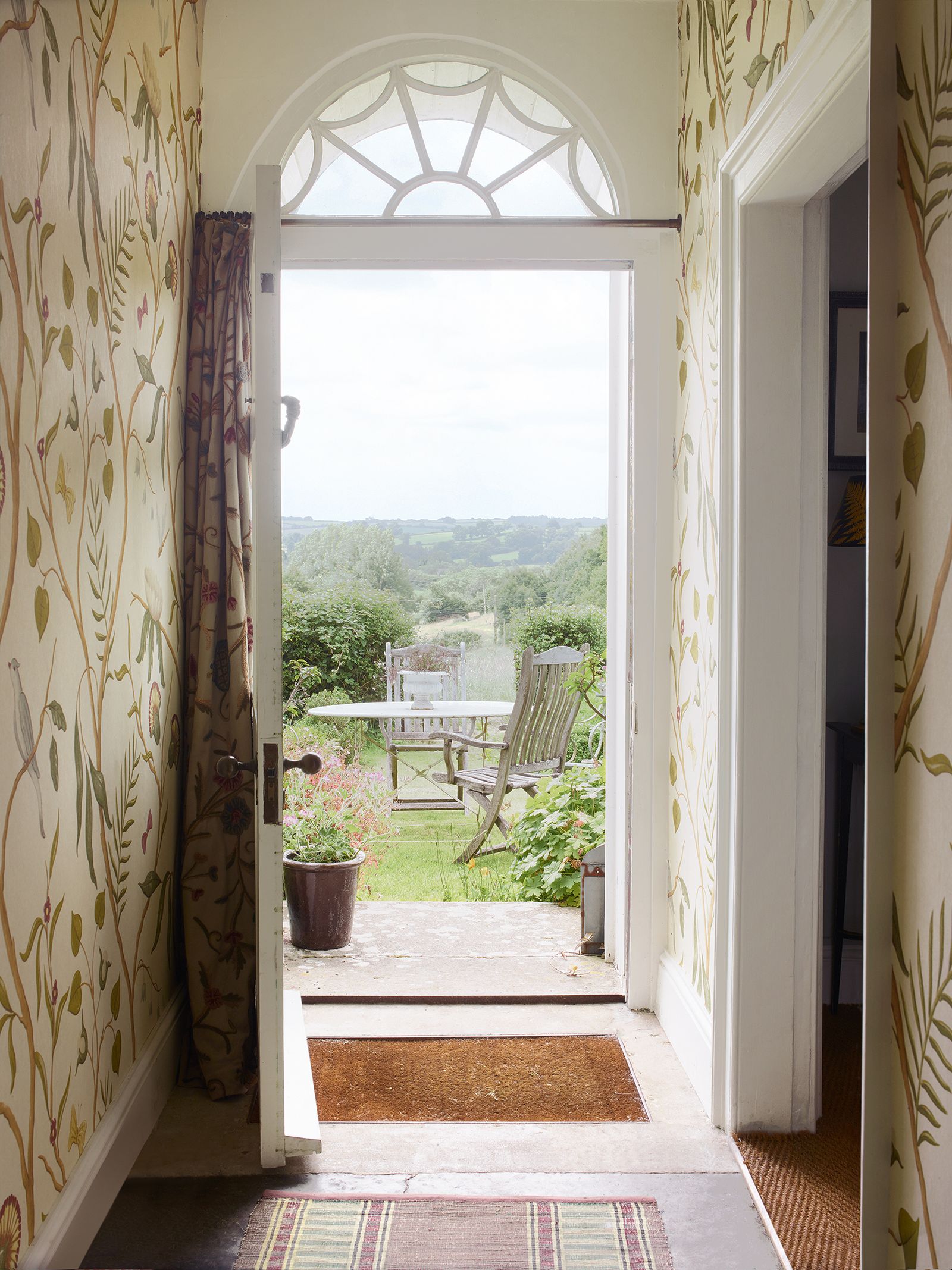
Friendships and the glories of the Dorset scenery aside, the house proved as attractive as the glimpse of its kitchen promised, accessed up a farm lane, sited on a gentle slope near the church, with cows grazing in a field of buttercups over the garden hedge. It also has the charm of oddity. It is not one house, but two: one medieval; the other dating from the 1830s. The older house comprises the kitchen and next to it four smaller rooms – a larder where once there would have been a staircase, a living room, a study and a utility room. The later house sits directly in front of its older sibling; it is joined to it by a staircase that fills part of the gap between the two.
When you are inside, this peculiarity is not apparent – the only giveaway is a stone mullioned window in the study next to the kitchen, which faces the back wall of the later building. In all other respects, the layout seems perfectly rational. The kitchen is at the back – a big room with a fireplace big enough to house a four-oven Aga and a floor flagged in squares of blue lias stone. Opposite the back door, which leads straight into the kitchen, is another door that opens into a central hall with the staircase rising on the left. Ahead is the front door and on either side are two nicely proportioned rooms: a drawing room and another living room. There is a sense of progression from the vernacular informality of the kitchen to the country classicism of these two rooms at the front.

Outside, the architectural discrepancy is more obvious. Approaching the house by car, you arrive at the back to see casement windows and the steep pitch of a roof that once supported thatch. Follow the path around the side of the house to its front garden and you are greeted by a façade of Regency symmetry, with sash windows and a door with an arched fanlight. Most of the changes Miranda has made to the house have been to the exterior, including knocking down a modern garage and removing a twentieth-century porch from the back door.

Inside, she says, she has done very little structurally. ‘I brought down some favourite bits from London and trawled the amazing antique shops of Bridport to fill the gaps.’ The previous owners were antique dealers and left some of their larger pieces of furniture in place. The unfitted kitchen, with its scrubbed-pine table, is much as it was in that picture. Miranda added some unusual Regency chairs, antique china and a green French garden chair. In the drawing and living rooms at the front of the house, the furniture is her own, including the Sean Cooper sofas. The living room had lost its fireplace, as had the main bedroom, so she found chimneypieces in architectural salvage shops on Golborne Road, W10.
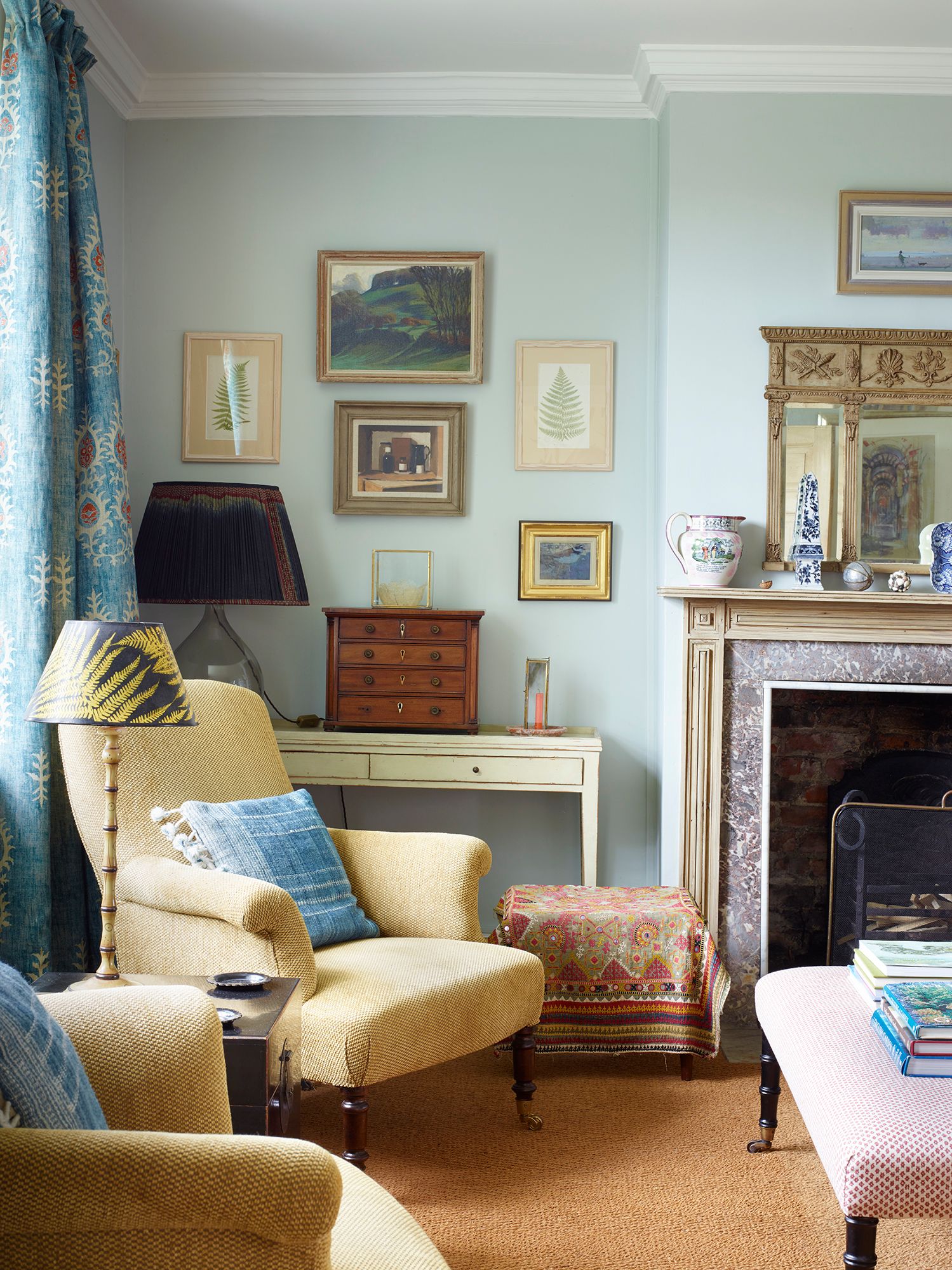
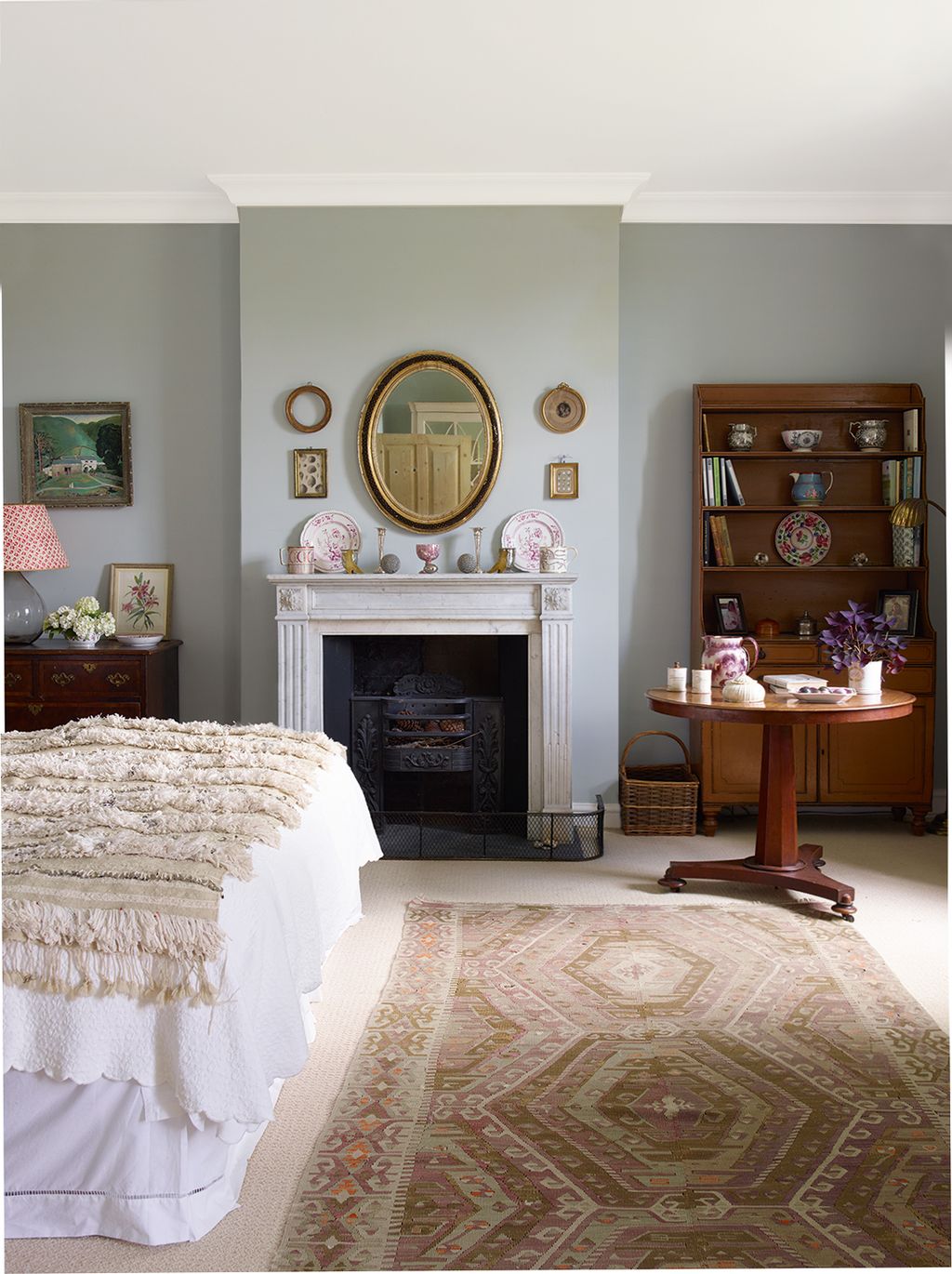
The main bedroom and bathroom sit at the front of the house, with the spare rooms and second bathroom at the back. For her bedroom curtains, Miranda chose ‘Olander’ embroidered linen from Colefax and Fowler in a darker shade of the duck-egg blue on the walls. The main bathroom’s seaweed wallpaper was designed by her aunt, Min Hogg, the founding editor of The World of Interiors.
Miranda describes her own taste as ‘English and traditional’, but there is originality in her choices – the Guy Goodfellow stripe on the drawing room sofa, for example, is used horizontally – and ample evidence of her eye for colour and for interesting objects. ‘I was influenced by my grandmother, Polly Hogg, whom I adored,’ she says. ‘She used to take me to see gardens and antiques, and to the Victoria & Albert Museum.’ Nicky Haslam described Polly in his memoir as having ‘humour, taste and understated elegance’. Miranda has inherited them all.
 Simon Upton1/20
Lewis & Wood's ‘Adam’s Eden' wallpaper continues up the stairs.
 Simon Upton2/20
A photograph of this room is what first drew Miranda to the house. Above her kitchen table Miranda has hung a white pendant light.
 Simon Upton3/20
She inherited the blue lias stone floor, the Aga and much of the furniture from the previous owners, but the Regency dining chairs are a more recent addition.
 Simon Upton4/20


 Simon Upton5/20
The sitting room combines light colours and antiques to pleasing effect.
 Simon Upton6/20
 Simon Upton7/20
 Simon Upton8/20
Eye-catching textiles provide visual interest in this light and airy bedroom. The quilt is from Oka and the mirrored curtains were ordered specially from India by Warris Vianni & Co in Golborne Road, W10. On the floor is a dhurrie from Guinevere.


 Simon Upton9/20
Miranda bought the rug in this room from Rare Rugs in Church Street, NW8.
 Simon Upton10/20
For her bedroom curtains, Miranda chose ‘Olander’ embroidered linen from Colefax and Fowler in a darker shade of the duck-egg blue on the walls.
 Simon Upton11/20
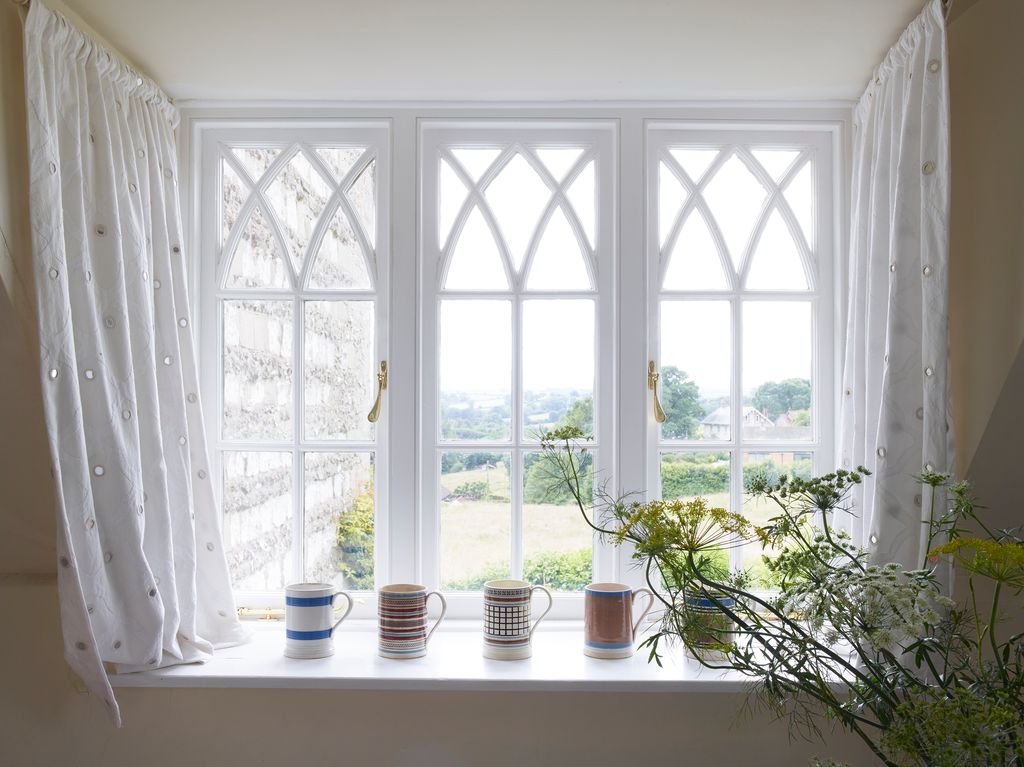
The spare room contains twin beds and tongue and groove panelling on the ceiling.
 Simon Upton12/20


 Simon Upton13/20
The seaweed-inspired ‘Sea Sprigs Large’ wallpaper in the main bathroom was designed by Miranda’s aunt Min Hogg.
 Simon Upton14/20
The main bathroom’s seaweed wallpaper was designed by her aunt, Min Hogg, the founding editor of The World of Interiors.
 Simon Upton15/20
 Simon Upton16/20
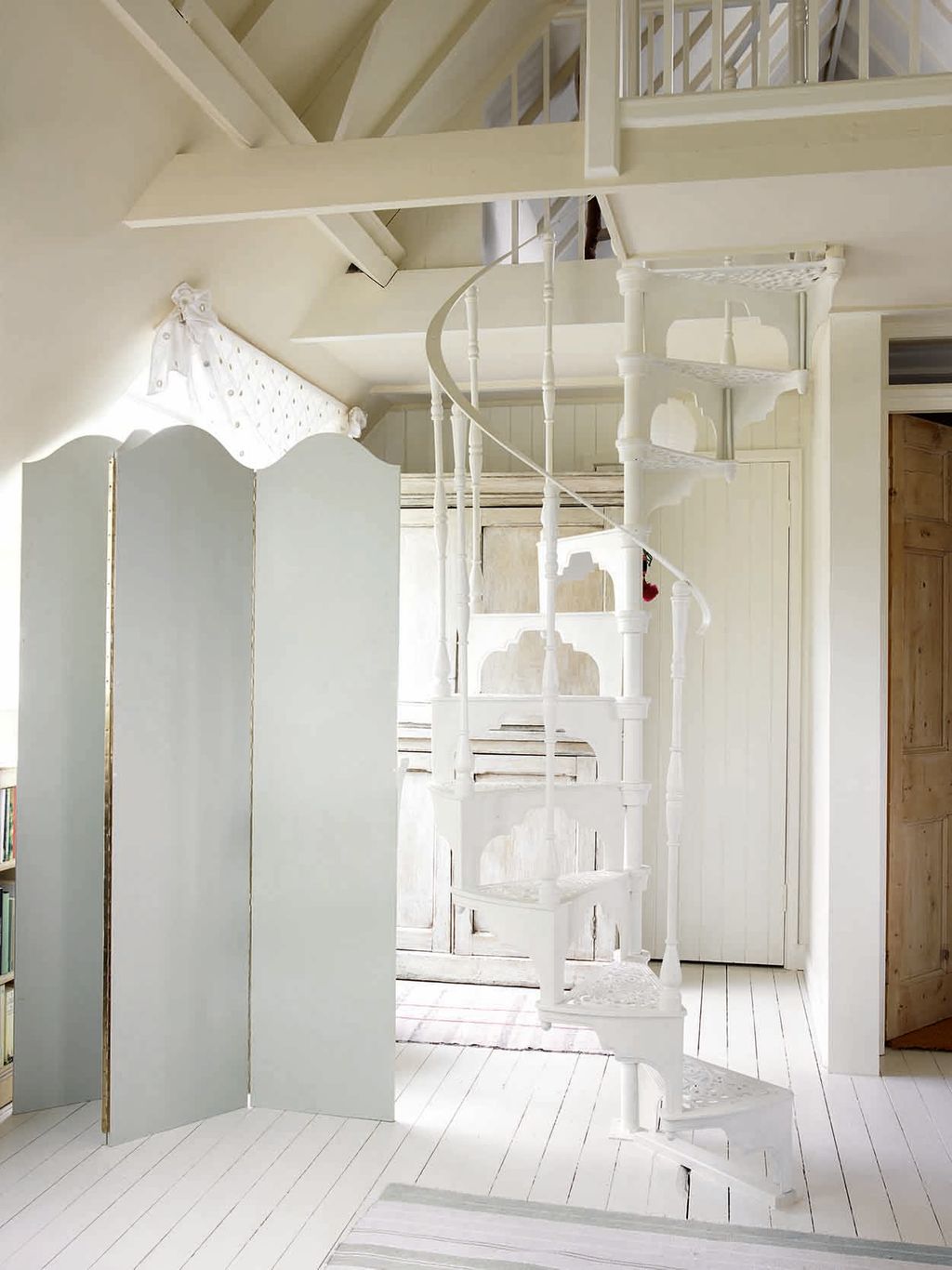
A spiral staircase, painted white to match the floorboards in this bedroom, leads to a bathroom on the floor above.


 Simon Upton17/20
 Simon Upton18/20
 Simon Upton19/20
 Simon Upton20/20


