
The romantic vistas of the Mitford sisters childhood home, Asthall Manor

Everything about Asthall Manor is romantic – the gables, the roses, the lake, the ballroom, and the swans on the willow-bordered River Windrush. Then there is the connection with the Mitford sisters, who lived here as children. The siblings moved into the Cotswold manor house in 1919 when their father, the 2nd Baron Redesdale, bought the house to reunite it with the estate, which he had inherited from his own father in 1916. The house, which dates from 1620, was immortalised as Alconleigh in Nancy Mitford’s The Pursuit of Love. Fans of the 1945 novel will be thrilled to learn that the ‘Hons’ cupboard’ remains intact at the top of the backstairs, as hot as ever, its slatted shelving still piled with laundry.
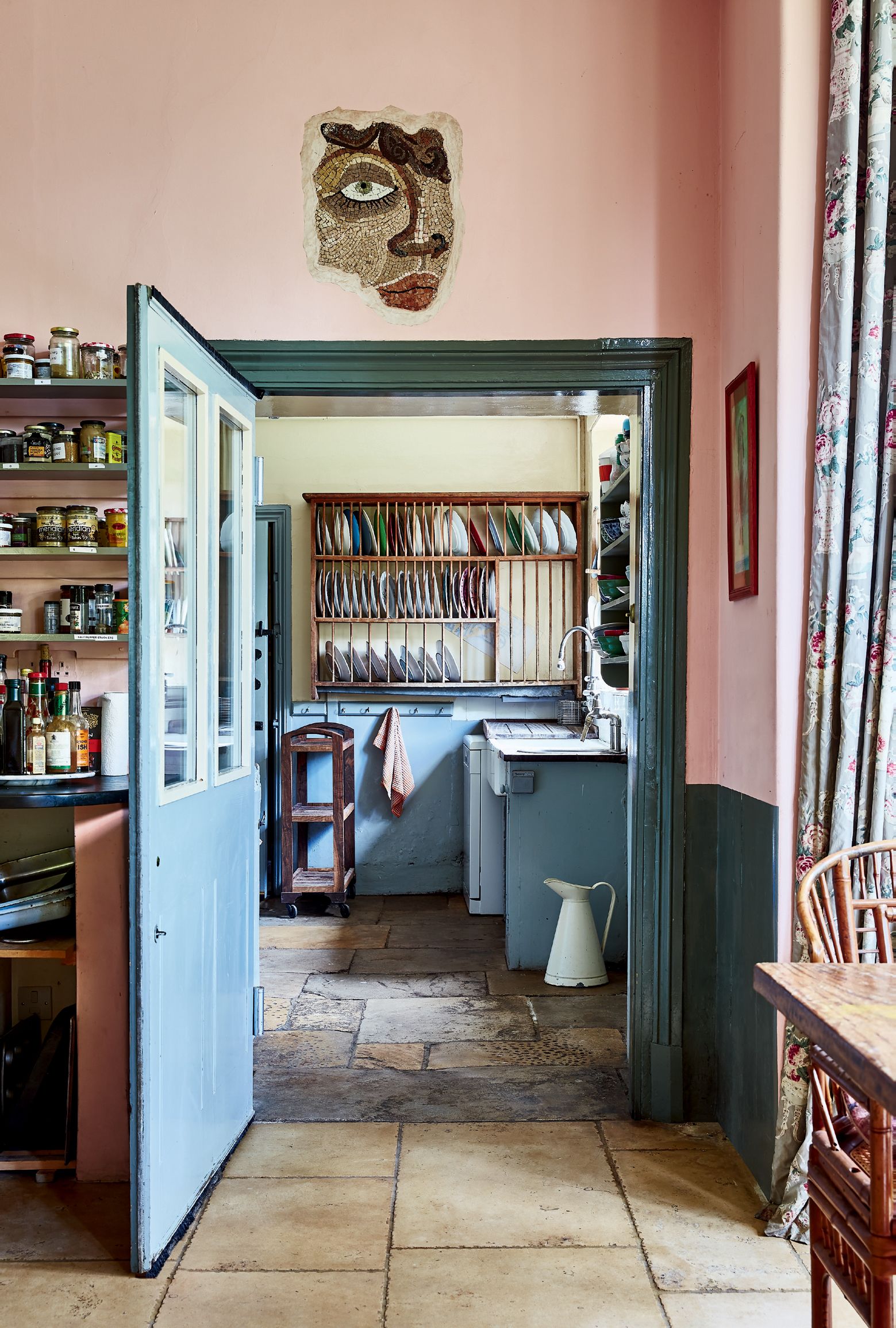
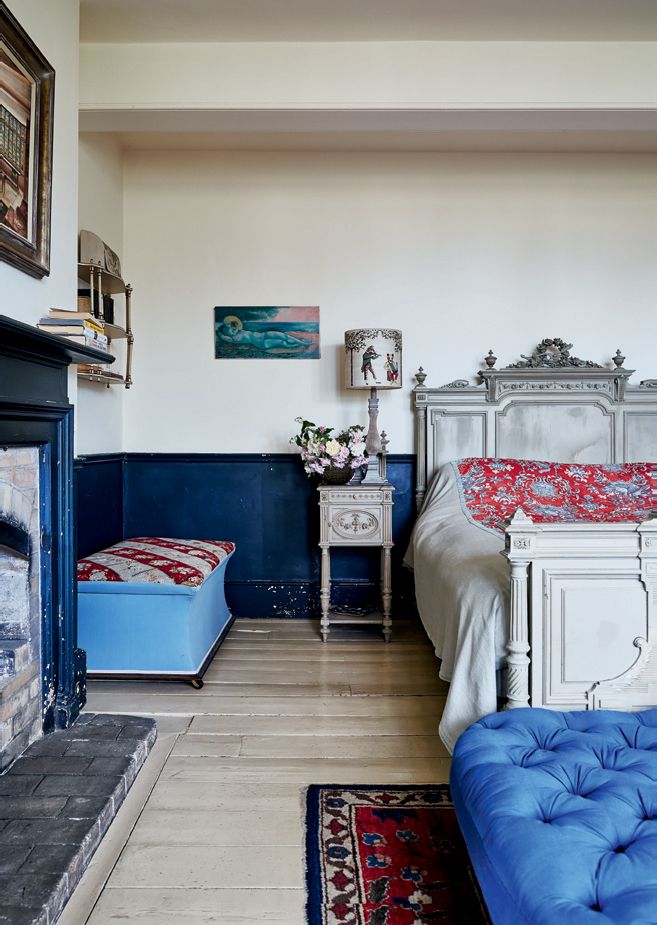
Asthall’s current owner, Rosie Pearson, is not immune to the Mitford magic. She enjoyed several impromptu visits from Debo, the late Duchess of Devonshire, who stopped short in front of the wooden plate rack in the scullery and said ‘Mabel’, recalling a maid she had not thought of since childhood, and was delighted that the Mitfords’ particular shade of blue paint had survived in the upstairs corridor. The lack of tampering also appealed to Rosie, who fell in love with the location before she saw the house. ‘I had come back from Jamaica in 1997, where I lived for 10 years and ran a school while raising my two daughters, and I was renting near Oxford. On my way for lunch with a friend, I came through this beautiful valley and thought I would love to live here one day.’
Not long afterwards, the house came up at auction. ‘It was beyond my budget because it had a lot of land,’ says Rosie. ‘But then, later that same year, it was put up for sale again, with only 18 acres, and although it was rather dilapidated, I bought it. I think I was a bit naive.’ Naive possibly, but also courageous. Having separated from her daughters’ Jamaican father, Rosie took on the house and gardens as a single mother. Friends rallied round to help. ‘Someone suggested I should contact Isabel and Julian Bannerman. They compiled a beautiful book of their ideas for the garden, and then held my hand throughout the process of restoring and decorating the house. I think I would have lost my nerve without them.’
MAY WE SUGGEST: Inside the home of the last Mitford
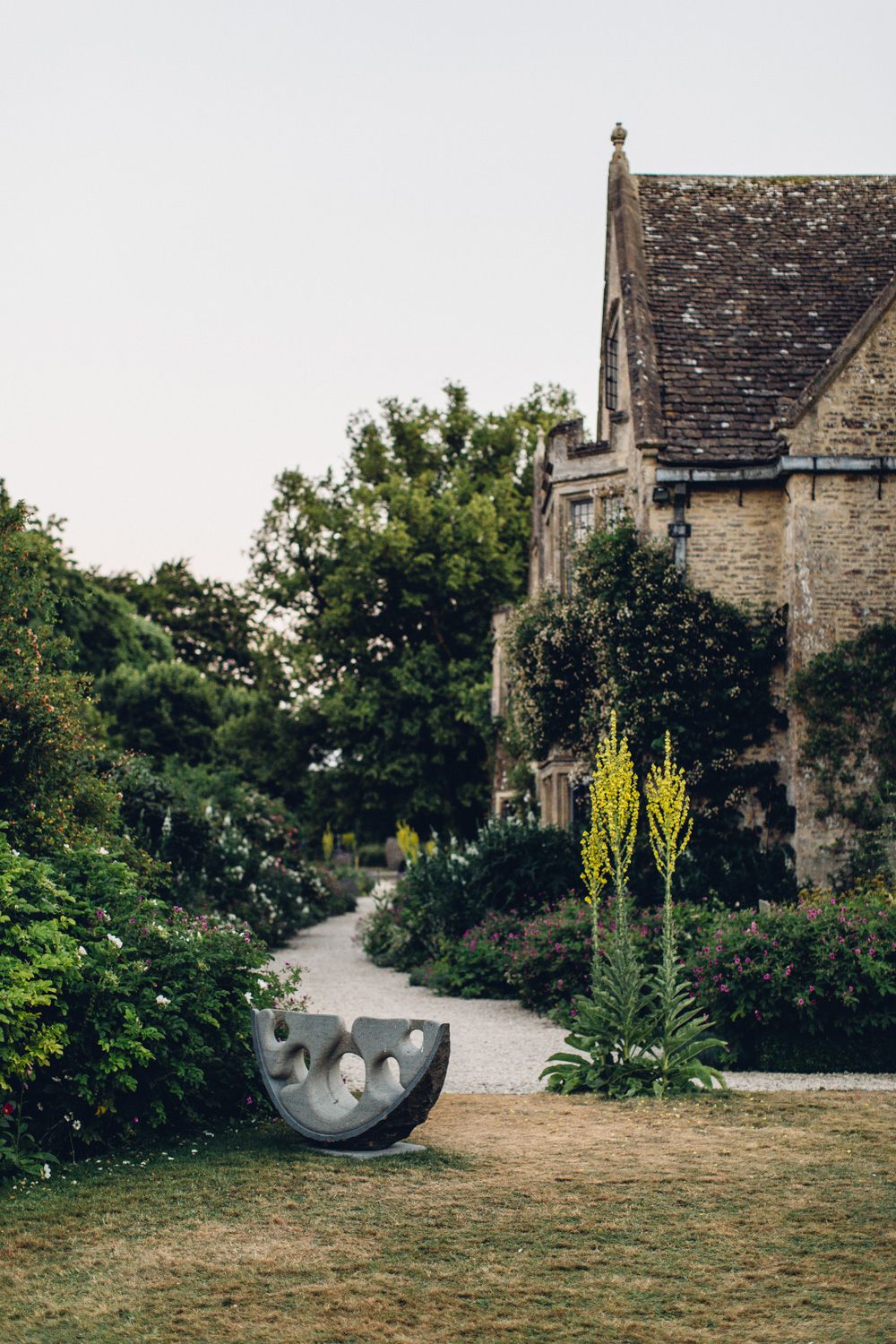
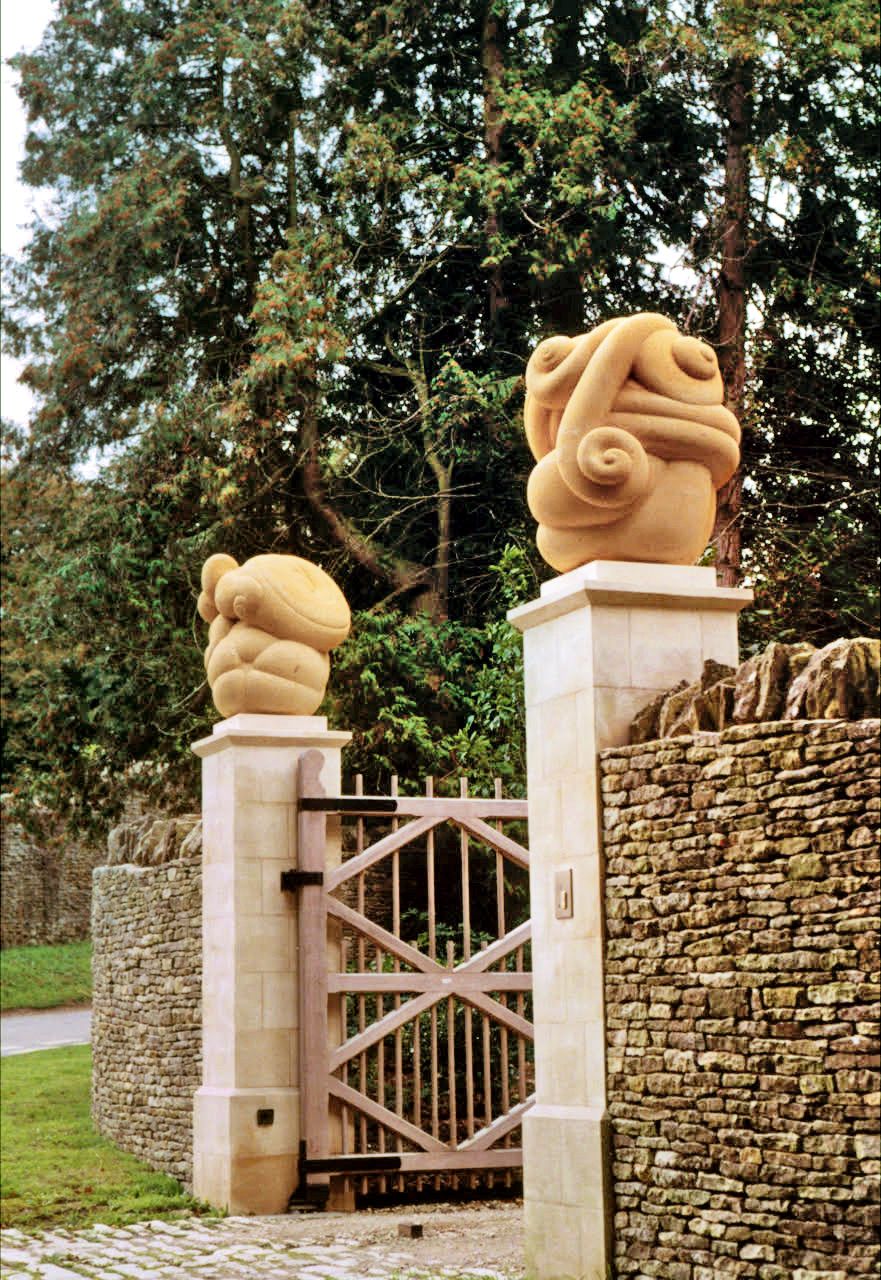
In truth, she seems to have plenty of nerve. Take her gateposts, for example. Most people would have been happy to top them with balls, or pineapples, but Rosie wanted something more interesting. She commissioned her old schoolfriend (now partner), the sculptor Anthony Turner, to create two large, non-identical, stone topknots, which squat curvaceously on top of their square pillars like extra-terrestrial turban squashes. ‘They caused quite a stir in the village when they first went up,’ she says.
They also triggered an idea for an event that has given the house a name beyond its literary associations, and is now a significant date in the art-world calendar. ‘Anthony brought a sculptor friend with him, Dominic Welch, to help with the gateposts. They both pointed out what a wonderful setting for contemporary sculpture the garden would be.’ The idea took root and the first biennial On Form exhibition took place in the summer of 2002, four years after Rosie first moved in. Each show has been a celebration of contemporary stone sculpture. Since 2006, Rosie has been assisted by the curator and art consultant Anna Greenacre. About 10,000 visitors passed through the gates in 2018 to see 384 works by 40 artists.
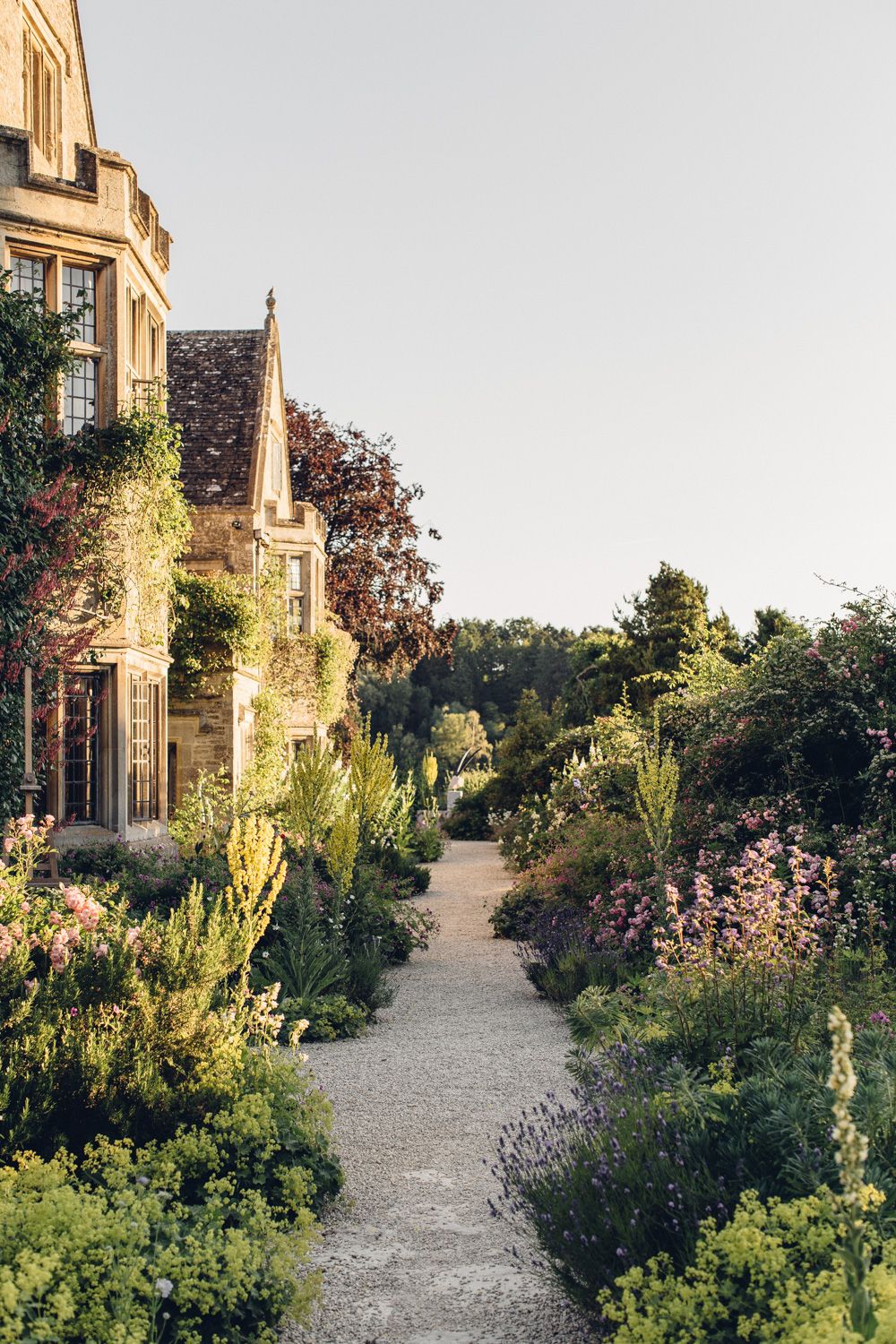
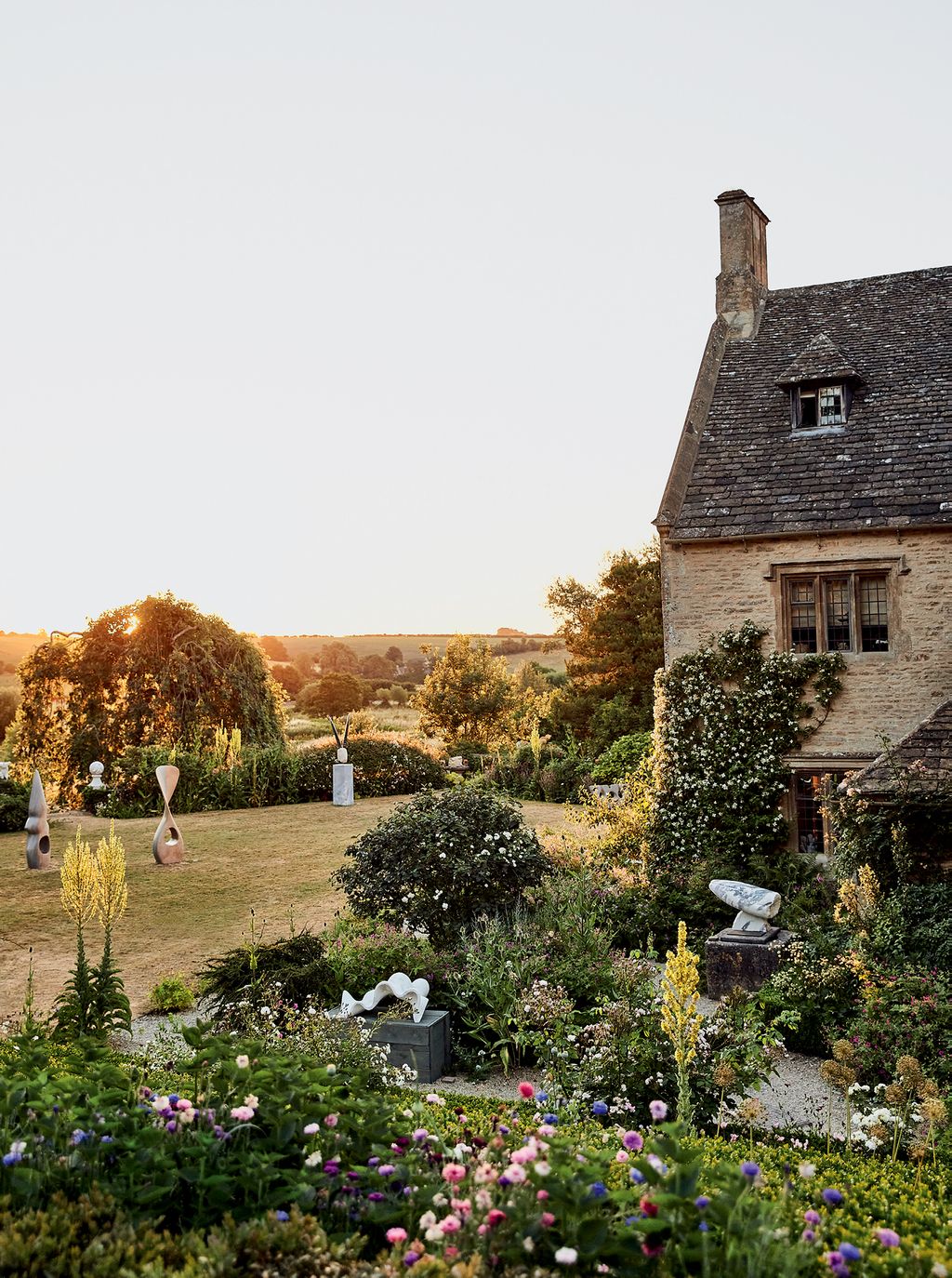
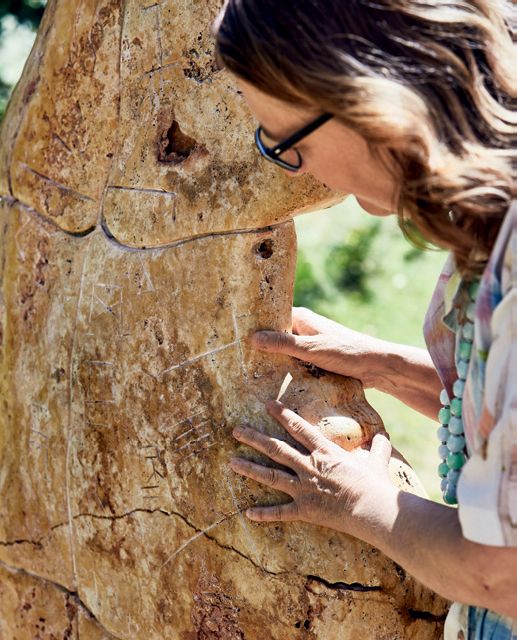
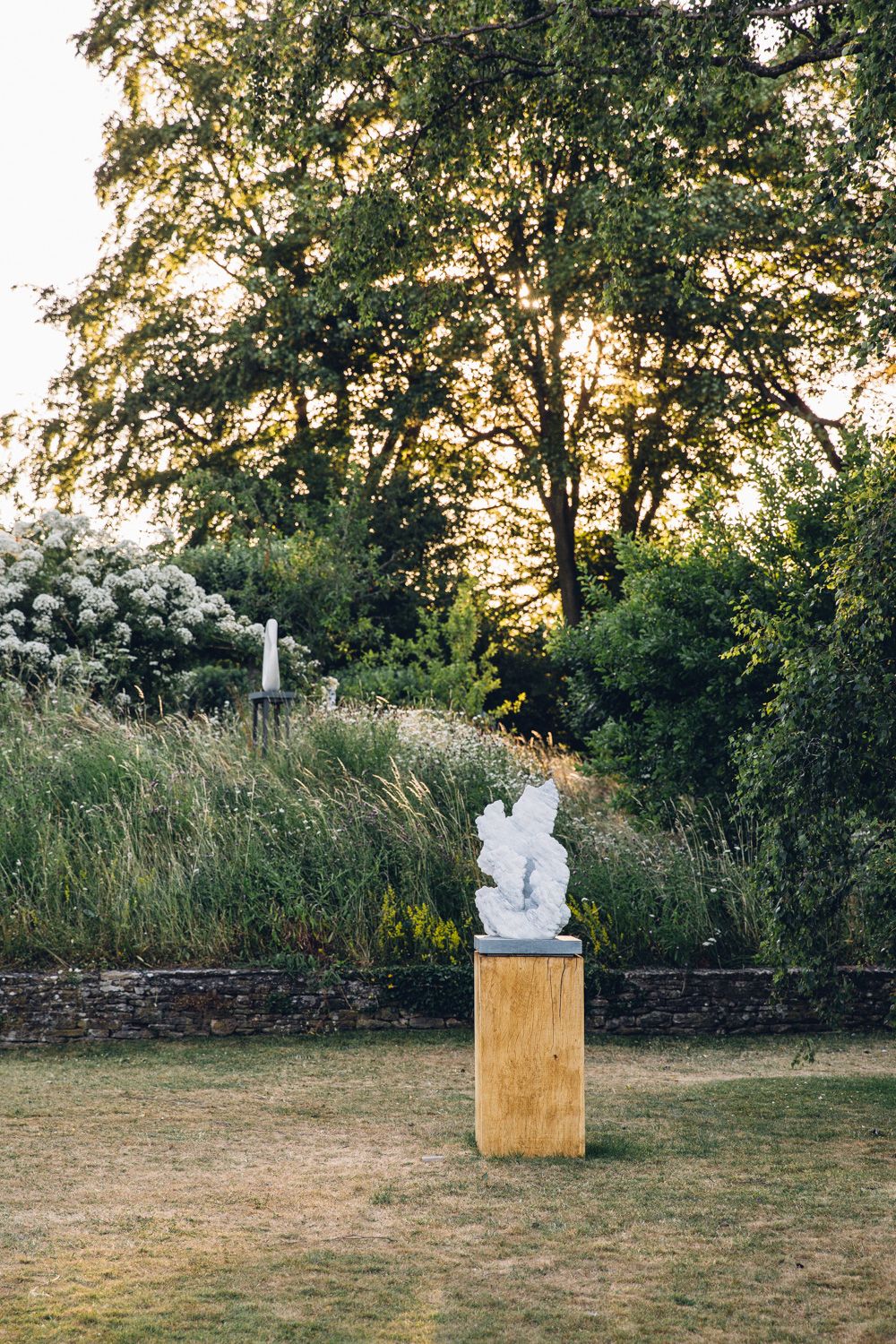
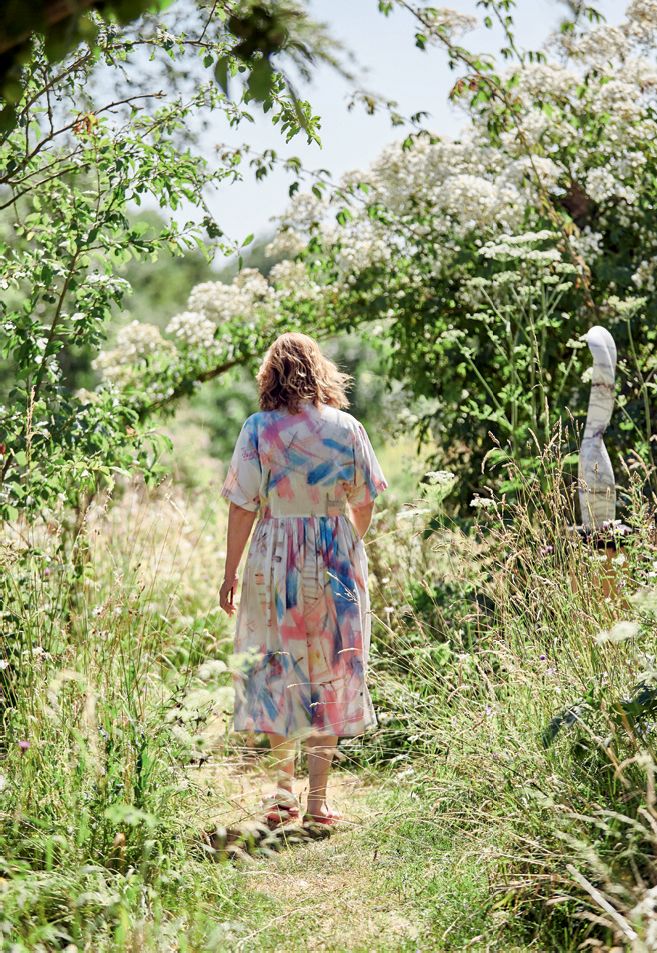
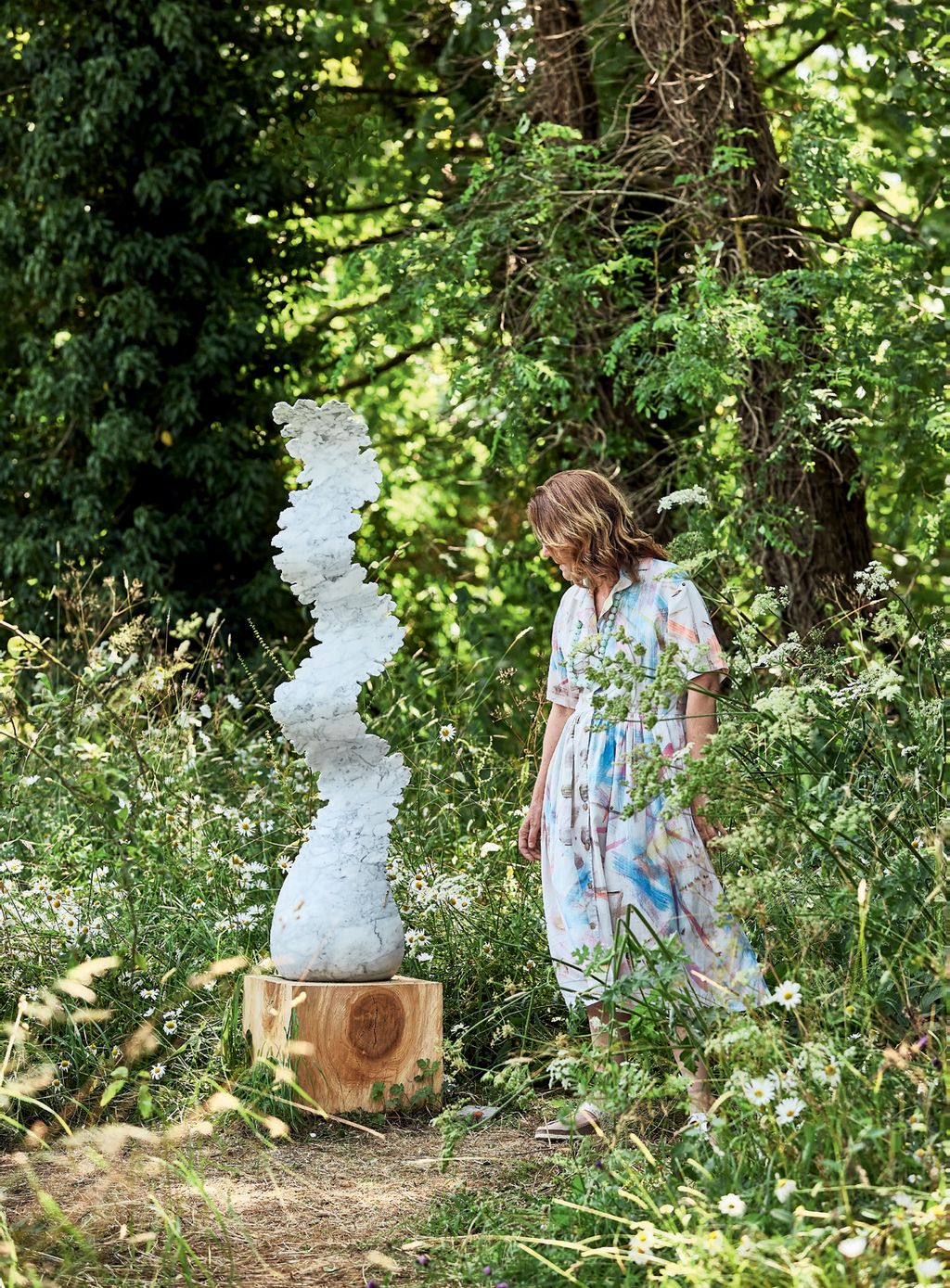
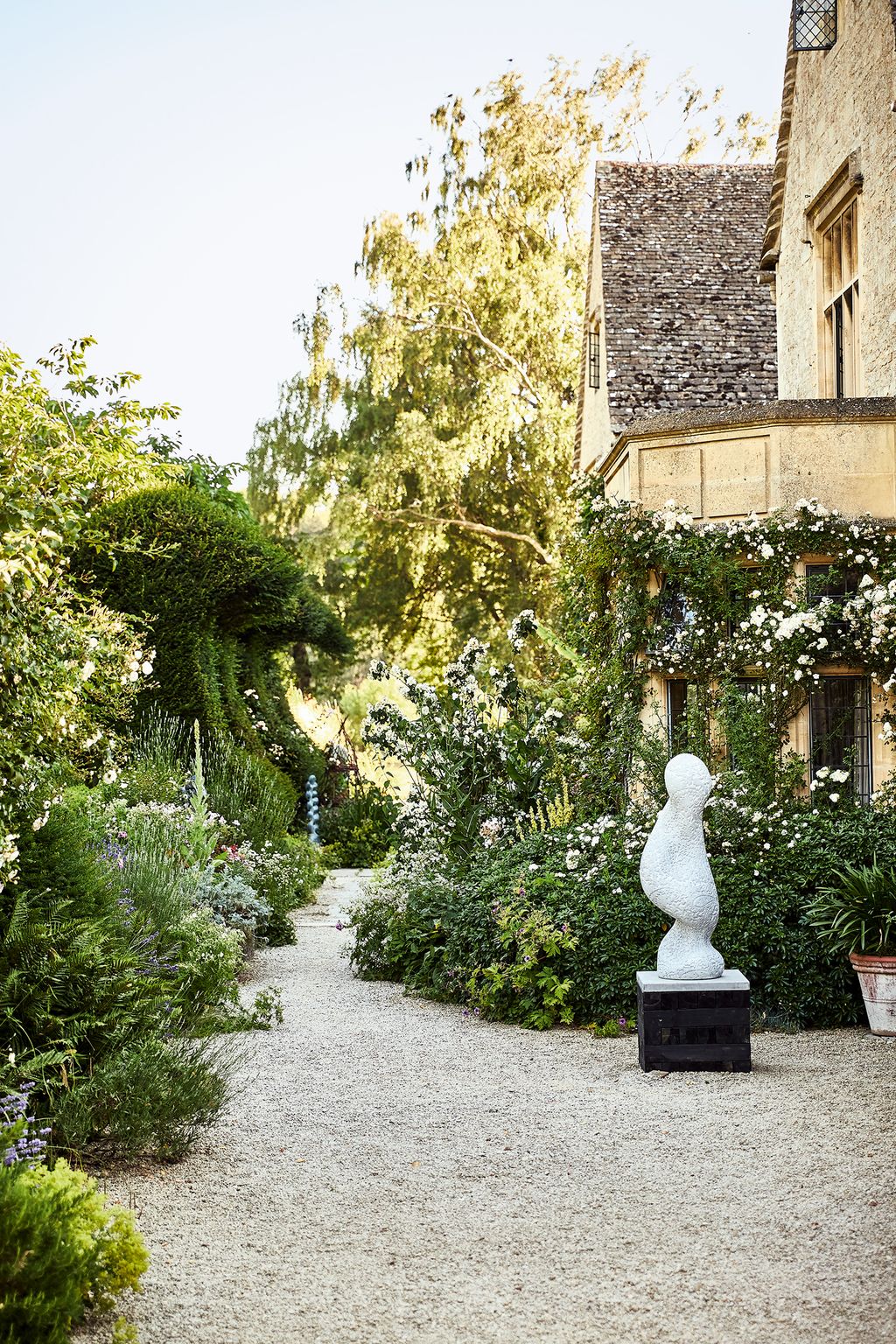
The Bannermans and Rosie have created a garden that invites leisurely wandering. It is more formal close to the house, with gravel paths, great wedges of clipped yew and a crisp parterre, but it loosens as it extends – its borders and lawns seeming to melt into the surrounding fields, through the orchard or down across the water meadows. Viewing the sculptures is an exploration, during which you will find a tree house, a thatched summerhouse, a pool-house bookshop and a gypsy caravan. Some works are set on the lawns, where sunlight dapples across surfaces of chiselled granite, honed marble and limestone; some rise from the longer grass of the meadows, while others are reflected in the still waters of the natural swimming pool or the lake. ‘Placing each work is an art in itself,’ says Rosie. ‘I like surprises, so we try to create interesting juxtapositions.’ Signs indicate to visitors, ‘DO touch.’
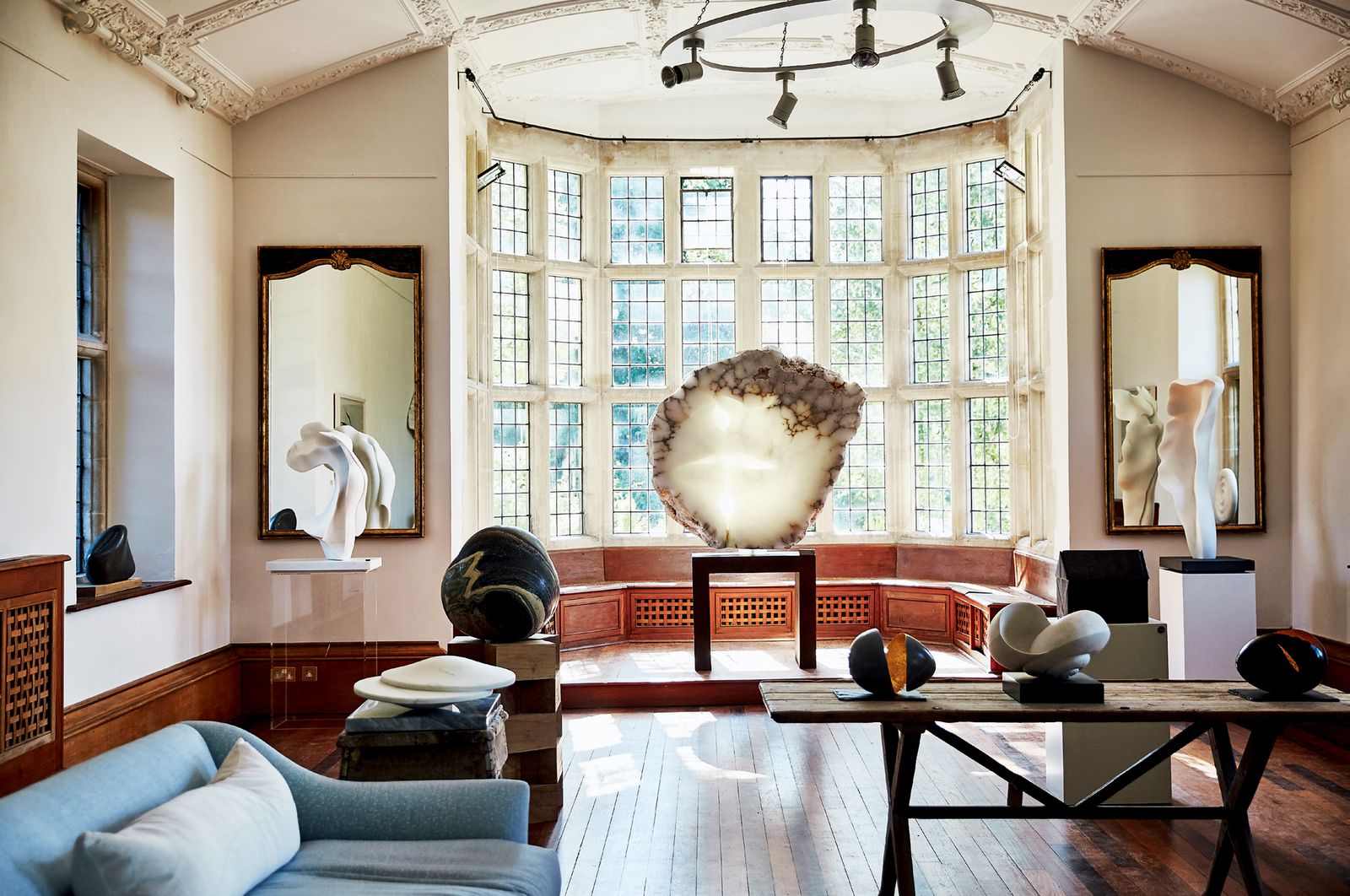
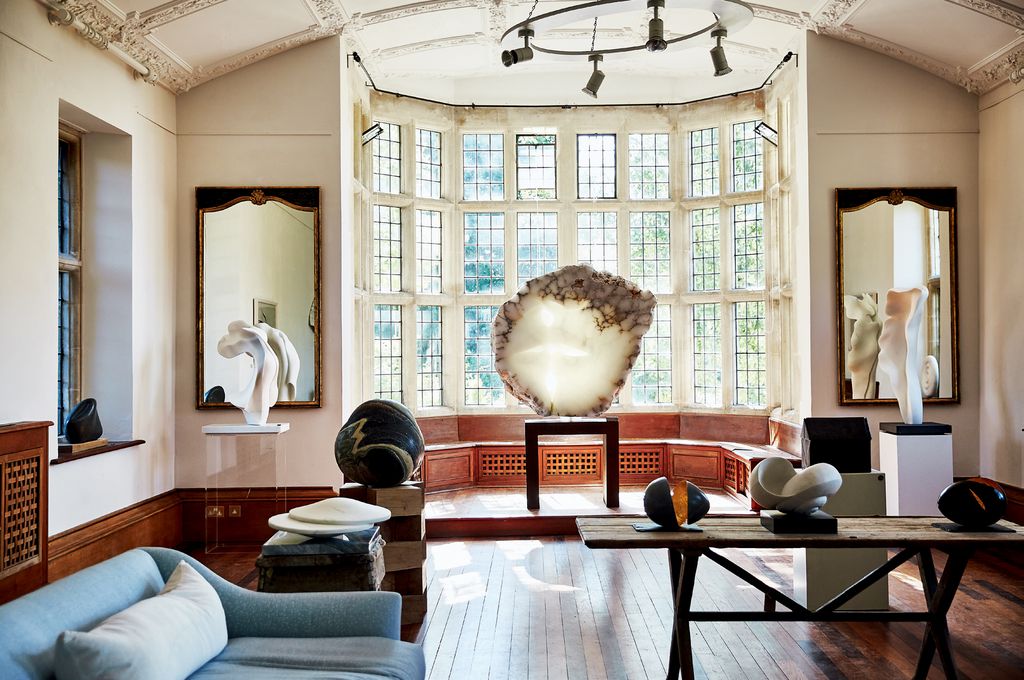
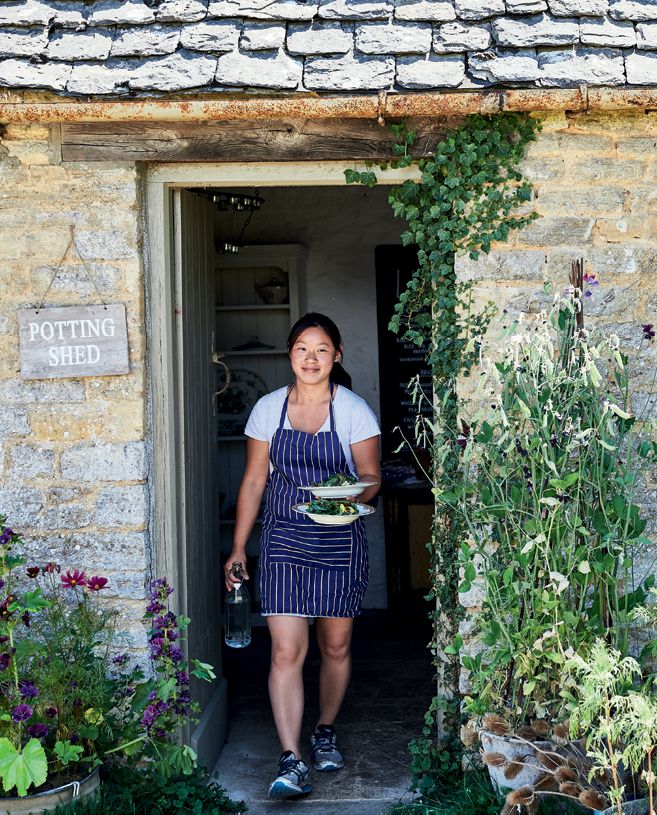
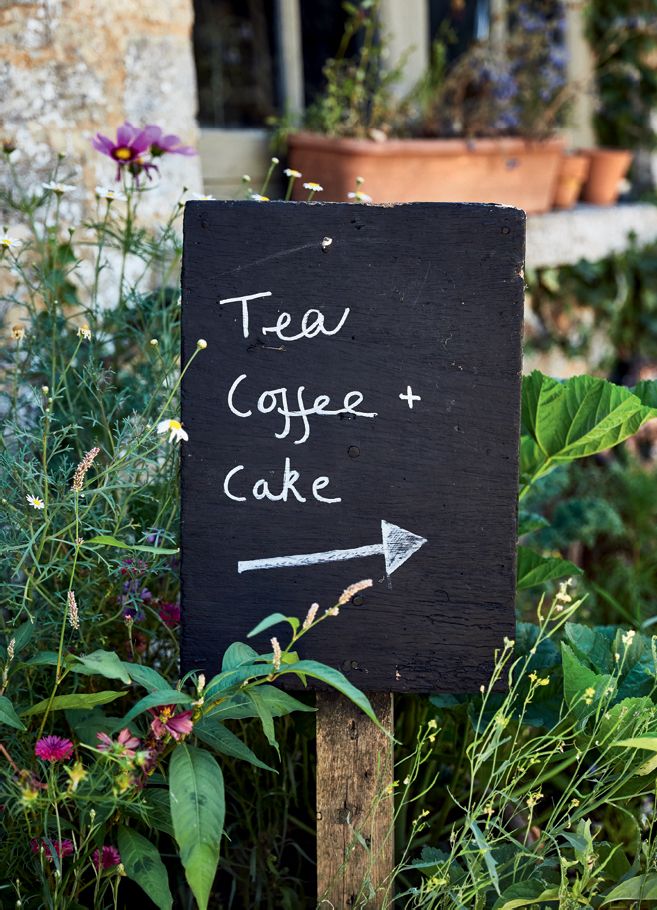
Across the lane from the house is the vegetable garden. Here, there are more striking sculptures to be seen – and touched – on the way to The Potting Shed café, which serves rustic salads alongside bruschetta cooked in the wood-burning oven by local chef Fiona Cullinane. Back at the house, smaller works are displayed in room settings, in the vast ballroom built by Lord Redesdale on the site of an old barn in 1920 and linked to the main house by a covered cloister, and in the sitting room that was once the Mitfords’ drawing room.
MAY WE SUGGEST: Let Isabel & Julian Bannerman take you on a tour of Trematon Castle Garden
For several months before and after On Form, the room beyond Rosie’s office becomes the centre of operations, but there is always plenty happening at Asthall in between, including residential retreats and workshops for artists and writers. ‘We are a venue for family reunions, small businesses and charities,’ says Rosie. ‘I want this to be a place where relationships are consolidated, ideas generated and shared.’ At least once a week, there is a gathering at the long kitchen table for lunch. On the day I visit, there are nine of us, including the head gardener Owen Vaughan. He is in the middle of pruning the roses according to the Asthall method, which produces an abundance of flowers in summer, and a spiralling – and appropriately sculptural – web of branches over winter. There is also a compost expert from New Zealand who is staying for a week as a WWOOF (World Wide Opportunities on Organic Farms) volunteer.
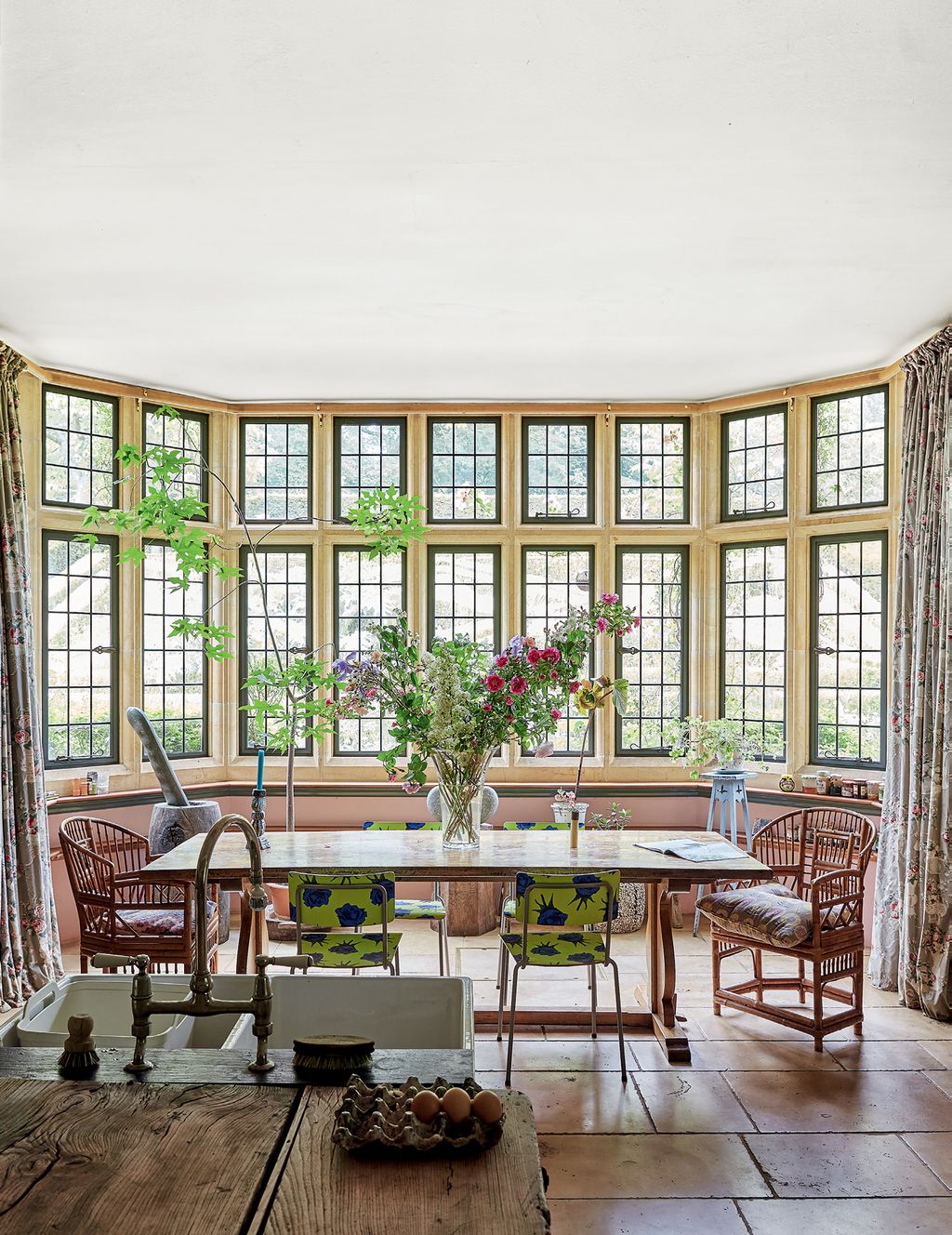
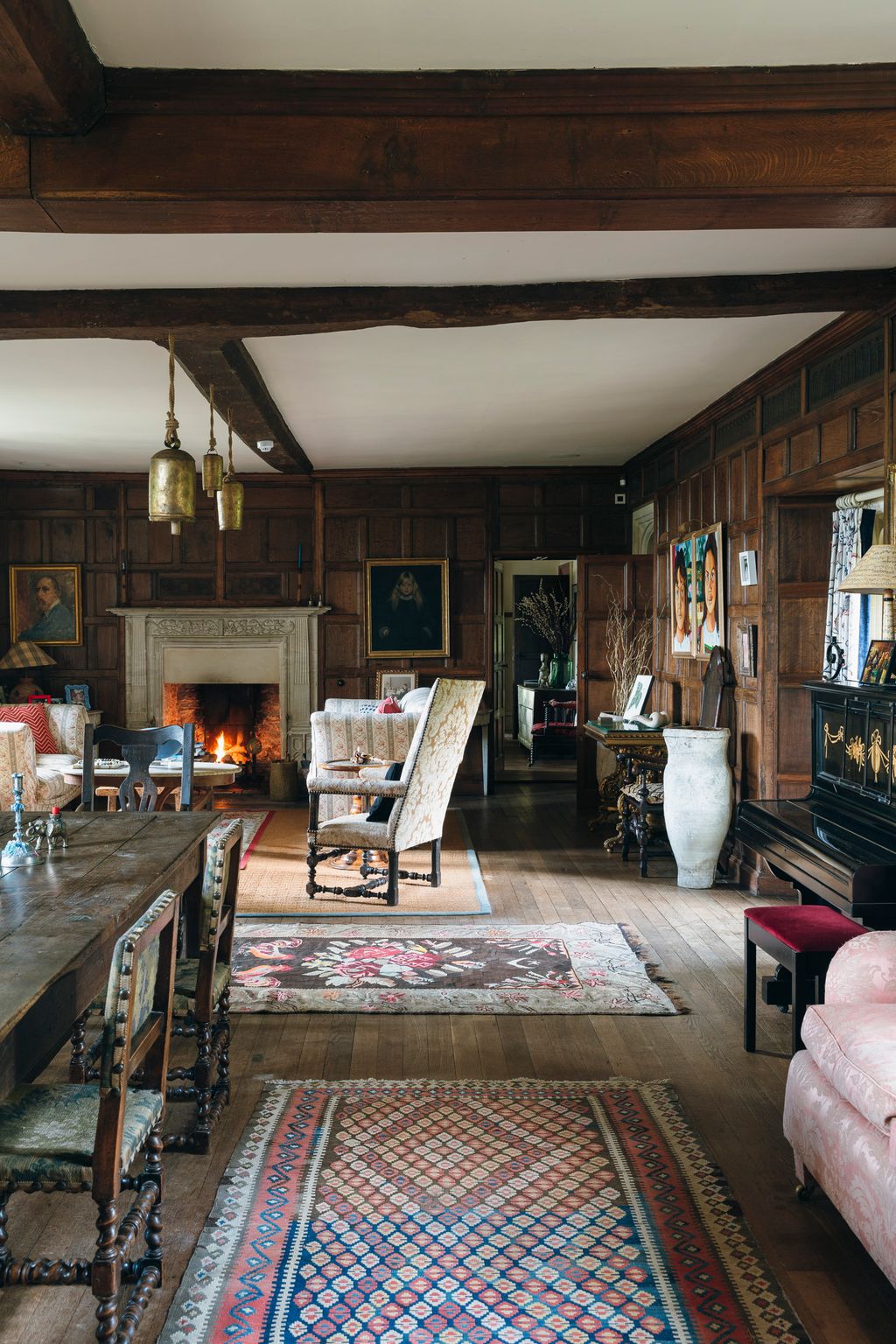
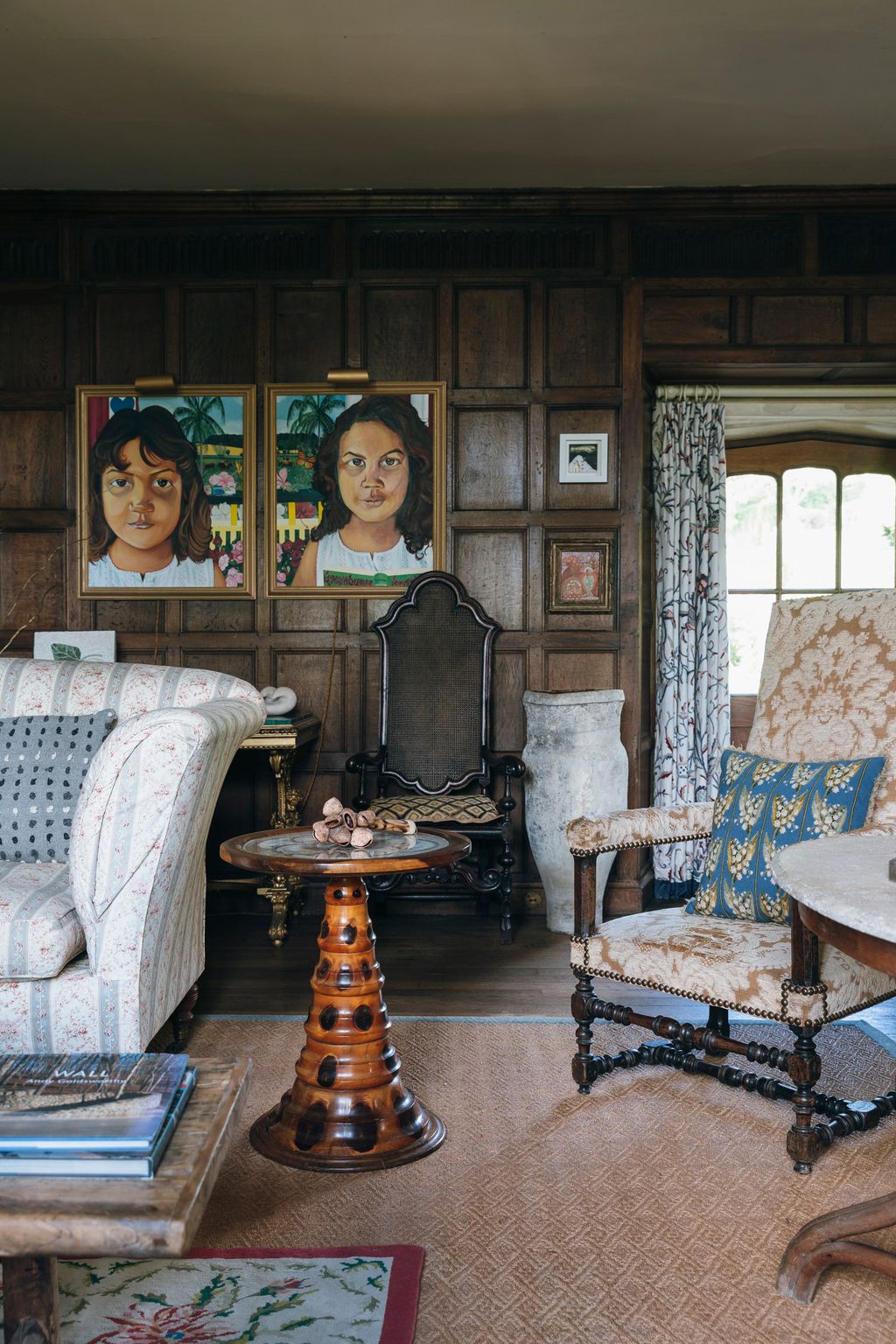
‘The kitchen is the room that has changed most since the Mitfords’ day,’ says Rosie, who explains that she put in the mullioned bay window in front of which the table now stands, and moved the original window to a side wall. Next door is the Red Room, once used for dining and now a sitting room. This leads into the panelled hall, which is used for parties. Furnishings are a comfortable and informal mix. In the hall, in addition to the sofas, the table and the piano, there is a pair of wood and metal horses from Kerala, a Victorian pram and a collection of Himalayan cow bells and Kenyan camel bells dangling from a beam.
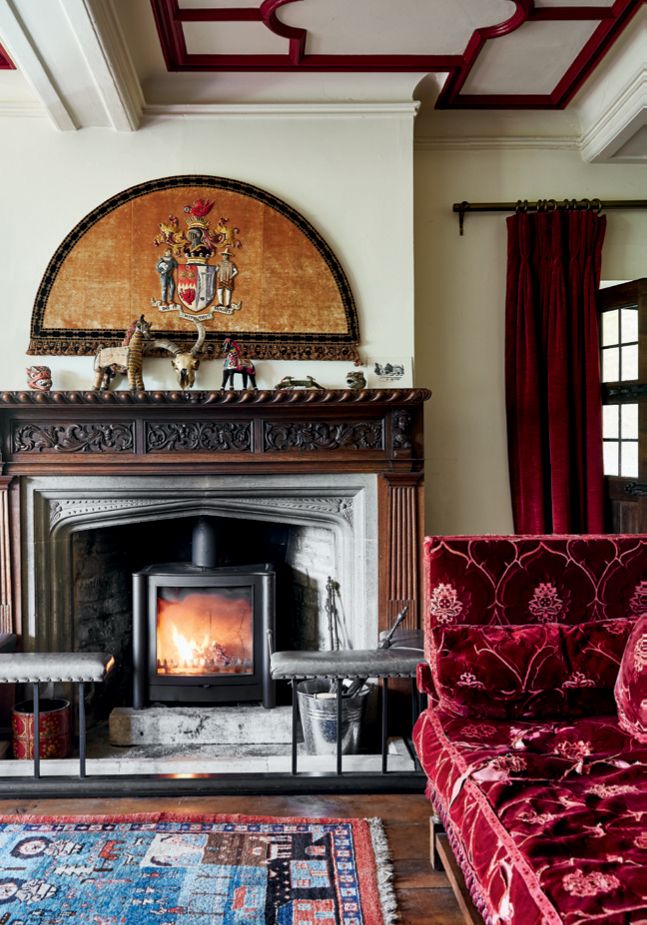
Among Rosie’s inherited family possessions is an embroidered lunette of the family coat of arms, created for her great-grandfather, Weetman Pearson, 1st Viscount Cowdray. It includes the figure of a Mexican labourer, in recognition of the wealth generated by Mexican oil wells. ‘He was doing what seemed best at the time,’ says Rosie. ‘Now we have to reverse our reliance on oil. I am a Green Party supporter and I enjoy the historic justice of trying to use the same creative energy that got us here, to help us to move on from the oil age. I try to reuse old objects and avoid buying many new things. It’s just a shame that I can’t reinstate the 1st Baron Redesdale’s water turbine to generate electricity for the house because, frustratingly, I don’t own the weir.’
 Dean Hearne1/27
 Dean Hearne2/27
 Dean Hearne3/27
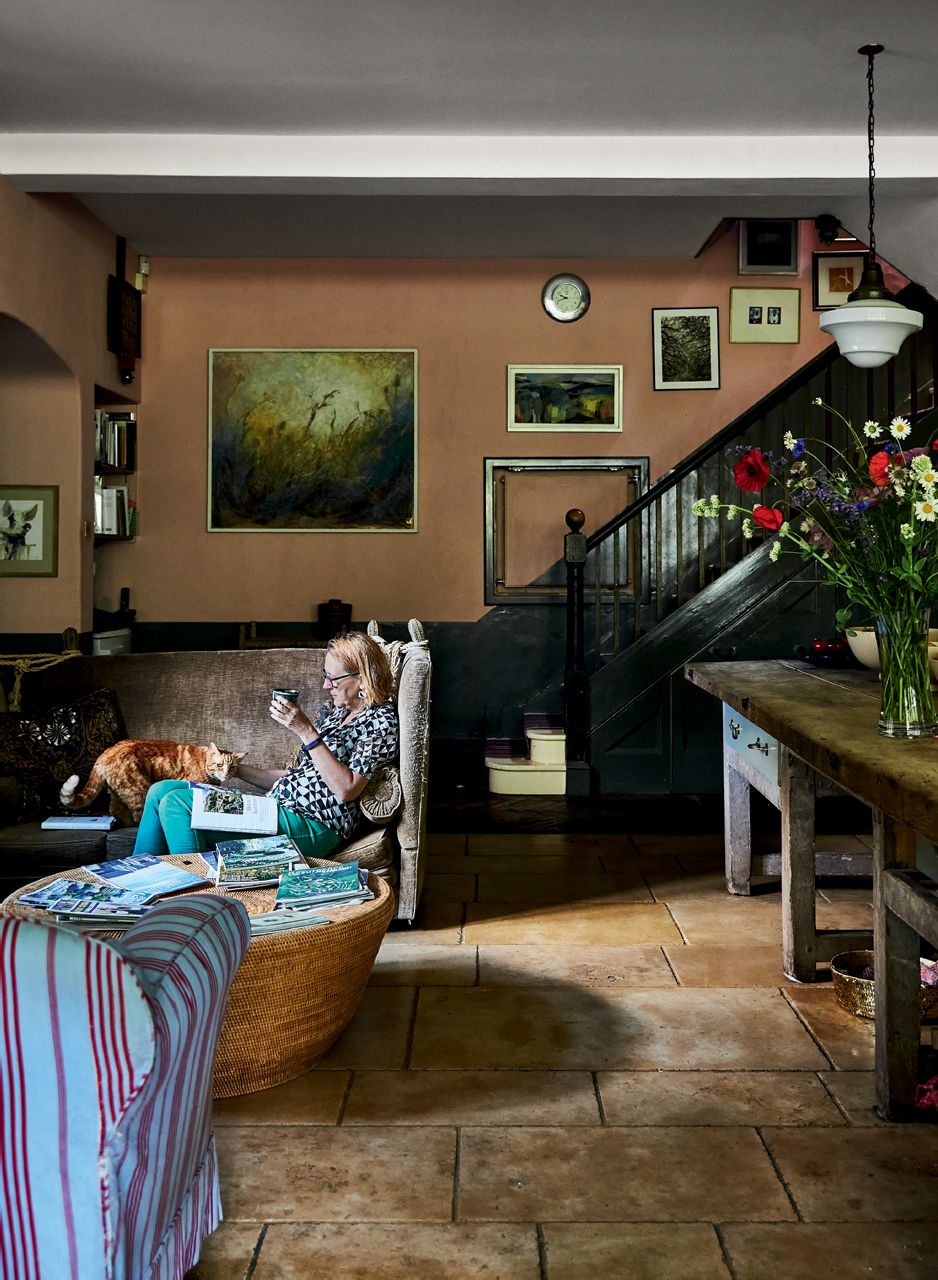
Rosie in the kitchen, which is now open to the backstairs.
 Dean Hearne4/27
She created the mosaic above the door to the scullery.


 Dean Hearne5/27
The kitchen features a new mullioned bay window. Anthony’s sculpture Sweet Rosie Pea is seen on the left.
 Dean Hearne6/27
Rosie’s family coat of arms is displayed in the Red Room, named after a sofa she inherited from her parents, which retains its Edwardian cut-velvet upholstery.
 Dean Hearne7/27
 Dean Hearne8/27


 Dean Hearne9/27
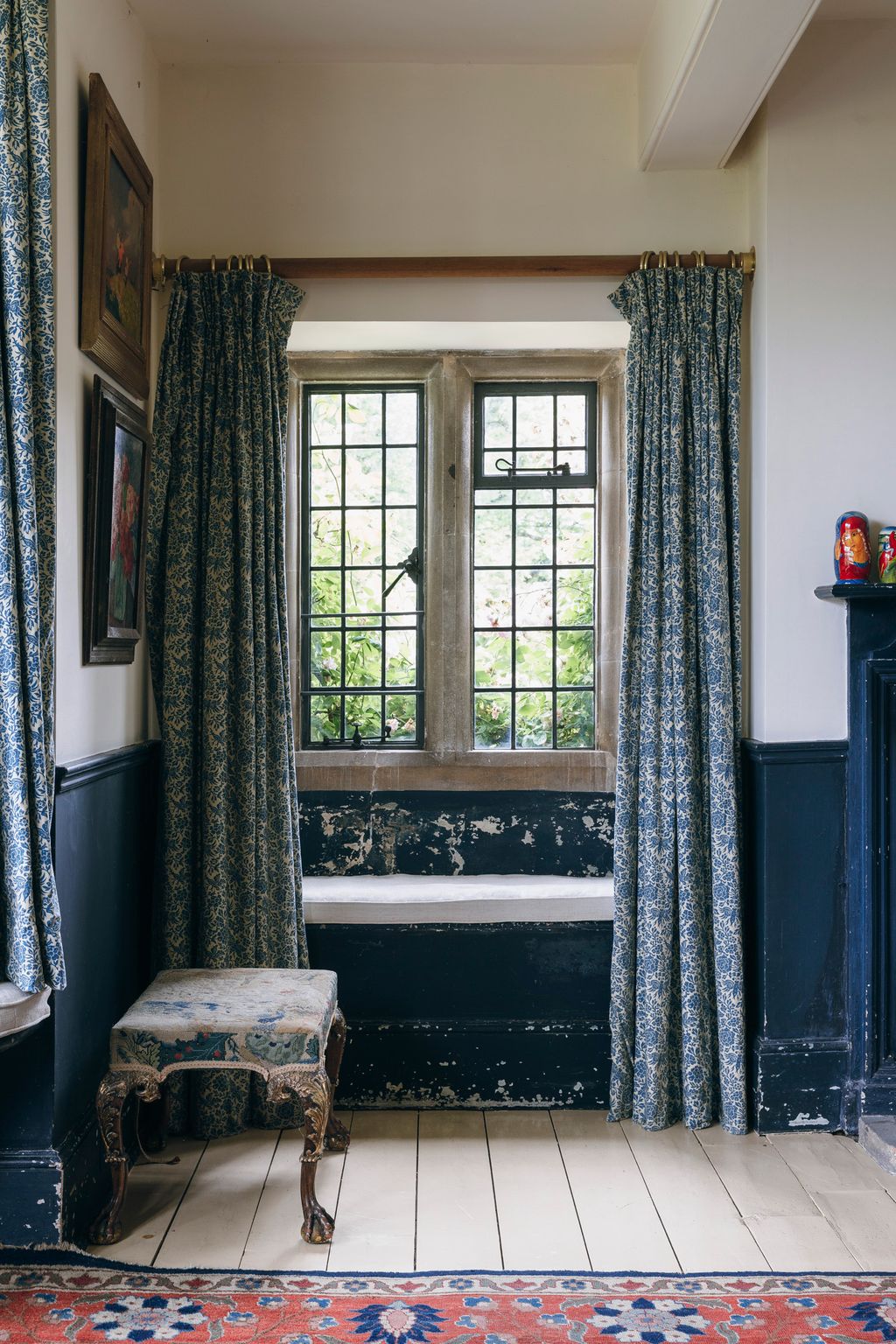
The Blue Room was the nursery and schoolroom of the Mitford sisters.
 Dean Hearne10/27
 Dean Hearne11/27
More works are displayed in the room that was once the Mitfords’ library and has been styled for sculpture by Lorfords.
 Dean Hearne12/27
Once every two years, the gardens and interiors of the 17th-century Cotswold manor house play host to hundreds of sculptures by international artists.


 Dean Hearne13/27
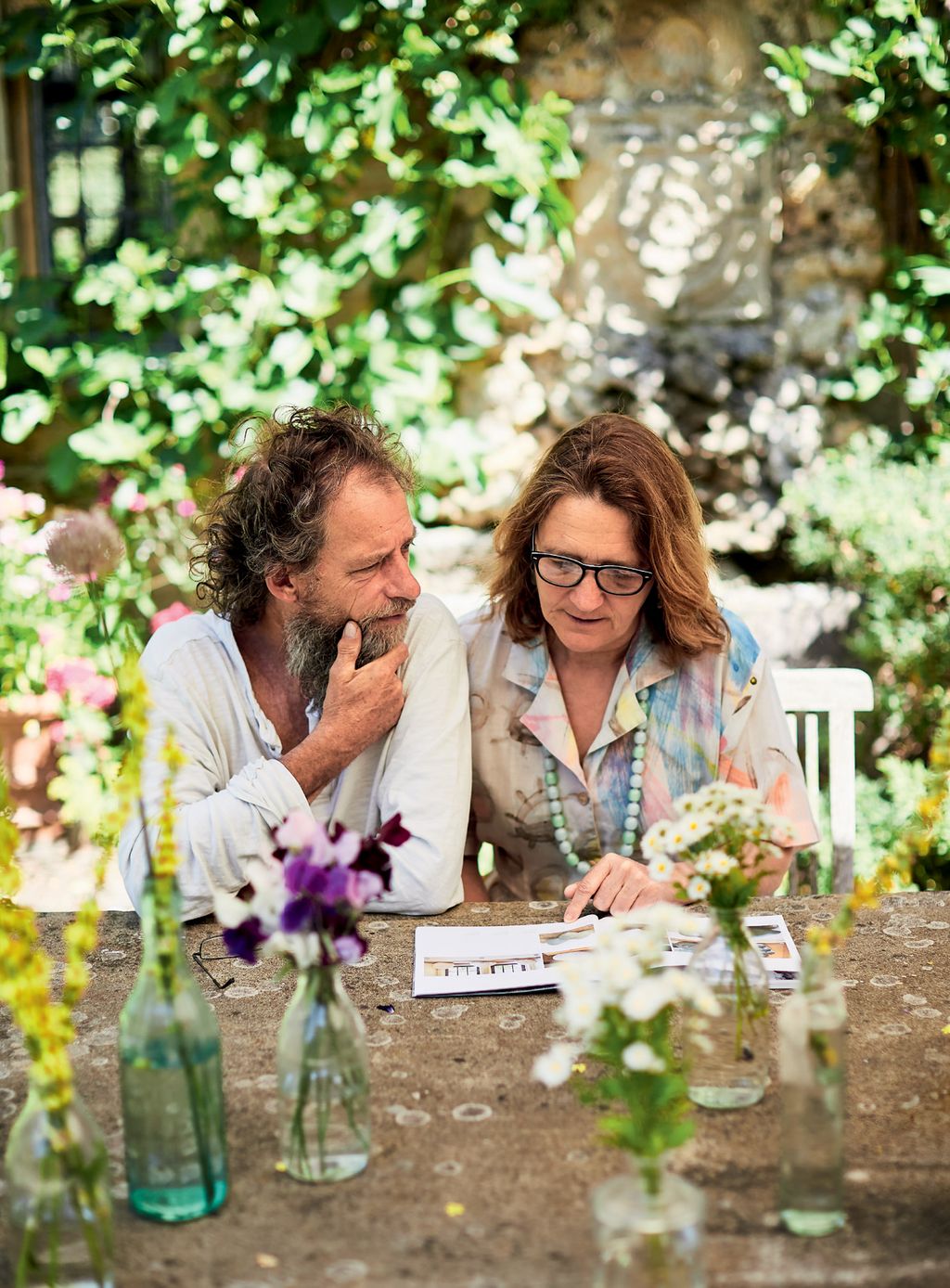
Asthall Manor’s owner, Rosie Pearson, with her partner, the sculptor Anthony Turner, whose creation of unique stone topknots for the house’s gateposts first inspired the On Form exhibition.
 Dean Hearne14/27
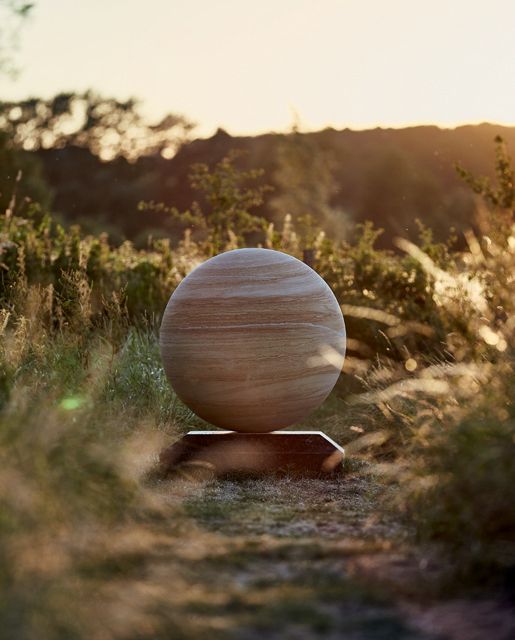
One element ofEarth, Moon & Sun, Scale 1:1.5 Billion by Alex Wenham.
 Dean Hearne15/27
Rosie encourages visitors to touch the sculptures
 Dean Hearne16/27


 Dean Hearne17/27
Rosie in the meadow.
 Dean Hearne18/27
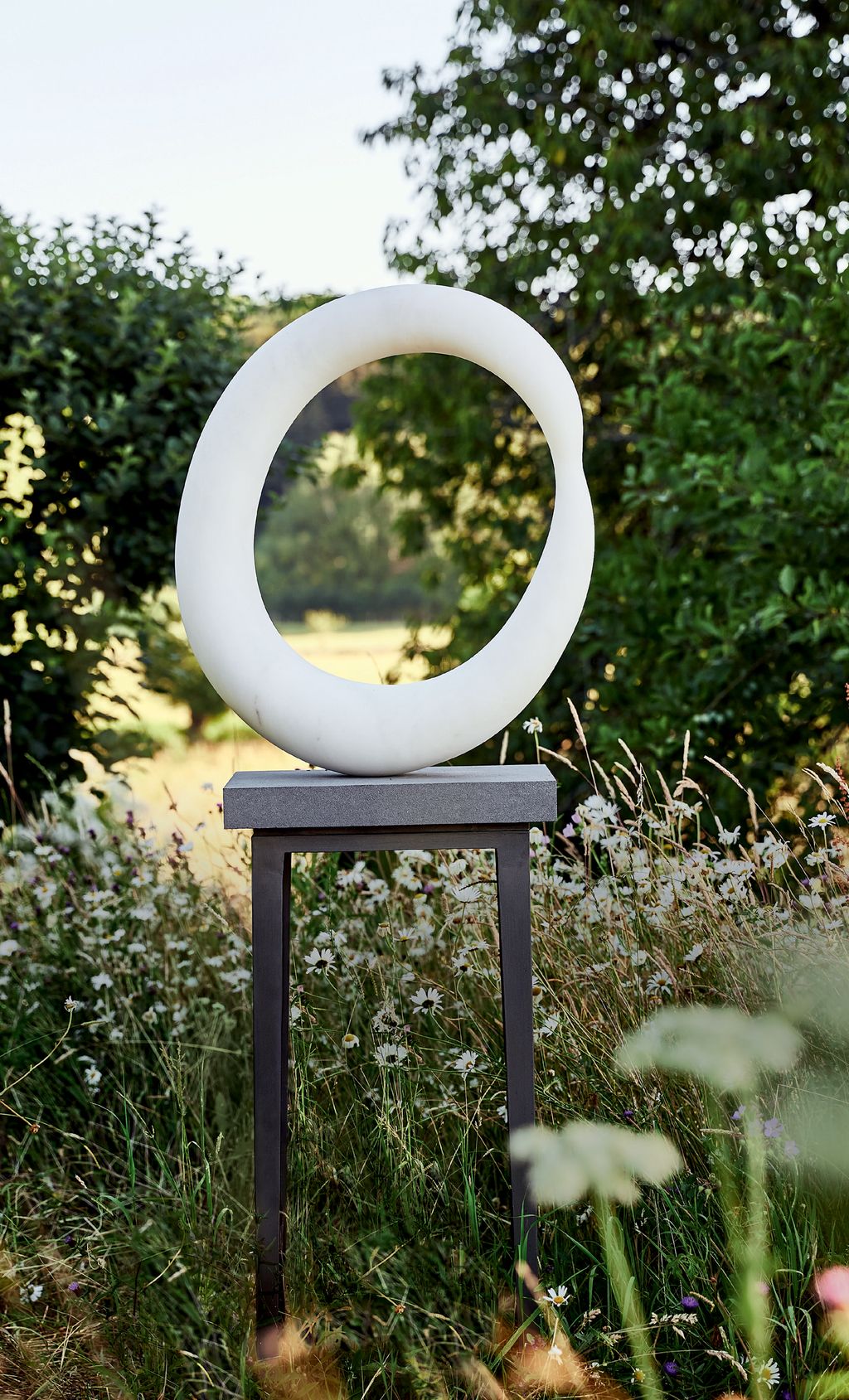
Anello Touch by Almuth Tebbenhoff frames the view.
 Dean Hearne19/27
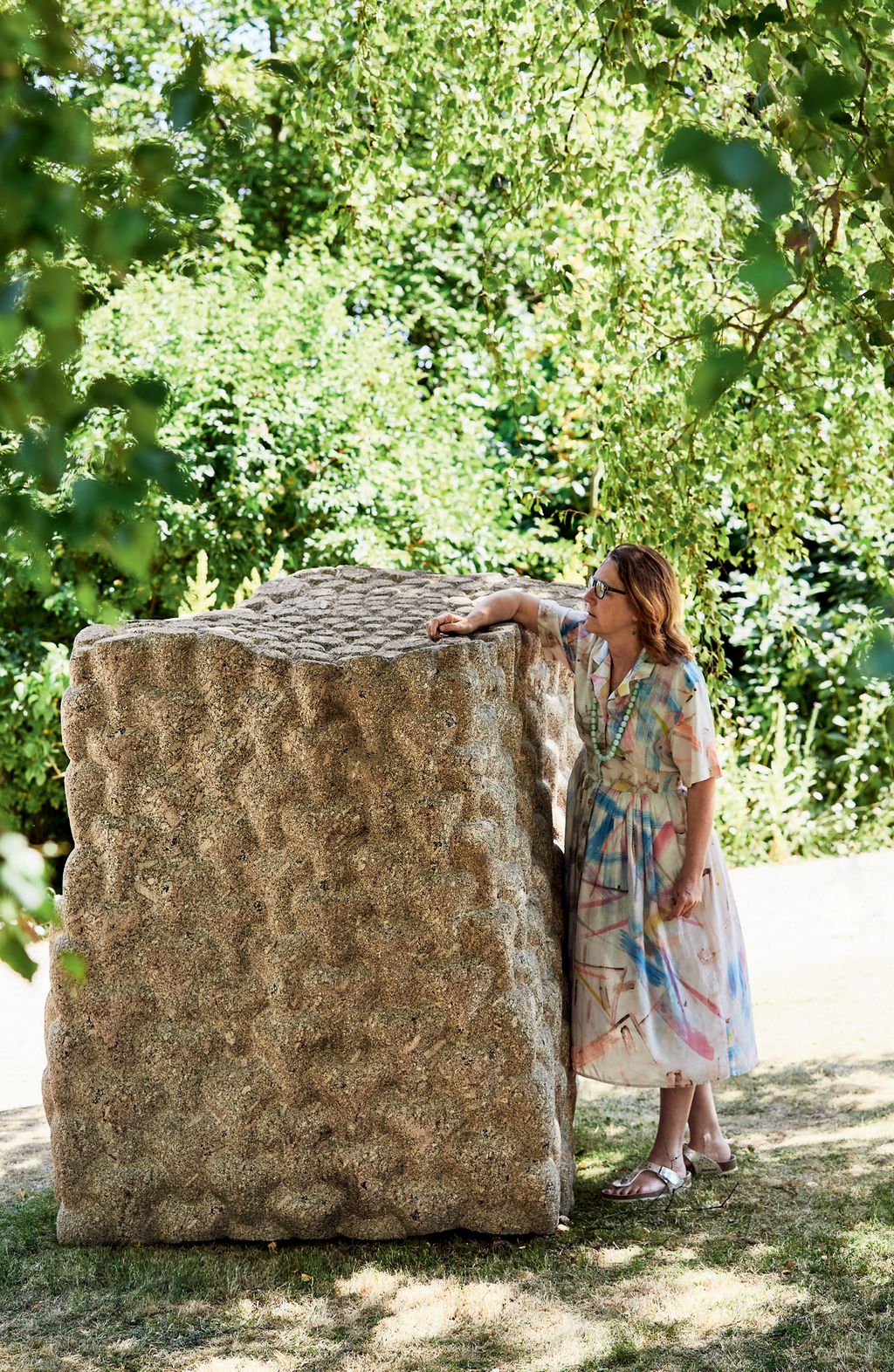
Rosie leans against Envelope of Pulsation by Peter Randall-Page. ‘Placing each work is an art in itself,’ she says.
 Dean Hearne20/27
Rosie with Guy Stevens’ Kelp in the wild woodland.


 21/27
21/27Anthony’s unusual gatepost finials.
 22/27
22/27A gravel path winds through clipped yew and herbaceous borders, past French Mist by John Isherwood.
 Dean Hearne23/27
The Potting Shed café.
 Dean Hearne24/27
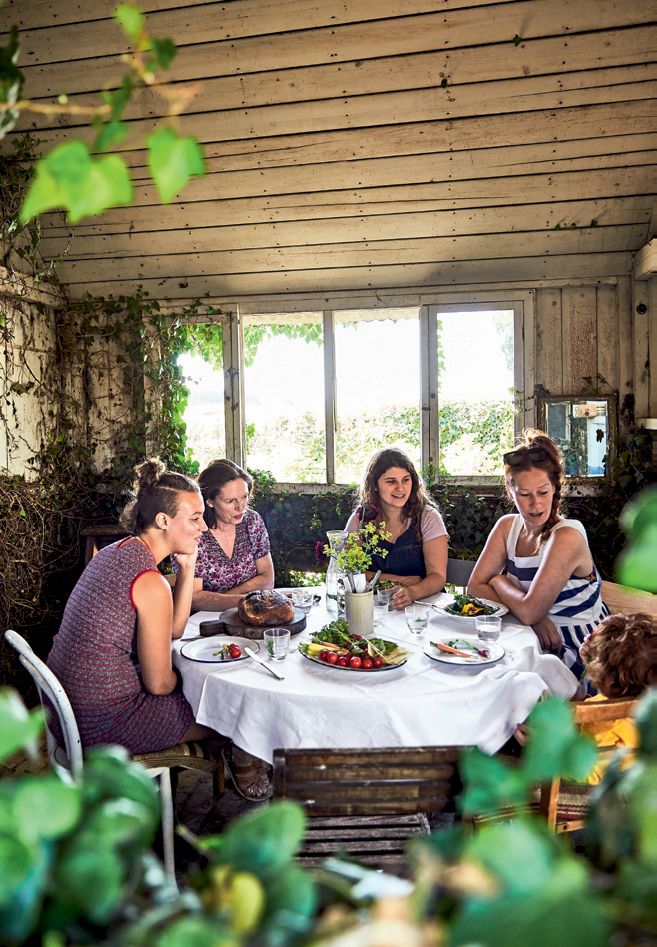
The simple menu uses produce from the garden.


 Dean Hearne25/27
Lunch from the café, served in the Ivy Shed.
 Dean Hearne26/27
Thousands of visitors wander through the garden during the biennial sculpture event.
 Dean Hearne27/27


