
A modernist California-inspired musicians’ home transplanted to north London

All the best artistic collaborations begin with a conversation in a pub. Or, at least, many do – not least the fruitful working relationship (and later, friendship) between interior designer Louis Hagen Hall and a musician couple, his clients Rae Morris and Benjamin Garrett, known as Fryars. After coming across Louis’ debut project on The Modern House, the duo dropped him a message on Instagram asking if he’d be interested in working on the two-bedroom house they owned in London’s Primrose Hill. Dating to the second half of the 20th century, the building had been split into three rental units and decorated unsympathetically; after a look round, the three decamped to the pub “for a few hours”, Louis recalls, and bonded over an interest in postwar architects like John Lautner and Richard Neutra. “We had a lot in common. In that sense, it was a really good process. We were on the same page from the beginning.”
The result of the conversation is a hyper-chic, 1970s-inflected home spread over three floors that draws on inspiration from those bungalows in the hilly Laurel Canyon neighbourhood above Los Angeles where the likes of Cass Elliot, Neil Young and Jackson Browne lived during rock and roll’s most mythologising era – and one which is perfectly set up for the domestic and professional needs of its inhabitants.
In enlisting Louis’s eponymous design practice, Studio Hagen Hall, Ben and Rae chose wisely. “All my favourite architects and designers were big in the 60s and 1970s in Los Angeles,” he says, citing design couple Charles and Ray Eames (of chair fame), as creative influences, as well as the Neutra VDL house, built by Richard Neutra in the 1930s as a light, airy place to live and work in Los Angeles’ Silver Lake. There was a personal connection to 20th-century LA, too: “Part of the brief was that they had been living in Laurel Canyon together when they were working on one of Rae’s albums. They loved that era.” And finally, there was one more major point to the brief: they needed a working recording studio. “They’re a creative power couple; they work on each other’s projects all the time. Ben writes with Rae and produces her albums, and Rae sings on Ben’s albums. They are very involved.”
The specific nature of the house meant that getting the floorplan right was essential from the beginning. And Louis had his work cut out. “It was a nightmare,” he says. The semi-retired previous owner had divided the house into three with little regard for spatial integrity and rented out each unit separately. “It was three separate flats, and it was just completely messed up. There was nothing really left of any kind of original detail.”
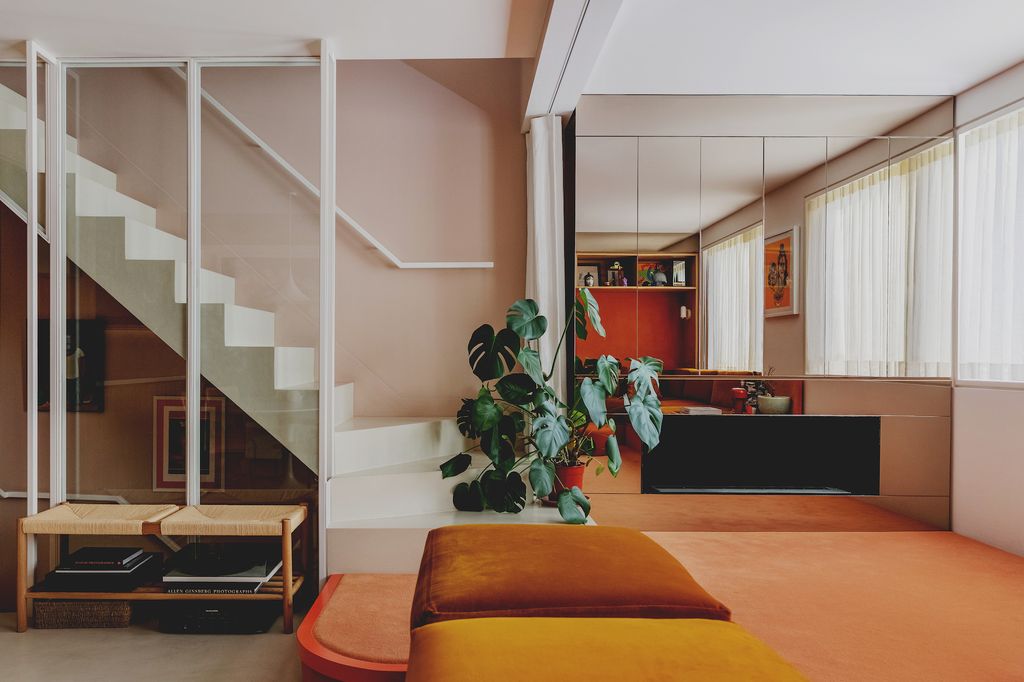
Luckily, though, the nature of the building meant that the internal walls were rarely load-bearing – though not a span house as such, there were “just two party walls, and the roof structurally spans over the whole thing. None of the interior walls are really doing anything, so we stripped it right back.” Louis remodelled the staircase, turning their lower steps onto a right angle to maximise the main living space, and he built-in all the furniture with a strong emphasis on storage. In the kitchen, for example, a hidden table that can be pulled out from under the countertop, which was inspired by “exquisite, mid-century sailboat joinery” Louis saw in his Norwegian aunt’s Swan sailing boat. Elsewhere, conversations around creating a 1970s-style conversation pit led to a dedicated, relaxed seating area – once again, with extensive storage space underneath each seat.
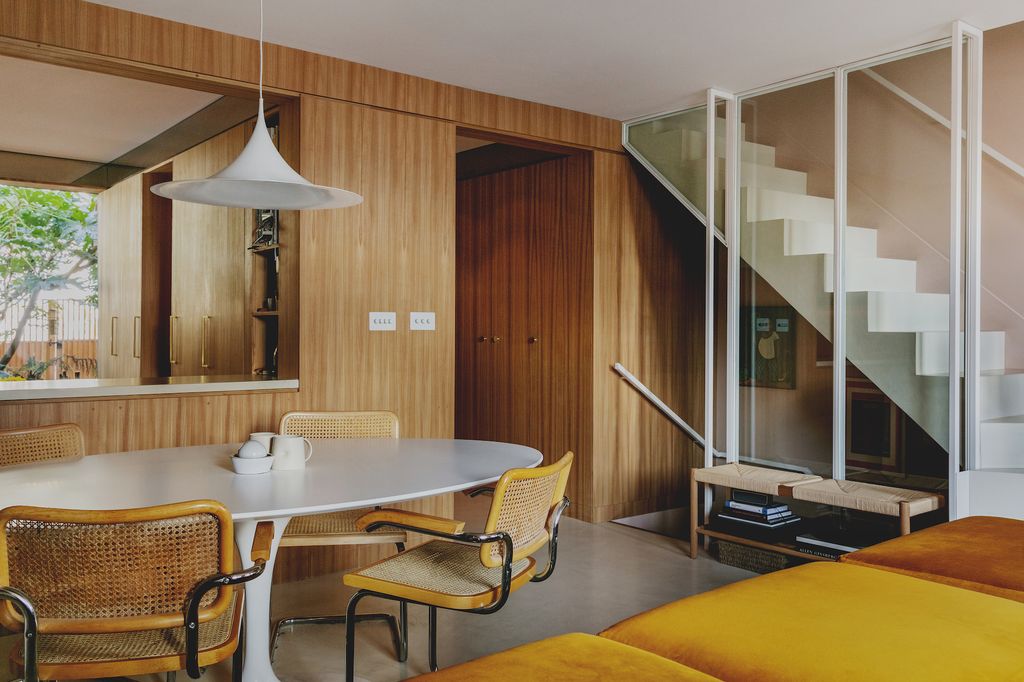
Nonetheless, when it came to furnishing the house, Louis says that he was keen to avoid “doing a 1970s knock-off pastiche”. In some rooms, Farrow & Ball’s now-iconic ‘Setting Plaster’ was used – Louis admits to having an “unhealthy obsession” with the paint – but elsewhere, such as in the master bedroom and en suite bathroom, the plaster was left in its raw state, giving the rooms a unique finish. Where furniture wasn’t custom-built, he sourced pieces from some of his favourite period designers: ‘Cesca’ dining chairs by Marcel Bruer for Knoll, a Bonderup & Thorup pendant light that matches the Saarinen ‘Tulip’ table underneath it, and ceramic and milk glass wall lights by Wagenfeld (“I have a secret supplier in Denmark, who sources bargain sales pieces for me. They’re just amazing”).
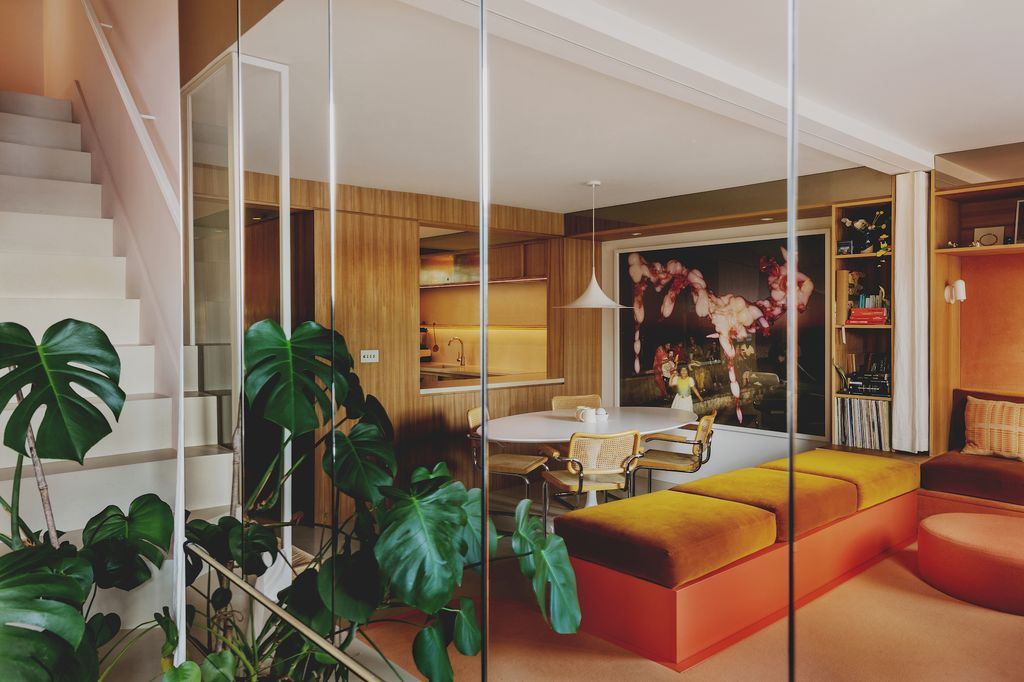
In the seating area – the conversation “platform”, because it was raised to meet the rerouted staircase – it was Ben and Rae who insisted on bold colour, says Louis (they also initially championed the ‘Tulip’ table). “I was thinking of doing something a bit more muted. [They] were like, ‘No, we want more colour, we want this big, bright corner.’” In the end, the colour scheme ended up a rich (alimentary) combination of salmon pink and mustard crushed velvet. Louis points out that this format – a relatively muted house with the odd commitment to strong colour – is typical of Neutra and Lautner. “There’s lots of timber and calm materials, but then there’ll be a bright green worktop or something along those lines.”
Having successfully avoided pastiche, there was one major element left to address: the studio. With remarkable pre-Covid foresight, the couple knew they wanted a space from which they could work in the house. “From a technical point of view, it was quite amazing,” says Louis. “We worked with an acoustic engineer who does a lot with Apple and Spotify and Abbey Road – a contact of Ben’s from the music industry.” The downstairs room was isolated, acoustically, from the rest of the house by creating a new box within the walls that didn’t touch any of the walls, ceiling or floor around it. “Everything is floating. The inner walls don't touch the main walls of the building and the ceiling is hung on special minimal-contact vibration hangers.”
The result is a room that can accommodate someone “blasting music” without a person sitting directly above them being any the wiser. The studio was also designed so that future owners who might be less keen on a recording space can easily reconvert it into a third bedroom: it has an en suite, and lots of cupboard space ready to be turned into wardrobes.
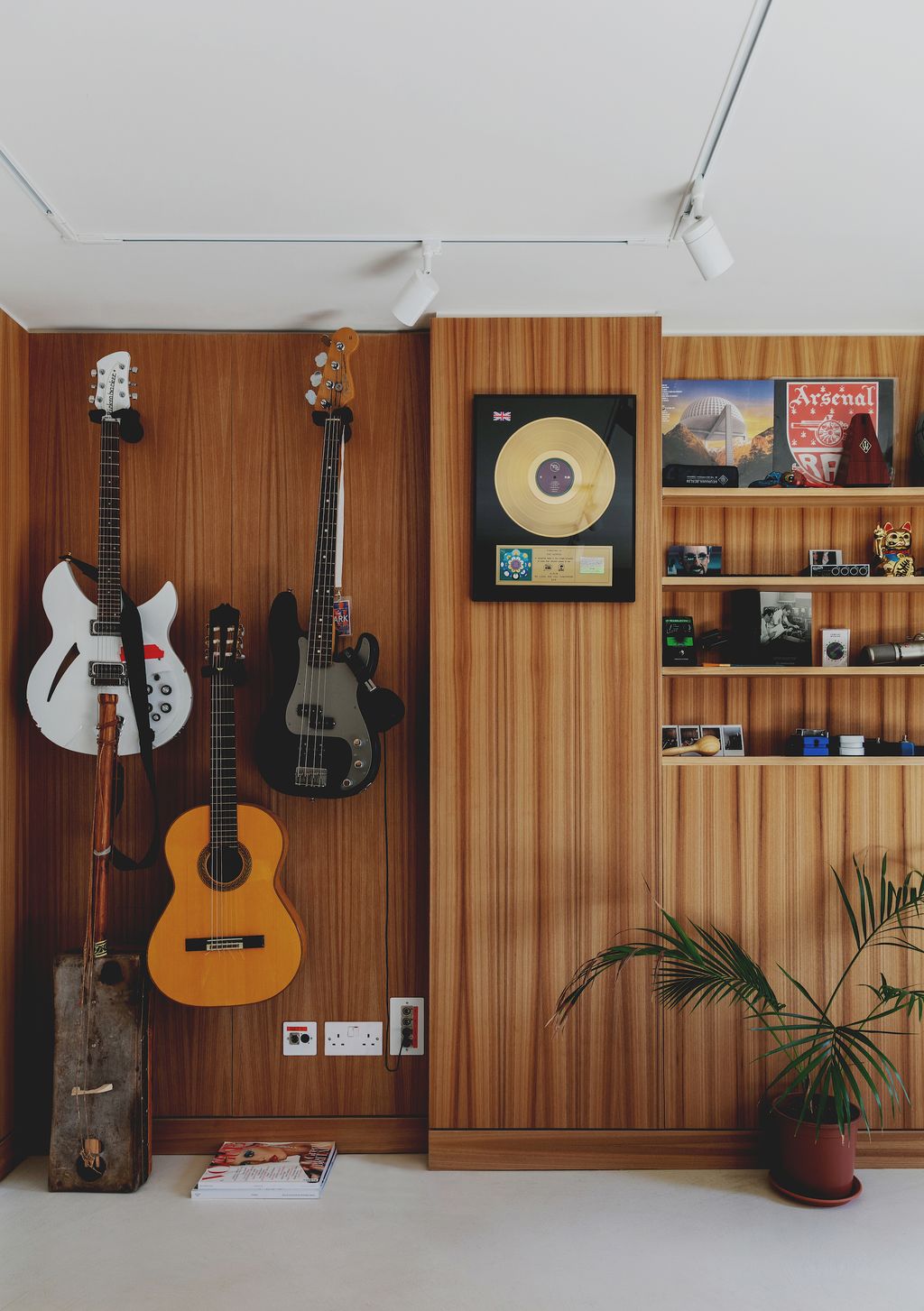
Once again, the studio is one of the house’s many callbacks to the Los Angeles hills. “Laurel Canyon used to be a really cheap place to live, 40, 50 years ago,” says Louis, “and that's where all the musicians lived, because they could make noise,” away from the strictures of the city. In all, it’s the perfect abode for two musicians to live and work, with an ideal ambience. “In the evening or at twilight,” Louis says, “you genuinely feel like you could be sat in the Hollywood Hills.”
 Mariell Lind Hansen1/12
In the raised seating area in the main living space of the house, the seats were built in Elm by Studio Hagen Hall. They’re upholstered in velvet by The Cloth Shop. The ‘Folk’ pouf is from noo.ma, the carpet is Balsan’s ‘Les Best’ range, the wall lights are ‘Orleans’ by Faro and the table lamp is ‘Bellhop’ by Flos. The artwork, by Jess Kanda, is entitled ‘Fawn’.
 Mariell Lind Hansen2/12
The table is Saarinen’s ‘Tulip’ table for Knoll, while the pendant lamp – chosen to mirror the table’s shape – is a ‘Semi’ pendant by Bonderup + Thorup for Knoll. The ‘Cesca’ dining chairs are by Marcel Breuer for Knoll. The rattan bench is the couple’s own.
 Mariell Lind Hansen3/12
 Mariell Lind Hansen4/12
Louis redirected the staircase at right angles to make more of the right-hand side of the living space useable.


 Mariell Lind Hansen5/12
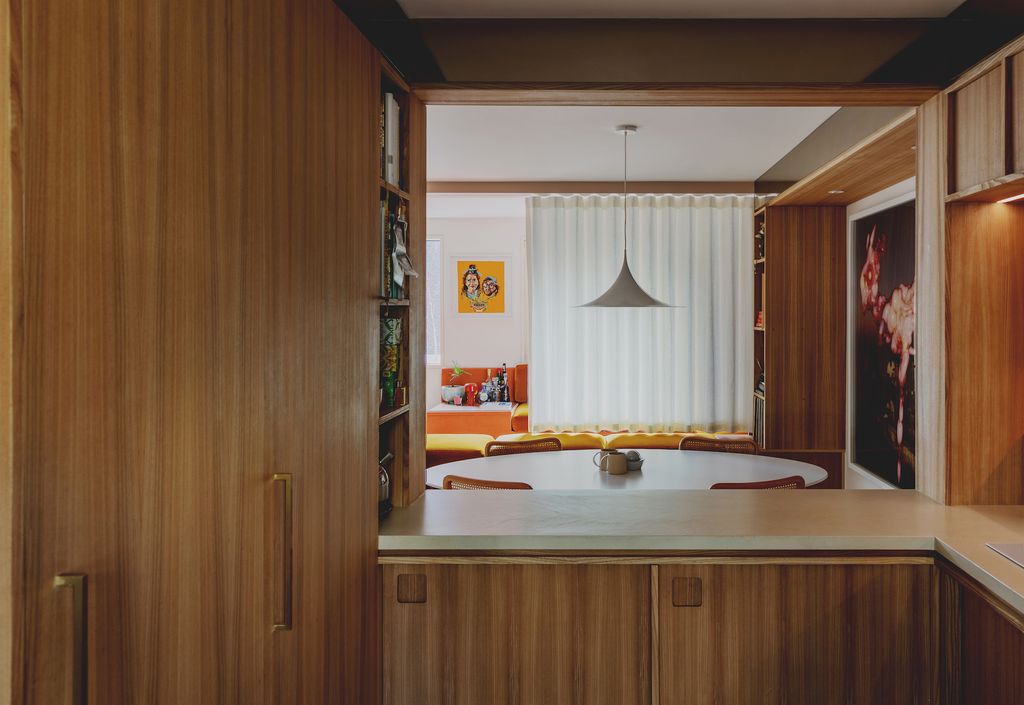
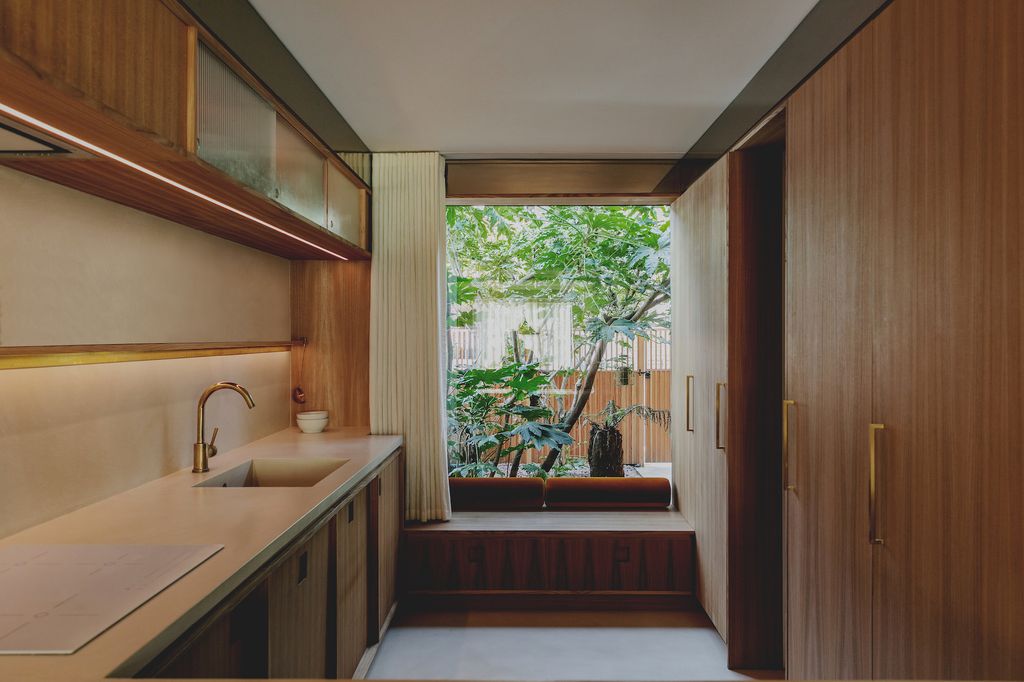
Joinery in the kitchen, as throughout the house, was made by Studio Hagen Hall and Louis’s new kitchen company, Bysse (named for the Norwegian word for a ship’s galley), in elm, microcement, fluted glass and brass.
 Mariell Lind Hansen6/12
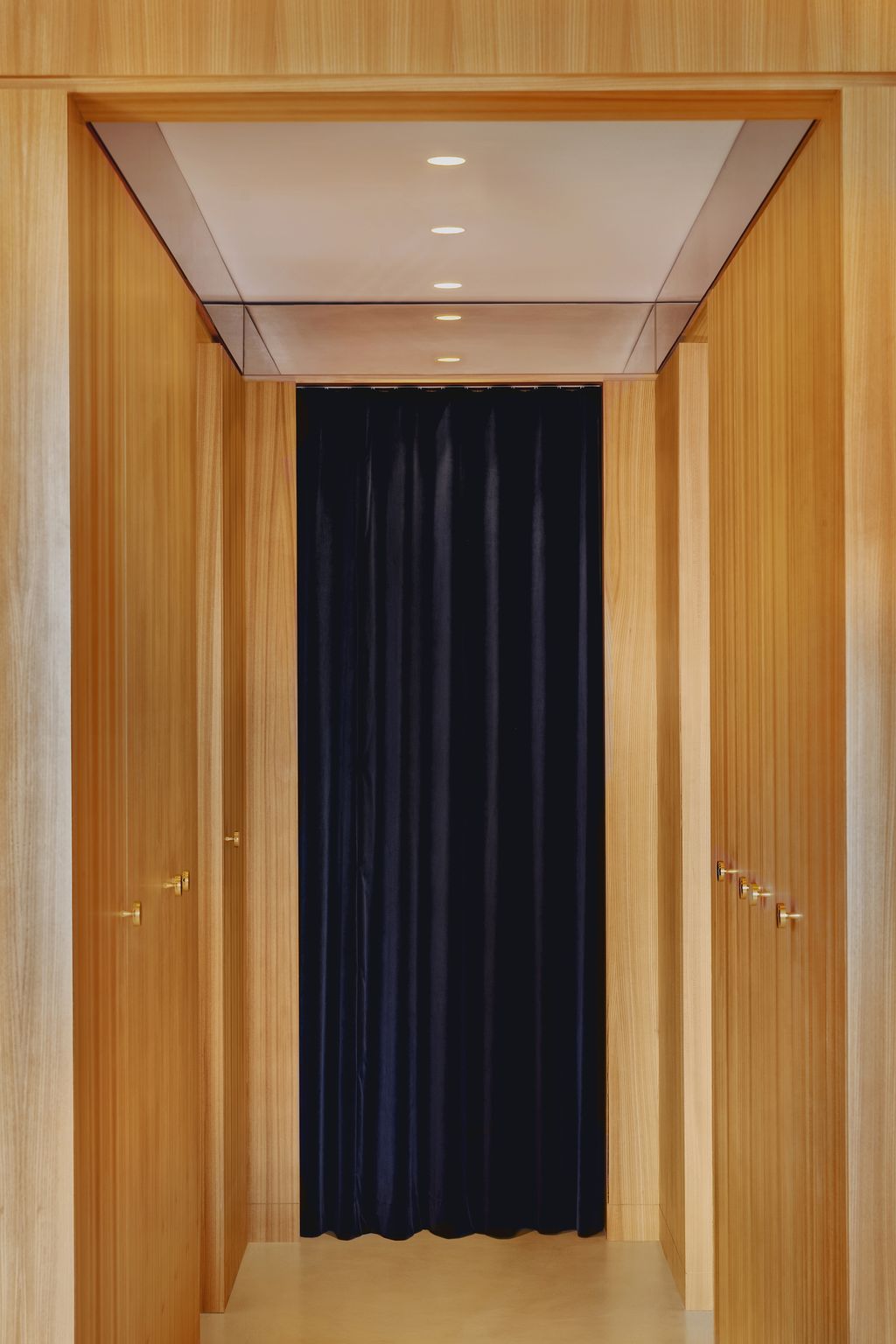
The faucet and tap are Tapwell’s ‘Evo 180’ and the cabinet handles are Schoolhouse’s ‘Edgecliff Pull’ handles, both in brass.
 Mariell Lind Hansen7/12
 Mariell Lind Hansen8/12
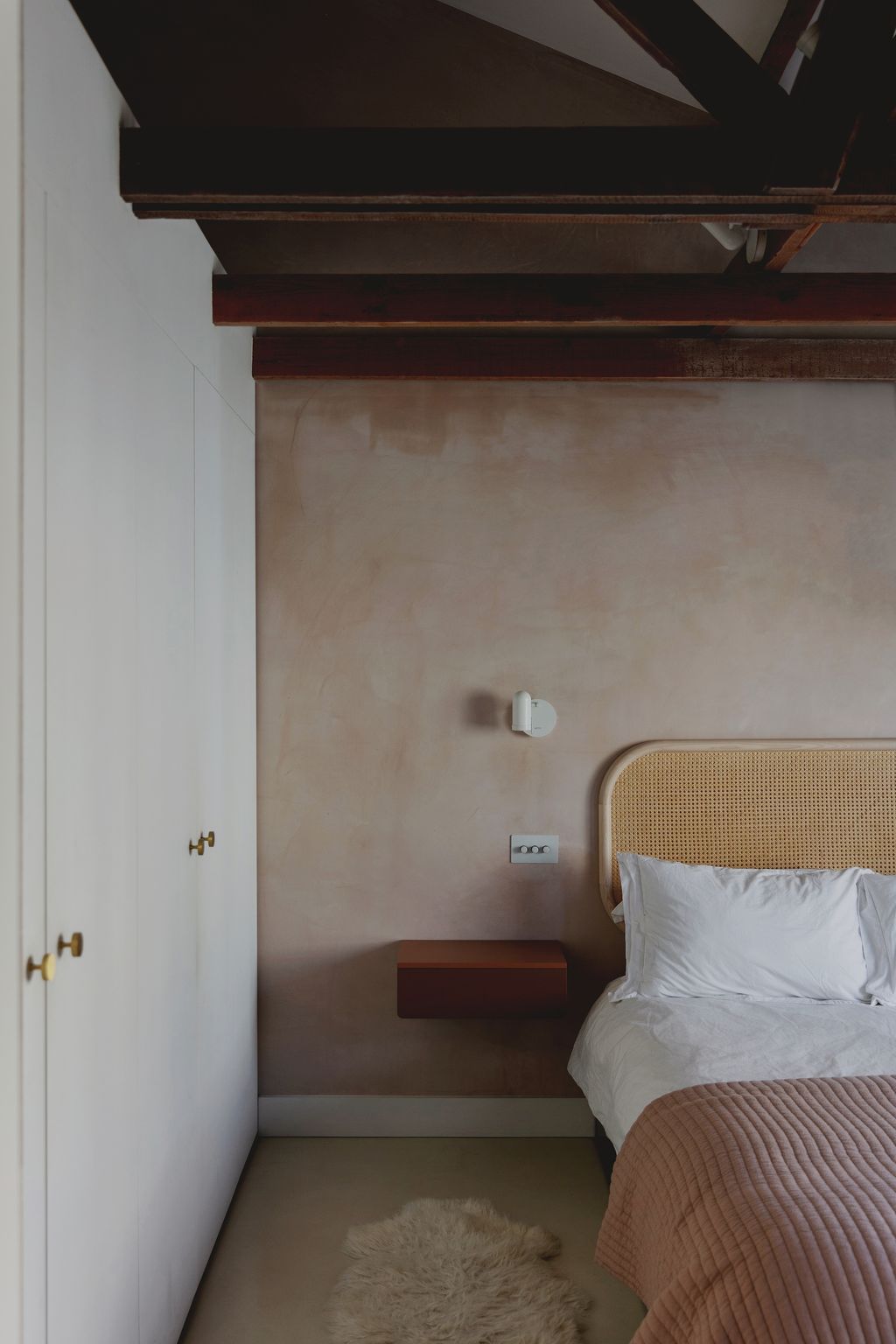
The bedroom walls are of sealed but raw plaster. The wall light is an ‘Orleans’ wall light from Faro, the rug is an Ikea sheepskin, and the bedside table is Kroft’s ‘Floating Nightstand’. The bed was built by Studio Hagen Hall; the headboard is ‘Lempi’ by Matri.


 Mariell Lind Hansen9/12
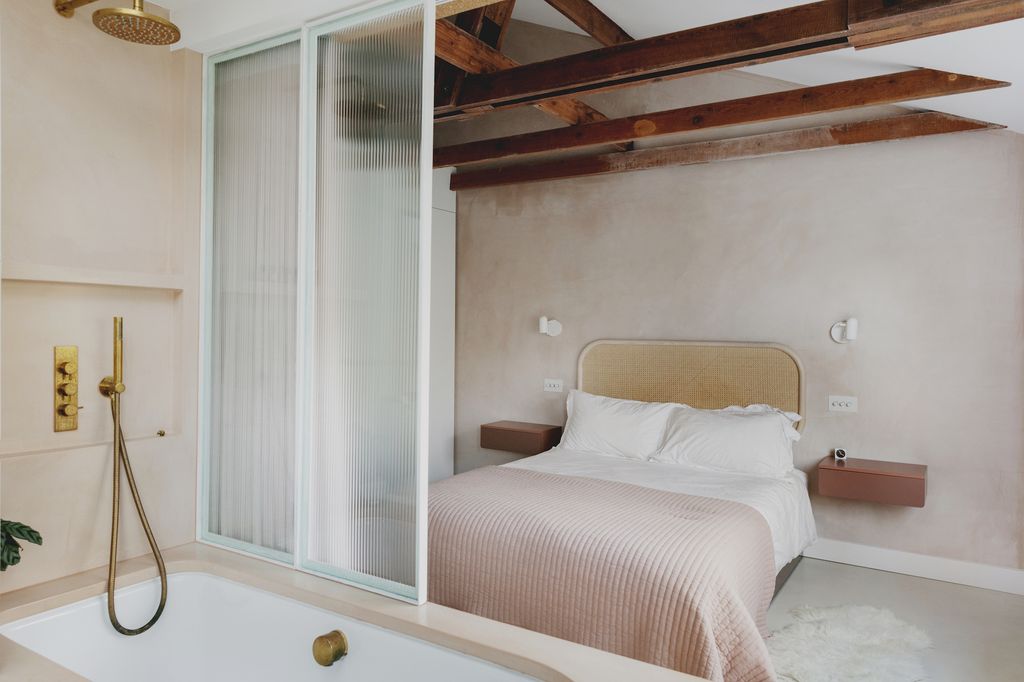
The shower fittings are from Aston Matthews’s ‘Ambra’ range in brass, as are the bathroom’s towel rail and taps.
 Mariell Lind Hansen10/12
The wall light is ‘WV340’ by Wagenfeld for Lindner in ceramic and milk glass. The basin is is ‘Enjoy e Amedeo’ by Ceramica Cielo.
 Mariell Lind Hansen11/12
The side of the bath and floor were both clad in cork tile.
 Mariell Lind Hansen12/12
More great decoration stories from House & Garden
- 50 stylish living room ideas to copy now
- Farrow and Ball paint colours in real homes
- Small room ideas from the House & Garden archive
- How to hang pictures on walls at home
- Bright bathroom ideas to make a splash
- Hallway ideas to make a great first impression
- Patio, garden decking and terrace ideas
- The best garden furniture stores to help you spruce up
- A guide to the best interiors shops in London
- How to decorate a Georgian house
- The best mattresses to buy for quality sleep


