
Take a walk in Italian writer Umberto Pasti's Moroccan hillside garden

Umberto Pasti is so passionate about preserving the native flora of northern Morocco, he has created a garden on a stony hillside above the sea south of Tangier. It is raining so hard when I arrive with the photographer that we slip and slide down the winding path to reach the little stone house, plastic bags over our heads. Umberto comes out to greet us with a huge grin, stretches out his arms and hugs us as if we are long-lost friends. ‘You have brought the rain from England,’ he exclaims. He tells us that they have not experienced proper rain in this northern tip of Morocco for three years. ‘The plants, the people, everyone needs this rain. We are so happy.’
Umberto is originally from Milan and first came to Morocco 30 years ago, when he bought a house in Tangier. He has always been drawn to nature, especially wild flowers, so he began to create a garden there, filling it with the large-leaved, exotic-flowered plants that thrive in the region. ‘These garden plants didn’t speak to me as much as the wild flowers I had seen as a child, but I learned to love them,’ he says. ‘I became a gardener, and now I make gardens for other people, too.’

But lovely though his city garden is, Umberto’s real passion is for the garden he has made in the countryside 40 miles south of Tangier. Twenty years ago, he went for a long walk along this stretch of coast, climbing the stony hillside to look back down at the magnificent seascape. ‘I fell asleep under a fig tree and woke up knowing that I had to come and live here,’ he explains. ‘I knew I had to build a garden here.’ So with the help of a Moroccan friend, he set about trying to buy some land near the village of Rohuna, a near-impossible venture due to baffling land divisions and ancient tribal laws, leading to negotiations with at least 20 different parties. Any other lily-livered foreigner would have given up at the first hurdle, but Umberto persevered relentlessly, determined to make the project work – and eventually he won.
Working with a team of men from nearby villages, Umberto started to carve a garden and a home out of the dusty hillside. ‘For hundreds of years, this was a charcoal-making area, so all the trees had disappeared, the hills were bare and the soil was baked,’ says Umberto. ‘People hadn’t given anything back to the soil, so we have had to transport hundreds of tons of topsoil and manure.’ Today, the garden is a paradise of shady trees, tangled greenery and jewel-like flowers that jostle together on terraces linked by meandering stone walls. The same stone, painstakingly dug out of the earth by hand, has been used to make the modest house that Umberto lives in while he is here. Water, clearly a precious resource in this climate, has been brought into the garden by means of a 90-metre-deep borehole. ‘Before, the women in the village would have to walk three miles to the source to collect water – now they can come here to get it,’ says Umberto. ‘I wanted to give something back to these people.’

Umberto’s vision for the garden has been clear from the start. He wanted to fill it with the indigenous Moroccan plants that he could see disappearing from landscapes blighted by development. ‘When I first came to Morocco, plants and bulbs like the wild Iris tingitana (Tangerian iris) were everywhere. You had to go only a few miles out of the city to see great fields of it. I was smitten.’ But then construction began to spread and great swathes of plants were destroyed. Umberto’s mission was to save these irises and other plants from disappearing altogether, so he started visiting the building sites, literally snatching the bulbs from underneath the bulldozers and replanting them in his garden.
Now, in the outer reaches of Umberto’s garden, on the hillside above the house, the Tangerian iris has found a safe haven among olive and almond trees. With statuesque purple-blue flowers appearing in January and February, it is one of six Moroccan irises that can be found here, flowering in succession throughout the year. Another iris, the pale-yellow I. juncea var. numidica, was almost extinct when Umberto spotted it growing by the side of the road. ‘I had been looking for it for years and there it was, almost lost in the middle of some roadworks.’ He found 18 bulbs, planting half of them in his garden and sending the rest to the University of Oxford Botanic Garden, where they still thrive. In addition to irises, thousands more Moroccan species can be found in Umberto’s living museum of plants – from narcissi and fritillaries to meadow saffron and alliums.

On the terraces near the house, he has allowed himself to wander from his original plan, planting other, non-indigenous species with the help of Belgian botanist Bernard Dogimont. Clusters of roses, spiky agaves, scented lilies and exotic erythrinas, among hundreds of other plants, crowd the narrow paths, a verdant jungle to get lost in. A consummate storyteller, Umberto has woven tales around all the terraces: there are English, Italian, Portuguese and Egyptian gardens, each attributed to an imaginary character. ‘The Englishman, for example, is a melancholy drunk,’ says Umberto. ‘I like taking a piece of reality and creating a fiction around it. By giving each new part of the garden a story, it suddenly has a history – a fictional history, yes, but that doesn’t matter. I forget that it’s made up.’ Umberto’s book about Rohuna, Perduto in Paradiso, was published in 2018.
As we wander round the garden after the rainstorm, everything is shiny and revived. Umberto waves his arms around, exclaiming with glee, and tells us stories about his beloved plants. ‘A garden should be made with honesty and with love,’ he concludes. ‘For me, a garden is all about the plants and the people, more than it is about design and aesthetics. It is real.’
 Ngoc Minh Ngo1/12
Moroccan irises flower on the hillside in succession throughout the year, including I. filifolia.
 Ngoc Minh Ngo2/12
I. tingitana is increasingly rare in the wild as land is lost to development.
 Ngoc Minh Ngo3/12
The cutting patch in summer, where plants grow tall and willowy.
 Ngoc Minh Ngo4/12
Cosmos and dahlias weave together to create a haze of colour.


 Ngoc Minh Ngo5/12
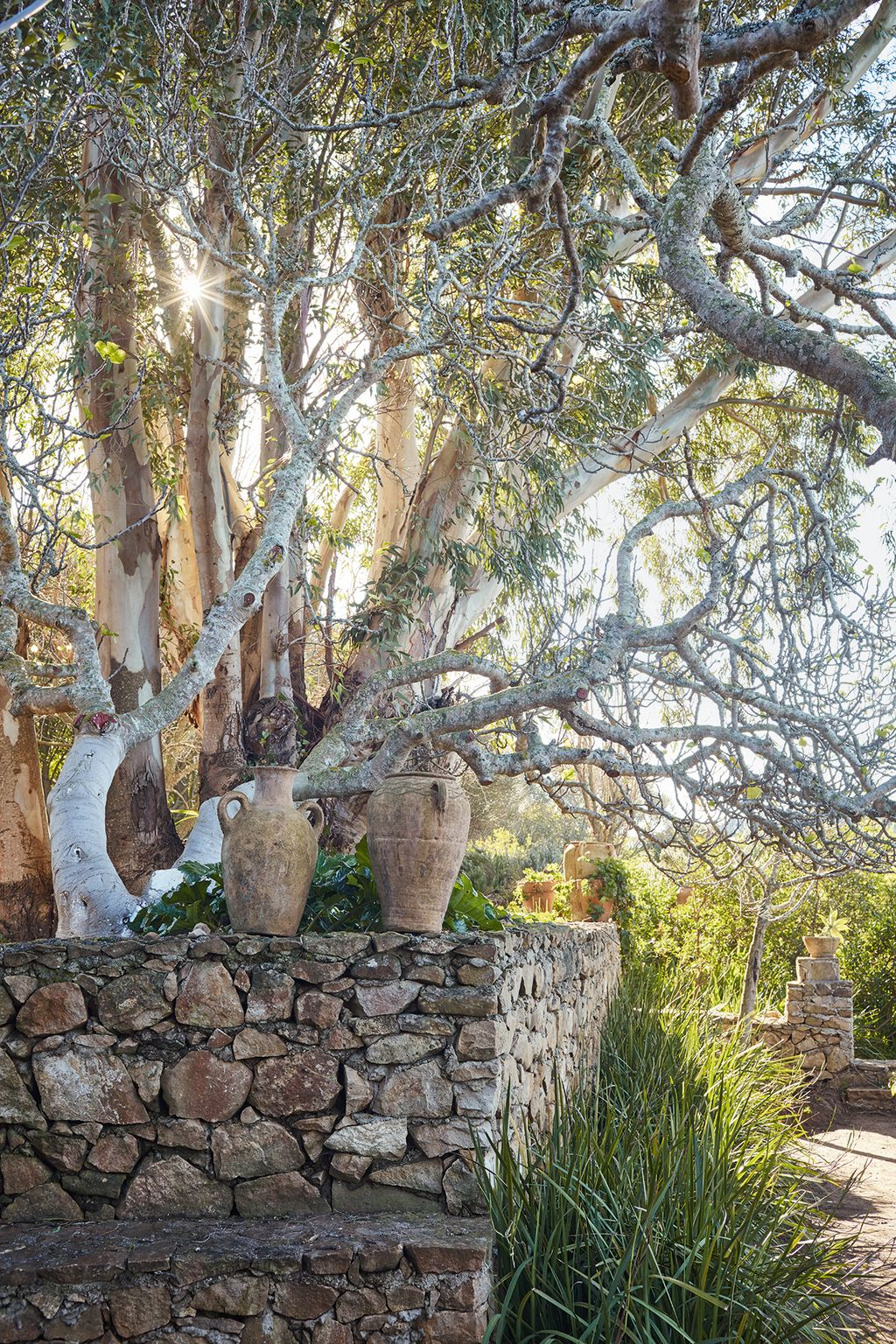
The steeply sloping garden around the house has been carved into a series of terraces.
 Ngoc Minh Ngo6/12
Stone dug out of the ground has been used to make all the walls, while old trees with sculptural trunks provide shade in warm weather.
 Ngoc Minh Ngo7/12
A path leads towards the exedra, where Umberto dines outside in the summer.
 Ngoc Minh Ngo8/12
A handmade wooden ladder provides support for climbing roses.


 Ngoc Minh Ngo9/12
A path leads through the Shadow Garden, with Euphorbia ingens like giant fingers on either side.
 Ngoc Minh Ngo10/12
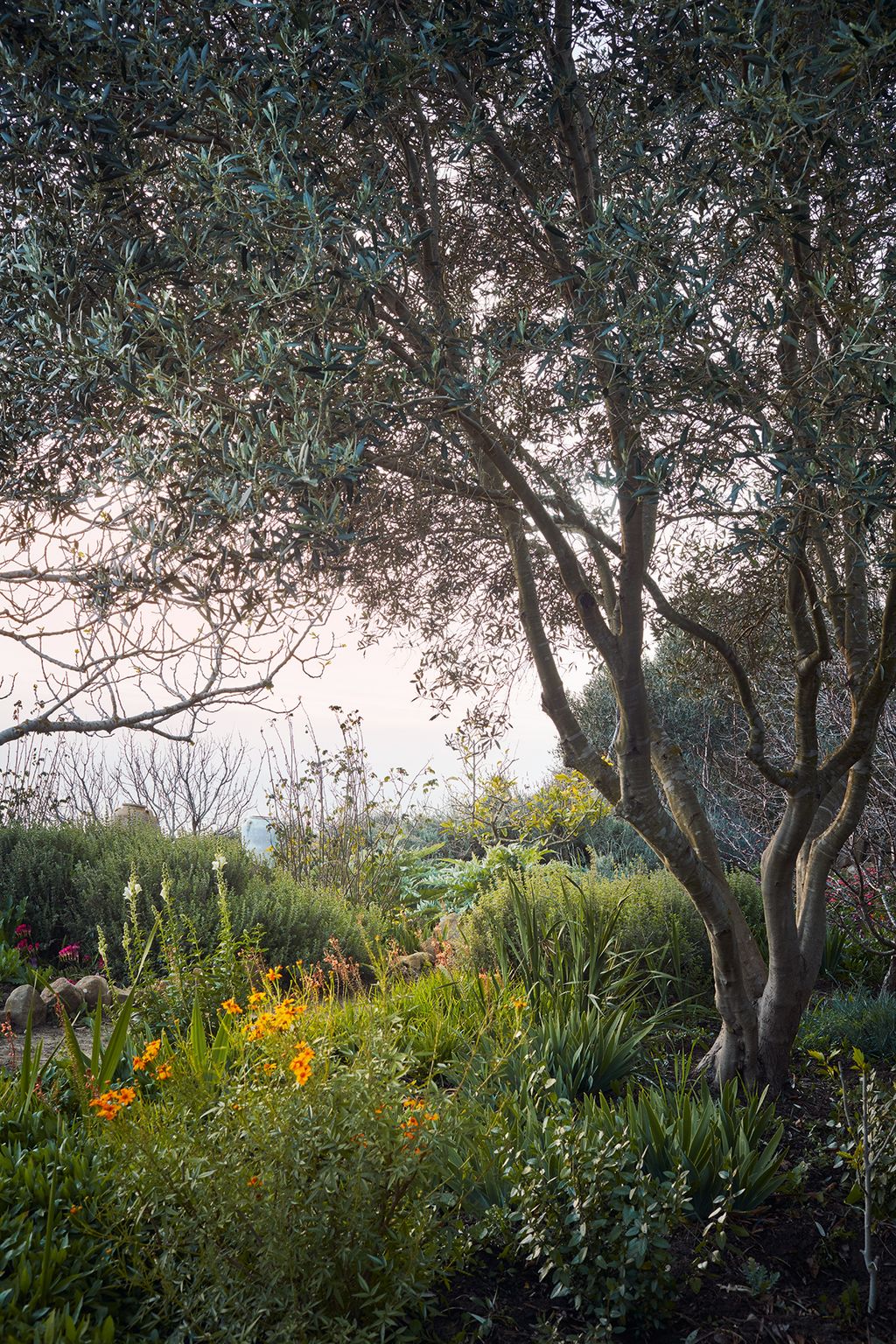
A young multi-stemmed olive tree has brilliant orange Tagetes lemmonii underneath.
 Ngoc Minh Ngo11/12
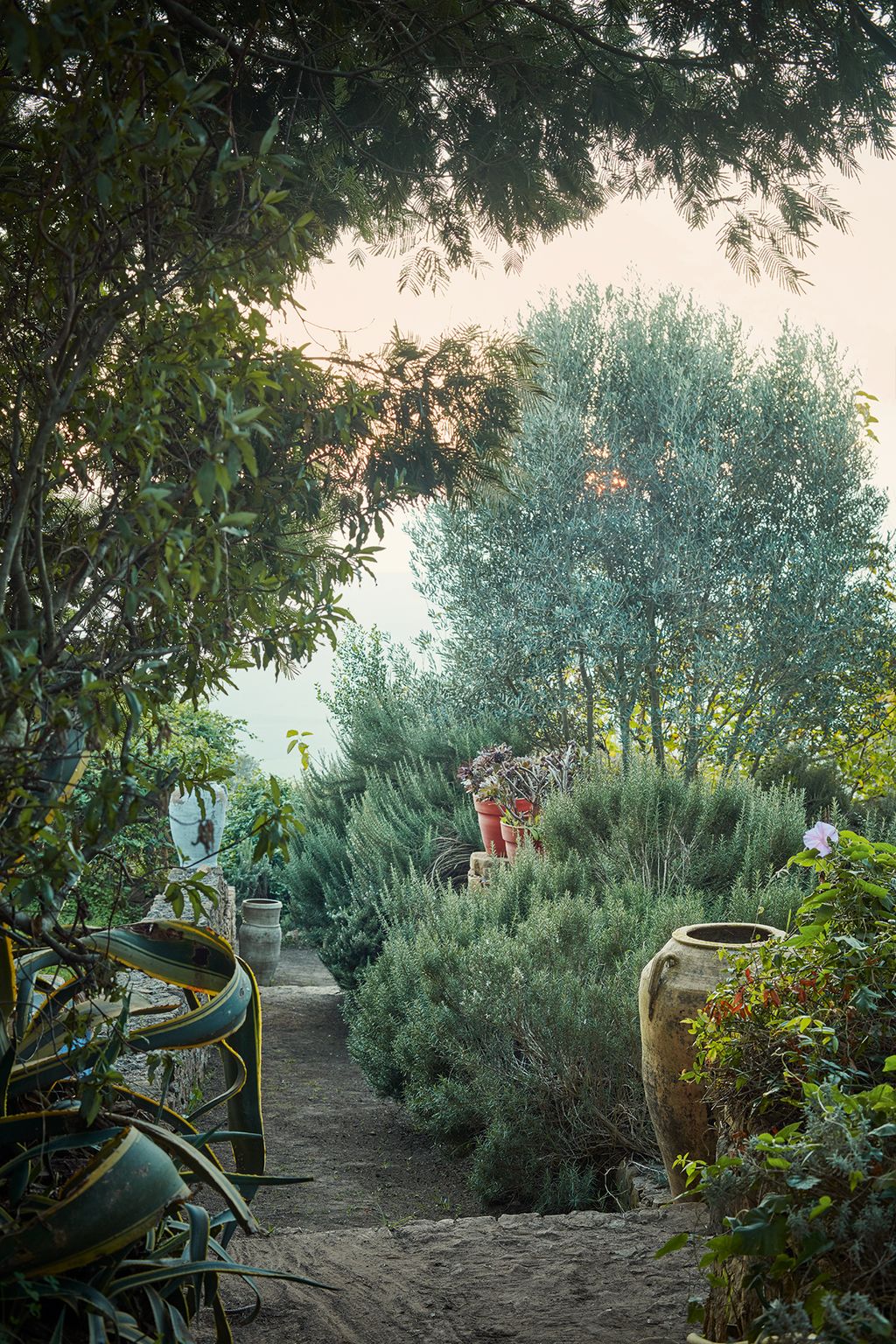
The main stone pathway leads down through the terraces towards the house.
 Ngoc Minh Ngo12/12
The Englishman’s garden includes pink hollyhocks, airy Nicotiana mutabilis and tiny mauve Tulbaghia violacea.


