
A journey through Morocco's lesser explored regions

Travelling east from Agadir, deeper into southern Morocco’s Souss Valley, the landscape dries as we drive further from the sea and closer to Taroudant. We pass towns as children pour out at the end of the school day. An oasis of palms appears like a lonely bush amid the terracotta landscape. Fruit and vegetables are displayed on roadside carts, their sharp hues intensified under the blazing sun.
In just under an hour, the fortified walls of Taroudant – the Grandmother of Marrakech, as it is known – signal our arrival into a bygone era. It is sheltered between the Atlas Mountains to the north and the Anti-Atlas and Sahara Desert to the south, with views alternating from a dry plain stretching into the horizon to red-tinted mountains dipped in the clouds.


Scenes from daily life in the city’s medina – from bakers selling fresh loaves of bread to teetering displays of terracotta pots in an array of sizes and styles
Taroudant bears many similarities to Marrakech. Its medina and souks exude a familiar charge and scent. Its ramparts are the oldest in Morocco and among the best preserved in the world after the Great Wall of China and Kumbhalgarh Fort in India. In the 16th century, it was briefly the capital of the Saadi dynasty (until they moved it to Marrakech). And it is dotted with beautiful riads to stay in, with leafy courtyards and plenty of design inspiration. But here in the south, there is a softness that is lacking in the north. Taroudant remains untouched by French intervention like the villes nouvelles in Marrakech or Tangier. Here you can walk through the bazaar in relative peace, without opportunists heckling you for a sale. Tourists tend to stay out of sight on the Atlantic beaches of Agadir and locals are eager to share their insights.
Its position further south has helped to keep it sheltered from visitors and the impact of time. You can still take a horse-driven carriage round the medina without it seeming like a gimmick, or gather with locals under a carob tree in the main square, Place Assarag, without feeling out of place. Like creatives past and present who have found refuge in Morocco – from Paul Bowles, Tennessee Williams, George Orwell and Yves Saint Laurent to Veere Greeney and Jasper Conran – one feels far enough to break free from conventions back home, yet close enough to enjoy that same sense of lightness as in the Mediterranean. Despite differences, it is a place where one does not feel like an ‘other’ or distant from others, rather where life is viewed under a golden light.

What to see and do
The medina and the meandering alleys that make up its two souks will take at least two days to explore, especially if you are planning to shop. You will find prices far cheaper than in Marrakech and the exchange more authentic, as merchants usually sell to locals rather than tourists. The Artisanal Souk between Assarag and Talmeklat offers leather accessories, pottery, rugs, copper and wrought-iron pieces, and jewellery in gold and silver. The Jnan Jamaa souk is the main attraction, with everything from cleaning products and soaps to spices, argan oil and terracotta pieces. Take time to survey the kasbah and city walls from the outside. Some babs (gateways) offer especially impressive views. Bab Targhount has three arched entrances and leads straight into the bustle of market life, while palm-lined Bab al Kasbah is a step back from the chaos and lets you tick off both the medina and a gateway at once.
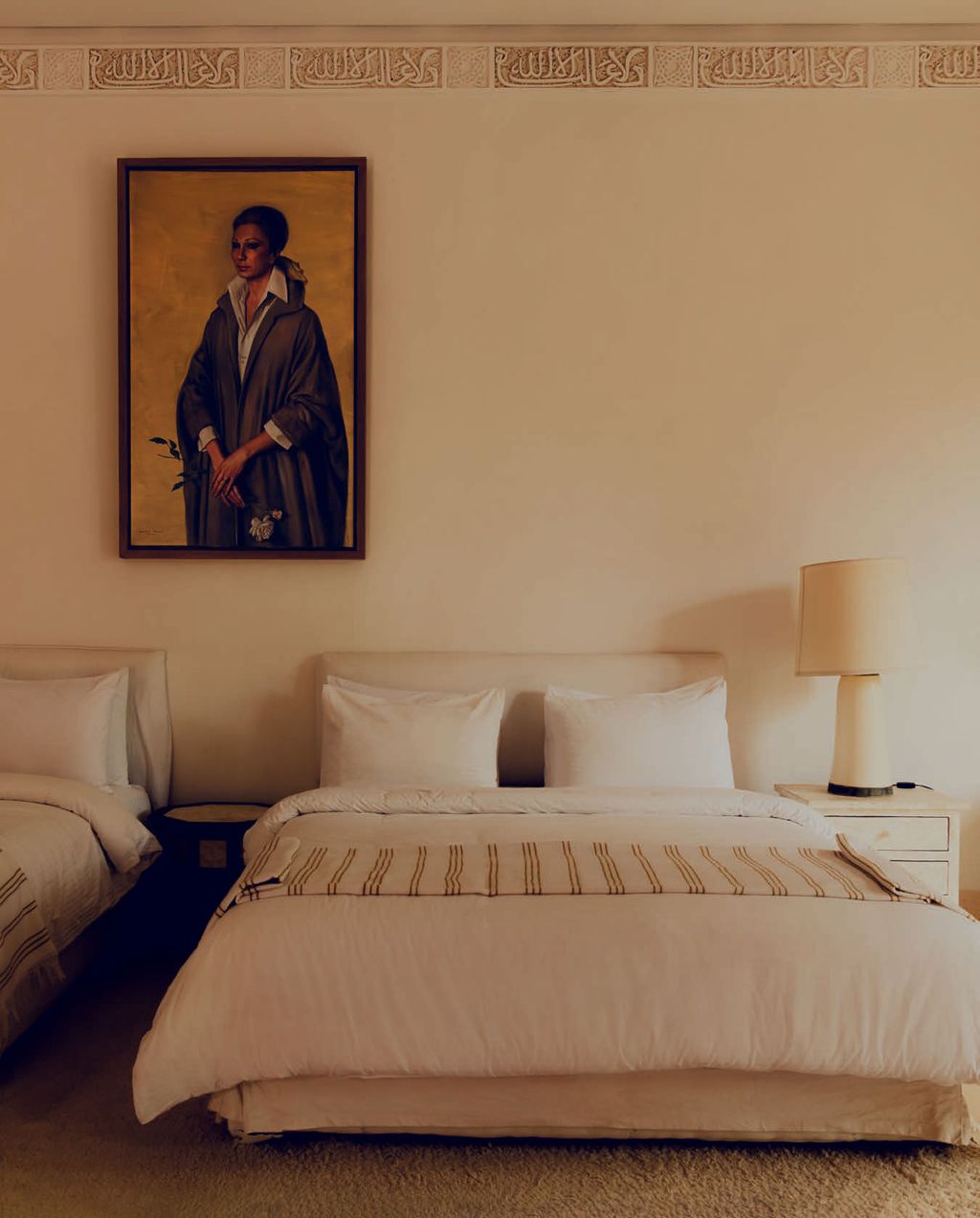
It is worth taking a day trip to the oasis of Tiout, with its dusty pink kasbah on a hill above lush fields of palm, and having lunch by the river. Allow at least half a day to visit the Palais Claudio Bravo, the former home of the Chilean hyper-realist artist, which is now a museum and hotel with some of the best food in the area. Having heard about Taroudant when he met Farah Diba Pahlavi, the last Empress of Iran, in Marrakech, Claudio came here to experience its charm for himself. He was so taken by the light and the arid conditions for painting – and the blissful isolation it afforded him in an otherwise increasingly crowded world – that he lived here until his death in 2011, leaving behind an emporium of art-works and antiques collected throughout his life and travels.
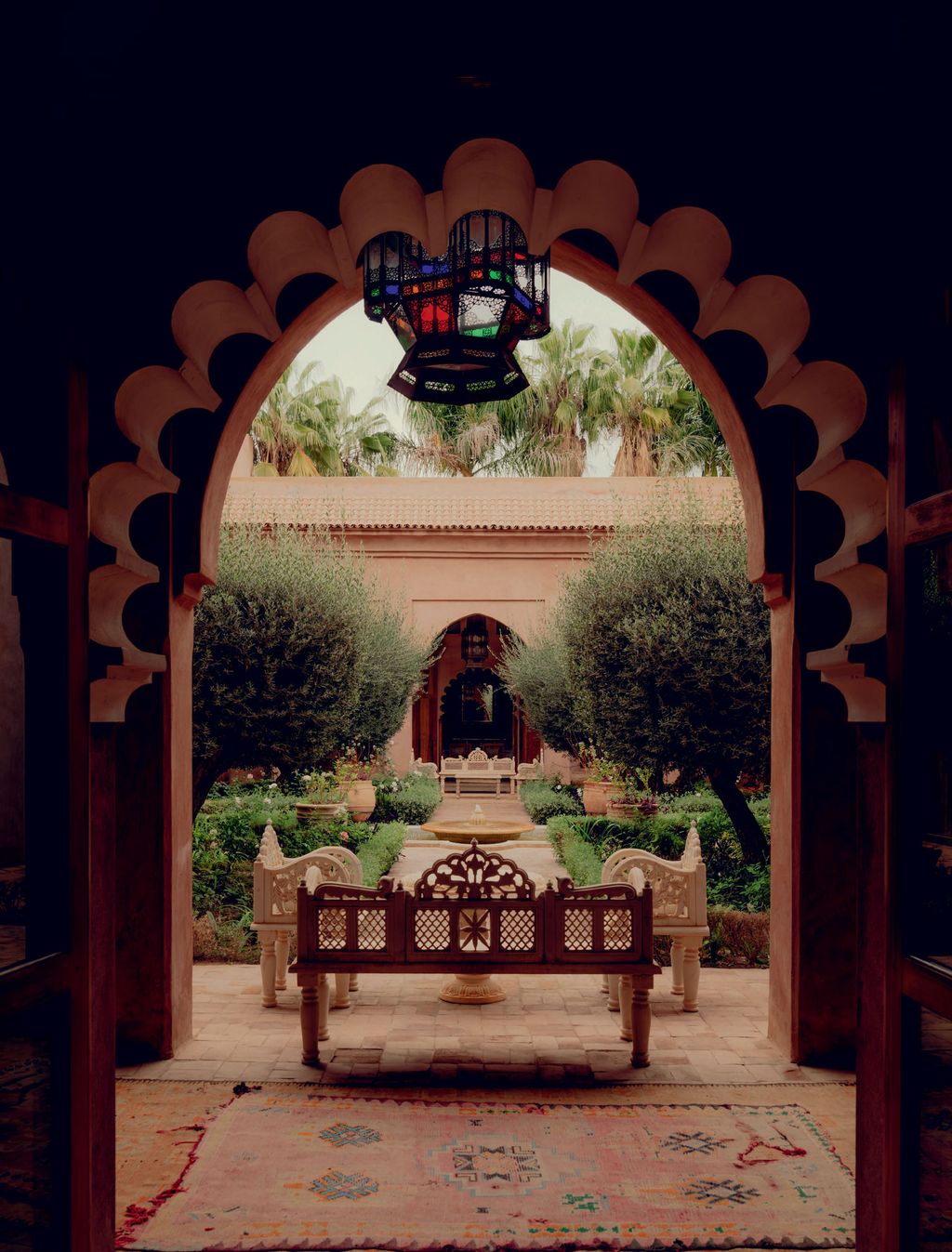
A 30-minute drive from the city of Taroudant, the Palais Claudio Bravo complex has similarities with the Alhambra in Andalusia and its rooms are filled to the brim with his precious finds. Evidence of his impeccable taste is never out of view: camel-bone chairs from Persia; garden furniture in the same marble as the Taj Mahal; ancient alabaster vases from Egypt; 18th-century Ottoman lanterns; suzani textiles from Uzbekistan; and Syrian mother-of-pearl cabinets. A walk in the grounds reveals two pools and a menara garden that rivals the one in Marrakech, backed by the dramatic High Atlas.
Where to stay
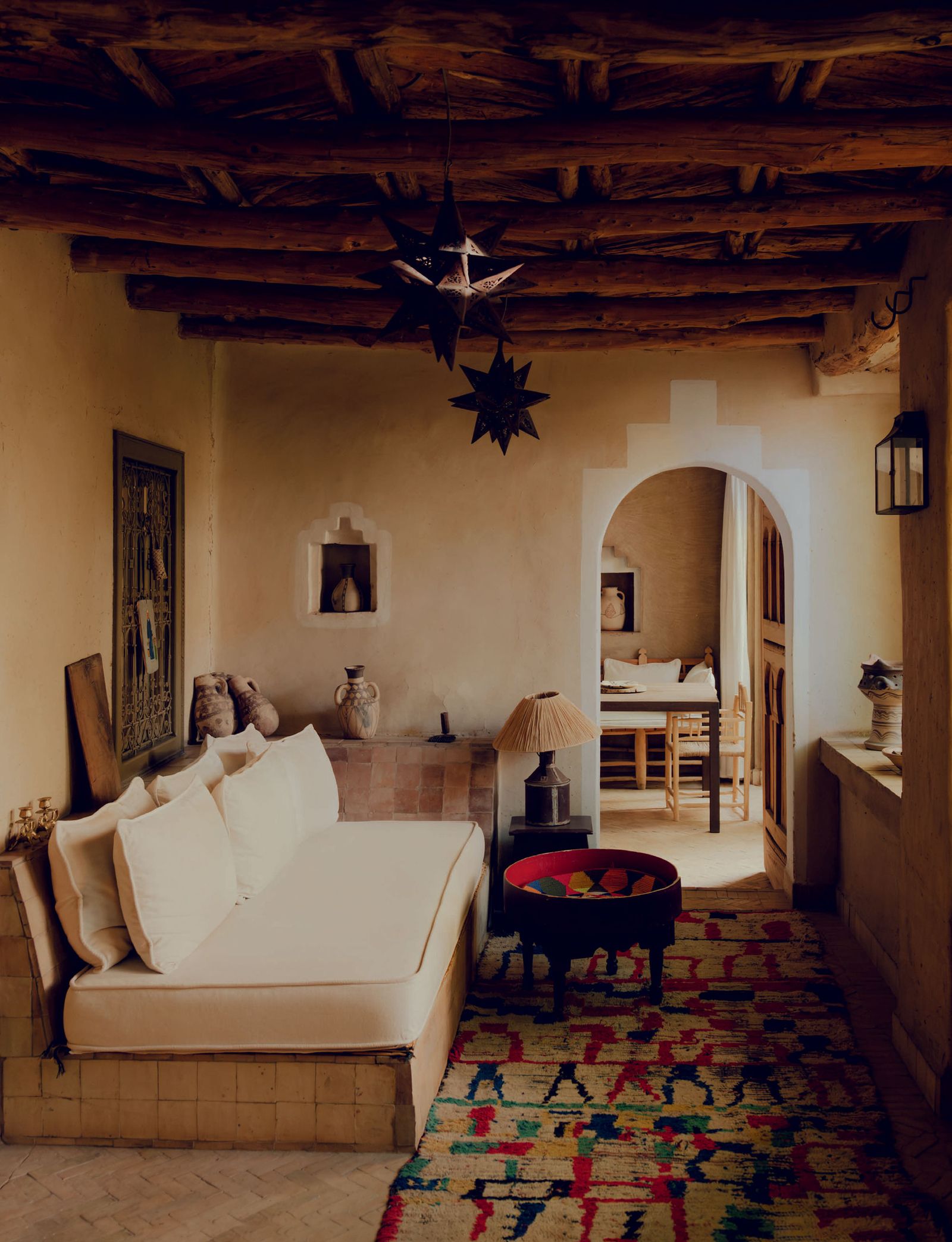
Riads on the outskirts of Taroudant have the most tranquil pools and gardens and more spacious rooms. The best is Dar al Hossoun (rooms from £191, B&B). Staying at Palais Claudio Bravo is like entering the artist’s fantasy world. Now owned by Claudio’s longtime assistant Bashir Tabchich, who converted it into a museum and hotel, it has 21 rooms, a serene courtyard pool and sun loungers backed by fragrant purple lantana from Andalusia and immaculate expansive sculpture gardens. History is written all through its storied corridors and grand reception areas (rooms from £72, B&B). Set within the medina, DarZahia is a stylish Amazigh-style guest house with eight bedrooms reimagined by a Paris-based French and Algerian couple. As you walk into the courtyard, the souks feel far away and only birdsong can be heard. Stay in the first-floor rooms to enjoy relaxing terraces and that golden light (rooms from £145, B&B, for a two-night minimum stay).
 Alixe Lay1/7
A view of the central courtyard at the Palais, which is furnished with exquisite pieces made from the same marble as the Taj Mahal.
 Alixe Lay2/7
A small courtyard between bedrooms at Palais Claudio Bravo, with a doorway leading to one of the pools.
 Alixe Lay3/7
The former bedroom of Farah Pahlavi, the last Empress of Iran, who was a great friend of Claudio Bravo and a frequent guest here; his portrait of her creates a striking focal point in what is now a beautifully pared-back guest room.
 Alixe Lay4/7
With its ancient ruins and views of the Atlas Mountains, the oasis of Tiout is a world away from Morocco’s bustling cities.


 Alixe Lay5/7
A goatherd with goats that climb up and feed on the Argan trees
is a common sight in this part of the country.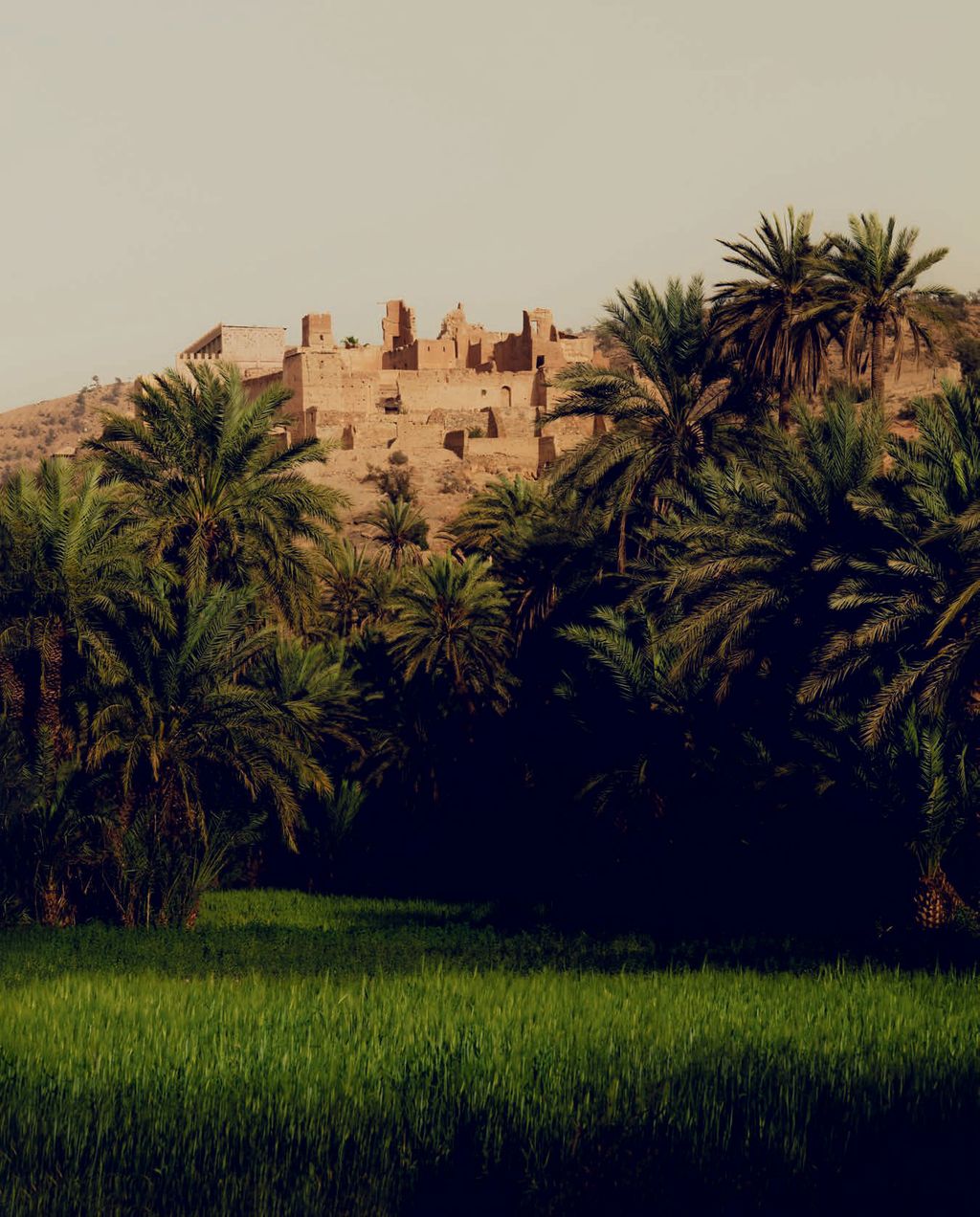 Alixe Lay6/7
The hilltop kasbah of Tiout, which dates back to the 16th-century Saadian period, is surrounded by the abundant palm groves of the oasis.
 Alixe Lay7/7
Built in traditional Moroccan riad style around a central courtyard, DarZahia guest house offers the ideal place to relax after a day spent exploring the busy medina.


