
Nicola Harding brings warmth and comfort to an Arts & Crafts house in Oxfordshire
'I have always had an allergy to waste,’ says interior designer Nicola Harding. And, indeed, a close inspection of previous projects that have been featured in House & Garden proves her statement true. Long before the term sustainability became a buzzword in the design world, Nicola was waging a quiet rebellion against the disposable. Her passion for, and extensive use of, antiques and found pieces in her work can be traced back to 2008, when she established her eponymous London studio. But even before that, her first home, a tiny two-bedroom flat in Edinburgh, was largely – and joyfully – furnished from a secondhand shop down the road. ‘I think it is a combination of always having an affinity with old pieces, and enjoying the opportunity to find a new way to use something rather than throwing it away,’ she says. ‘If we can reimagine and reuse, we save the entire carbon implication of creating something new from scratch – however sustainable that thing might claim to be.’
It is this bedrock principle that underpinned Nicola’s redesign of this five-bedroom Arts and Crafts family house in Oxfordshire. Built as a cottage in the late 19th century, it had endured numerous unsympathetic additions over time, including flimsy extensions that lacked reason or resonance. In fact, the owners, who had already lived here for a number of years and were deliberating about what their dream home would be, did at one point consider demolishing the house and building a new one in its place.

Instead, they drafted in architect Billy Sinclair, the director of Sinclair Studios, who started to look into options that involved using as much as possible of the existing building while also improving its energy efficiency. The owners then enlisted Nicola to work out how the series of confusing rooms could be reconfigured for a more coherent feeling. Thus the process of creative replanning began. ‘Some people go to bed and do Sudoku, but I love walking through spaces in my mind and reorganising them,’ she says. ‘I get a huge sense of satisfaction from taking the brief of how a client wants to live and rethinking a space to make it fit.’
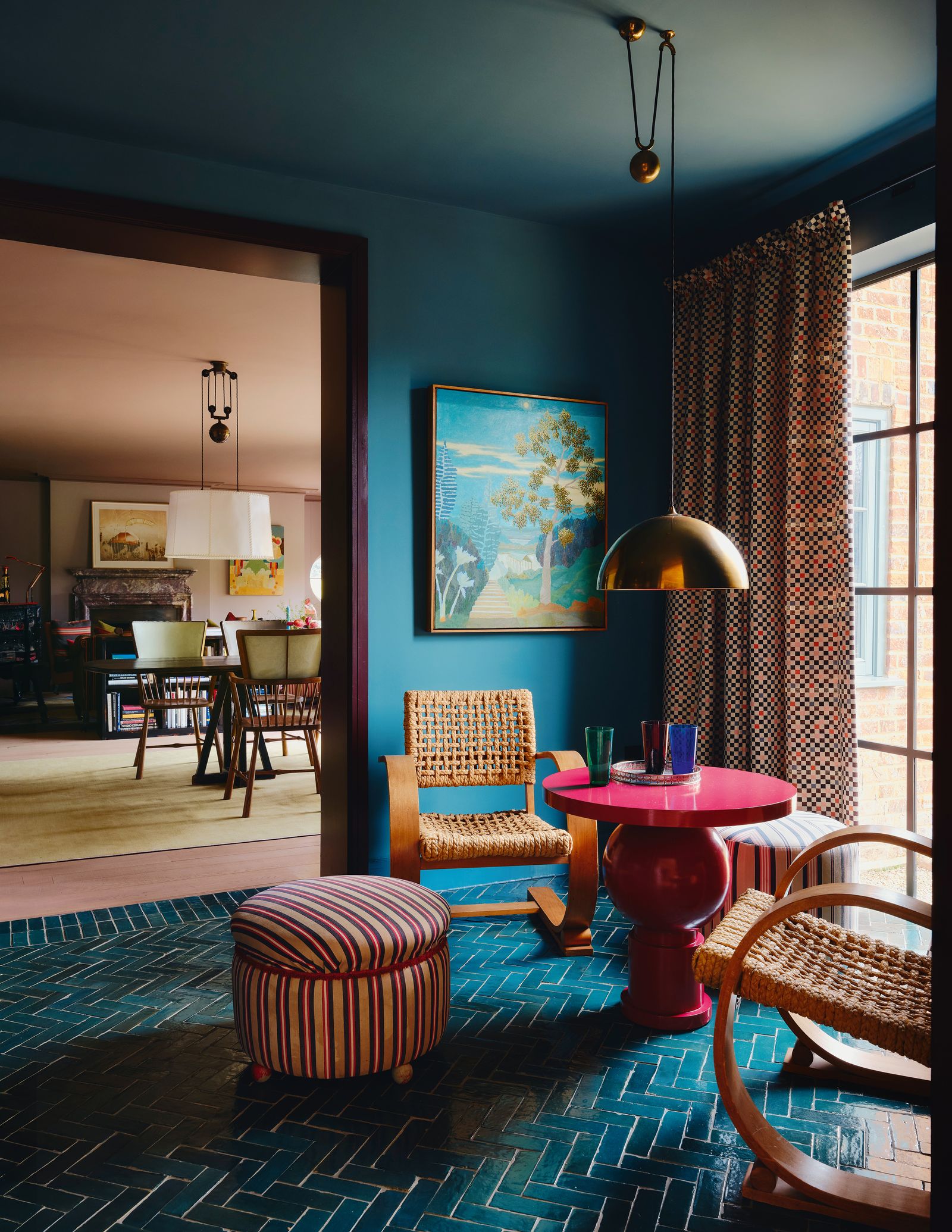
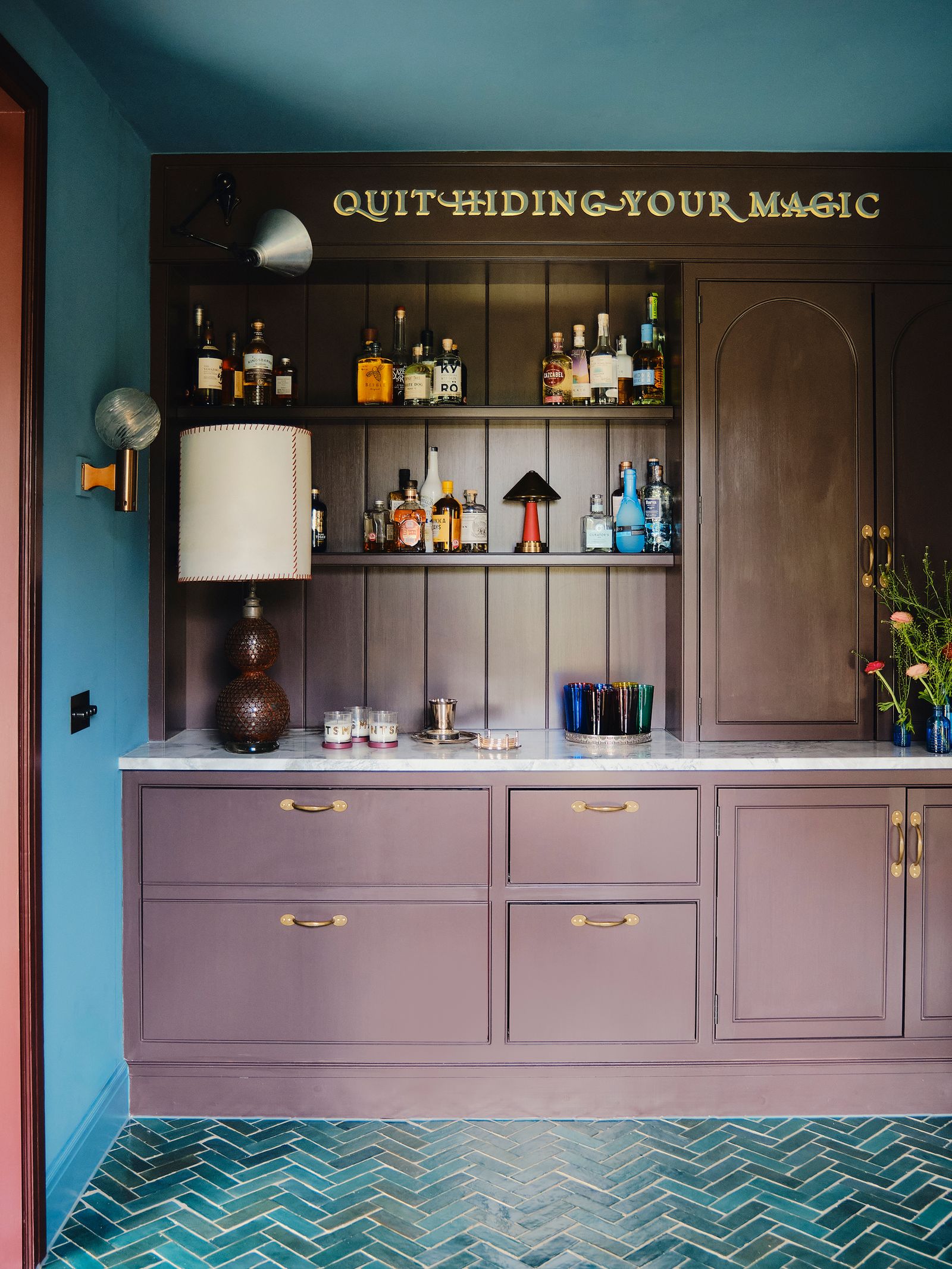
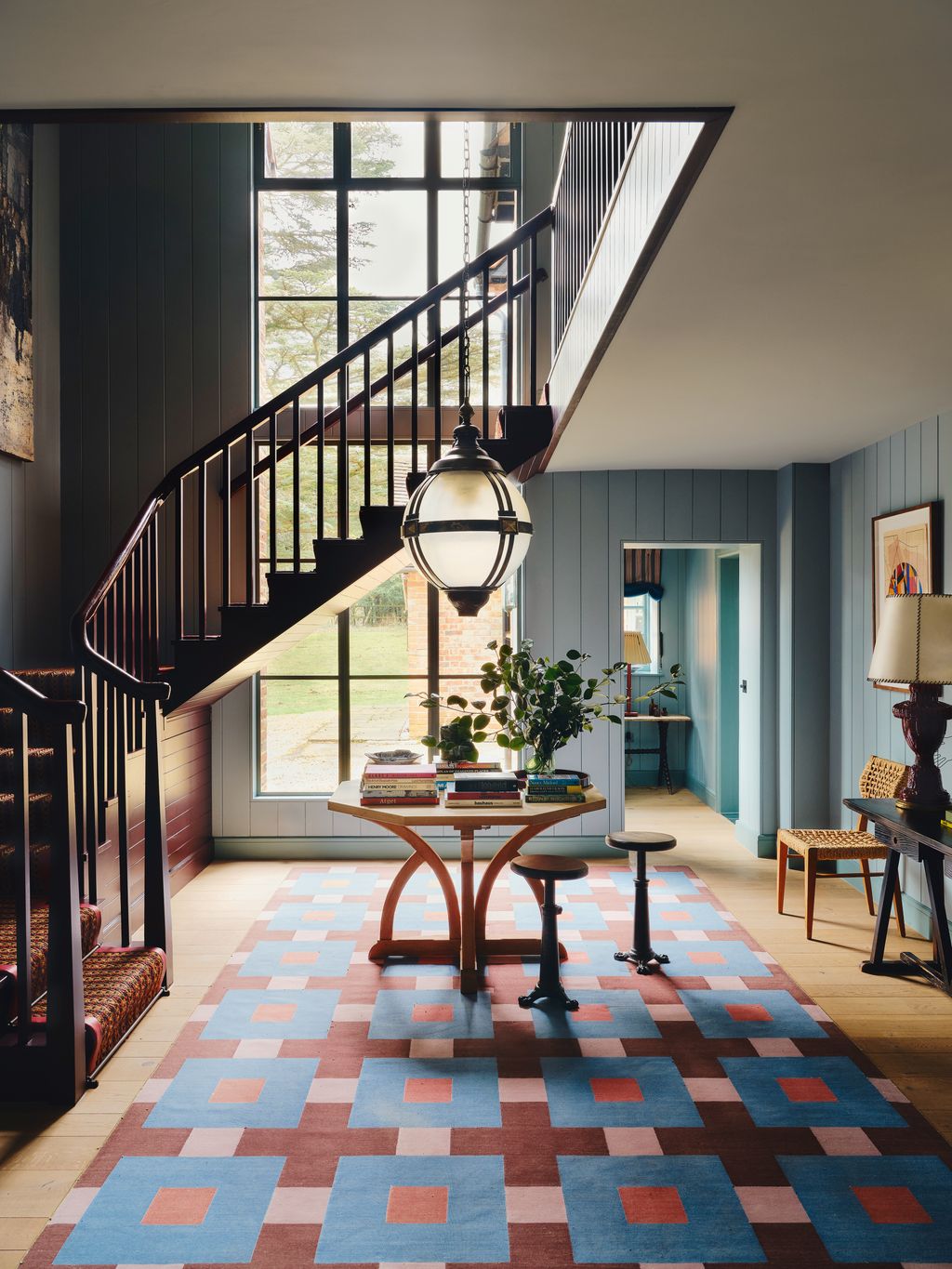
The bleak and uninviting entrance hall was remodelled with a new staircase and a large window was introduced to bring in natural light. But it is Nicola’s discerning eye for storied items that helps to give the space its spirit. Nearly half of the pieces chosen for the house are vintage and antique. This includes the striking pendant in the hall – a French street light – that hangs over a central table. A second staircase was removed to allow for an additional study, which doubles as a television room. And a dingy corridor between the kitchen and drawing room was transformed into a bar area. It has an antique light, vintage rope chairs and striped textiles on the stools.
When Nicola did source new pieces, she was intentional with her choices and all of them were crafted in small UK workshops: ‘I’m mindful of where things come from, how they’re made and how they’ll stand the test of time. And I’m careful to work with suppliers who share my values.’ These include Vanderhurd, Howe London, Soane Britain and Matthew Cox, as well as her own homeware line, NiX by Nicola Harding. Even the Pure & Original paint was chosen because it is water-based with organic pigments: ‘My clients were really engaged with the idea of buying things from local makers and championing British craftspeople, even if it was the more expensive option.’
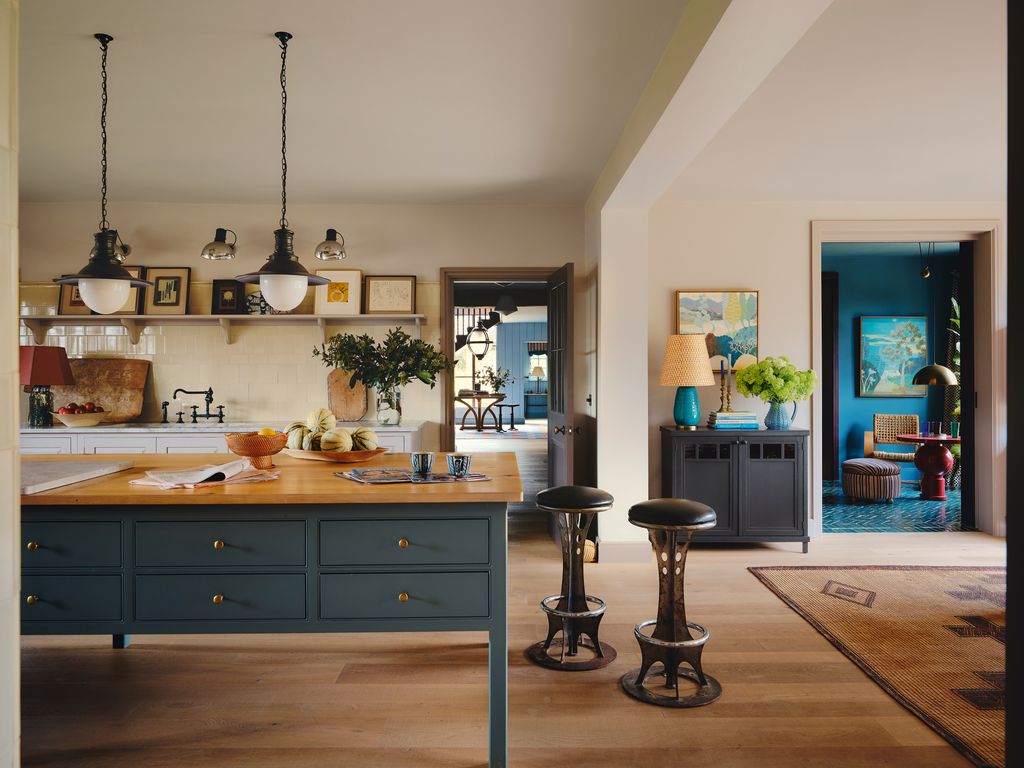
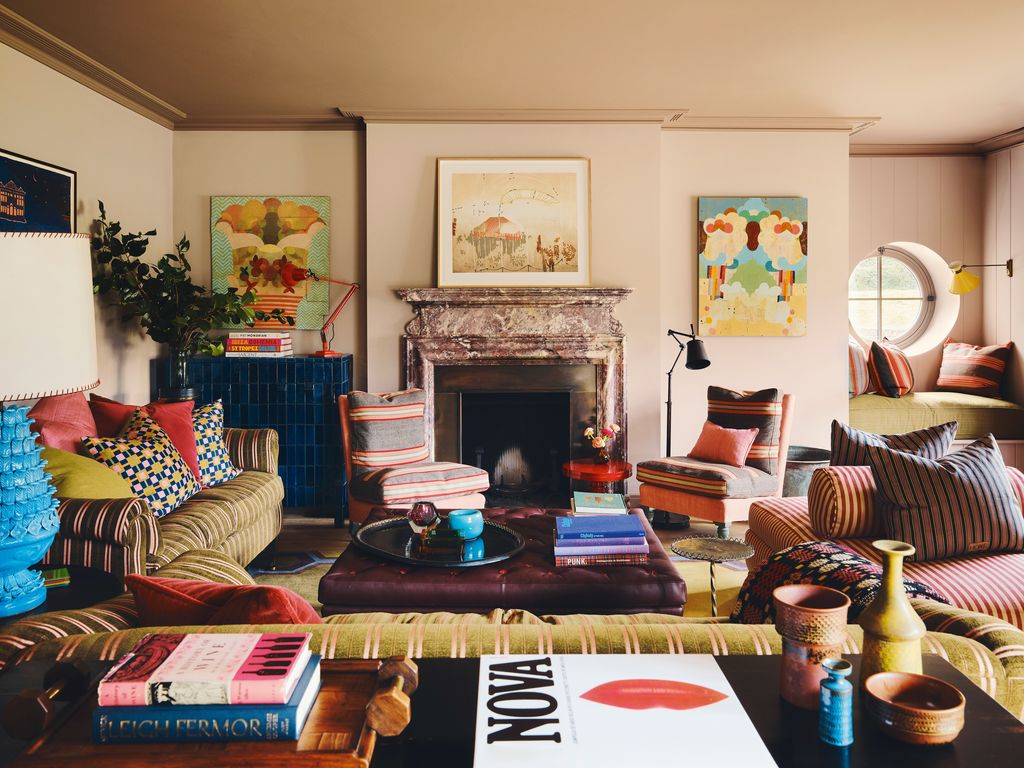
The kitchen, which has been repositioned to be more central in the house, has Plain English cabinetry and there is a hard-working back-of-house area. The drawing room is a masterful composition of colour and textiles, and has several sitting areas. ‘I love creating intimate spaces, even in a larger room like this,’ says Nicola, explaining it had a number of openings, which made it feel transient. So she proposed shutting off one door and replacing it with a round window, with a seat below overlooking the garden.
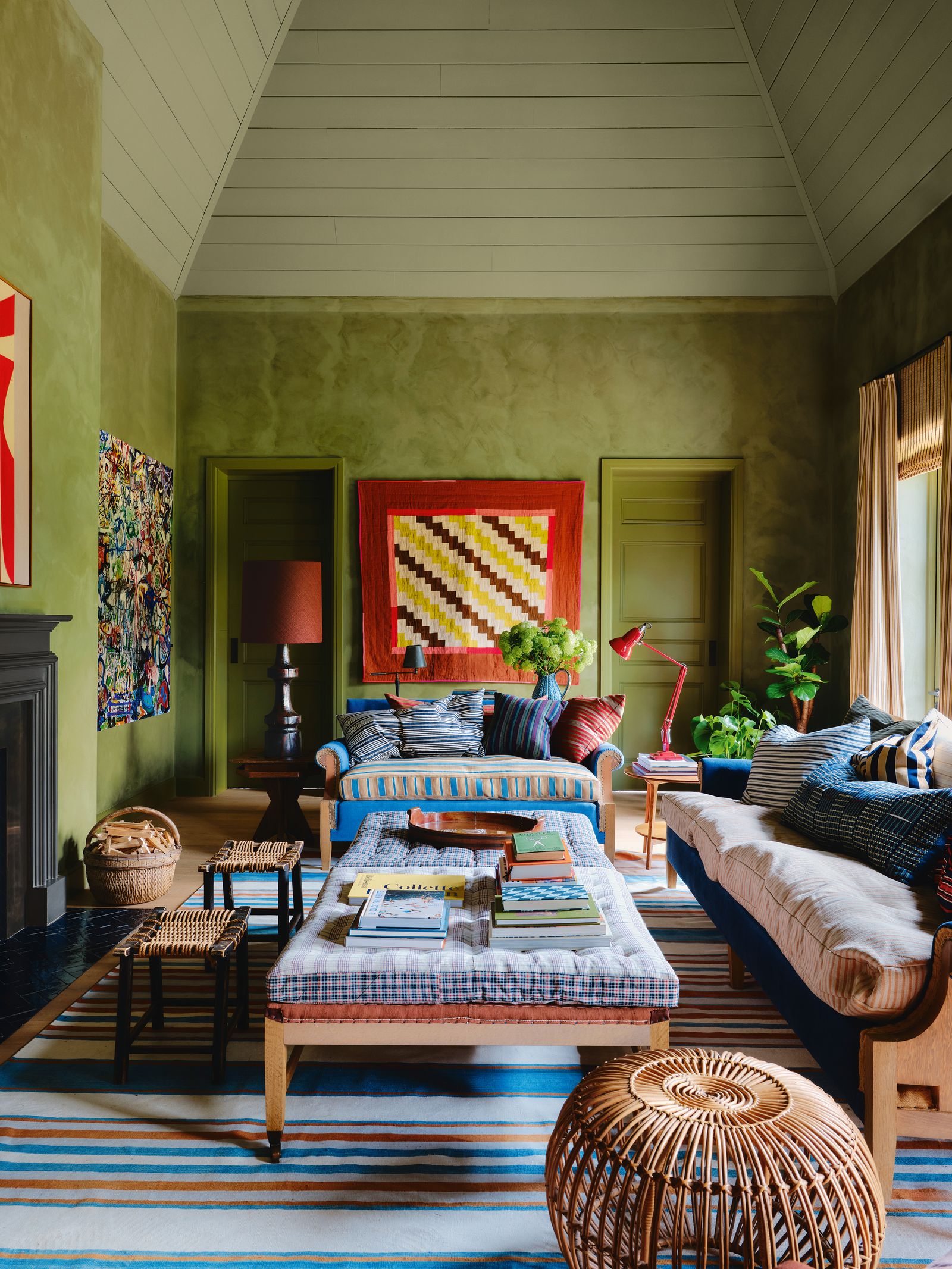
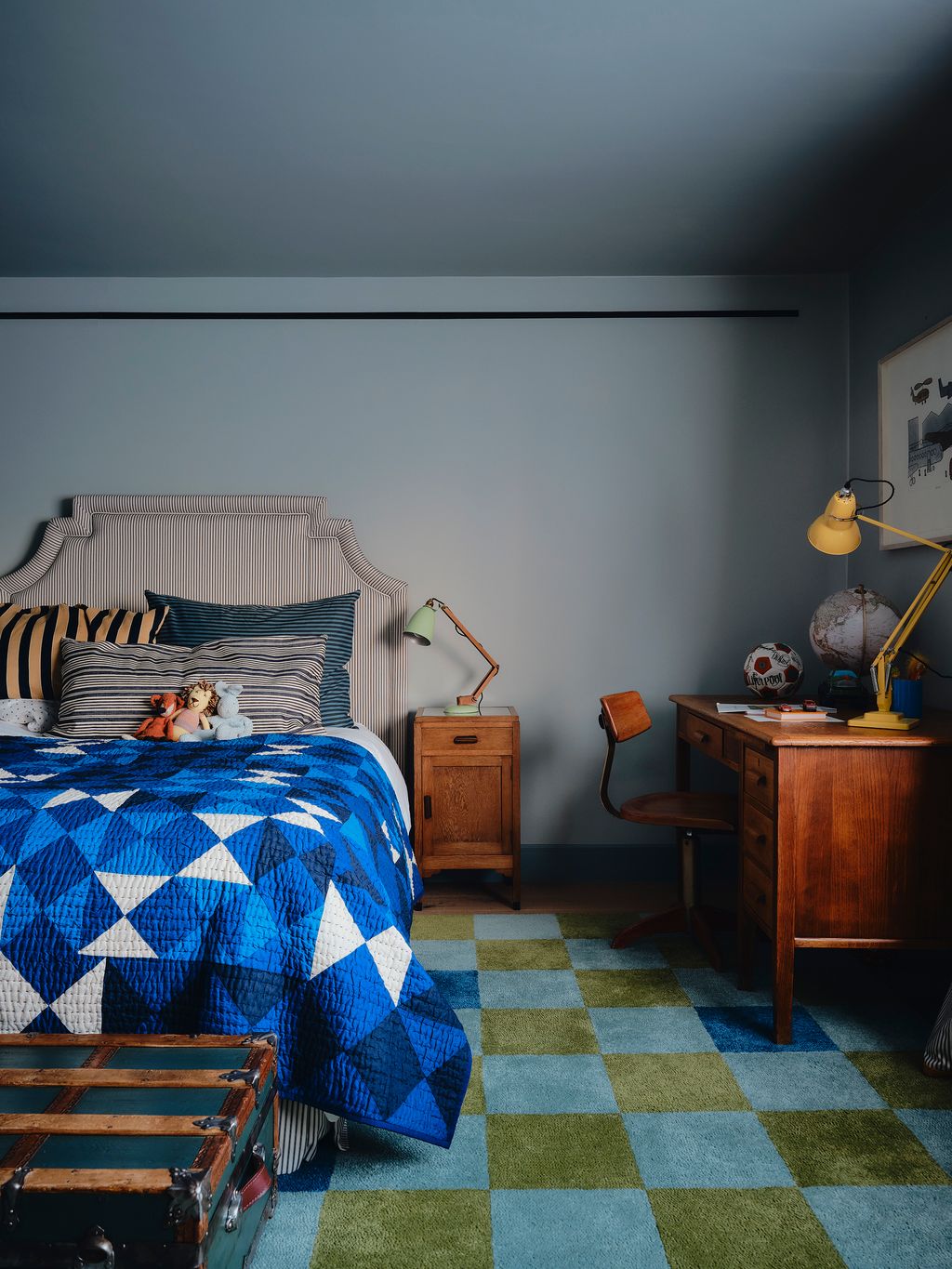
In the family room, now with deep green walls, Nicola opened up the ceiling and added panelling to stop it feeling cavernous. Upstairs, more panelling was included in the bedrooms and the bathrooms to give them an inviting feel, with a mix of vintage furniture and fabrics.
‘When I’m asked to advise clients on renovating their homes, it is often the case that they are considering a new extension and sometimes even a complete rebuild. Yet, usually they have enough house, they are just not using it in a way that suits them,’ says Nicola. ‘My guidance is nearly always to do the more challenging but much more rewarding job of getting what they already have to truly work for them.’ The benefits are obvious. ‘Not only does their budget go further and their carbon footprint is reduced, it also means they use every corner of their existing building. And because they haven’t made their house any bigger, their energy consumption is less than it would otherwise have been.’
Unsurprisingly, the owners’ proposed search for their dream home was called off as soon as they realised that, to their delight, they had been living in it all along.

This is one of the houses featured in ‘Nicola Harding: Homing Instinct’ (Rizzoli, £47.50), which will be published this autumn. Nicola Harding & Co: nicolaharding.com
 Dean Hearne1/11
Plain English made the units and the central wooden island, which is painted in ‘Livid’ by Little Greene; it is teamed with antique industrial hanging lights and a pair of 1950s leather-topped metal counter stools. The shelf above the pale tiled splashback displays a selection of sketches and prints sourced with help from the London-based art consultancy practice Cramer & Bell. Across the room, a Richard Ballinger artwork is showcased above a freestanding painted wooden cabinet designed by Nicola. A vintage Tuareg rug softens the floorboards
 Dean Hearne2/11
A framed artwork by Katherine Jones is flanked by Jason Thompson paintings, one of which is above a ‘Welcome’ tile-clad cabinet created by ceramicist Matthew Raw for The New Craftmaker. Sofas, a daybed and slipper chairs with cushions in vintage fabrics, and a ‘Focused’ floor light from the NiX collection, are arranged around a leather-covered ottoman from Howe London.
 Dean Hearne3/11
Panelling painted in ‘Blue Reef’ and the staircase in ‘Moorland’, both by Pure & Original, pick up on the rug designed by Nicola in collaboration with Vanderhurd. An old French street light is suspended over a table from Dean Antiques with vintage stools.
 Dean Hearne4/11
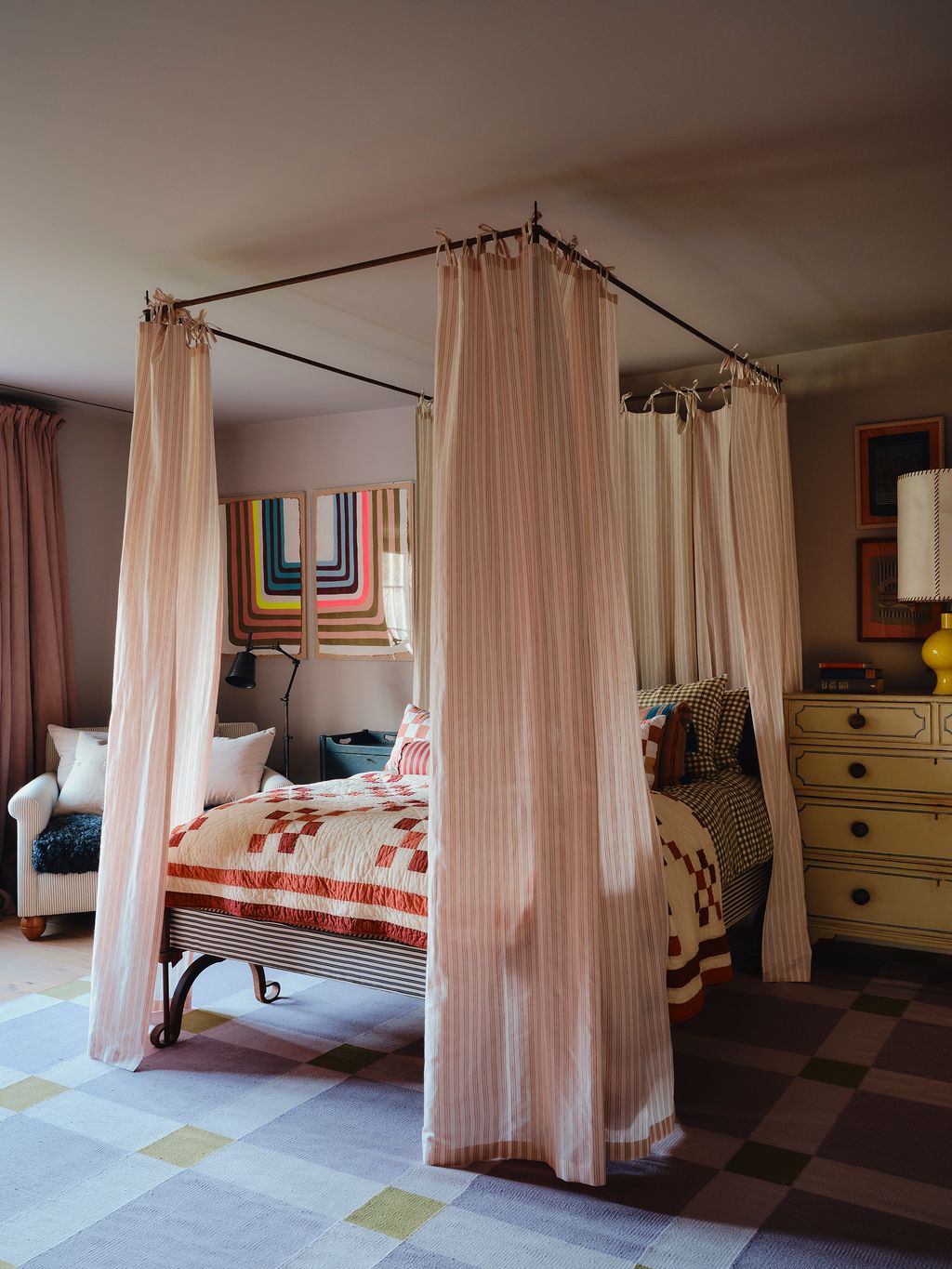
A pair of deep armchairs and an ottoman covered in ticking fabrics, a striking ‘Polygon’ rug from Vanderhurd, and a 1920s orange lamp on a 1930s wooden side table create a relaxed, comfortable feel, which allows this space to double as a television room for the family. Walls in ‘Post Modern Mauve’ are broken up by built-in shelving in ‘Aubergine’, both by Pure & Original, which house the owner’s collection of books, ceramics and artwork, and a set of vintage bowling balls lined up along the cornice. The desk and desk chair are both 1950s designs.


 Dean Hearne5/11
 Dean Hearne6/11
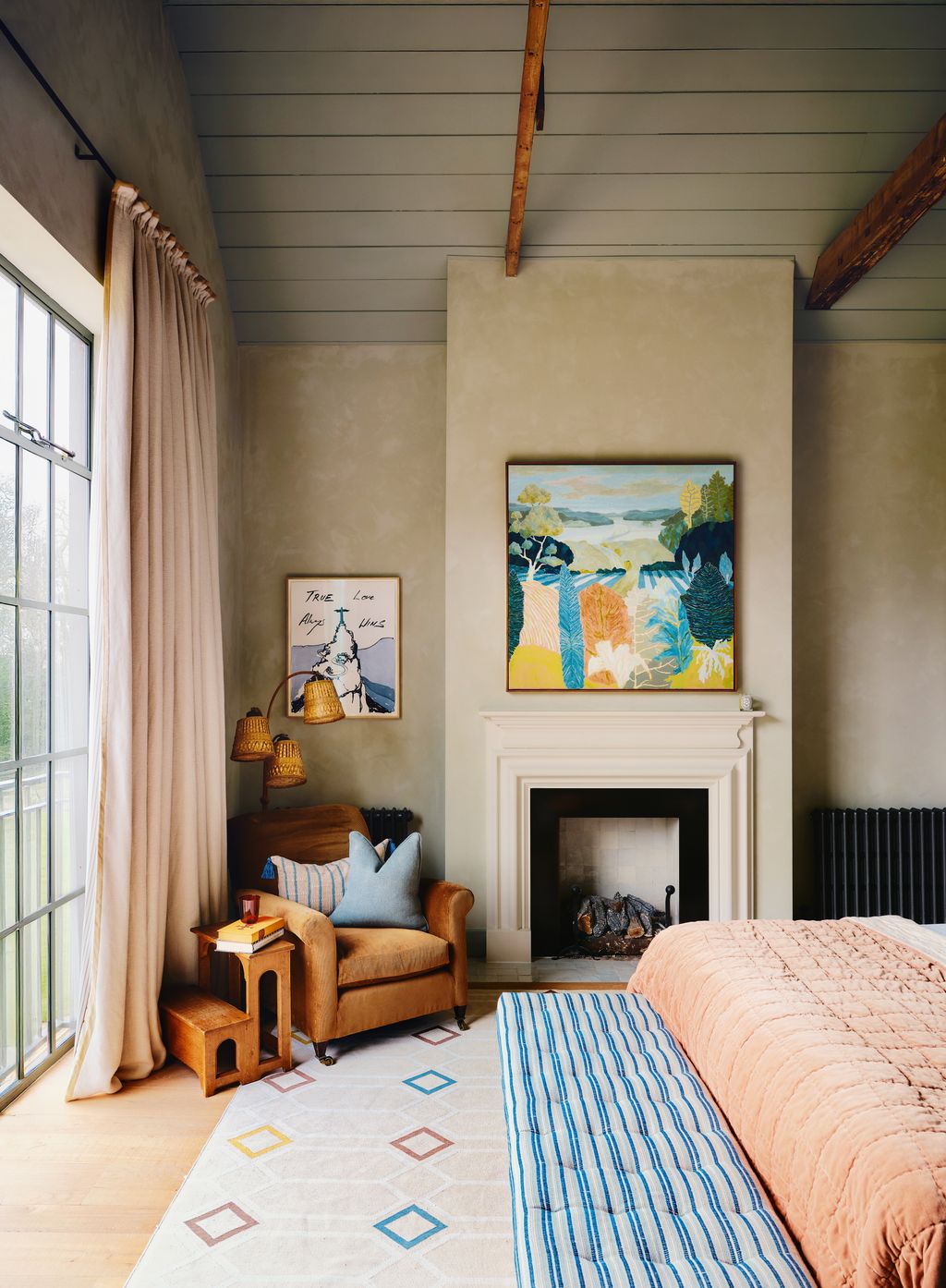
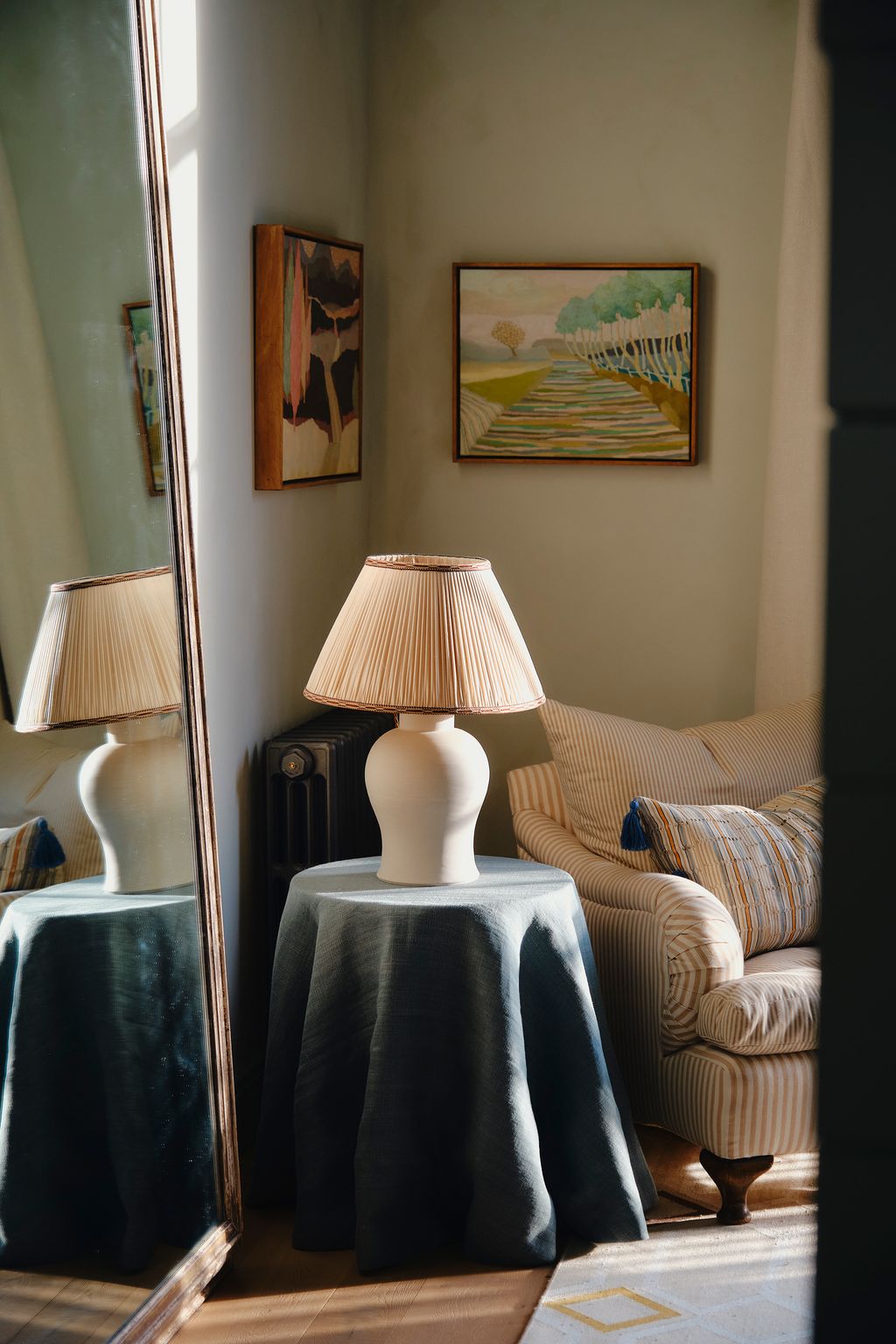
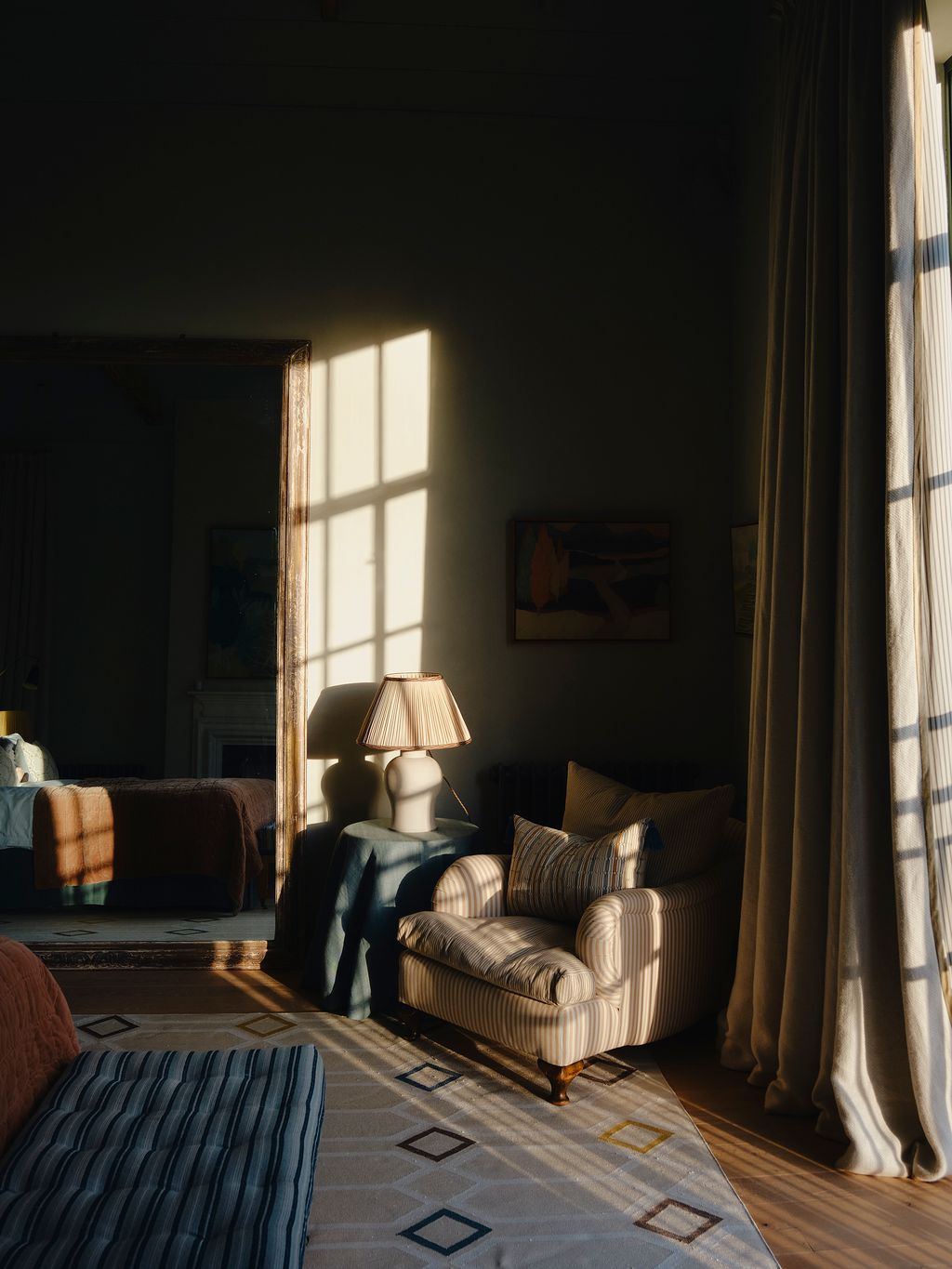
An assortment of vintage furniture and textiles, a geometric rug from Vanderhurd and distinctive artworks by Tracey Emin and Richard Ballinger introduce colour and character to this light and airy main bedroom, which has walls in Pure & Original’s ‘Kiwi White’ fresco paint.
 Dean Hearne7/11
 Dean Hearne8/11


 Dean Hearne9/11
 Dean Hearne10/11
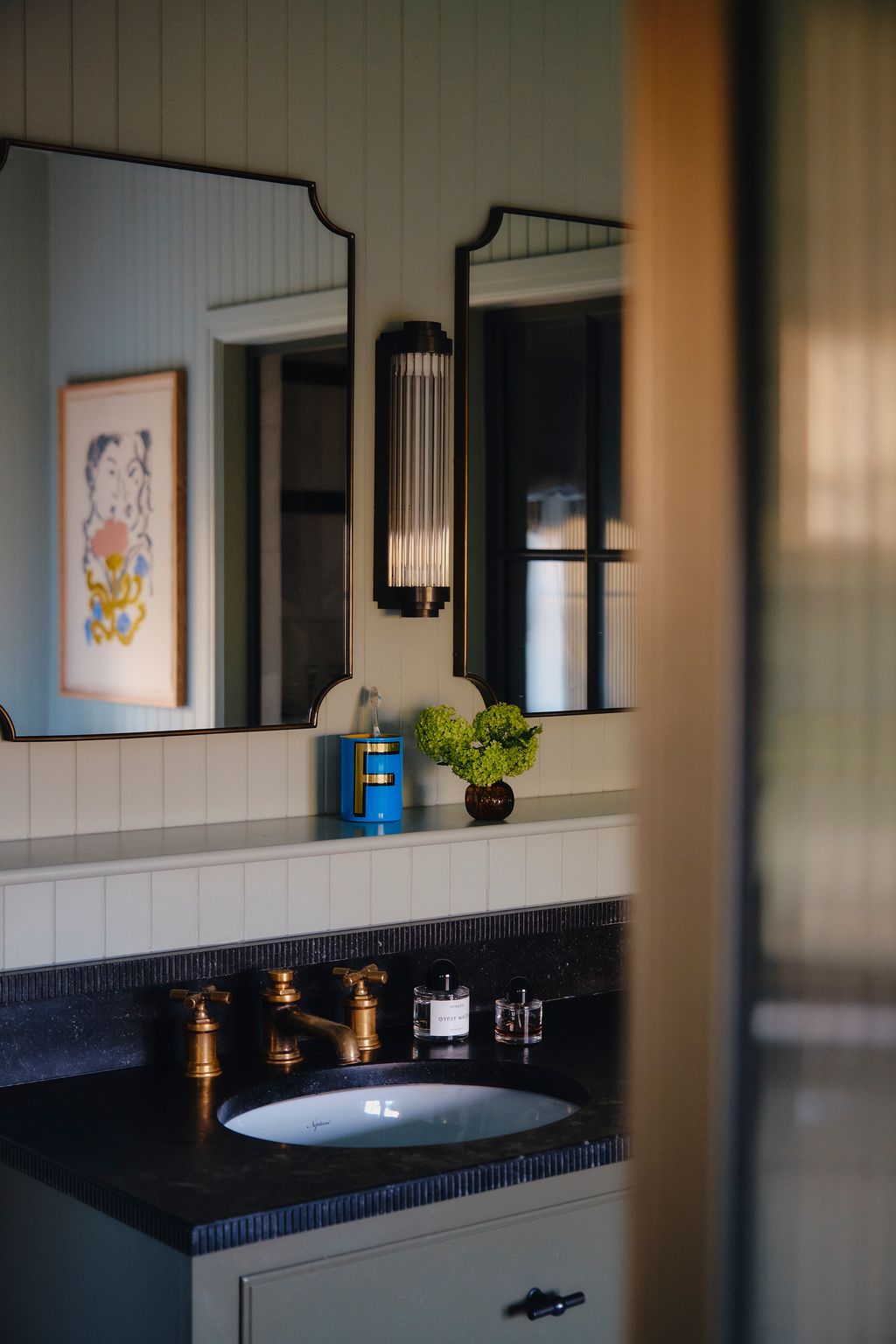
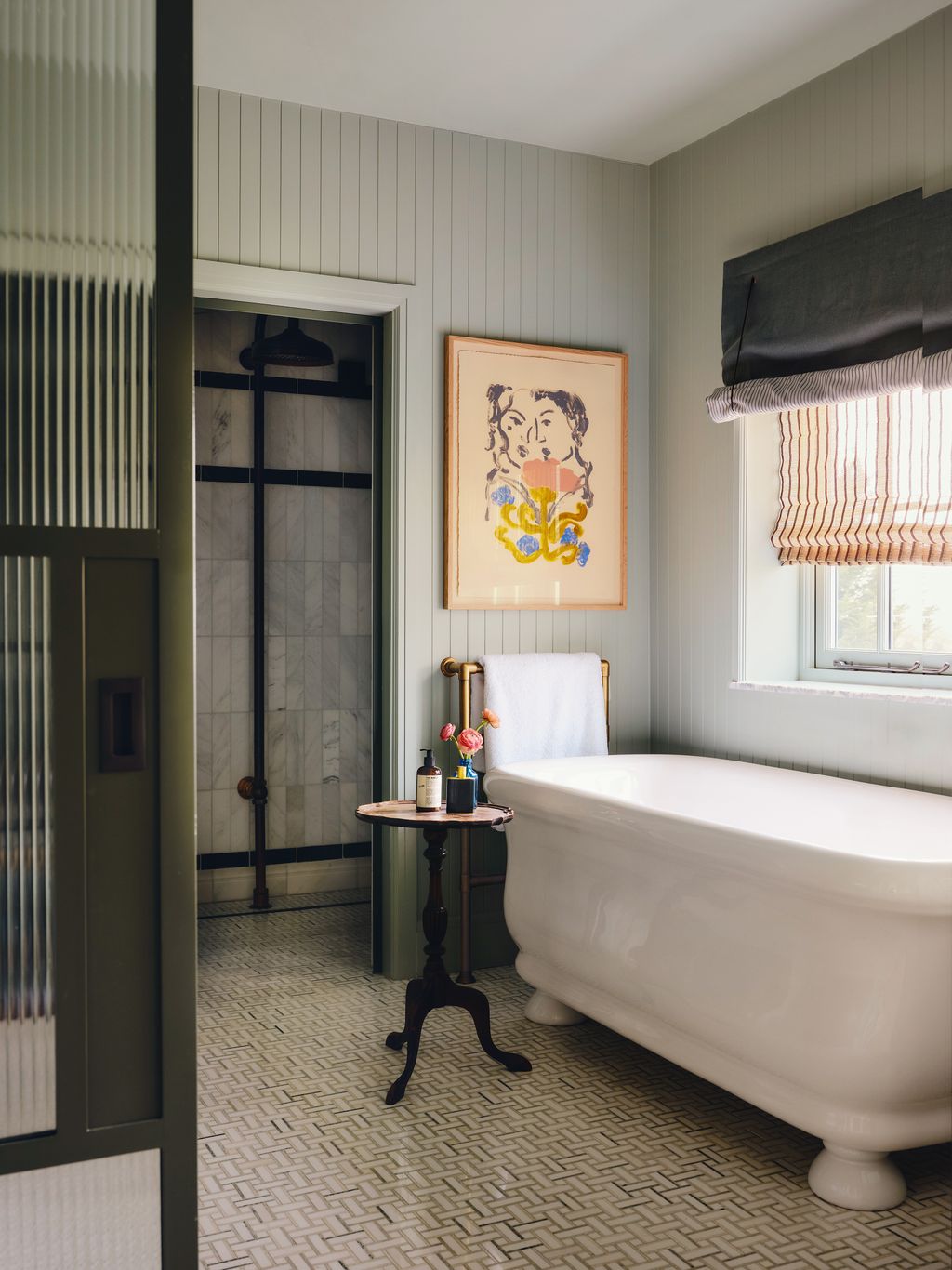
In the main bathroom, ‘North Haven Basketweave’ floor tiles from Fired Earth and panelling painted in Pure & Original’s ‘Polar Blue’ provide an elegant setting for a freestanding ‘Paris’ footed bathtub from The Water Monopoly, an antique side table and a painting by Faye Wei Wei.
 Dean Hearne11/11


.jpg)


