
Rixo co-founder Orlagh McCloskey has turned a barren new build into a house full of personal touches

There is a quote by Henri Matisse on creativity that reads, ‘I have always wished my works to have a light joyousness of springtime which never lets anyone suspect the labours it has cost me.’ It's an apt musing on the true process of artistry, and one that feels applicable to Orlagh's house. The house may have been a labour, but the result is undoubtedly one of light joyousness.
‘I was looking for an unusual property. I didn’t want a two up, two down terrace,' Orlagh confesses, explaining the specific requirements she and her husband Brook had when hunting for a house. 'We wanted something with a more open plan layout that would suit our lifestyle, but we also needed somewhere that we wouldn’t have to change the structure. I knew I wouldn't have time to do that alongside my work.'
Given their long list of non-negotiables, the couple decided to circumvent the property market entirely, opting to buy directly from a developer Orlagh knew through a friend. The plot had been a redundant bit of land: an empty space behind a block of flats that had recently been erected. ‘It was done like a showroom, but I could see what I could turn it into immediately,' Orlagh says. ‘It ticked a lot of boxes.’
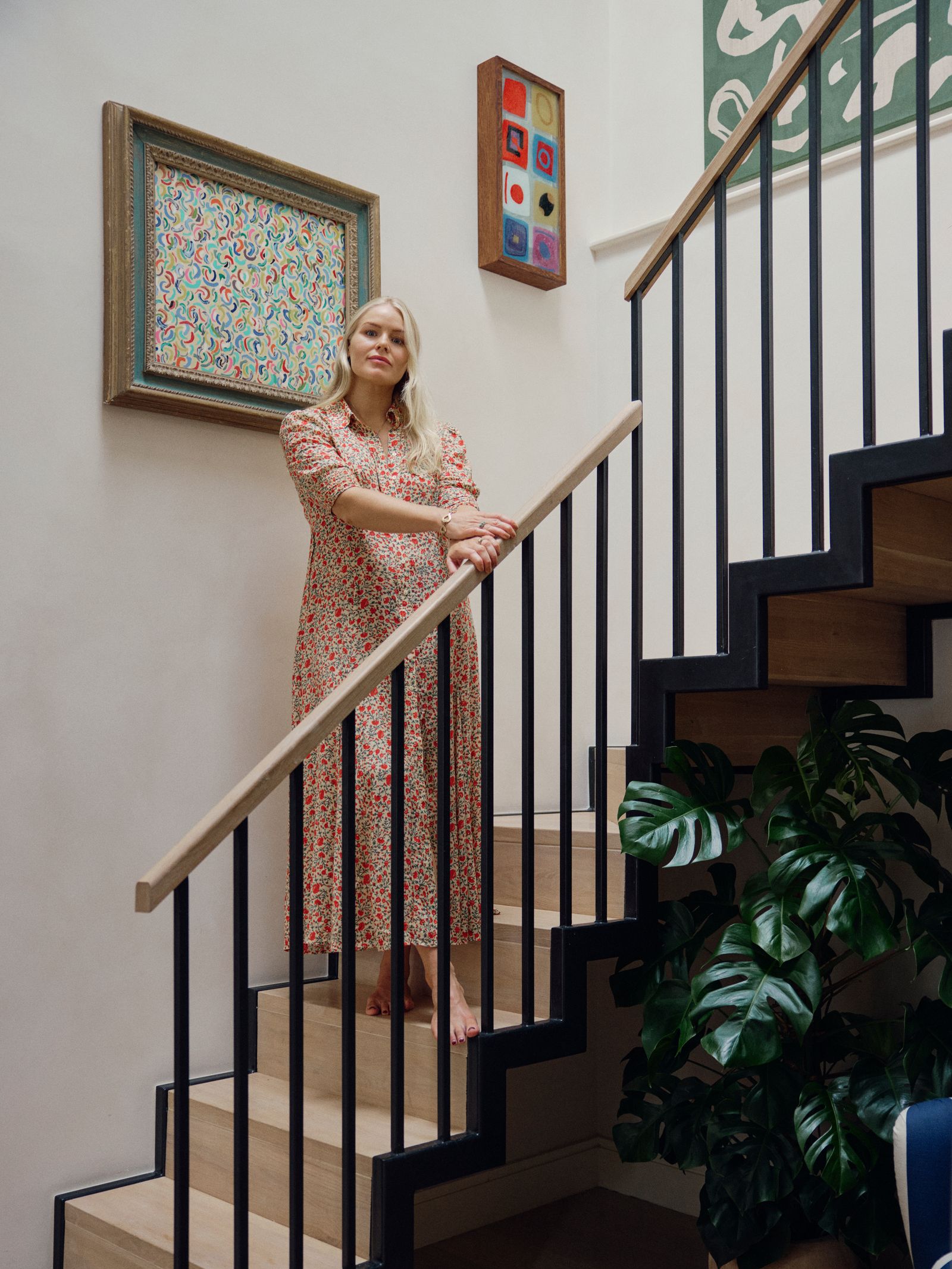
For the duo, the most important thing was an abundance of natural light. ‘Before buying this house, I was flat sharing with [Rixo co-founder] Henrietta. After our lease came to an end, she found a house quite quickly, but I ended up in an AirBnB in Shepherd's Bush for the first seven months of the pandemic.' She continues, ‘With the regulations in place, I couldn’t go and see it in advance. It was much darker and smaller than the photos suggested and made me understand just how important light is in a house. It really affects your mood.'
Thanks to the modern credentials of the house she bought, all Orlagh had to do was add a dash of flavour to the blank space. The first, and most effective, decision made was to paint the ‘landlord white’ walls in a Bauwerk limewash. ‘It gave the space the texture new builds crave.’ From there, Orlagh and Brook layered vintage finds with contemporary pieces, decidedly adding character as they went.
One of the greatest obstacles in the decoration of the house was its scale. Vast blank walls and double height ceilings made choosing furniture rather difficult. ‘Trying to find things to fit walls of this size…it’s impossible to source things that aren't ridiculously expensive.' Frustrated with the hunt for affordable art, Orlagh took matters into her own hands in the way only true creatives can; armed with canvas, paints and card, she cut out shapes inspired by Henri Matisse and painted her own large scale artworks. Brook then created bespoke frames for each of them.
Perhaps the most impressive and special thing about this project is the partnership between Orlagh and Brook. ‘Brook’s a carpenter and joiner by trade, so he had all of the skills and machinery required to make a lot of the furniture himself, Orlagh explains. ‘I would sketch and design things. He’d CAD it up and then make it.' Throughout the house, examples of their partnership are present. There's the cabinet in the living room that is a computer desk disguising itself as a Brutalist piece; the coffee table that Orlagh tried to track down for two years before deciding to make it herself; and the banquette seating handmade by Brook. It is a brilliant, and rare, way to add personality and individuality into a modern home. As Orlagh summarises, 'I’m the driving force for vision, and he makes it come to life.'
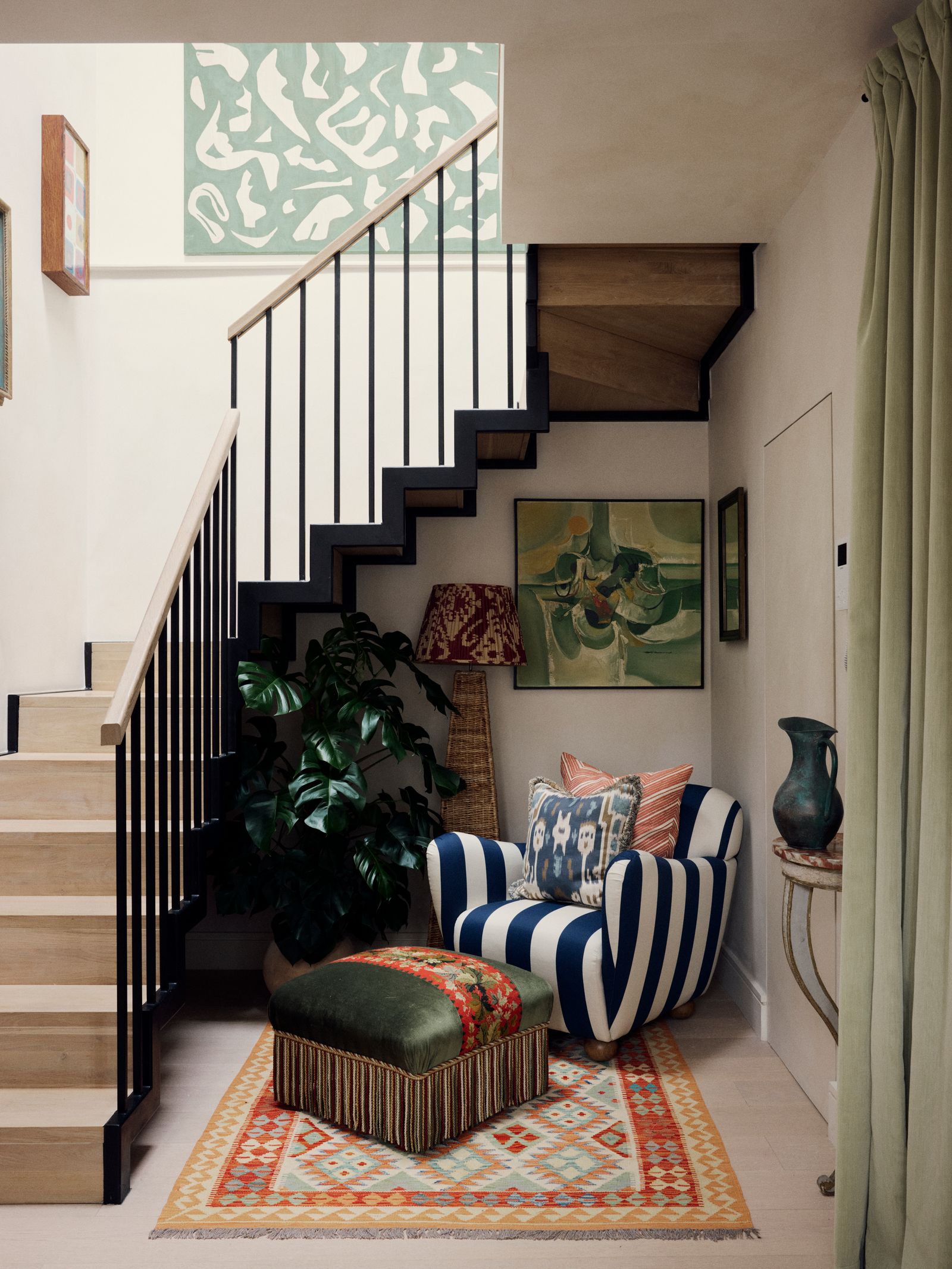
It wasn't just her husband Orlagh collaborated closely with, but her twin sister, who just so happens to be an interior designer. Founder of Cupla Studio, Gemma McCloskey was an invaluable font of knowledge throughout the project. Together they considered the lighting and layout, as well as digging through antique fairs and jumble sales to unearth treasures. ‘What’s so good about Gemma is she knows the products of her industry really well, as well as understanding my taste – just from being my twin.'
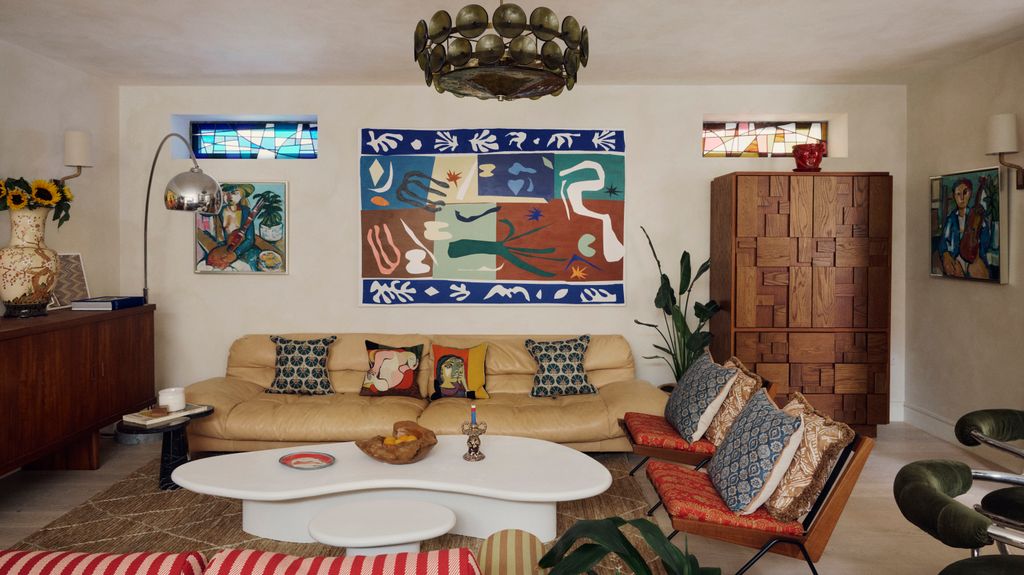
It was Gemma who finally cracked the code on what to do with the back wall in the living room. ‘She said to me one day, “Have you seen Matisse’s stained glass windows in the Chapelle du Rosaire de Vence?” I looked them up and they were perfect.' Orlagh drew up her own versions, looking to 1970s stained glass for further inspiration, before discovering Maya Glass Studio locally, who crafted the windows to their specifications. In situ, they provide an energising shot of colour, and cast a sacred light around the room.
The windows are intentionally one of very few permanent expressions of colour within the house. Orlagh has layered pattern and texture to create a rich tapestry that feels bedded in, without commitment. ‘Everyone who comes here says it looks like Rixo as a house,' she admits – and anyone familiar with the brand's beautiful, eclectic prints will likely agree. ‘The colour is all from the items and furnishings, which means you can just move things around if you get bored’: much like creating a new outfit from an existing wardrobe.
 Mark Anthony Fox1/19
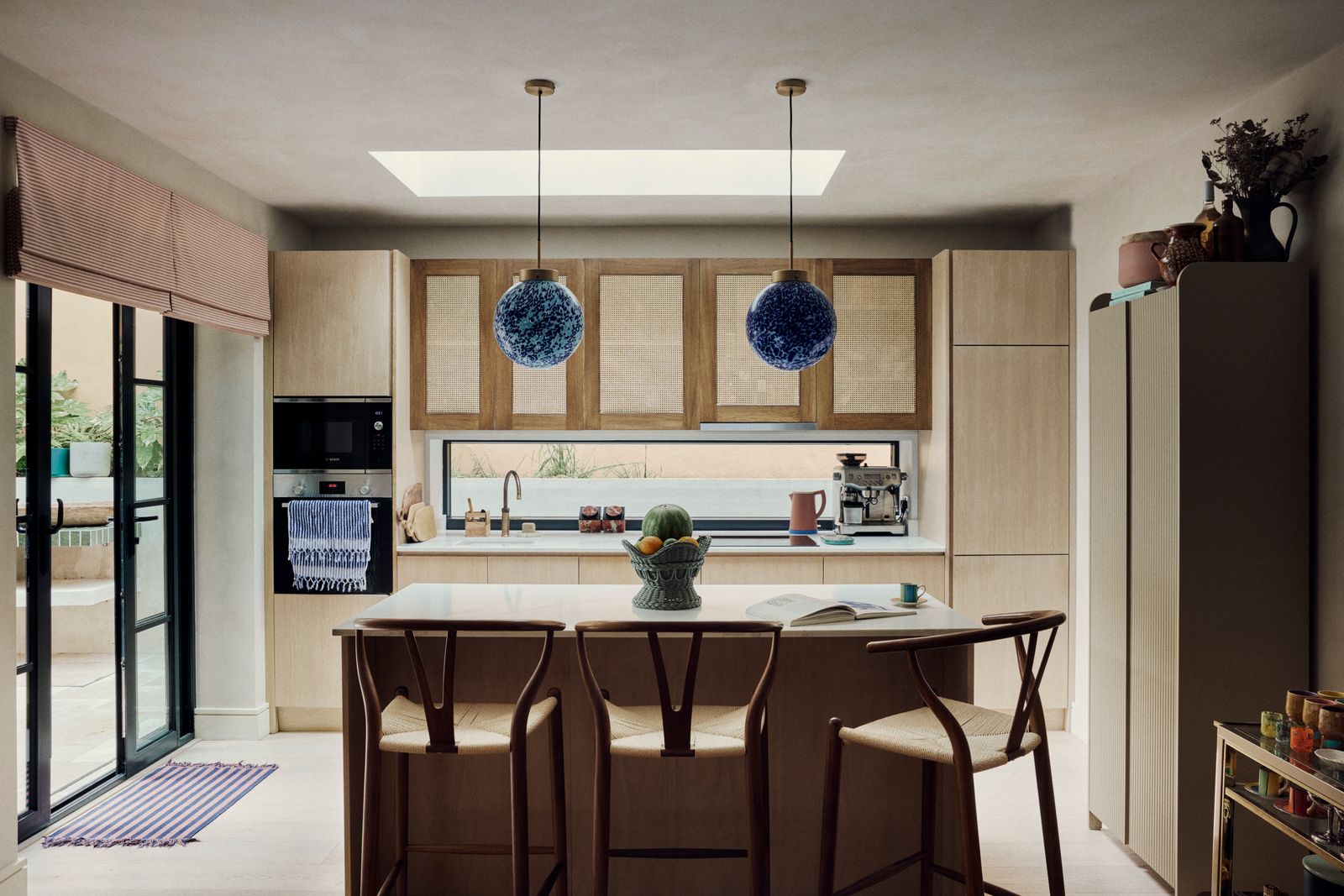
On the walls of the large open plan kitchen/sitting room, Bauwerk limewash paint in ‘Bone’ provides texture without being overwhelming.
The bar stools are from Molebaris, and they sit under Murano glass pendants are from Cupla Studio, created by Orlagh's twin sister, Gemma.
 Mark Anthony Fox2/19
Much of Orlagh's furniture has been collected over time in antique markets across the globe. The rug, bar cart and bamboo cabinet are all vintage. Much of the decorative pieces on the bar are vintage too.
 Mark Anthony Fox3/19
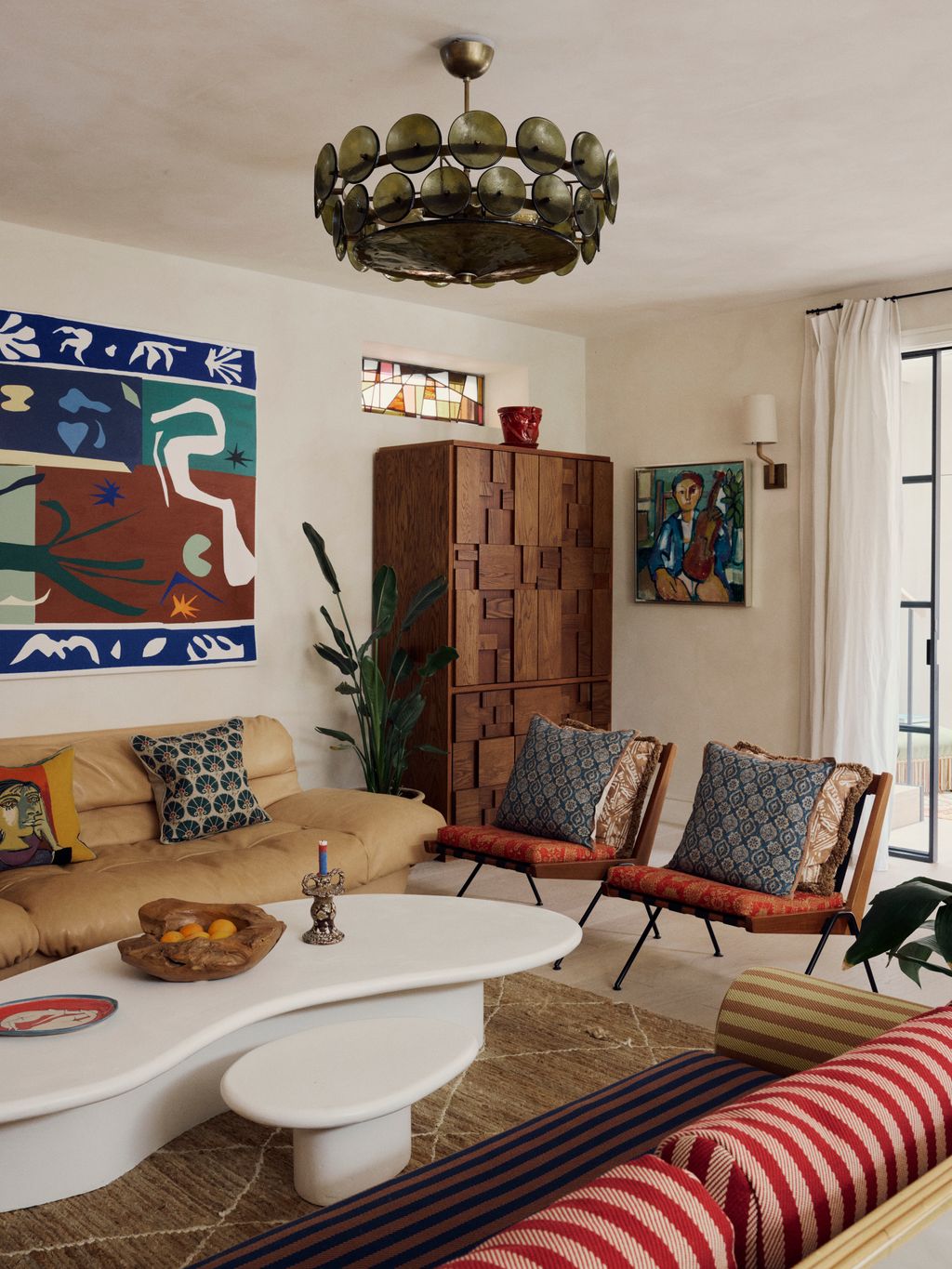
The large artwork on the back wall of Orlagh's living room was painted by her. It is flanked by stained glass windows based on a number of references. They were created by Maya Glass Studio in Acton.
On the yellow sofa - which is the ‘Baxter’ from Milano Sofa - cushions in clashing patterns have been layered. The Picasso cushions are from The Conran Shop, the blue are from OKA, and the brown ones are Soho House. Underfoot, a rug from OKA grounds the scheme.
 Mark Anthony Fox4/19
Some of the most interesting and unique pieces in this house were made by Orlagh's husband, Brook. After struggling to find a coffee table of the right scale and proportion, the duo decided to create and build their own.
The Brutalist cabinet in the corner was also designed and built by Orlagh and Brook, and it beautifully conceals a large desktop computer, a pull out desk, and other unsightly office necessities.


 Mark Anthony Fox5/19
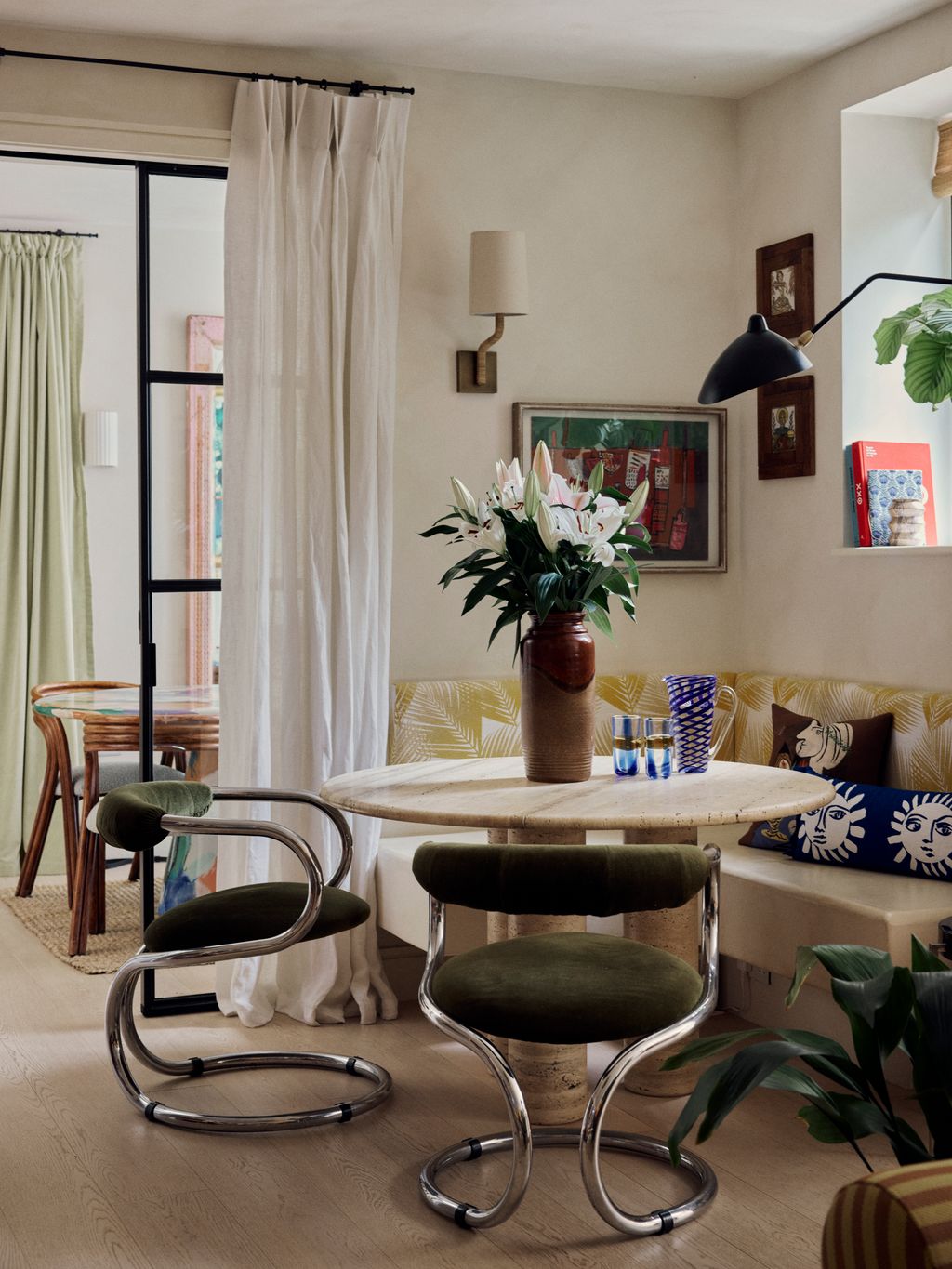
In a cosy corner of the open plan space, an intimate dining nook has been created. Brook built custom banquet seating for the space, which is juxtaposed by 1970s Italian ‘Chrome’ by Tecnosalotto chairs, bought at Ardingly antique fair. The travertine table was made by Cupla Studio, based off an antique.
 Mark Anthony Fox6/19
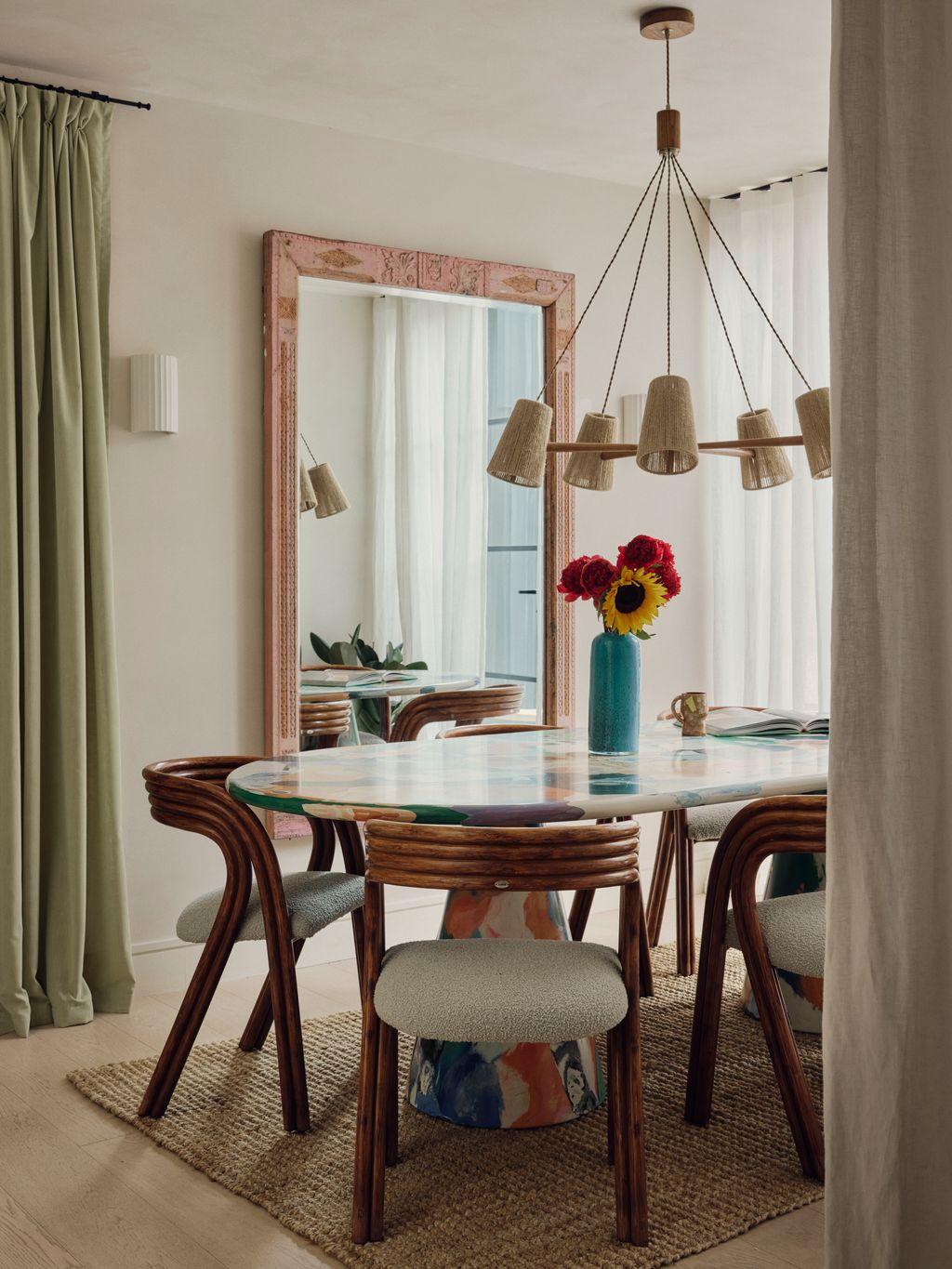
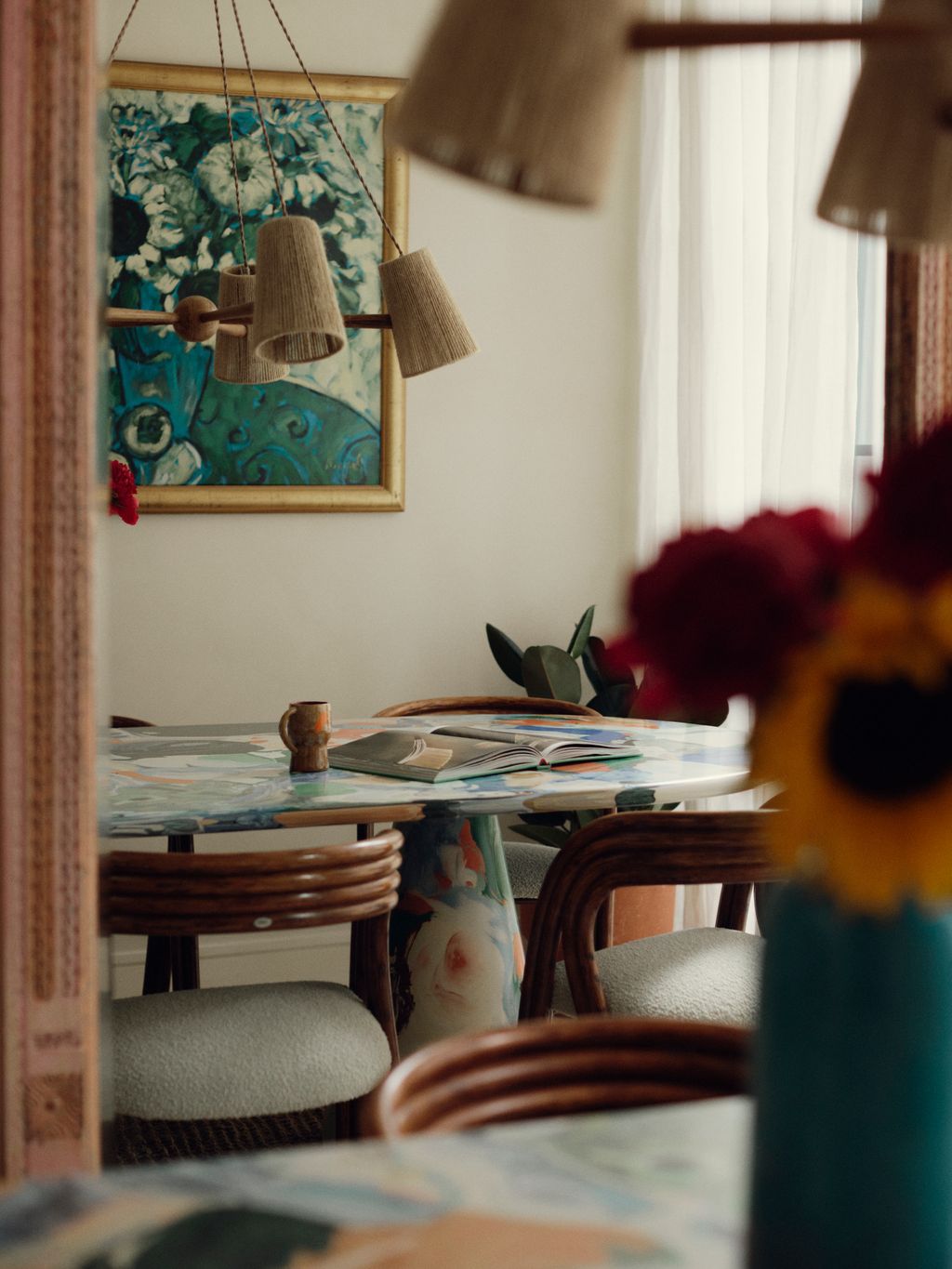
In the more formal dining area, a Soho Home pendant hangs above a Dirk Van Der Kooij table. At the back of the room, an Indian mirror makes the room feel brighter and larger. It was purchased from Opium Shop on the Kings Road.
The chairs are antique, reupholstered in Yarn Collective ‘Bouclé in Pistachio’.
 Mark Anthony Fox7/19
 Mark Anthony Fox8/19
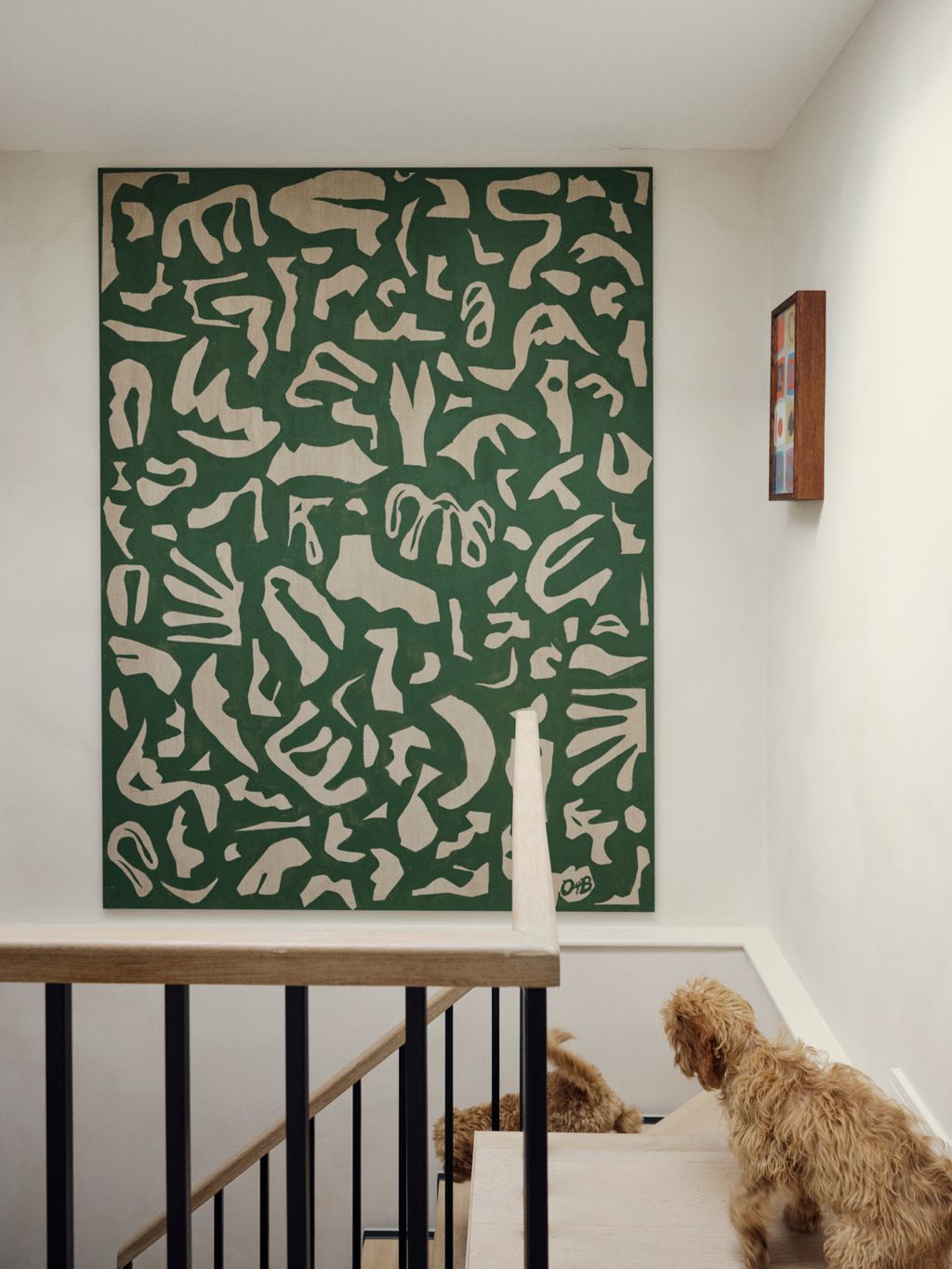
Finding a piece of art larger enough to feel the vast double height staircase was proving an expensive and difficult endeavour. Ultimately, Orlagh decided to paint a piece herself based on shapes loved by Matisse.
Either side of the artwork, 1970s antique wall lights hang. They have been framed in a bespoke wooden box, and lit by Brook, Orlagh's husband.


 Mark Anthony Fox9/19
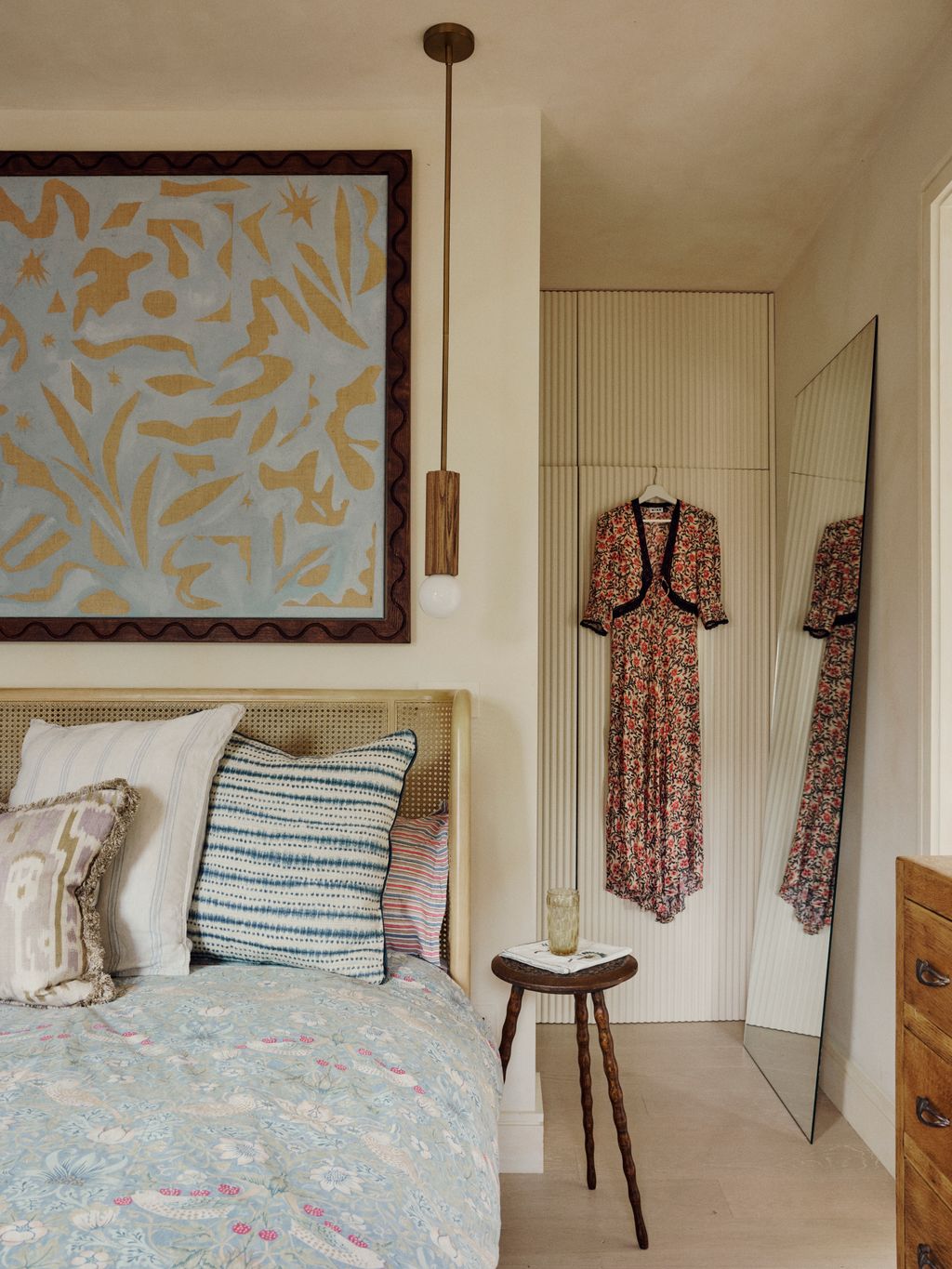
The primary bedroom has also been painted in ‘Bone’ by Bauwerk, but Orlagh added a peach tint to give it a warmer undertone. The entire back wall has been covered in fitted wardrobes with a pretty scalloped finish made by Brook. In the side of the frame, a chest of drawers from Vinterior sits.
The dress hanging up is the Rixo 'Amina’ dress in ‘Rose Blush’.
 Mark Anthony Fox10/19
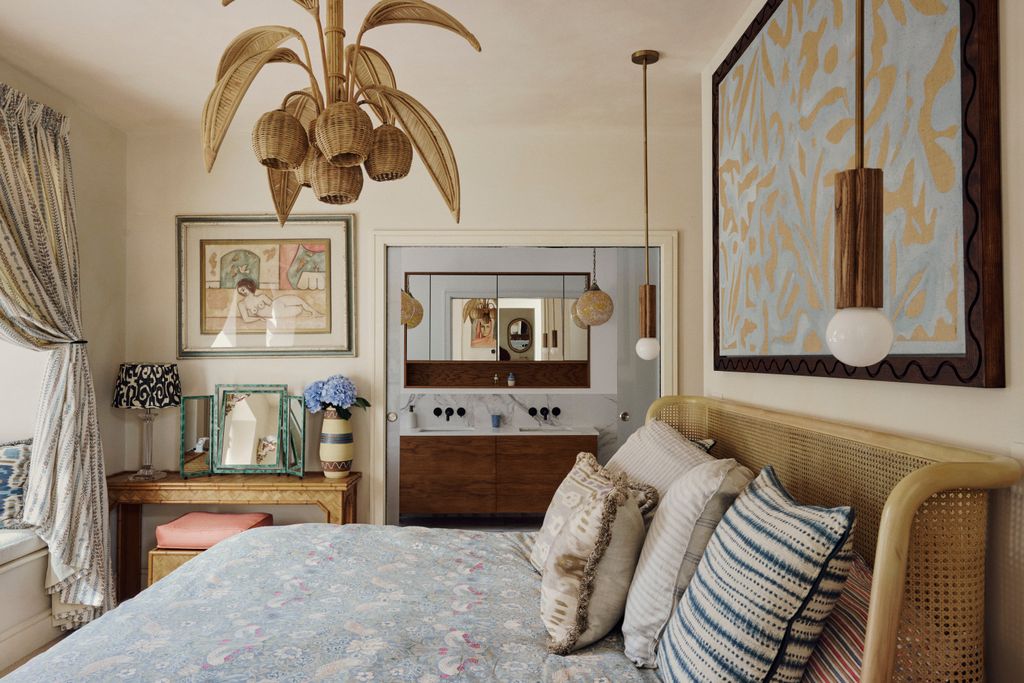
The bed is from Soho Home, with a bedside table from Annämh Living. Hanging above the bed is an artwork made by Orlagh, with a custom frame made by Brook.
The bed is made up in a William Morris bed sheet, with Anouki India pillowcases underneath. The large cream cushions are from Zara Home.
 Mark Anthony Fox11/19
The corner of the primary bedroom is a study in delicate pattern and colour. The bamboo dressing table is from Annä MH Living, with a table lamp from OKA atop it. The rattan pendant light is an antique piece.
The window seat is covered in the same Yarn Collective bouclé as the chairs downstairs. The curtain is the ‘Bandana’ from Lewis and Wood.
 Mark Anthony Fox12/19
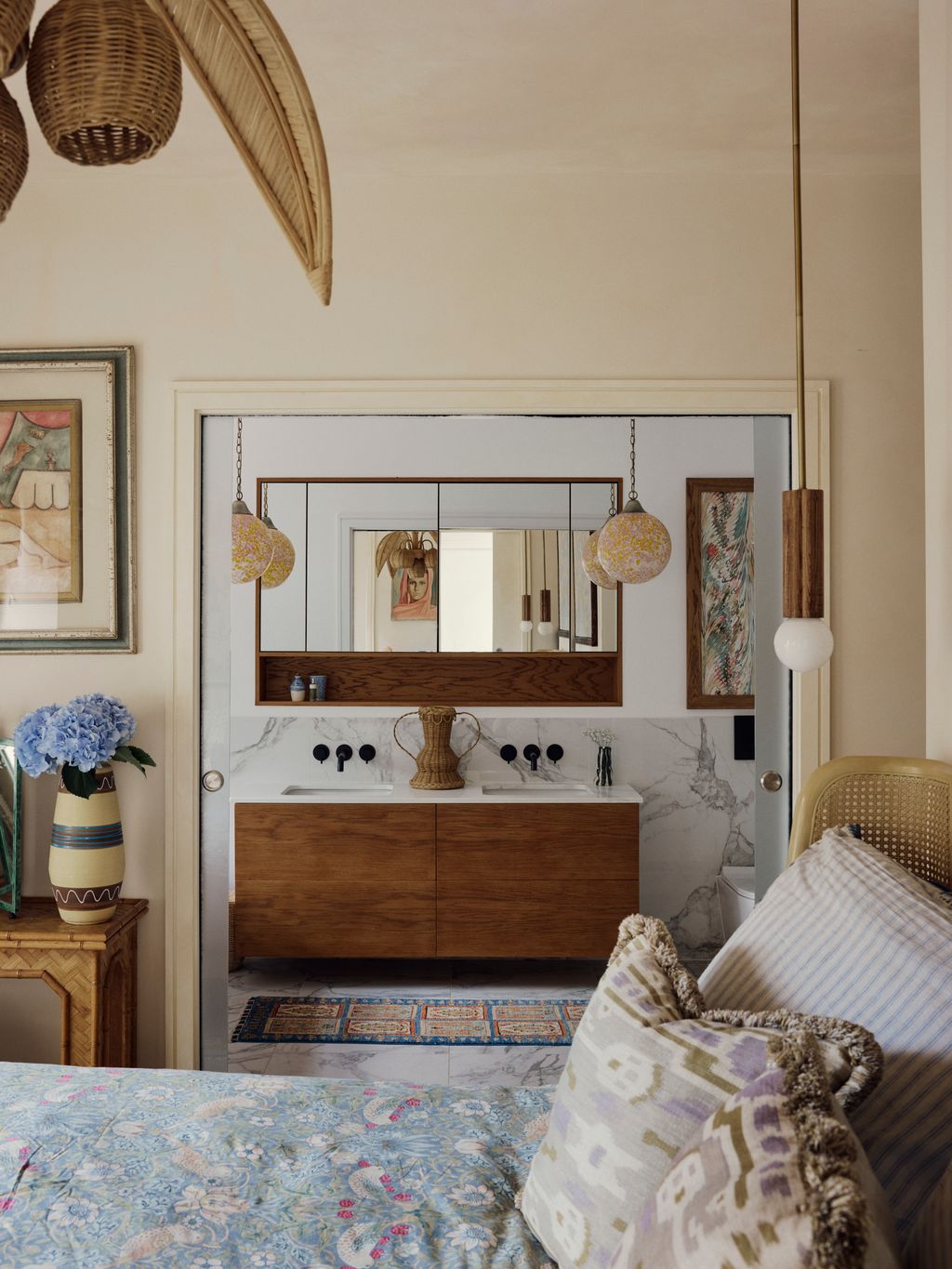
The en suite bathroom is rendered in a calm palette. Murano glass globe lights by Cupla Studio hang above the marble vanity. Texture has been added to the space with accessories in rattan.


 Mark Anthony Fox13/19
Either side of the sink, wooden frame doors conceal built in shelves. These are decorated with ‘Marbleised Feather Scroll Wallpaper’ from Lee Jofa Kravet.
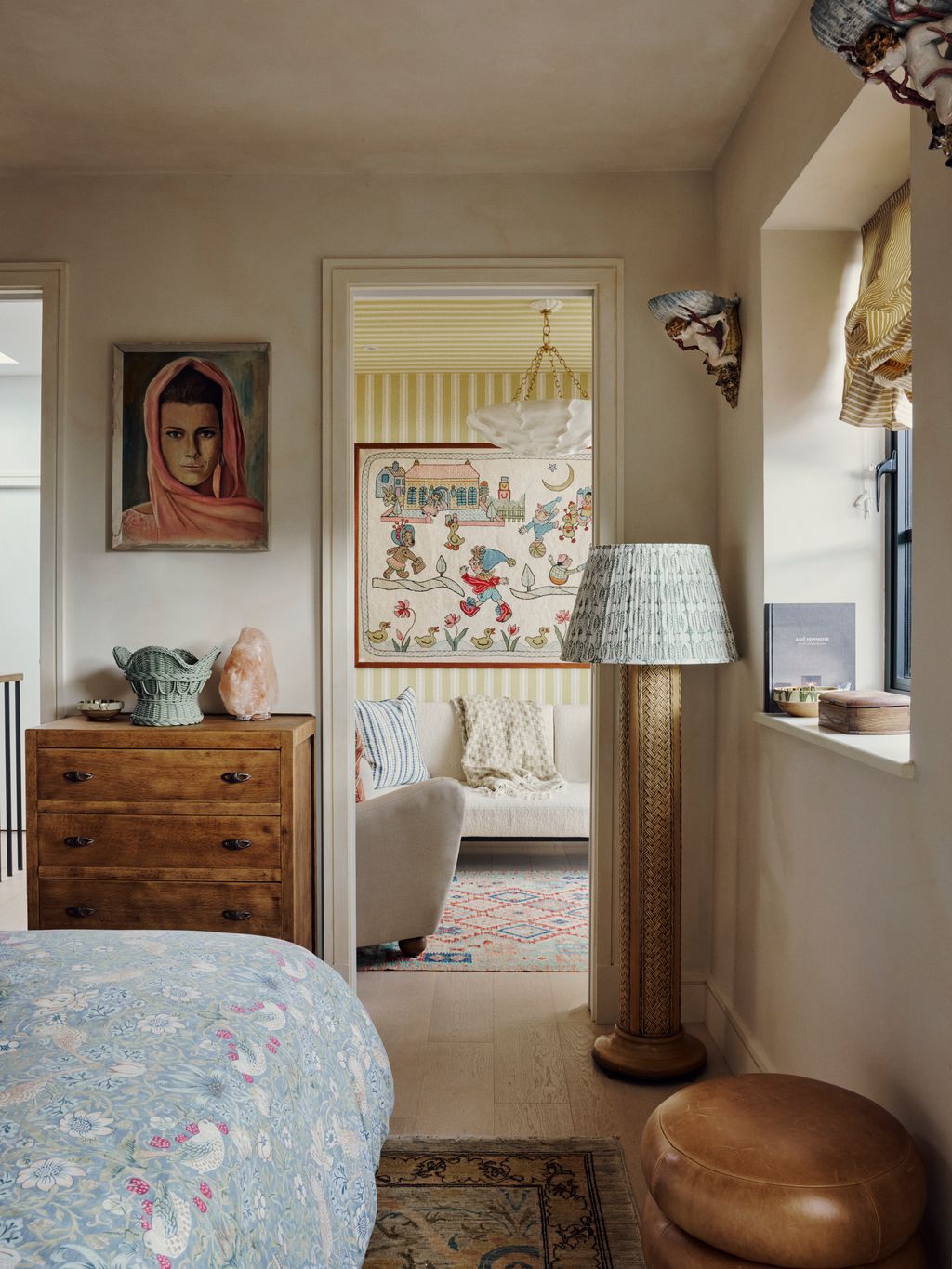 Mark Anthony Fox14/19
On the other side of the primary bedroom, a small room destined to be a nursery lies.
The leather pouf from Soho Home sits underneath antique wall sconces, and a floor lamp from eBay. It is topped off with an OKA lampshade.
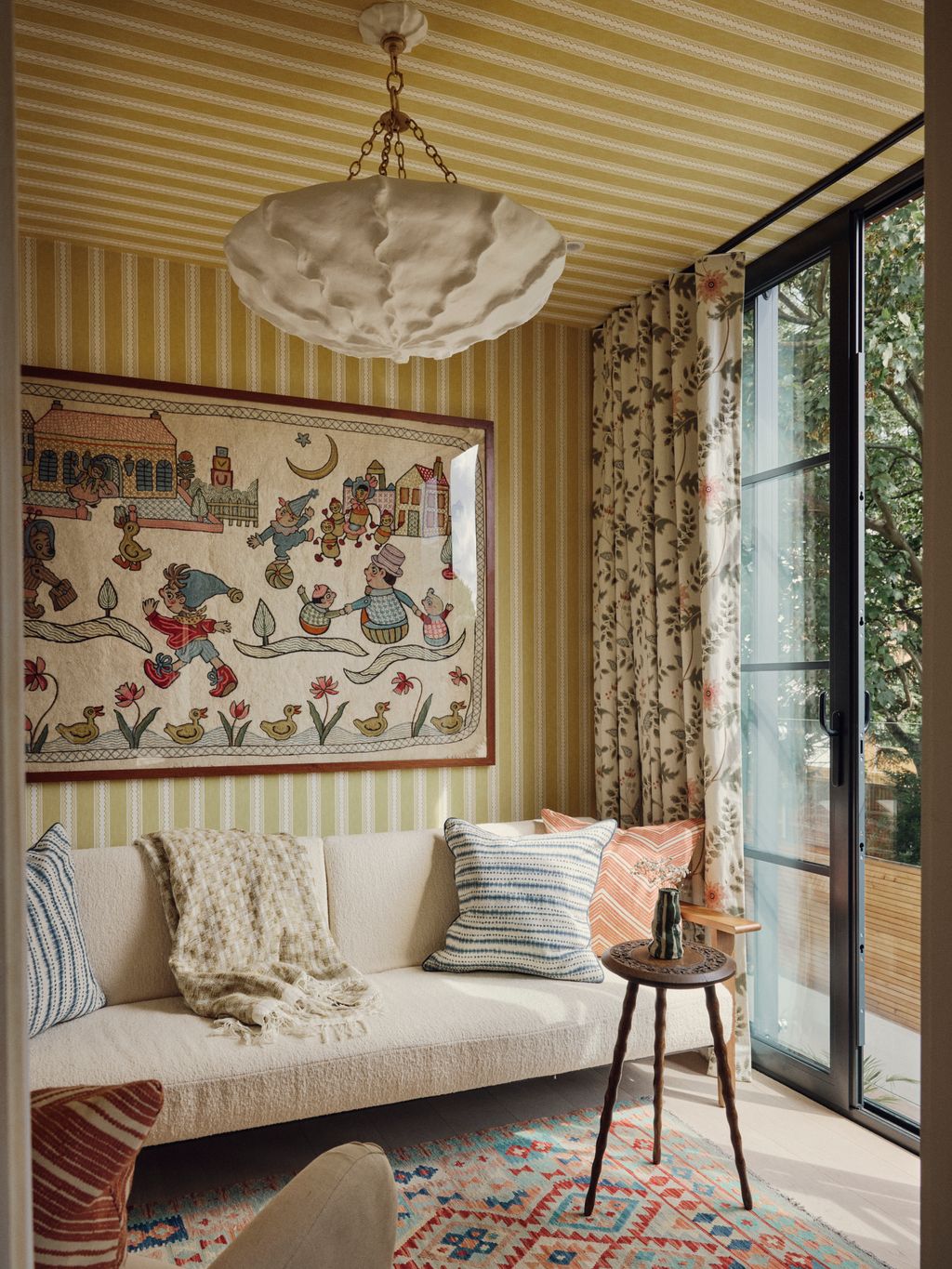 Mark Anthony Fox15/19
The soon-to-be nursery is a masterclass in decorating a fun child's bedroom in a stylish way. The wallpaper is Salvesen Graham's ‘Mustard Stripe’, paired with curtains from the same studio shop.
The sofa is from The Conran Shop, covered in a Yarn Collective ‘Bouclé’.
 Mark Anthony Fox16/19
In the spare bedroom, an antique ceiling light draws the eye immediately. The large bed is from Soho Home. The bedside lamps are antique Portuguese lights from the 1970s, and they side on vintage bedside tables from The French House. The blinds are bamboo blinds from Color and Co.


 Mark Anthony Fox17/19
A welcoming window nook provides seating in the spare bedroom.
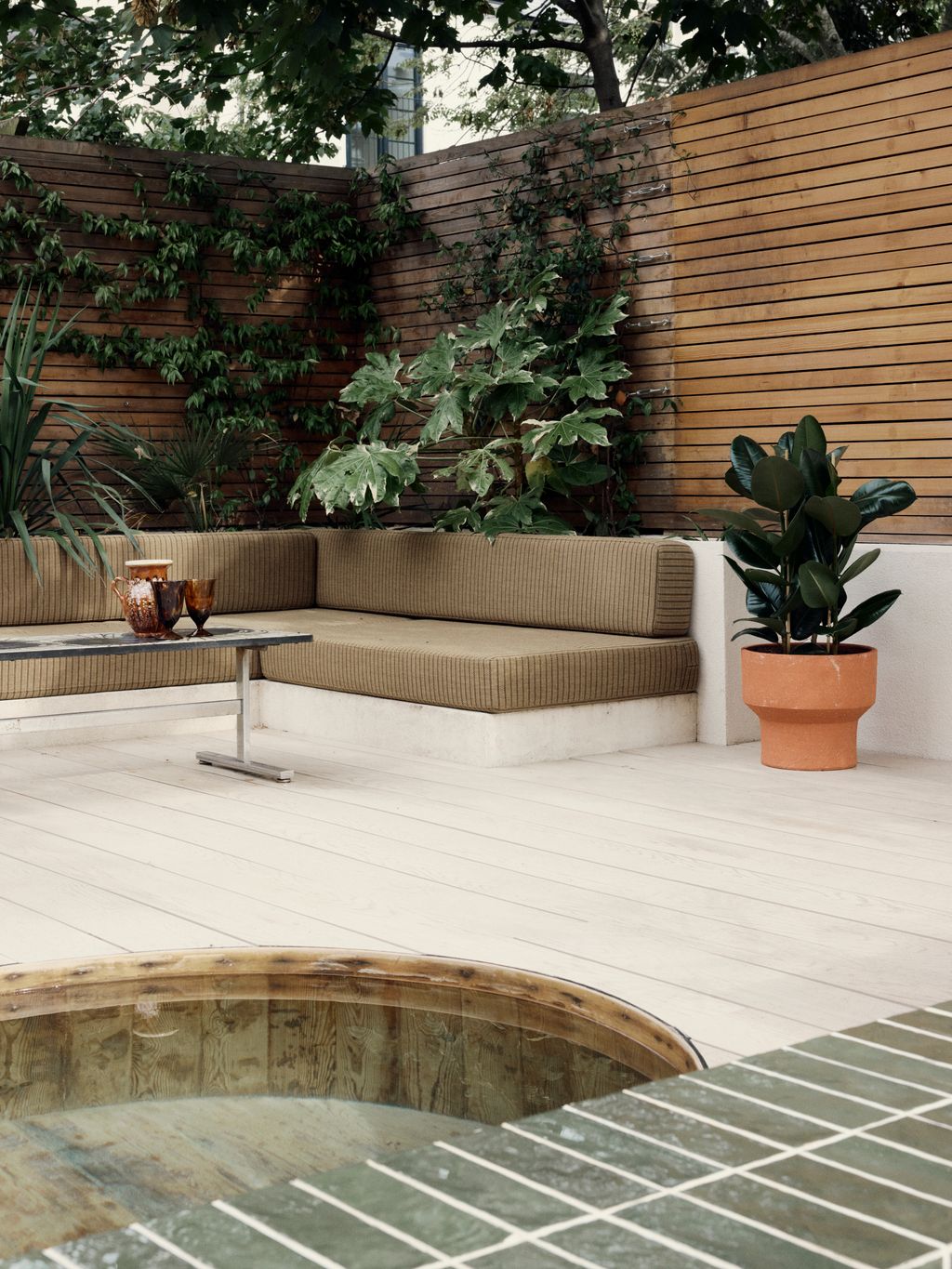 Mark Anthony Fox18/19
The large outdoor space has a contemporary, yet bohemian feel.
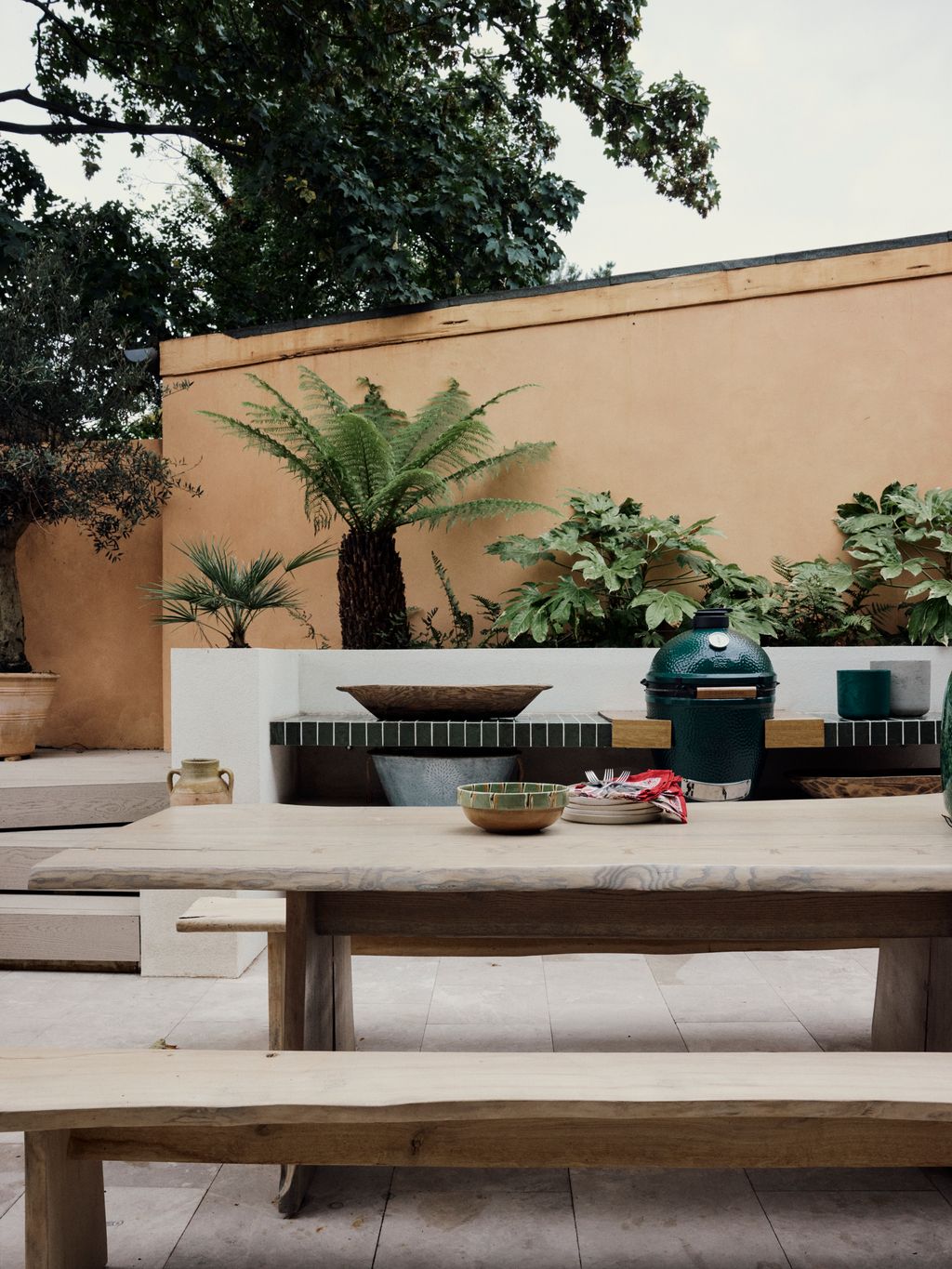 Mark Anthony Fox19/19
The outdoor dining area is perfect for long lunches.


