
A glamorous London home restored with salvaged materials by Retrouvius
I don’t really remember what I said,’ Maria Speake admits, with a cringe. For those who were not there to see the naturally modest Maria accept the award for House & Garden Interior Designer of the Year at a ceremony in London a few months ago, what she said in the Spiegeltent on the South Bank filled with interior designers, was something along the following lines: ‘Remember, most of what we are putting in our projects today will be ripped out in 10 years’ time – so use screws, not glue.’
It was the perfect expression of the responsibility she feels as a designer to be aware of the impermanence of the interiors she creates, and to ensure the materials that go into them can have a life beyond their current use.
Understandably, Maria and her work are most strongly associated with the innovative use of architectural salvage and reclaimed materials. In 1993, she and her now husband Adam Hills founded the company Retrouvius, which specialises in the stuff, and it was not long before Maria started taking on interior-design projects, in which some of their stock inevitably found new homes. But this narrative of Maria as a great sage of repair, reuse and recycling is too limited and sometimes fails to acknowledge her great talent for spatial design, and the quality of detailing and finish present in her work.
Maria and Adam studied architecture at the Glasgow School of Art, where, she says, ‘The tutors were mostly hardcore brutalists who thought that what we were doing was some hippy-dippy messing around with old stuff. We were actively discouraged.’ Nonetheless, the experience stood her in good stead, providing her, for example, with the confidence and ability to reorganise the internal structure of a building to make it work more efficiently.
Such was the case when she took on the project photographed on these pages. It was a classic tale of a Victorian terrace house in north London, in which the kitchen and living spaces were on the lower-ground floor and the bedrooms at the top of the house, with a barely used raised ground floor between them. ‘I am astounded how often people think adding a big extension on to the back of the house will solve their problems, when there’s a huge amount of dead space they could be making more of,’ she explains.
This unused floor became a luxuriantly large, open-plan space for a kitchen and dining area, as well as a little breakfast table at the front of the house and a study at the back where the children do their homework. ‘It means the family can be on the same level without being on top of each other and without schoolbooks on the dining table,’ says Maria.
Off to one side, a repositioned staircase leads to the lower-ground floor, where Maria has carved out space for a large hallway. This separates a smart sitting room and what can only be described as an indoor-outdoor football pitch for the children, with artificial grass extending from the inside to the end of the garden. It is a gloriously whimsical idea for what would otherwise be the darkest and potentially least inspiring part of the house. Meanwhile, one of the upper floors has a large main bedroom and bathroom. Another now houses two bedrooms for the children and one for guests.
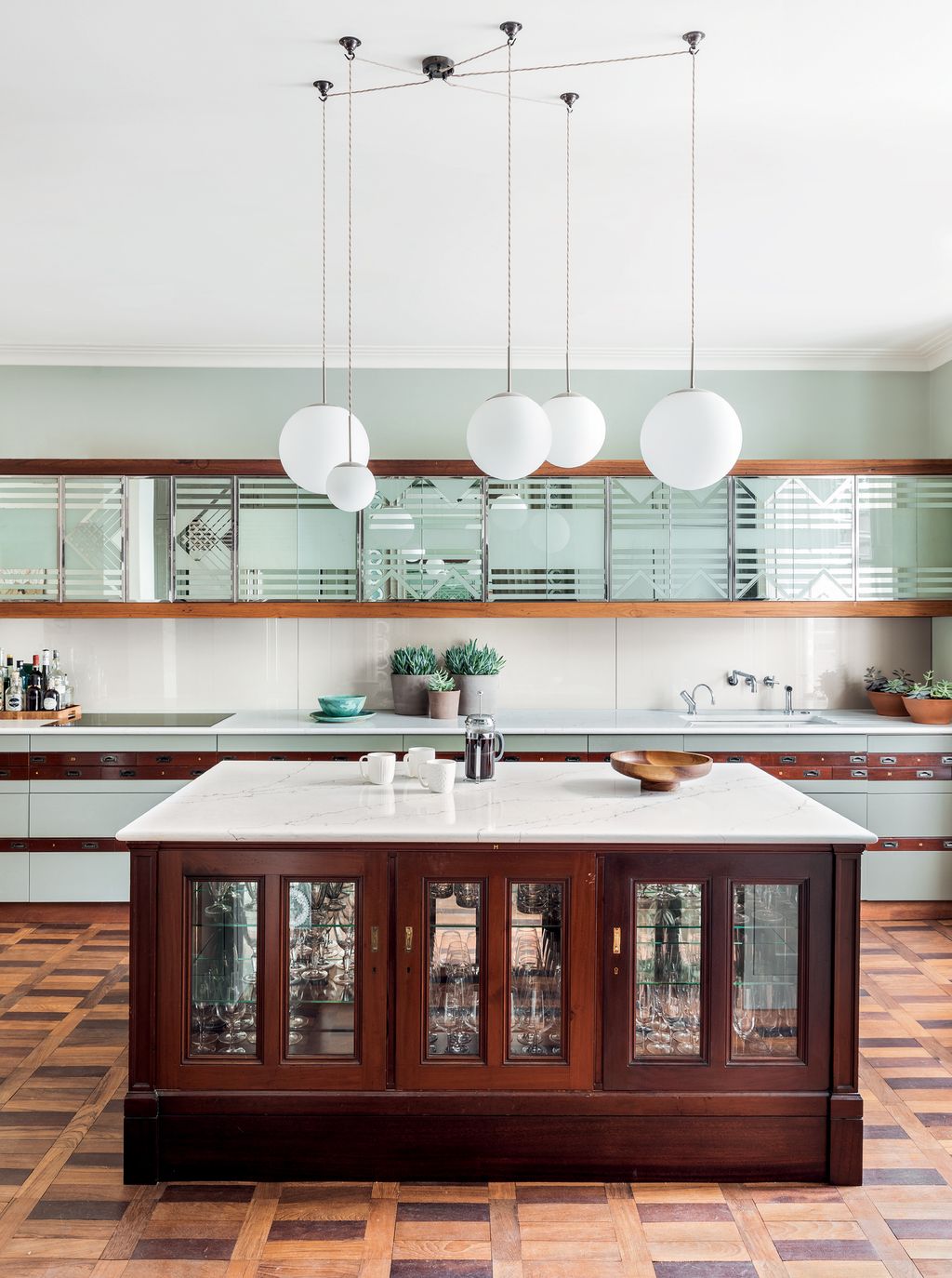
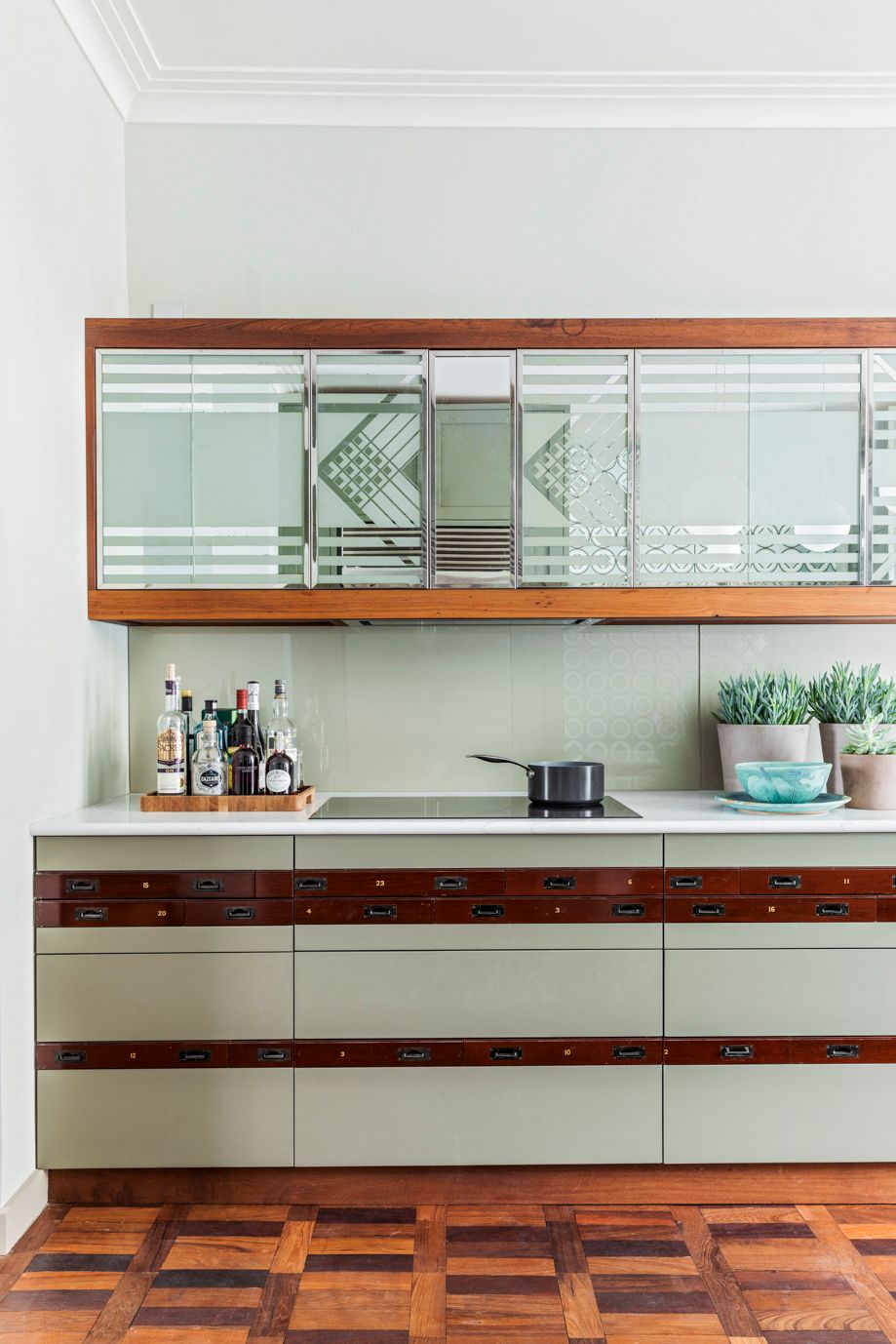
For many, the idea of using salvaged materials has a dangerously close association with the loathsome concept of ‘shabby chic’. But that would emphatically not be the term to describe how Maria turned two mahogany museum cabinets into a kitchen island, with the leftover elements being used as inlays on cupboard fronts elsewhere in the room or along the base of the bespoke iroko dining table made by Retrouvius. Nor the way reams of vintage labels, printed for a Belgian match company, were transformed into a patchwork wallpaper for the downstairs loo. Or how red leather and fabric-covered folio cases from the British Museum have become cladding for cabinet fronts in the study. It is all incredibly modern.
Maria does, of course, incorporate new pieces within her projects and also commissions artisans. This house includes laser-etched oak panels made by Daniel Heath, with whom she works regularly. There are also wallpapers by Neisha Crosland and fabrics by Timorous Beasties. While responsible design is at the forefront of her work, Maria is the first to admit that there are gaps in her own knowledge when it comes to the sustainability and environmental impact of some commercially produced items. She has never professed to be perfect.
‘It’s so sad to think that beautiful, big trees from the other side of the Atlantic made their way here as ship ballast,’ she says. ‘And then, through a huge amount of a designer’s effort and care, became pieces of furniture or cabinetry that did their job for 100 years – and probably could have done it for another 200 – but are so often ripped out in splinters. It’s sort of apocalyptic and so disrespectful.'
 Romain Ricard1/21
In the kitchen, Farrow & Ball’s soft green ‘Mizzle’ paint provides a backdrop for wall units fronted with mirrors salvaged from the entrance hall of Unilever House on London’s Embankment. An array of ‘Café Glass Globe Pendant’ lights from Lampsy hangs above a central island created from two mahogany museum cabinets.
 Romain Ricard2/21
Pocket doors in Neisha Crosland’s metallic ‘Moorish Circles’ wallpaper open onto the hall.
 Romain Ricard3/21
 4/21
4/21


 Romain Ricard5/21
 Romain Ricard6/21
 Romain Ricard7/21
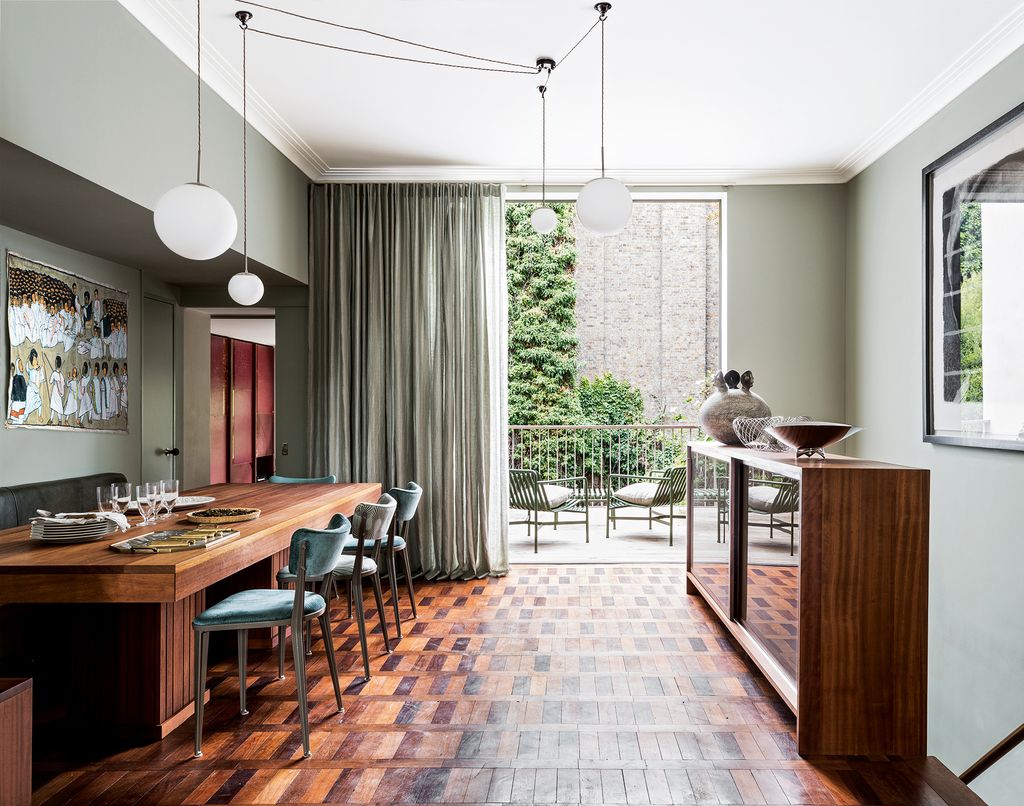
In the dining area, a vintage hand-painted Coptic wall hanging is displayed above an iroko table by Retrouvius. Ernest Race ‘BA3’ aluminium chairs are covered in vintage fabrics and Neisha Crosland’s ‘Hedgehog’ linen.
 Romain Ricard8/21


 Romain Ricard9/21
 Romain Ricard10/21
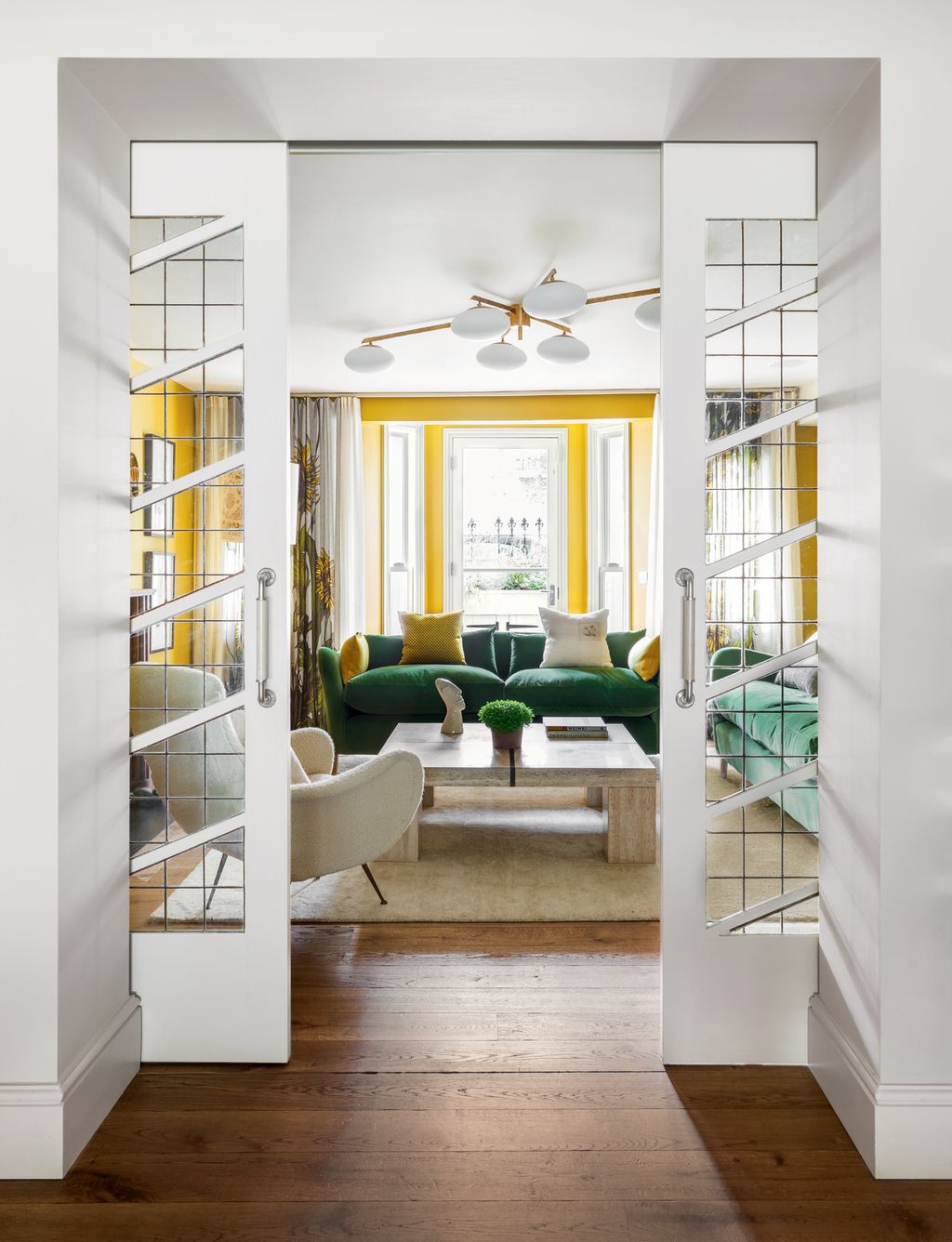
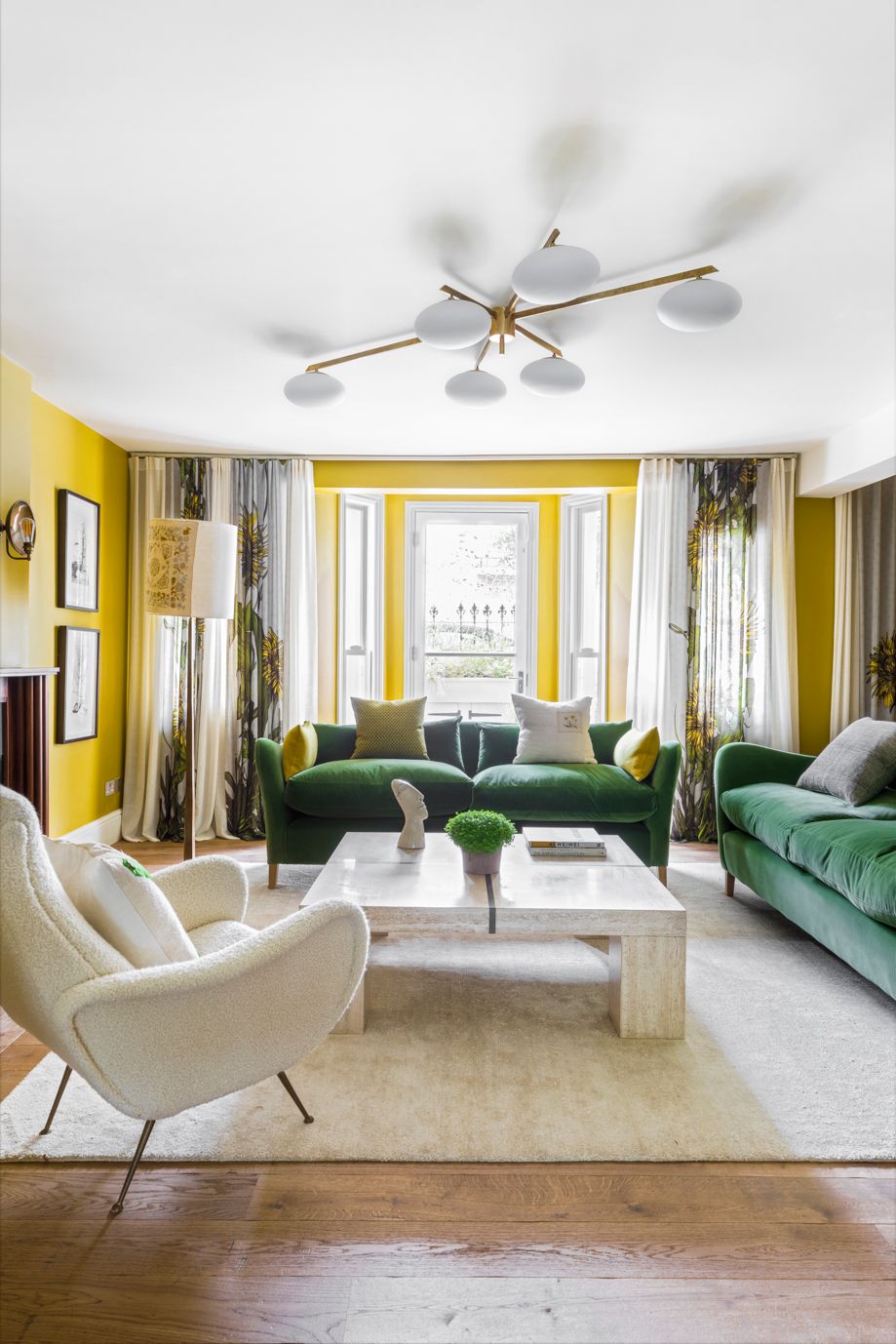
Sliding Thirties chevron doors with chrome handles open into the sitting room, where ‘Moreau’ sofas by Pinch, covered in green velvet from Designers Guild, stand out against walls in ‘Reginald’ paint from Colour Makes People Happy. A ceiling light from Alfies Antique Market makes a statement above an antique travertine and brass coffee table from Stephen Sprake. Full-length curtains in ‘Dandelion’ wool voile by Timorous Beasties pick up on the vibrant colour of the walls. A vintage Italian armchair covered in wool bouclé sits on the ‘Bamboo Silk’ rug from The Rug Company.
 Romain Ricard11/21
 Romain Ricard12/21
Leather folio cases from the British Museum clad the cabinets in the study.


 Romain Ricard13/21
Old Belgian match labels serve as wallpaper in the downstairs loo.
 Romain Ricard14/21
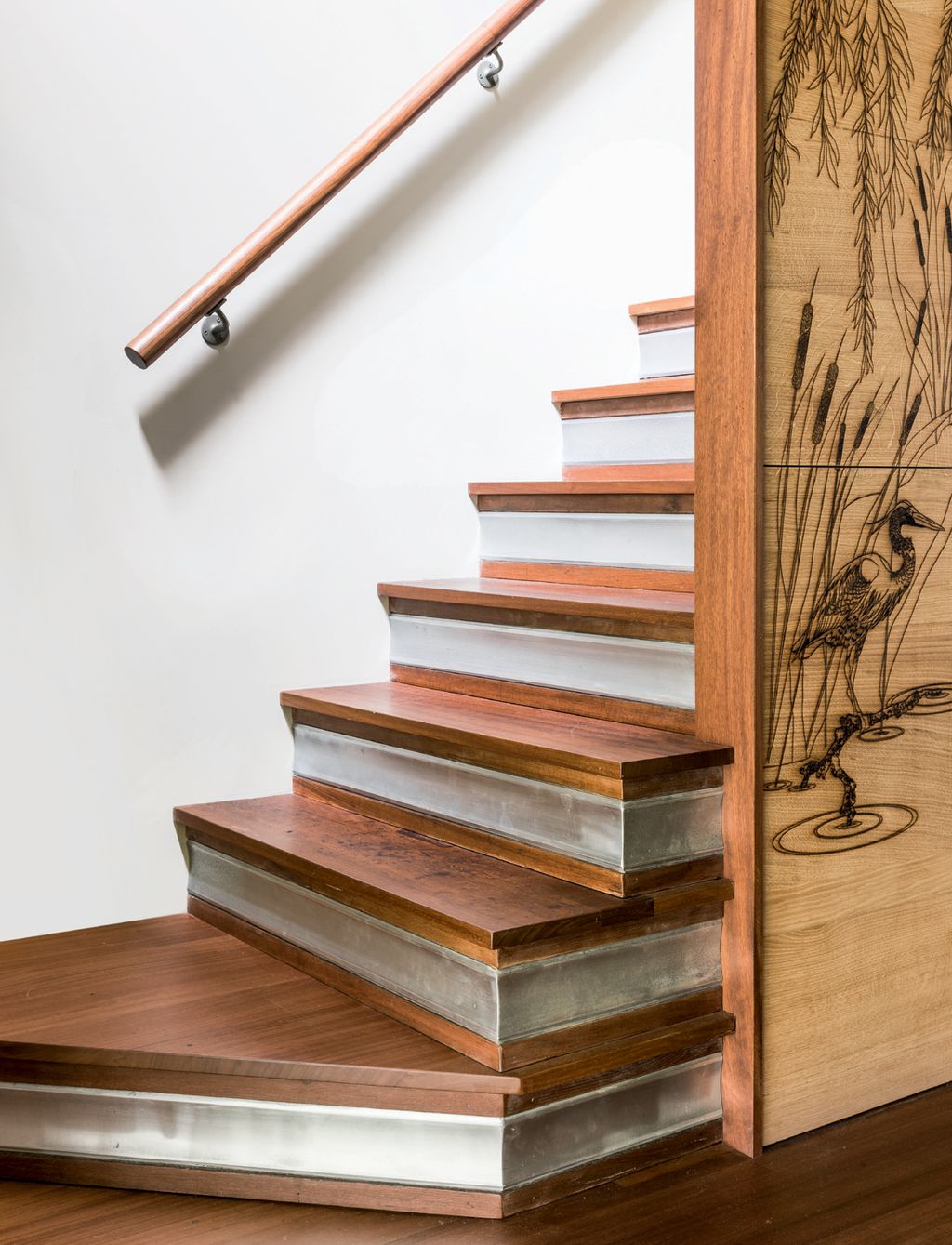
Daniel Heath’s laser-etched oak panels clad a staircase made of aluminium-inlaid teak window frames from the South Bank’s Shell Centre.
 Romain Ricard15/21
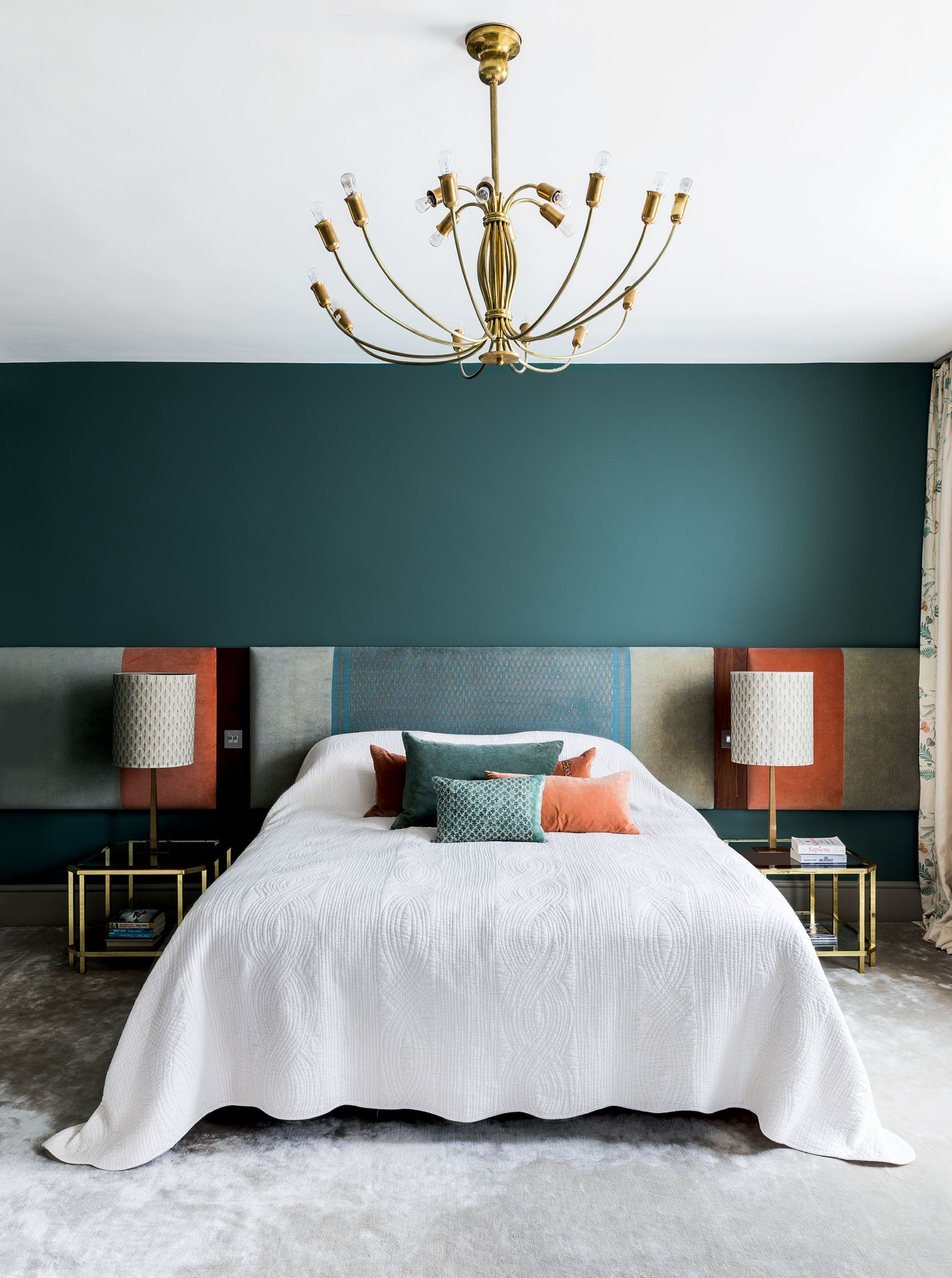
In the main bedroom, cushions on a bedcover from Antiques by Design echo the colours of a headboard, upholstered in a mix of fabrics including hand-dyed velvet by Kirsten Hecktermann. An antique chandelier from Schmid McDonagh picks up on vintage Italian bedside tables with ‘Trafalgar’ lamps by Pooky. The carpet by Jacaranda balances Farrow & Ball’s rich ‘Green Smoke’ paint on the walls.
 Romain Ricard16/21
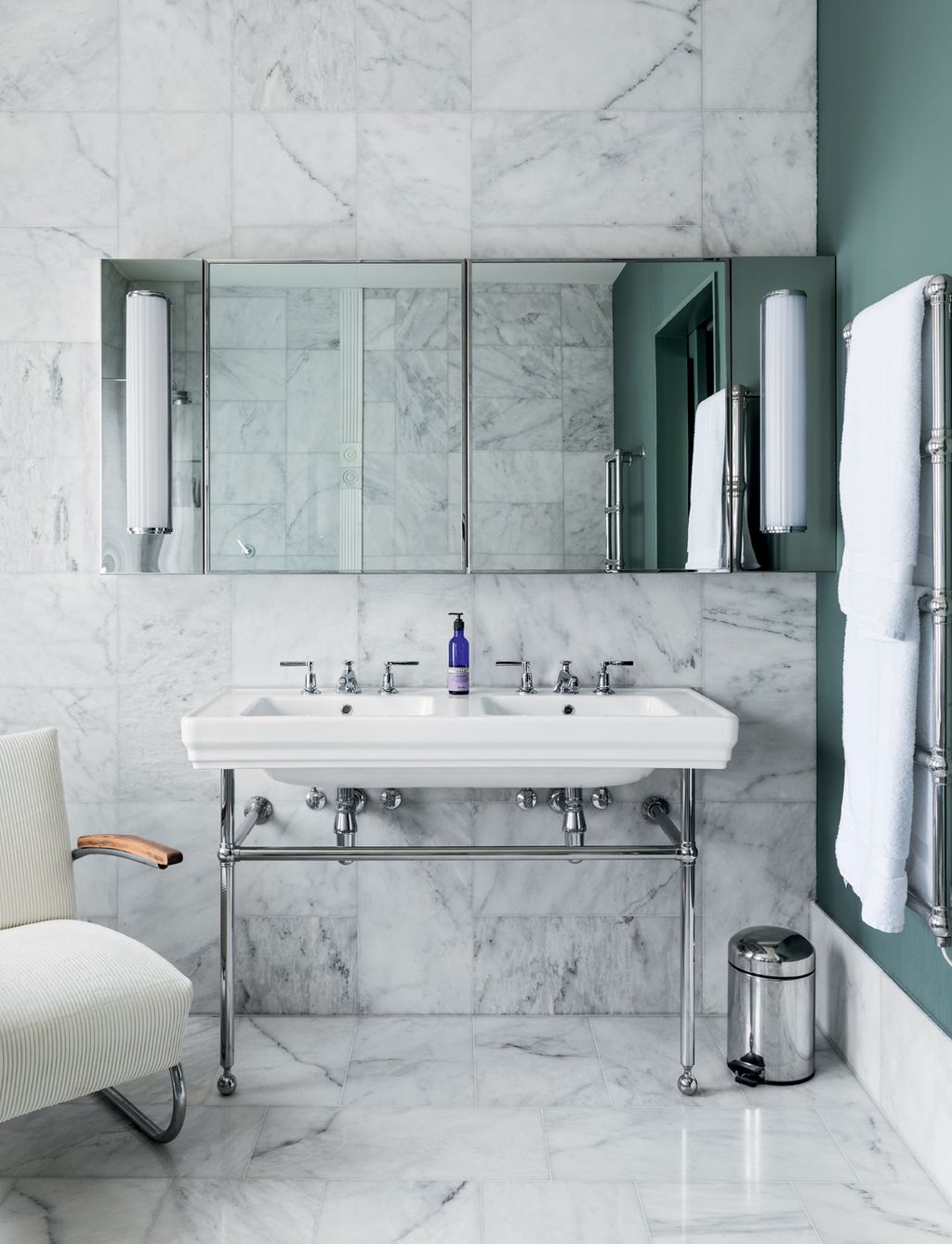
An ‘SS41’ Thonet chair covered in jumbo cream corduroy softens the effect of pale reclaimed and new marble in the main bathroom; the ‘Carlton’ double basin unit is from Aston Matthews.


 Romain Ricard17/21
 Romain Ricard18/21
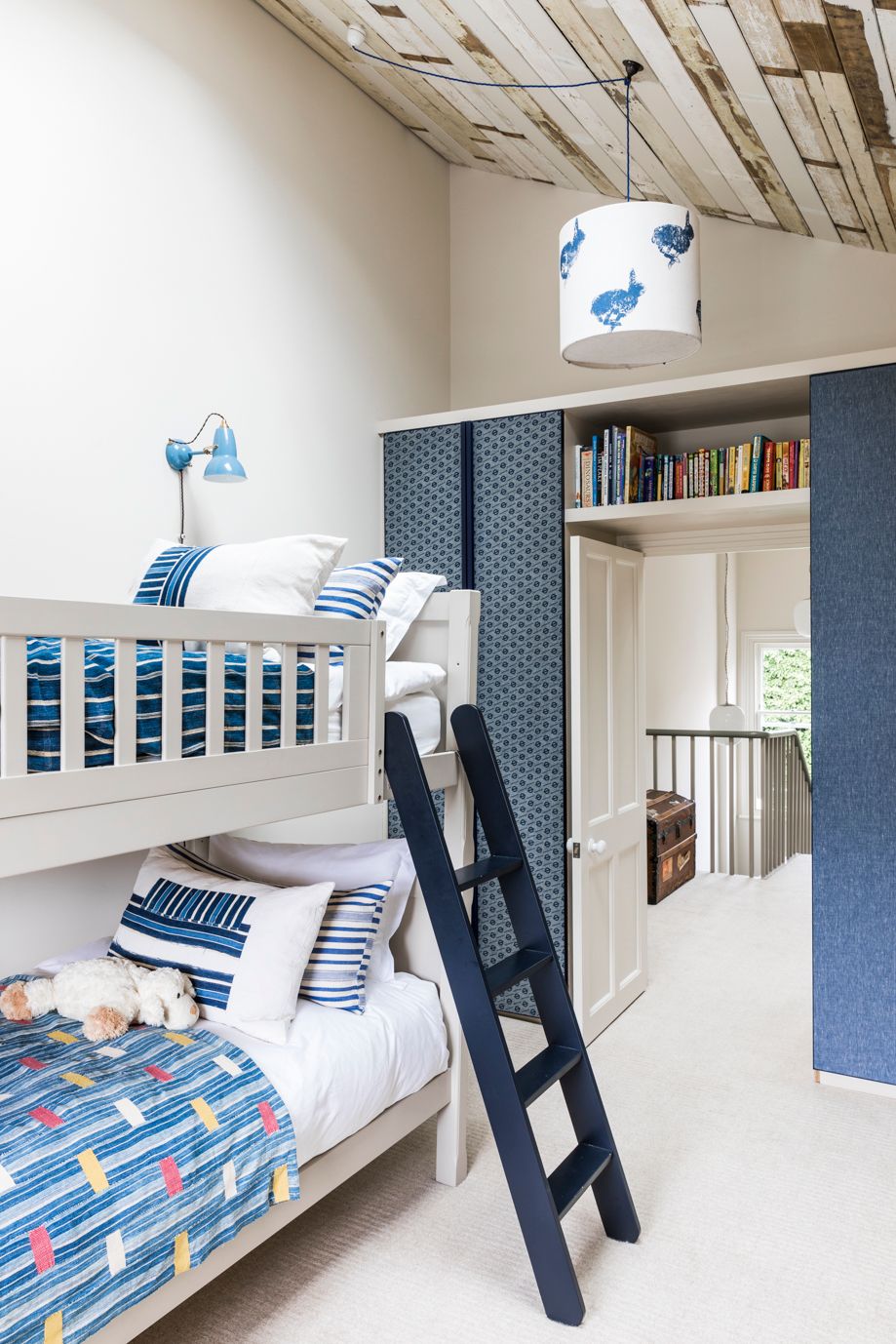
Reclaimed wooden boards extend from one wall onto the ceiling in a child’s bedroom.
 Romain Ricard19/21
 Romain Ricard20/21


 Romain Ricard21/21
Artificial turf by Easigrass extends into the garden from a space on the lower ground floor.


