
The director of Pallant House Gallery is at the heart of Sussex's creative community
In the early 20th century, Sussex played host to an astonishing range of British and international artists and writers. These modernist communities were at the forefront of ground-breaking artistic innovation and, more than 100 years later, the county still occupies a unique position in the history of British art, literature and design. Sussex is home to an abundance of galleries, museums, houses and public buildings, which continue to reflect this spirit of modern creativity. Central to this is Pallant House Gallery in Chichester, which tells the story of Modern British art through the eyes of some of the period’s key protagonists.
In 1977, Walter Hussey retired from his position as Dean of Chichester Cathedral and offered his collection, including works by Barbara Hepworth, Henry Moore, John Piper and Graham Sutherland, to the city of Chichester with the stipulation that it must be shown in Pallant House, a handsome Queen Anne building. ‘The gallery tells the tale of a particular kind of local patronage with international significance and we take great pride in that,’ says director Simon Martin.
During the intervening years, the gallery and collection have developed and expanded. ‘Our main strength is in understanding that British art has never existed within a vacuum, so it’s about showing the influence of – and the connections with – international art,’ he adds.
This summer marked Simon Martin’s 17th year at Pallant House. ‘A life sentence would have been shorter,’ he quips. ‘But I love it. A lot has changed since I started – new buildings, a heck of a lot of exhibitions, books, events, acquisitions and a few promotions – from assistant curator to director in 2017.’ A contemporary wing was added in 2006 and, two years ago, the gallery purchased the original 19th-century coach house at the rear of the building, which promises to expand its offering further. ‘It’s a wonderful place to work.’
It was a tour of Italy, aged 16, that consolidated Simon’s childhood love of art. ‘History of art wasn’t taught at my school, so I did an A Level at an adult education class and then studied it at university.’ He spent a term in Venice as part of his degree, which was followed by an MA at The Courtauld Institute of Art. ‘The day after handing in my thesis, I started work at Pallant House Gallery.’ He has been there ever since.
During his tenure, Simon has curated numerous exhibitions featuring the likes of John Minton, John Piper, Edward Burra and Stanley Spencer, as well as overseeing contemporary installations by artists including Pablo Bronstein, Clare Woods, Cathie Pilkington and Spencer Finch. A key part of his mission is celebrating overlooked artists. This will be put into practice next month with the major show Radical Women: Jessica Dismorr and her Contemporaries, which explores how Dismorr, an artist at the forefront of the avant-garde in Britain, and her female peers engaged with modernist literature and radical politics through their art.
When Simon started work at the Gallery, he was 23 and opted to live in Brighton rather than Chichester. ‘I was moving from the East End of London and I felt I could lure my friends to come and stay in Brighton with the promise of clubbing.’ While his priorities might have shifted – if only a little – over the years, Simon is still besotted by the city. ‘It is one of the most cosmopolitan places in the country – filled with writers, designers and interesting people living alternative lives.’
In 2012, Simon moved into a flat in a Regency building. ‘It was a disaster when I bought it,’ he says, explaining it was the view of the sea beyond the rooftops that convinced him to make an offer. ‘In the Sixties or Seventies, someone had taken out the original fireplaces and doorways, and installed a not very nice kitchen,’ he recalls. ‘I set about replacing everything. I added reclaimed Victorian panelling in the kitchen and sitting room, changed the light switches to round Bakelite ones and stripped away layers of gloss paint in the stairwell, even finding dark, gothic block-printed wallpaper under the stair rail.’ The flat is now a far cry from the gloomy picture Simon paints. He cites folk art, mid-century design, artists’ and designers’ homes, Kettle’s Yard in Cambridge and all kinds of collectors as among his influences. A priority was installing enough shelving to accommodate his art books, chronologically ordered from ancient to contemporary in a reflection of his diverse interests: ‘The loft is also full of books.’
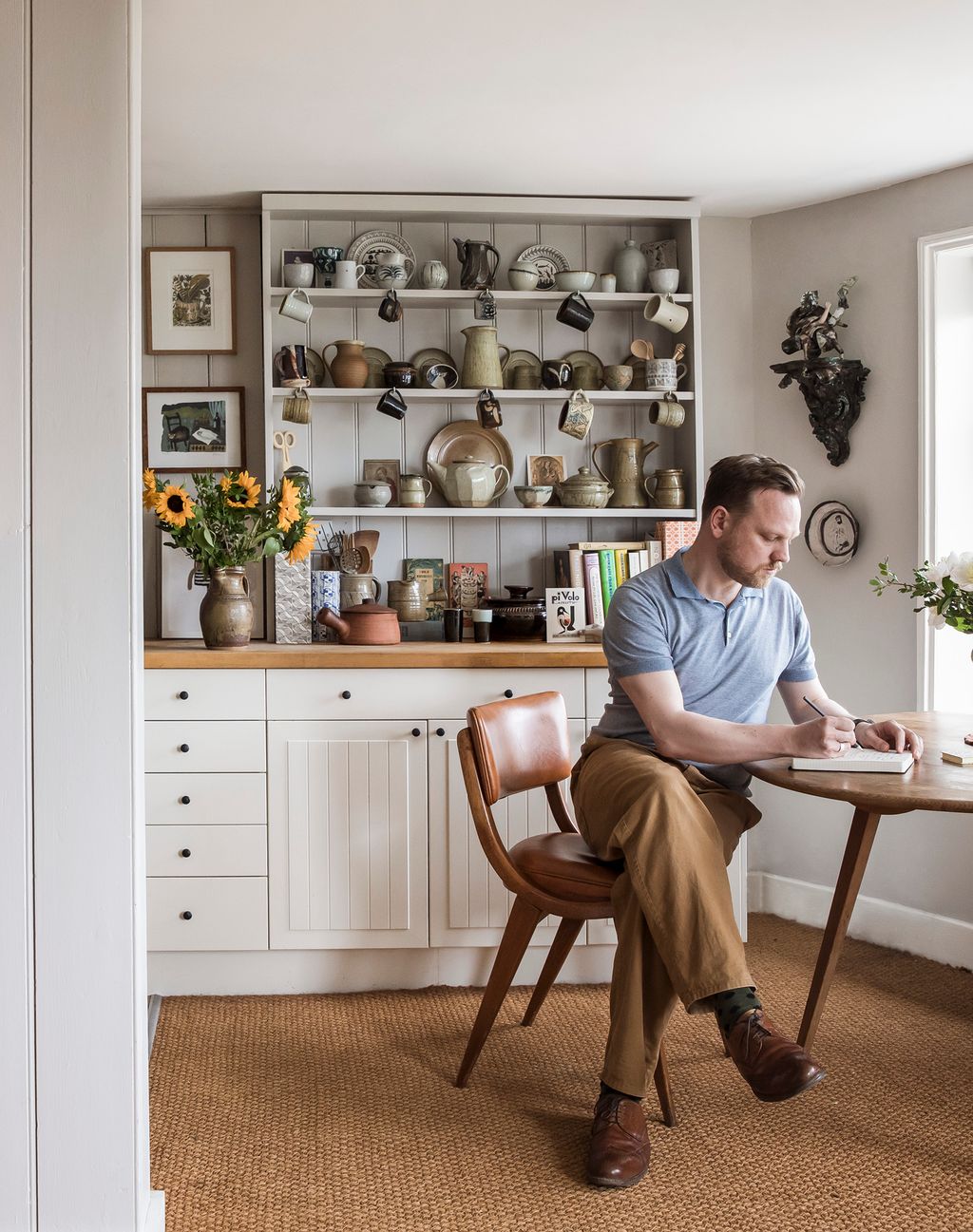
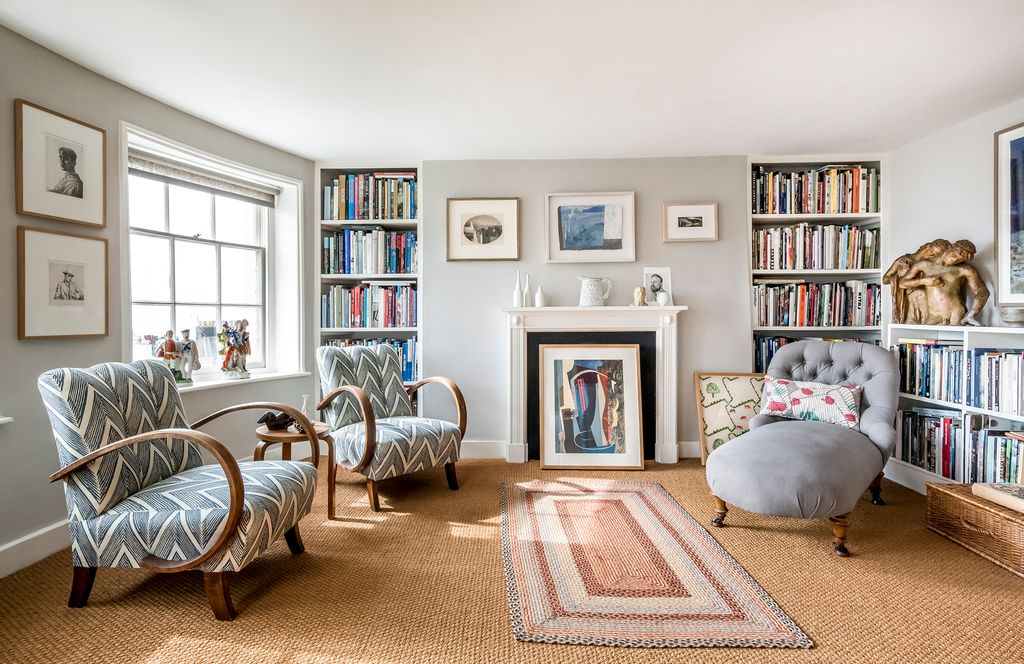
Simon is particularly proud of his pair of bentwood chairs by the Czech designer Jindrich Halabala. ‘I bought them from Hand of Glory Antiques & Interiors, which had sourced them from the film set of The Little Stranger, and I had them re-covered in a 1935 Enid Marx fabric called “Zig Zag”.’ He is also partial to textiles designed by artists. Unsurprisingly, his art collection is largely rooted in 20th-century Britain, with prints by Wyndham Lewis, Eric Gill, John Piper and Peter Blake. These are interspersed with works by friends such as Angie Lewin, Ed Kluz and Kate Jenkins, and an impressive collection of studio pottery. ‘Over the years, I’ve amassed pieces by Emmanuel Cooper, Chris Keenan, Shozo Michikawa, Adam Buick, Richard Batterham and many more.’
The potter Emmanuel Cooper was an early mentor to Simon. ‘He realised I was interested in ceramics and got me writing for Ceramic Review. I’ve acquired many things relatively economically, finding them in flea markets and auctions,’ says Simon. ‘For me, a lot of the pleasure comes from the sleuthing.’
As his flat makes clear, Simon is an intuitive and curious collector. ‘One of my quirkier interests is tracking down artists’ bookplates. It’s like a more nuanced version of stamp collecting, but what fascinates me is that everyone from Paul Nash to Keith Vaughan and Rex Whistler seemed to make them. They are essentially a private thing and, although difficult to find, they say so much about the artist who was commissioned and the individual whose book it is in.’
Like his Sussex forebears, Simon is part of an enviably creative community. Pallant House Gallery and its neighbouring museums and galleries are fine examples of the cultural riches in this patch of south England. So it is fitting that Simon’s flat is testament to both his historical knowledge and his desire to support makers and artists working today.
 Taran Wilkhu1/18
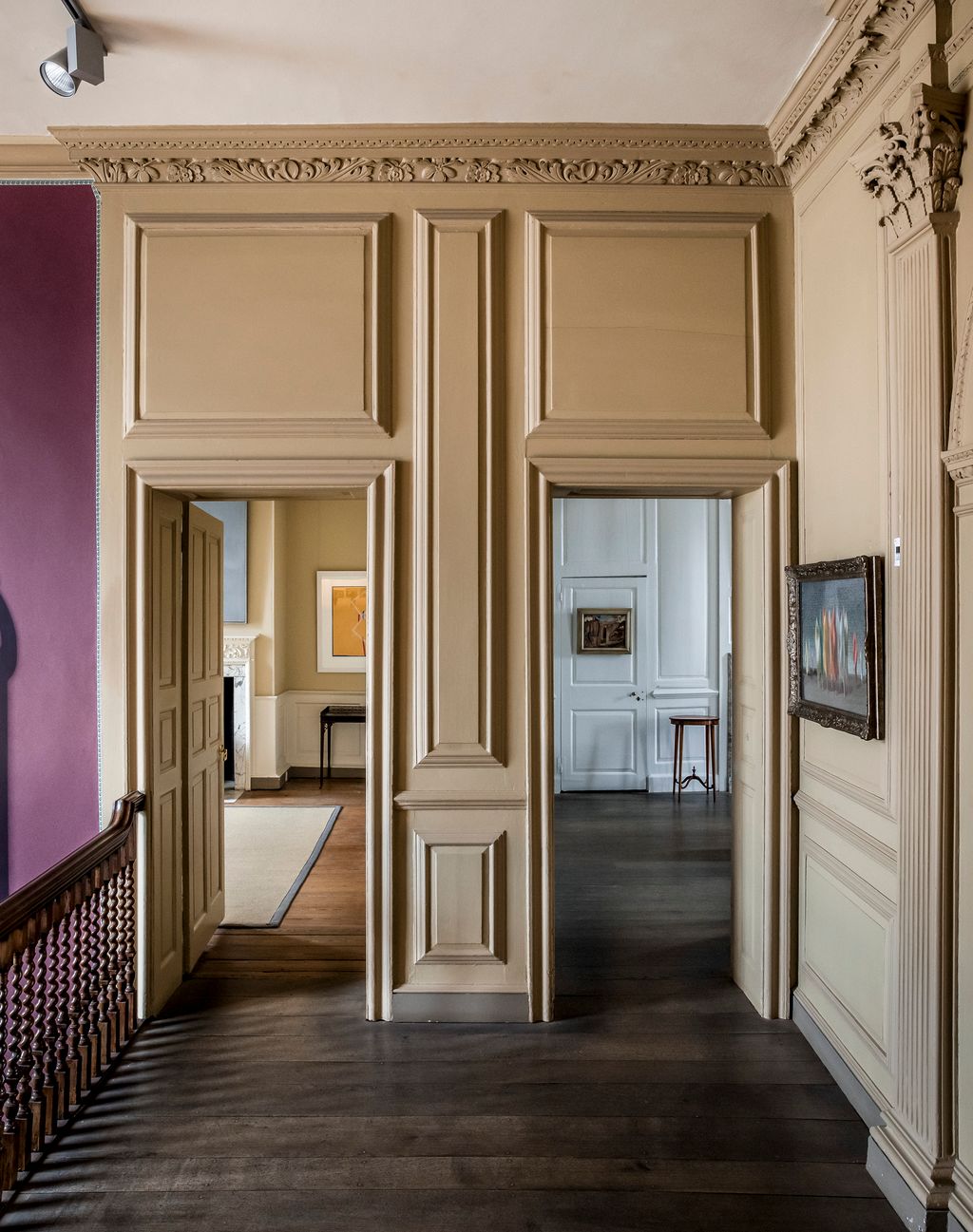
A view of the panelled interior at Pallant House. The gallery’s collection of Modern British art is displayed throughout the 1712 townhouse.
 Taran Wilkhu2/18
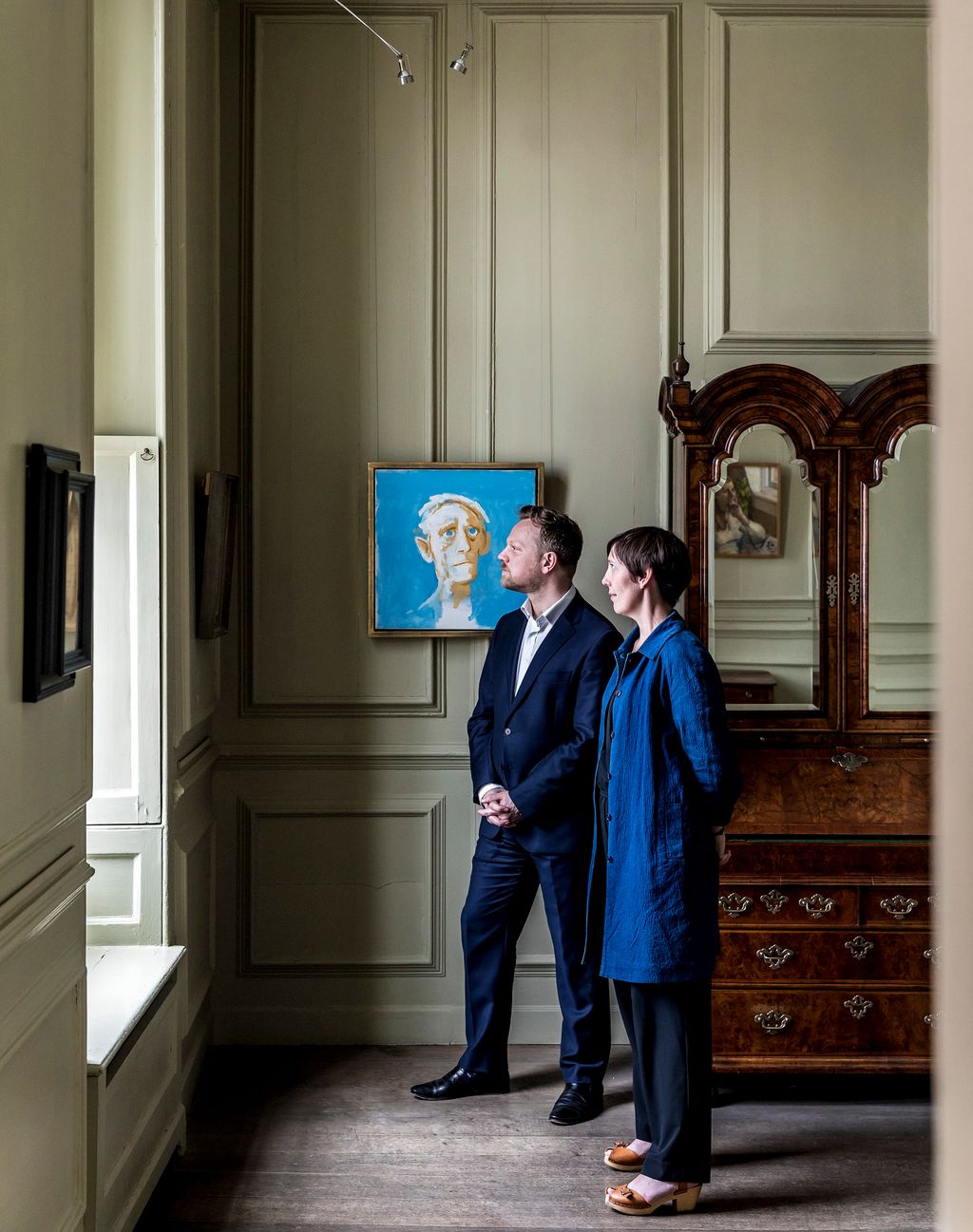
Simon in Room 8 with Clare Hindle, the gallery’s head of development. The painting is by Victor Willing, late husband of the artist Paula Rego.
 Taran Wilkhu3/18
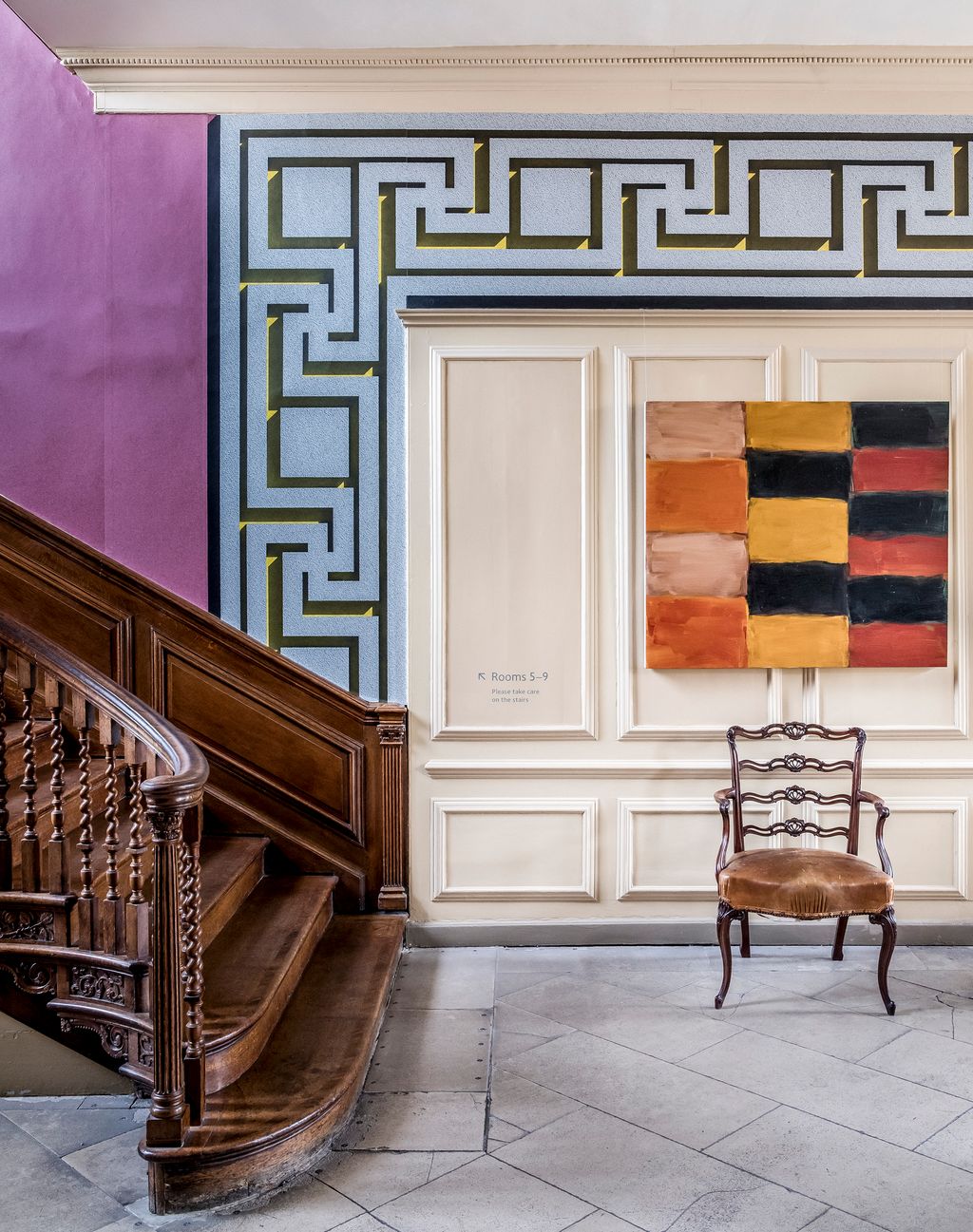
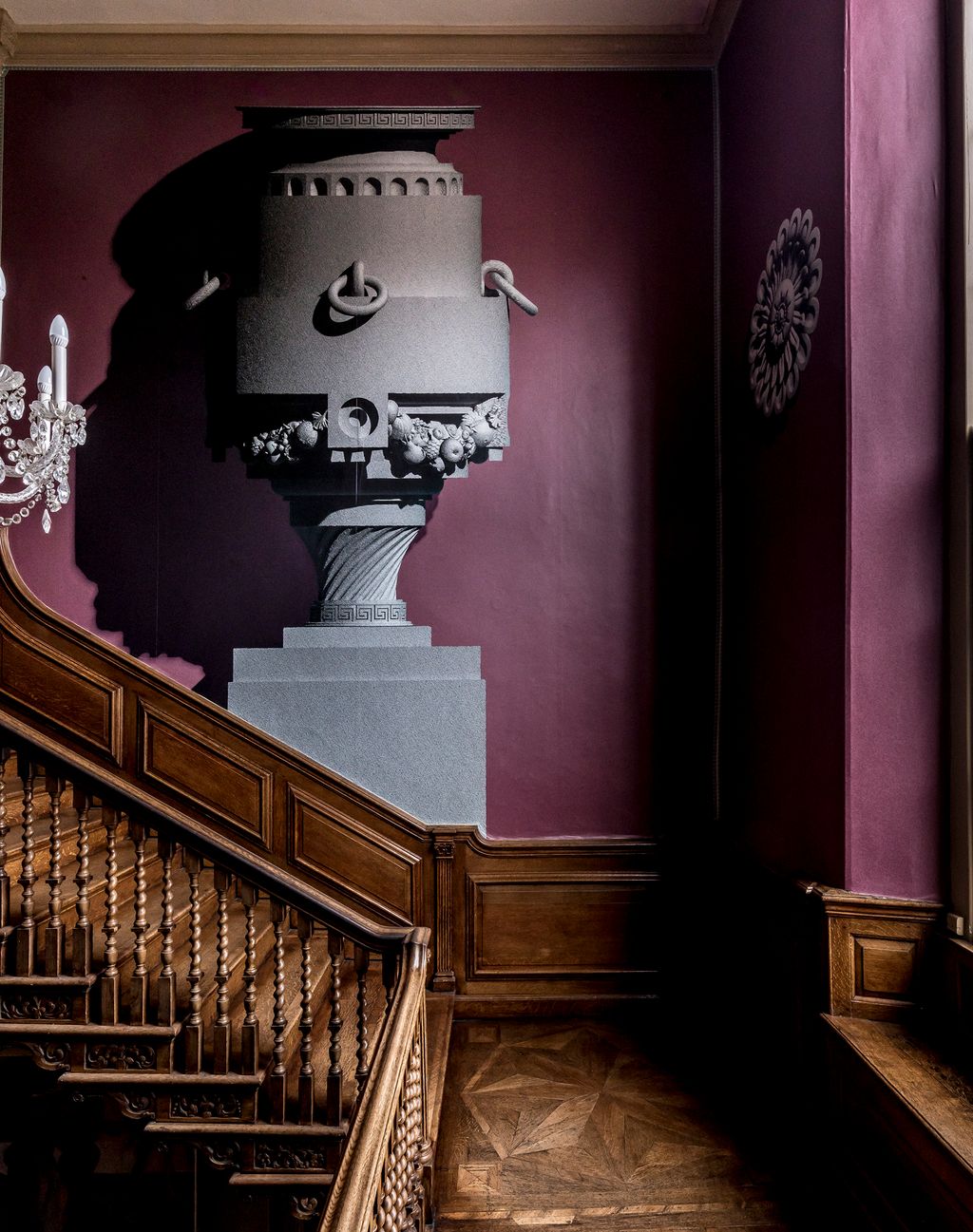
Pablo Bronstein’s Wall Pomp installation frames Sean Scully’s Pink Dark Triptych, 2011, in the entrance hall of the gallery.
 Taran Wilkhu4/18
Pablo Bronstein’s Wall Pomp wallpaper installation makes a statement on the gallery’s 18th-century staircase


 Taran Wilkhu5/18
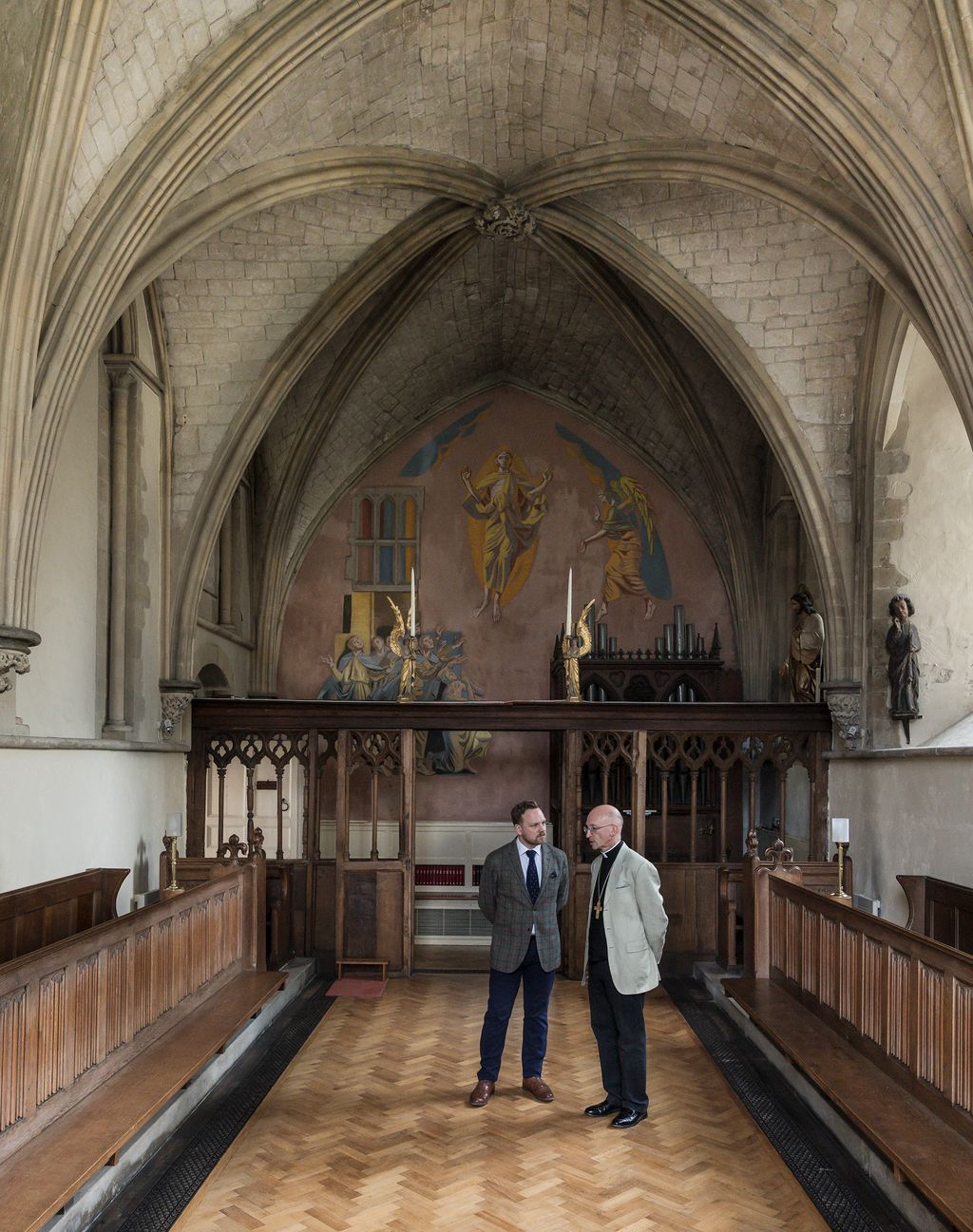
Simon with Bishop Martin in the chapel of the Bishop’s Palace in Chichester, in front of a mural by Hans Feibusch.
 Taran Wilkhu6/18
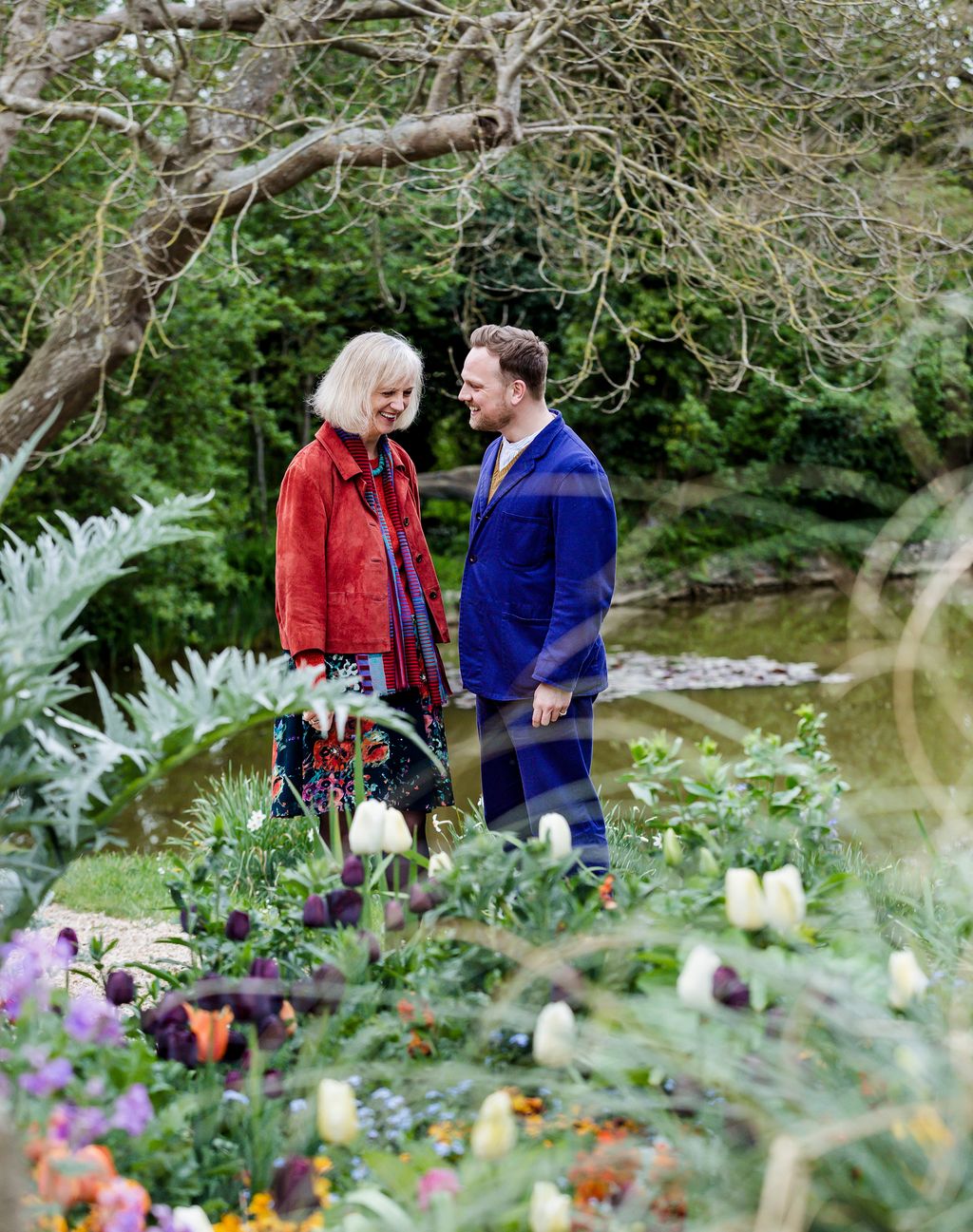
Virginia Nicholson, granddaughter of Vanessa Bell and president of The Charleston Trust in the gardens at Charleston, East Sussex, where Simon is a trustee.
 Taran Wilkhu7/18
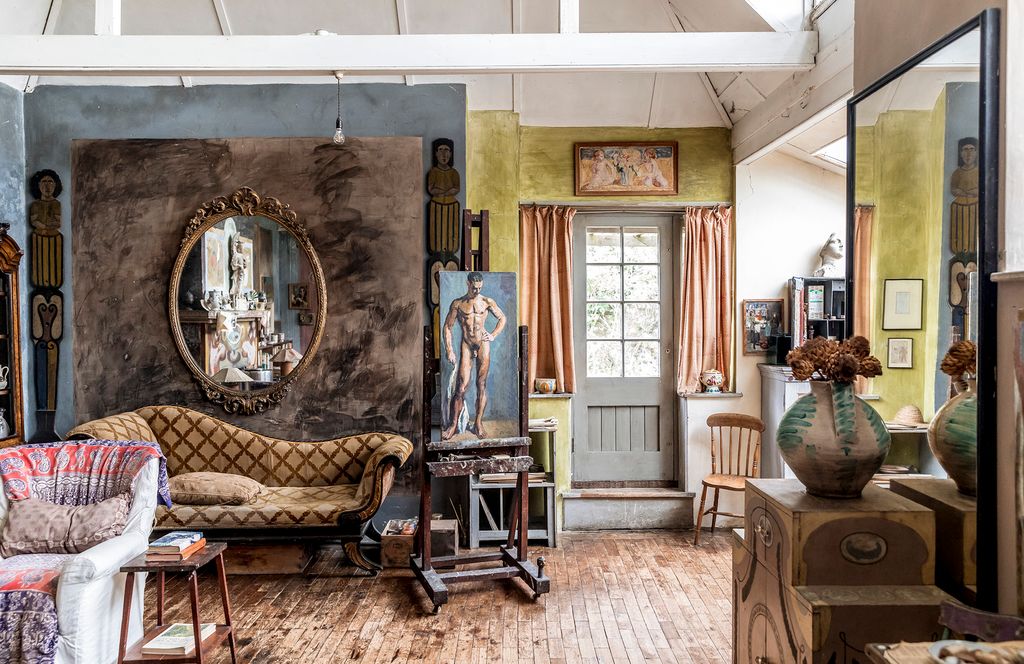
The studio at Charleston, used by Duncan Grant until his death in 1978, with one of his male nudes.
 Taran Wilkhu8/18
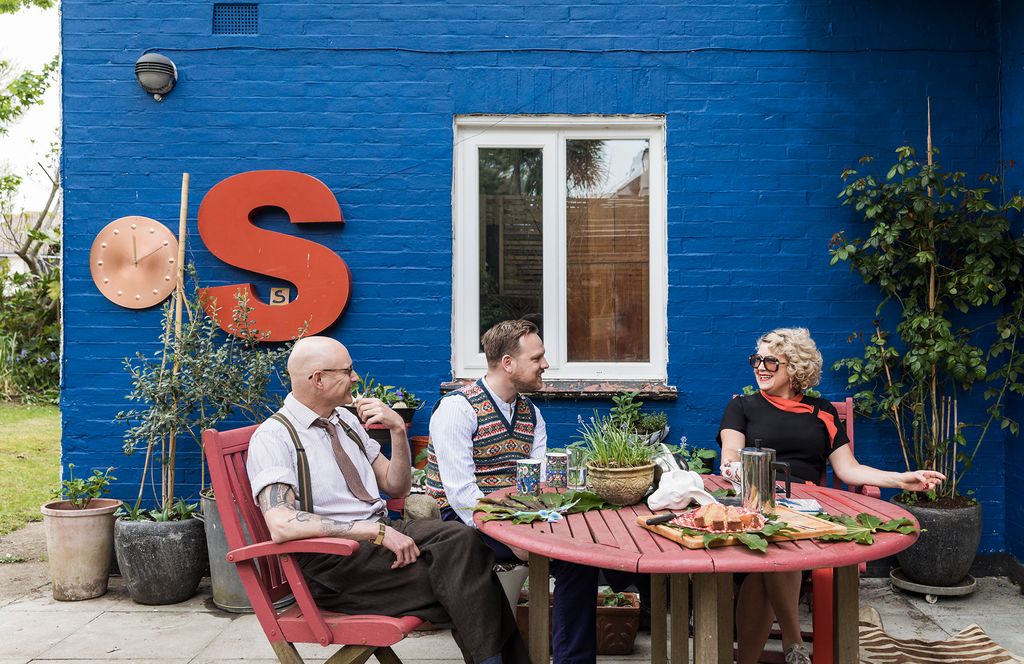
Simon enjoys lunch with friends Daren Kay and designer Sarah Arnett, in her Brighton garden.


 Taran Wilkhu9/18
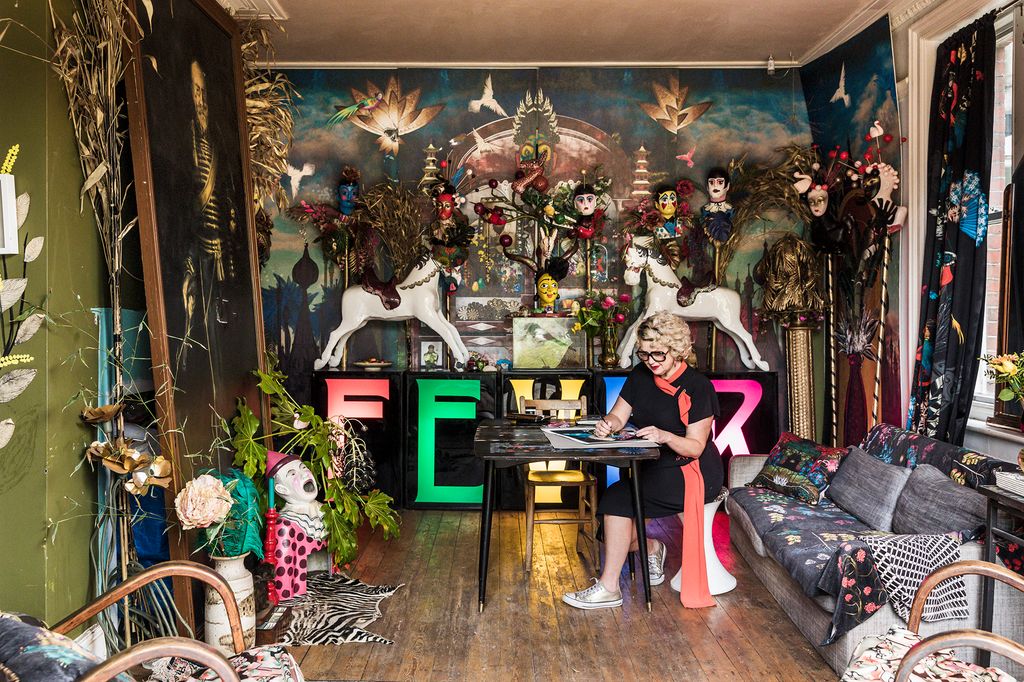
Sarah working on collage-based wallpaper and fabric patterns, which draw on the exoticism of the Royal Pavilion, in her eclectic studio.
 Taran Wilkhu10/18
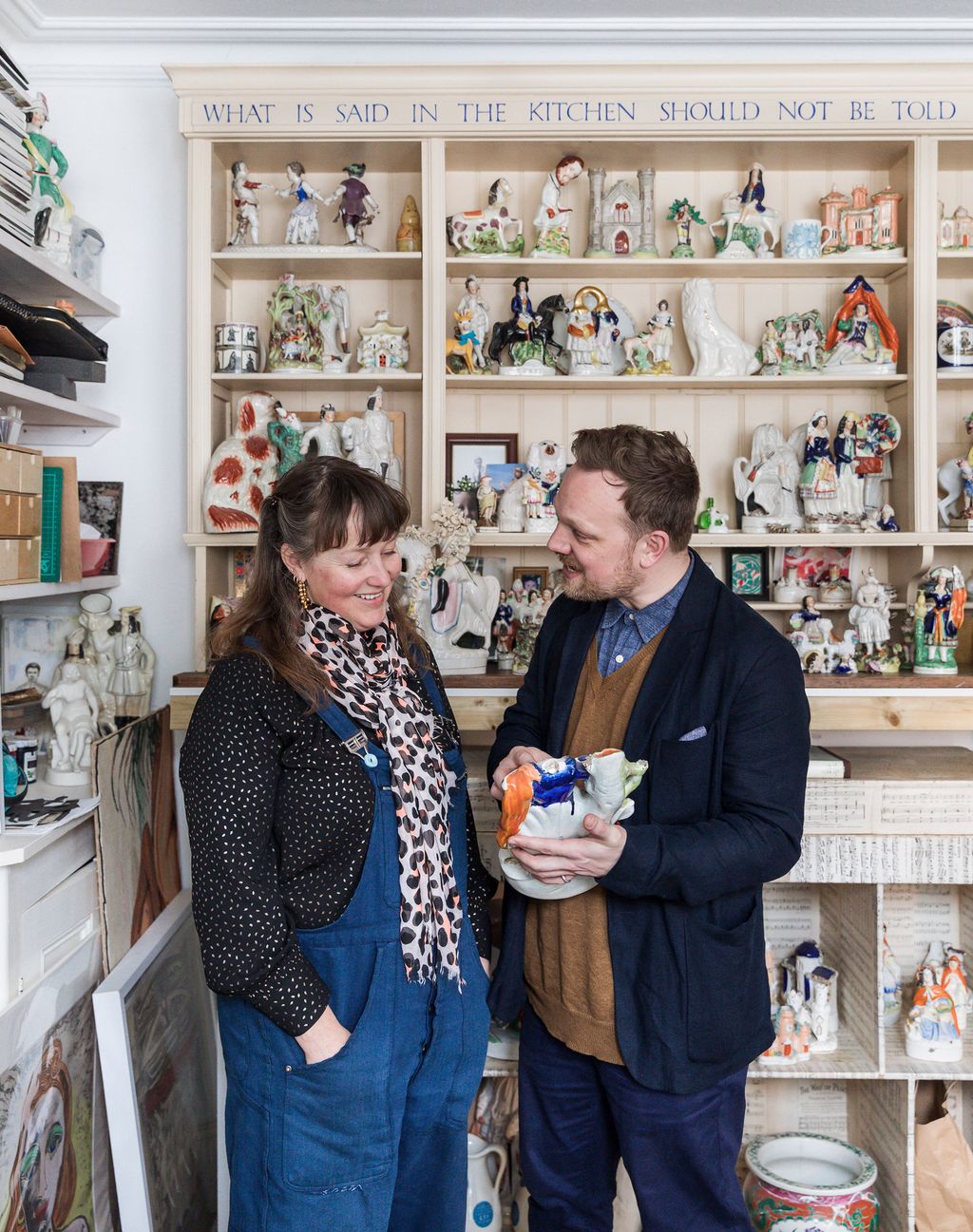
Simon with ceramics restorer Amy Douglas.
 Taran Wilkhu11/18
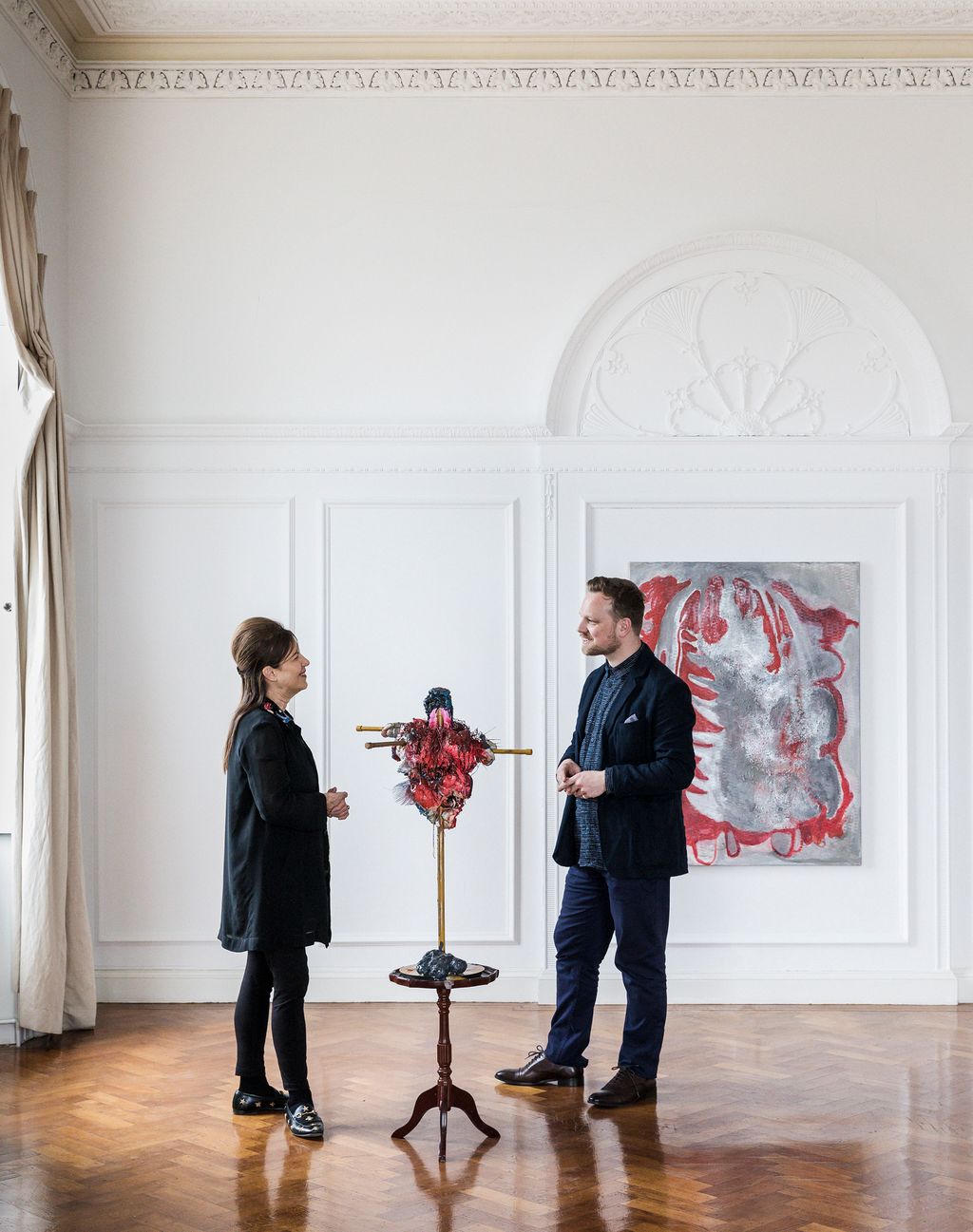
Simon and Maureen Paley at her gallery, Morena di Luna in Hove.
 Taran Wilkhu12/18
Simon at his Ercol kitchen table.


 Taran Wilkhu13/18
Prints by Edgar Holloway, John Piper and Edward Bawden, and a Jeremy Gardiner watercolour hang in Simon’s sitting room.
 Taran Wilkhu14/18
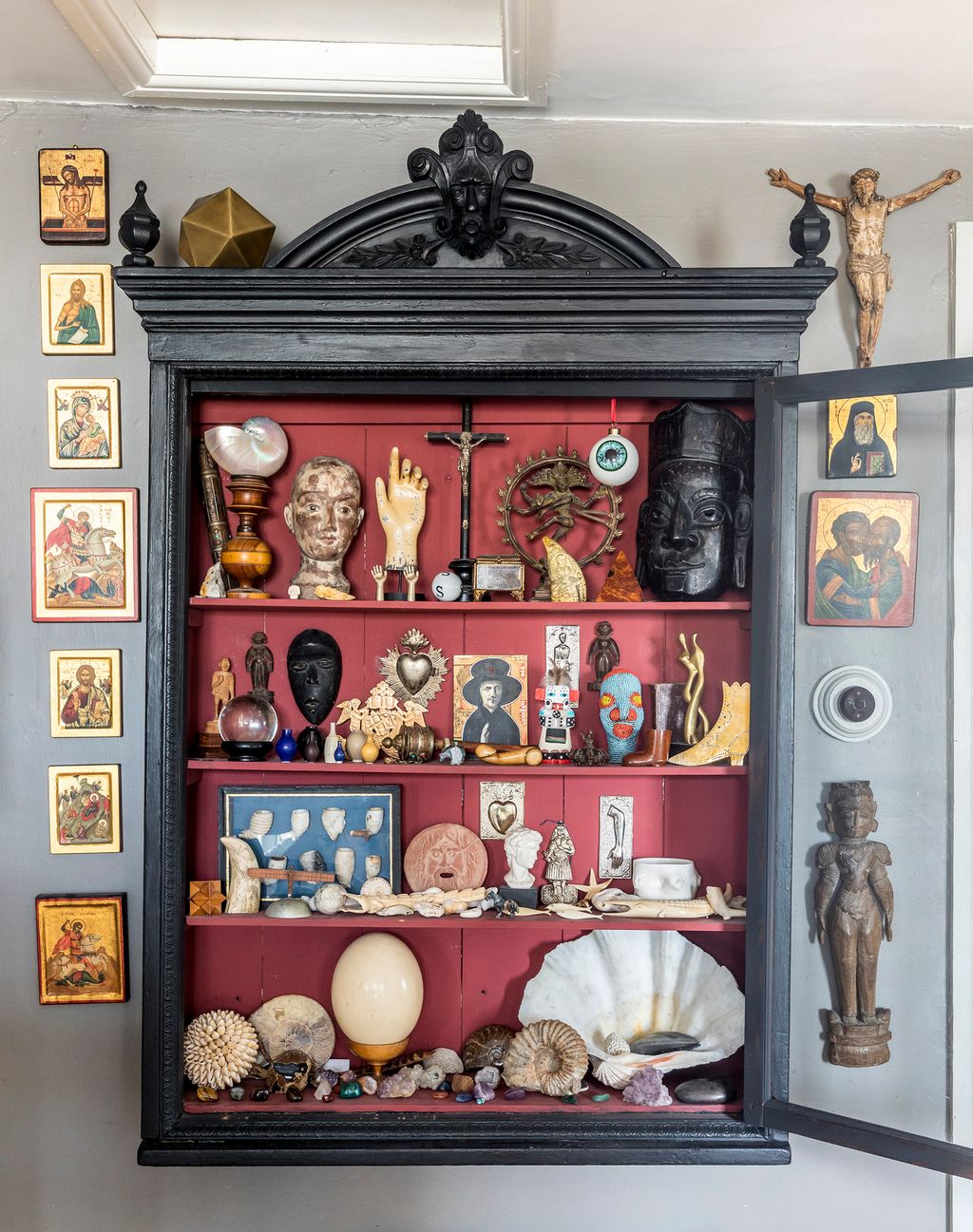
A Victorian shop cabinet ‘pimped up’ with a carved wood finial from Brighton flea market and filled with religious and magic artefacts.
 Taran Wilkhu15/18
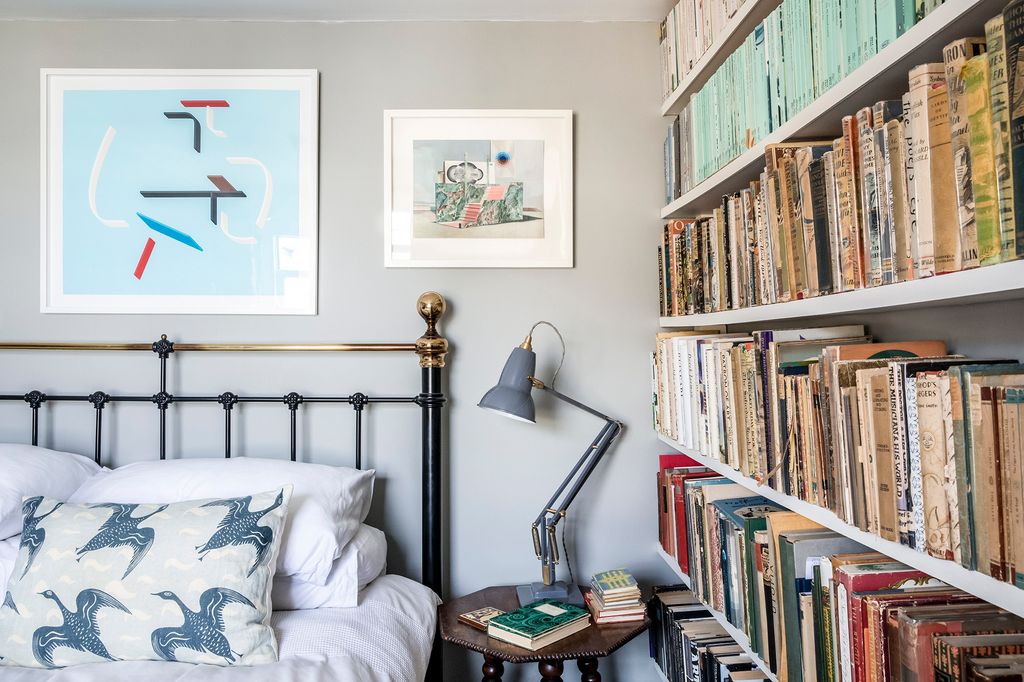
A Toby Paterson screenprint and Louise Bristow gouache hang above Simon’s bed with cushions in ‘Black Goose’
by EQ Nicholson.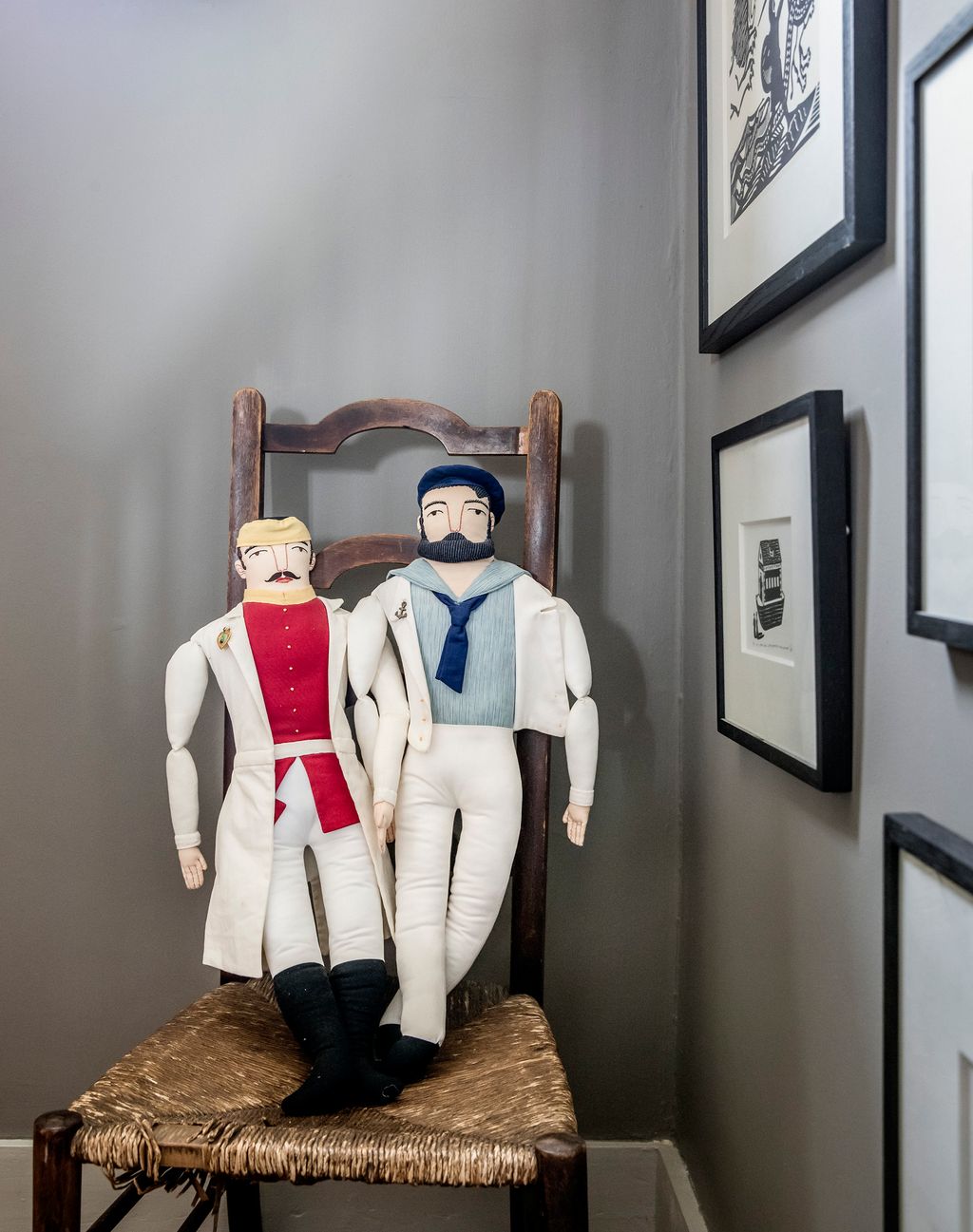 Taran Wilkhu16/18
Georges and Bertie by the American dollmaker Mimi Kirchner.


 Taran Wilkhu17/18
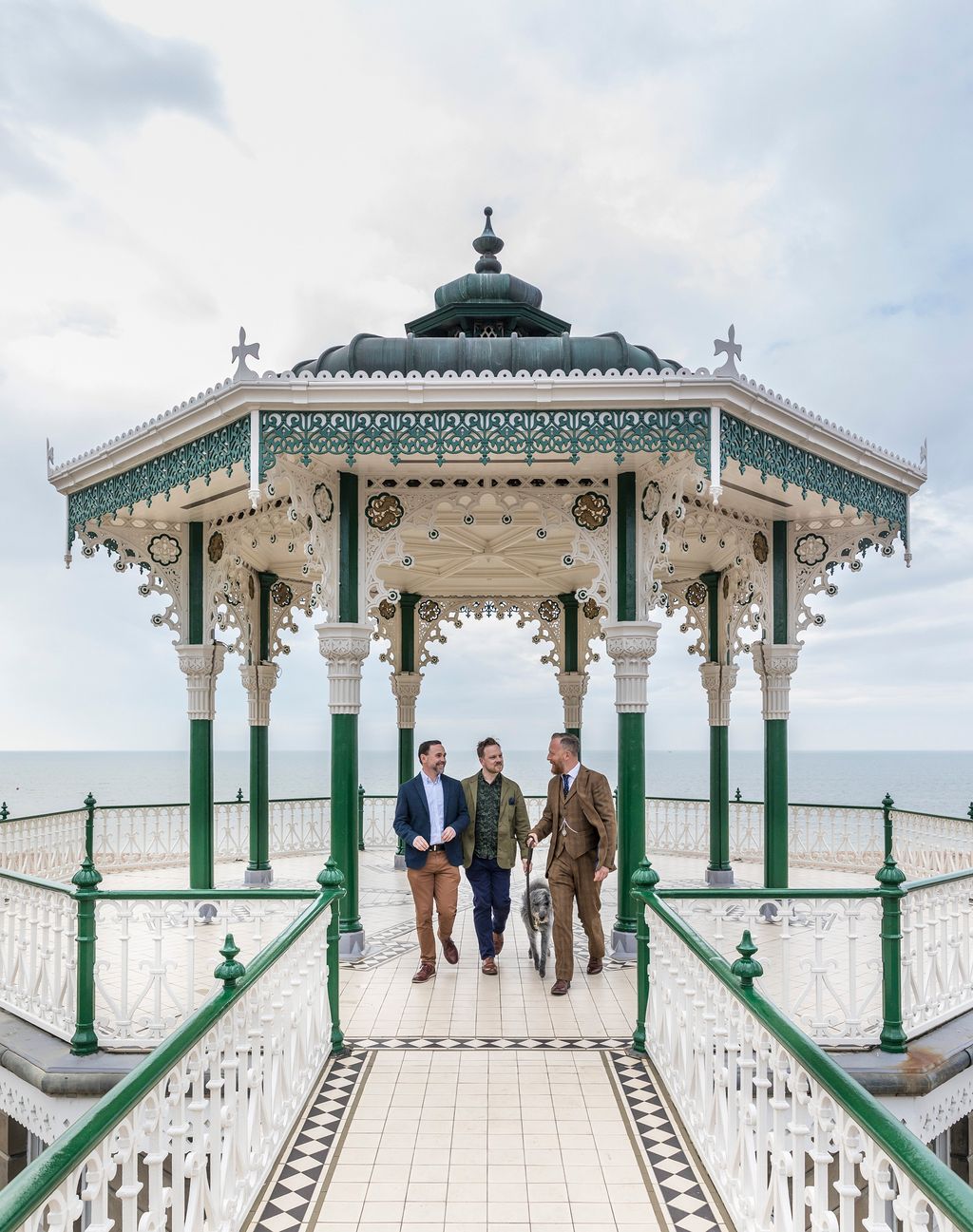
Simon with his friends, architect Alejandro Martínez Rodríguez and theatre designer Gary McCann, on the Victorian bandstand on Brighton seafront.
 Taran Wilkhu18/18
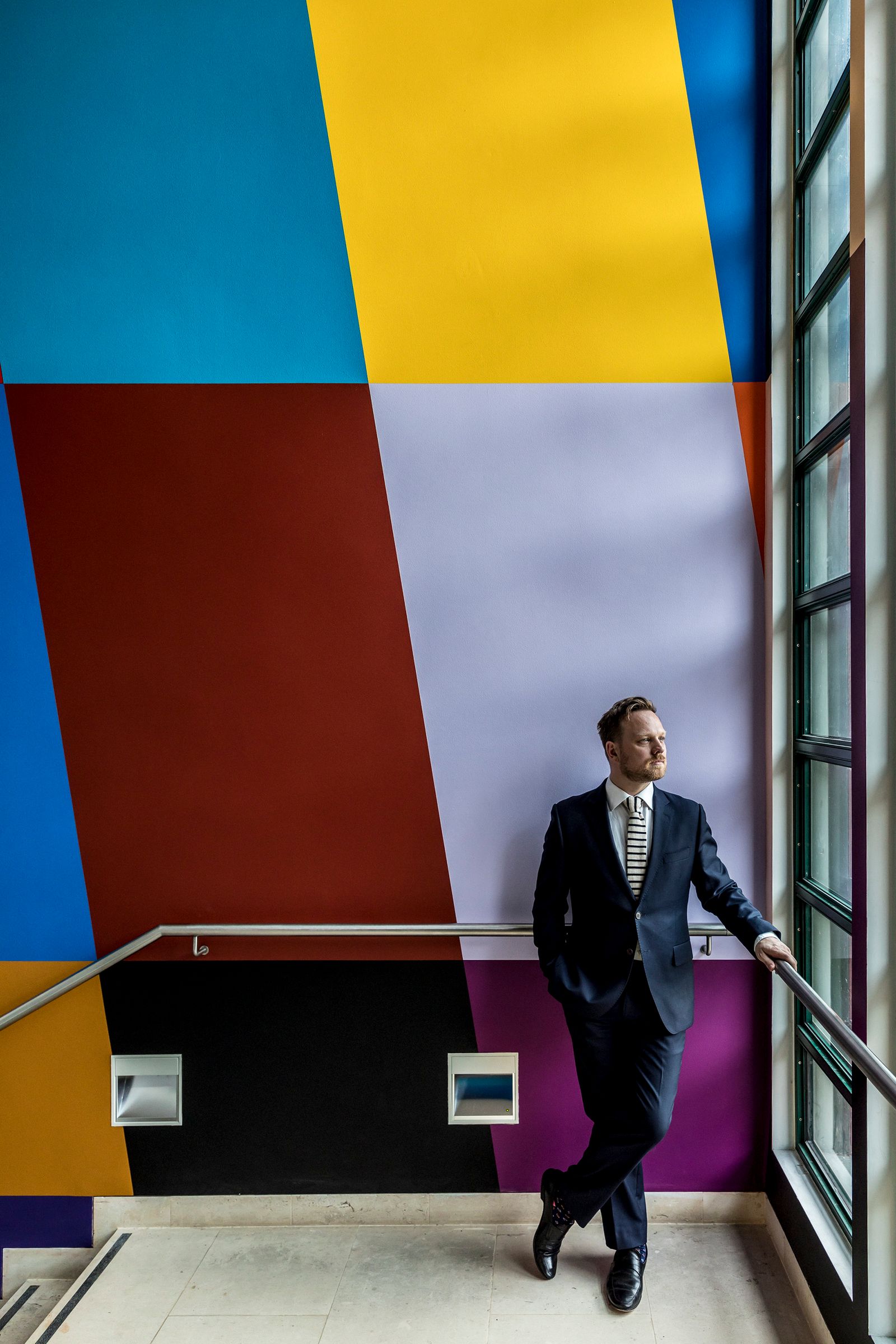
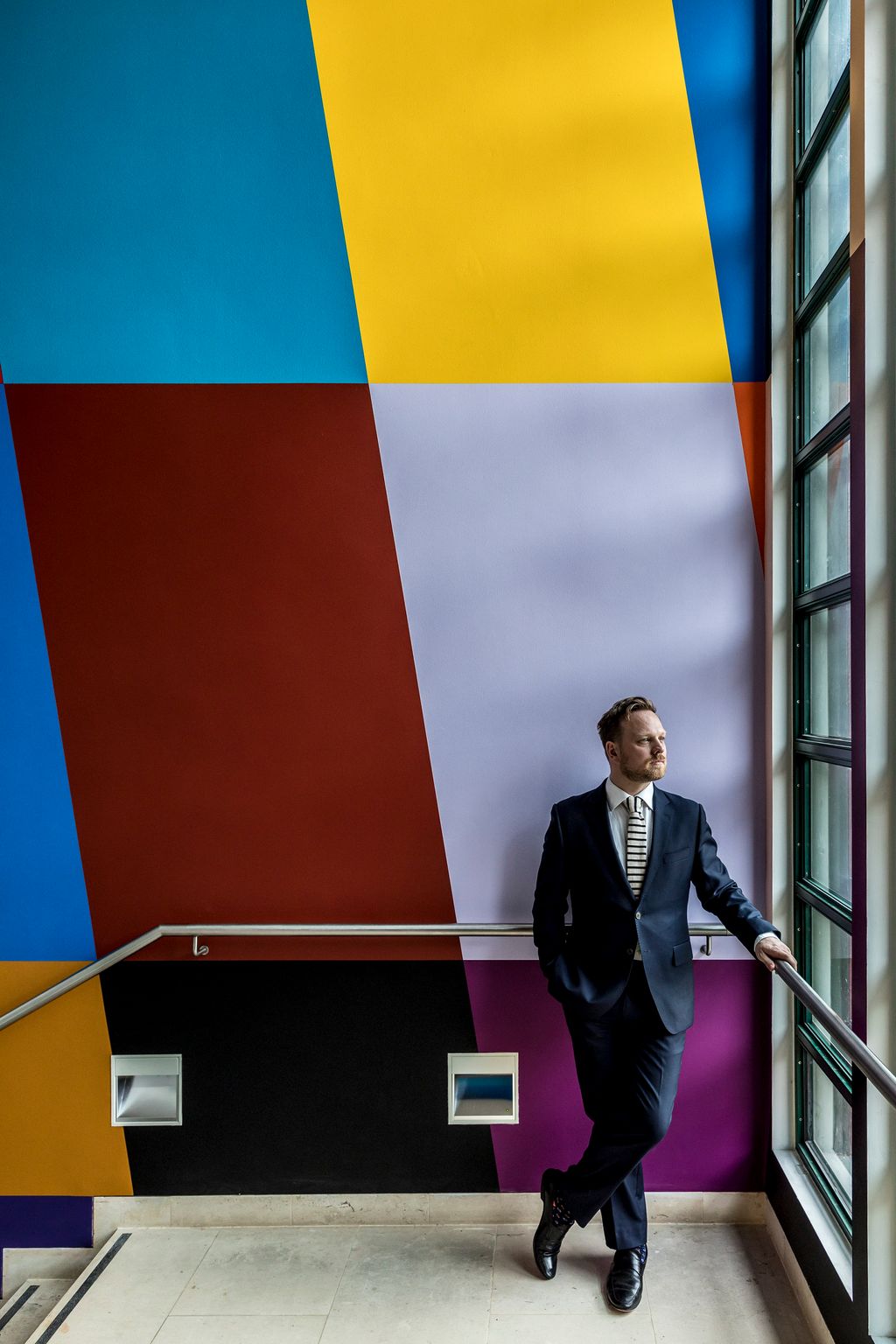
Simon in front of a site-specific mural by Lothar Götz in the stairwell at Pallant House Gallery.


