
A once-dilapidated wreck in the glorious Tuscan countryside brought beautifully back to life

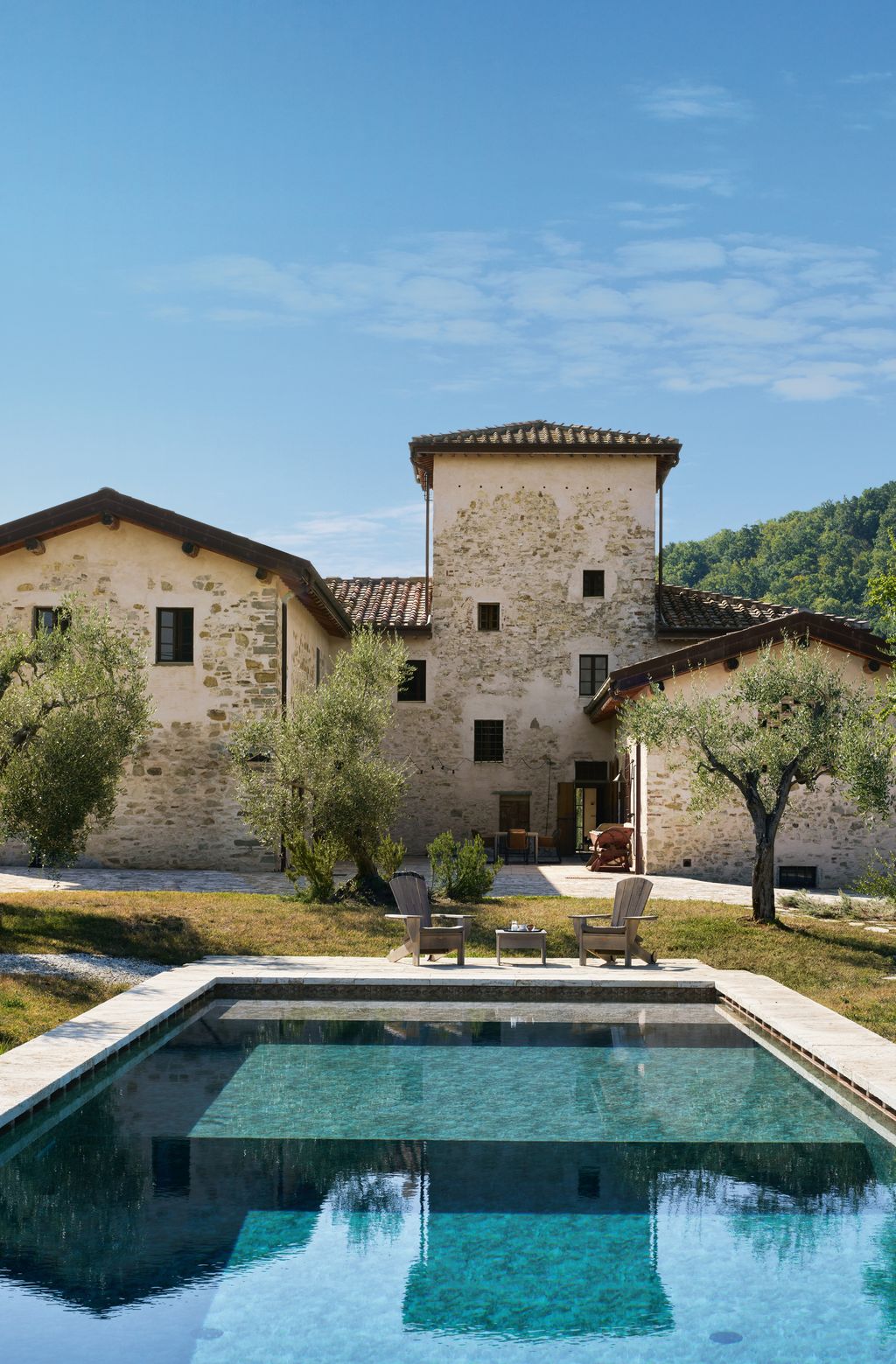
The first time I visited the London-based designer and gallerist Shiro Muchiri at her holiday house in Tuscany was in August 2020. On holiday in Florence, I jumped at the chance to escape the high-summer humidity of the city. Driving south east of the city for about 30 minutes, I (eventually) found the correct turning, where a winding lane rose and fell, twisted and turned through the rolling hills of extraordinary countryside. Then, onto a gravel track, past olive and cypress trees and a lawn dotted with fresh bales of hay, to a handsome farmhouse perched on top of a hill. It was postcard perfect. But it was not always thus.
Shiro’s connection with Italy goes back nearly 30 years, when she left Nairobi to study interior architecture in Milan. While there, she soaked up everything she could in a city steeped in 20th-century and contemporary design. She learned Italian and explored the country at the weekend and during holidays. Once her studies were over, Shiro set her sights on London. ‘Because of the UK’s ties with Kenya, I felt there was a stronger cultural connection for me,’ she says. ‘And London is so vibrant and seemed full of possibilities.’ She continued her studies, obtaining an MA in design management at the University of the Creative Arts. London would become her home, where she would marry, have two sons and, in 2002, set up her own company Interni Design Studio, following a short stint as a freelance designer.
Over the past few years, her work as a designer has led to the founding of SoShiro, a collaborative gallery space and shop in a five-storey Georgian townhouse in Marylebone. Its mission is to support and promote designers, artists and craftspeople from around the world to ‘create, protect and celebrate the future heritage of diverse cultures around the world’. It was set to launch just before Covid hit and has thrived since the world began to re-emerge. When I last met up with Shiro, she was itching to get travelling again, on the lookout for people to collaborate with.
Italy always beckoned, with the family decamping to Tuscany most summers. ‘I realised we had been renting different places for four weeks at a time, for eight years,’ she recalls. ‘And I wondered if maybe we should be looking for somewhere of our own.’ She took her time, viewing more than 30 houses over the course of a few years. But, by 2014, they had found just the property.

It was a classic Tuscan wreck. ‘Before we could even do a survey, we had to support the roof, which was caving in, to make sure the work could be done safely,’ she says. Built in the 19th century, the farmhouse was one of many on the sprawling estate of Villa di Torre a Cona. It was actually home to two families: both farmers who supplied their produce (including olives) to wealthy Florentine families. Untouched since the Forties and semi derelict, it had been used more recently as a shelter by hunters.
Shiro’s plan was to convert the two dwellings into a single home: an enormous project under any circumstances, but made all the more challenging when accompanied by the infamous, multi-tiered bureaucracy of Tuscan planning departments. And not only was there no electricity or running water, but as the house was not accessible by car, they also had to construct a road to it.
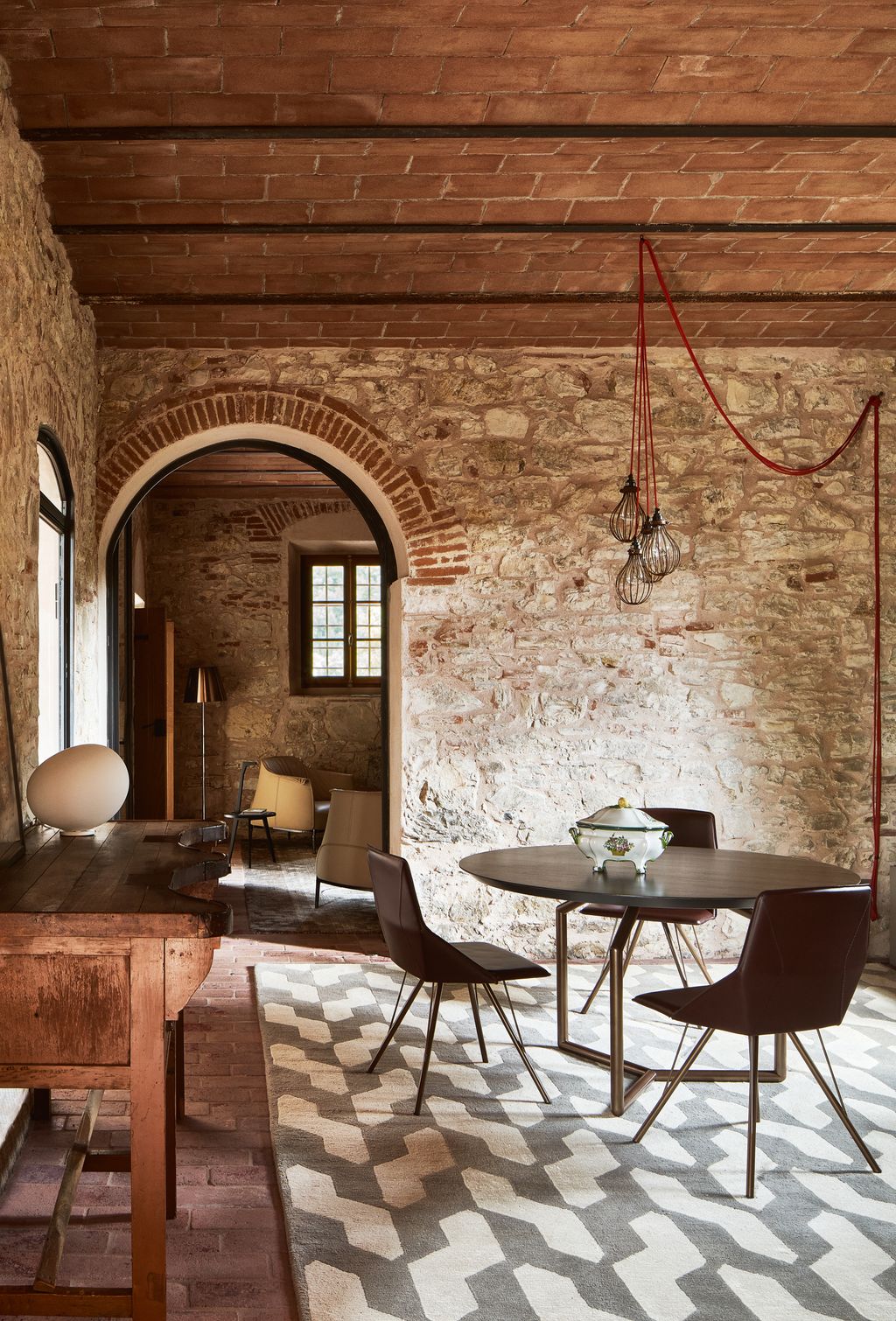
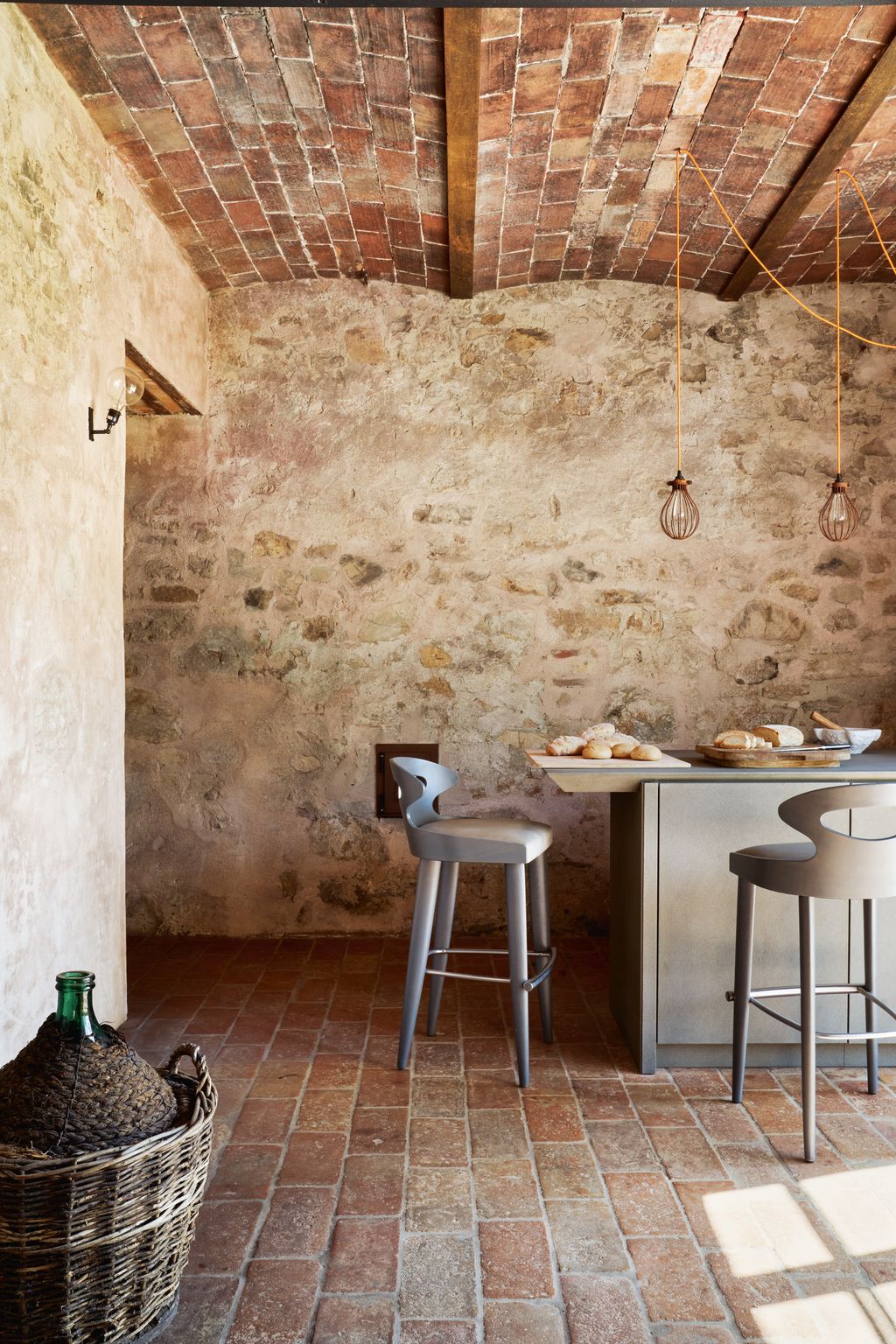
The roof notwithstanding, the building was structurally sound. And it might surprise some that a designer with an eye for the contemporary decided to keep the fabric of the building as authentic as possible. The terracotta bricks on the floor are nearly all original; each one was removed, cleaned and relaid. Where the plaster had fallen away from the stone walls, new plaster – carefully colour matched on site by a local artist – was applied. It is difficult to distinguish between the two. The beams on the ground floor were in good condition, so they were kept, their rugged imperfection enhancing the feeling of a house that has simply aged rather than been brought back to life.
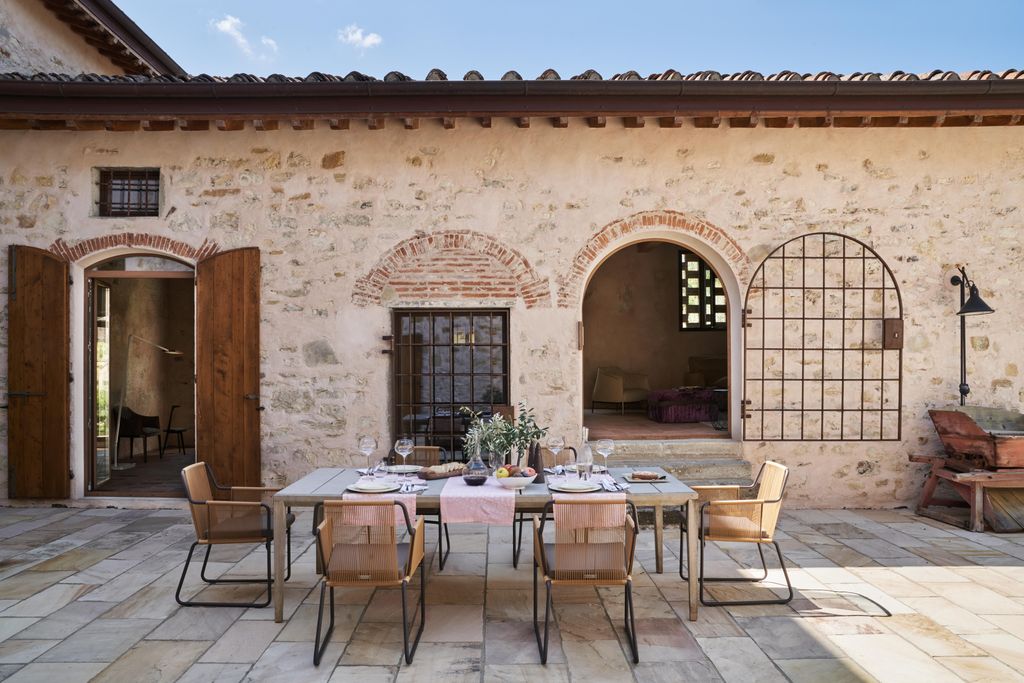
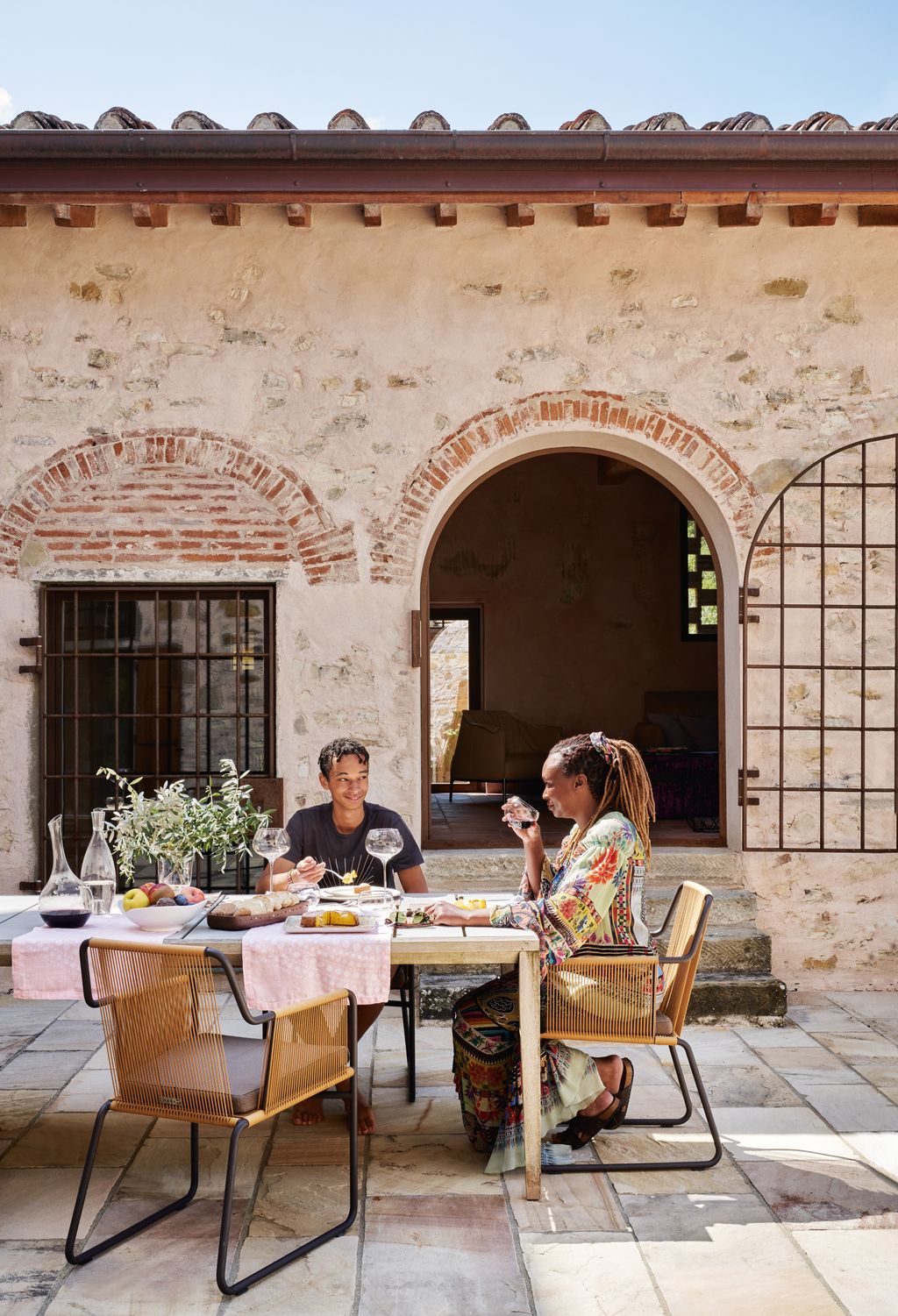
It is roughly U-shaped, creating a sheltered courtyard towards the back. Of the two original entrances, one leads into the new main hall, off which is an enfilade of sitting and reading rooms. The other leads into what is now a little bar area, including the original (still working) oven that serviced the two houses. Off this is the kitchen and a large dining room. Again, in an effort to retain the original spirit of the building, Shiro has done remarkably little in terms of changing the size, shape or distribution of the rooms. A couple of openings were made in the wall that once divided the two homes, and the main bedroom was slightly enlarged to allow for storage. Also on the first floor are Shiro’s two sons’ bedrooms, at the front of the house, divided by their own large sitting room. Perched on top of all this is the tower, where Shiro has created a study for herself with views over the landscape.
These vistas are matched only by those on the other side of the house, where the courtyard leads down to a pool, which is set just far away enough from the house to feel part of the landscape. There are more than 400 olive trees, and Shiro has continued the tradition of this land producing olive oil – I can attest to its deliciousness. And although the house did not have an address when Shiro bought it (obtaining one was yet another hurdle), it did have a name. Uccellare, meaning ‘to catch birds’, references the pheasants, partridges and quails that would have been hunted here. Today, the birds merely join in with the bees and crickets and the gentle breeze to create an ideal soundtrack for languid days by the pool. It doesn’t get much better than this.
 Davide Lovatti1/12
Built in the 19th century, the stone buildings were a wreck when Shiro first saw them.
 Davide Lovatti2/12
A Roda ‘Teka 174’ table and ‘Harp 359’ chairs provide an ideal set-up for relaxed dining.
 Davide Lovatti3/12
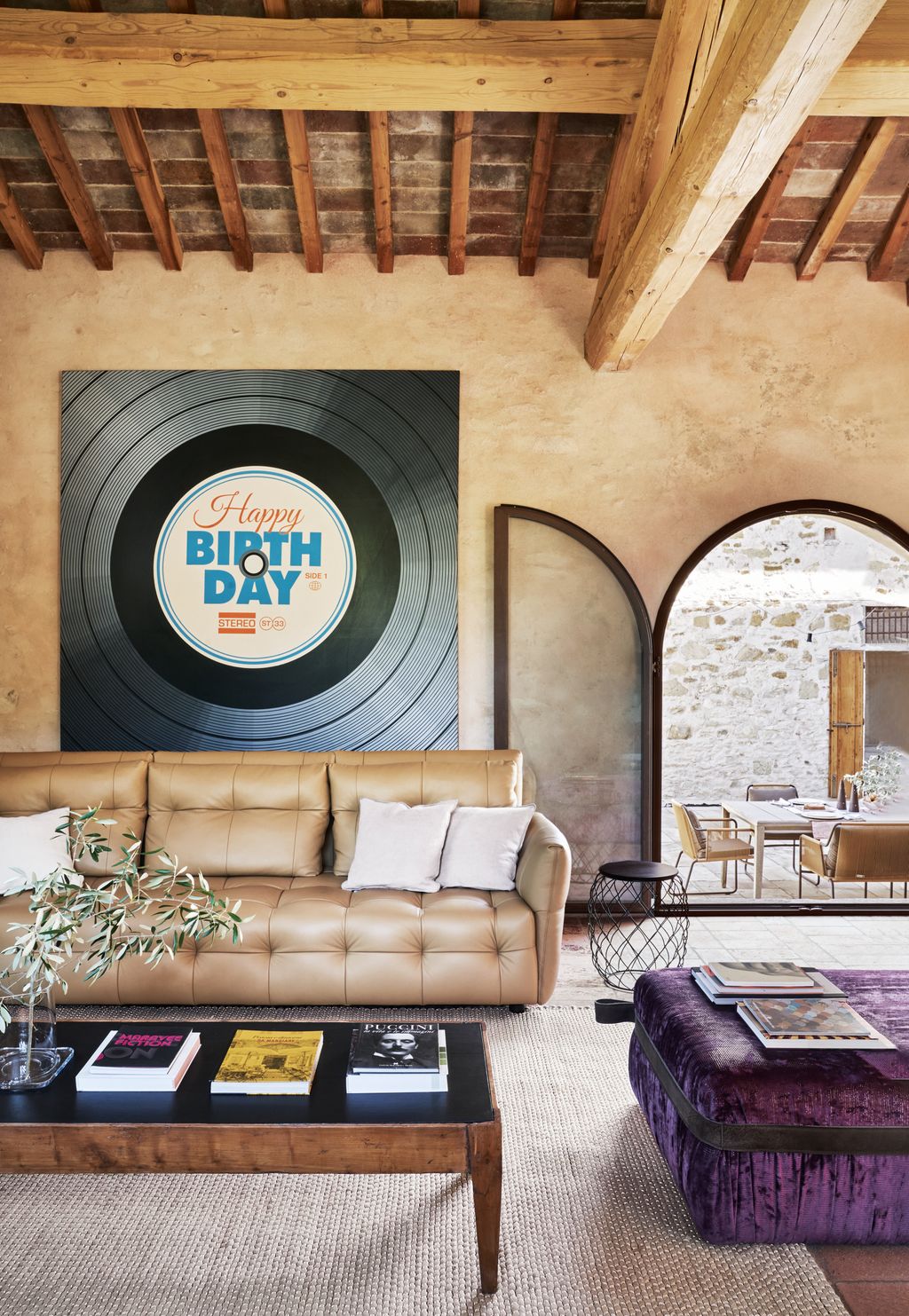
Opening onto the rear courtyard, this room has an artwork by Eduardo Ponjuán above a Poltrona Frau leather ‘Duvet’ sofa. The ‘Herm’ velvet ottoman is from Potocco.
 Davide Lovatti4/12
In this multi-purpose space, a round ‘Tolomeo’ dinner table and ‘Sax’ chairs, all from Esedra, are set off by a hand-knotted Tibetan wool ‘Cable Neutral’ rug from The Rug Company and lights from Urban Cottage Industries.


 Davide Lovatti5/12
‘Ginger’ armchairs from Poltrona Frau partner the dining table made from reclaimed wood by a local furniture dealer.
 Davide Lovatti6/12
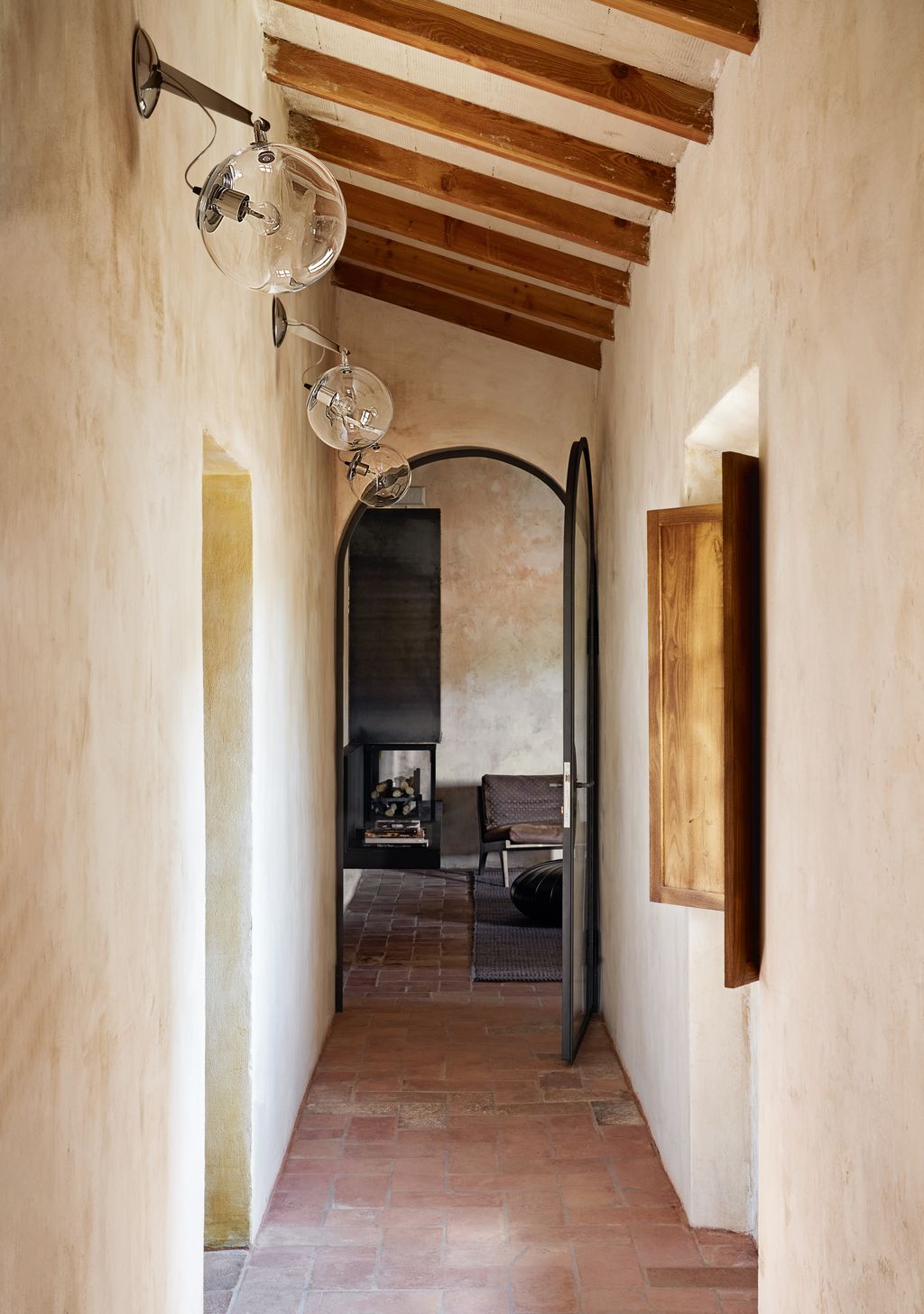
A series of Artemide’s ‘Miconos’ wall lights were chosen for this corridor, which connects the main bedroom to one of two sitting rooms on the first floor.
 Davide Lovatti7/12
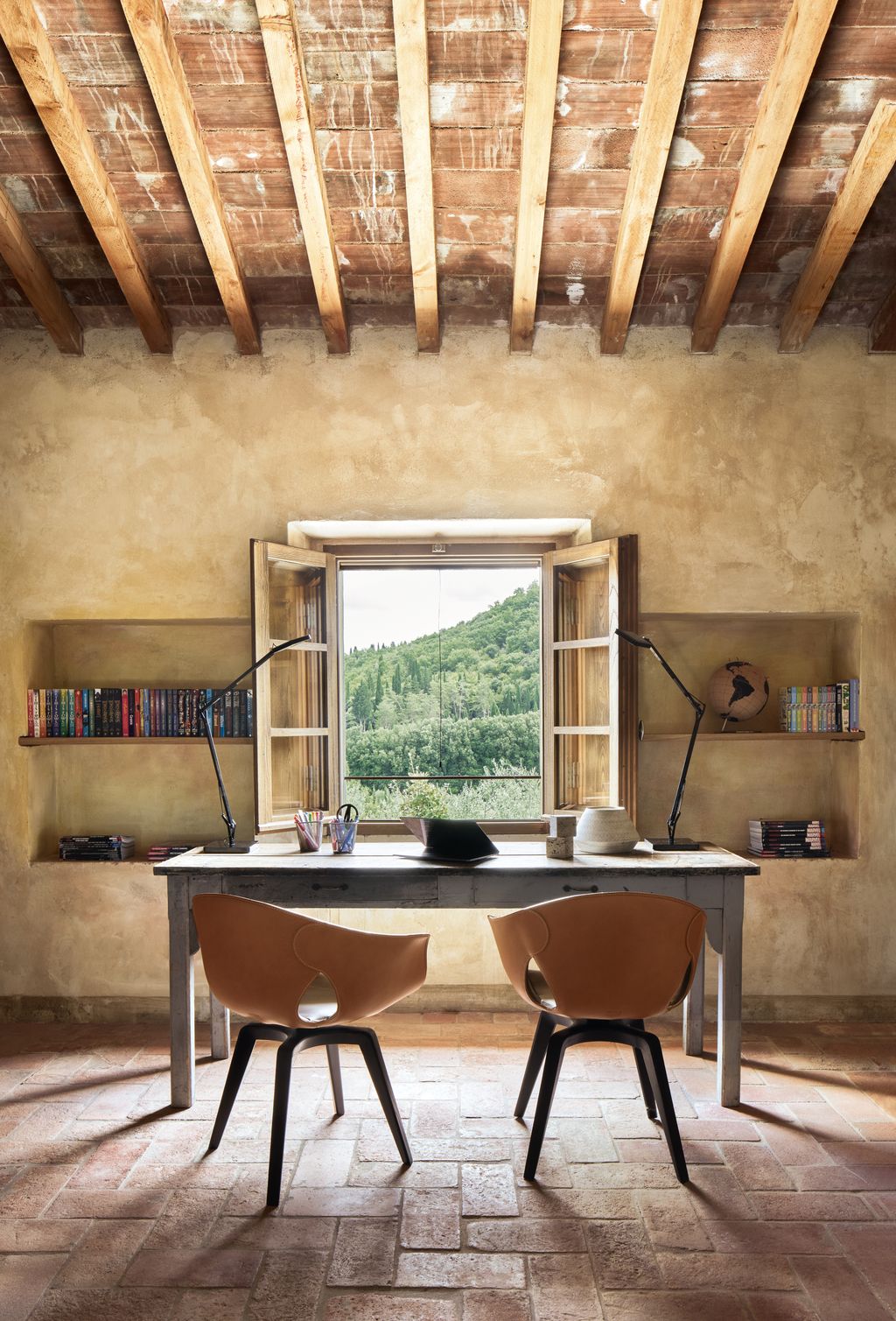
A reclaimed-wood desk, with Poltrona Frau ‘Ginger’ armchairs, is positioned to make the most of the light and views.
 Davide Lovatti8/12
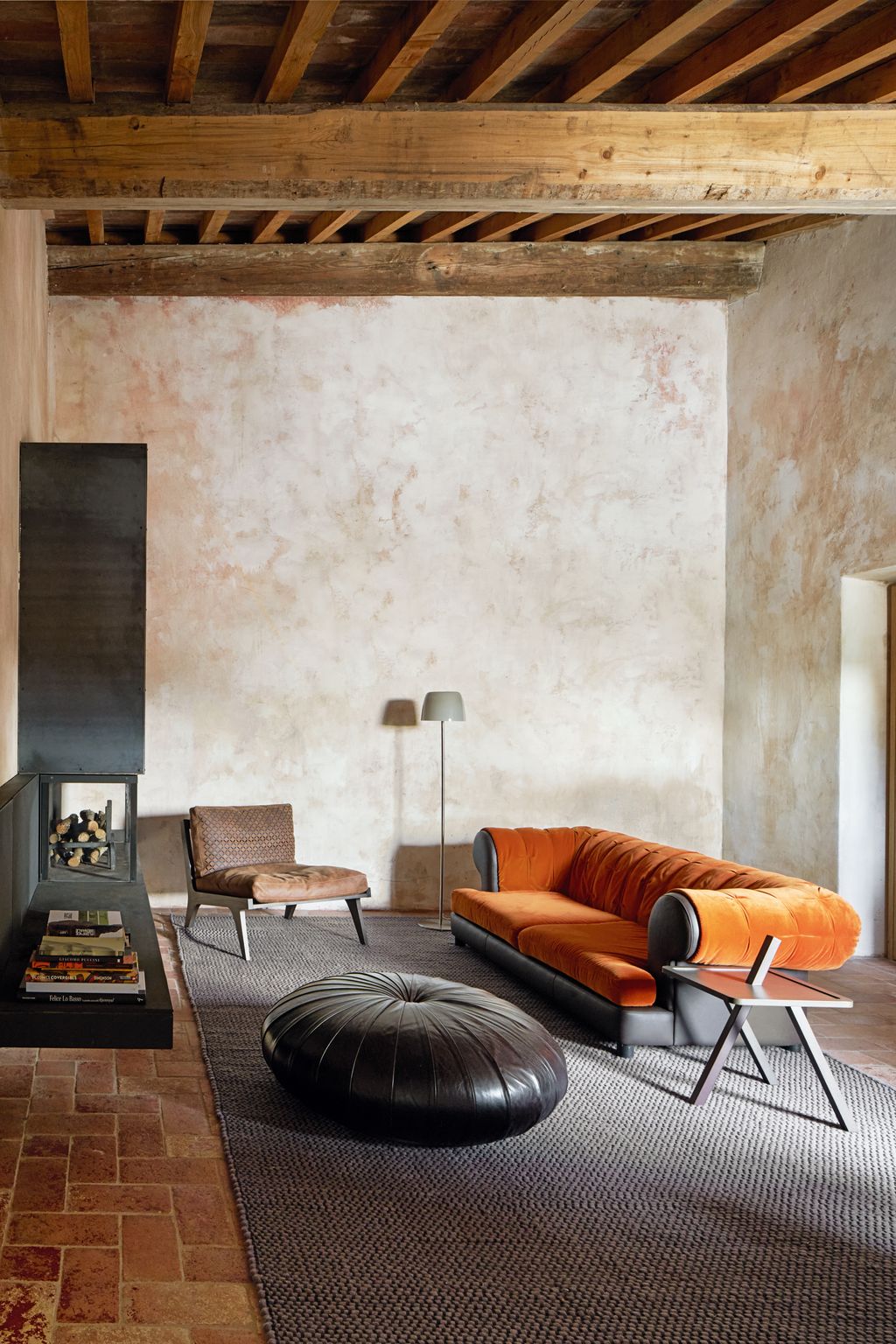
In the upstairs sitting room, Poltrona Frau’s ‘Mantò’ sofa and leather ‘Esedra’ pouffe are paired with Potocco’s ‘Ego’ lounge chair and ‘Paco’ table.


 Davide Lovatti9/12
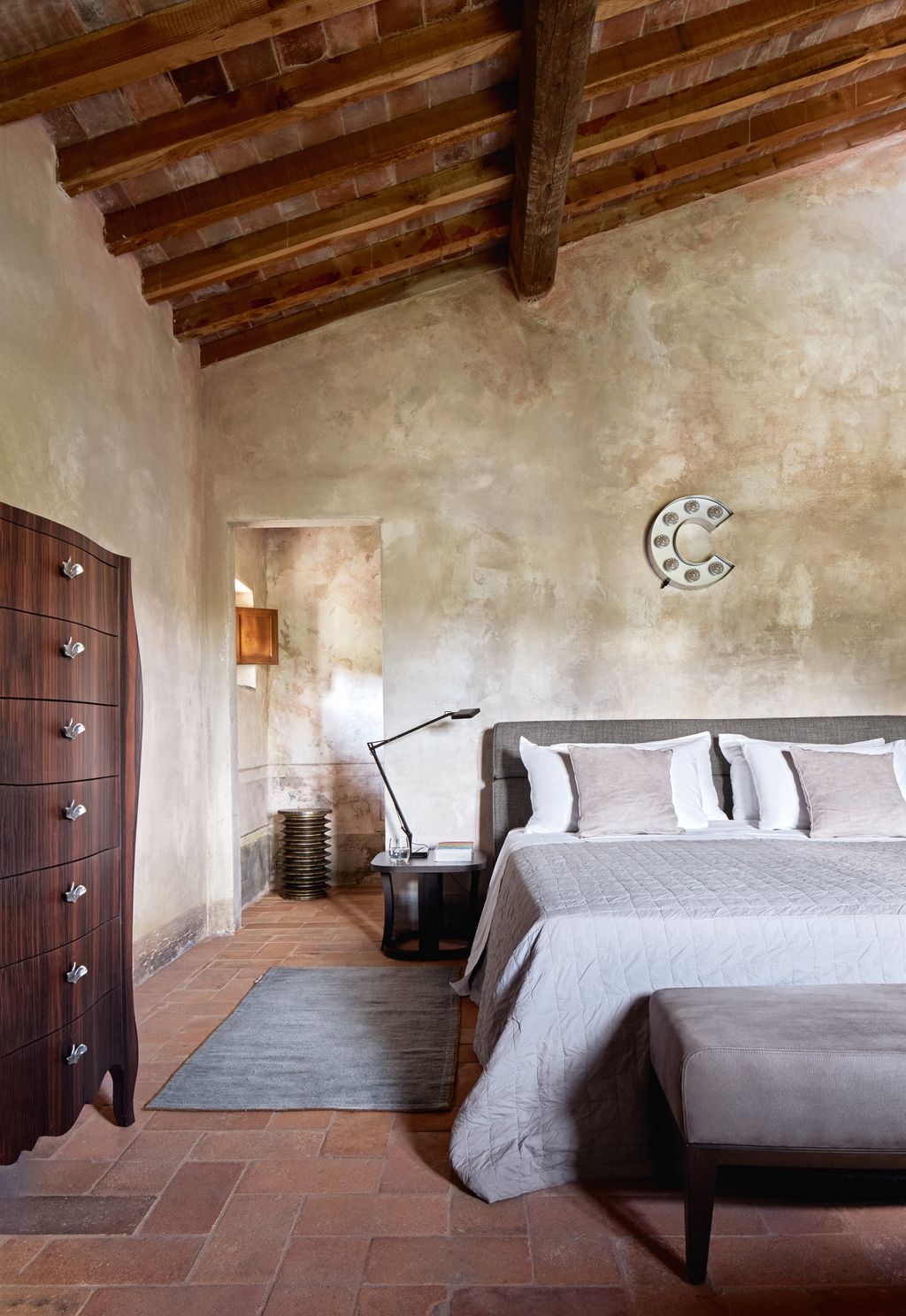
Contemporary pieces, such as the chest of drawers and stool, both from a small contemporary furniture maker near Milan, complement the pared-back aesthetic.
 Davide Lovatti10/12
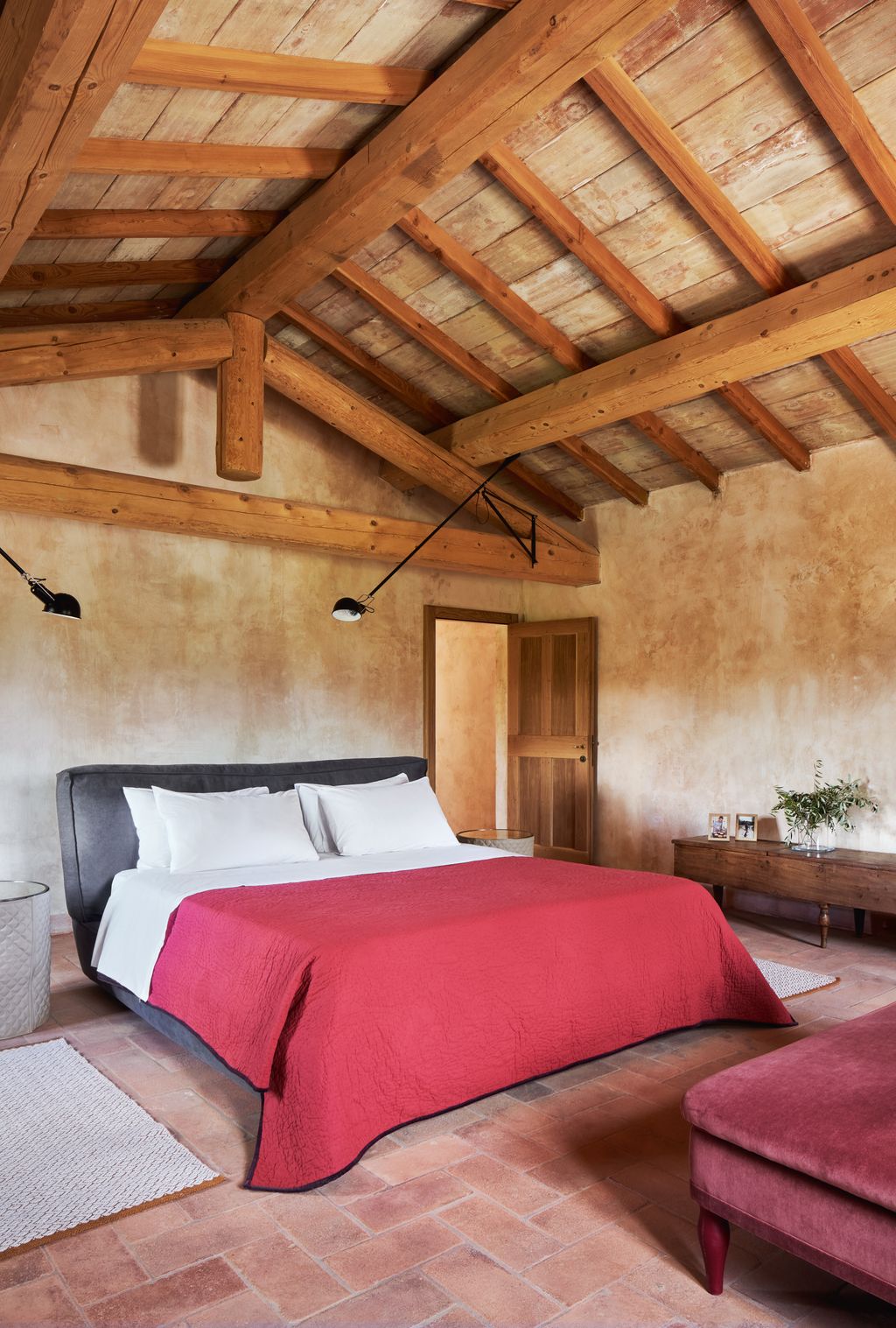
Paolo Rizzatto’s ‘265’ articulated wall lights for Flos illuminate the ‘Sausalito’ bed from Cinova.
 Davide Lovatti11/12
Stone walls and original terracotta flooring contrast with a contemporary breakfast bar designed by Shiro, ‘Paddle’ stools from Potocco and ‘Rosa’ pendants from Urban Cottage Industries.
 Davide Lovatti12/12
Shiro and her son Cameron enjoy lunch in the sheltered area at the back of the house.


