
A historic Seattle house with a mischievous sense of humour

A sense of humour in a house is a rare thing to get right, but Lauren Lothrop Caron did just that when she and her interior design practice Studio Laloc were called in to reimagine a central Seattle home in one of the city’s oldest neighbourhoods. Nestled on the slopes of the Capitol Hill neighbourhood, the house was built to take in views of Lake Washington and the Cascades around 1939, making it among the more venerable houses in the city (a good number of the buildings like it have disappeared in the decades since, after alarmingly sliding down the hill). In 2017, its new owner – a restauranteur, philanthropist and art enthusiast with a degree in interior architecture – wanted to remould it to better suit her own lifestyle.
Another designer put the client in touch with Lauren, reckoning – correctly – that her distinct style, partially informed by her early roots in small-town Connecticut, would better suit what the client was after. “That’s ingrained in me. I love New England,” Lauren says. “I definitely seek out those houses that are older.” As an East Coast native, her reputation for taking on historical properties and retaining their original character proceeded her. The client certainly thought so, anyway; a collaboration was born that would last the next five years, as they renovated the house in phases, room by room.
Lauren began by identifying the key characteristics that informed the client’s taste and personality, tangentially drawing on her experience working in retail design at high-end department stores like Tiffany and Bergdorf Goodman earlier in her career. “Those brands had a very strong brand heritage. If we worked with vendors like, say, Valentino or Chanel, on displays or an installation, we also had to consider those brands. I’ve had a good amount of training and understanding brand image and creating those pillars and using them.” In the same way, time spent talking to and getting to know the owner of a home could build up an accurate understanding of their taste and their requirements for whatever space they intended to live in.
Central to the new owner’s identity an English-inspired design sensibility. (Lauren explains what this means to her: “I have a feeling the Brits don’t love when Americans throw around that we’re ‘inspired by English interior design’. What sets English interiors apart from American interiors is that there is a sense of unstuffy-ness and they always feel less contrived, even if they may be.”) The owner was also keen on offbeat visual puns, so she and Lauren worked together to include subtle references to her personal interests while keeping the house elegant and – at least to the uninitiated eye – traditionally stylish.
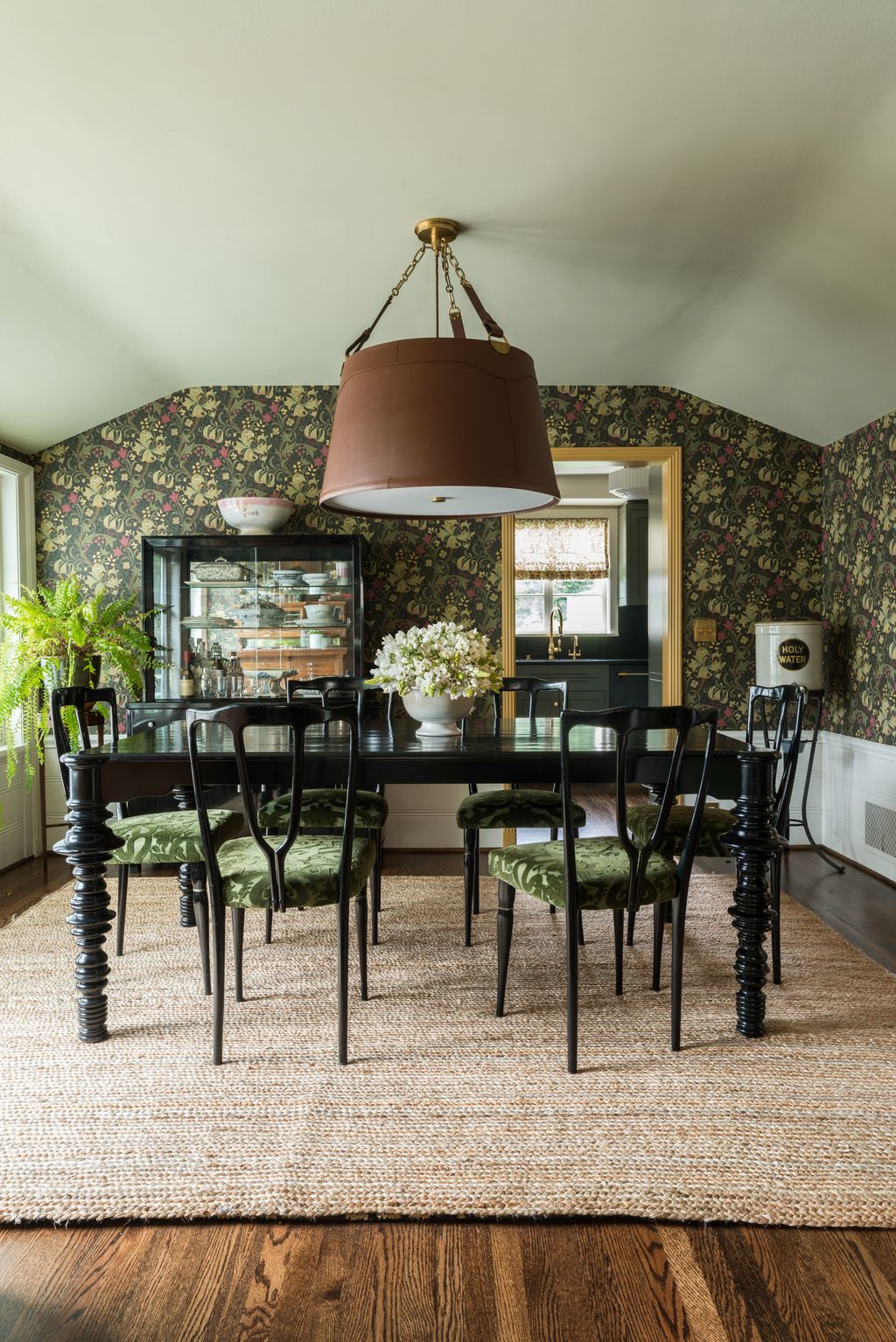
One such reference is the William Morris lily-print wallpaper in the dining room. “She chose that because lilies are associated with death,” says Lauren, describing the client as “a bit of a New Wave kid. It’s a bit of a nod to being a goth, but it really doesn’t look that way.” Elsewhere, there is a painting of a taxidermist above the fireplace in a nod to the client’s enthusiasm for the discipline, and a tongue-in-cheek water holder labelled “Holy Water”. When the client wanted to paper a wall in ‘Coven’ wallpaper from Maison C – which features a recurring motif of nude witches – she and Lauren agreed to use it in a walk-in closet.
The resultant décor in the house is distinctly individual, but still comfortably within the bounds of a relatively mainstream aesthetic; it’s not egregiously provocative, as it could have been in the hands of a lesser designer. Lauren describes the design process as highly collaborative, if unusual. “A lot of times, when we work on projects, we have clients have good taste, but they don’t have as much knowledge. They’re not really as involved.” This client, on the other hand, was enthusiastically involved in every decision. “It was a very close relationship that we formed. She doesn’t want to have a house that everybody can have.” Every decision was informed in reference back to Lauren and the client’s original vision for the house; every paint colour, every item of furniture was subjected to the question of “Why?”, Lauren explains. If that question couldn’t be answered satisfactorily, no matter how beautiful or desirable a feature might be, Lauren would suggest steering clear of it. “I was very much able to be that editor.”
As a result, that five-year, phase-by-phase process of redesign has led to a house that is still holistic in concept and true to its owner. And it’s not over yet: Lauren is currently working on “a little conservatory-style atrium off of the house,” with materials ordered from the UK. And, if the client wants to continue their partnership in the future, she has no qualms. “I love it so much” she says. “My assistant and I joke about how if we could live in any one of our client’s homes, it would be that one. It’s just really special.”
 Lauren L. Caron1/13
The sofa is custom-made by a local Seattle workroom, the fabric is ‘Flying Ducks Velvet’ by Mulberry Home. The light is a vintage Florian Schulz double pendant lamp with counter-weights, and the wingback chair is a BDDW Papa Chair, upholstered in Zak & Fox’s ‘Expedition’.
 Lauren L. Caron2/13
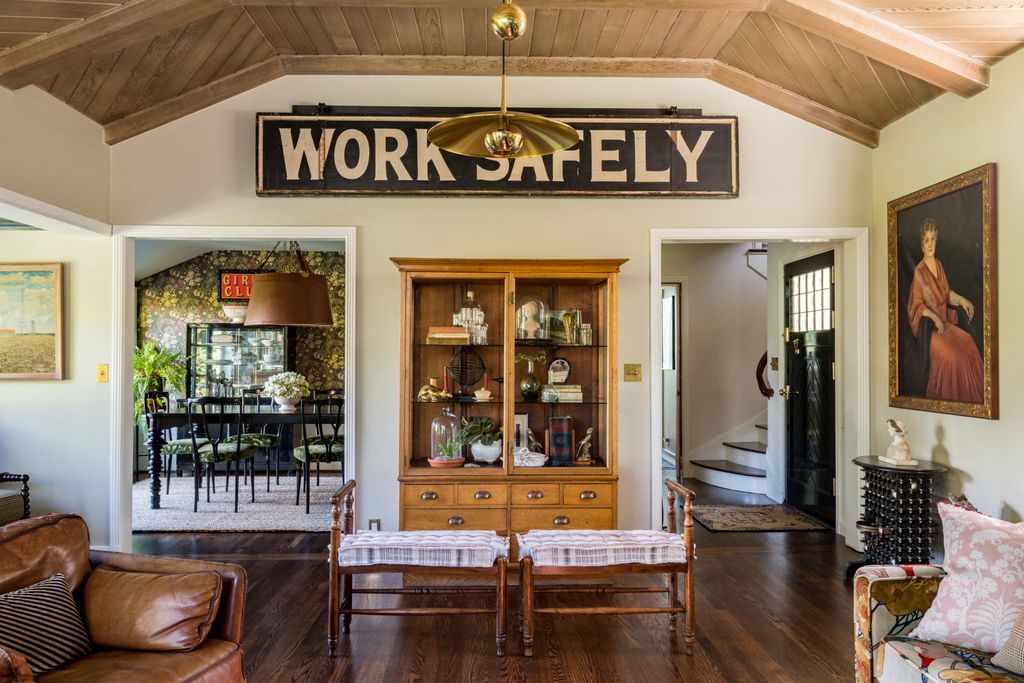
The sign is vintage – “Another example of an item that we purchased to add a touch of humour to the space,” as Lauren explains. It was sourced from 1stDibs and dates to the 1900s. “We believe it maybe was a sign from an old turn-of-the-century factory.” The cabinet is an old trophy case purchased from Kassie Keith, an antiques dealer in Seattle.
 Lauren L. Caron3/13
These pictures are all from the client’s collection. She and Lauren sourced some together at Susan Wheeler Home; others she sourced from online or other antique stores and artists.
 Lauren L. Caron4/13
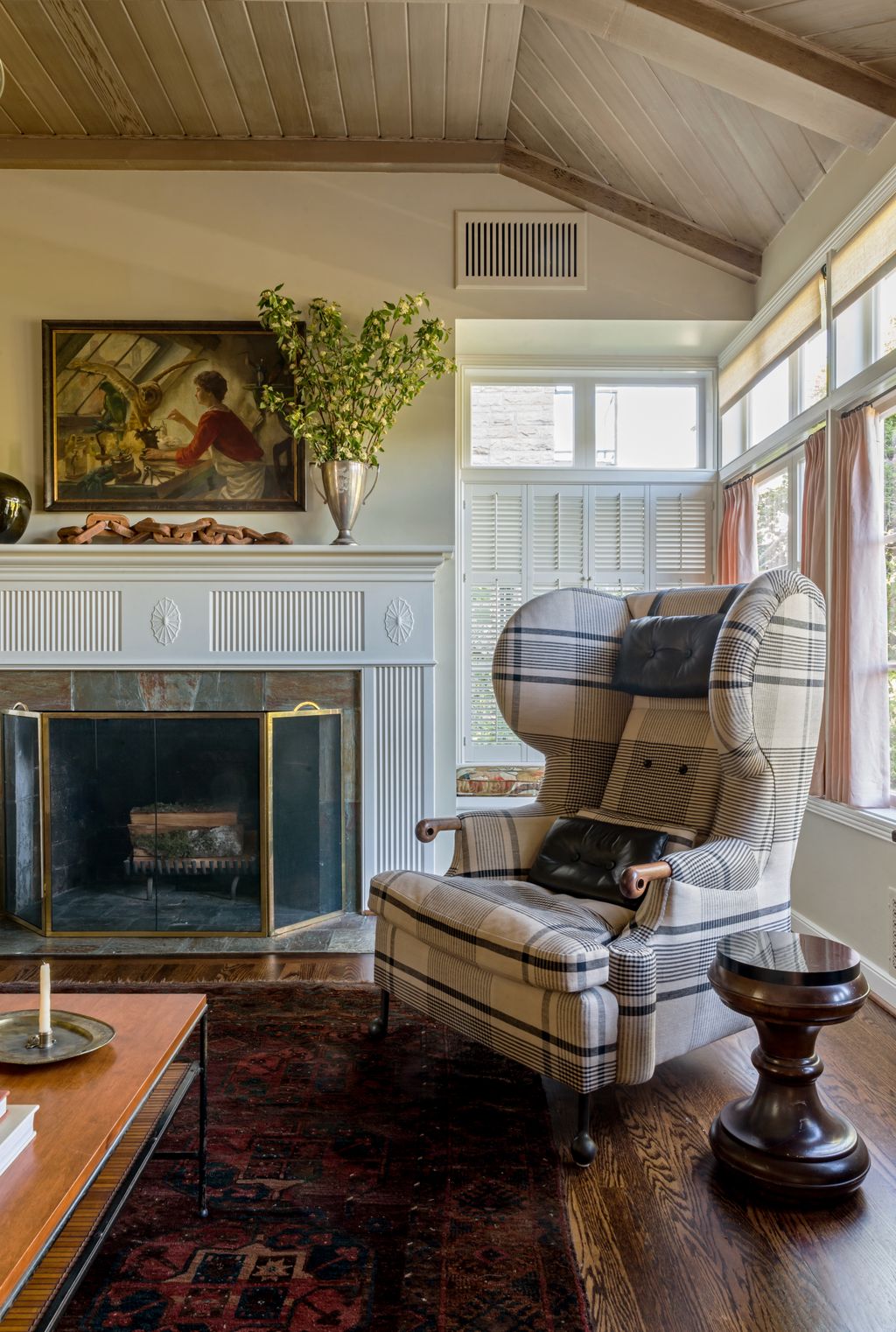
The table is also from Seattle dealer Kassie Keith. “It reminds me of a chess piece,” Lauren says. The fireplace mantel and surround are original to the house, the screen is from 1stDibs, and the rug is vintage from Chairish.com.


 Lauren L. Caron5/13
The pair of chairs was already owned by the client; they were reupholstered in a Ralph Lauren ‘Houndstooth Wool’. The leather chair is vintage Roche Bobois, a 1970s design. The book on the bookstand is from a local antique store and is land (or property) survey of the city of Seattle dating to c.1900.
 Lauren L. Caron6/13
The table is from Noir, the chairs are vintage Italian chairs from 1stDibs, reupholstered in ‘Anaconda’ velvet by House of Hackney. The wallpaper is ‘Golden Lily’, designed by William Morris, in charcoal and olive. The Holy Water vat is from 1stDibs. At the back of the room is a medicine cabinet from Susan Wheeler Home. The lampshade is by Ralph Lauren from Visual Comfort.
 Lauren L. Caron7/13
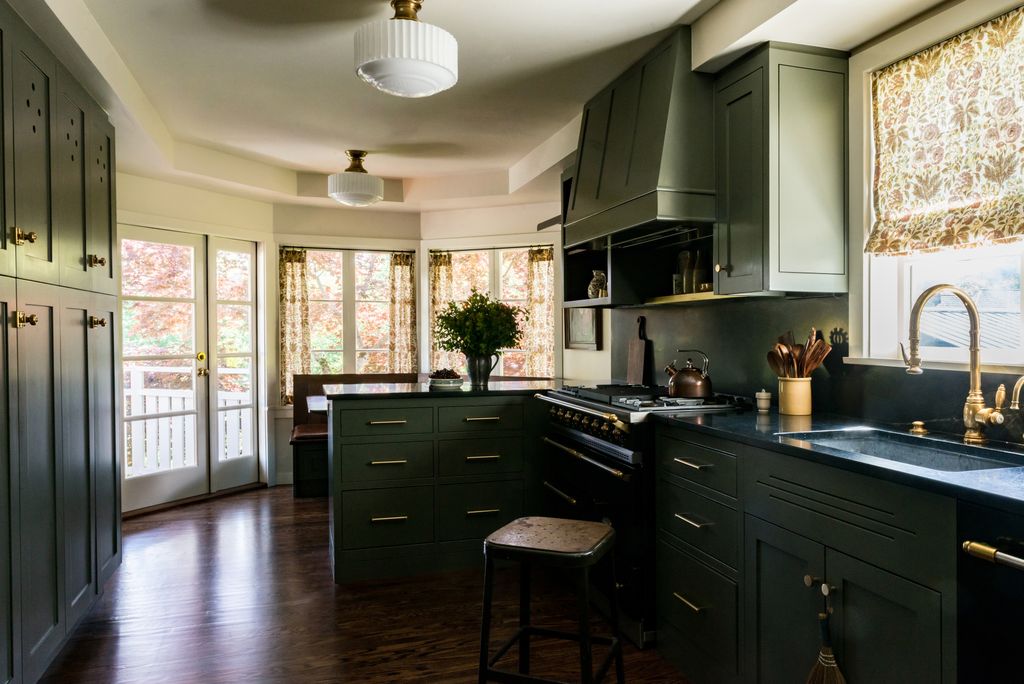
The paint colour on the cabinets is a custom Fine Paints of Europe colour: GC-662. The stool in the foreground was a vintage find from an antique store (previously owned by the client). The built-in bench nook in the back was custom-made and designed by Mallet Design Build.
 Lauren L. Caron8/13


 Lauren L. Caron9/13
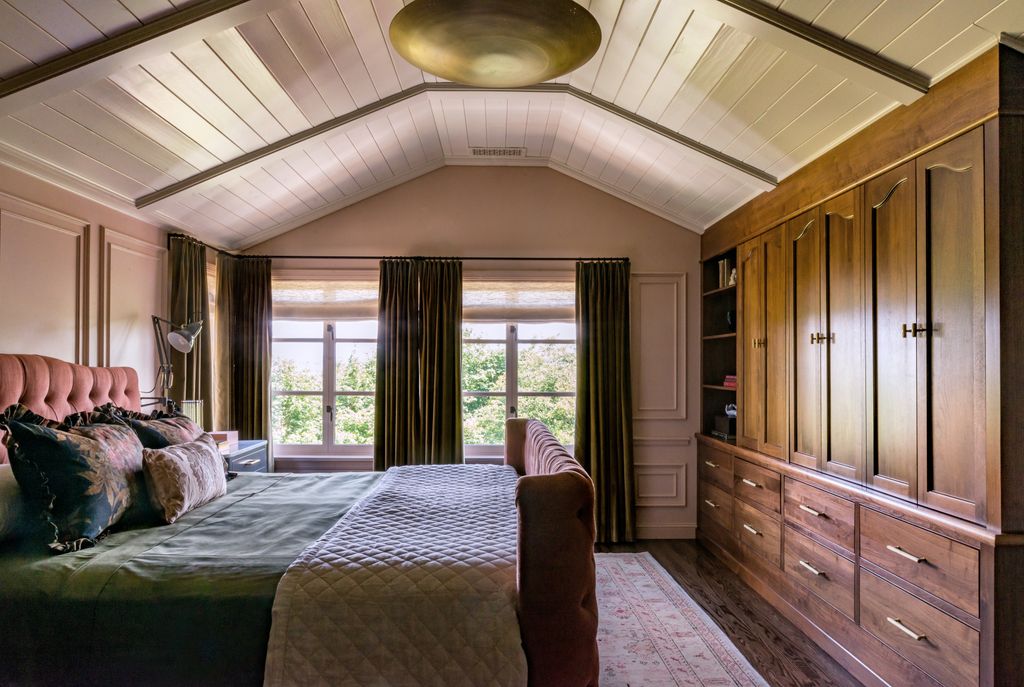
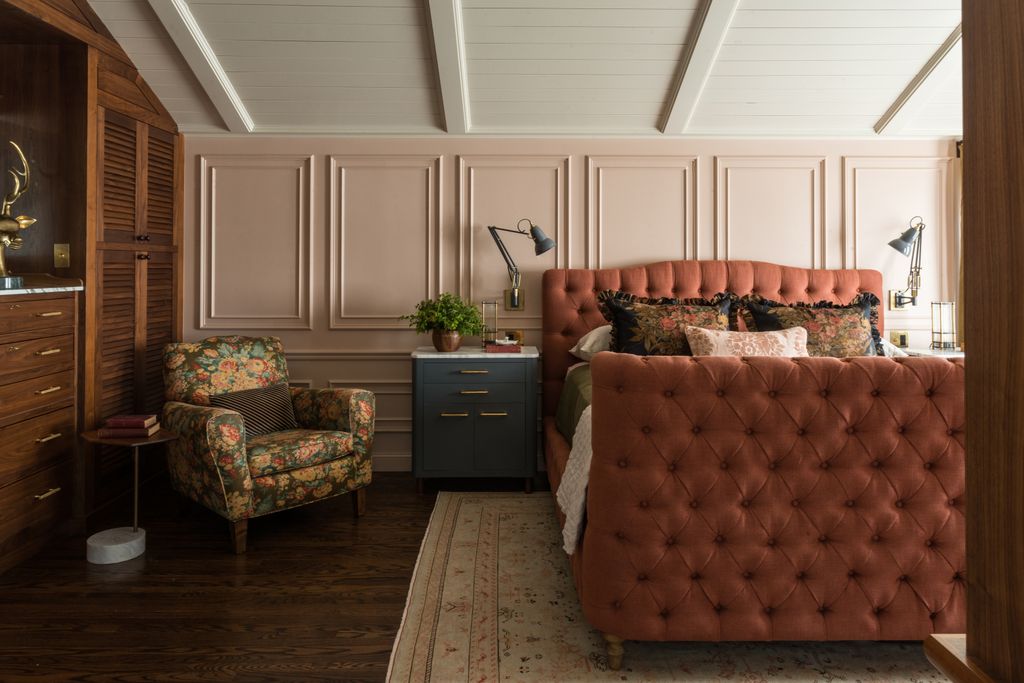
The bed was previously owned by the client, who had purchased it from RH several years before she and Lauren started working together. Lauren had her custom workroom add height to the headboard and footboard, and reupholster it in a Pierre Frey linen. “We are trying to bring footboards back into homes,” Lauren says, “and this client specifically was open to a high footboard.”
Mallet Design Build built the custom cabinets out of walnut wood. The designs were loosely inspired by the French furniture designer Andre Arbus’ armoires. The light is from Lawson Fenning. “This one is perforated and reminded us of the looking at the stars when you’re in bed. Like the adult version of those glow-in-the-dark stars we had as kids.”
 Lauren L. Caron10/13
The chair is an old piece of furniture the client owned; it was reupholstered in a Jasper fabric. The cabinet is an antique medicine cabinet, repainted, with a new marble tops added and legs and hardware replaced to elevate its overall look.
 Lauren L. Caron11/13
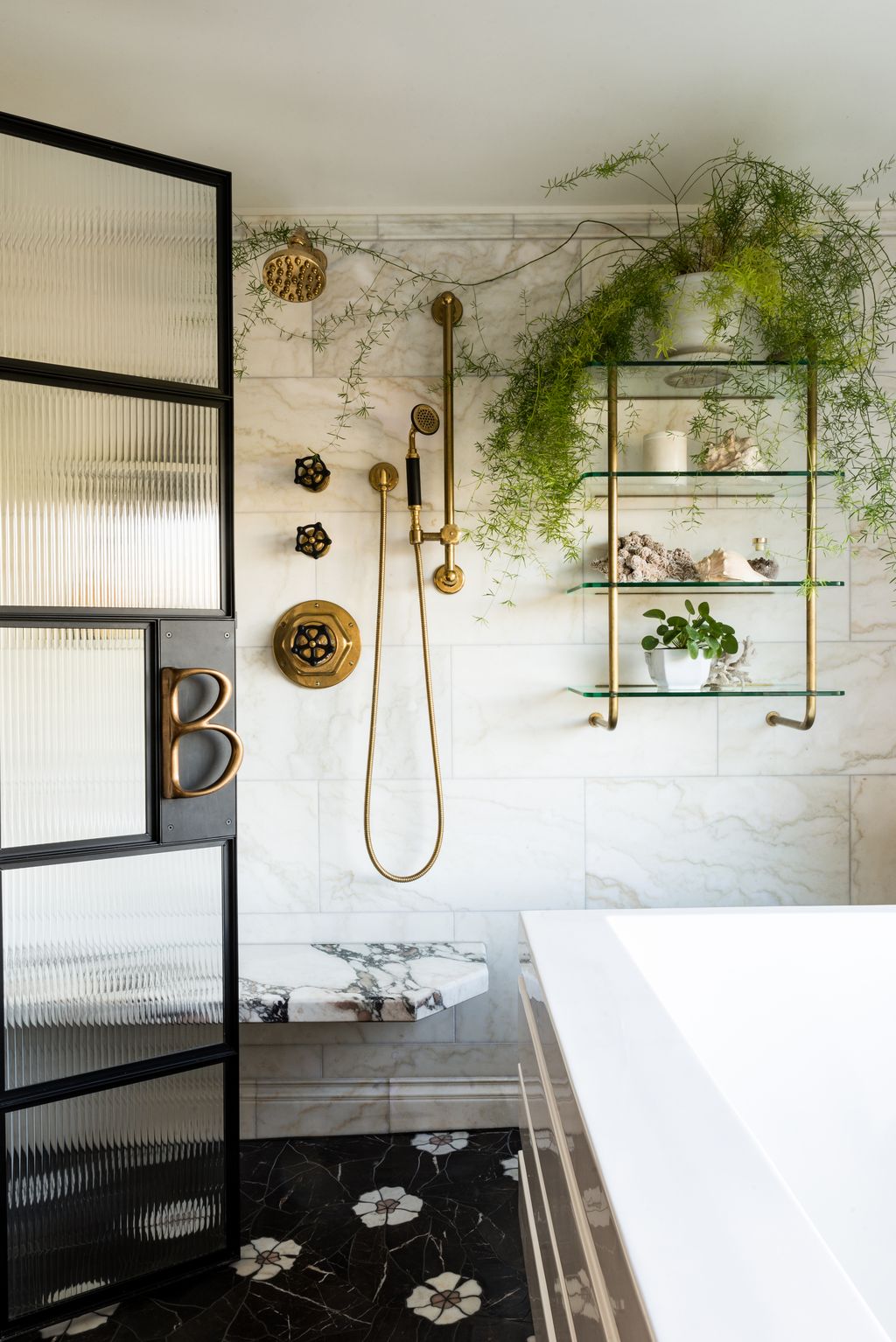
The fittings in the bathroom are ‘Regulator’ by Waterworks; the bath is a Manhattan Tub from Hydrosystem’s Metro collection. The floor is covered in customised Ann Sacks New Ravenna ‘Raku Flower’ tiles. The B on the door was vintage from Etsy, but came from a fine jewellery store called Birks in Vancouver. “There’s a pair of them,” says Lauren, “and we believe they were on the front entrance doors of the original Birks in Vancouver. The client’s first name is Beck, so the Bs are a very personal touch!”
 Lauren L. Caron12/13
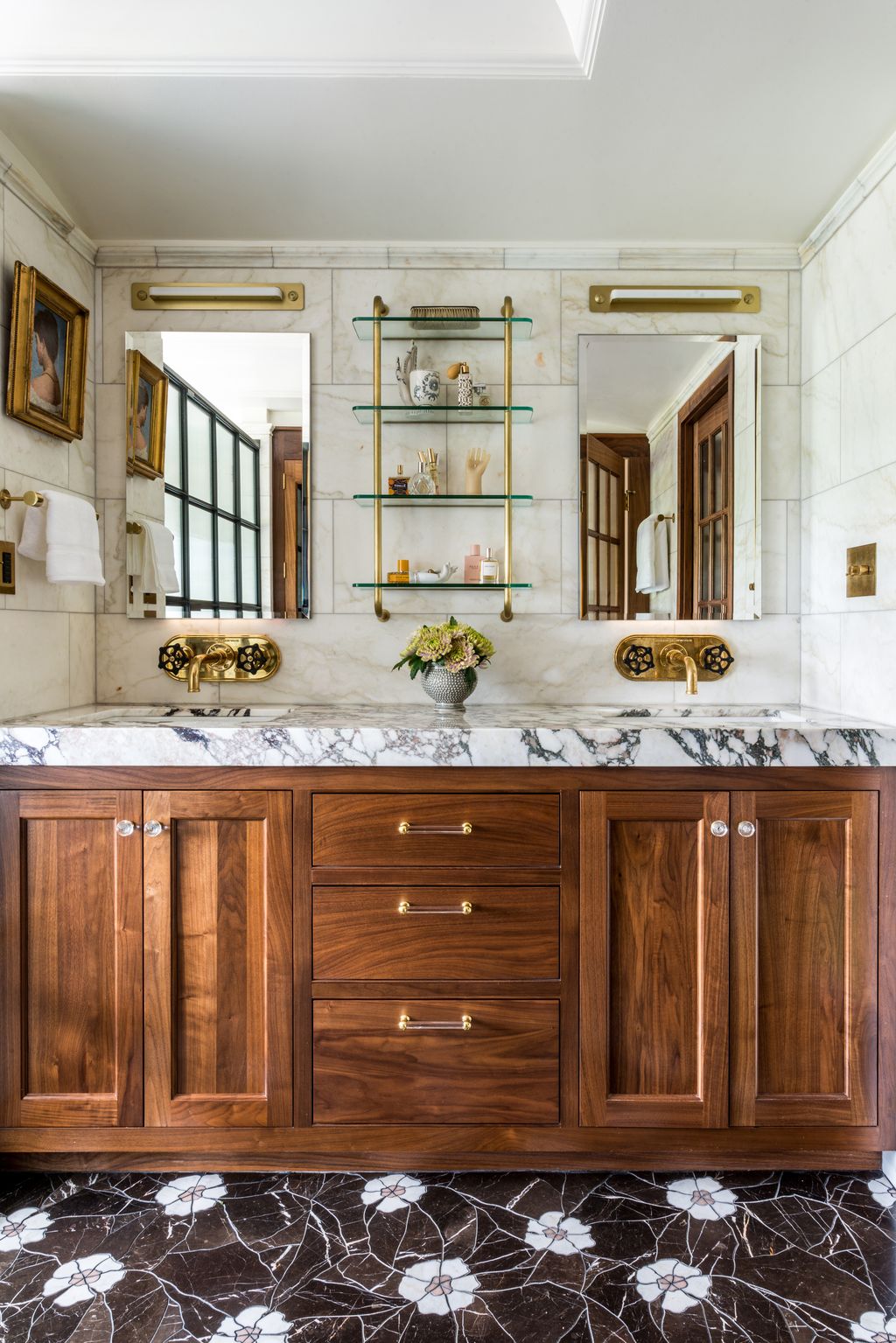
The cupboards are custom-built by Mallet Design Build, in walnut.


 Lauren L. Caron13/13
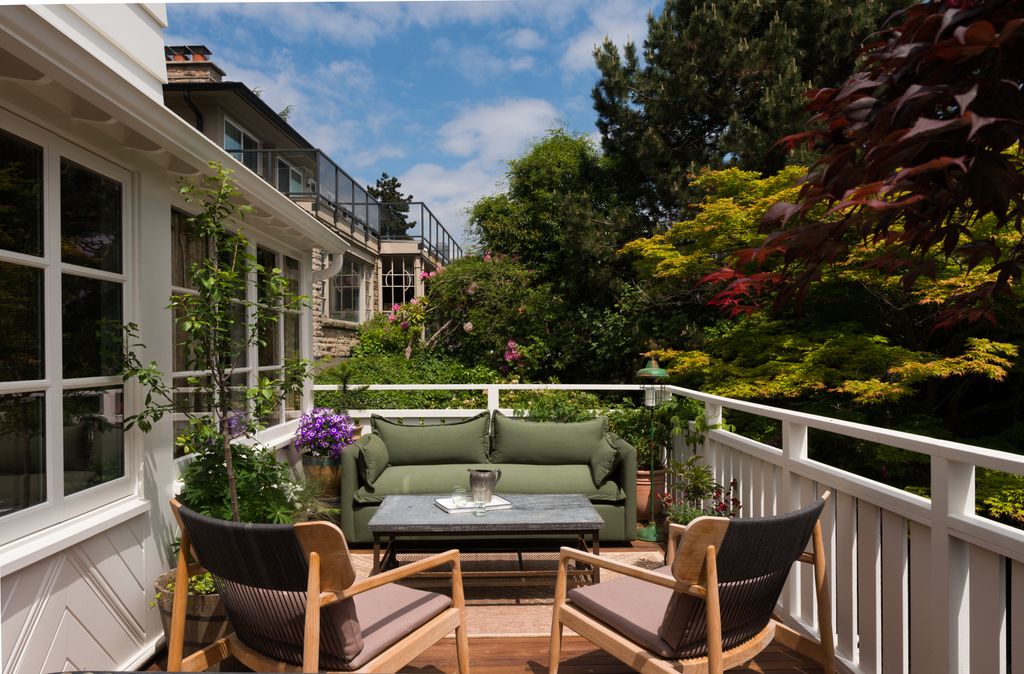
The sofa is from Anthropologie, the coffee table from Chairish.com, the chairs are from Summerhouse. Lauren had weatherproof covers made for the upholstered items for the winter months.


