
Eye candy: an opulently illustrated new book from TASCHEN delves into the history of costume jewels
.jpg)
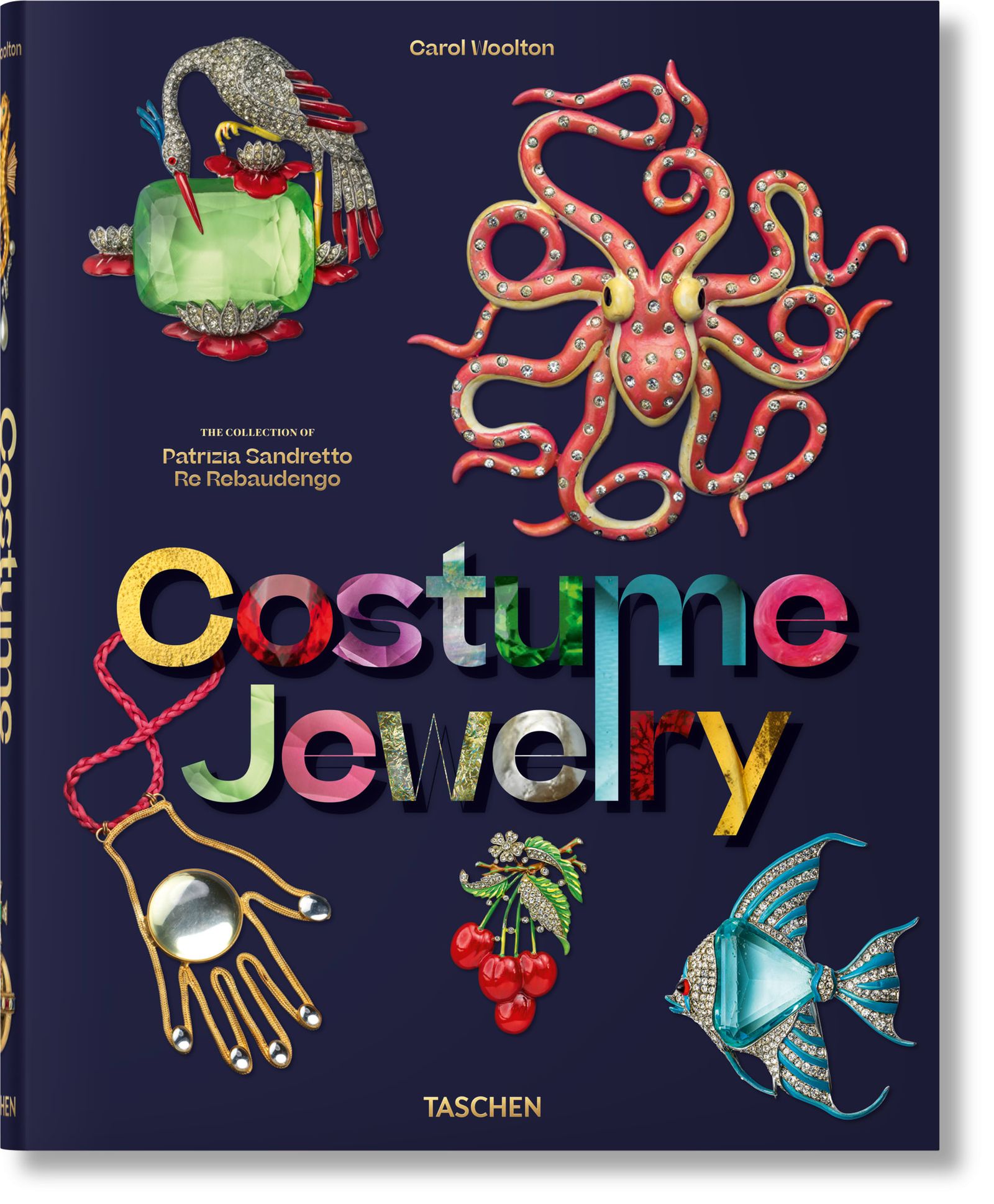
As in so many sartorial matters, Coco Chanel had the last word on jewellery. The notion of wearing real gems to show off one’s wealth was, she remarked, like “wearing a cheque around your neck”. Instead, bijoux should be “an ornament and an amusement”. This was a radical statement in the 1920s, when costume jewellery was a concept only beginning to be appreciated. When perusing Taschen’s new book Costume Jewelry, however, her words spring to mind time and again.
The book documents 30 years of collecting by the Italian arts patron Patrizia Sandretto Re Rebaudengo. Although she’s also an art connoisseur, Sandretto Re Rebaudengo’s chief passion is not for works that hang statically on walls or languish in vaults; she likes to wear her acquisitions, making the nature of her interests quite unique. “I was intrigued by the way in which the exquisite jewellery designs contrast with the humble materials used in their manufacture,” she says.
Unlike most fashionistas, Sandretto Re Rebaudengo chooses outfits to complement her jewellery, rather than the other way around. As fashion critic Maria Luisa Frisa reveals in the essay that concludes the book, the collector stores her treasures in cabinets with sliding drawers, each item identified by a photo and index card so it can be easily accessed or packed for travel.
The book is organised in loosely themed chapters – sometimes dedicated to important designers like Miriam Haskell and William de Lillo (Sandretto Re Rebaudengo’s favourite), sometimes exploring decorative tropes. Each section is whimsically headed with a song title – a fruit-and-flower-themed chapter, for instance, is represented by George Gershwin’s Summertime.
One of the most illuminating aspects is British Vogue contributor Carol Woolton’s introduction, which tells how the phenomenon of costume jewellery came into being from the 1930s onwards. She traces its origins in the diaspora of European craftsmen who emigrated to the United States after World War One, taking with them skills honed in fine jewellery houses, and in the democratisation of American fashion and society, which produced a newly emancipated audience of women eager to make independent style choices.
.jpg)
The new pursuits of travel and cocktail parties demanded a more irreverent, extrovert style of gem than the staid diamonds and pearls of yore: Princess Margaret wore her Kenneth Jay Lane gems to go swimming in Mustique, which you couldn’t do with Cartier. New plastic-based materials, such as Lucite and Bakelite, made ever more fanciful designs possible, as evidenced by the “Jelly Bellies” animal creations that Sandretto Re Rebaudengo collects widely.
Nobody knows for sure who coined the term “costume jewellery” – Frisa suggests a theatrical link via William Hobé, whose creations adorned Ziegfeld Follies showgirls – but Sandretto Re Rebaudengo favours the Italian term gioielli fantasia, which seems somehow more appropriate: this really is the stuff of fantasy.
Costume Jewelry, published November 4 by Taschen, £100, taschen.com
 © ph. Luciano Romano 20221/10
Dating from 1941, this spangled pink enamel octopus pin by Marcel Boucher is set with rhinestones on a rhodium-plated metal base, a whimsical design typical of his imaginative style. Courtesy of TASCHEN.
 © ph. Luciano Romano 20222/10
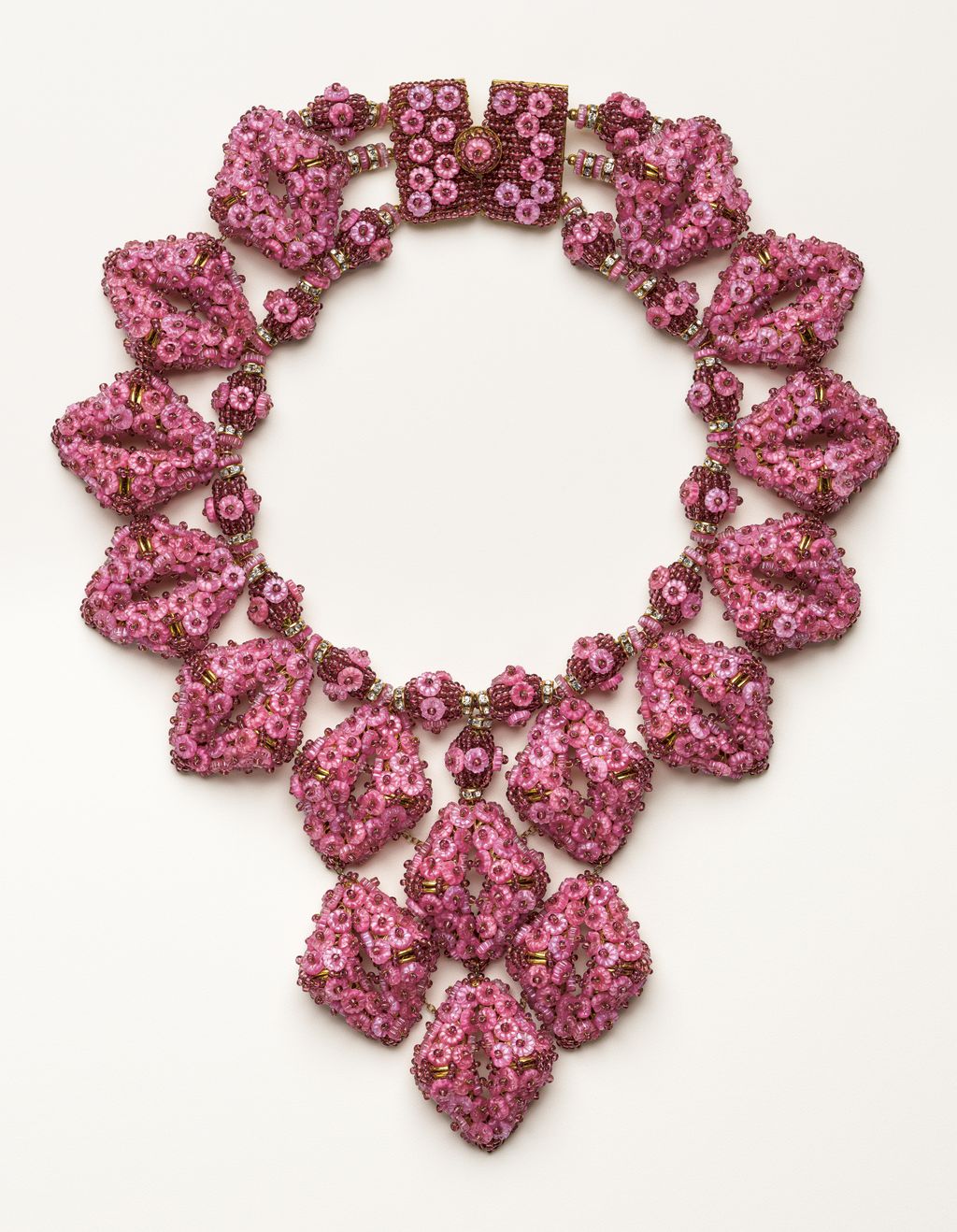
Made around 1970–1980 by William de Lillo, this festoon necklace is hand-crafted from French glass beads and rhinestones. Courtesy of TASCHEN.
 © ph. Luciano Romano 20223/10
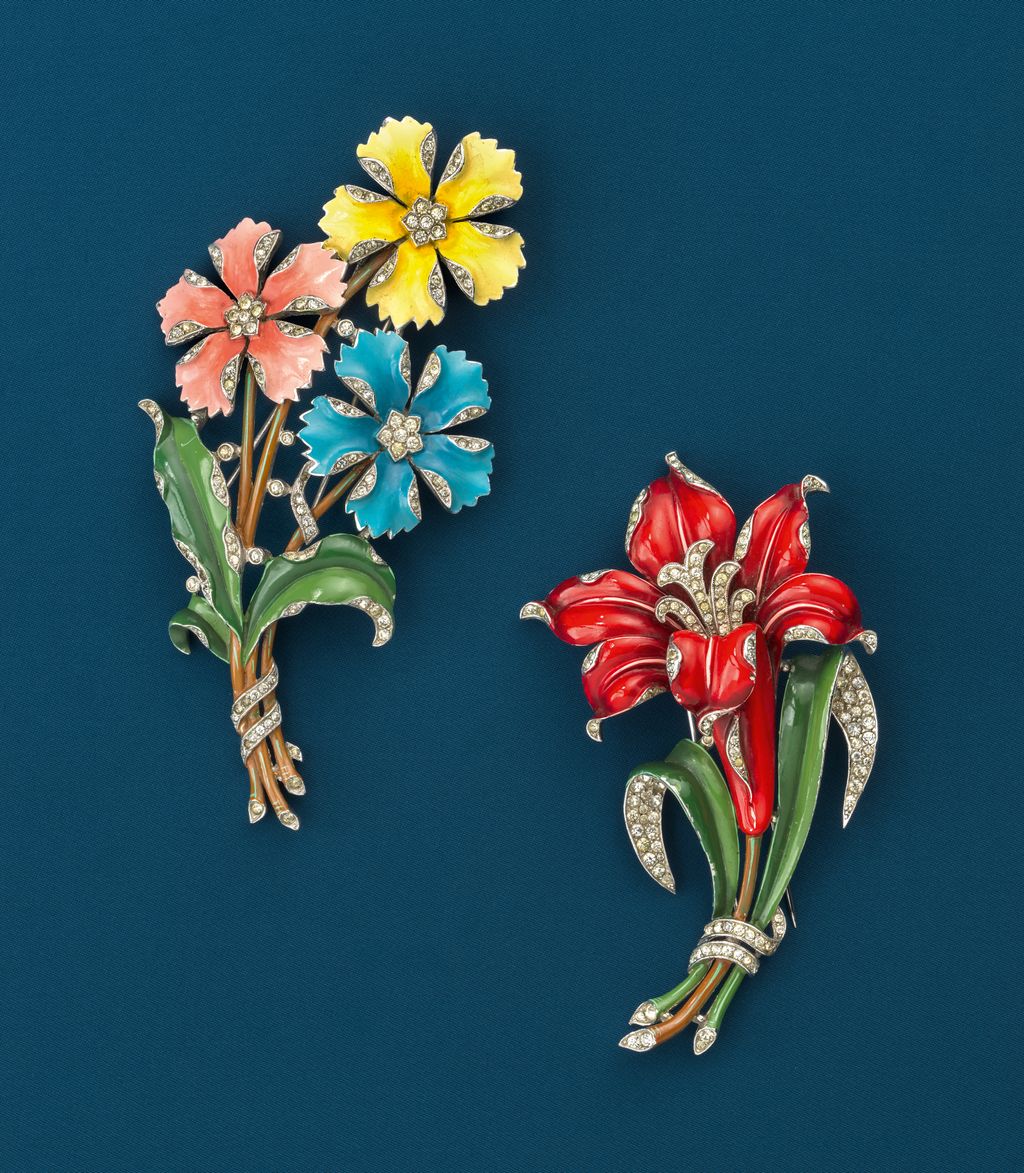
Designed by Alfred Philippe for Trifari in 1941–42, these floral spray pins feature enamelled flowers set with rhinestones on a rhodium-plated metal base. Courtesy of TASCHEN.
.jpg) © photo GRAFILUCE /Luciano Romano 20214/10
© photo GRAFILUCE /Luciano Romano 20214/10A parure by Réja from the 1940s, composed of green crystals and rhinestones set on a golden sterling silver base. The bold design includes a large pin and matching earrings. Courtesy of TASCHEN.


.jpg)
 © ph. Luciano Romano 20225/10
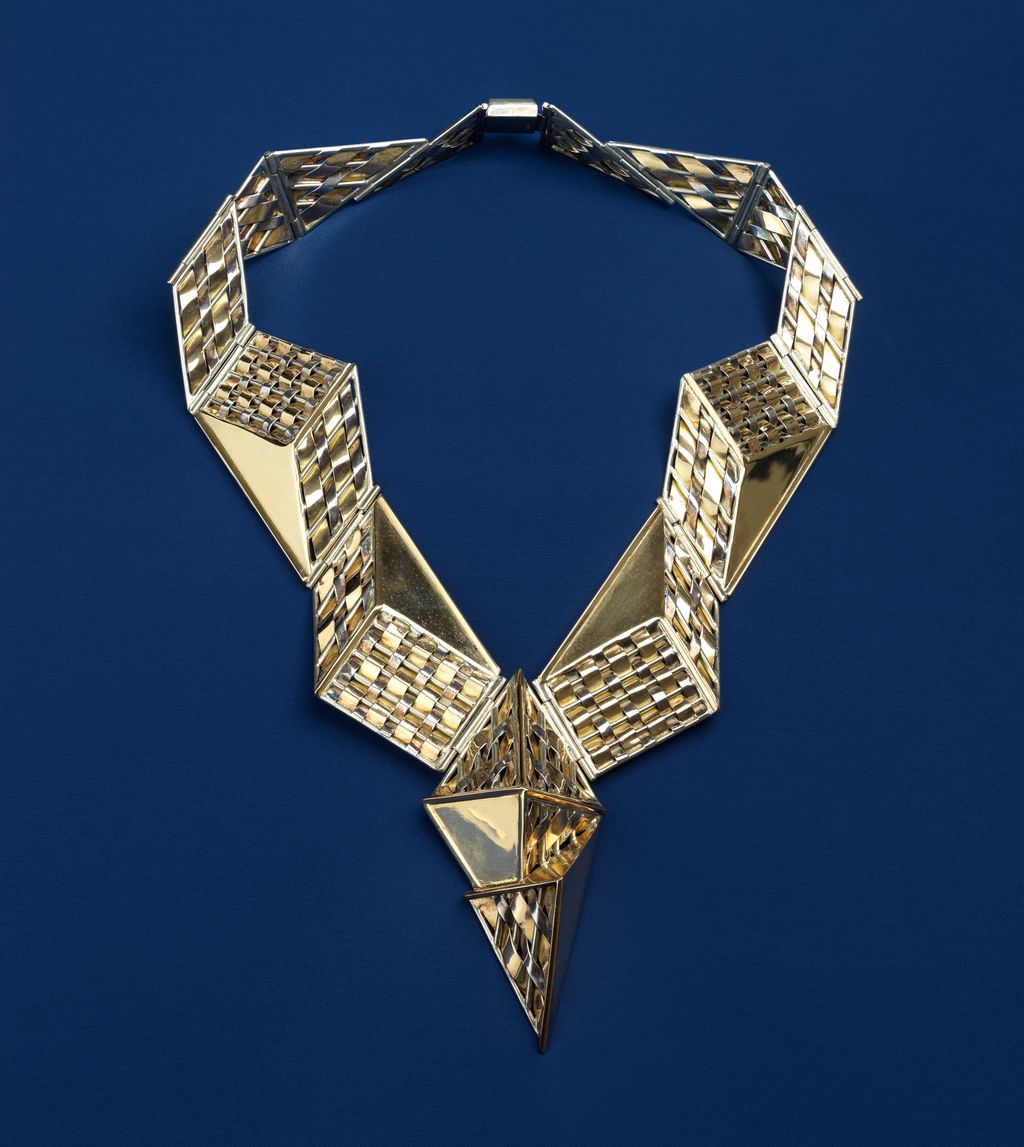
With its architectural geometry and articulated links, this prismatic weave necklace by William de Lillo, c. 1969, is crafted from sterling silver and 14-carat gold. Courtesy of TASCHEN.
 © ph. Luciano Romano 20226/10
This floral necklace by Sandor, made in 1960, features pastel enamelled flowers on a gold-plated metal base, its delicate palette and clustered forms evoking the freshness of spring. Courtesy of TASCHEN.
.jpg) © ph. Luciano Romano 20227/10
© ph. Luciano Romano 20227/10Created in 1944 by Adolph Katz for Coro, these Jelly Belly bird pins depict a flying grouse and a pheasant, combining rhinestones, enamel and Lucite on gold- and pink gold-plated sterling silver bases. Courtesy of TASCHEN.
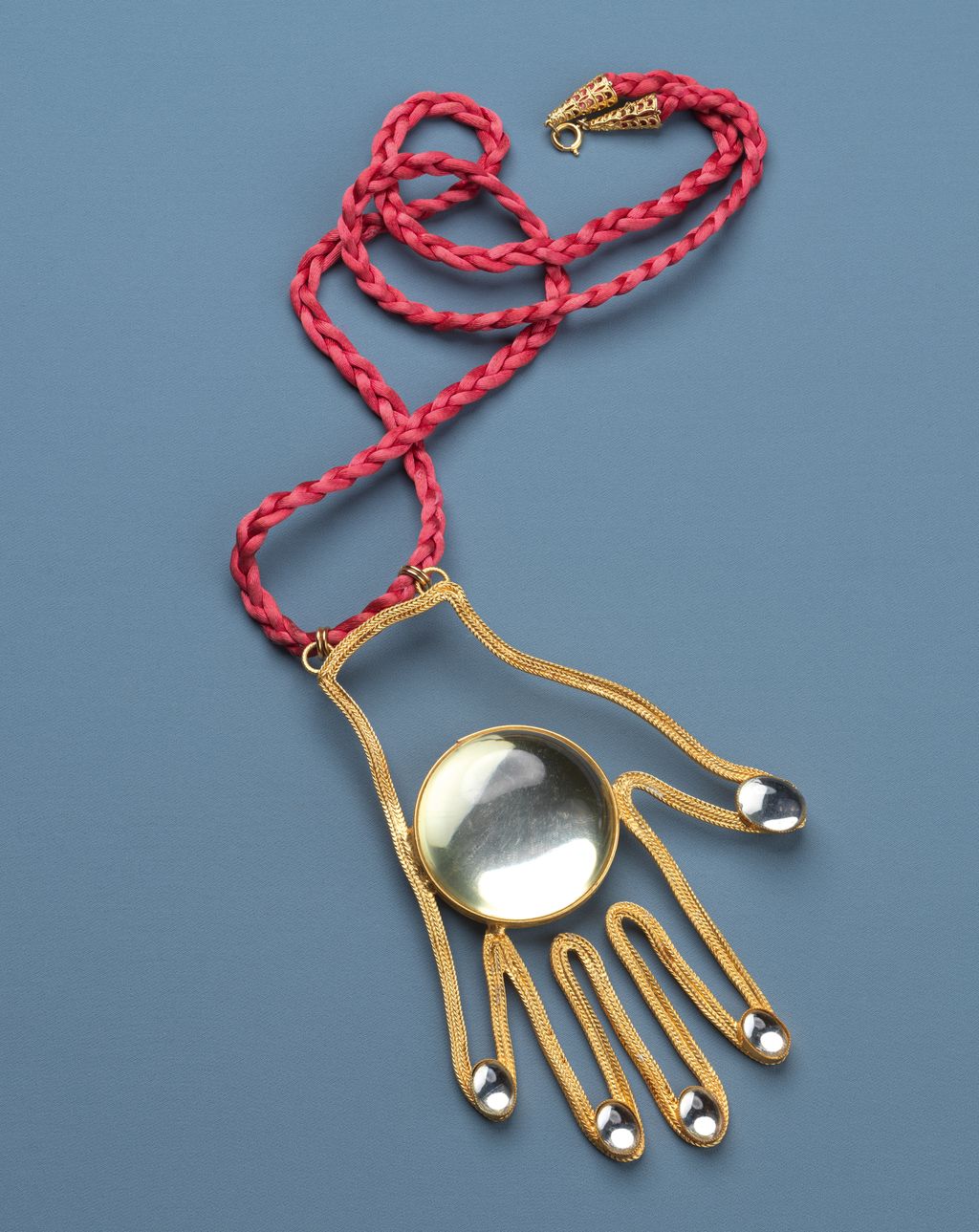 © ph. Luciano Romano 20228/10
Created in 1971 by William de Lillo, this silk necklace features a gold-plated pendant in the outline of a hand – a surreal, almost dreamlike motif that captures the spirit of the era. Courtesy of TASCHEN.


.jpg)

.jpg) © ph. Luciano Romano 20229/10
© ph. Luciano Romano 20229/10Mimi di Niscemi created this festoon necklace in 1972, combining golden shells and green pâte de verre teardrops on a gold-toned metal base to form a design that moves with quiet rhythm. Courtesy of TASCHEN.
.jpg) © ph. Luciano Romano 202210/10
© ph. Luciano Romano 202210/10This Egyptian Revival scarab necklace by Hattie Carnegie, made in 1972, combines lapis and turquoise beads with carnelians and enamel on a gold-plated base. Courtesy of TASCHEN.
.jpg)
.jpg)


