
Sicily's southeastern corner is the Italian hotspot to know this summer

Southern Italy has been growing in popularity steadily for the last five years or so, with competition for Puglia’s distinctive cone-shaped trulli becoming hotter and hotter as travellers flock to the area. This summer, however, a new southern Italian hotspot has emerged. You might have noticed your social media feeds flooded with images of Baroque buildings, glittering blue water and the largest aubergines and tomatoes you’ve ever seen–that’s Sicily, and it's particularly the south-eastern corner of the island that is having a moment.
The area is a large one, stretching from the second largest city on the island–Catania–down to the south coast and taking in the seven Baroque towns in between. Modica, Ragusa, Scicli and Noto are the best known of these and offer culture and architecture in spades for tourists. The real jewel of this part of Sicily is Ortigia, the island city connected to the larger sprawl of Syracuse. And then of course there is the dark overlord which towers over the region: Mount Etna and its constant plume of smoke.
As Catania has the second airport in Sicily (the other being Palermo), it’s best to start or end a trip in the surrounding area. Monaci delle Terre Nere is one of the best hotels around, situated in a large expanse of volcanic land on the slopes of Mount Etna, away from the chaos of Catania. This old monastery turned country hotel has a few rooms in the main house alongside other residences scattered across the 25 hectares, where fruit trees, vineyards, vegetable and herb gardens and chickens provide much of the food for the hotel. There is much to explore here and you could quite easily hole up at the hotel for a few days lounging by the pool with its views over the Ionian sea, wandering the grounds and–if you’re lucky–watching Etna erupt in red fury against the black night sky.
MAY WE SUGGEST: The 800-year-old estate of a Sicilian marquis with evolving displays of succulents and tropical flowers
About forty minutes drive north of the hotel is Taormina, a popular tourist town and one that is worth dropping by for its Greek heritage (and the best arancini on an island already famed for them). The hillside town is essentially composed of one main, pedestrianised street, with a few charming alleys off and around it and an extra draw in the Greek theatre, which dates back to the 3rd century BC and has beautiful views towards Mount Etna and the coastline. The neighbouring coastal town below Taormina shares a name with the Greek island of Naxos, reminding visitors of the Greek colonisation of Sicily that started in the 8th century BC. If you want to feel like a true Sicilian, you should swing by Rosticceria Da Cristina as you head back to the car, queue up with the locals and construction workers and pick up a picnic of sciacca, arancini and pizza slices to take to the pebble beach that runs south from Naxos to Riposto.
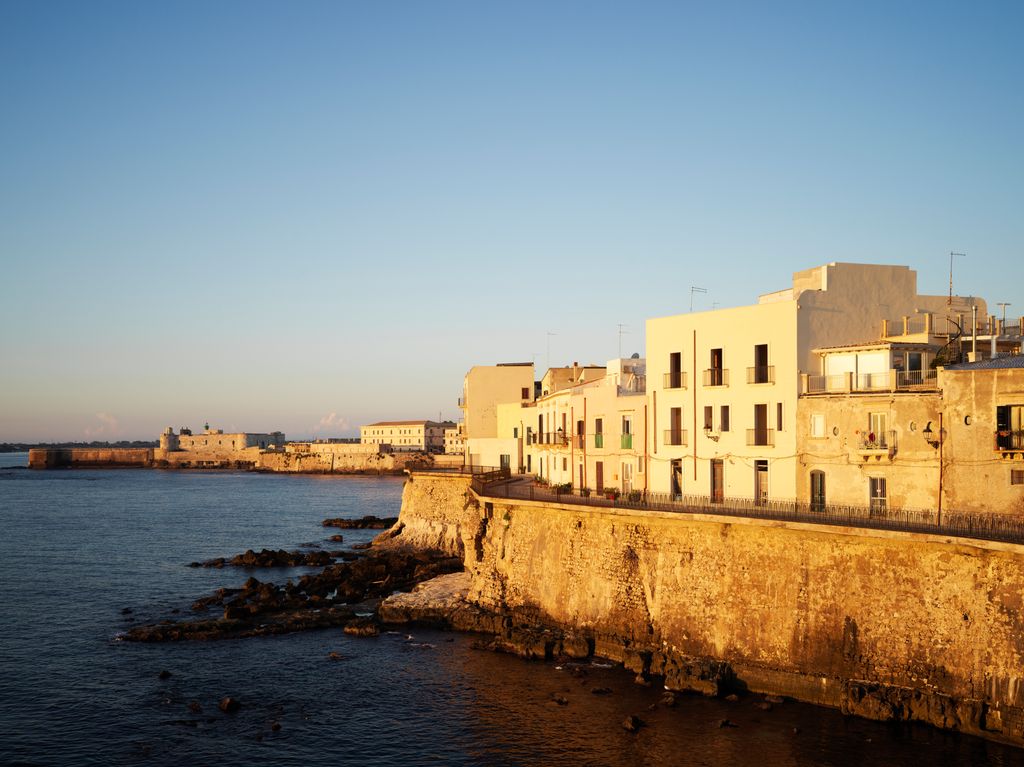
Architecture lovers will be particularly well rewarded further south, as you come to the corner that contains Ortigia, Noto, Modica, Scicli and many other Baroque beauties. Ortigia is a must-visit, either as a base to stay or simply for a day trip or two. It has it all; commerce, a ruined temple of Apollo, intricate honey-coloured buildings, the best almond granita and brioche in Sicily, a food market full of sights, sounds and smells to tantalise the senses and an unexpectedly lovely swimming spot. A day can be very easily spent in Ortigia, but better make it two to repeat all the best bits or try one of the restaurants and delis that you didn’t quite make the first time.
Noto is perhaps the second best known city in this area, with a succession of spectacular Baroque buildings along its main street and a huge cathedral dominating proceedings. In the daytime, the bun fight of coach tours and tourists mean it's probably best avoided, but pop back at aperitivo hour and you get the place nearly to yourself, with just other locals, drinkers and restaurant goers for company. Caffé Sicilia offers the best views with a Campari soda, if you can nab an outside seat, that is, while Caffé Constanza has a more authentic feel. Follow drinks up with dinner at Modica di San Giovanni, if only to get a taste of their ricotta ravioli in pork ragù.
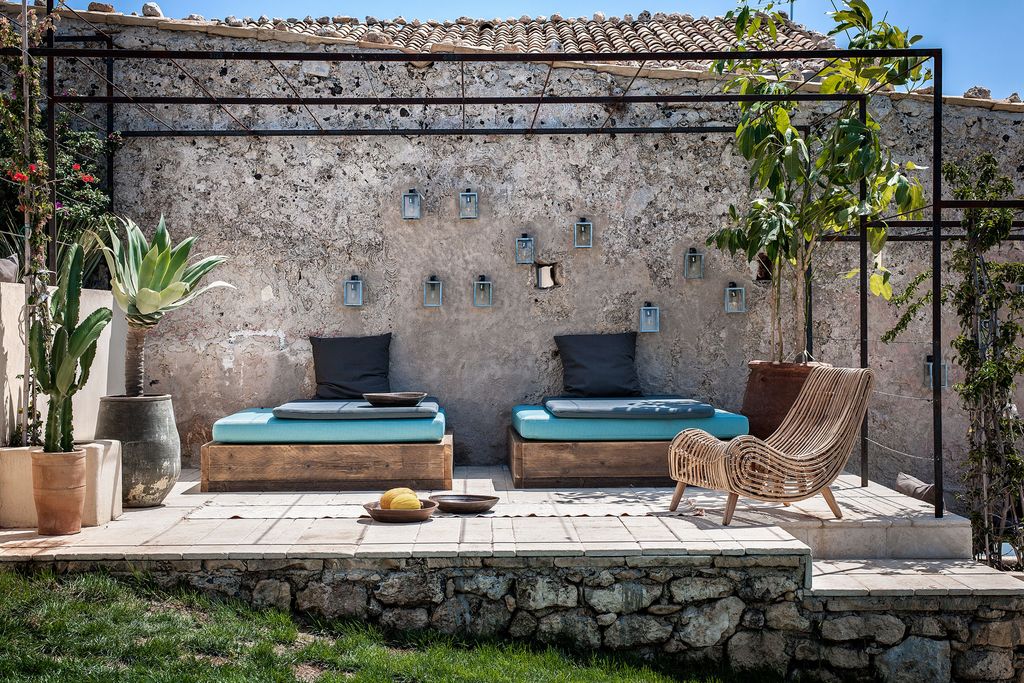
The best place to stay for venturing to Ortigia, Noto, Modica and Ragusa is Dimora delle Balze, a completely idyllic country hotel in striking distance of them all. Remarkably for an island with notoriously shoddy roads (an ongoing reminder of the mafia’s chokehold on the island), the drive from Dimora delle Balze to Noto is rather enjoyable. Dimora itself might just be the nicest place to stay in the whole of Sicily. It blends traditional, crenellated architecture with a modern minimalist aesthetic, while feeling airy, spacious and utterly remote from anywhere else. It’s a weary traveller's haven, and the sight of a long wooden farmhouse table laden down with breakfast goodies is enough of a reason to book, even before you come to the spacious, breezy rooms and turquoise pool. It’s boutique luxury done very well indeed.
MAY WE SUGGEST: A grand, decaying Sicilian house undergoes a remarkable restoration
Directly south west of Dimora delle Balze is Modica, one of the largest Baroque cities on the island. It’s a multi-layered urban sprawl, lively by day and night and full of highly recommended restaurants. It’s worth climbing up the many steps and steep roads to the Duomo di San Giorgio just before night falls to look out over the city and watch all the lights come on in one magical blink of an eye. From there, you can simply wander down again to Corso Umberto I (one of the main streets) and refuel with very hearty portions of traditional Sicilian dishes served at Osteria dei Sapori Perduti. The plates are generous, and this is not a fancy restaurant, but it is charming and reassuringly full of Sicilians.
The very south coastline of the island is the last place to visit along this stretch, with sandy beaches galore, tiny fishing villages and nature reserves. Pozzallo is the largest city here, with a port and ferries that go straight to the Maltese capital at Valetta, while the popular beach resort of Santa Maria del Focallo further east offers a more laid-back holiday feel (though it gets extremely crowded in high summer). The town of Portopalo boasts a beach where the Ionian sea meets the Mediterranean and further north back towards Ortigia is the photogenic village of Marzamemi, a formerly run down fishing village that is now a hotspot for tourists and has seen a boom that fills every seaside restaurant table when the season is in full swing. It's set to perhaps be even more popular now, as Dolce & Gabbana recently held their couture show there.
There are some caveats that come with holidaying in this part of Sicily. A car is a necessity, as is making sure it’s insured up to the gills. It can be extraordinarily hot in summer (August is regularly well over 40 degrees celsius) and so the best time to visit is May and June (which is, handily, well before the Italians descend en masse). However, Sicilians still consider it cold in late May–regardless of 30 degree plus weather–and the summer season only really begins then, so some coastal attractions (beach bars, for example) will not open until June.
Ways & Means
Flights to Catania depart daily from London. Rooms at Dimora delle Balze start at €484 per night. Rooms at Monaci delle Terre Nere start at £273 per night, including breakfast.
 Gonzalo Azumendi1/10
Noto is one of best known Baroque towns in Sicily.
 Westend612/10
St Nicholas Cathedral in Noto is the largest Baroque building in the city. It's best to visit later in the day, when the crowds have dispersed.
 Gary Yeowell3/10
Ortigia is an island within the island, and offers everything you could want, from a food market to ancient ruins and sea swims.
 Gary Yeowell4/10
Ortigia.


 Atlantide Phototravel5/10
Duomo di San Giorgio in Modica.
 Federica Gentile6/10
The fishing village of Marzamemi.
 7/10
7/10Dimora delle Balze is a country house hotel with serious style.
 8/10
8/10Dimora delle Balze has a breezy, minimalist style that blends with the ancient architecture.


 9/10
9/10A terrace area at Dimora delle Balze.
 10/10
10/10A bedroom at Dimora delle Balze.


Comments
Back to Top


