
How to decorate with wallhangings and tapestries

Tapestries and wallhangings sometimes suffer from a rather fuddy-duddy reputation, associated with images of crumbling country houses and musty rooms. We're here to make clear that this is far from the truth. Decorating with antique tapestries, Turkish rugs and precious textile fragments can add warmth and richness to traditional schemes. And ‘precious’ can mean so many things – it doesn't have to be an expensive, ornate tapestry, it could be as simple as an antique tea towel bought on eBay or a scrap of lace hung in a nice frame.
Why decorate with wallhangings and tapestries?
In a word? They’re beautiful. Wallhangings, textiles and tapestries are visually engaging and fascinating to look at again and again, and they introduce something which could be seen as more “authentic” or organic than certain pieces of fine art. For centuries, they have been a vehicle for vernacular artistic expression around the world, woven by people – overwhelmingly women – who might not have had access to other means of creativity. They carry huge meaning: in Islam, for example, rugs can be abstracted depictions of jannah, or paradise, despite figurative images otherwise being impermissible under the religion. Tapestries around the world tell stories and commemorate events.
There are also practical considerations. Wallhangings are a great addition to a rented space, for example, because they can be quite easily moved. They keep your house warmer in the winter months, as many of them were intended to in the past. There’s a wealth of fabrics out there that can enhance even the airiest and most contemporary of interiors, or any wall that might be unattractive in texture or colour. They’re perfect for hiding sins – we’ve even seen some examples of textiles concealing some of the vulgar, less attractive addendums to our houses, such as televisions (like in a charming living room by Studio Squire, where a suzani on a curtain pole hides one). Plus, they’re completely brilliant for filling those awkwardly large expanses of empty wall – many of our designers use them in hallways or above sofas and beds.
Where should you buy wallhangings and tapestries?
When trying to source textiles, the internet is your friend. Etsy has a wealth of wonderful handmade, custom or antique textiles that can be hung in a myriad of ways. Jess Maybury is a wonderful young collector of vintage textiles from all over the world and she sells a lot of them – from Uzbek suzanis to Moldovan kilims – on her website. Collecting textiles on your travels is also always a good idea: Ghanaian Asafo flags have a rich history, whilst early American quilts and bedspreads add texture and interest to a wall and French flea markets are brimming with embroidered tablecloths.
If you have a particularly valuable textile, why not consider framing it and hanging it as you would an artwork? From colourful Indian kanthas to artist-designed rugs or suzanis, scroll down for inspiration on hanging fabrics on your walls.
 Dean Hearne1/25
Despite looking like a house in Provence, Ceara Donnelly’s apartment is actually in the heart of Manhattan. Over the bed, an inherited mid-century wall hangs above a 'Garden' cashmere blanket from Saved NY. The effect is a dramatic and striking one.
 Jonathan Bond Photography2/25
In this Buckinghamshire house designed by Elizabeth Hay, the client’s collection of historic Indian textiles, already preserved in Perspex, were hung on the double-height wall by the staircase. It’s an unusual but engaging way to display wall hangings and other fabrics, while still an expression of the client’s personality and taste.
 Kristin Perers3/25
In a Dulwich flat decorated on a tight budget, Catherine Olley has used a suzani to inexpensively cover a large expanse of blank wall in her dining room. The suzani, along with the dining table, chairs and rug, were all all found on eBay. Neutral walls tend to work well with a tapestry, here Catherine has used Dulux's Indian White.
 Christopher Horwood4/25
A tapestry can be useful as well as beautiful. Seen here, a large suzani found on Vinterior conceals a TV screen in the living room of this welcoming country cottage in the South Downs by Studio Squire. The golden tones of the suzani are picked up by the sofa, which is covered in a Rose Uniacke corduroy with cushions from Fermoie and Zara Home.


 Dean Hearne5/25
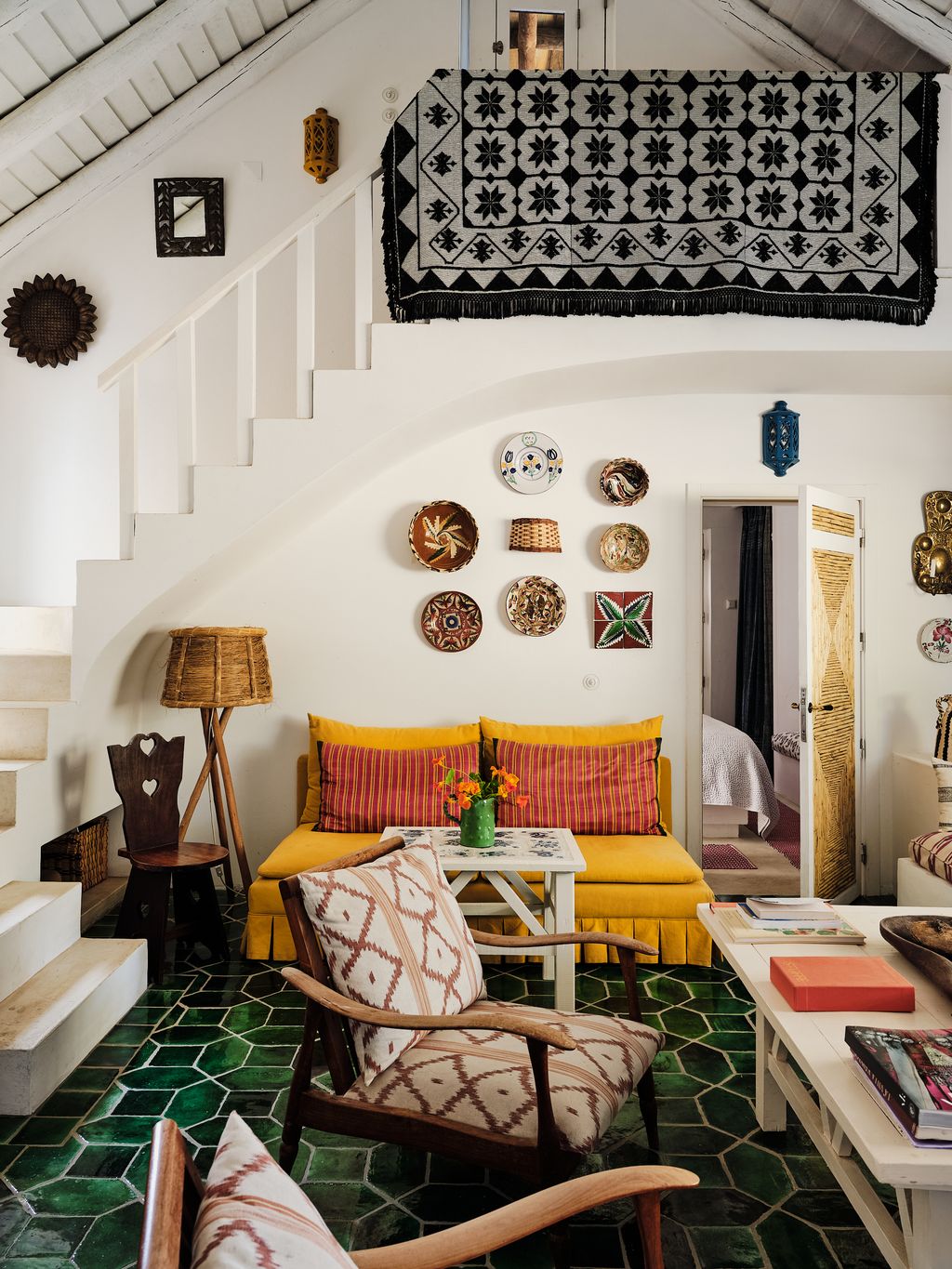
Tapestries are by nature moveable feats. Here, doyenne of fabrics Carolina Irving has casually thrown a throw (as the name instructs) over her staircase, to add a moment of interest at the top of the room, and balance out some of the action below, including the floor tiles from Azulejos de Azeitão. The hand-woven textile sits above the Spanish ceramics across the walls.
 Boz Gagovski6/25
Tapestries and blankets can be framed to add a more formal and finished look to a wall. Wrapped with shelving, this humorous throw by BFGF is the perfect colourful centrepiece for Stella Weatherall's densely decorated Notting Hill Flat. The abundance of cushions and fabrics continues the textile-focus throughout the room.
 Mark Anthony Fox7/25
Phoebe Clive’s love of homespun crafts is evident in every corner of her 16th-century Herefordshire cottage. In the sitting room, Phoebe’s collection of Hungarian and Bulgarian folk-art frames is displayed above a wall curtain in Tinsmiths’ ‘Ledbury Elizabethan’ linen, based on a Tudor wall painting discovered above the council offices in Ledbury. This is the backdrop for Curwen Menagerie, an original lithograph by Mark Hearld. More curtain than traditional tapestry, this technique is insulating and enveloping, and could be used in a rental space and then brought with you when you left.
 Mark Fox8/25
In the bedroom of Alfred Bramsen's Art Deco flat in Hackney a wall hanging from Norlha Atelier adds a pop of colour that is picked up in the Asafo flag draped on the bed. The ceiling lampshade and lamp by the window are both Hay, while the other is a Noguchi piece.


 Boz Gagovski9/25
The green and red of this intricate tapestry set the tone for the spare room in Max Hurd's theatrical Victorian terraced house. The painted section below the dado rail was to use spare paint and, executed beautifully by Queenie Ingrams, is the perfect geometric counterpoint to the tapestry above. The patchwork headboard and bedspread (made from American 19th-century rag quilts) continue the textured, tactile feel of the room too.
 Paul Massey10/25
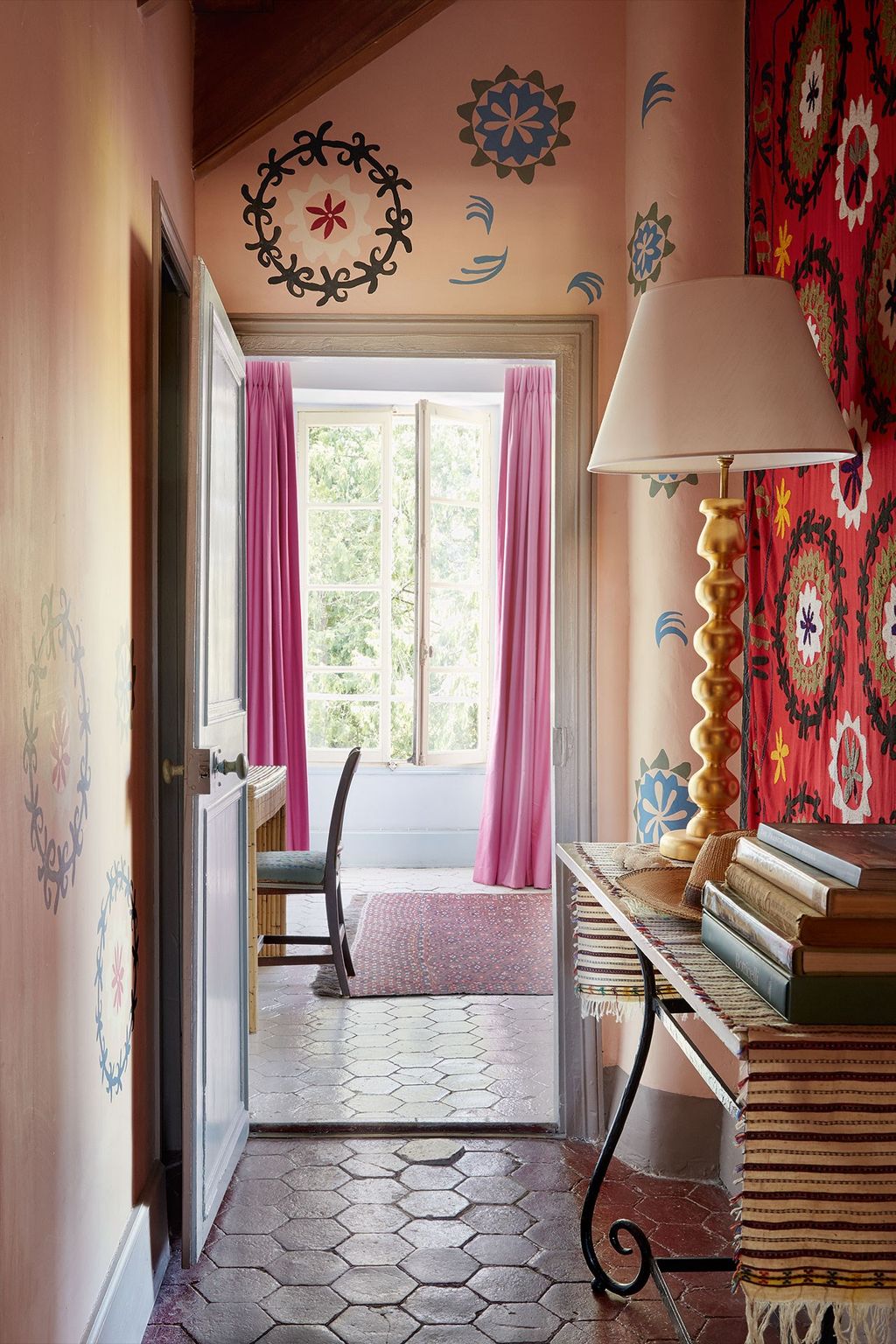
Interior designer and fabric dealer Susan Deliss can always be relied upon for a good use of a suzani. Seen here in her French country retreat, an antique suzani hangs on the landing outside the main bedroom; a motif from this inspired the decoration around the doorway, which was painted Susan's partner Max.
 Paul Massey11/25
In the bedroom of the same French country house, Susan had an antique Ikat textile mounted to a board to create an artwork for the wall. Above the headboard - also made from an antique suzani - hangs an unusually thin, delicately embroidered piece of fabric. It's not neat or perfect, but it's the perfect stripe of specialness.
 Elsa Young12/25
In a rural house in Ibiza designed by Joanna Plant, lamps from Magus Antiques, with shades made from saris, pick up on the colours of an antique Indian hanging. The cotton bedcover is from Oka.


 Elsa Young13/25
In the hallway of the same house, a vintage table from Puckhaber stands in front of an antique English crewelwork hanging in the hall.
 Rachel Whiting14/25
Gabby Deeming's Bloomsbury flat is full of clever ideas to copy, including this kantha hung over the sofa. "The bare expanse of wall above the sofa required a bit of thinking. I am not an enormous fan of gallery-hung pictures so a vintage kantha quilt, which had been living on the back of the sofa, solved my problem. I bought it in India and the colours are perfect – it’s almost an abstracted version of the Etro fabric on the ottoman."
 ERIC PIASECKI15/25
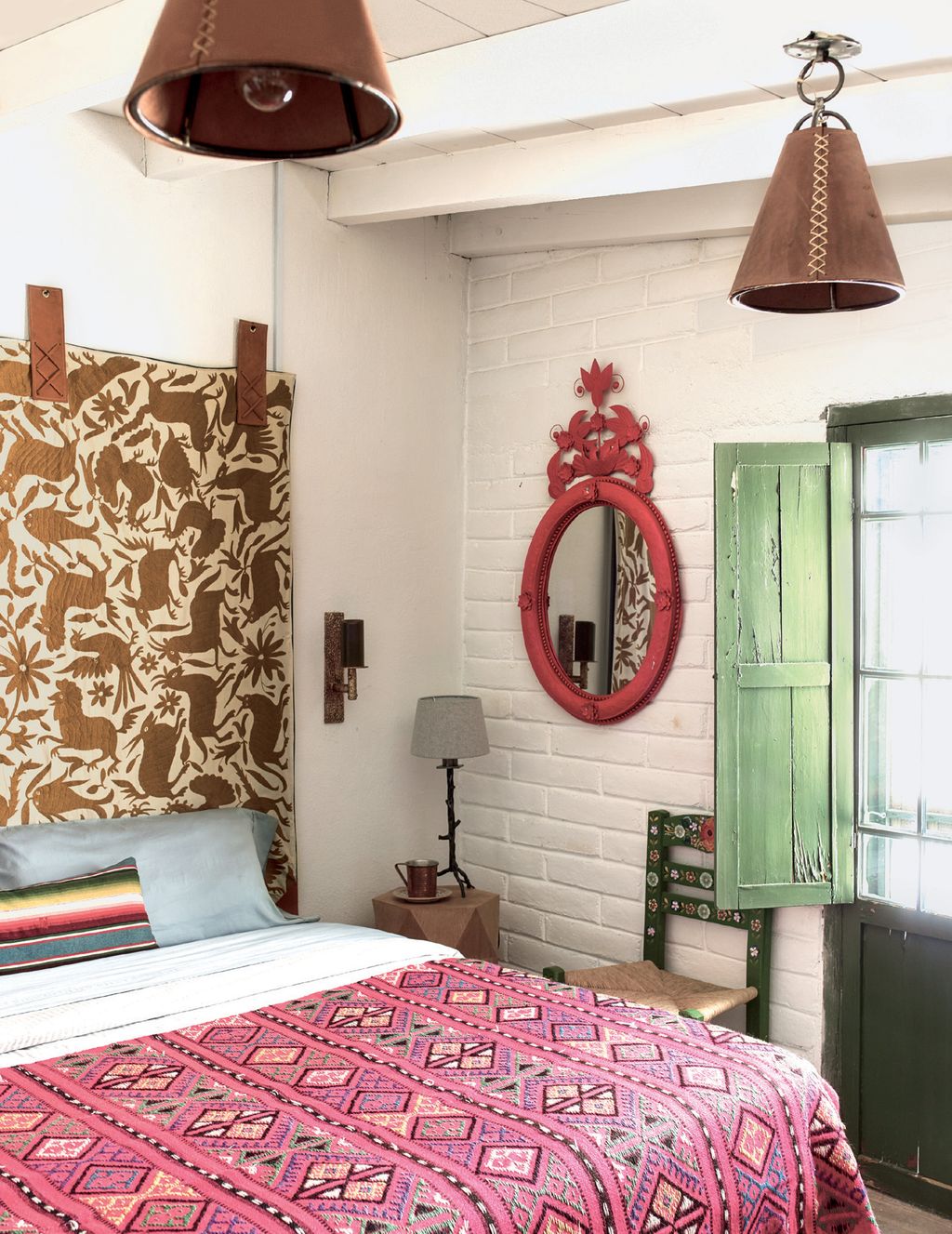
The well-travelled design duo behind the artisanal furniture brand Casamidy have built a ranch in a remote area of northern Mexico, in which their handmade pieces mingle with family heirlooms and objects collected over time. Textiles play a large part in the space; as well as being hung on the walls of the double-height living room, a traditional Mexican Otomi fabric serves as a headboard in this bedroom.
 Paul Massey16/25
A Matisse-style throw from BFGF hangs on the wall behind an antique sofa with cushions in ‘Victor Hugo’ linen mix by Le Manach in this unconventional country cottage by Beata Heuman.


 Paul Massey17/25
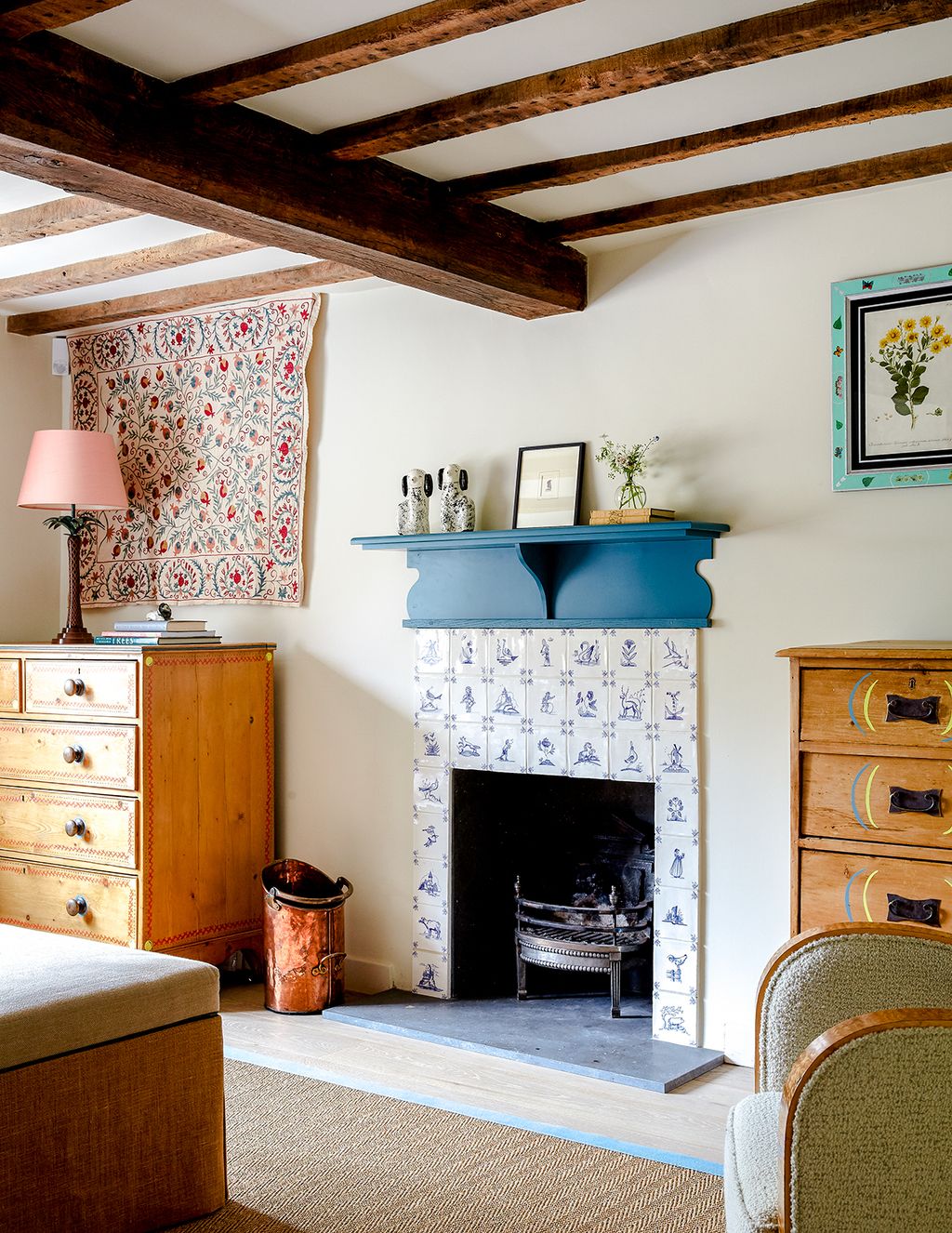
Elsewhere in the same cottage, Beata hung a small suzani on the wall of the bedroom to balance out the space over each of the two dressers.
 Paul Massey18/25
Joanna Plant has updated this elegant Georgian house in the Cotswolds to meet the needs of a family, reconfiguring the layout and creating inviting yet practical spaces for the owners and their children. In the sitting room, an ancient Ottoman textile fragment from Esther Fitzgerald hangs above the chimneypiece.
 Simon Upton19/25
Interior designer Robert Kime is known for his expertise in antique textiles, often using tapestries and carpets as dominant decorative features. In the hallway of his own London flat, rugs hang on the walls, framing a large, distinctive animal portrait.
 Paul Massey20/25
In the spare room in Rita Konig's London flat a Guatemalan tapestry hangs on the wall, paired with curtains in 'Broadcloth' felt from Hainsworth, Tyler Hall's 'First Bloom' wallpaper from Tissus d'Hélène.


 Simon Upton21/25
The scheme for the drawing room in this restored farmhouse was designed around a set of seventeenth-century Soho tapestries, which hang on each side of the chimneypiece. Various shades of green, notably the British racing green velvet armchairs and the white and lime green chairs, bring the room together.
 Andrew Montgomery22/25
In Bridget Elworthy of The Land Gardeners' home, Wardington Manor in Oxfordshire, neutral walls are the base to show off French hangings sourced from junk shops.
 Richard Powers23/25
When interior designer Douglas Mackie and his partner Julian Jackson bought this house in the Languedoc region of the South of France, it was a chance for him - a knowledgeable collector of textiles - to show off his stock of older, pieces. 'I have always been an avid collector, and now their rich saturated colours sit wonderfully well in the shafts of sunlight of a southern home.' In this spare room, aPersian jajim hangs in the spare room, contrasting with the vintage Moroccan rug.
 Richard Powers24/25
In the main bedroom of the same house, a French, eighteenth-century tapestry based on the story of Abraham and Isaac hangs behind the bed.


 Ngoc Minh Ngo25/25
Tapestry doesn't have to be antique. In the living room of Jos and Annabel White's town house in Manhattan, huge tapestries by contemporary artists Kara Walker and Julie Verhoeven line the walls.

Comments
Back to Top


