
A once-ruined silk weaver's house in Spitalfields beautifully restored (2021)

Olwen Evans and her daughters, Alice and Amelia, had been living in a Victorian villa in south-west London but wanted to move somewhere more central. It was Amelia who first spotted this Spitalfields house, built in 1724, on a property website. Georgian houses in this area rarely become available and, inspired by a visit to Dennis Severs' House in Folgate Street - the 10 rooms of which are each restored in a different historic style - Olwen thought it worth a look. In the end it was the only one she viewed.
The five-floor house was very different then. It had become a ruin in the Eighties and narrowly missed being demolished. Instead it was listed and underwent an intensive 'restoration'. 'There was a lot of wall-to-wall cream carpet,' Olwen recalls. Her plan was to return it more closely to its original style, which meant reversing much of the previous work. She chose architect Chris Dyson for the project as he had worked on similar Georgian houses in Spitalfields, including his own award-winning home and office.

Chris often researches the houses he works on. This house was probably occupied by Huguenot silk merchants in the eighteenth century. An 1891 census shows it was later occupied by two households, totalling 12 people. And, according to a ledger belonging to a firm called M Bardinger, which Olwen found under the floorboards, it was in commercial use as a textile business from 1902 to 1977 and had a shopfront.
The only original chimneypiece was in the main bedroom, and there was original panelling in just one room. Other period details had been stripped out, but, with Chris's knowledge and experience, great plans began to emerge, and he designed chimneypieces for the sitting and dining rooms based on period originals. Beautifully finished, they blend in effortlessly.
Chris designed the new conservatory extension to sit comfortably with the rest of the house and suggested moving the kitchen to the front of the property. This allowed more space for the dining and sitting rooms, and made for a better flow from the kitchen through to the conservatory and garden. The small garden is in its infancy, but has shown surprising results already. 'The shrub Tzbouchina generally needs greenhouse conditions in this country, but, as it's protected on all sides, it's flourishing,' Olwen says.

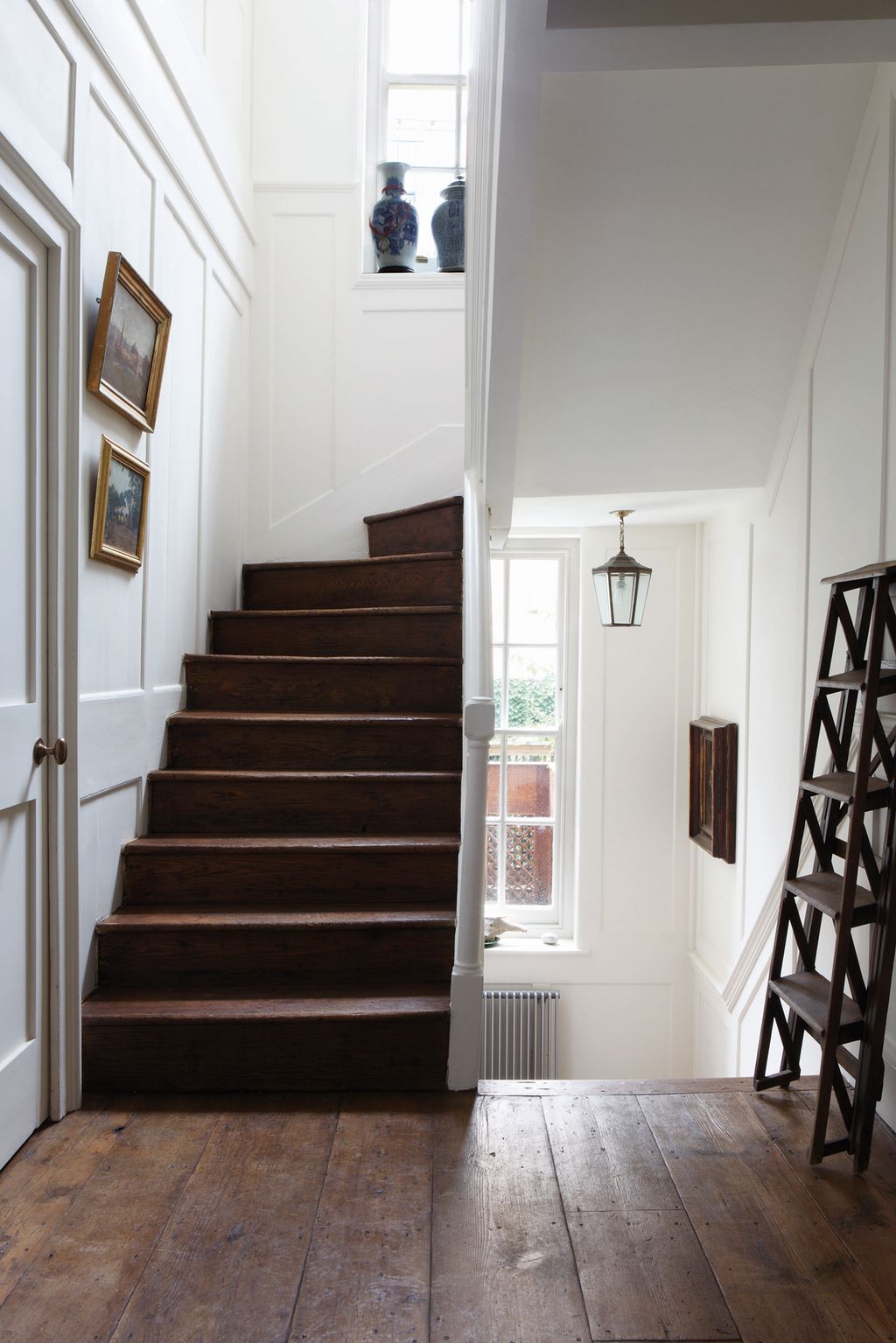
Seamless as it all looks now, this project took over a year and included replacing all the modern floorboards, laid in the Eighties, with reclaimed early-nineteenth-century boards, originally from a Welsh chapel. The staircase throughout is original but was stained and waxed to match the floor.
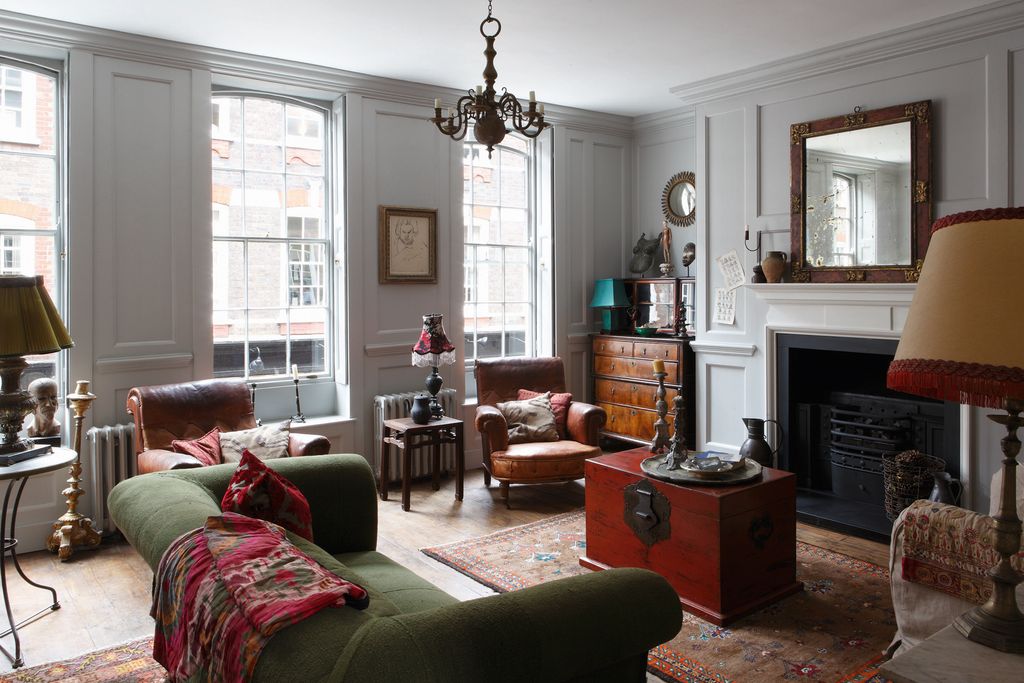
Olwen's previous house was much larger, so her furniture and belongings required some careful editing. A great collector and traveller, she says, 'Wherever I go, I always come back with just a few more things.' She is no stranger to the London salerooms either, and carefully mixes antique English furniture and rugs bought at Bonhams and Christie's with pieces from markets and other more modern discoveries. Finding a suitable sofa for the sitting room was a challenge, but a Clarke & Reilly example, upholstered in rough-linen sacking, now sits happily alongside a red-lacquer Chinese chest and an English cabinet. 'It was an indulgence, but I love it,' Olwen smiles. Elsewhere she surprised herself by buying a dramatic, red-glass, twentieth-century chandelier at Alfies Antique Market - 'I thought, “Well, it'll certainly stop the house looking like a museum.”
MAY WE SUGGEST: A specialist in historical paint techniques has faithfully restored his Georgian house
Olwen grimaces briefly and describes the experience of seeing all five floors being stripped. 'This was a big decision and a huge task, but it was absolutely the right thing to do and fundamental to the project,' she says. The dust has now settled and Olwen feels truly at home. 'I am very much a village or town person,' she remarks, 'and I love this area of east London - its markets, shops and diversity of architecture and history. There's so much happening here; it's vibrant and yet retains a real feeling of community'.
 Alexander James1/13
Reclaimed nineteenth-century floorboards from a Welsh chapel were laid throughout the house.
 Alexander James2/13
In the sitting room, the new Clarke & Reilly sofa fits in well with the many antiques.
 Alexander James3/13
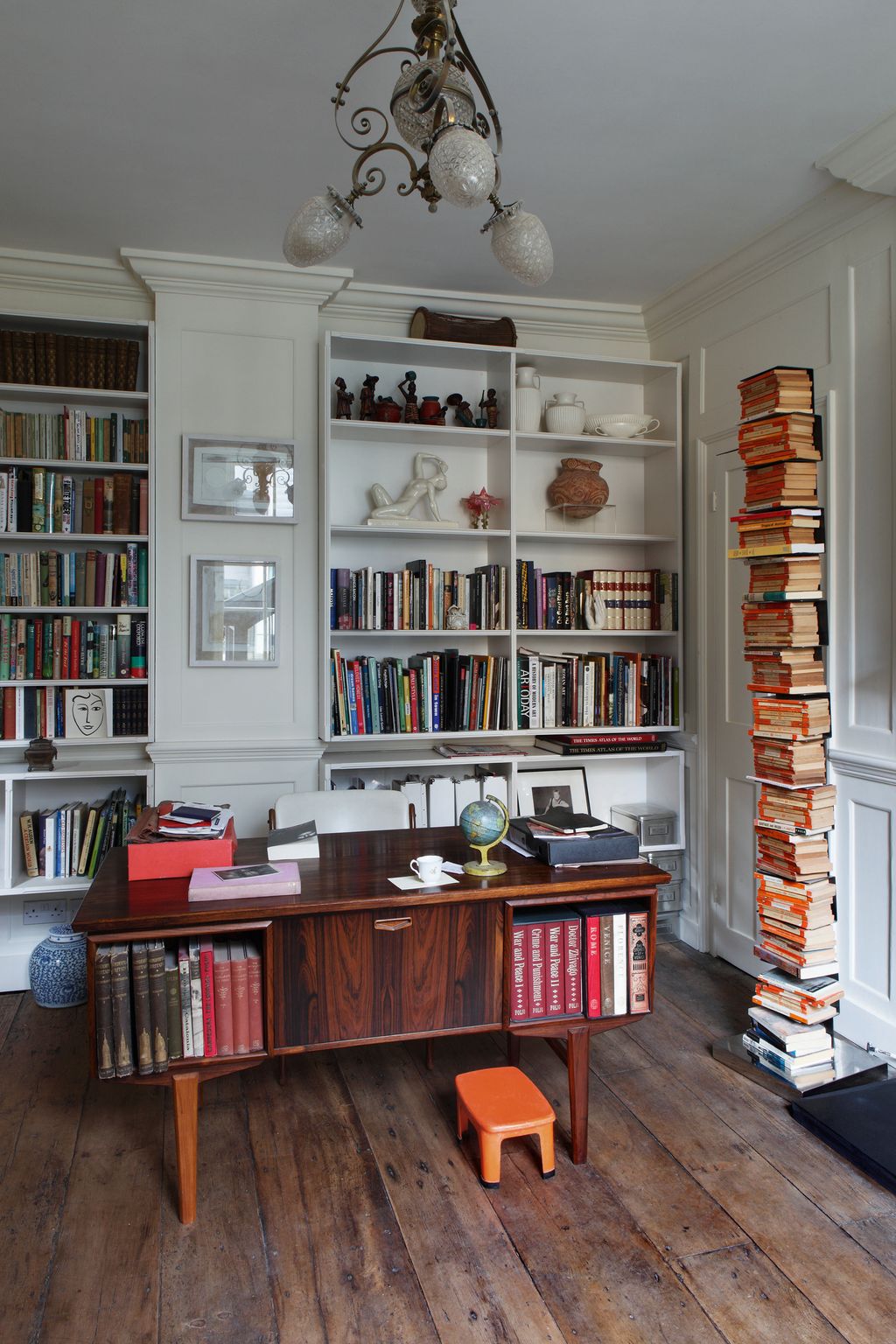
The desk in the study, from The Conran Shop, is vintage Danish; the ceiling light came with the house.
 Alexander James4/13
The conservatory has a wing chair upholstered in an antique kilim from Kingston Antiques Market.


 Alexander James5/13
Architect Chris Dyson restored the house to resemble closely the original style; concessions to modernity include the twentieth-century red-glass chandelier in the dining room, from Alfies Antique Market; the chimneypiece, designed by Chris, is based on a period original.
 Alexander James6/13
The kitchen, with its range of 'Spitalfields' cabinets by Plain English, was moved to the front of the house.
 Alexander James7/13
The staircase was stained to match the floorboards.
 Alexander James8/13
Olwen Evans bought the wood and ivory figure in Hong Kong.


 Alexander James9/13
Olwen's bedlinen (above) is by Yves Delorme; the mirror-fronted chiffonier came from a junk shop in Kingston.
 Alexander James10/13
A slipper bath stands on a Carrara-marble plinth designed by Chris.
 Alexander James11/13
There is now an unimpeded flow from the kitchen, through the dining room, to the conservatory.
 Alexander James12/13
The new conservatory is in keeping with the rest of the house. It opens on to a compact garden.


 Alexander James13/13
It is likely that this house was once inhabited by Huguenot silk merchants.

.jpg)


