ADAM Architecture is a leading practice specialising in classical and traditional architecture and urban design. The practice is recognised worldwide for its residential portfolio, which, alongside new town and country houses, ranges in scale from conversions, renovations and extensions for private owners, to masterplans and new urban designs, including village extensions and major urban developments, and commercial projects including hotels, offices and healthcare buildings.In addition to new buildings, ADAM Architecture has been involved with the restoration, adaptation and re-use of numerous historic buildings, including listed and protected buildings and monuments. ADAM Architecture developed a speciality in classical design in the 1980s and has since also become well known for its pioneering contextual urban design. In that time, the practice has gone from strength to strength, and today employs around 150 staff across its offices in London and Winchester. The practice is led by five design directors – Hugh Petter, George Saumarez Smith, Robbie Kerr, Darren Price and Robert Cox – who each lead their own projects with their own distinct design ethos while working together as experts in the field of classical and traditional architecture. In all projects, they are supported by the wider ADAM Architecture team of highly skilled and experienced architects, technologists, urban designers, consultants, in-house historical researchers, project managers and administrative support colleagues. As the practice has continued to grow, so too has its geographic reach outside the UK with ADAM Architecture currently working on several prestigious projects around the world, in countries including China, Hong Kong, Cuba, Dubai, USA and India.ADAM Architecture’s expertise and clarity of thinking has been recognised by the government and other leading decision-makers, who regularly consult the practice on policy development and issues affecting planning and design. The government’s recent report ‘Living with Beauty,’ published by the Building Better Building Beautiful Commission, gave particular prominence to Nansledan, a new urban extension to Newquay in Cornwall, as an exemplar development.
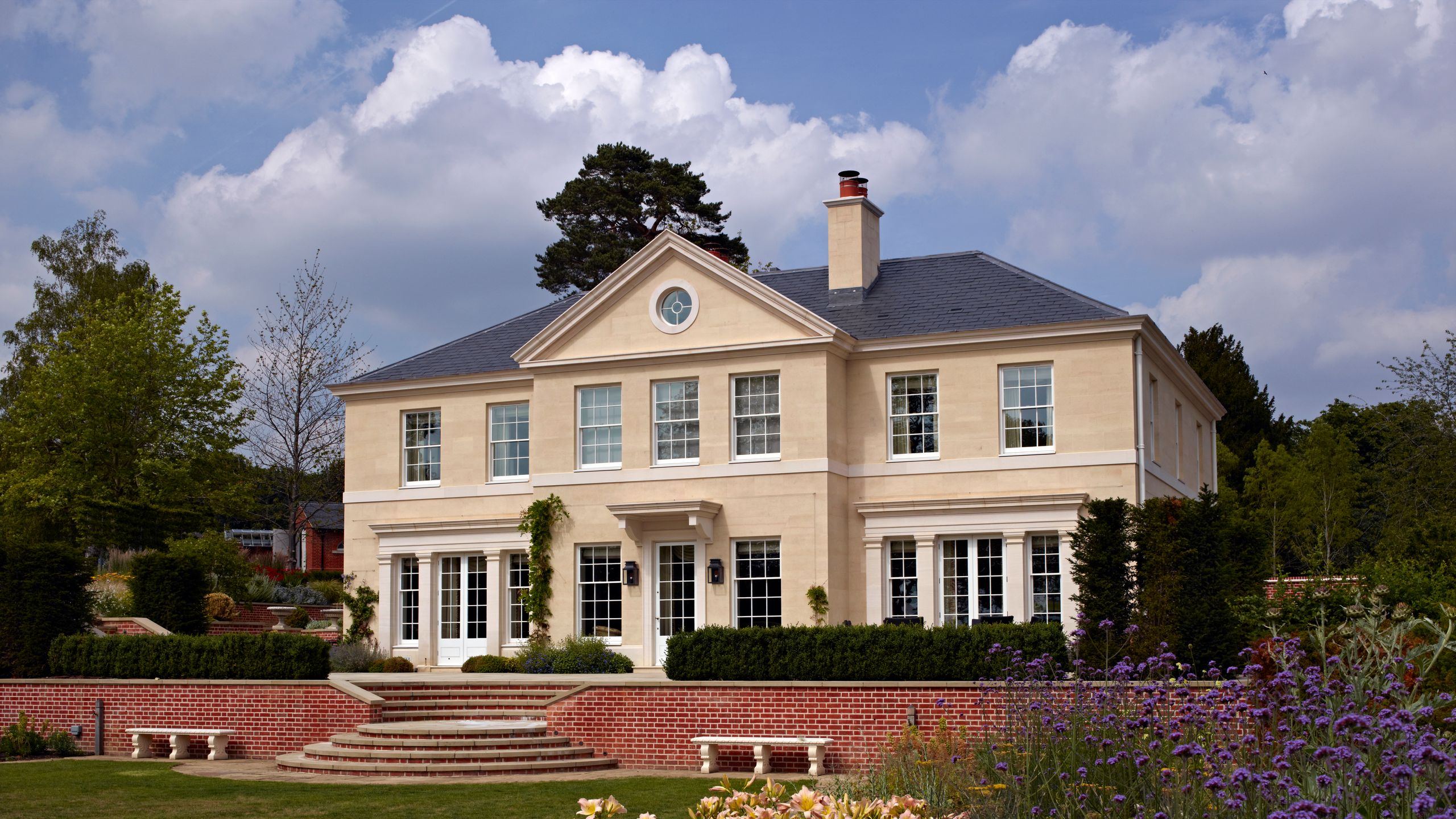
This new country house sits at the centre of an agricultural estate, in Newbury, West Berkshire. The design explores the heritage of Palladianism, drawing particularly on the villa-farms created in the Veneto and the villa tradition developed in England in the eighteenth century. The plan is based on an unbuilt design for the Villa Ragona at Le Ghizzole by Palladio and incorporates various sustainable building technologies. Inside there is a cantilevered stone staircase overlooked by vaulted landings and decorated with a pair of specially sculpted monkeys. The project forms part of a wider series of works to the estate including the construction of new farm buildings. Winner of Best Craftsmanship Award, 2008 Brick Awards. Designed by George Saumarez Smith
The new Villa replaces an uninspiring 1970’s house in rural Hampshire. Facing on to a quiet country lane and overlooking an open landscape, the villa is built in white brick with Portland stone dressings, and a Welsh slate roof. The design takes its inspiration from the Regency period, a time when red brick was considered to be too harsh in the landscape and there was a desire for very light interiors. There is a view from the front door right through the house which gives a sense of spaciousness and a connection to the landscape. The bedrooms are placed in the four corners upstairs and are reached by a broad landing the full width of the house. The house does not have side elevations but rather a series of fronts, broadly symmetrical in their composition but of varying importance in the overall hierarchy of the house. The north front is seen first with its wings extending to welcome the visitor; the main garden front faces south and is more formal.Photo by Paul Highnam
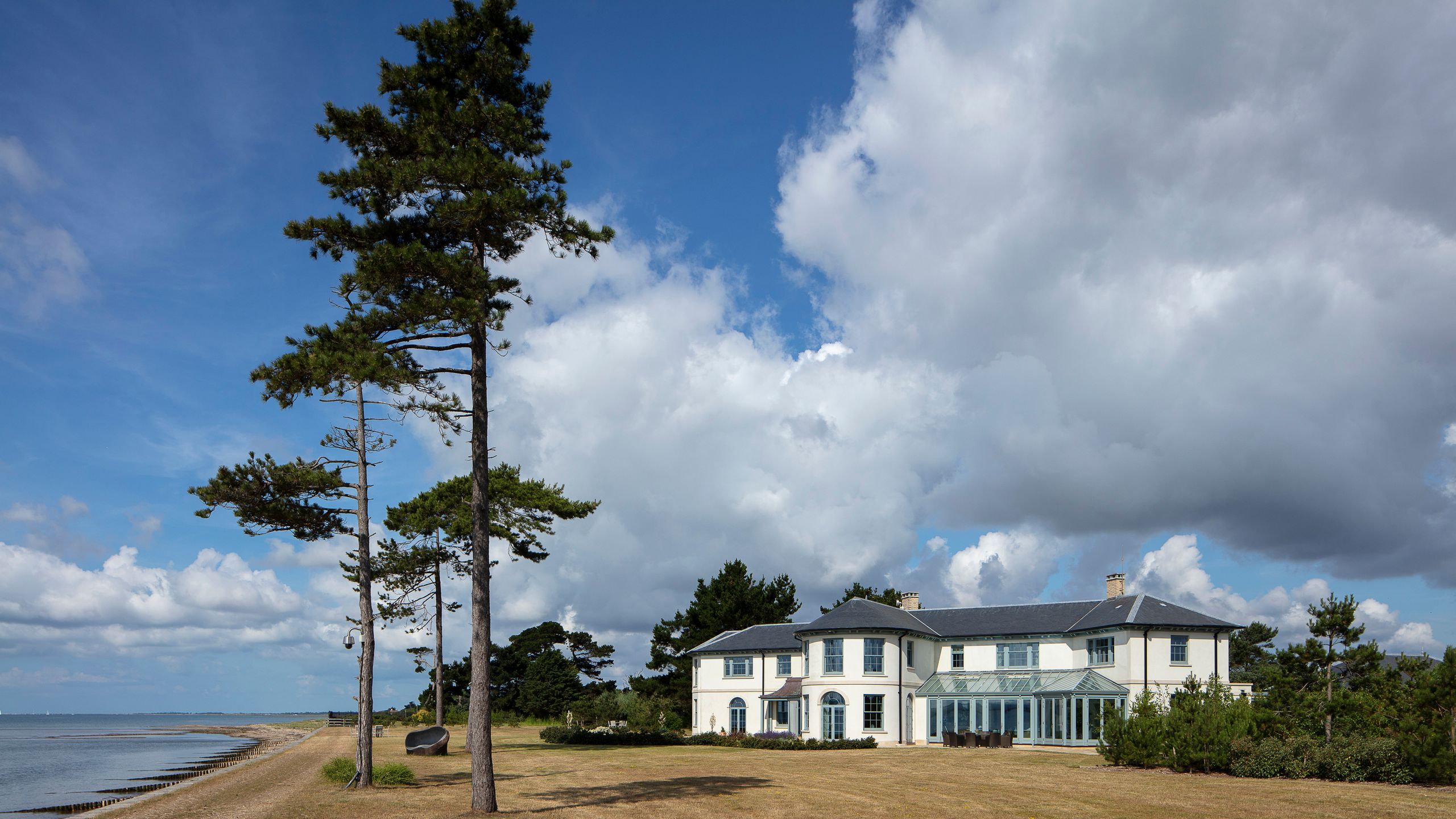
The replacement ‘butterfly’ plan house, a type made popular by the Arts and Crafts movement in the late 19th Century/early 20th Century, is the most suitable plan in an exposed location such as this. A garage, pool pavilion, boathouse, associated landscaping, and a biodiversity scheme also enhance the surroundings. The new house has been re-sited further to the northeast of the plot, away from the more sensitive ecological areas, and is lower in height. The scheme draws some inspiration from the nearby Exbury Estate, with the use of buff-colour rendered walls, natural slate roofs and grey/yellow brick and timber outbuildings. The use of a shallow pitched slate roof covering and the use of the vertically proportioned ground floor structural openings indicates an external appearance that has a Regency character and style. The low-key classical language and asymmetric plan are wholly appropriate in this location, as it allows the beauty of the structure to be derived from its elegant and dynamic butterfly form.Architect: Nigel AndersonPhoto by Dylan Thomas
Grade II Listed Georgian house in Hampshire with medieval origins that had undergone considerable modern alterations. ADAM Architecture was commissioned to undertake a scheme of restoration involving the demolition of a 1930s extension and its replacement with a modest cross wing. The new addition stands proud of the principal elevations, emphasising its aesthetic independence from the historic core of the building. In addition, the flat roofed kitchen is replaced by a new, single-storey pitched roofed structure constructed in handmade brick to match those of the new wing, with an oak-framed roof, open to view from the interior.Architect: George Saumarez Smith
On a beautiful site in rural Hampshire with far-reaching views, this new house is designed around a compact plan with a central staircase. The family rooms lie to the east with views of open parkland, and the more formal rooms face west towards a more sheltered area of garden backed by mature trees. The house is faced in lime render with Bath stone dressings, and in addition to the house the estate has various new outbuildings including garages, stables and a pool pavilion. Throughout the project we worked closely with Todhunter Earle on the interiors and with Taylor Tripp on the garden design.Designed by George Saumarez SmithInterior Designer: Todhunter EarleLandscape Designer: Taylor TrippPhoto by Dylan Thomas
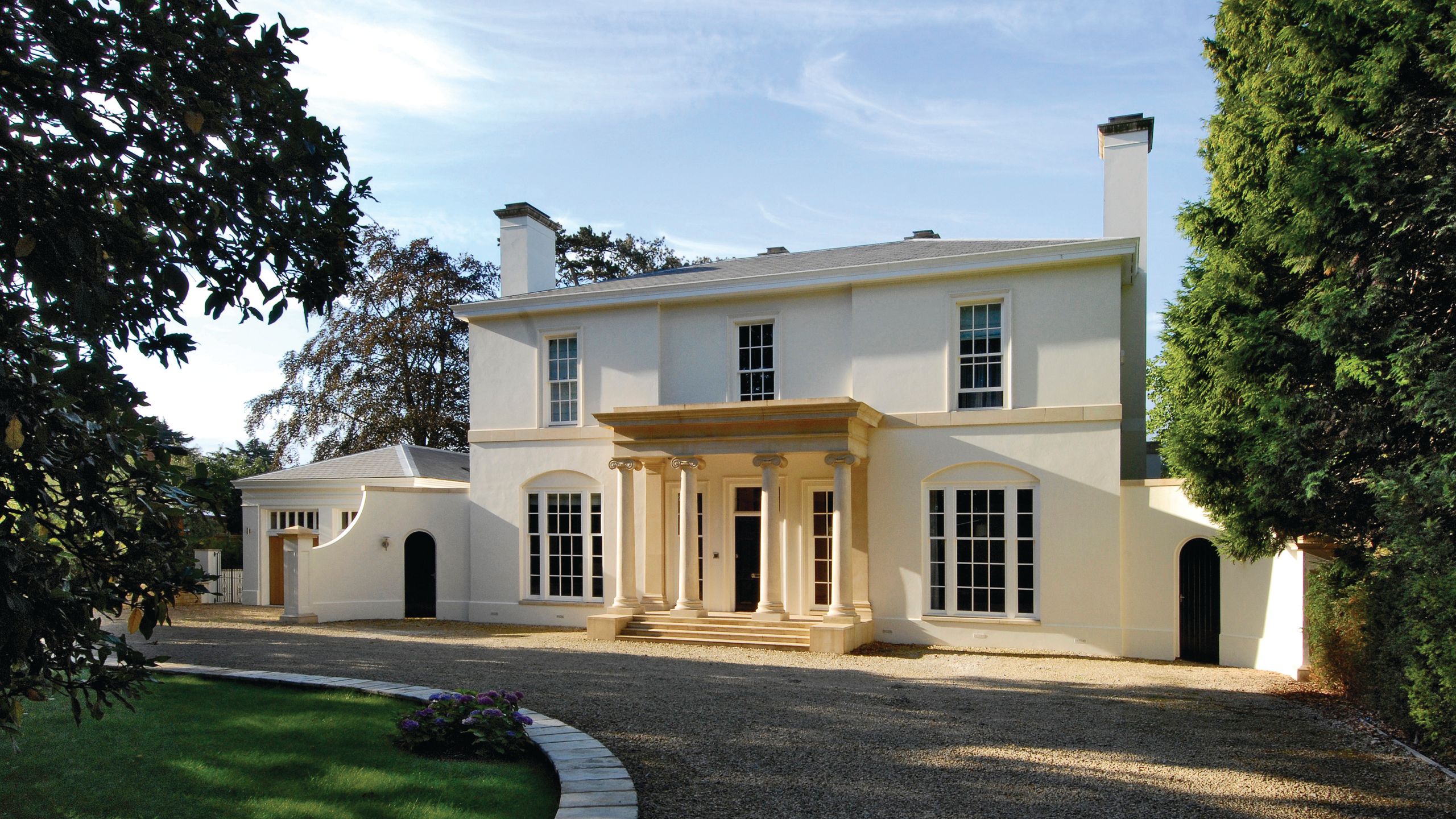
A new house that replaces a mid-twentieth century building within a line of listed Regency villas. The property sits comfortably within the Conservation Area setting, referring to local architectural traditions without being a copy of an historic design. There are 6-bedrooms within the property and a swimming pool set within a raised terrace at the rear. Rooms are arranged around a central, top-lit, cantilevered staircase in cast stone, minimising the need for corridors and retaining open vistas through the house. It is decorated sparingly with detailing limited to restrained Greek mouldings. The Georgian Group’s Giles Worsley Architectural Award 2008 for a ‘New Building in a Georgian Context’Best Architecture (single unit) in the Daily Mail Property Awards in 2008
The team behind Orbel Ursula Interiors, together with their client, has reimagined the sitting room of this Victorian house into a space that is perfect for entertaining