
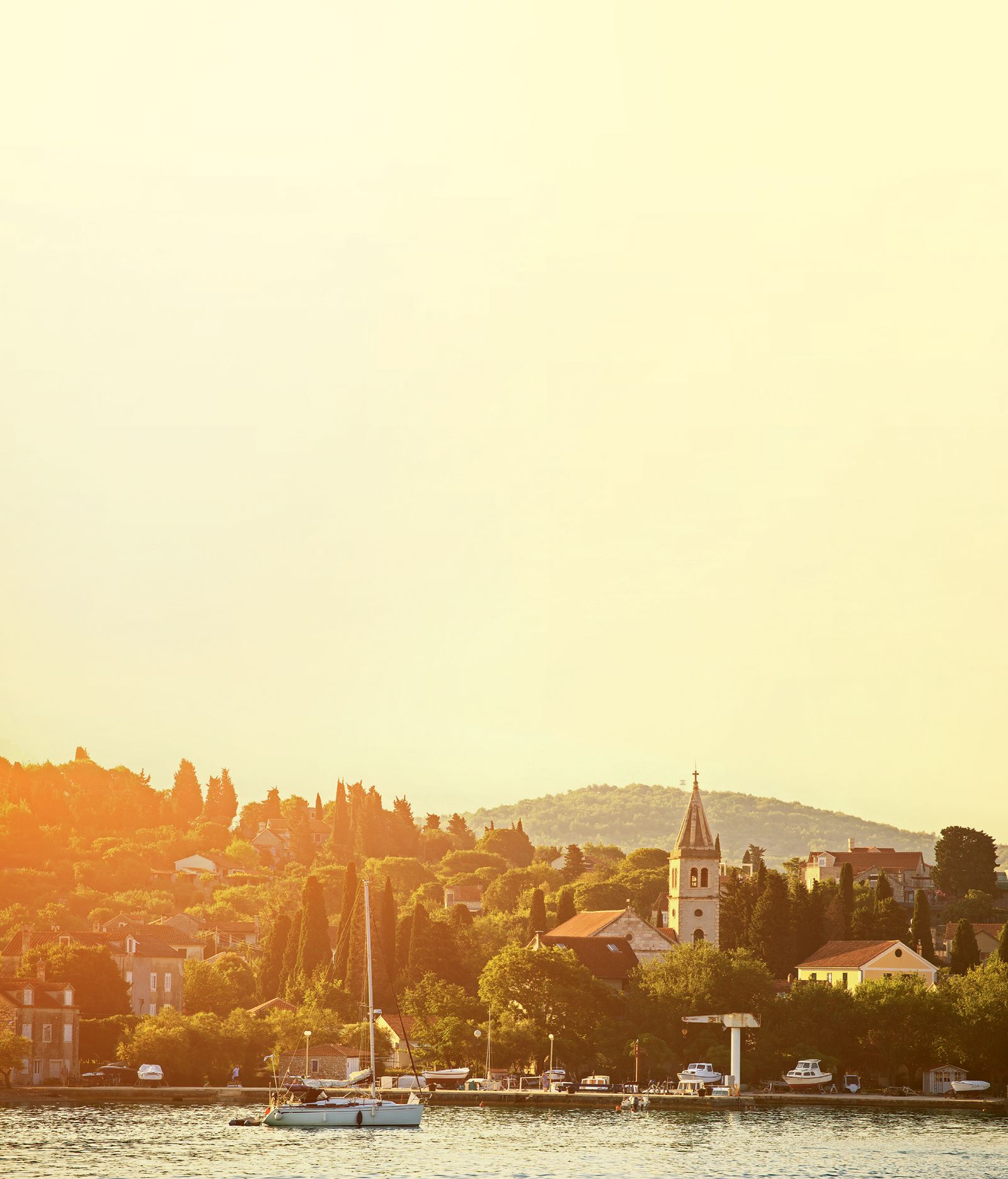
For the last 15 years, I have lived on the Croatian coast, travelling extensively throughout the islands, exploring the country as a whole and writing guide books,’ says Jane Foster. ‘The four, less well-known islands I have chosen to single out here combine two of my greatest loves – dramatic landscapes and cultural creativity. Each island is a holiday retreat in its own right, but can also be visited as a secondary destination from a mainland port – Sibenik, Dubrovnik or Rijeka – that serves it by ferry or catamaran.’
Zlarin, Central Dalmatia
A 25-minute ferry journey from medieval Sibenik lies tiny Zlarin, part of the Sibenik archipelago. The 284 permanent residents all live in Zlarin Town, where centuries-old stone houses huddle round a small harbour, overlooked by a Baroque church. It is car-free, but you can hire bikes and kayaks.
From the 15th-century, local families earned a living coral diving: red coral was used to make jewellery but is now protected by law. Opening this summer, the new Croatian Coral Centre combines an exhibition space and education centre to highlight the region’s rich marine biodiversity. Zlarin cherishes its enduring con-nection with nature: in 2018, it launched the Zlarin Without Plastic project to encourage sustainability.
Each month, Peak and Paddle organises a full-moon sea-kayaking tour, circumnavigating Zlarin, which affords night-time panoramas over the surrounding seascape. By day, kayaking tours are offered to the neighbouring island of Prvic, also served by a ferry.
Pelagia House is a basic stone cottage with one double room. It has a terrace and barbecue, and comes with mountain bikes and a golf cart; from €100 a night (sleeps family of four). Na Rudini is a rustic cottage with a terrace and two double rooms; from €125 a night. Villa Parona is a modern villa with a pool and four en-suite double rooms; from €2,700 a week.
By Jadrolinija ferry from Sibenik on the Croatian mainland – five sailings daily in summer.
Lopud, South Dalmatia
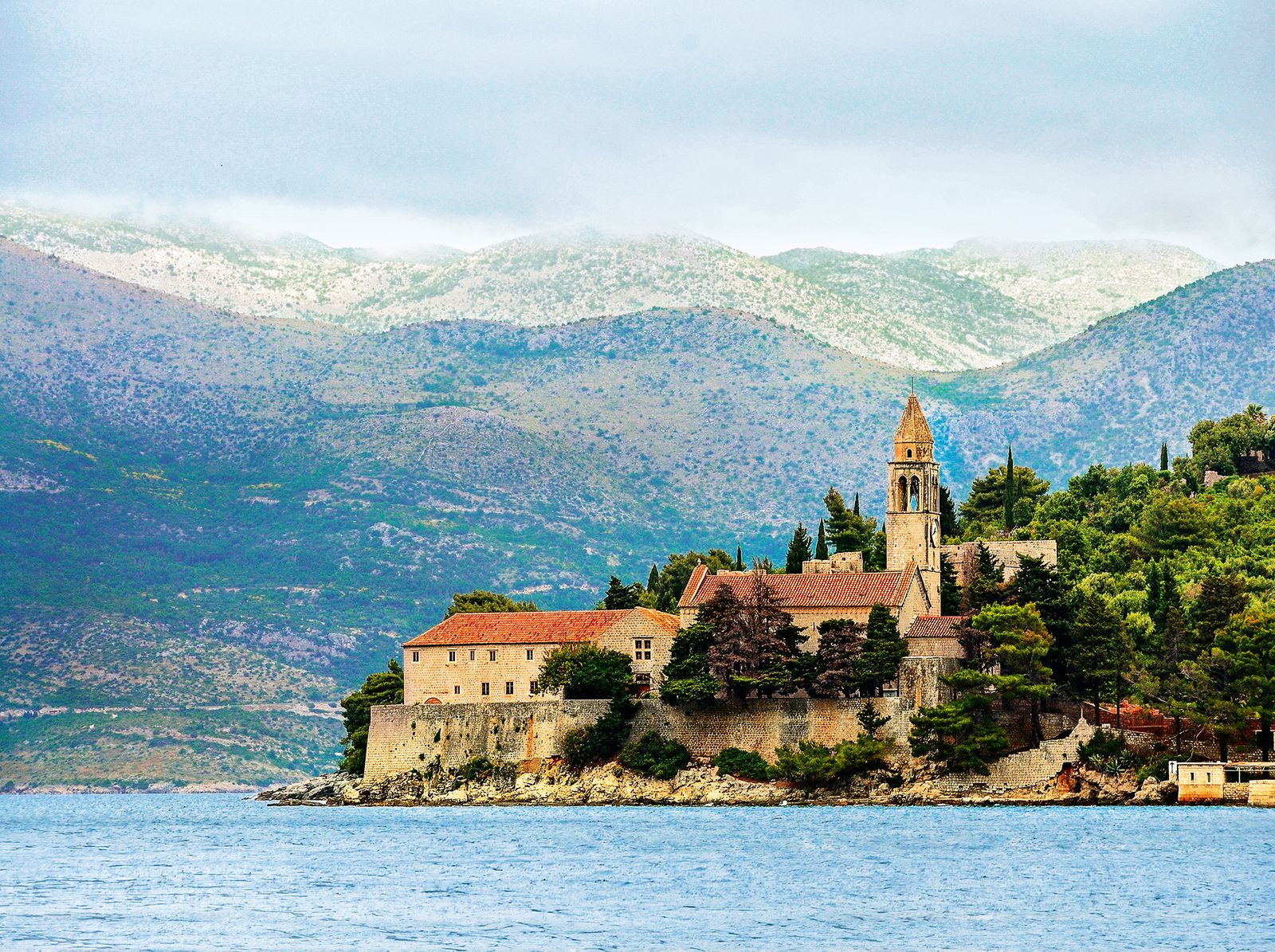
During Dubrovnik’s 15th- and 16th-century Golden Age, the city’s nobles built their Renaissance summer villas on Lopud, so they could escape to it during the hottest months. Monks from Dubrovnik’s Francis-can monastery gathered medicinal herbs there and, in 1483, founded a monastery on Lopud Bay. Closed in 1808, it stood derelict for decades, until bought by art collector Francesca Thyssen-Bornemisza, who spent 20 years renovating it.
Finished in 2020, the complex is a small hotel, Lopud 1483. The 13 monks’ cells now form five spacious suites, with original stonework, minimalist furniture and con-temporary art. The terraced garden reflects the philosophy of Francis of Assisi, who advocated finding God in nature. Surely he would revere Lopud today – sea air, no cars, pine woods, palms and eucalyptus trees.
On the hillside above Lopud Bay stands the Your Black Horizon art pavilion, created by Olafur Eliasson and David Adjaye for the 2005 Venice Biennale. Step inside for a serene and contemplative experience, this time with a contemporary edge.
Lopud 1483 can be booked exclusively (June-August), from €10,000 a night, half board (five suites, sleeping ten); or as individual suites (April and October), from €2,000 a night, B&B.
By Jadrolinija ferry from Dubrovnik.
Mljet, South Dalmatia
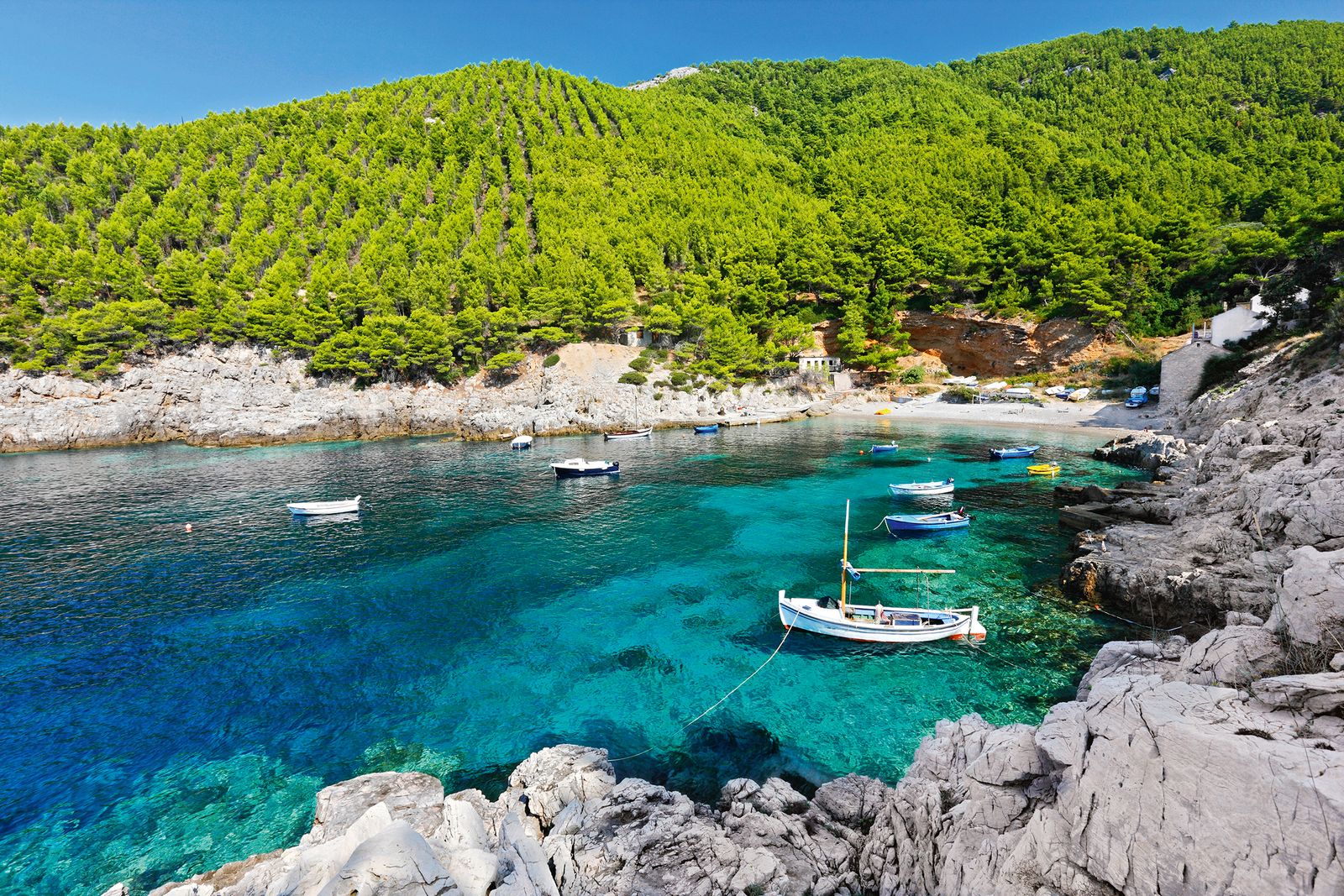
Approached from the sea at night, Mljet is dark and mysterious, shrouded in dense forests. Sunrise paints a brighter picture of turquoise waters and fragrant pine woods. It is an island that time forgot. While most of Dalmatia came under Venetian rule, Mljet fell into the possession of Benedictine monks. In 1151, they built a monastery on a tiny islet in the middle of Mljet’s salt-water lake, hidden from the open sea. Strict and insular, they subjected locals to feudal rule. The building of permanent settlements was banned – even today, the island has no proper towns.
One third of Mljet is now a National Park, where you can hike in the forest, rent bikes and cycle around the lake, and swim. Visit it by boat to see the abandoned monastery and fortified Romanesque church.
On Mljet’s south coast lies Odysseus Cave – here Calypso supposedly held Homer’s mythical hero captive for seven years. Swim inside around noon to find the interior bathed in iridescent turquoise light.
Boutique Accommodation Mljet (boutiqueaccommodationmljet.com) is an old stone house with three basic self-catering apartments for two, three and four people; from €70 a night (sleeps two). On the ground floor the Stara Skula Gallery holds art exhibitions.
By G&V Line or by Krilo catamaran, both from Dubrovnik.
Cres, Kvarner
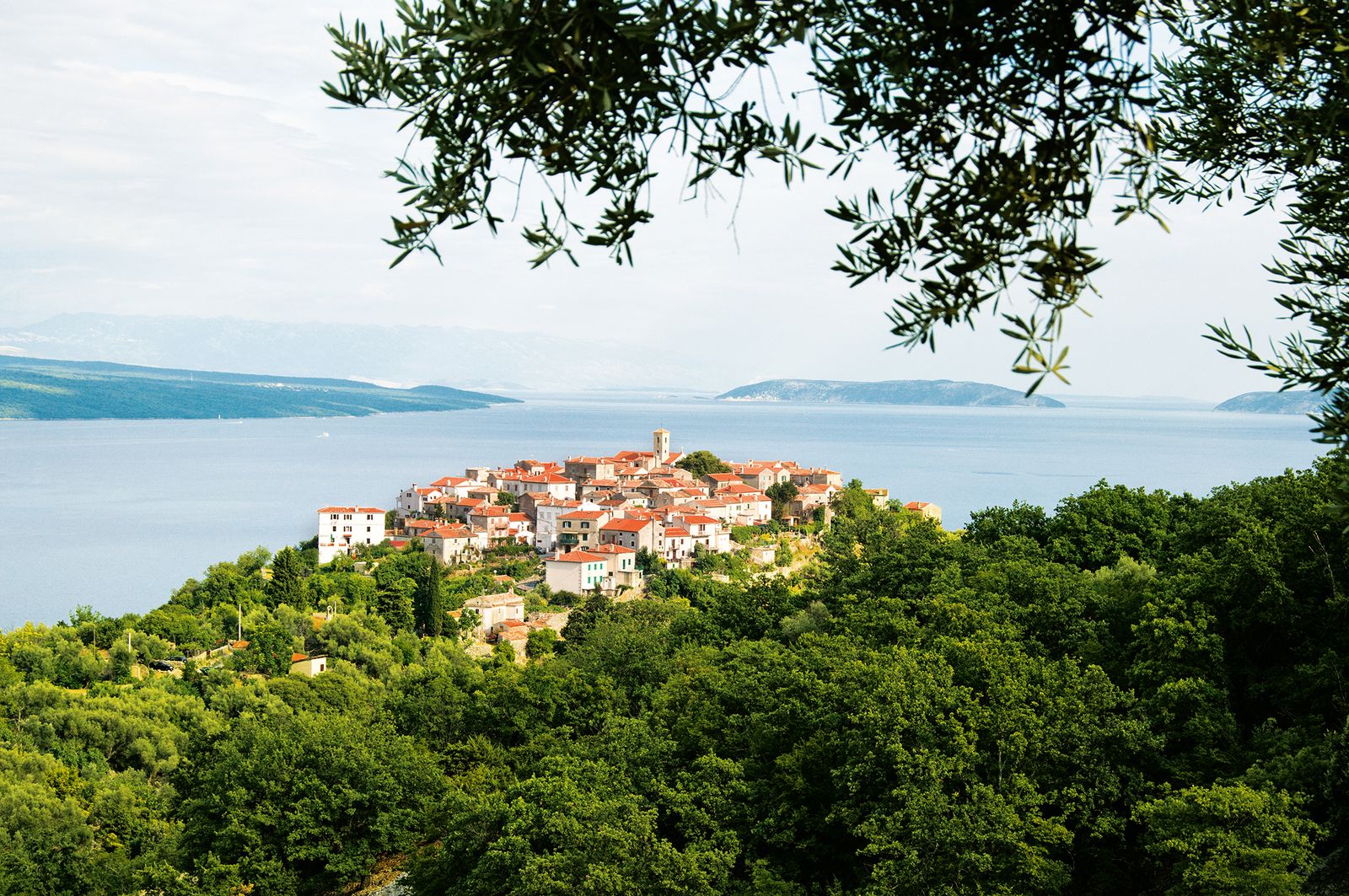
Wild and mountainous, long and skinny Cres rises from the deep blue Kvarner Gulf. Its rocky terrain supports sparse pastures flecked with herbs and grazed by hardy sheep that outnumber people by five to one. Venice ruled Cres from 1409 to 1797, and relished the island’s lean tender lamb and olive oil. Today, olive groves back the main settlement, Cres Town, where Agricultural Cooperative Cres runs oil-tasting tours.
In contrast, on Cres’s northern tip, the Tramuntana oak forest remains primal and uncultivated. In Beli, a village of semi-abandoned stone cottages, the Beli Visitor Centre is the starting point for seven hiking trails and protects a colony of rare griffon vultures. These huge birds nest in the sea-ward cliffs, circling for food high in the sky.
To the south, Osor – Cres’s oldest settle-ment – guards the Kavuada, a narrow sea channel dug by the Romans to allow ships passage. On summer nights, Osor’s stone alleys are filled with classical music coming from the 15th-century church. It hosts the Osor Musical Evenings (osorfestival.eu), showcasing international musicians and pieces by modern Croatian composers.
Rent stone Villa Antiqua in Osor. Set in gardens with a pool, it has three double rooms (for up to seven people); from €3,115 a week.
By Jadrolinija catamaran from Rijeka
MAY WE SUGGEST: What to do and where to stay in Dubrovnik


