

When we think of Buckingham Palace, we visualise the ‘red and gold’ state rooms and miles of elaborate interior design. After this Platinum Jubilee year it is fascinating to take a peek at the rooms which are not open to the public, the rooms Queen Elizabeth has had a hand in shaping. I am immensely privileged to have sketched these rooms, played squash very badly on the palace squash courts and even to have swum in the pool, and to be in a position to pick out some favourite elements from the lesser-seen sides of this famous house.
The North Wing

Going through the Palace Arches into the inner quadrangle always gives you a sense of arrival and a fizz of excitement. It is a door to the right-hand side (if you’re standing at the front of the palace) that takes you into the private quarters. It’s always a delight to see the well-worn children’s toys still around the Garden staircase entrance, making it feel like a home that’s used and lived in, as much as it is a working Palace.
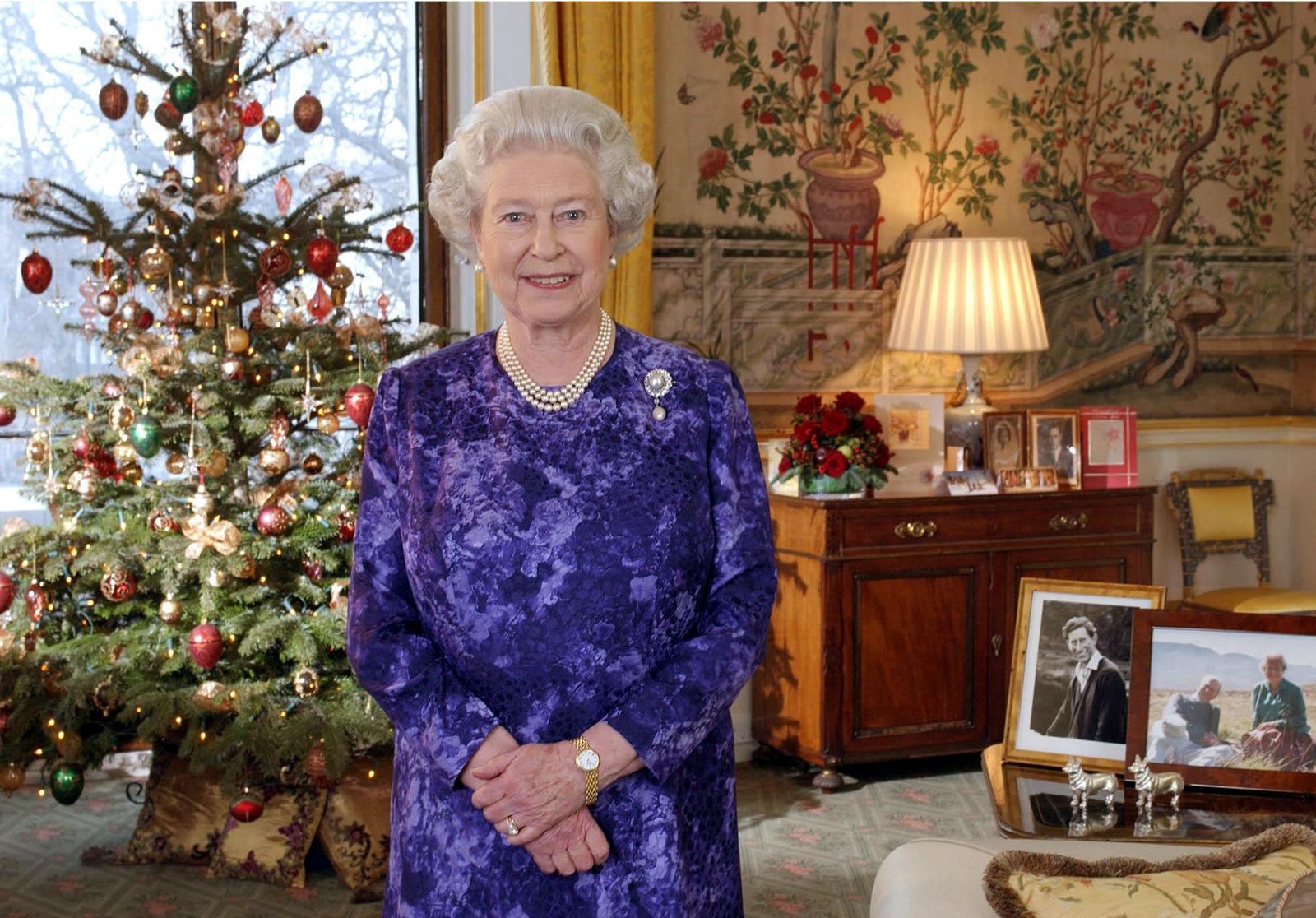
The North Wing is where the Queen’s private apartments are, a mixture of bedroom suites and a beautiful private study which has a bow-fronted set of three windows that look right out across Green Park. The Palace also has a cinema, a wonderfully large ground floor drawing room that opens out onto the garden, a built-in screen with curtains and a splendid marble fireplace with a boulle clock. There’s something rather ‘old school’ about it and I can’t for the life of me remember what film I actually saw. I was most likely looking at the oil paintings hanging on the wall.
The pool is yet another beautiful and private space, created in 1938 by King George VI for the use of the young Queen and Princess Margaret. Apparently, Princess Elizabeth as she then was and Princess Margaret, under the tutelage of Miss Amy Daly, had rather taken to swimming lessons at the well known Bath Club in Piccadilly, a short walk from the palace. As a gift their father and mother had this stunning pool created for them.
The design looks almost Victorian in its hanger-like volume and abundant tiling. The original structure was designed by Nash a hundred years earlier as an Orangery, and retained its exceptional height. One detail which made me smile was a wonderful sign that read ‘These towels are to be used by members of the Royal family only.’ There must be nothing worse than accidentally taking Her Majesty’s Towel in her Jubilee year!
The Yellow Drawing Room
When it comes to the better-known rooms of the palace, there are some remarkable details that I keep returning to. The front elevation of Buckingham Palace (the East Wing) which holds its famous balcony and most of the public rooms, contains a pair of exquisite rooms at either end. One of the remarkable things about the Yellow Drawing Room – the room at the far left of the Palace, within the pedimented bay – is its tranquillity and the light that pours in from the side windows. It’s likely that this is the reason why The Queen and members of the royal family use this room when sitting for portraits, such as Rolf Harris’s portrait of The Queen, commissioned for her eightieth birthday, and a painting by enamellist and portrait painter Alexei Maximov. Each of the three rooms within the projecting bays of the front façade, including the central one behind the famous balcony, are beneficiaries of George IV’s passionate pursuit of new building projects and his exotic taste in decoration. They came to be installed here through a wonderful chain of people and circumstances.
Queen Victoria was the first sovereign to take up residence in the new Buckingham Palace – as expanded by George IV’s favourite architect, John Nash – in July 1837. Very quickly, however, she found the building inadequate for court life and her growing family. In response, Nash's sober successor, Edward Blore, created the new East Front, which not only rather betrayed Nash's neoclassical concept but also required the sale of George IV's Royal Pavilion in Brighton in order to meet its costs. On her accession, Queen Victoria had taken an instant dislike to the Royal Pavilion and its very public location, and so readily agreed to sell it, first removing all furnishings and fittings to Windsor, Buckingham Palace and Kensington Palace.

Some of these pieces were used by Blore, who tailored his room designs to accommodate them. But it was Queen Mary, who took a serious interest in the furnishing of the Royal Palaces, who eventually rescued many of the remaining unused remnants and put them to use in these stunning rooms. The wall paper was found in storage by Queen Mary. It is a beautiful early 19th-century chinoiserie paper, which has recently undergone extensive conservation work. (The storage here and at Windsor Castle is legendary: Royal newlyweds always nip down to see the treasures it holds as soon as they get married.)
Brighton Pavilion has only just finished copying the original chimneypieces to fill the empty spaces left when they were removed. The tradition of creative redeployment has continued with Queen Elizabeth II. Some carved and gilded palm trees, that would have originally formed door surrounds at the Royal Pavilion, recently found in store, have been transformed into the pelmets in the Yellow Drawing Room, which you can just see in my drawing above, reflected in the mirror.

The Chinese Dining Room
The other room on the front elevation on the opposite side to the Yellow Drawing room is known as the Chinese Dining Room, and it too draws on the original decoration of the Pavilion at Brighton. You can clearly trace the origins of the beautiful painted panels designed by Robert Jones from a watercolour by Augustus Pugin, which shows how they used to hang in the banqueting room at Brighton. The chimneypiece was carved by Richard Westmacott, and, with its winged dragon, lotuses and ormolu vases, was originally installed in the music room at Brighton, while the ceiling lamps, now such an iconic design, also used to hang there. It is much darker and used for small dinners, but has the most staggering Chinese panels on the walls, again from the Pavilion. The fireplace in this room originally came from the Pavilion’s music room and is totally extraordinary, a full dragon and its outstretched wings creating the opening for the fireplace in bronze and ormolu gilt – it’s truly a masterpiece. In its original position in the Prince’s Palace in Brighton there is a fiberglass glass replica which I’m sorry to say doesn’t even come close to the beauty of the original here.


The front elevation
The year after George IV acceded to the throne in 1820, he invited John Nash to draw up plans for the transformation of Buckingham House into a grand palace. Nash rebuilt and enlarged the two side flanks and designed a triumphal arch to serve as an entrance. On the King's death inJune 1830, however, with costs standing at nearly £500,000, the Treasury withdrew Nash's commission. Edward Blore took on the task of finishing the job and created, according to his critics, an architectural statement more in common with a railway station than a palace. In addition, over the years, London soot was to do its worst to the soft French stone Blore had used. In 1913, therefore, Sir Aston Webb was commissioned to redesign and reface this entire elevation in the more suitable Portland stone. This is the elevation that stands today, with its three projecting, pedimented bays - a conception much more reminiscent of Nash's original design and much more in keeping with the splendour of the idea of British imperial power as embodied by the monarch. Knowing that these magical rooms stand behind this façade, with all their insane chinoiserie and wild imagination, always fills me with utter joy. It is, after all, a very British thing.


