


It’s often the rituals of Christmas that bring particular meaning to the season. We remember stirring the Christmas cake, attending carol services and foraging for holly more than we recall the presents we give and receive, the annual repetition speaking equally to memory and eager anticipation. And, for those of us who love baking for our family and friends or decorating a table, any reason to do it brings joy – and many of us are keen to extend and maximise the celebratory period. American Thanksgiving is next week – which started as a harvest festival and is now seen by many as the beginning of the holiday season – while, if you look at the Julian calendar as well as the Gregorian calendar, you could technically celebrate New Year twice.
For many these dates are familiar and already observed, due to our heritage, our friends, or having lived in more than one country. But more than simply being a welcome opportunity for more parties (and cake, by way of Swedish cinnamon buns, the French galette des rois and Greek Vasilopita), knowing about others’ traditions – why they started, how they work, and that most Ukranian families exchange their gifts on 7th January - enables consideration towards those who might not be able to celebrate Christmas at home this year.
Thanksgiving

This year, American Thanksgiving fell on Thursday 23rd November. It started as a day of thanksgiving and harvest festival (which could seem reason enough to observe the day, even you don’t have American heritage - our own British harvest festival celebrations having dropped off rather in recent decades.) Traditionally, the Thanksgiving menu consists of roast turkey with all the accoutrements, and pumpkin pie, and theoretically the whole family – or group of friends - comes together to cook, i.e. the process is as important as the outcome.
In terms of decorations, Mona Perlhagen of Chelsea Textiles, who hosts an annual Thanksgiving dinner in London for family and friends, uses flowers, berries, vegetables such as gourds and ornamental cabbages – and plenty of candles.
Christmas Markets
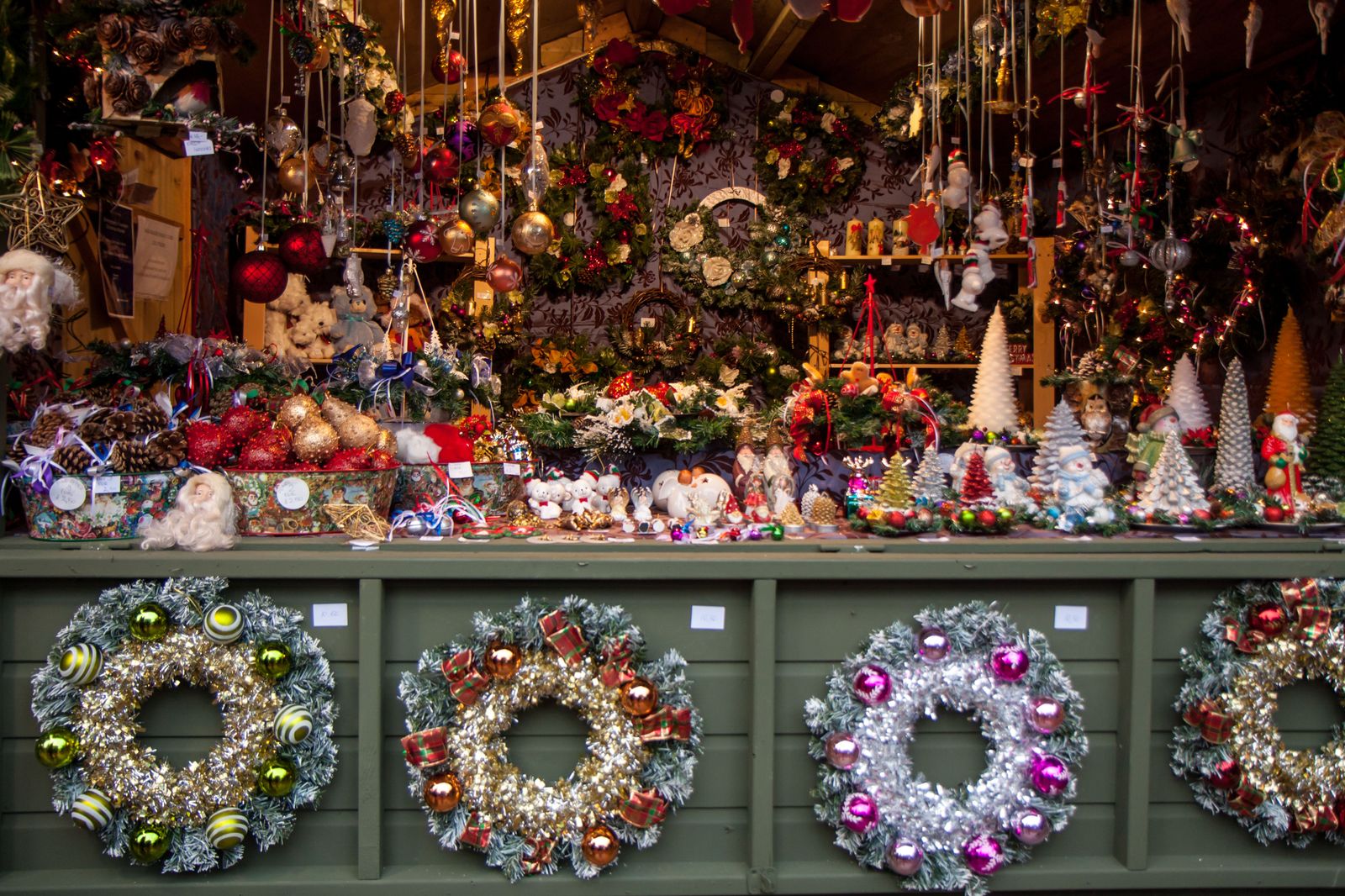
These originated in German-speaking Europe in the late middle-ages and would open at the beginning of Advent. They’re also known as Christkindlemarkt – literally ‘Christ Child Market’ – and offer gluhwein, food (including such delicious sweet treats as stollen and lebkuchen) and seasonal items for sale from open air stalls, and there’s often singing and dancing; “they are social occasions as much as shopping opportunities,” says Fabian Strobel Lall of Cultural Communications Agency Rees & Co, making clear the delight in going with friends. While, arguably, Germany still holds the best, we’ve got pretty good ones in the UK, too – many of which are already open, thus extending Advent.
Advent Windows
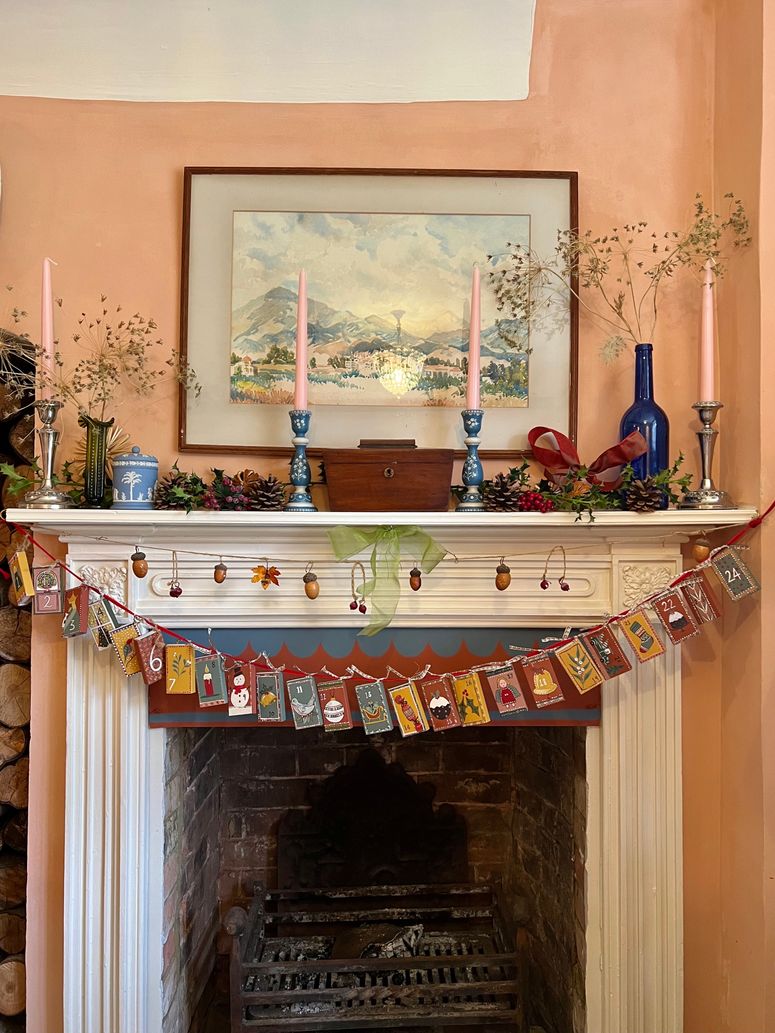
The Swiss have long been somewhat ahead of us when it comes to Advent Calendars; many families still make their own rather than picking up a Cadbury’s version along with the weekly supermarket shop - or giving into our children’s pleas for one filled with Lego. But the Swiss go yet further; in some villages there are ‘real’ advent calendars, with houses decorating Advent windows. Essentially, each house chooses a date, and on that day the window is revealed – it might be a snow scene, or a nativity scene, or simply beautifully arranged candles and foliage – and an informal party is given by the resident of that house, with nibbles and mulled wine. The advent windows started gaining popularity in Britain during lockdown as a means of sharing seasonal spirit against the odds - the party element, of course, wasn’t possible. But it is now, and what a way of meeting your neighbours and maintaining a sense of community. (You don't need to live in a village – you can arrange it with your street.)
Not necessarily Swiss, but no less lovely an idea (and arguably more important) is the reverse advent calendar. Every day, instead of opening a door and taking something out, you put something into a box. That something might be dried food, pasta sauce, shower gel – a full list of what is required will be on your local food bank’s website. Then all you have to do is deliver the box (to the food bank.)
St. Nicholas’s Day
St. Nicholas, who brings gifts, is the forerunner to Father Christmas/ Santa Claus, and his saints’ day is celebrated on the 5th or 6th December throughout much of Western Europe. There is regional variation, but the common gist – certainly in Belgium, the Netherlands, Luxembourg and much of Germany - is that children put out their shoes or boots on the night of the 5th, only to wake up on the 6th and discover that they’ve miraculously been filled with small toys and chocolate. In France the day involves much baking of spiced gingerbread biscuits and mannala, which are brioche in the shape of the saint, while in some areas of Germany, details Fabian, “young boys will dress up as St. Nicholas and collect money for charitable causes.” Some families will also exchange their main Christmas gifts on this day, though others prefer Christmas Eve – including, famously, our Royal Family, who have German heritage.
St. Lucia’s Day

This is celebrated in Sweden and Finland on the 13th December, and is generally seen as the start of Christmas in both countries. Lucia was a 3rd century martyr who brought food to persecuted Christians in hiding, and traditionally, the eldest daughter of the house would dress up at St. Lucia (in a white robe and crown of candles – or a safer alternative) and serve her parents buns – whether cinnamon, or the saffron lusse bulle favoured by Beata Heuman - and coffee (or mulled wine.) The Swedish Church in London has a succession of St. Lucia services; “they’re extraordinarily beautiful, with a procession of girls and candles,” recounts Jenny Simpson of Chelsea Textiles. This year there’s one at Westminster Cathedral on the 9th December, and at Southwark Cathedral on the 11th December.
Also worth noting, especially for those who struggle with tinsel and glitter, is the Swedish approach to Christmas trees; they’re usually set up only a couple of days before Christmas, as they’re decorated with flowers such as poinsettia, red tulips, and red and white amaryllis.
St. Basil’s Day
The first of January is not just New Year’s Day in Greece, it’s also the feast day of the Greek Orthodox St. Basil – which naturally merits a cake, the Vasilopita. “It’s orange-scented bread – so you can have it for breakfast - and it started because St. Basil wanted to give something to poor people,” explains Viviane Paxinos, the CEO of Allbright. A coin is hidden inside; whoever gets it has good luck for the coming year. That said, it’s not guaranteed that anyone will receive it, as “the first slices are set aside for God, then Jesus, and then for the house,” before the rest is allocated by age order.
Epiphany and the Fête des Rois
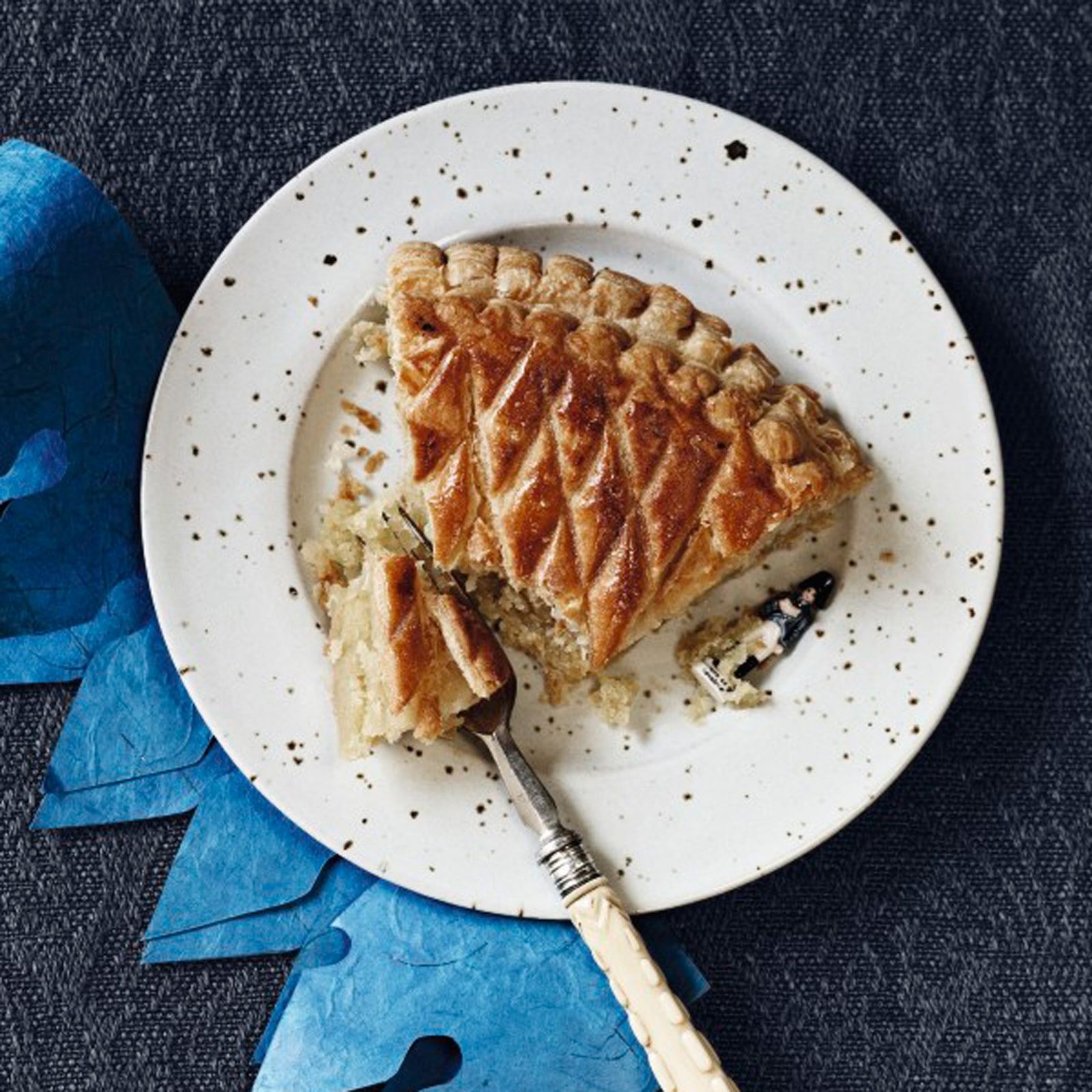
Epiphany, on the 6th January, marks the day that the Kings arrived at Christ’s crib in Bethlehem. It’s also Twelfth Night, when decorations traditionally come down - depending on how you count. (There is a school of thought maintains that Twelfth Night falls on the 5th, but we prefer to keep decorations up for this final fling.) The French celebrate with a “immediate family, cousins and neighbours, it can be very informal,” explains Alice Avenal of Lallie London (which has the prettiest children’s dresses – worn by the offspring of Alexandra Tolstoy, Emilia d’Erlanger of d’Erlanger and Sloan, etc.) Key is the galette des rois, an almond and puff pastry concoction that sports a crown and can be had for tea “or simply for pudding,” says Alice. The galette is sliced, and the youngest child goes under the table to pass it around – the point is that slices are blind allocated. For hidden in the cake is a ‘fêve’ or charm – “you can get really lovely ones on Ebay,” - and whoever finds it is King or Queen for the night and receives the crown.
Orthodox Christmas
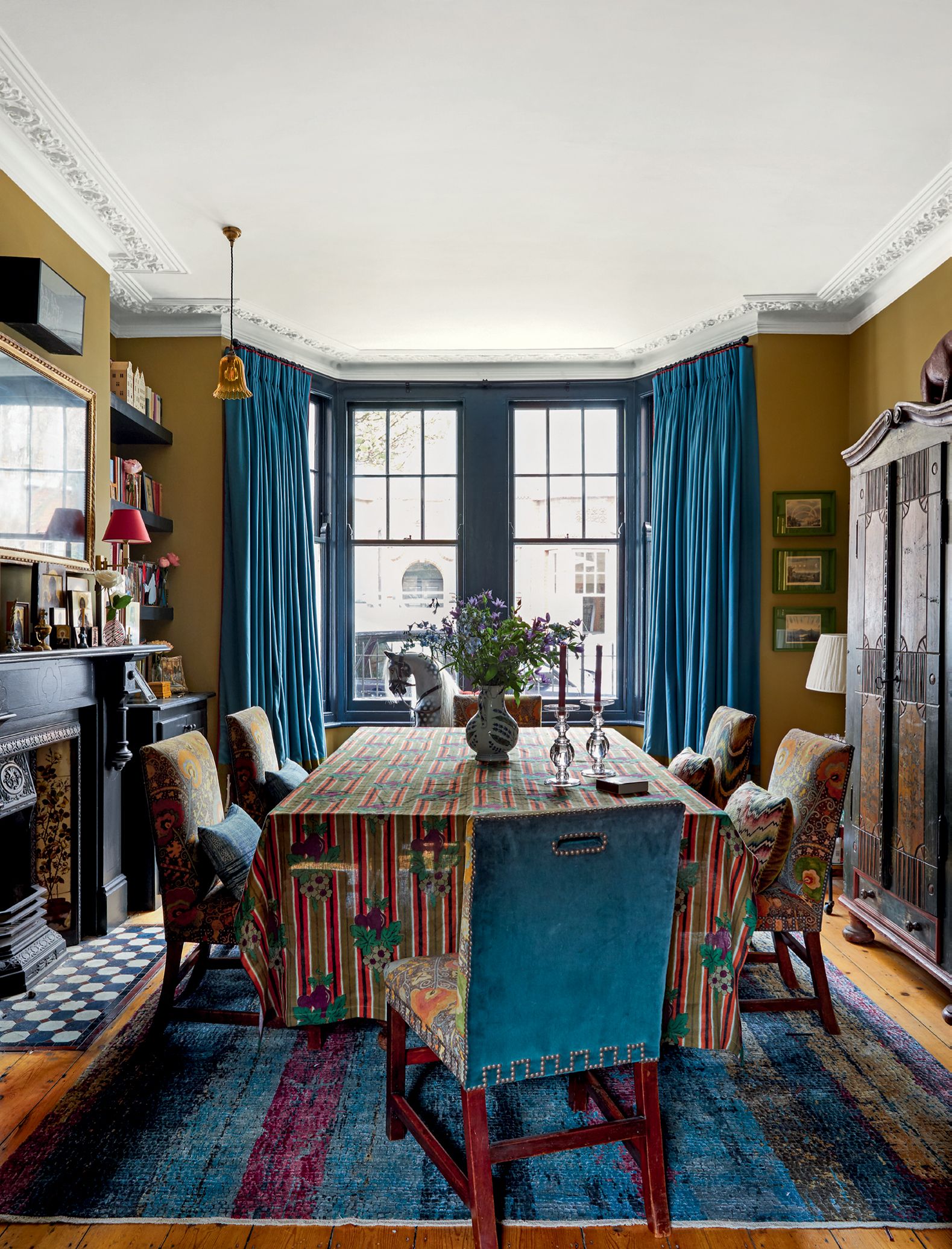
When it comes to Christmas, not all countries follow the same calendar. Notably, Ukraine, Russia, Israel and Egypt – countries where the predominant religion is Orthodox Christianity – follow the Julian calendar. (Greece is almost entirely Orthodox, but the majority of Greeks now celebrate on the 25th December.) The Julian calendar, as proposed by Julius Caesar in 46BC, was the calendar used by most of the Western world until 1582, when Pope Gregory XIII amended the calendar to account for the drift against the solar year, creating the Gregorian calendar.
What this means, practically, is that many Orthodox Christians celebrate Christmas on the 7th January, though festivities start on Christmas Eve, the 6th January. The Ukrainian Christmas Eve is called Sviatyi Vechir (Holy Evening) and the entire family gathers together to perform carols, and eat Sviat Vecheria (a Holy Supper) of 12 dishes, none of which contain milk, meat or eggs, in keeping with the traditional advent fast. The table is decorated with a symbolic sheaf of wheat, and often there is hay on the embroidered tablecloth, a reference to the manger in Bethlehem.
Orthodox New Year, also referred to as the Old New Year, falls on 14th January - which, incidentally, is a much more attractive date to commence New Year’s Resolutions, or re-set, if for instance, a New Year diet was immediately scuppered by Vasilopita for breakfast on the 1st January.


