
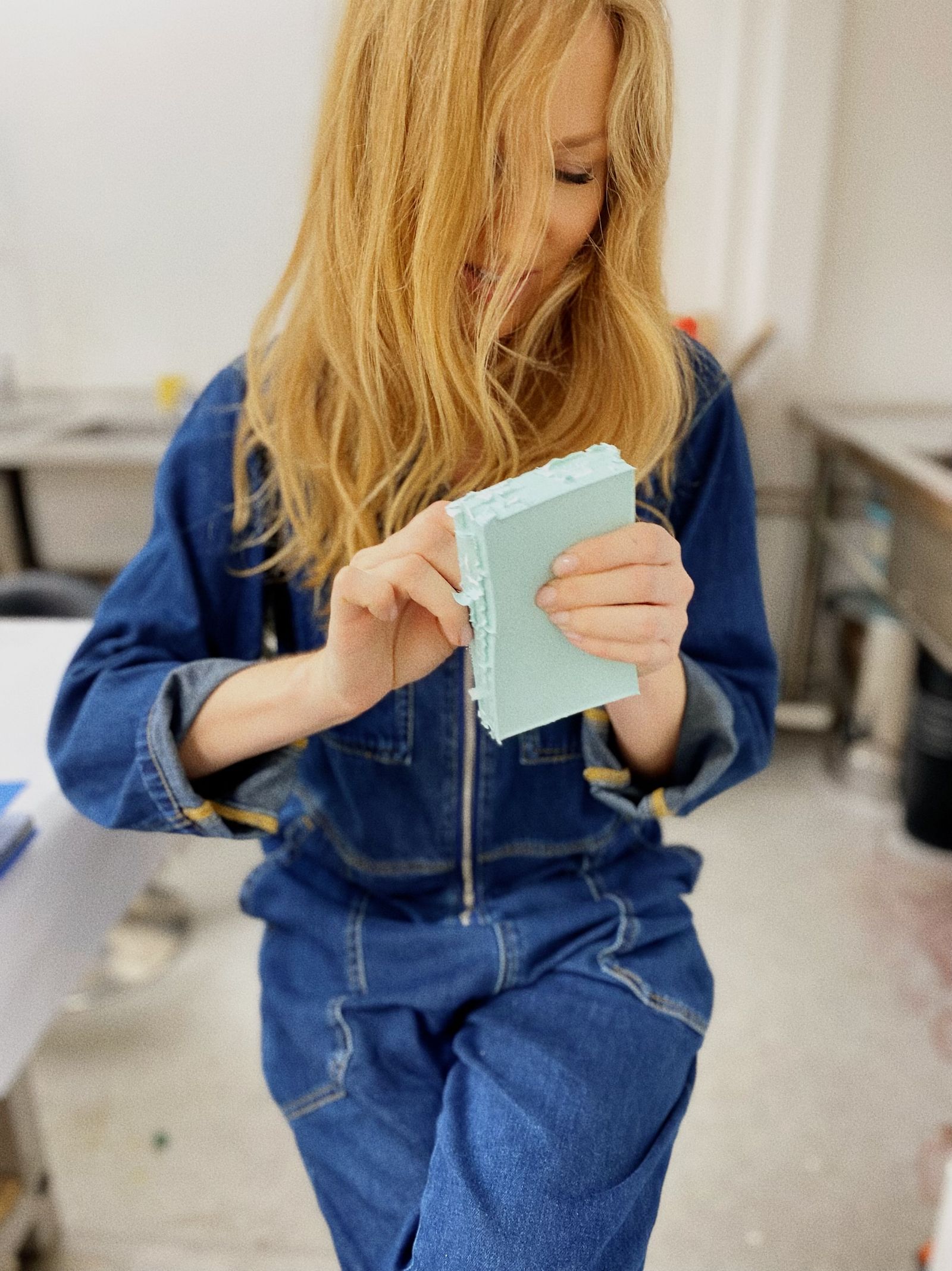
My friend Miranda has just published her debut, How To Be Somebody Else and naturally, I think it’s brilliant because we have been friends for decades. But the reviews are now in, and they prove everyone else thinks it’s brilliant too. The book is described as an “uncoming of age” story and I’m obviously not going to explain why and spoil what is an essential read for you all (available at all good bookshops etc) but part of what makes it compelling is that it is so refreshing to read about experiment, risk and reinvention from the perspective of a fully-fledged grown-up. Because the unsettling but ultimately romantic reality, is that starting out doesn’t just happen once, in our box-fresh early 20s; it can happen again and again, each iteration evolving from (or completely rejecting) the last, and each version containing the potential for the adventure of a lifetime.
Miranda and I did in fact come of age together, so I got to experience that with her too. We met as graduatess at a London ad agency. Our first day coincided with the agency summer party, where we were welcomed by a troop of Brazilian dancers, clad in feathers and thongs and brandishing viciously alcoholic drinks. It was an inauspicious start to our first proper job and it set the tone quite accurately for the rest of our careers. In that business, there’s a whole department called 'Creative' and in those days, it was widely agreed that no good ideas were ever allowed to come from anywhere else. The whole system would collapse if an Account Man (like me) had a cohesive, captivating thought beyond selling the ad and taking everyone out for larks afterwards. As a consequence of this ruthless division of labour, I sometimes struggle to take myself seriously as a creative, even all these years later, as if I can’t possibly be credible, because I started life in a department with a different name. I know this is ludicrous and I should let it go, but I think our sense of self can be formed rather severely in the early stages of our career and for me, the lingering sense that I should put down the Sharpie and let someone better qualified do the drawing still haunts and undermines me if I let it.
And yet, I am part of a growing number of people who, after long careers doing God knows what, are starting again, in the pursuit of a purely creative endeavour. Of craft. Rather than downing tools, we are picking them up, sometimes for the first time since adolescence. And as someone who is of an age that I’m not prepared to be specific about here in writing, I’m personally delighted by this trend for debut talent from a non-debut demographic.
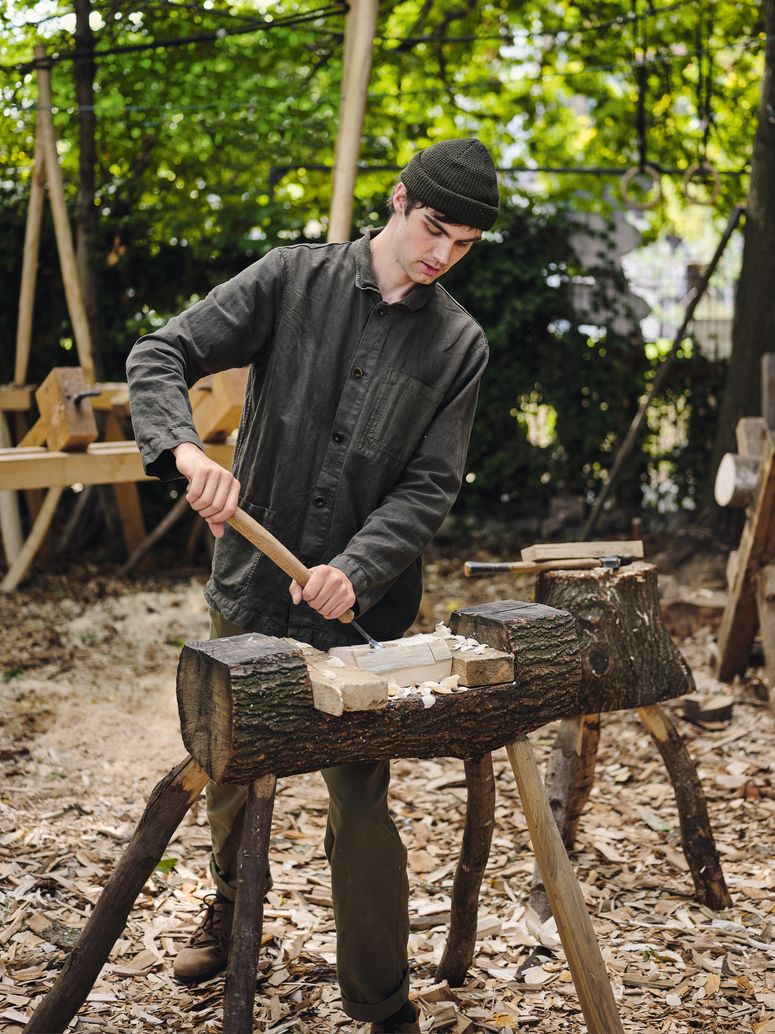
Culture’s obsession with the cult of youth focuses on the thrill of the new, but what about the thrill of the actually quite old and experienced? Yes, we're more tired. More cynical, perhaps (although thinking about it, no one was more cynical than my teenage self and I suspect I was not alone here) but also considered, reflective and practised. There’s a refinement, both of skills and perspective, that comes as a bonus free gift with age, and which definitely compensates for some of the more visible, but less lovely developments (most of which I try to laser off anyway to be completely honest).
I’m not for a minute disparaging youthful enthusiasm; it’s just that there are other kinds of enthusiasm too. Especially when someone turns to making (whether that’s a book, or a dolls' house or a piece of pottery) after a long career doing something else. There’s a glorious energy to that decisiveness; a casting off of something stable and instead embracing a long-held desire to produce something from our imaginations.
Having the freedom to do this is of course a great privilege, and on a practical level, if you crave the fantasy of a picturesque studio and uninterrupted months of producing exquisite items, it does help to have had a long and lucrative career which can sponsor your segué from commerce to art.
I’m looking for a studio space in west London at the moment, and there is no element of fantasy about it. All I can afford is a small windowless hole – it will be a bit like trying to work in a bin bag. Not very inspiring. Or practical. It will be a while before the floor-to-ceiling windows of my dreams (where I can flounce around in overalls and 1920’s kimonos, with paintbrushes in my hair) materialises. Until then, even a 113sq ft basement feels like progress when the alternative is the kitchen table alongside homework, Play Doh and sometimes even dinner (although mostly we have to eat that standing up because it’s covered in my equipment).
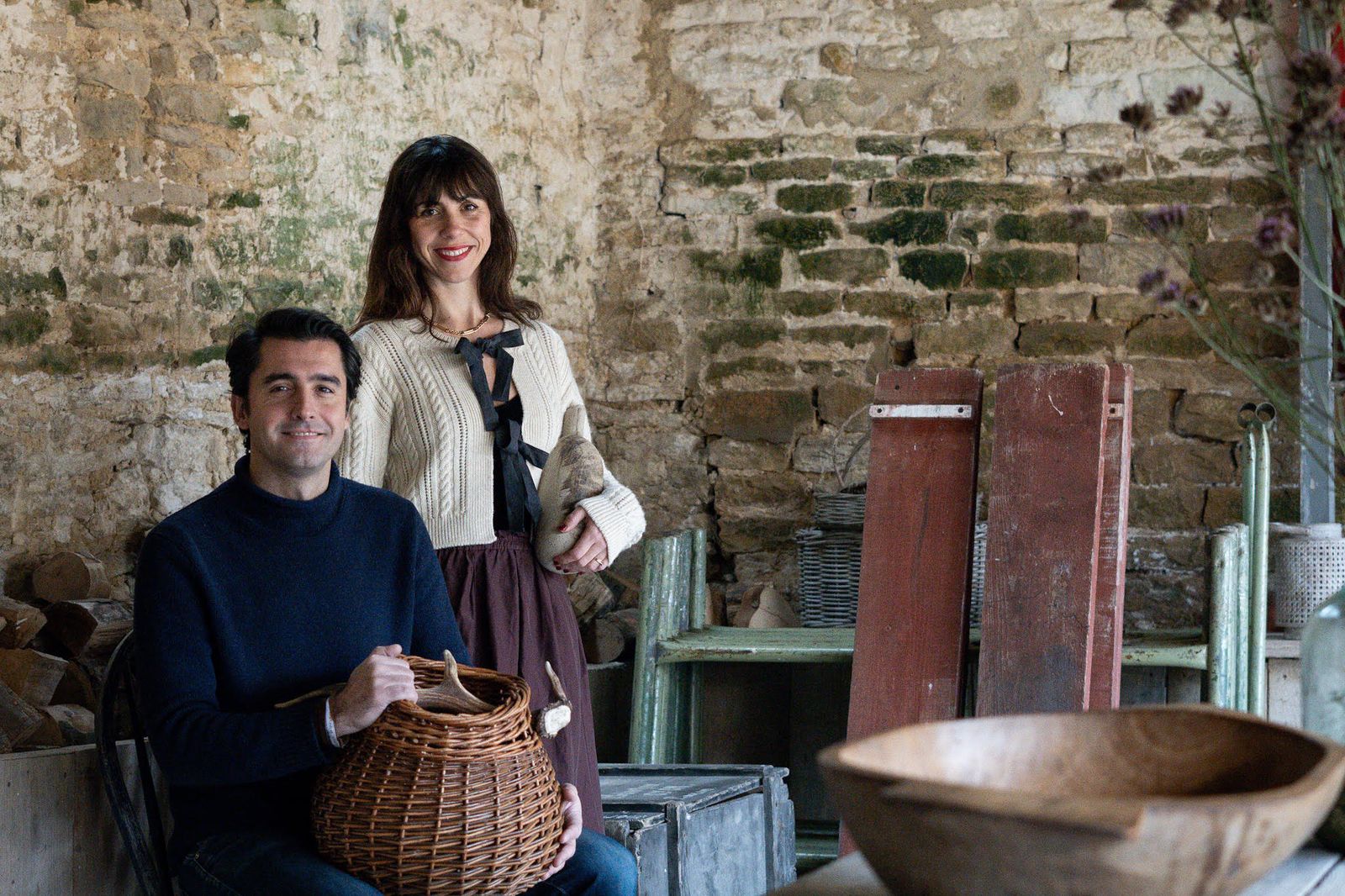
So I have spent many a jealous hour lusting over the workspaces showcased on Vigour and Skills, an online concept store that works with over sixty UK makers and craftspeople, founded by wife and husband team Bea Savoretti and Clement Lauchard. Storytelling is central to the project, and that means you often get a good snoop around various studios, workshops and sheds, where the magic happens. Savoretti observes that “we've witnessed our customers yearning for the stories of creative epiphanies, the life journeys that guide individuals to the profound satisfaction of crafting by hand. All our makers have embarked on many different paths to their crafts—from art school, to hobbies that evolved into full-time jobs, craftwork as a tool to manage mental health, or to unexpected courses that led to feelings of joy. Whatever path our makers took to find their craft, they all share a common bond: a sense of tranquillity and happiness that comes from the art of handmade creations."
Lots of people arrive at this juncture because they’ve become burnt out by business and hustle and need a break. Craft as the road to redemption after a crisis is a well-trodden path and that’s because it works. I’ve written about my experience of grief and the power of a glue gun to rehabilitate here. I certainly didn’t embark on that first dolls' house as a business, it was a balm. That it has evolved into something more formal still surprises and delights me because the whole project is born out of love. Craft is cheaper than therapy and in the end, you have something solid to show for it beyond a pile of snotty tissues. Perhaps it’s because I’ve never had therapy, that there is nothing I cannot make out of papier maché and I consider this something of a super power although I have not yet been called upon to test this theory. Many people relish exercise for their mental health but that’s never worked for me (it just makes me very tired and very hungry). I find nothing more calming or recalibrating than the act of making. Of course, exercise and craft are not actually that dissimilar, they share an element of physicality. And although we don’t need William Morris to remind us that "a good way to rid one's self of a sense of discomfort is to do something. That uneasy, dissatisfied feeling is actual force vibrating out of order." It’s always nice to hear from him isn’t it? Most modern jobs lack that physicality, and so a day doing them can leave you feeling strung out or sullen.
As a child I would spend weeks squirrelled away in my attic bedroom variously making beads, painting a predictably pre-Raphaelite mural which took an entire summer to not quite finish, or fashioning crinolines from reams of paper. I think I have never been happier or more fulfilled than when in that making state. It’s a sense of total absorption in a physical process. You cannot get that feeling from sending a really good email. Now, on the days when I come close to recreating this atmosphere, I consider myself very lucky indeed.
.jpg)
Even if you're not a maker, you can still benefit from the luxury of craft. The positive contribution that hand-crafted objects make to our experience of an environment is very much on people's minds at the moment. At their new townhouse in Mulberry Square, Chelsea Barracks, interior design studio Banda has embraced this theory. Edo Mapelli Mozzi (Founder and CEO) explains “The therapeutic undertones behind the crafted furniture, together with the use of natural materials, bring about a huge sense of wellbeing. We often hear from our craftspeople how important their skills are to their mental health – it’s this sense of being ‘grounded’ and ‘calm’ that’s prevalent throughout the home.” This desire to be surrounded by beautiful things, objects of style AND substance, resonates beyond the ultra-luxe bracket too. Three billion pounds was spent on handmade craft in the UK in 2020, a serious and escalating number that’s looks more solid on a spreadsheet than you might expect. It’s easy to underestimate the quiet, sometimes earnest work of craft in comparison to industry but the trend away from wipe clean, mass-produced perfection has real momentum. If love of the process is at the heart of production, if hundreds of hand hours have been applied to the finished piece – then of course it is of a different quality to something which was made in a factory, by the thousands. By quality I mean, characteristics, rather than value judgement. Only the customer can decide what something is worth. And with London Craft Week on the horizon (13th-19th May) there is no better time than to discover a whole host of emerging and established makers across the country.
Looking at the Vigour and Skills line up, I think there’s a nuance and depth to a lot of the work that you wouldn’t necessarily get straight out of art college. For me I know that there’s a layering to my work that comes from the wide-ranging references I’ve carried about in my head for years, none of which were there when I was younger (hence the Pre-Raphaelite mural). Maturity means your instincts are honed and your judgement is (hopefully) sound. You’ve made loads of mistakes and so you know that sometimes that’s also when you make the leaps. Creatively, there’s no better place to be.
There are lots of great things about not being 20 and one of them is a sense of accomplishment and confidence that it’s impossible to own before you’ve had a chance to put in the hours. Now I know my strengths, and no longer agonise over my weaknesses. Because I recognise those weaknesses as spaces ripe for collaboration. The things I am terrible at, I supplement with other people’s brilliance – for example, my mother is in charge of all the textiles in our dollshouses because I become instantly incompetent when faced with fabric. My friend Patrick Grant (a judge on The Great British Sewing Bee) who knows a thing or two on this subject, says I am the worst sewer in the United Kingdom. This is fair (I staple my children’s school name labels onto their collars) because where my mother can embroider miniscule flowers in silk thread, I can’t even sew on a button. And that’s fine because you don’t have to be able to do it all, in our case where we can’t, we do it together.
Fortunately, my mother has become a lot more supportive of my creativity. I remember asking her as a small child what she would like for her birthday, and she replied “nothing homemade” which was a pretty rough thing to say to a three-year-old with no pocket money. She would hang my nursery decorations at the very back of the Christmas tree, pinioned against the wall and completely invisible to the naked eye. But it does mean that these days, when she says something is good, it really is very good and as a partnership that takes care of all quality control measures.
One of the reasons our intergenerational partnership works is because (she won’t like me saying this) she is a lot older than me (what with being my mother). But thankfully, at last, we are seeing age as an asset rather than an apology. New talent doesn’t have to mean young talent. I walk past PD James’ house in Holland Park every day on the school run and I always salute it – not just out of respect for a writer who I have always enjoyed enormously but because I equally enjoy the reminder that James did not start writing until her forties. She is proof that talent, growth and curiosity just doesn’t have a sell by date. There’s still hope for us all.


