

Gen Z and Millennials are associated with many things, including the mysterious popularity of bubble tea and the return of cycling shorts as daywear. But being held responsible for a boom in traditional crafting? That one snuck up by surprise.
If you’re already fully immersed in the crafting community, you’ve likely watched the steady increase in people willing to get stuck in and give something new (to them) a try – often in a desperate attempt to reconnect with themselves away from a screen. Running parallel with this increased chatter around craft is a decrease in the average age of those taking up traditional hobbies such as embroidery or quilting –pastimes previously associated with those far longer in the tooth.
In their teens, twenties, or early thirties; this new generation of makers is more likely to learn from YouTube videos, social events or TikTok than formal classes at a local night school. And who can blame them? It’s much cheaper that way, and if you’re practicing in your bedroom, there’s no one around to judge your bodged first attempts.
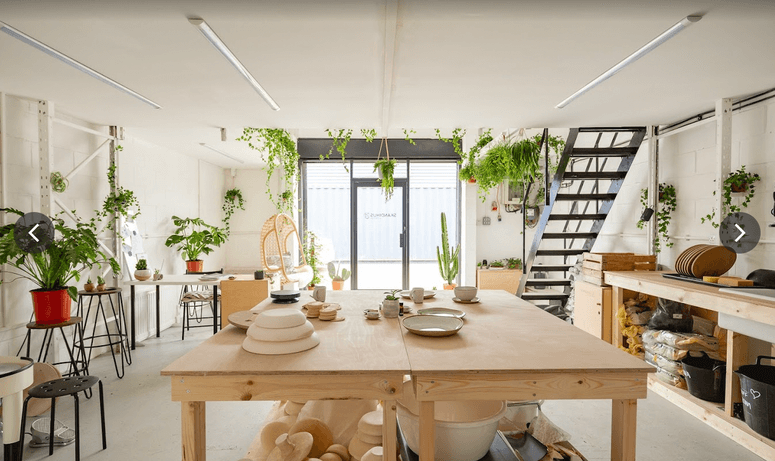
During lockdown, people of all ages had endless time at home to experiment with meditative making and practice creating something tangible with their whole hands (rather than scrolling with a single thumb). Three years later, life is largely back to normality, but the looms and pottery wheels aren’t going anywhere.
Some say Harry Styles (specifically his enviable knitwear collection) is to blame for the uptake in young people learning traditional crafting methods. Some say it’s a fight back against excessive screen time or a way to cope with anxiety about the state of the world. The motivation to create is very personal, but the numbers don’t lie. Bearing in mind that approximately 75% of all TikTok users are 34 and under, a search for #crochetforbeginners returned 196.4 million views, #tuftingrugs has 397.4 million views and #basketweaving has 20.5 million views. Pottery studios have waiting lists, lampshade making classes sell-out like festival tickets and retail platforms such as Glassette, The Chuffed Store and Iota Edit regularly support the work of creatives who are breathing new life into age-old methods of making.
.jpg)
.jpg)
FELT is a specialist platform that sells and champions contemporary arts and crafts, and when asked about Gen Z’s interest in crafting and what makes their approach stand out, they’d noticed that “Their way of making and the materials used are often sustainable and considerate of the environment. For example, Oscar Crabb, a recent Slade graduate, creates appliquéd textiles using antique linen found on eBay, which he dyes naturally”. FELT are working with increasing numbers of self-taught artists who haven’t received any formal training in their craft, and they believe this can actually benefit the final works, “Because they’re not bound by any rules and expectations”. They add “Depending on what discipline you choose, craft doesn’t have to require huge amounts of space or specialist equipment – you can make at the kitchen table. Materials used are often inexpensive and younger makers are imaginative about reusing them”. “Social media is an important factor too – rather than directing them away from art and craft, platforms such as Instagram and TikTok enable young people to find inspiration, share their work and subsequently make money from it”.
It’s always difficult to stand-out from the crowd in a saturated market with tough competition, but the social-savvy generations have technical ability on their side, with the skills to grow an online presence or attract the attention of influential names who could change their lives overnight. When you use the internet to your advantage, what might begin as a casual hobby or an exploration of an interest can become a paying side hustle, or even a full time job (if you want it to be). We speak to 10 young crafters who have done exactly that.
George Bronwin, potter
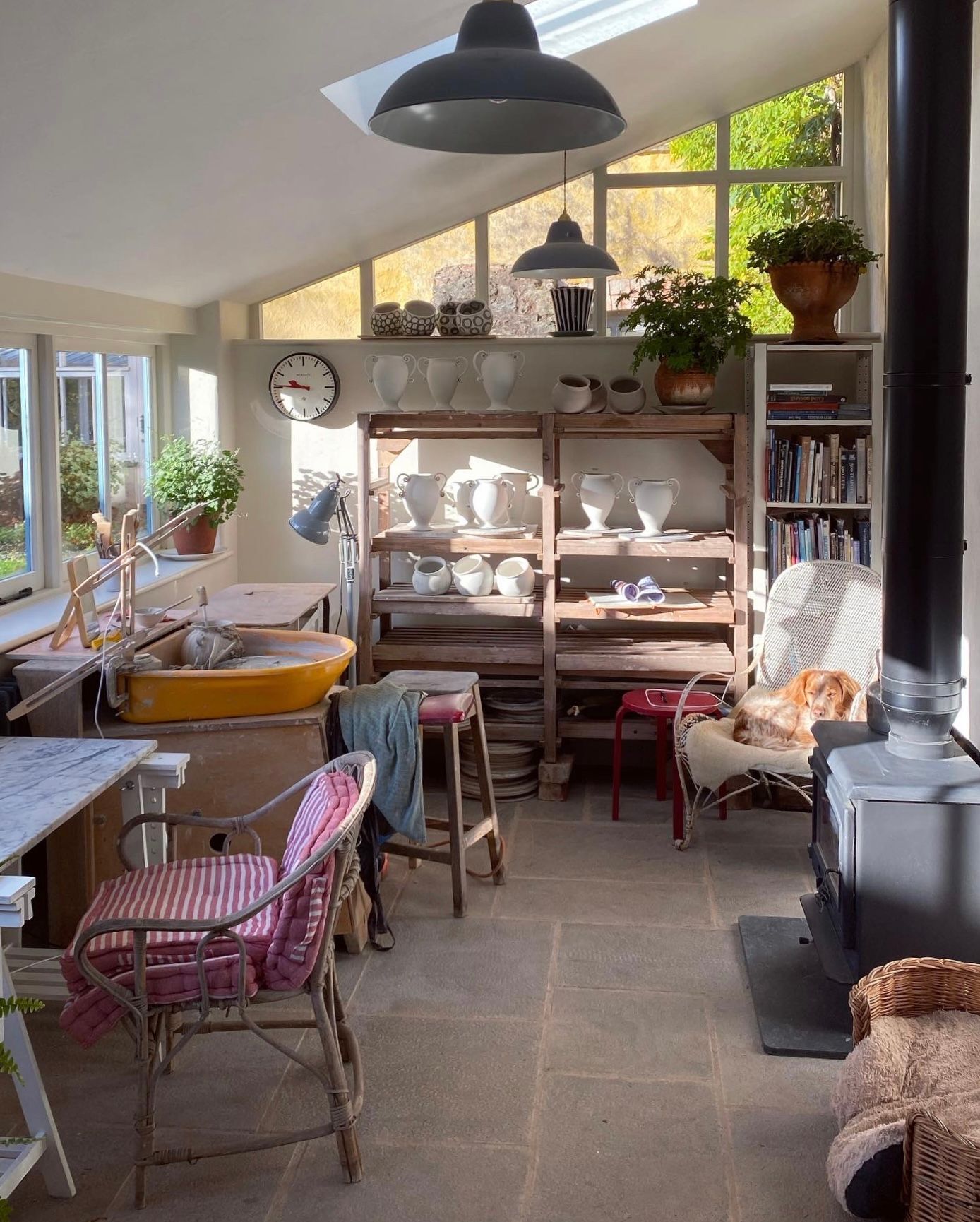
I spent my early twenties working in the Alps, cooking, then managing luxury ski chalets for the super-rich. Aged 28, I decided to hang up my ski boots and return to London, where I moved in with my sister and her young family in Islington. I used the dosh I earned as a private cook to join a shared ceramics study in Hackney. I had first tried pottery at a night class a few years before, whilst having a miserable time studying History and Politics at university. I found throwing – similar to cooking – completely addictive. Pots filled my mind and helped me out of the dark slump of depression I was in at the time.
I was terrible on the wheel to start with, but it was the challenge to become less rubbish that drew me in. Pottery can be incredible at helping with your mental health. It’s not that the act of throwing is particularly relaxing – it can actually be rather stressful – but it’s all-encompassing, it demands total involvement. There’s something reassuring about that process, also the constant exposure to failure – cracks, explosions, crazing, glaze running. Failure is a grounding and generous reminder not to take things too seriously or wallow in self pity (a bit of wallowing is understandable, of course).
In the first lockdown of 2020, I was one of the lucky ones already used to working in my slippers. Through the power of Instagram and pot-hungry locals, the commissions started rolling in, which gave me the resources to focus all my efforts on making pottery – something I hadn't seriously considered as a viable option beforehand. Today I work as a full-time potter from my own studio in Somerset and I feel so relieved that I stumbled upon playing with clay.
Perhaps the huge numbers of young people making and crafting now is in response to the popularity of factory-produced goods and urban working and living. We got hooked on consumerism and cheap, mass-produced imports, so it’s no surprise that periodically, a large group of people want to rediscover alternative ways of living. Popular interest in craft waxes and wanes but there’s always a pull for humans to understand the world via the objects we make and use every day. And whether we understand it or not, hand-made things spark a reaction.
Kara Rose Marshall, Tuft Luck Studio, artist and tufter
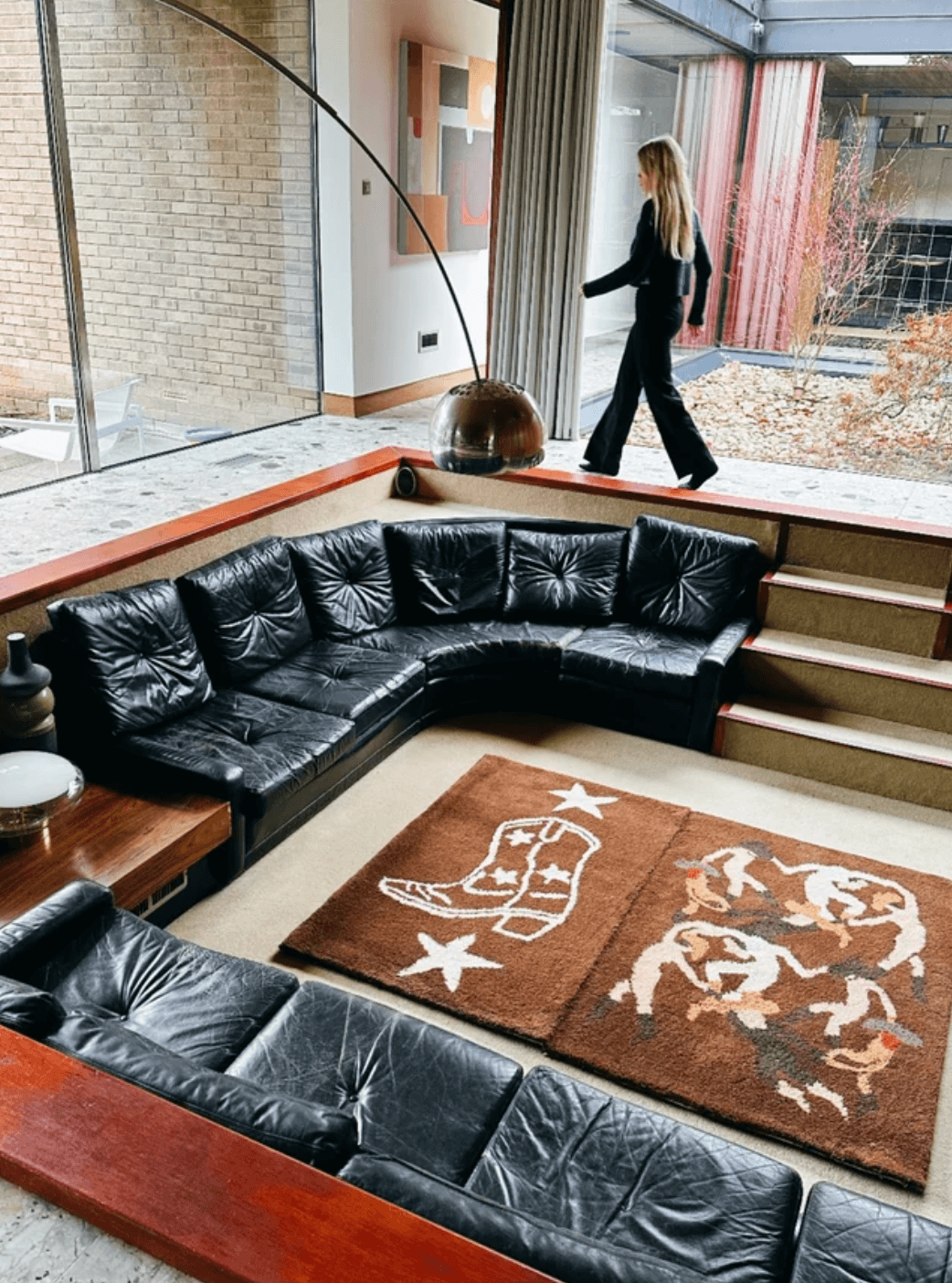
I first started rug tufting in 2019, shortly after giving birth to my son, Duke. I’d worked as a model for ten years and it was terrifying to fall pregnant in my twenties without a reliable income. It felt like the perfect time for a change, plus I’ve always had a creative side that I hadn’t fully explored.
My partner is a tattoo artist and I’d often use his iPad to doodle and design while I was pregnant, thinking that I’d go down the route of starting my own fashion brand. Then by chance, I came across a video of someone tufting – this was long before it became a TikTok trend – and I knew instantly that I wanted to learn. I found a tufting course at London Met and my partner bought it for me as a Christmas gift. Sadly, I’d only taken my first one-hour class when lockdown came and the course was cancelled. I was so determined to learn that I built my own frame, bought a tufting gun and taught myself instead.
I really fell in love with the process of creating tactile art and my first rug was a piece called Bunny Boy, inspired by the film Gummo. I shared a photo of it on social media and my friend Jamie Hince bought it. This gave me a huge boost of confidence to keep going and within a week, I had my first commission by Miles Kane. A custom rug for MTV soon followed and my brand has continued to grow. Now I share a studio space with my partner, Elliott. He tattoos and on the other side of a glass wall, I create watercolour paintings and tuft. It’s far removed from ‘traditional’ crafting but I love what I do.
Rosa Harradine, brush maker
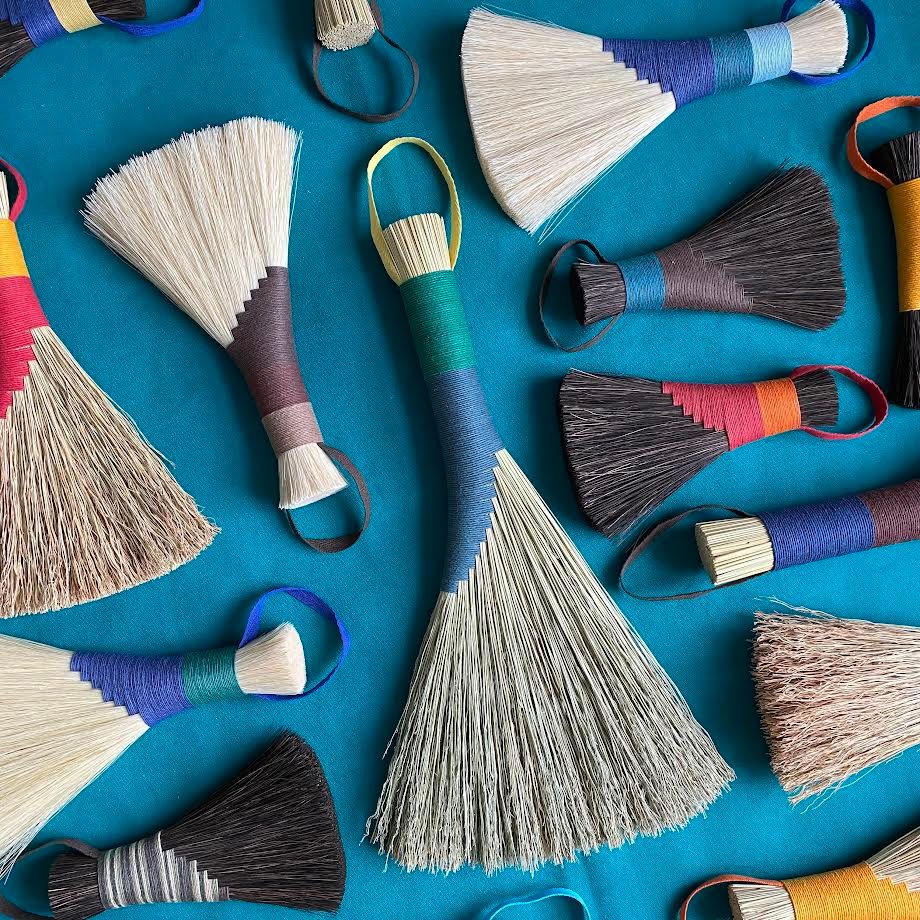
I became interested in craft when I was feeling unfulfilled in an office job, looking at spreadsheets all day. I really needed something in my life that was grounding. I wanted the feeling of being in a flow state, working with my hands, making something tangible. I think so much of our lives are digital now that it's really refreshing (even necessary) to have time away from a screen.
Originally I started making wooden spoons, then turning wooden bowls and weaving willow baskets. I loved learning each new skill and being able to create something beautiful felt so rewarding. Eventually I stumbled upon brush making online and ordered some materials to give it a go. The idea of creating useful objects from natural and sustainable materials particularly appealed – especially as a reaction to the single-use, throwaway culture that we're used to.
I found the whole process really meditative and despite usually having a short attention span, I realised I could spend hours happily crafting without losing focus, which still feels pretty special.
I shared some photos of my brushes online – which were very well received – and my hobby quickly became a business! Now I sell my brushes and brooms online and I’m also stocked in TOAST after being selected for their New Makers programme. I can't imagine spending my time doing anything else.
Chelsea Vivash, marquetry artist and maker
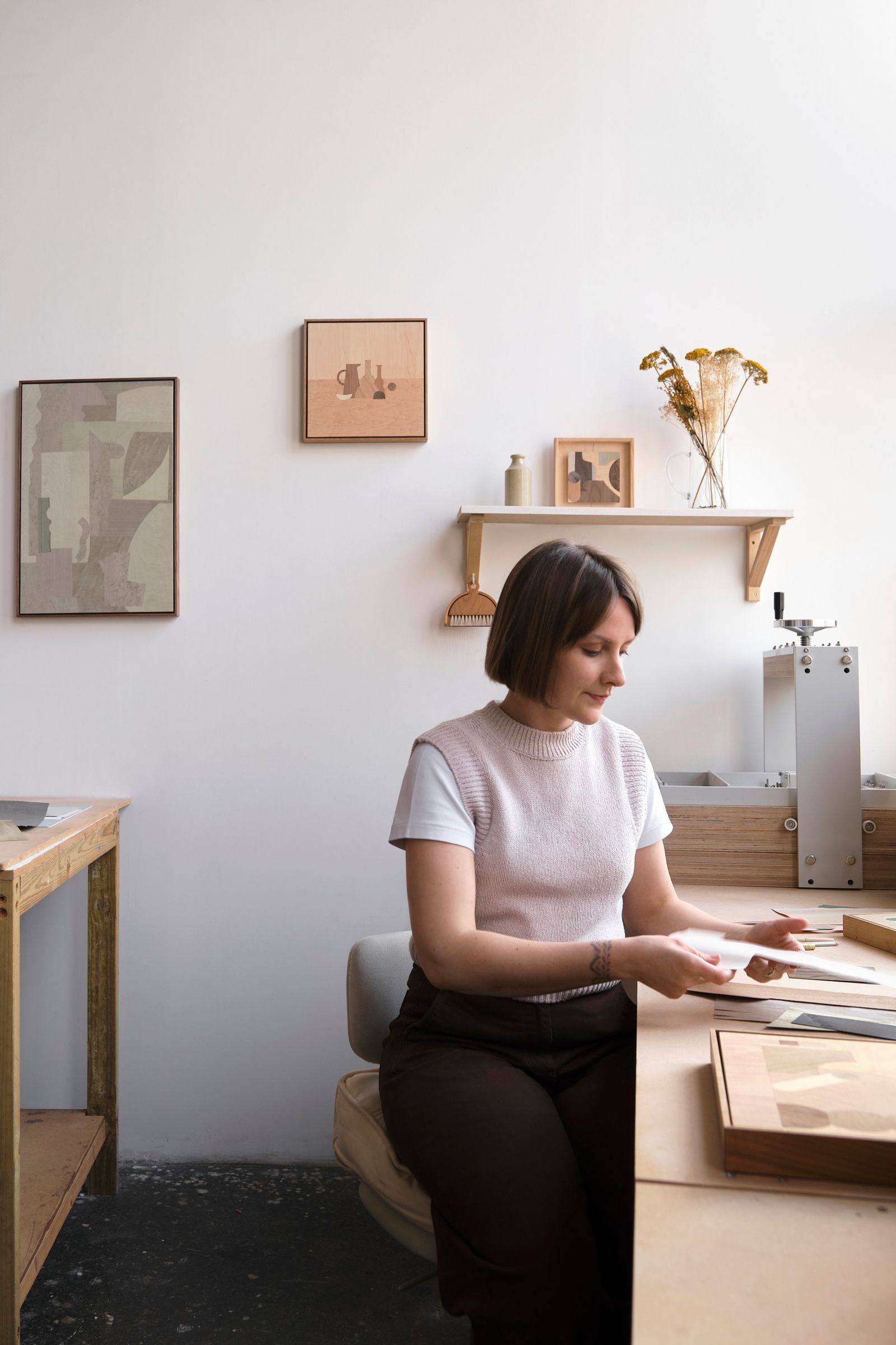
My practice developed from an appreciation of the richness and irregularity of hand-crafted objects. I’ve always been especially drawn to the texture of wood grain (I studied both fine art and furniture design) and marquetry combines my making skills with my love of art. To me, it’s just like painting or drawing with wood. From the very first samples that I made, I knew that I wanted to hone the craft.
Although marquetry is a traditional woodworking technique, these days it can be created using a few different methods, one of which is via a pre-programmed laser cutting machine. I actively chose to practice creating only by hand, as it means I work intuitively with the materials. It’s assumed that Gen Z and Millennials prefer to live digitally – utilising technology wherever it’s available – but I’ve never been someone who feels comfortable constantly working at a computer, and I don’t think I’m not alone in that. I believe that young people are feeling a desire to rebel against relentless screen time. Everything is so fast paced now, but when you’re engaged in a physical craft, everything slows down and it removes the external noise.
To give credit where it’s due, the internet does allow people to share their skills in an easy and accessible way. A craft that was once available only to those who could afford training can now be self-taught via free online tutorials. Young people are pushing the boundaries of craft – we’re not limited to traditional ways of working and we harness social media to learn new skills, connect with other creatives and market our work.
Sabine Van der Sande, hand-weaver
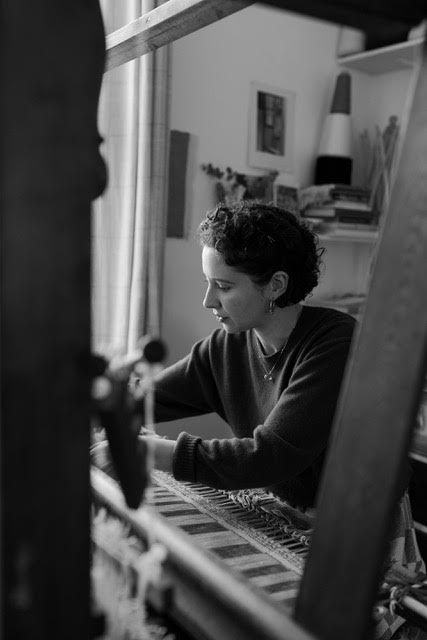
I have a background in Art History and I have always been fascinated by historical textiles – both the ancient methods of production, and the ways in which cloth has been cherished, shared and passed on through generations. In an age of industrial production and fast fashion, this context actually highlights the importance of craftsmanship. Things that are made by hand have imperfections and are scarce by nature – this contributes to their desirability.
I think we will always find the hand-made to be beautiful, but I also hope to highlight the labour that goes into making a textile. When I post photos or videos of my work on social media, I want to share every part of the process, from winding to dyeing to warping to weaving, all powered by my own calorie consumption, each piece made lovingly and with a deep desire to learn from the way that humans have made cloth for centuries.
I’m not a complete luddite, though – I’ve found countless treasure troves of inspiration in online archives, where centuries-old manuals and pattern books have been faithfully digitised. The mechanism of my loom remains unchanged, so these preserved resources allow me to reach into the past and hold on to a thread of tradition.
Jess Wheeler, artist and designer
I’ve been making and creating in a wide variety of forms for as long as I can remember. I grew up on a farm and would spend every moment I could with my siblings, finding materials on the farm and in the woods to build and make things.
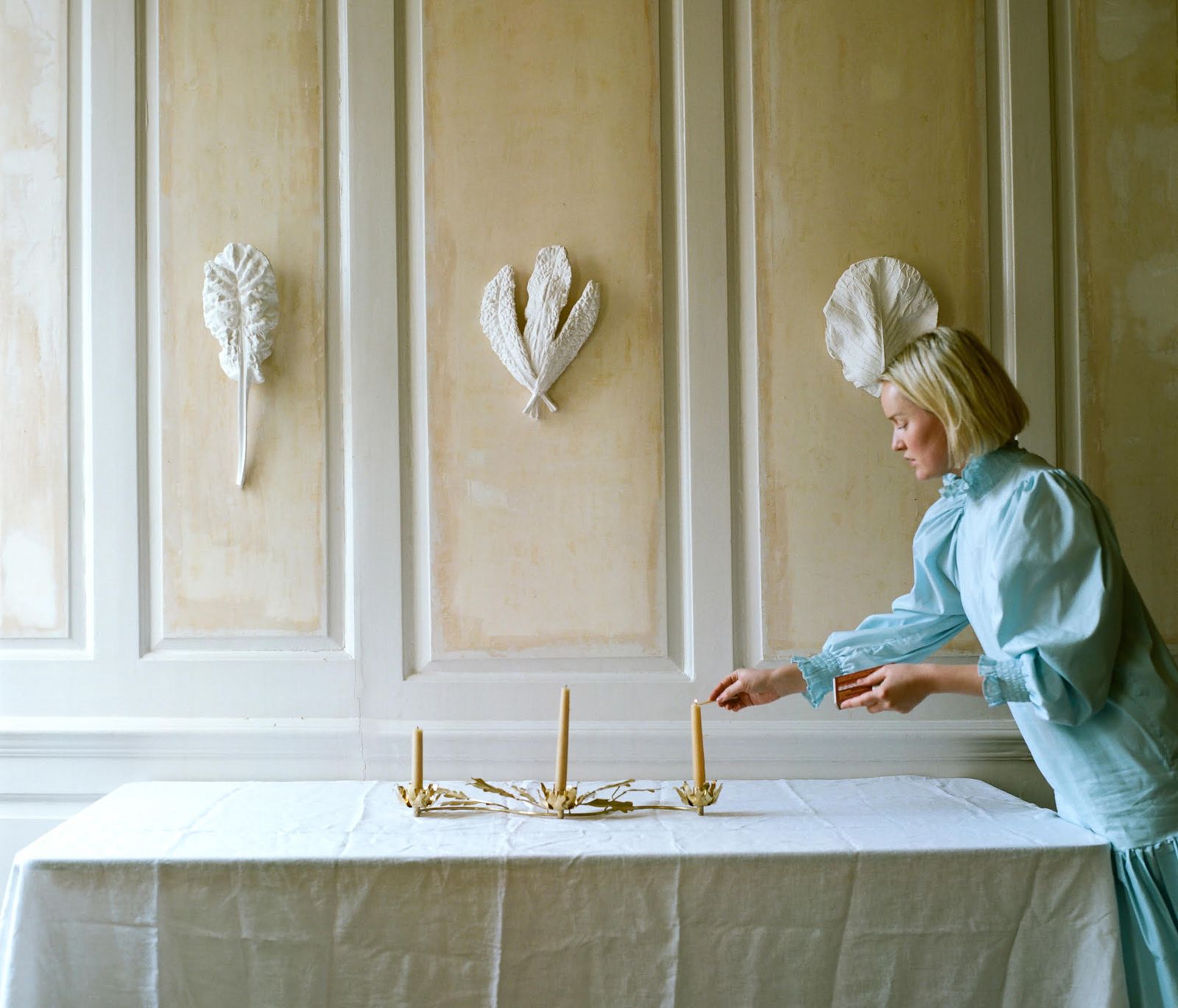
I first started working with metal when I moved from London to North Wales three years ago. The new found space meant I was able to expand my practice and making in metal was an itch I needed to scratch. I learnt from a local man called Stan, shadowing him in his workshop. The fire, drama and precision of soldering, the satisfaction of turning a rigid material into something organic – I was immediately hooked. There’s a comfort in using age-old, traditional techniques and processes to realise a contemporary idea. I create pieces made to last and I hope they’ll be passed down through generations as I like to think my work transcends styles and trends. I’m currently working in bronze, plaster and brass. I use the ‘lost-wax’ technique to make my bronze wall lights, which is a 6,000-year-old method of metal casting. Plaster casting is an amazingly quick and dynamic way of working. It’s such a physical material to work with – it feels like childlike play. All of my brass is recycled and it’s such a wonderful material; I love how it develops a beautiful patina over time if not lacquered.
As someone who has grown up with fast-changing technology, I love that as I step into my workshop (an old cow shed) with no internet connection and barely any signal, I can fully escape and get lost in what I’m making. Running a business can mean long days at a desk in front of a computer, but working with my hands keeps me connected to myself and my surroundings. When your hands are busy holding a soldering flame, you cannot pick up your phone to scroll; which feels very freeing.
Imogen Pope, lampshade maker
Instagram content
My grandmother was a natural, multi-talented crafter. She taught me how to sew as a child and it was something that I always enjoyed when I went to visit. As a teenager, it continued and I made little handbags to sell to my friends. Sewing and crafting was something that I always came back to. It’s a wonderful feeling to start with nothing and end with a finished product - you get a real sense of satisfaction.
In 2020, I had an idea that I wanted to make a frilly fabric lampshade for our kitchen. I took an online course and then experimented with how to attach the frill trim. I loved the creative process of making it; measuring, cutting, pinning, stitching. In fact, I enjoyed it so much that I kept on making them for our whole house – teaching myself new techniques as I went. I finally started selling my lampshades in 2022 after encouragement from my family to ‘just put them out there'. It has been the best feeling to see my business grow!
I think more and more people want to buy hand-made items that they can have in their homes forever. I feel incredibly lucky to have created a job for myself where I can be creative and use age-old crafting techniques everyday - many of which I originally learnt from my grandmother.
I think Gen Z and Millennials are experimenting with craft as a way of slowing down and focusing on mindful practices to cope with all of the media we consume. Most of us – particularly Gen Z – have grown up with a mobile phone in our hand and so many of us suffer with anxiety. Learning a craft helps steady your mind and limit the doom-scrolling!
Georgia Doherty, Plants for Shade, paper artist
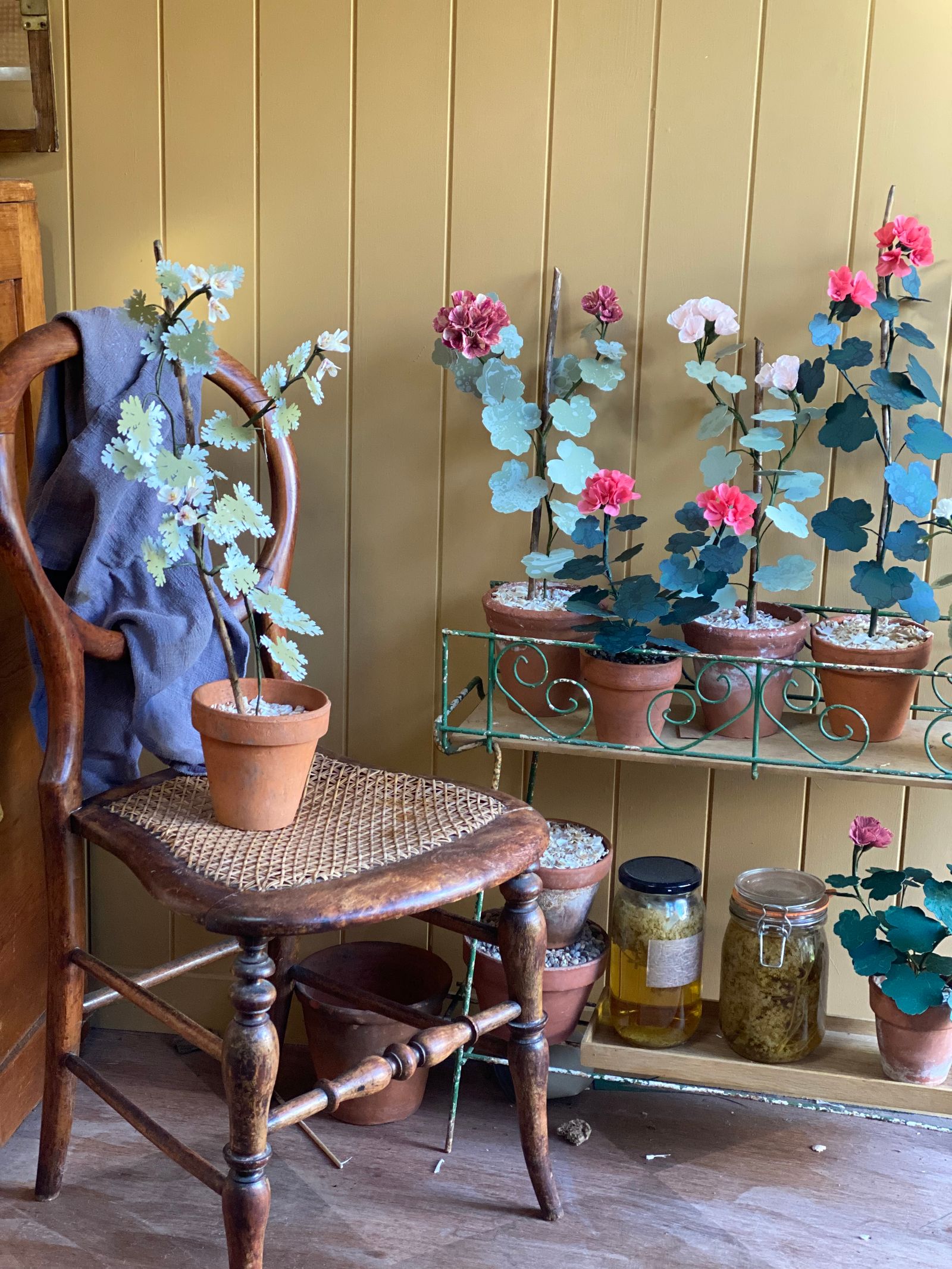
I’ve always made things. I spent most of my childhood turning cardboard boxes into dollhouses and castles and until recently, I was styling and cooking for events. I just love making and now my focus is on paper flowers. When I'm searching for things for my own home, I’m always looking for something unbranded, imperfect, unique and with a story. Something that isn’t wasteful and will stand the test of time. Something made by hand that will have special meaning for me.
I’ve never been very good at making repeats, be it recipes, symmetrical flower arrangements or designs for events. Every pot I make comes out differently. Sometimes I set out to make a small geranium but as I add the leaves and the plant grows, I get a little lost in watching it take shape. Suddenly it’s a large one or something entirely different to what I was expecting. It makes it harder to take commissions, but for me, the uniqueness of every paper plant is what makes it so enjoyable.
Social media has been such an important tool – not only does it give me access to an inspirational community, it has helped me to learn skills that would have previously been limited to courses that I haven’t had the money or time to take. Crafters tend to be extremely encouraging and generous with their advice, I think because they’re so passionate.
I hand-marble the papers that I use to make my leaves, which is an ancient and now endangered craft. My papers are very simple but I learnt the marbling methods mostly through videos on the internet and I'm not sure I would have been as confident to try it if I was working from instructions in a book.
Lizzie Scarlett Towndrow, quilter
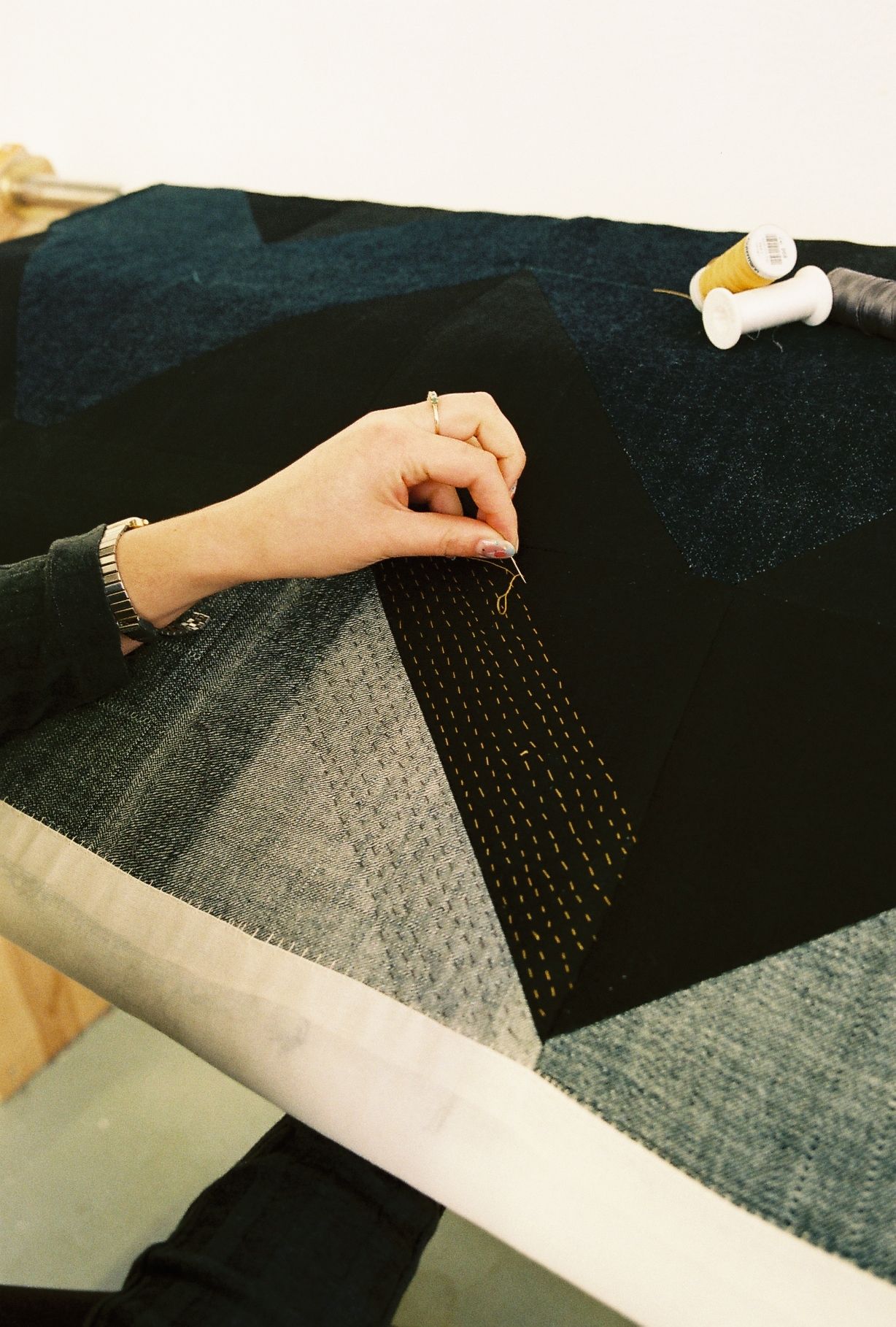
Throughout history, patchwork quilting has been used to tell stories and hold histories. They’re seen as objects of warmth, comfort, and inanimate extensions of ourselves that store our most complex sentiments and memories. I first started quilting during my BA in illustration, as a way of communicating stories and ideas through 3D, tactile pieces. I then studied textile crafts for my MA and focused on patchwork quilting.
I learned through first-hand experience and practice, by handling the materials directly, keenly observing the handwork of my teachers, and experimenting with my knowledge. I see the process of teaching and passing of skills as storytelling, the craftsperson communicating their skills by processing and reconstructing experiences of a material memory.
One of the most valuable things about quilting – and actually most crafts – is that everyone can give it a go. I learned lots of basic skills from my grandmother, such as knitting and embroidery, and patchwork quilting soon became a natural craft for me to use in my work. One of the great things about it is you can use scrap materials you have laying around, upcycle old clothes or tea towels… There is no right or wrong.
I think we’re seeing a resurgence in younger people like myself learning slow, hand-made crafts as we did in the Arts and Crafts movement, not long after the Industrial Revolution. Perhaps it’s a reaction to growing up feeling overwhelmed by the impact of technology, social media, and fast fashion.
Jacob Monk, hand-weaver and textile artist
Instagram content
I was first drawn to weaving when I was studying Textile Design at Central Saint Martins and saw the huge looms in the studio. I didn’t know how they worked but I
I was intrigued to try for myself. After graduating, I wanted to explore the Ikat technique further, so I bought a second-hand tabletop loom and my journey into hand-weaving began there. I was particularly drawn to Ikat because it’s a traditional, hands-on technique and it requires a lot of patience and practice to improve your skill level. The making process is very rewarding.
In 2018, I exhibited some of my early work at the London Design Fair in The Truman Brewery and I met several of the other makers; all working in different areas of craft and at different stages in their careers. Their confidence in their own practice was so inspiring to me that I decided to fully commit to becoming an independent artist and maker. I joined Cockpit Studios in Deptford in 2019 on the Clothworkers’ Company Award, focusing on my hand-weaving practice and – crucially – learning how to run a business.
The beautiful thing about craft is the slow nature of it. You often hear people describe weaving or knitting as therapeutic, plus you end up with a tangible product that you made with your own hands. You can feel proud of what you created and it brings far more satisfaction than mindless scrolling. Though, social media does have a role to play. Reels and TikToks have become such useful, accessible tools for learning about niche crafts that you might not have seen before.


