

Much has been made of Nora Ephron's ability to pull a character into focus using interiors and houses that reflect their personality. Much, too, has been made of Nancy Meyers' set building magic. Whilst these two women undoubtedly paved the way for female film makers following in their footsteps, there's another director who deserves just as much credit for her prowess in building worlds: Sofia Coppola.
Sofia Coppola first burst onto the scene in 1999 with her adaptation of Jeffrey Eugenides' The Virgin Suicides. Her point of view was clear from the off, with her unapologetically feminine sets and girlish embellishments that felt real and true, rather than posed. Where many of Nancy Meyers and Nora Ephron's characters have been self-sufficient, independent women whose comfortable homes are an extension of themselves (think Meg Ryan's Manhattan apartment in You've Got Mail), Sofia Coppola has primarily been concerned with girls at odds with their surroundings.

The sets of Sofia's films exist not just to make the film more aesthetically pleasing, but to tell the viewer a little more about the character's interior workings. The theme of loneliness is prevalent across her full œuvre, and nowhere does the director explore this more than in her character's bedrooms. Each of her protagonists battle feelings of entrapment: their bedrooms are at once their place of solace and their cage.
A veritable compost heap of girlhood, frothy, frilly and floral is Sofia Coppola's M.O. when it comes to building her characters' worlds. There is an intimacy to Sofia's set pieces that rivals the garishness of Baz Luhrmann's and the theatricality of Wes Anderson's.
Below, we explore Sofia Coppola's greatest hits, from Marie Antoinette to The Bling Ring.
The Virgin Suicides (1999)
Sofia Coppola's late nineties directorial debut laid out many of the film maker's interests and hallmarks. The movie, based on Jeffrey Eugenides' novel of the same name, follows four teen sisters in 1970s Michigan who take their own lives one by one. It's a harrowing anti-coming-of-age story, at odds with the golden light and soft palette Sofia makes use of throughout.
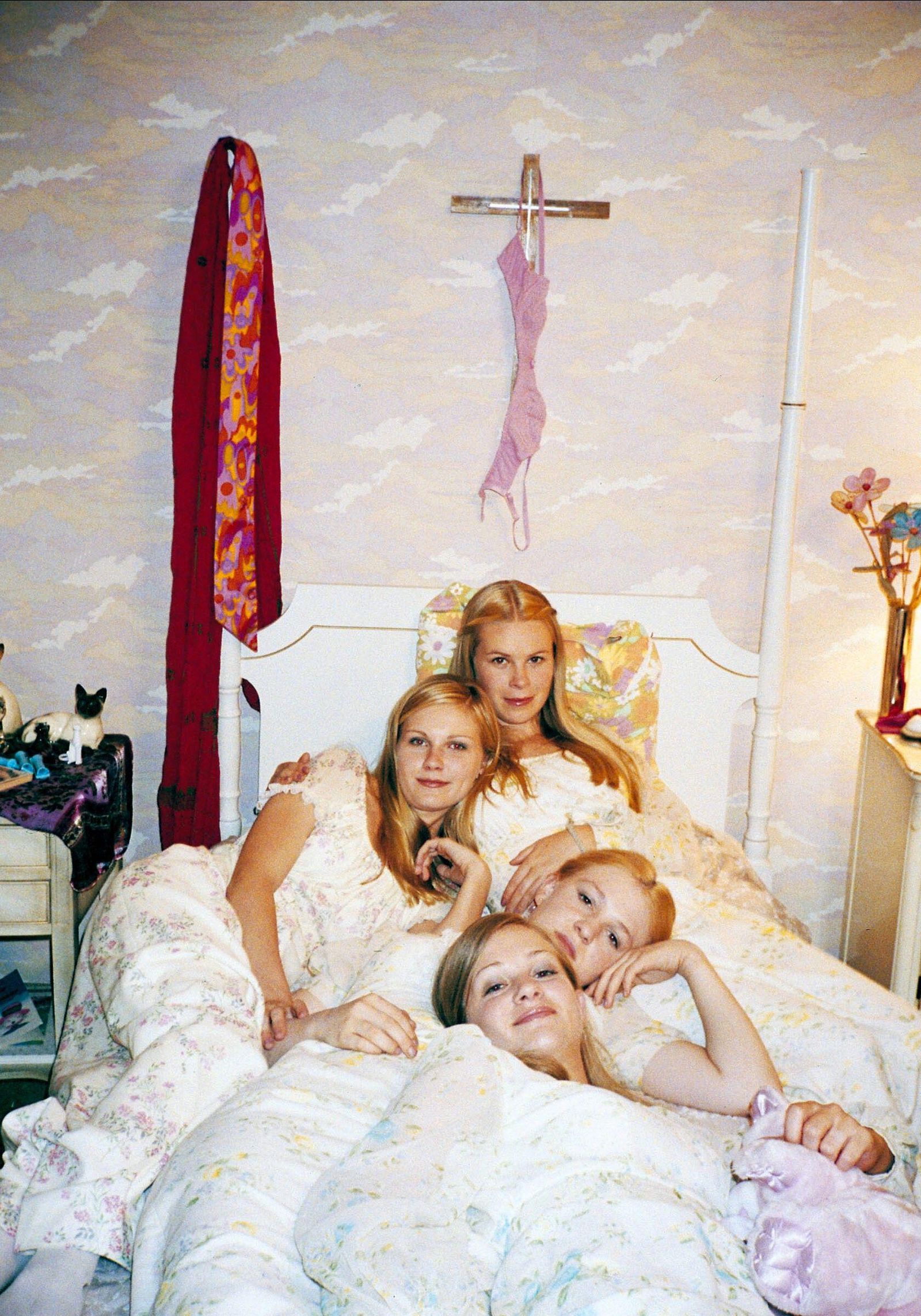
The Lisbon sibling's strict parents effectively imprison the girls in their own house, preventing them from communicating and socialising with outsiders. As such, their bedrooms become their entire world. Part of what makes this film so intriguing, so enticing, is how at odds the story and the setting are with one another. The confectionery-coloured surface hiding the visceral and painful internal lives the girls are leading.
The bedrooms belonging to each of the Lisbon sisters are subtly different, each replete with Easter eggs that drop foreboding hints. In Lux's bedroom, a pale pink bra hangs from a wooden cross in one scene, gently signposting her movement towards sexual maturity and away from her religious youth.
Marie Antoinette (2006)
Sofia Coppola's second collaboration with Kirsten Dunst came in the form of 2006's Marie Antoinette. Whilst the film initially received middling reviews, it has since garnered a cult following with a Gen Z audience. The film follows a 19-year-old Marie Antoinette arriving at Versailles an Austrian teenager and charts the course of her life until the guillotine comes crashing down.

Much like The Virgin Suicides, the film's sugary setting adds a perverse texture to the character, where Marie Antoinette's profound misery is buried underneath floral eiderdowns and sugary silks.
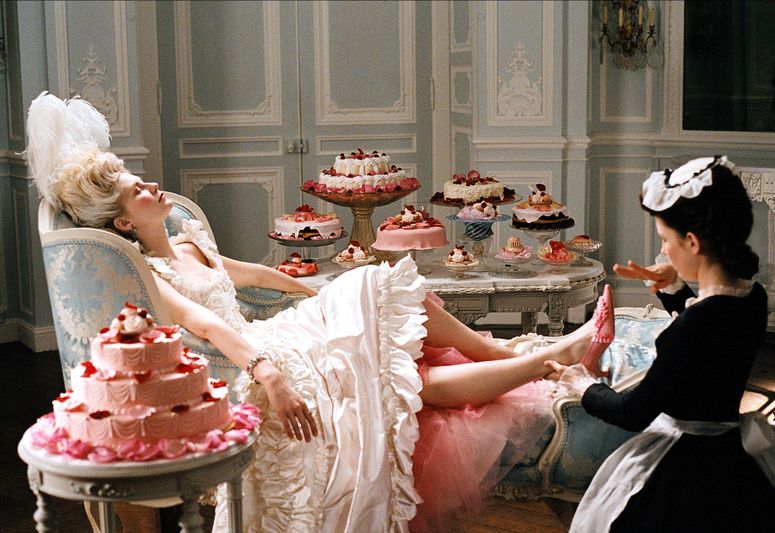
The whole film is rendered is pastels and hues traditionally associated with more female-heavy settings. As Sofia Coppola explains, ‘I was drawn to the idea of this girl being so young, and that our perceptions of Marie Antoinette, the myth, how she was turned into this villainous queen, are so different to the actual person, and she was just this kid that got sucked into a weird situation.’

Lost in Translation (2003)
Unlike Sofia's other projects, her 2003 film, Lost in Translation, presents characters without a physical home. Following two American expats in Japan, the characters profound loneliness is set against the nigh clinical backdrop of the Park Hyatt Tokyo.
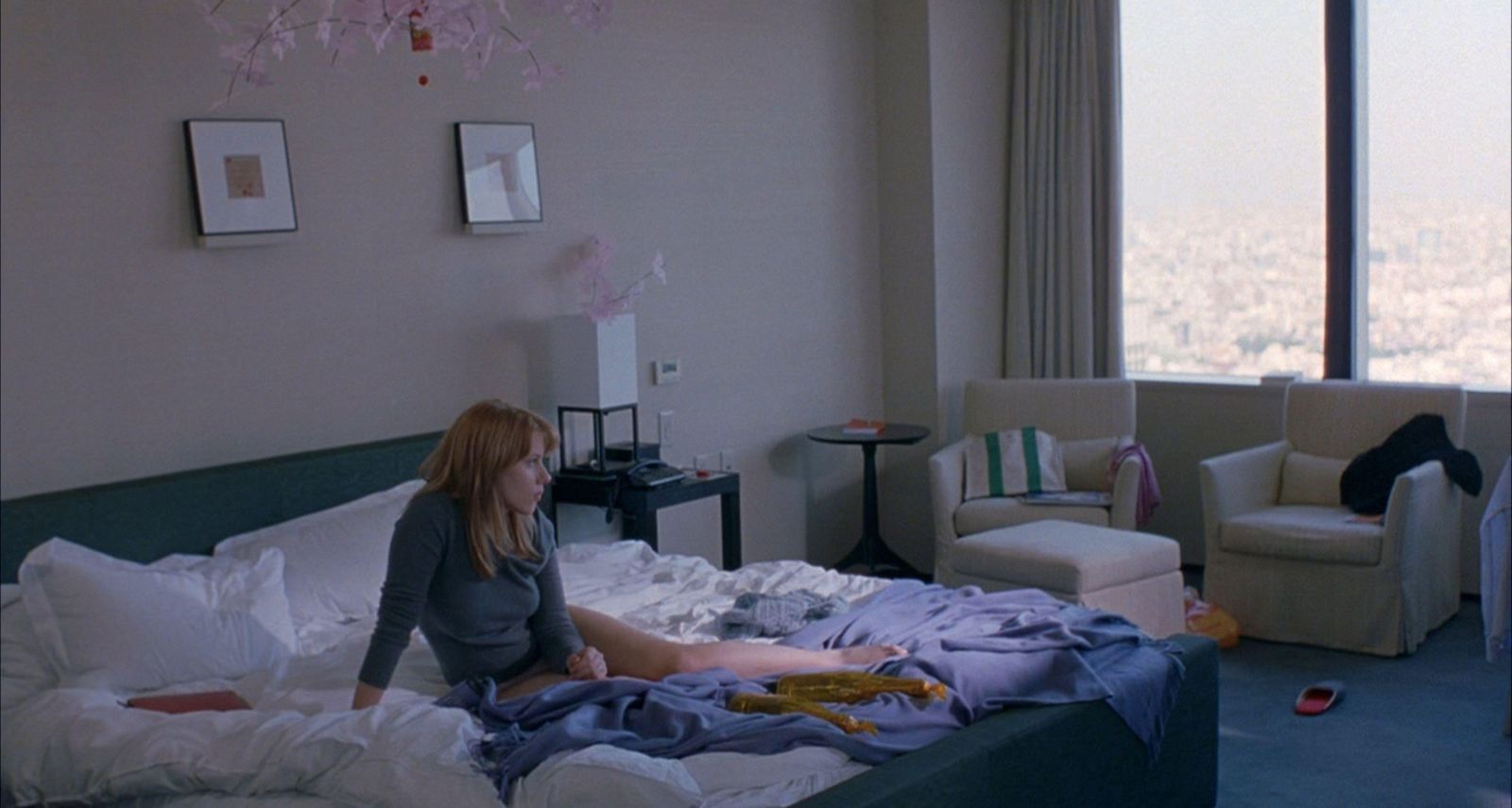
Where the settings of The Virgin Suicides and Marie Antoinette throw their character's misery into stark relief, the impersonal hotel rooms of Lost in Translation double down on just how lost and lonely these two characters are, their selfhood demonstrably erased by the sterility of their environment.
As Bill Murray's ‘Bob’ and Scarlett Johansson's 'Charlotte' grow closer, and the characters feel more at ease, Charlotte's room becomes more personal and soft. She manages to introduce Coppola's signature pink palette through paper flowers and clothes strewn across the hotel room's floor.
The Bling Ring (2013)
Inspired by the Vanity Fair article titled ‘The Suspects Wore Louboutins’, Coppola's 2013 The Bling Ring follows a group of delinquent teens who burgle celebrities' houses across Los Angeles.

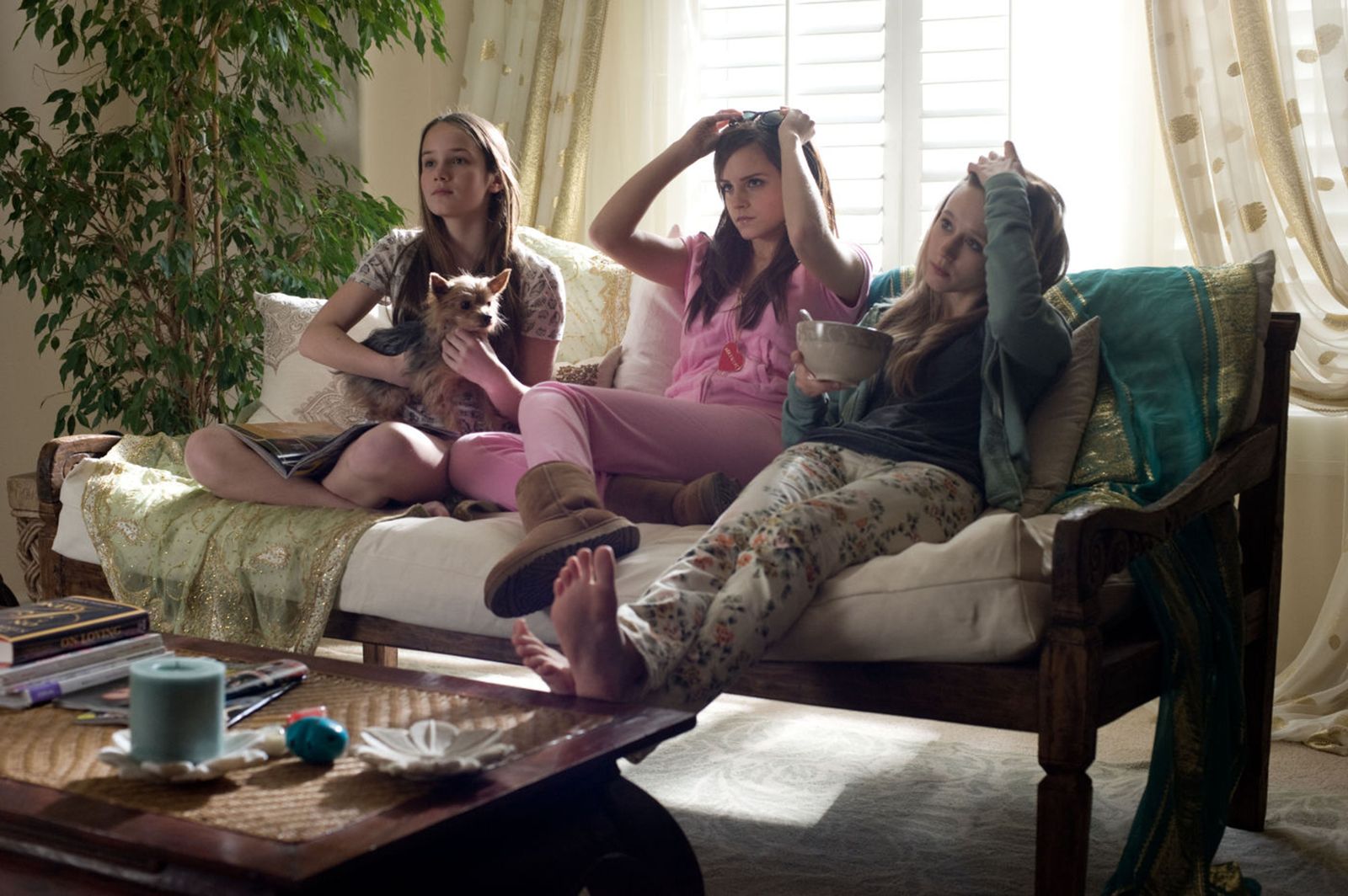
In an interesting 180, The Bling Ring sees Sofia Coppola's protagonists violate the bedrooms and houses of other characters. They rifle through their drawers and cupboards, taking what they want without care.
Their own spaces also offer insights into their personalities. The chaotic mess of the bedroom belonging to Emma Watson's ‘Nikki Moore', strewn with pills and discarded VIP lanyards, is at odds with the childlike furnishings and palette. Sofia is showing us a girl growing up–a girl who doesn't quite know who she is yet.
Priscilla (2023)
Sofia Coppola's latest project? Priscilla, based on Elvis and Priscilla Presley's relationship, as seen from the latter's perspective. We're yet to see any stills of the film's sets, but given the garish glory of Graceland, we suspect they will be something to marvel at.


