

We have builders. Stealthy ninja warriors, they arrive in the dark and leave when it is darker still. They work on Saturday mornings. They mostly refuse tea when it is offered. They are incredibly polite and unrelentingly hard-working. They hail from Romania and are a pin-up poster for it; kind-hearted artisans who even play with the neurotic dog.
Because of the builders, I spend a lot of time moving from room to room, in search of a WiFi signal, or a calm place that doesn’t have drilling or humans in it. What I have discovered through the course of my research into finding quiet is that, in terms of workspace, my husband has hit the residential jackpot.
His music studio is in the garden and the studio’s kitchenette is currently serving as our kitchen, in lieu of the real one. The family now eats breakfast, lunch and dinner in it, we both work in it and I feel I now know it quite intimately. The boon of this studio is that it is entirely soundproof. It also does not have a phone or a doorbell and therefore it is a place where my husband – until the family invaded him – got things done.
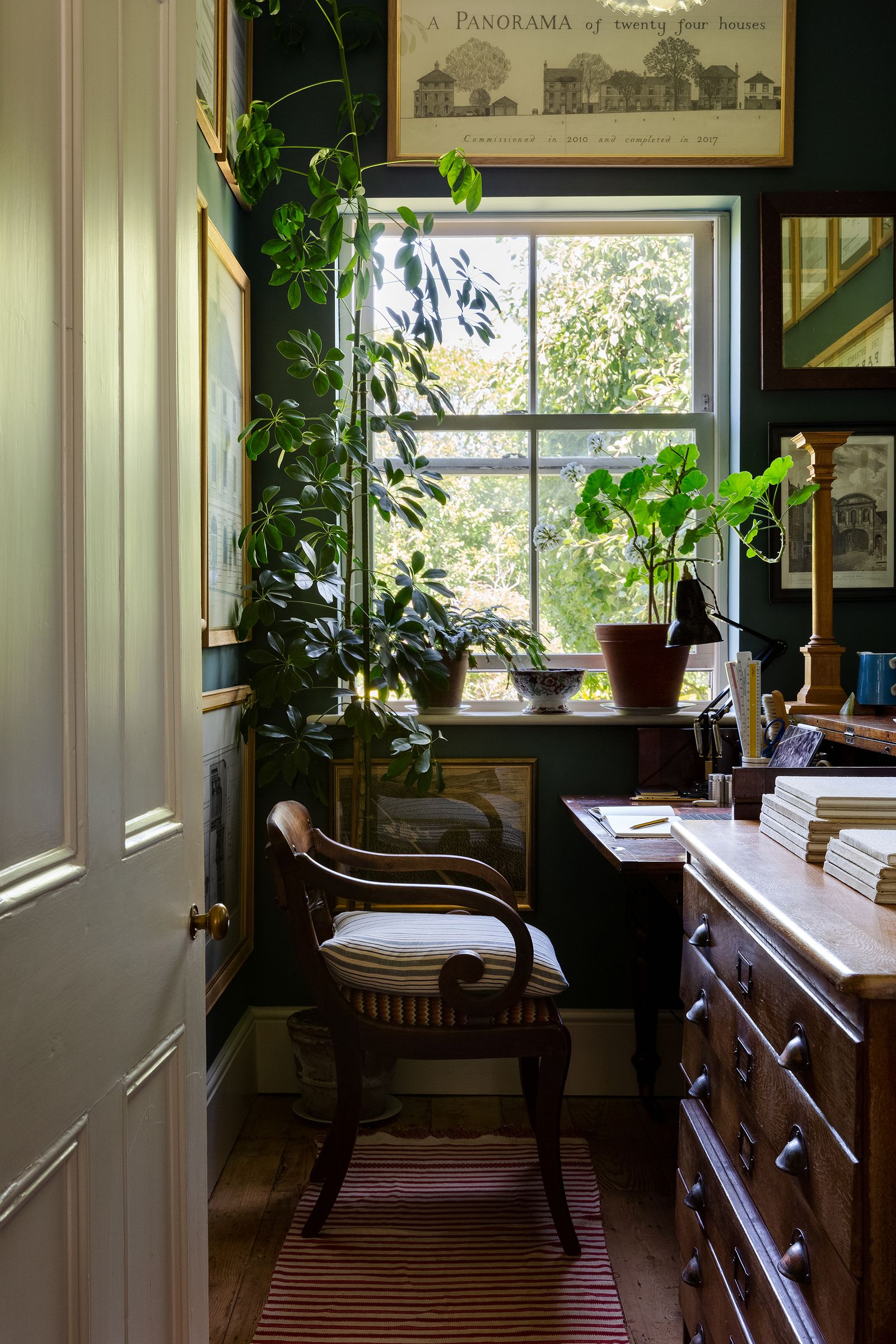
My workspace has ever been the kitchen table. This is problematic for many reasons: its proximity to the phone, the needy dog, the doorbell, the ever-beckoning fridge and other humans requiring responses. Plumber, electrician, wasp-nest man – in they’ve always trooped without ceremony. Our laidback farm cat, sometimes with fleas, hangs off me, along with his more cautious, flea-less sibling. From March to November, when he’s not slumbering, a lascivious tortoise joins the throng. The cats flank him like obsessive bodyguards, shadowing his every move and sniffing his reptilian thighs inappropriately. In the kitchen, I write a book now and again, and many long lists. Sometimes, at a push, I might make a chocolate-chip banana bread.
But in the studio, where padded silence hangs like snowfall in a forgotten garden, I can write for hours undisturbed. I am now apprised of why my husband has produced prodigious amounts of work and won an Ivor Novello Award. He’s certainly a talented, hard-working, multi-instrument Renaissance man, but he’s not assailed by a constant stream of domestic traffic and cavalcade of animals. Until now. A soundproof door suddenly feels like the answer to many of life’s conundrums.
During the pandemic, the home office came to the fore. Suddenly, we were in each other’s living spaces, this strange new intimacy and voyeurism yet another weird facet of the virus. On Google classroom, we burst with adoration for the teacher who was a recent new father, conducting a lesson from his car, so his wife and baby could sleep. We admired another’s immaculate kitchen, empathised with the less so. I have become properly allergic to video calls ever since, and shudder when anyone says, ‘Shall we jump on a quick Zoom?’. The answer to this is always: ‘No.’
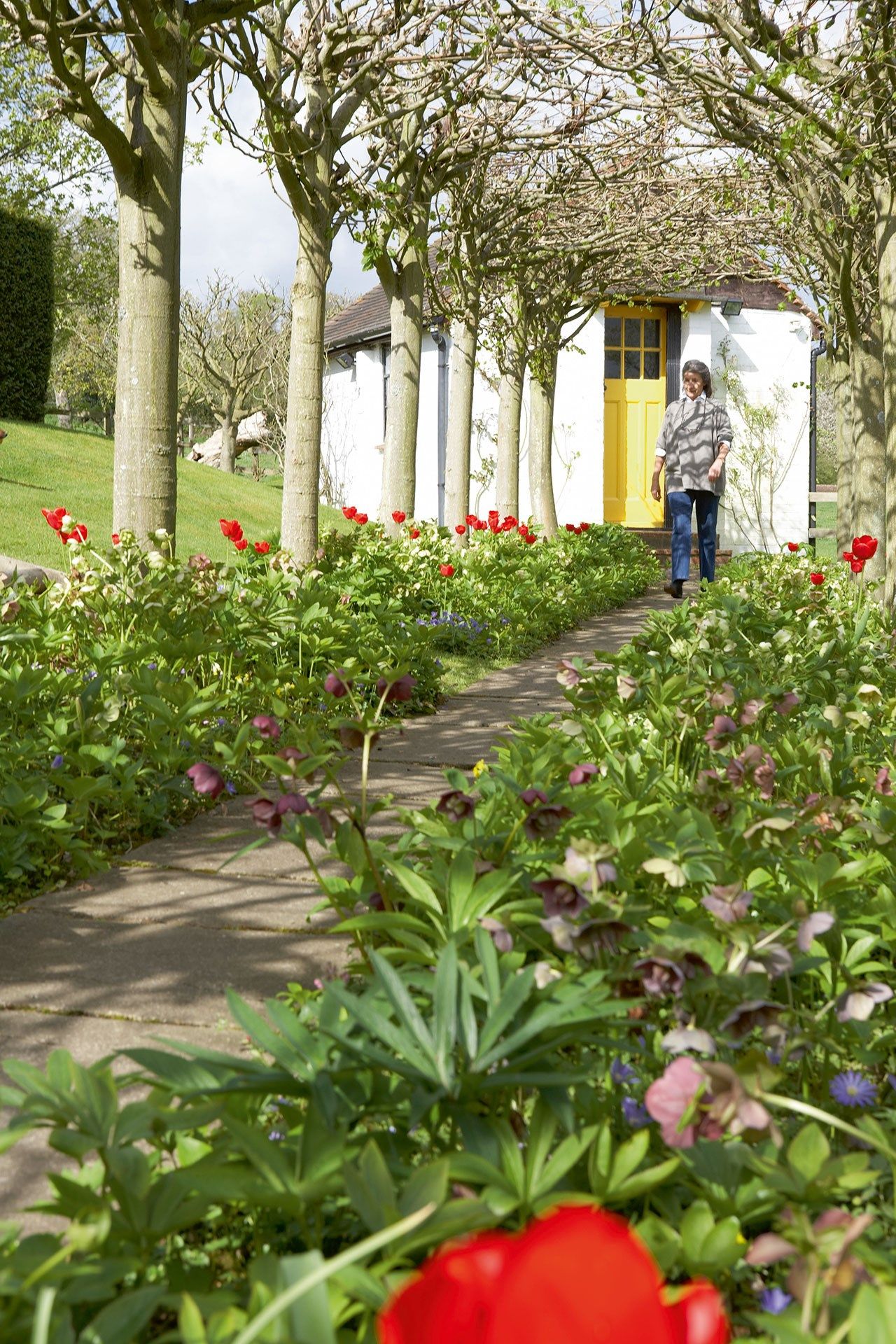
Dylan Thomas had, for a time, a word-splashed room of his own, in a former wooden garage perched above the boathouse in Laugharne, where he lived. Painted blue, it stares down at the infinite grey of the sea stretching beyond it. Thomas was one of many writers and artists to have such a room. My grandfather Roald visited Laugharne and returned home to build his own version – a small, whitewashed building with a yellow door, the view firmly locked out, blackouts on the windows, a huge armchair to hold his 6ft 7in frame. Hemingway had a writer’s room in Key West, with fish on the walls, oak furniture and a red-tiled floor, while Virginia Woolf looked onto the green of the garden – and the Sussex Downs beyond – from her writing lodge at Monk’s House. George Bernard Shaw had a tiny, spartan, revolving Tardis of a garden room. In her house in Sheffield Terrace, W8, Agatha Christie had a grander home office with no telephone, ‘a hard upright chair for typing’, a sofa and a Steinway grand piano.
Whether a glorified cupboard, shed, shepherd’s hut, garden office or study, a work room needs to offer sanctuary to the individual who occupies it, along with an atmosphere that lends itself to productivity and peace. Or, in the words of that great arbiter of personal space Virginia Woolf: ‘I feel so intensely the delights of shutting oneself up in a little world of one’s own, with pictures and music and everything beautiful.’ I would add here, ‘And soundproofing’.


