
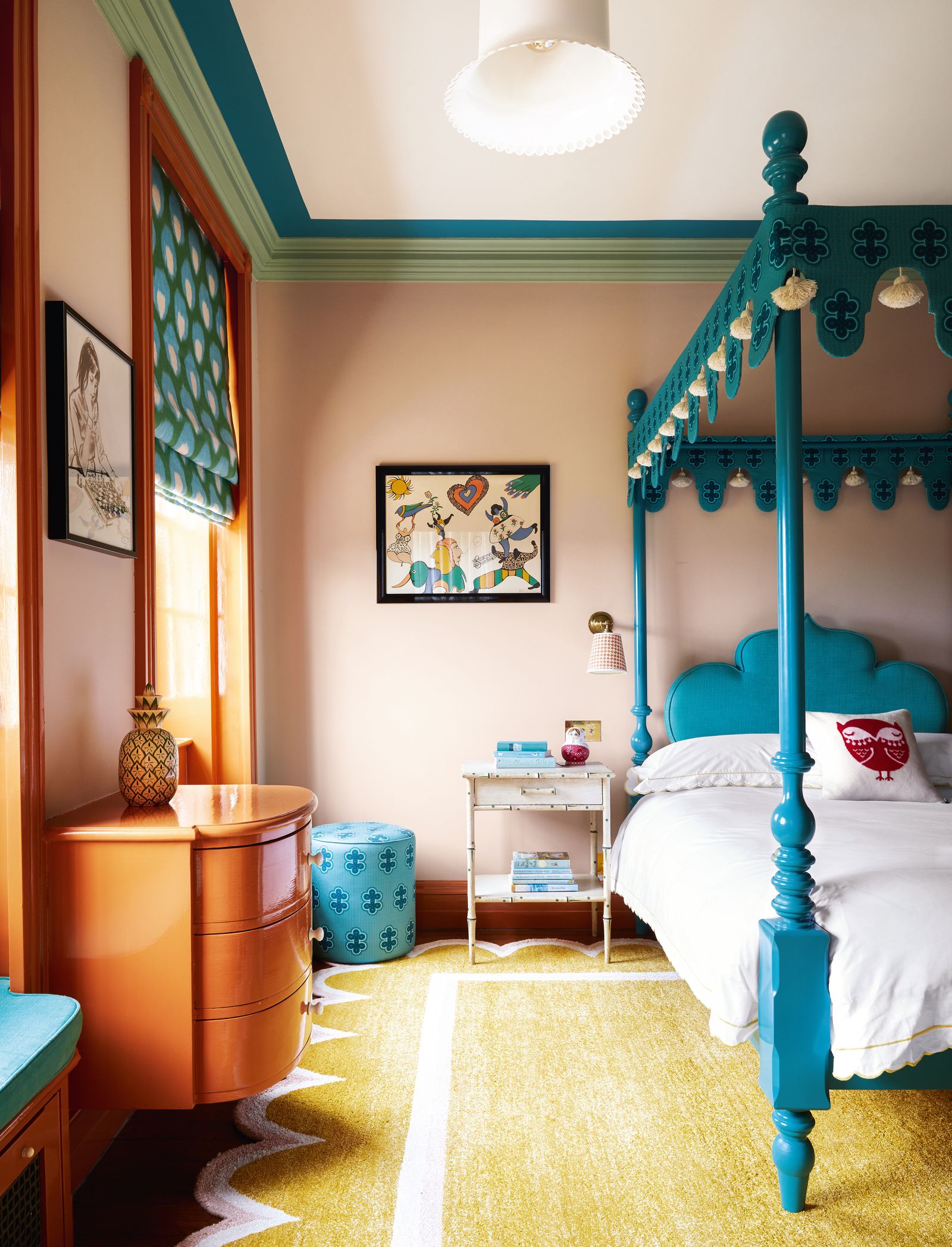
I’ve decorated many children’s bedrooms over the years, and I can now say with confidence, that the most important thing to do when devising your ideal scheme is to picture it all perfectly…and then add a massive Lego Death Star. The Death Star is the size of a small cottage, made entirely from dull grey plastic bricks and will dominate the nicest of spaces with its imposing, and almost immediately dusty presence. It is an object treated with such reverence by its owner that you’re probably not allowed to touch it, let alone move it or cover it with a charming, embroidered cloth.
Children ruin children’s rooms; their clutter isn’t colour coordinated, their tastes are chaotic, vulgar and ever-changing and their preferred activities are messy and disruptive and always involve millions of tiny, vicious items all over the carpet. They believe furniture is improved with the addition of hundreds of stickers, which are impossible to remove (even with wire wool and neat acetone). Not to mention, they are the most dedicated hoarders, refusing to discard ancient toys on the basis that you never know when you might need an armoury of Nerf Guns, even as an adult.
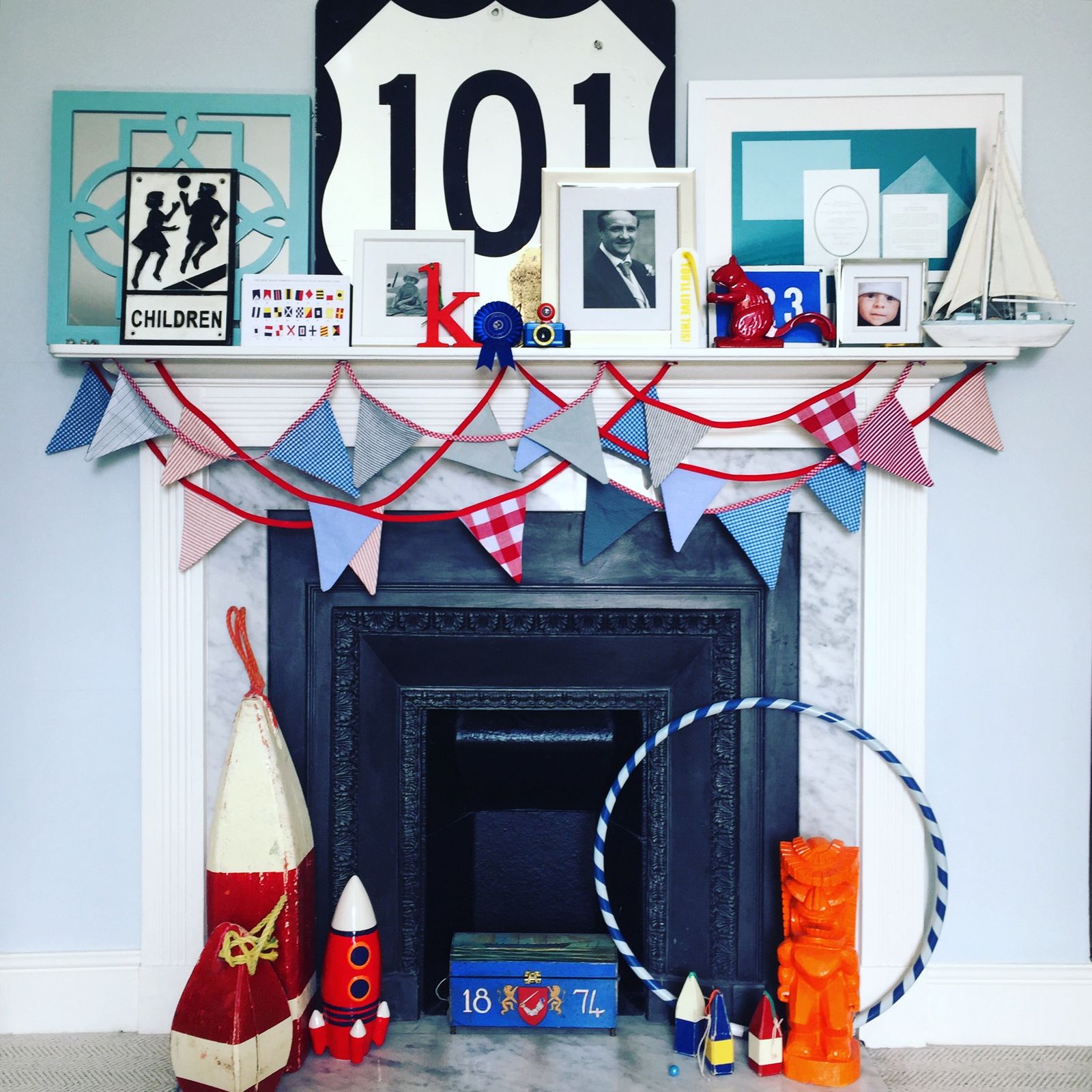
When I first had a baby, I didn’t know any of this. My son Kit’s room (below) was designed in a strict symphony of red, white and blue. It had nautical accents and pretensions towards Hamptons grandeur which made no sense, given that it was off the A36. But I thought it was wonderful. That is, until he moved into it, loudly announcing “my Ninjago posters are going to look amazing in here.” If you are unfamiliar with the corrosive damage even a tiny bit of Blu Tack can inflict on wallpaper, then let’s just say it’s quite surprising that this sticky substance is actually comprised entirely of grease. One word: residue. As soon as all Kit’s disparate possessions were unpacked (strewn about), it dawned on me that you cannot have a strict colour palette in children’s rooms, because their belongings are so very multicoloured.
Choosing finishes for kid’s rooms is tricky. I recently ordered wallpaper so posh that it came with a waiver form, basically asking me to agree that “this wallpaper is made of fairy dust and I promise not to touch it or breathe near it or expose it to any kind of emotional trauma” – this is not the kind of wallpaper to choose for a small person’s bedroom. You need the wipe clean kind, and even then, best to hide the Blu Tack.
This is not a problem in dollshouse rooms, where the occupants are imaginary and therefore extremely tidy, thoughtful creatures, without any opinions. When I make children’s rooms in miniature, I prioritise perfect symmetry and iconic nursery patterns. I don’t include iPads, empty packets of PomBears or armies of scantily clad Sylvanian Families all over the floor. I’m planning a number of new dollshouses at the moment, including a nursery inspired by Gloria Vanderbilt’s 1970s patchwork room, which has long been on my list of fantasy interiors I can’t manifest at full scale.
Back in the real world, I have made some dubious interiors choices for my children’s rooms, even featuring accidental elements of danger. When he graduated from a crib, Kit slept in a beautiful Georgian day bed from Brownrigg that was so narrow he fell out of it ten times a night for six months before I accepted defeat and brought him something human-width. My guilt about the whole thing manifested in a lavish upgrade: a caravan bed by Mathy by Bols which I bought from the Conran Shop in a custom-coloured blue (because I was still committed to the Hampton’s idea). It came with secret storage, folding fabric roof and a personalised number plate, but changing the sheets involved levels of contortion and upper body strength that was beyond me. I’d have to psych myself up for days to tackle this basic housekeeping task.
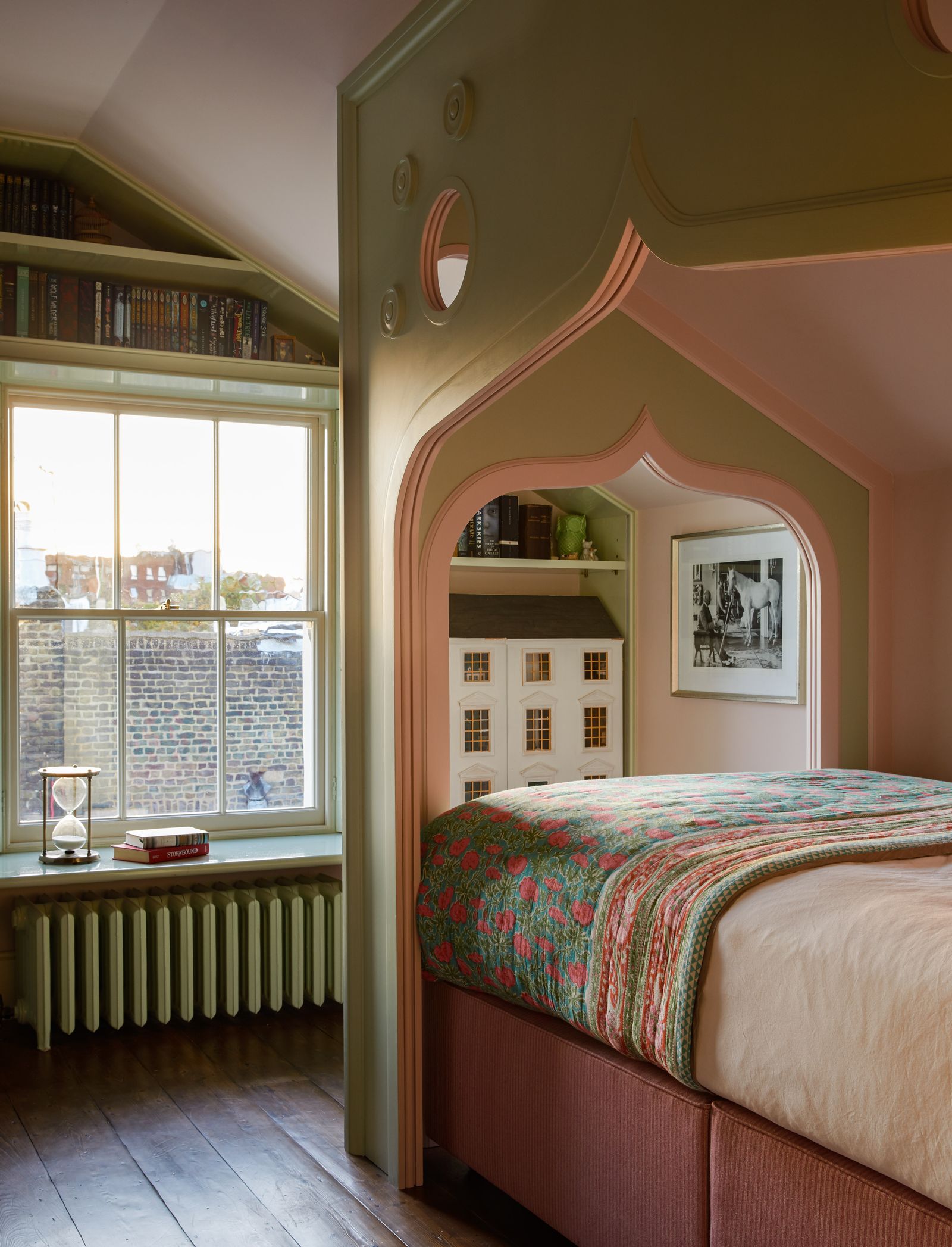
Now aged 14, Kit’s current bed is a tented palace, lovingly draped in brown ticking and kingfisher linen by the brilliant Phoebe of Tinsmiths. It has bright orange shelves (Farrow & Ball's ‘Charlotte’s Locks’) to house his books and treasures. But for some months, he’s been complaining about outgrowing it, because his sleeping feet now meet his extensive snow globe collection. I told him to fold up. Which was fine until a combination of a toddler ear infection plus house guests meant a week of musical beds, and I had to bunk down in his room. I now better appreciate the strange effect of having your toes touch tiny Finland, Lanzarote and Marwell Zoo. I had a disturbed night full of surreal, Lilliputian dreams. I’m not sure what the solution is, apart from to stop feeding him, but it’s a lesson in anticipating extreme change – a bed that was designed for a person in Year 4, also needs to ultimately accommodate someone who will soon be around 6ft5. It happens faster than you think.
The treasure shelf is the one thing that does evolve perfectly, and which is an integral part of any children’s space, whatever their age. Whether it’s early nursery scribbles (sorry, I mean masterpieces), book tokens, craft projects, party photos or exam notes – falling asleep surrounded by fragments that remind them of their small triumphs, their obsessions, ambitions and memories is a really lovely thing. Like snuggling down in a scrapbook of a life in progress. I’ve never been one for sticking things to the fridge, I think the Ukulele Player Of The Week certificate belongs in your bedroom, so that it’s one of the last things you see at night and a reminder to practice in the morning.
I recently installed such a shelf for 3-year-old Bunny who gratifyingly declared “ALL MY SPECIAL THINGS!” on entering the room and seeing it for the first time. Her special things are not the same as nicely curated, decorative objects. Grubby stones, the centre of an avocado, some mangled pipe cleaners and a loo roll tube with googly eyes on it form the centre of her collection. They might not be attractive, but they are indisputably her treasure. And though I wish her aesthetic were more refined, I do respect the desire to display the things you love most and I’ve accepted that in her case that is usually a lot of dry old leaves.

Another thing I’ve learnt is that it’s a myth that children play in their bedrooms. They play where you are. On the kitchen floor or just outside the bathroom while you shower. A playroom is a total luxury, but it will only function effectively if it is adjacent to wherever you spend most of your time. Until they are teens, children need to be within crying distance, so in most houses, the idea that they are happily playing in their upstairs bedroom all day is deeply impractical (unless you enjoy shouting “what was that bang?” up the stairs repeatedly). If you design a bedroom with an emphasis on playability, you’re asking for trouble when it comes to bedtime. I think the caravan bed fell into this category, it was too much like a playground and not enough like a bed – the opportunities for distraction and climbing and adventure were far too plentiful. I think the focus of children’s bedrooms should be about optimising the environment to be as conducive to sleep as possible – nothing beats sustained and uninterrupted nights of snooze. Since the quality of your child’s sleep radically influences the quality of yours, this is a two for one deal.
So perhaps the biggest consideration is the management of light. This has become much more sophisticated and commercialised since my youth – when my parents simply turned off the main light and went about their evening. In contrast my daughter sleeps with a device that produces red light, and pink noise – created originally to help astronauts adjust their circadian rhythms during orbit, but equally appealing to desperate parents who simply want their darling daughter to GO TO SLEEP FOR THE LOVE OF GOD GO TO SLEEP. The same device can also bust out vapour imbued with essential oil, in a sleepy scent, but I gave up using that mode after day one because not only is she not an astronaut, she’s not Gwyneth Paltrow either.
As the youngest in the house Bunny has drawn the short straw in terms of bedroom real estate and sleeps in a very small room which she shares with my fashion archive (which is just a nicer title for “things that don’t fit me anymore”). Her window is problematic. It issues icy blasts in the winter and in summer it is daylight from 4am. My solution has been to gaffer tape bin liners over the blind, which I admit looks a bit more crack den than I would like. So I’ve put pastel rosettes all the way around the window frame to jazz it up a bit (completely inauthentic, I bought them from Amazon – that child has never ridden a horse, let alone won a prize for it) but it still looks thoroughly depressing. Proper blackouts blinds have been ordered, along with solid wooden shutters because I am taking no chances. Every night when I put her to bed, along with four hundred soft toys, she delights in telling me “all my friends are nocturnal,” prompting a nasty flash forward to her teen years and 3am in a SoHo nightclub. But until then, it is bed at 6pm, tucked up amongst her bin liners.
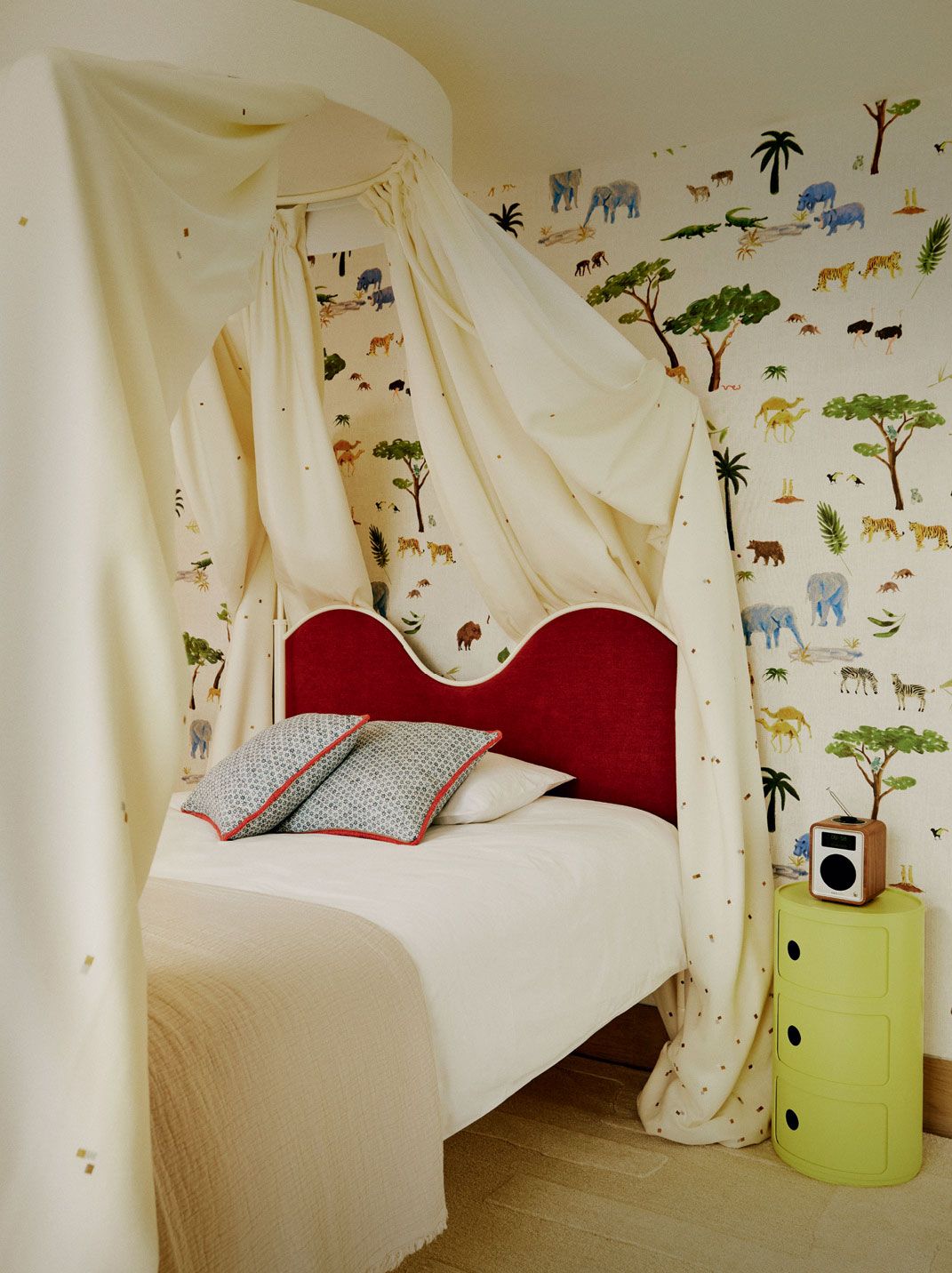
In writing this, I’ve realised that in every other room I prioritise look over feel. But children’s rooms are all about feeling – they are caves of comfort, populated by bedtime stories and lullabies, forehead kisses and sweet dreams. They invite confessions and revelations, about school and friendship and worry. They need sturdy bookcases and somewhere comfy to drink milk and talk the kind of urgent and absolute nonsense that keeps parents captive for just one more minute. They have to accommodate the extremes of worrying fevers and raucous sleepovers, and under-the-bed must be an uninviting spot for monsters. Because these are places of sentimentality, softness and safety; as multicoloured as the kaleidoscopic lives of their little occupants. Who should stay there, fast asleep until at least 7am.


