

A visit to PAD London last week felt like stepping into an Aladdin’s cave. It was filled with an eclectic mix of 20th-century furniture and decorative arts, and of course provided ample opportunities for people watching. Among all the pieces I loved, one I keep returning to is a 1930s Murano glass chandelier by Vittorio Zecchin at Galerie Kreo. Maybe it’s because I grew up not far from Venice, or because I’m in the middle of furnishing my flat and a bit of dreaming never hurts. Or perhaps it’s simply that there’s something inherently appealing about the liquid transparency of glass. Either way, I think we should all embrace a touch of Murano in our daily lives, even just as a pop of colour at home.
Though we typically link Murano with chandeliers, there’s so much more to it. Its story is rooted in a tradition of craftsmanship that blends the sacred and the everyday, from shimmering church mosaics to slightly kitsch figurines, and reaches back to the late Roman Empire.

The Romans mastered the art of glassmaking, and a visit to any major museum is a reminder of how inventive they were – I’m as drawn to the Portland Vase at the British Museum as I am to Wedgwood’s jasperware version, recently reissued in new colour schemes. It seems that the inhabitants of the Veneto region, along the northern Adriatic, learned Roman glassmaking techniques and carried them to the small islands of the Venetian lagoon, where they settled after waves of invasions drove them from the mainland.
That marked the beginning not only of Venice but also of its glass industry. Benefiting from their city’s position between East and West, Venetian glassmakers refined their skills through contact with Byzantine mosaicists active from Constantinople to Alexandria, and their work was soon sought after across Europe. It wasn’t chandeliers that popes and princes coveted, though, but smaller decorative objects – their bright colours and enamelled surfaces gleaming in the light like jewels.
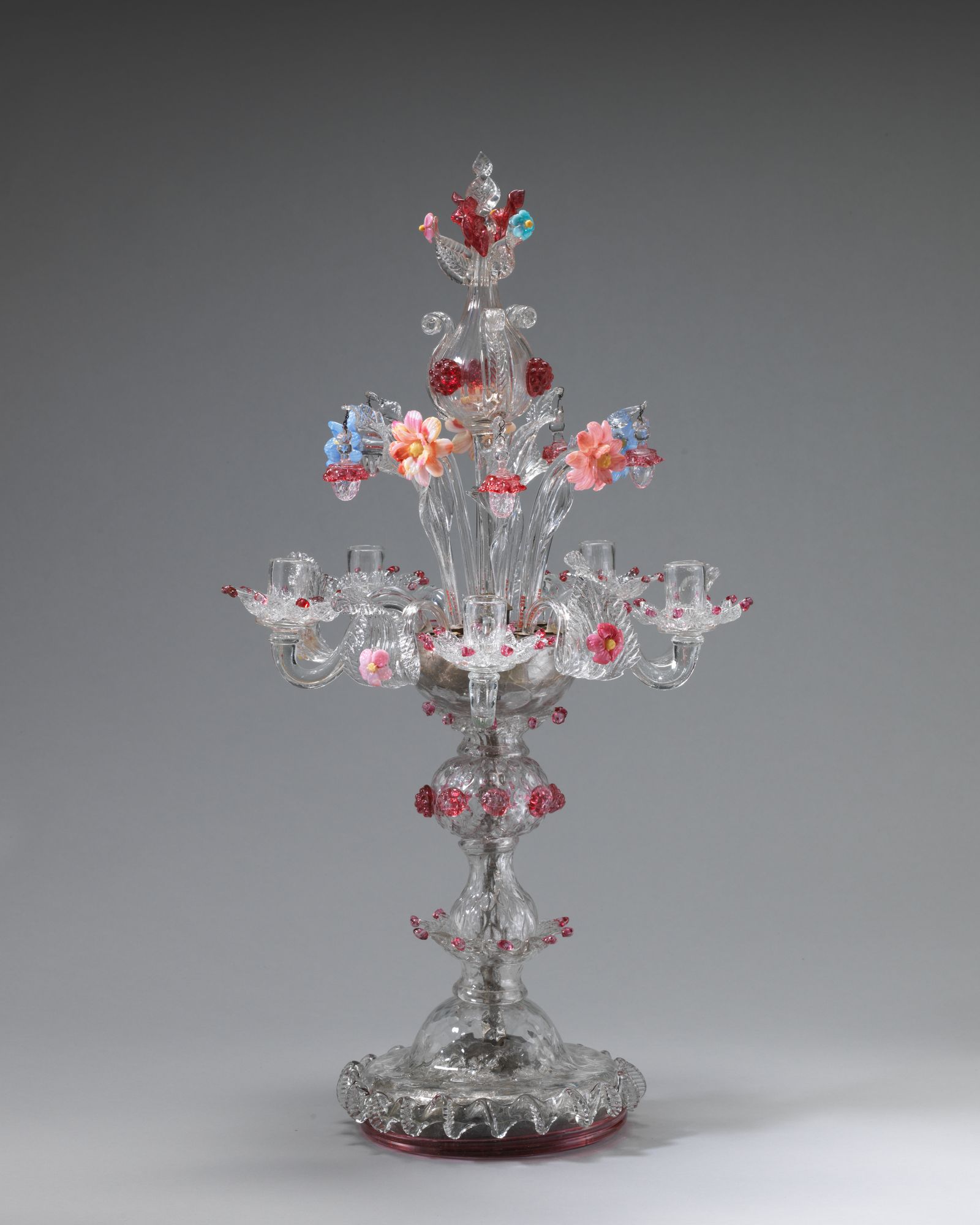
Glass became such a profitable trade that by the 12th century Venetian artisans had formed a guild with its own statutes, granting privileges that set them apart from others. This encouraged innovation and led to the discovery of perfectly clear crystal glass, a breakthrough that gave them a monopoly on mirror-making for centuries.
Venice, however, isn’t Murano, so the question of the name naturally arises, even for someone ‘local’ like me. The furnaces were officially moved to Murano in 1291. The stated reason was to prevent fires from spreading through Venice’s wooden buildings, though the real motive was probably to protect trade secrets and keep valuable techniques from leaving the lagoon.
Over the following centuries, the expertise of Venetian glassmakers allowed them to keep pace with changing fashions. The craze for Chinese porcelain that swept Europe in the 18th century, for instance, led to the development of lattimo, a milky glass designed to mimic it.
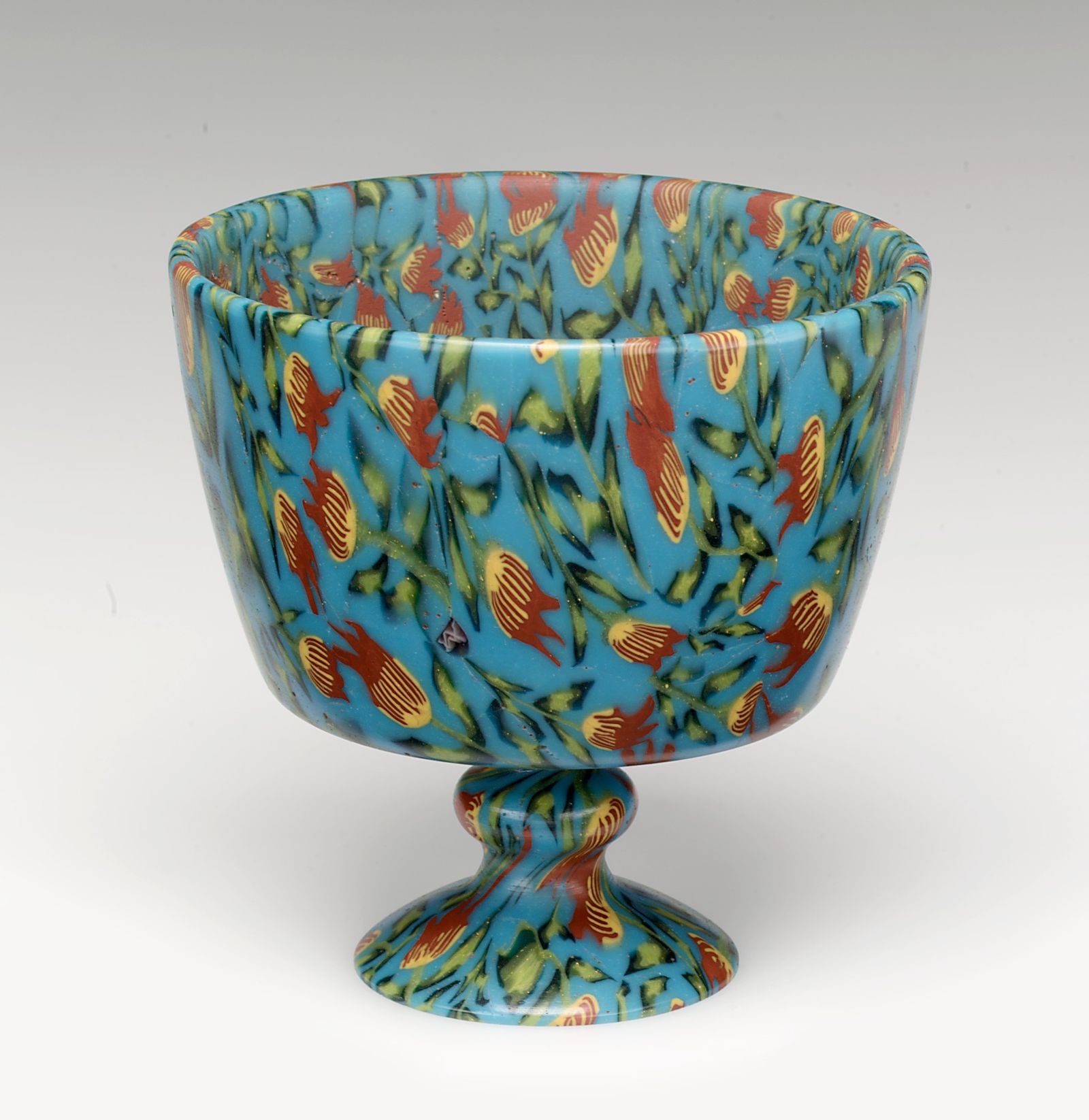
Decorative pieces from that period – cups, bowls and candelabra – often feature flowers, beads and fantastical creatures made using complex methods, embedding metal flecks for a sparkly effect or creating the illusion of semiprecious stones. These intricate pieces are, in their own way, strikingly modern and would hold their own even in the most pared-back, wabi sabi interiors.
Despite their ingenuity, Murano’s artisans couldn’t escape the shifts in taste, society and politics that came with the fall of the Venetian Republic, first under Napoleon, then within the Habsburg Empire.
In a city where Byzantine mosaics still cover the walls of churches like skin, however, the restoration of ancient monuments reignited interest in the craft. Artisans such as Antonio Salviati and Vincenzo Moretti revived techniques like millefiori (a thousand flowers), creating exuberant objects that caught the imagination of artists and collectors alike.

That spirit carried well into the 20th century, and it’s still very much alive today, as Silvia Damiani of Venini told me. Founded in 1921, the furnace became a hub for designers such as Carlo Scarpa and Gio Ponti, who treated glass not as mere ornament but as a language for ideas. ‘Murano glass has always gone beyond its decorative side,’ she said. ‘For us, it’s a living material – it breathes, it reacts, it carries emotion. Every piece begins with tradition, but it has to speak to the present.’
Silvia sees each collaboration not as an exercise in branding but as a way to keep that creative dialogue alive, allowing designers to interpret an old language in their own way. Recent projects with Peter Marino, Ron Arad, Tadao Ando and Emmanuel Babled prove that Murano’s furnaces remain places of imagination, where precision and playfulness coexist. ‘In a world dominated by industrial production,’ she told me, ‘Murano represents the value of time, of gesture, of something truly human.’
She believes the future of Venetian glass lies not only in its authenticity, but also in its intrinsic versatility. ‘I see it increasingly as a protagonist in contemporary interiors – it’s a material that knows how to interact with light, with new technologies and with other materials, yet remains profoundly human.’
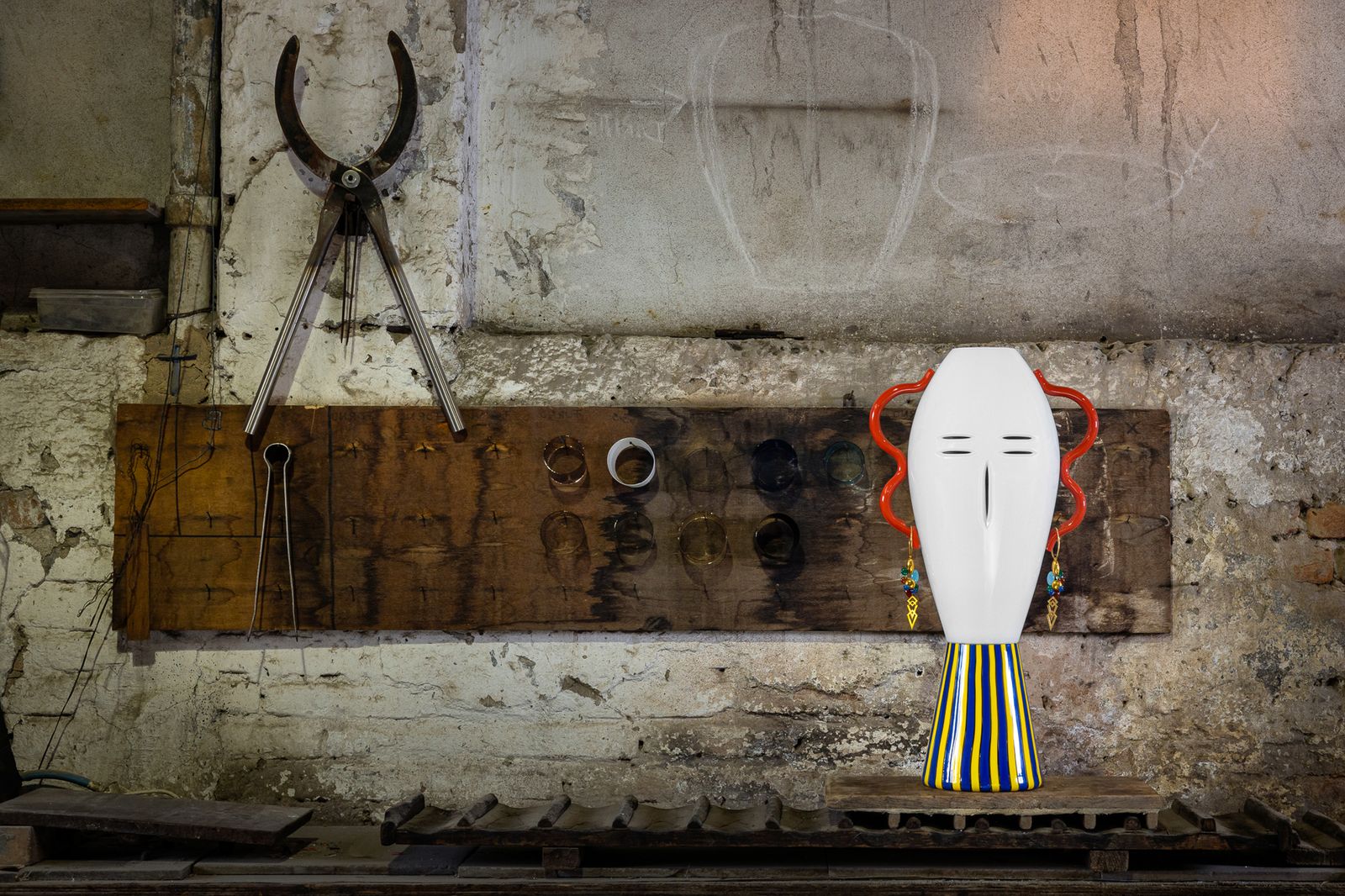
And she’s not alone. Jonathan Anderson has recently launched a series of glasses and jugs made in collaboration with Laguna B, using the murrina technique – a method in which colourful glass canes with intricate patterns are sliced into thin cross-sections called murrine, then fused into a mosaic to form the object’s design.
It’s proof of the enduring appeal of an ancient craft that continues to evolve – and that, centuries on, is still capable of wonder.


