

In the late 1980s, the famed Italian designer Ettore Sottsass formed a group of designers to create pieces bold, expressive pieces that rejected the minimal and modern styles that were so popular at the time. The group was known as Memphis Milano, and of its members, several are now known globally for their immense contribution to the design industry, including George Sowden, Nathalie du Pasquier and Andrea Branzi. It is thought that Bob Dylan’s ‘Stuck Inside of Mobile with the Memphis Blues Again’ was playing in the background during the first gathering at Sottsass’ Milan apartment in December 1980 and that the song gave the group its name.
Though Memphis design can be characterised in many different ways, and varied interpretations have emerged in the decades since the group was founded, it is generally accepted that bold, block colours that sometimes clash, geometric patterns and unusual materials such as linoleum are all defining features of the style.

In the four decades since Memphis design was first established, it has fallen into and out of favour, often in tandem with the decline or rise in the popularity of minimalism. Over the last few months, references to its shapes and colours have been cropping up more and more frequently, in the houses we shoot for the pages of House & Garden and in the inventive new creations coming out of contemporary design studios. When it emerged that its popularity had made its way to the high street – a true indicator of where the zeitgeist is – it was confirmed: Memphis is having a moment.
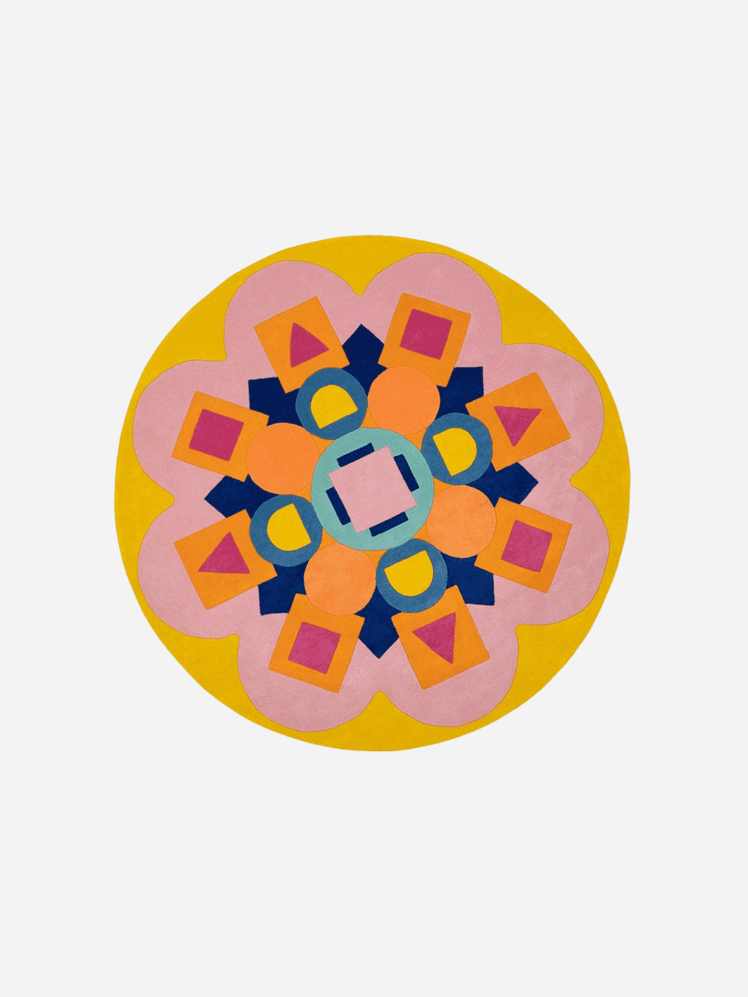
‘Every time people get a little bit bored of Scandi or minimal design, there’s a burst of Sottsass in reaction’, says the multidisciplinary creative Adam Nathaniel Furman, who frequently uses Memphis as a reference point for his own designs. ‘There aren’t a huge number of references for colourful modern pieces. Memphis provides a contemporary feeling and way of using shapes and patterns without being fuddy-duddy or chintzy’, he adds.
For Adam, it is not just the way that the designs look that he finds pleasing, but the political statement that the movement represents. ‘Philosophically it’s incredibly important and interesting. It’s the idea of using new materials such as lino in a way that elevates them and makes them important’, he says. Sottsass’ role in building up the profiles of relatively unknown designers is also a point of inspiration for Adam, who considers Natalie du Pasquier not just a talented textile designer but an inspirational person.

If Memphis represents a daring approach to design, it makes perfect sense that Bethan Laura Wood, another multidisciplinary designer whose projects range from furniture and lighting to rugs and installations, should look to the Memphis era when using colour. ‘I have a strong memory of the first time I saw a Memphis piece, and though I can’t remember which it was, I was drawn to it. It was complex and challenging and that’s what I like about it’. It is this ability to provoke thought that Bethan often emulates through her own work, some of which, such as her ‘Super Fake’ rugs directly references Memphis by using the exact same material that was used by the group to make their patterned laminates. For other projects, the nod is more subtle: currently, her ‘particle cabinet’ is on show at The Design Museum, its ‘proportionality inspired by the way Sottsass used space and divided things up’.
Instagram content
Though some consciously borrow from the Memphis group’s ingenuity, other contemporary designers are subliminally incorporating it into their work. Among them is interior designer Tatjana von Stein, whose exploration of specialist painted surfaces and natural veneers represents what she calls a ‘shared instinct for designing a form and experimenting with it through finish, colour, and texture’. Oliver Lyttleton, one of House & Garden’s Rising Stars for 2025, is similarly inspired by the group: ‘Memphis is something that has always been there in my head as a light muse. I’ve never actively put it on a moodboard, but I love and admire Ettore Sottsass. It definitely makes its way into my design through primary colours’. When it comes to Memphis-inspired shapes, Oliver prefers a light touch approach. ‘I try to incorporate something that represents it, like one piece of furniture, one glossy arch or one bold stripe. To do too much would be overkill, it needs to stand alone’, he says.
Though original Memphis pieces, such as Sottsass’ iconic ‘Tartar Table’, which is currently on 1st dibs for a cool £25,999, may be unattainable for many of us, the high street seems to be kicking into gear and producing a number of Memphis-esque designs. Hot off the production line at DFS are the ‘Cosma' desk and the ‘Enchanted’ sofa, with curved lines and bold colours. Over at Habitat you can pick up a number of lively accessories, textiles and furniture in pop-colours.



Adam's theory that Memphis grows in popularity as a reaction to neutral, minimal decoration could explain why we are seeing so much of it lately. As the appetite for calm, airy rooms continues to rise, so does the appetite for its antithesis: loud, evocative and rousing design. In other words, the cornerstones of Memphis Milano.


