
A 17th-century house in a hilltop Cotswold hamlet, remodelled in exquisite Arts & Crafts style

Clinging to the side of a hill high above the villages of Broadway, Buckland and Laverton is the ancient, stone-built hamlet of Snowshill. From its perch on top of the Cotswolds escarpment it commands extraordinary views over an exquisite landscape below. Its height gives it its name as, come winter, the snow settles here before anywhere else in the Cotswolds. It is home to a handsome National Trust manor house, famed for its Arts and Crafts garden and it is also the location of a house owned by Robin Smith Sulger which is itself an exemplar of the Arts and Crafts style.
The Cotswolds is synonymous with the Arts and Crafts movement. This design philosophy, which flourished in England in the decades straddling the turn of the twentieth century, advocated traditional craftsmanship that married practicality with artistry, often drawing on medieval and folk styles of decoration. Many of its leading practitioners settled in the area during this period. They were following in the footsteps of the design giant William Morris whose manor house in Kelmscott remains a place of pilgrimage for Arts and Crafts aficionados to this day. They were also drawn by the charm of its landscape, its rich craft tradition, and its unique existing architecture.
One of these architect designers who left their mark on the region was Charles Edward Bateman. Bateman was a Birmingham-based architect who rejected the highly ornate, gothic style of many of his Victorian peers as he turned his attention towards the Cotswolds. In 1916 he was commissioned to restore four ancient cottages in charming Snowshill. He completely remodelled the existing seventeenth century buildings to creative a large family home with a picturesque exterior and a practical arrangement of rooms inside. It is a masterpiece of Arts and Crafts restorative architectural design.
The Cotswolds stone house is an unusual L-shape with a half-timbered link, with plasterwork, connecting the elevations. There are attractive mullion windows, fine stone dressings and both hipped and gabled dormers. Inside we find great open fireplaces and flag stoned floors that date back centuries alongside the wooden fittings and exposed stonework of Bateman’s work.

The house was bought by Robin and her husband Justin in 2019. The couple are both American - Robin originally from North Carolina and Justin from New York - but they met in London, where they were both working. Their daughters were born in the UK, and the family divides its time between The Cotswolds and London.
Robin always had a love for interior design. After renovating her own homes (including a previous house in the Cotswolds), friends started asking her for help with theirs. She now runs her own design studio and considers it a great privilege. ‘Working with people on their houses is incredibly intimate.’ Robin has a sympathetic approach to her renovations and design work: ‘It’s important to be historically informed and respectful. This doesn’t mean that everything needs to be period, but you should never fight the architecture of the house’.
Her own house is pleasingly uncluttered, but not stark. ‘I always try to create soft, serene spaces but still with a bit of soul to them – I love a ‘collected’ aesthetic – when a room feels like it has come together over time’. She believes in preserving or enhancing historic architectural details as much as possible and admits to often being ‘worryingly obsessed with lighting’, partial to low wattages, dimmers, and candlelight.
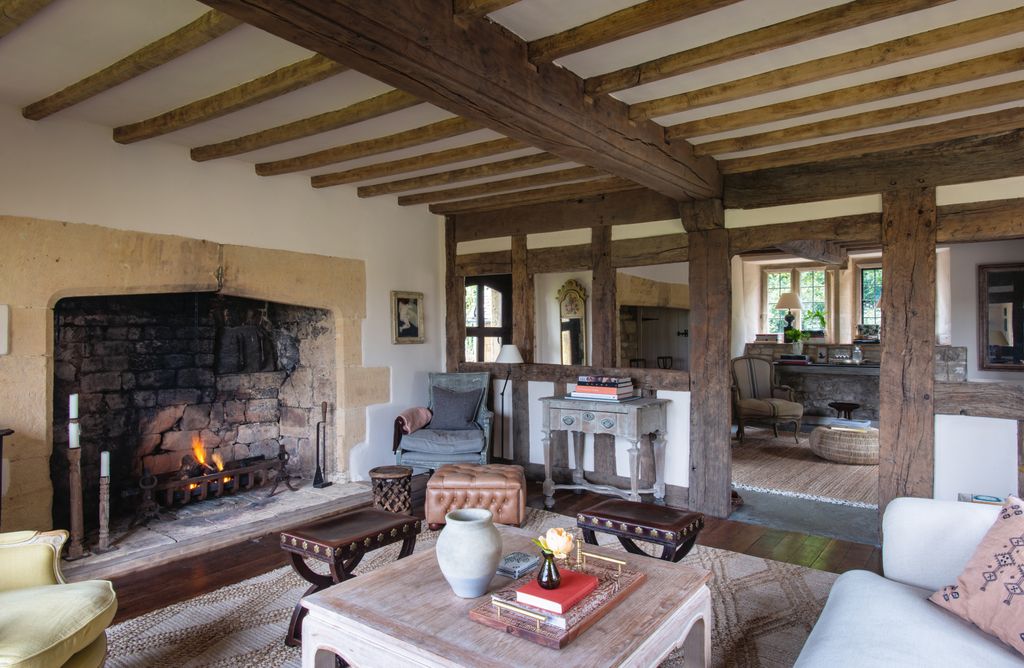
One enters the house into a tall-ceilinged reception hall where a Spanish metal chandelier hangs over a large French mirrored-top table from the 1960s. The main staircase hall is adjacent and steps down lead to a pair of beautifully timbered interconnecting reception rooms. When it comes to furniture, Robin has fairly eclectic tastes and a passion for sourcing antiques and vintage pieces. Geographically, she is all embracing. In the drawing room, for example, there are Italian wall lights and Spanish leather topped stools from the nineteenth century alongside eighteenth century French armchairs and a Dutch bleached oak table. A carved wooden tribal stool come from Cameroon and a little English bobbin table sits in the corner.
Follow the stairs back up and you reach the bright master bedroom wing, which boasts seven original leaded windows and half-timbered walls. The adjoining, longer wing containing three further bedrooms sits above the large dining room with the kitchen beyond.
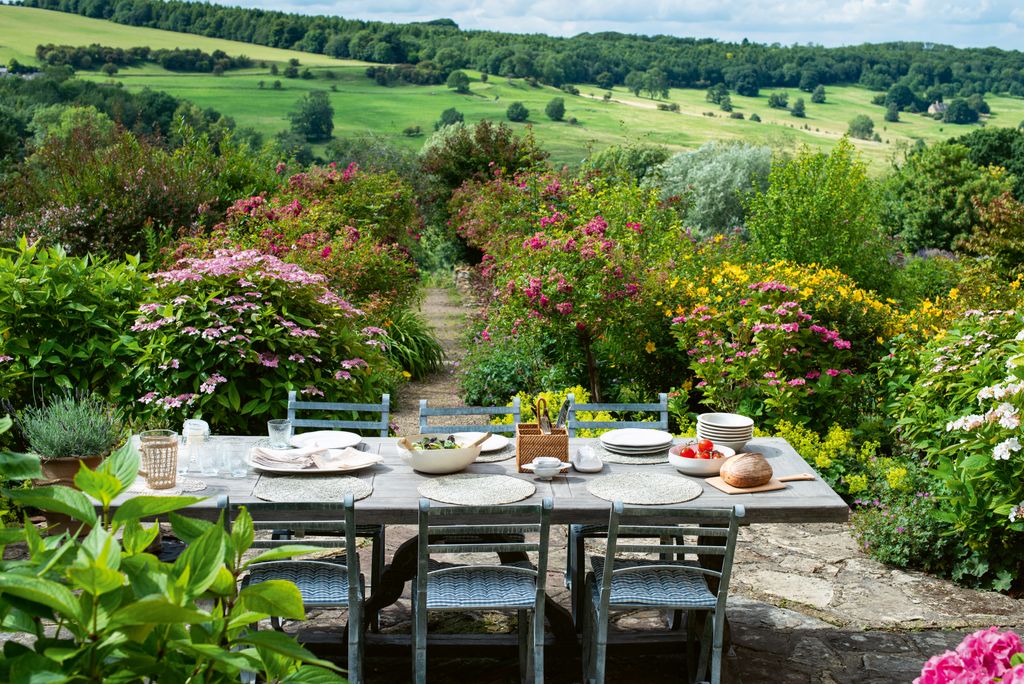
French doors in the dining room lead out to the kitchen terrace which looks out over the house’s twenty acres of terraced gardens, woods and ancient pastures leading down to a small lake. Robin admits, ‘it was the view that sold me the house’. And what a view it is. It is quite literally breath-taking. I challenge anyone to step out onto the terrace and look up without having a sudden, small intake of breath. It is a quintessential Cotswold landscape that is endlessly absorbing. To me, it explains why bronze age settlers chose to inhabit this stunning spot thousands of years ago (and left behind a burial mound whose treasures can now be found in the British museum). They must have been jolly cold come wintertime in their short woollen tunics, but it would have been worth it for such a view.
 Mark Nicholson1/9
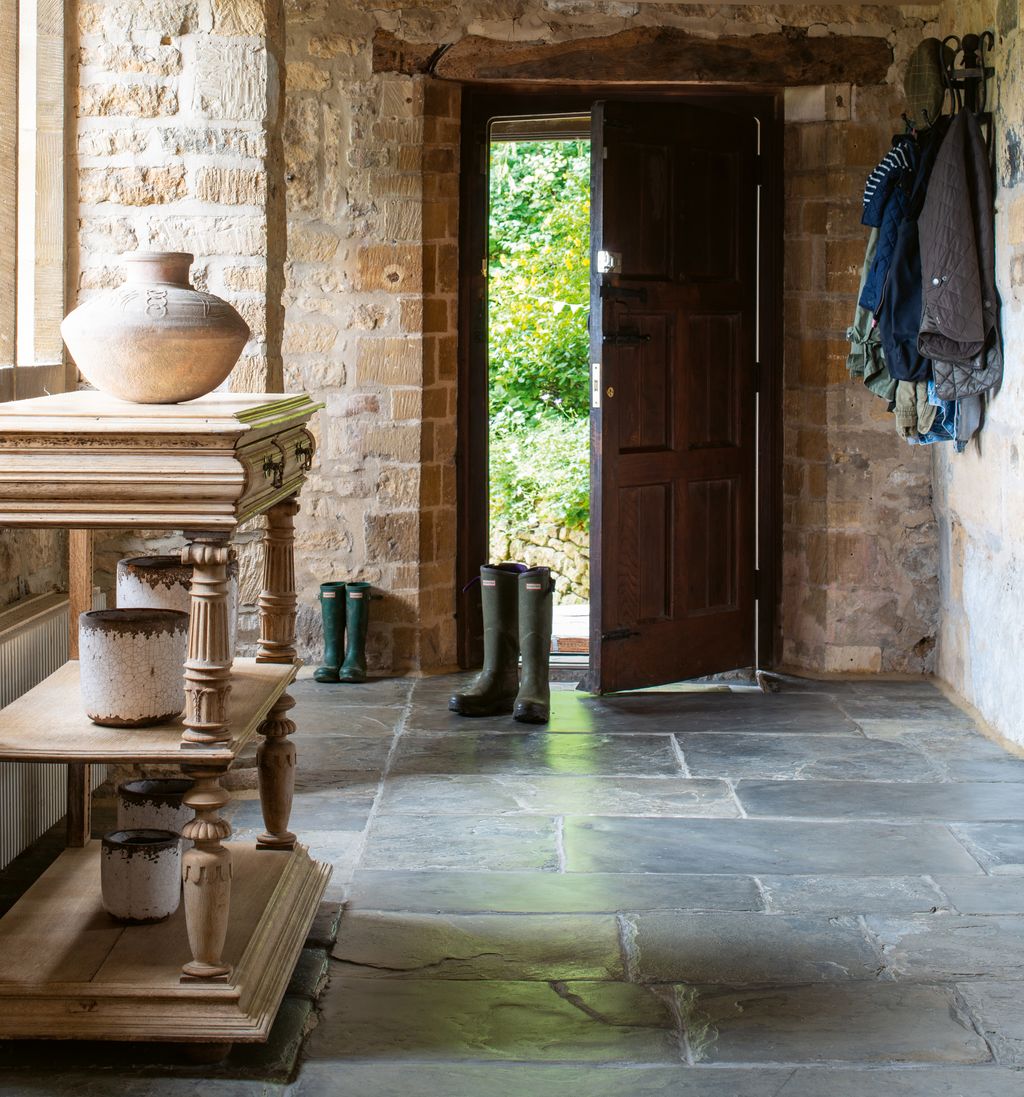
The front door leads into the oldest part of the house and the flagstoned front hall.
 Mark Nicholson2/9
The zinc pendant lights hanging over the dining table are from The French House. Robin found the antique Italian refectory table at Lorfords antiques in Tetbury. The walls are painted ‘Inferior Grey’ by Edward Bulmer.
The dining chairs are a mix of vintage pieces and Tollix-inspired copper and wood chairs. The ceiling is painted with Little Greene’s ‘Roman Plaster’.
 Mark Nicholson3/9
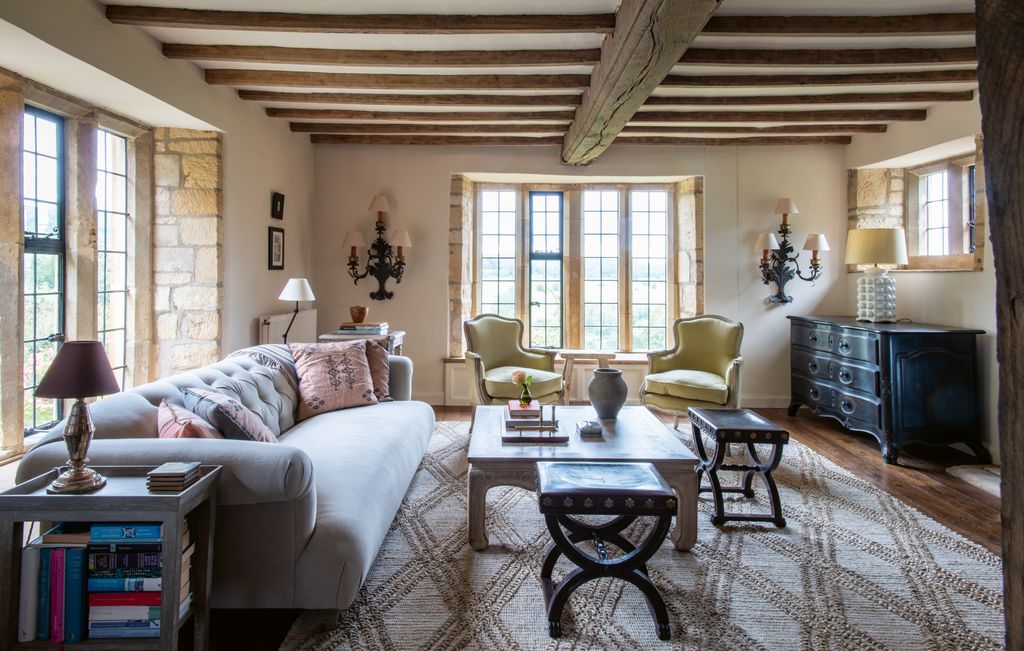
The drawing room is painted in Edward Bulmer Lilac Pink, which turns into a warm pink in the evening light. The sofa is covered in jute which Robin concedes is a bit impractical, but she loves the natural texture.
Furnishings include a pair of 18th century French Bergères in yellow linen, antique studded leather stools from Spain, and an eighteenth century French ebonised chest of drawers.
 Mark Nicholson4/9


 Mark Nicholson5/9
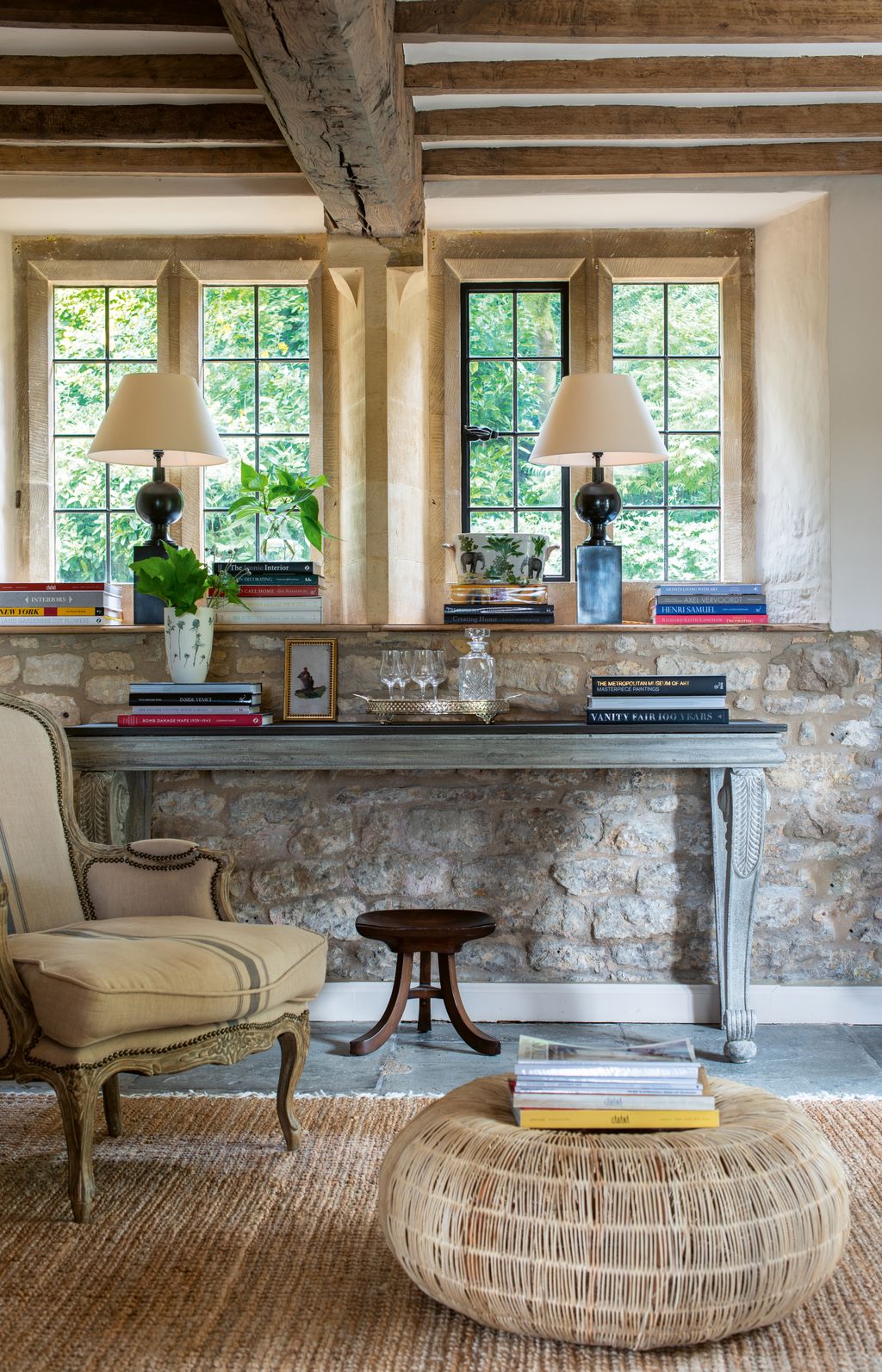
A Scottish console with a pair of Vaughan table lamps sitting above. The handmade mahogany miking stool was a wedding gift.
 Mark Nicholson6/9
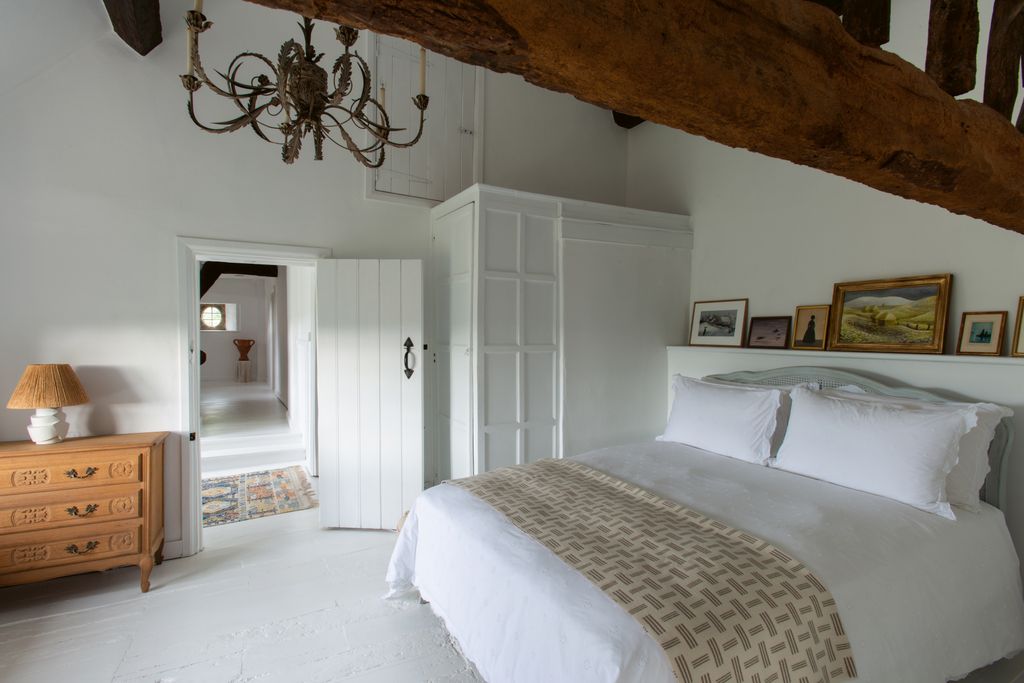
Four coats of Little Greene's ‘Loft White’ cover the floorboards in the guest bedroom. The light fixture is a vintage metal chandelier, the oak chest of doors is French and from the 19th century.
‘I really like bedrooms in the countryside to feel light and fresh’, says Robin.
 Mark Nicholson7/9
A quintessential Cotswold view from the kitchen terrace.
 Mark Nicholson8/9


 9/9
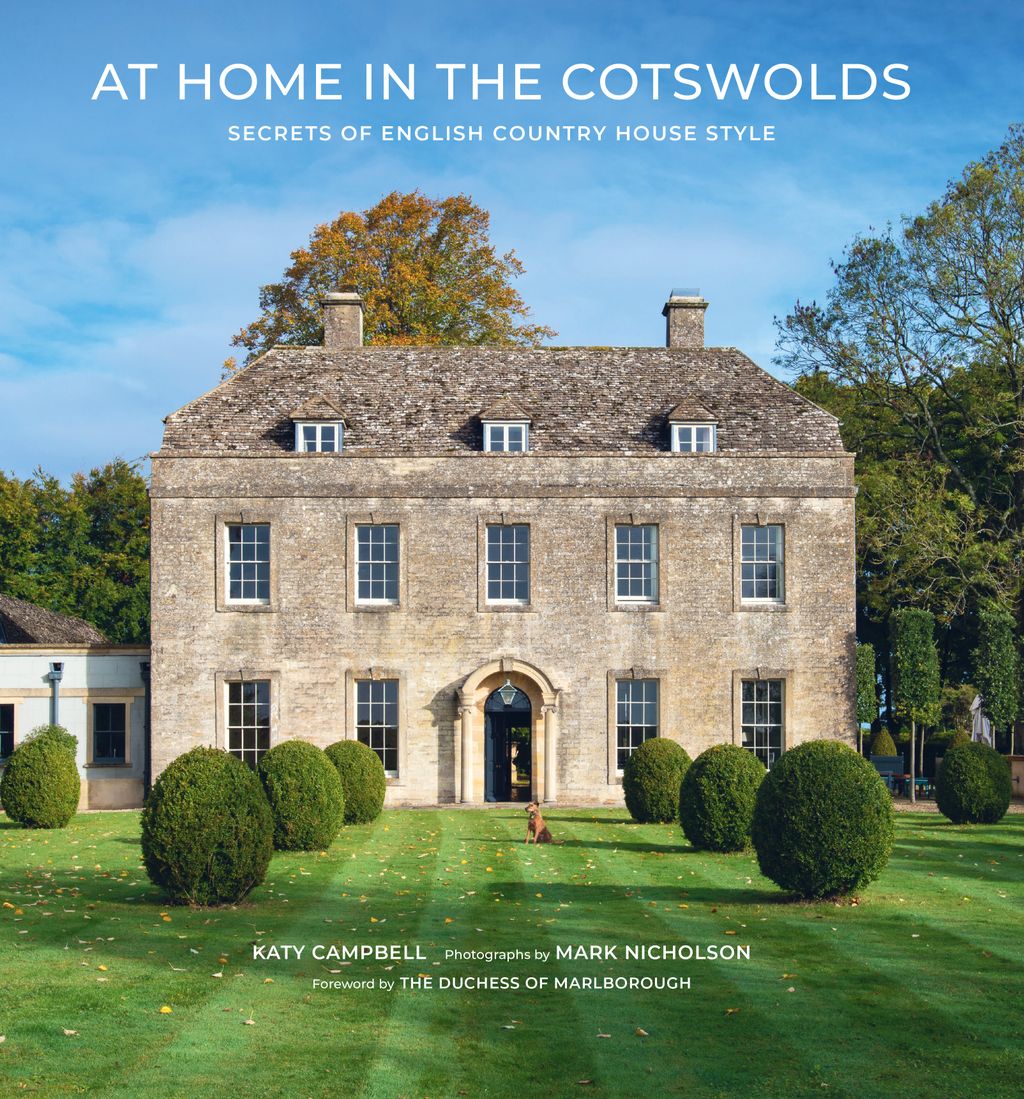
9/9At Home in the Cotswolds: Secrets of English Country House Style by Katy Campbell and Mark Nicholson (Abrams, £45) is out now


