
27 stylish blinds from the world’s most creative designers
Blinds might not have the drama of heavy curtains or sweeping pelmets, but their impact can be just as considered. Depending on the style, they can feel crisp and architectural, or soft and gently theatrical. Ultimately, blinds offer a way to manage light and proportion with quiet precision, often doing more for a room than first meets the eye. We asked some designers how to get the most out of them.
‘Blinds are so difficult to get right,’ says interior designer Brandon Schubert. ‘A huge amount of technical know-how goes into their making. In fact, I’d argue that one needs more skill to create a seemingly ordinary but beautiful blind than to create a seemingly ordinary pair of curtains.’
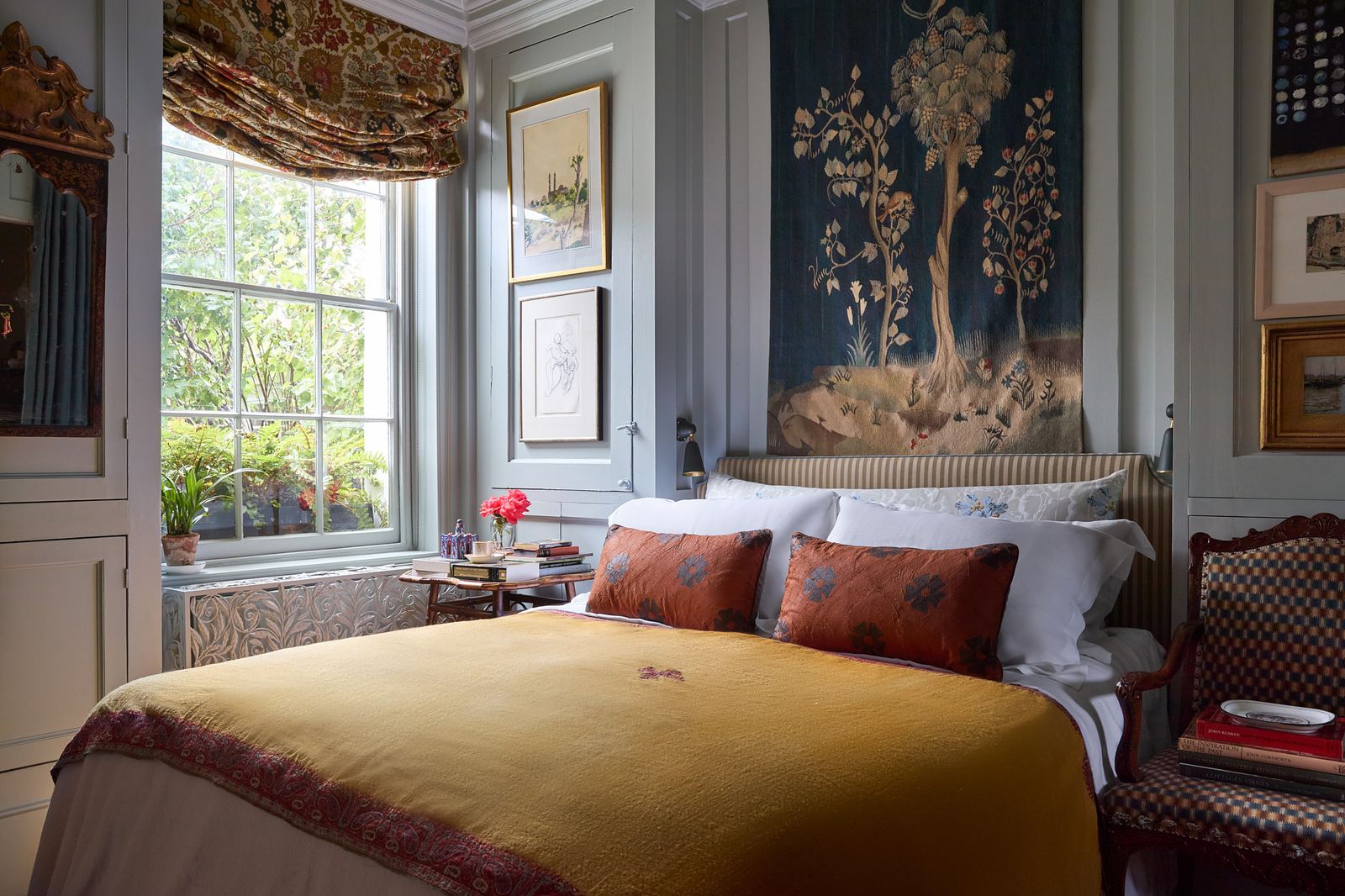
The most familiar type is the roman blind, which typically features rods sewn in to guide the folds and ensure smooth movement. Their crispness makes them a natural choice for those drawn to clean lines and precision. But structured Roman blinds may not be everyone’s cup of tea, especially when a softer look is desired. ‘Those rods also rob the blind of life and movement, making the blind highly functional, but not a highly decorative choice,’ comments Schubert. ‘So when possible, I prefer something with a bit more life to it, like a partially or fully unstructured roman blind, where the fabric droops and swags.’

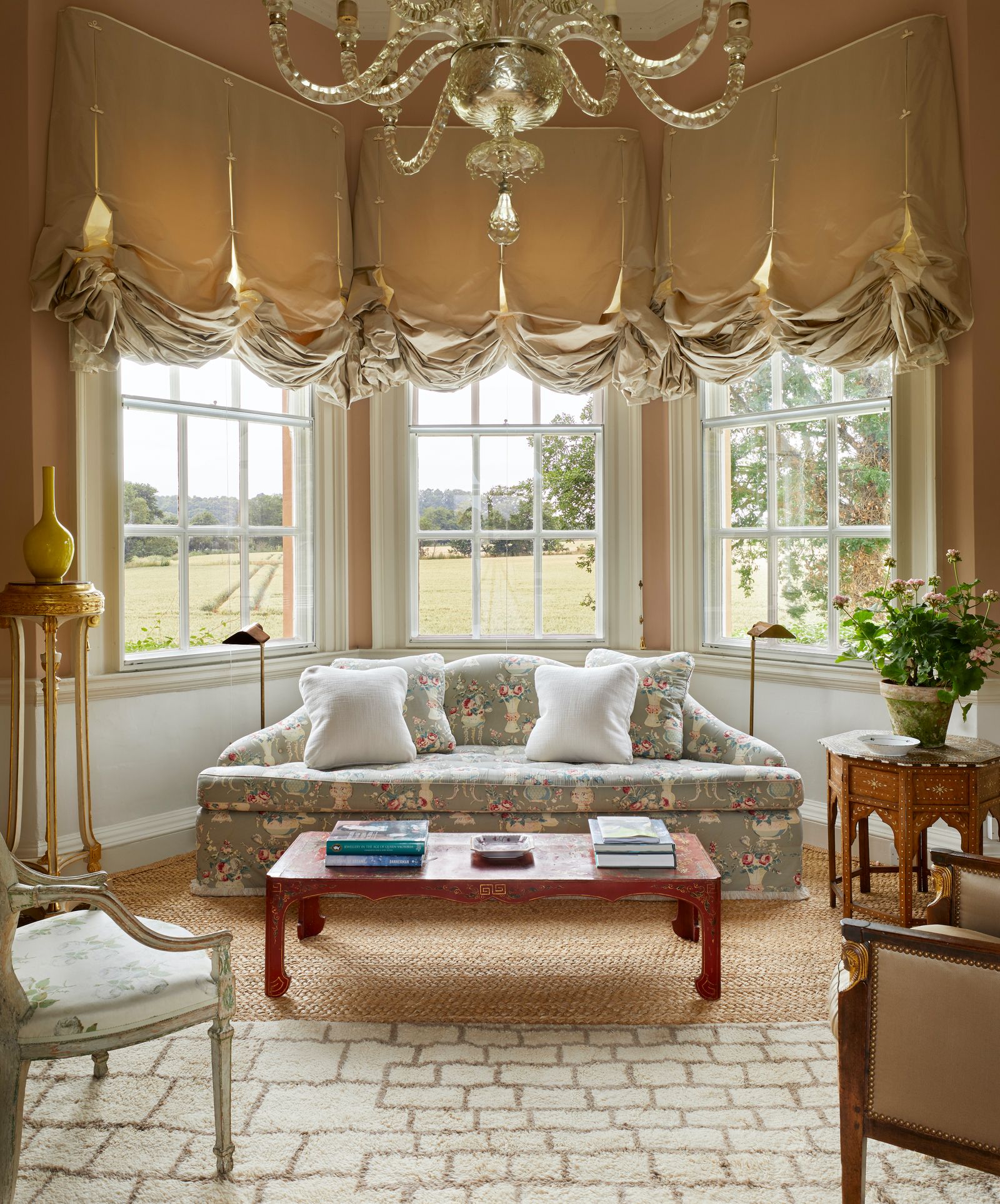
There are, however, other appealing options. The London blind, with its soft, inverted pleats, suits traditional interiors particularly well. For a more theatrical mood, the Austrian blind – with its ruched, vertical lines of gathering – adds a generous swathe of fabric and a welcome touch of drama.
Even if you do have curtains, there’s no reason not to use blinds as well. ‘I love blinds behind curtains,’ says interior designer Rita Konig. ‘I tend to have sheer roller blinds behind the curtains so that one can have privacy without having to grope around in the dark to get dressed in the morning.’ It’s a logic we can all agree with.
Though often discreet, blinds don’t necessarily need to be shy, according to Daniel Slowik. ‘They can be just as expressive as curtains when designed with fullness, trimming or a touch of frill – like a wonderful dress,’ he says. ‘I’m very fond of a festoon blind, and there’s always room for a bow or even a Maltese cross.’ For maximum effect, Slowik often opts for plain fabric: ‘It helps draw attention to the shape and structure of the design, rather than letting patterns do the work.’
Beyond style, blinds can subtly influence how a room is perceived, particularly in spaces with awkward proportions. ‘I recently worked on a stair window where the ceiling was much higher than in a typical room, leaving a lot of wall above the window to play with,’ says Schubert. ‘By positioning the blind about 80 cm above the top of the window, we were able to hide the window’s true height and create the illusion of a taller, more elegant opening. You couldn’t do that with curtains.’
Whether used to block out light entirely or to allow a soft glow of daylight through, blinds are a versatile option worth considering. Scroll down for examples of the different types and how they can be used in a variety of decorative schemes, from town to countryside.
 Christopher Horwood1/24
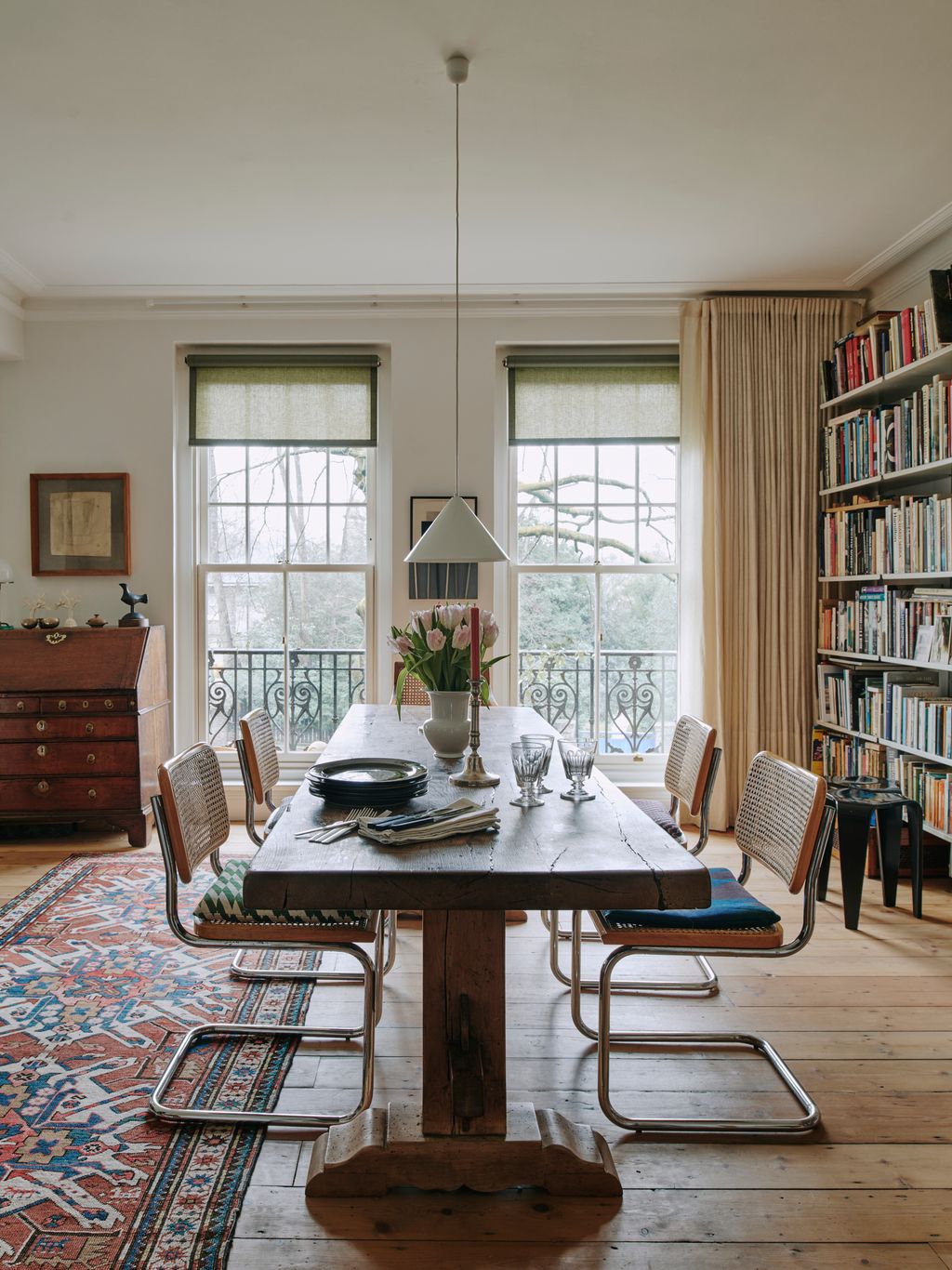
Don't discount the humble roller blind – when done well, they can be a stylish addition to an interior. In her Hampstead Heath flat, designer Virginia White favours blinds from specialist maker Sunnex, made up in an old olive green Holland cloth supplied by her friend Marianna Kennedy
 Boz Gagovski2/24
Having both a sheer blind and a more decorative blind on the same window can be helpful in rooms which require privacy, such as bedrooms and bathrooms. In this Hampstead project by Anna Haines, she has used a striped roman blind with a pretty swagged sheer one beneath.
 Paul Massey3/24
In this Flora Soames-designed house in the Cotswolds, a triple application of Flora’s “Dahlias” print to wallpaper, a blind and her “Maud” chair have helped to disguise the border between wall and window, creating the sense of continuity.
%252013.jpg) Matthew Kissiday4/24
Matthew Kissiday4/24There’s no hard and fast requirement to choose between curtain and blind, even in the same room. In this creative sitting room in a Connecticut house by Elizabeth Hay, the same material – Robert Kime’s “Tashkent” pattern – has been used for curtains on one set of windows and blinds on the other.


%252013.jpg)
 Simon Upton5/24
In the study of a surreal house by Rachel Chudley, a blind in Dear's 'Tabularasa' has overlaid with the owner's wedding veil for an added decorative flourish. It covers a set of French doors which is not the most expected place for a blind.
 6/24
6/24A sheer pinoleum blind (pinoleum is a type of woven wood blind) allows a wonderful amount of light into this sitting room in California by Rita Konig, without dazzling anyone who happens to be sitting and reading by the window. Surrounded by white panelled walls, the natural wood weave of the blind complements the muted tones of the patterned rug and daybed.
 Simon Brown7/24
This London blind (a more decorative version of a Roman blind) makes a strong impact against the colours and patterns in the bedroom of de Gournay's Hannah Cecil Gurney. in the silk wallpaper from de Gournay and in the carpet. The same shade of yellow is picked up in the headboard, the divan and the lampshade, which completes the well-considered space without lessening the impact of the wallpaper itself.
 Tim Lenz8/24
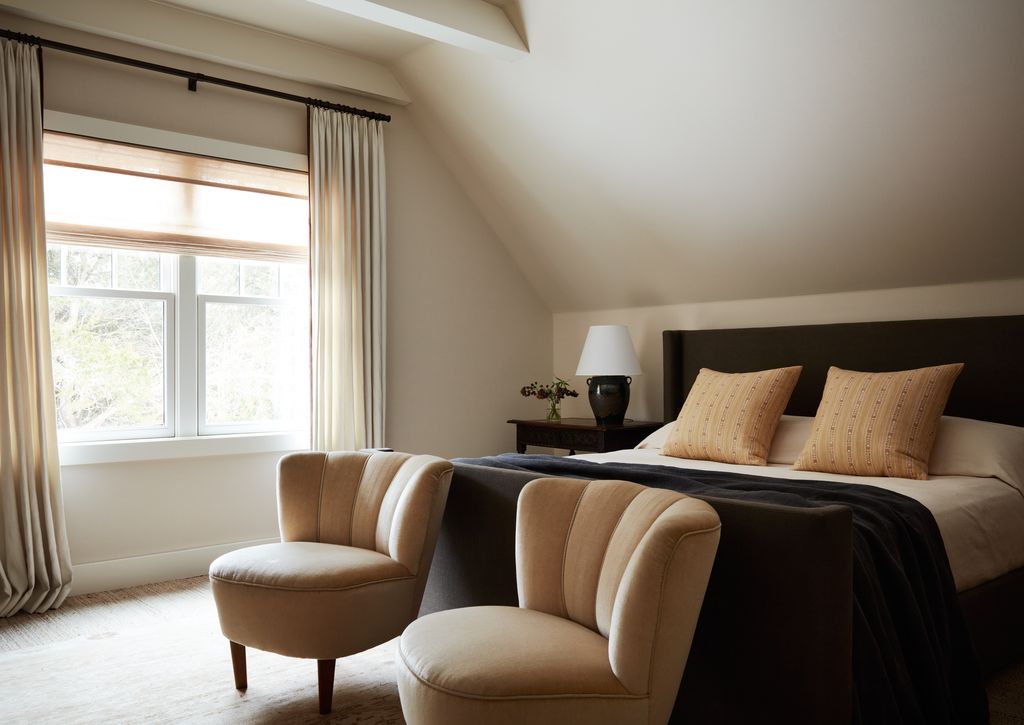
A light linen blind combines with a similar pair of curtains in this elegant house in the Hamptons in the USA, offering privacy when one layer is drawn and darkness with two, but without ever sacrificing the feeling of lightweight and spacious interiors.


 Lucas Allen9/24
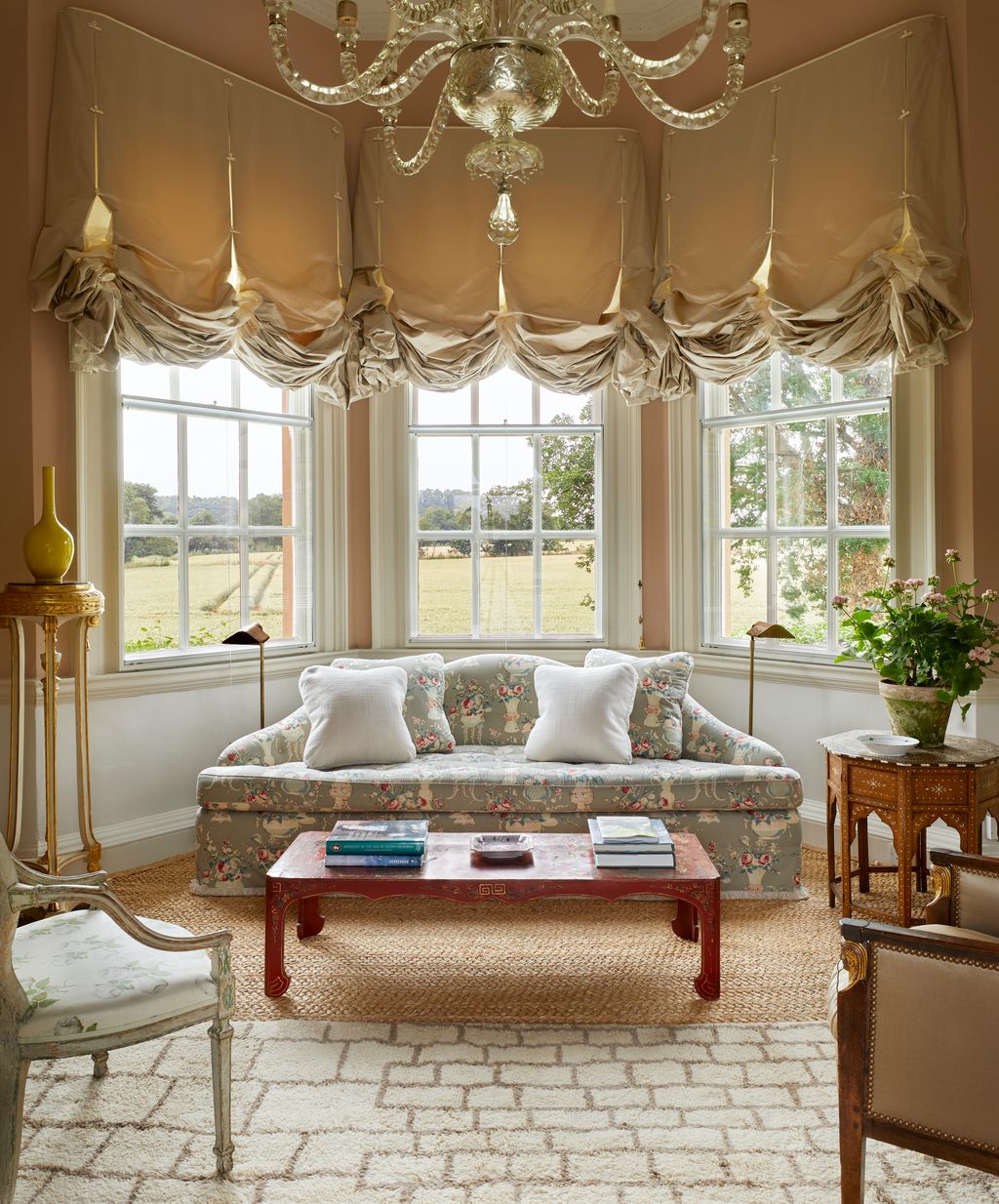
Austrian blinds bring a fun, glamorous touch to this room in Edward Bulmer's country house. When replicating the look, it’s important that the blind is made of lightweight fabric, which will allow its scalloped form to hang beautifully, with a slightly louche and loose shape. Remember that the blind will keep this shape even when lowered – if excluding light is a priority, you could add a lining.
 Francesco Flagnese10/24
These generously ruched Austrian blinds hang in Veere Grenney’s 18th-century folly, and channel a style which was deeply in fashion in the 1980s but has since fallen out of favour. That said, Rivals did captivate a fair swathe of the nation last year… might maximalist, frilly fabrics be back in, alongside shoulder pads and perms? These voluminous numbers would suggest so.
 James McDonald11/24
A relaxed blind in ‘Melilla’ by Fortuny and a pretty vintage kantha from Elizabeth van Amerongen (find her on Instagram) combined with a ‘La Rochelle’ roll top bath from The Cast Iron Bath Company give this bedroom in a London house by Kate Guinness a quietly romantic atmosphere.
 Jake Curtis12/24
Matchy matchy: using the same pattern for walls and blinds makes a strong statement, and it is an inventive way to make a small space sing. Ben Pentreath chose Soane’s “Seaweed Lace” linen in emerald for this bedroom in his own Bloomsbury flat, resulting in a room that is visually striking but not overpowering. Here, its pattern contrasts a simpler but colourful Pendleton blanket.


 Michael Sinclair13/24
Designer Audrey Carden chose a graphic delineation of grey and yellow in the spare room of her own house. She had the blind fabric colour-matched to the vibrant yellow paint, which creates a visually harmonious effect. Colour blocking using such a bold yellow brings both warmth and impact to the small space.
 Michael Sinclair14/24
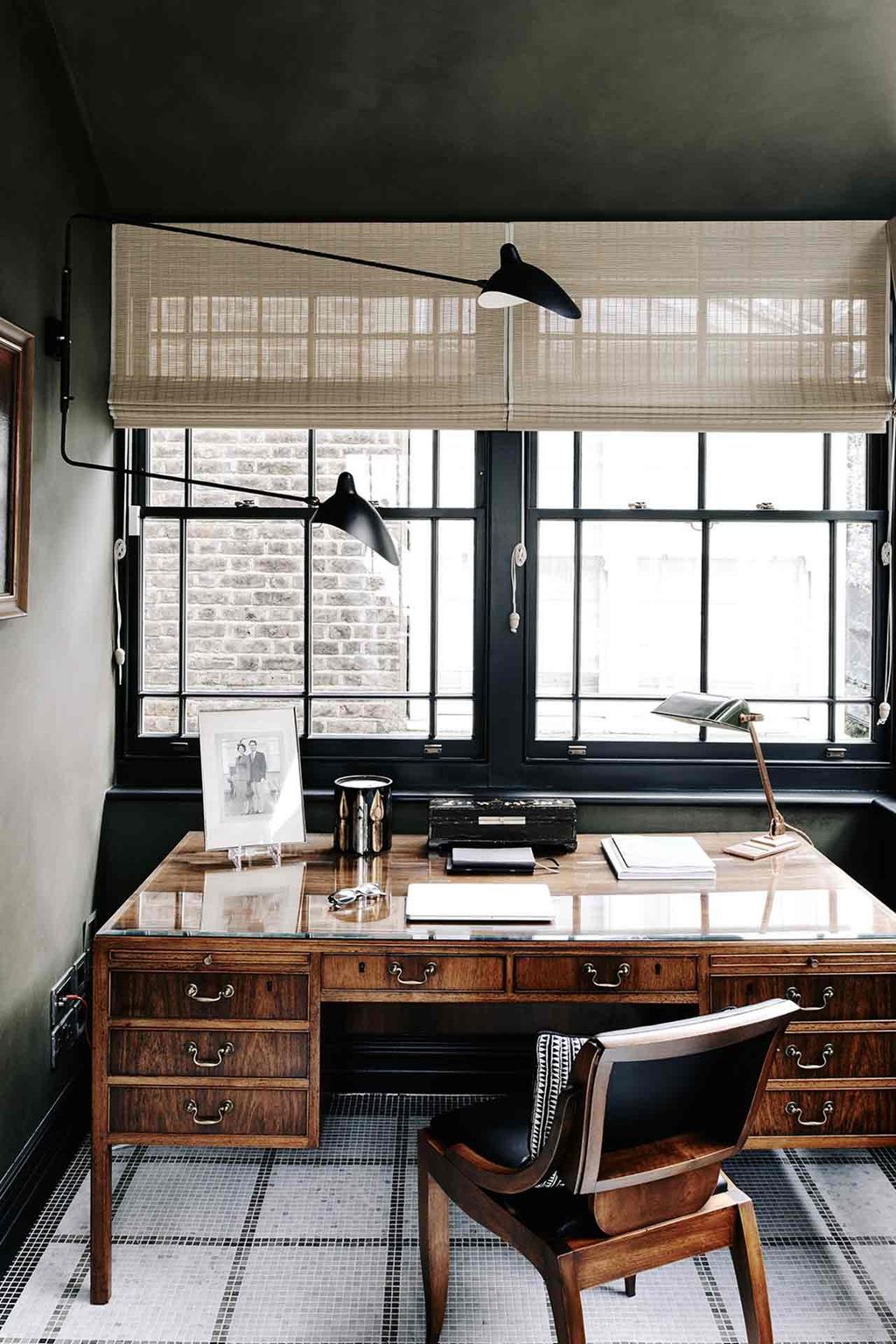
Pinoleum blinds are the perfect way to prevent home offices feeling corporate, while maintaining a sense of privacy. In this London house by Jane Gowers, blinds from RJS Interiors in a custom colour and trim have been designed to introduce a natural element to the room, while also blocking out the bright afternoon sun.
 Owen Gale15/24
Blinds are a cost-effective option for bay windows, as they use less fabric than curtains. They also take up less space and look neater pulled down behind a piece of furniture in the window. In her Victorian house in west London, jewellery designer Sandra Barrio von Hurter has used a combination of blinds and cafe curtains to create a visually light look that still gives the inhabitants plenty of privacy.
 Alexander James16/24
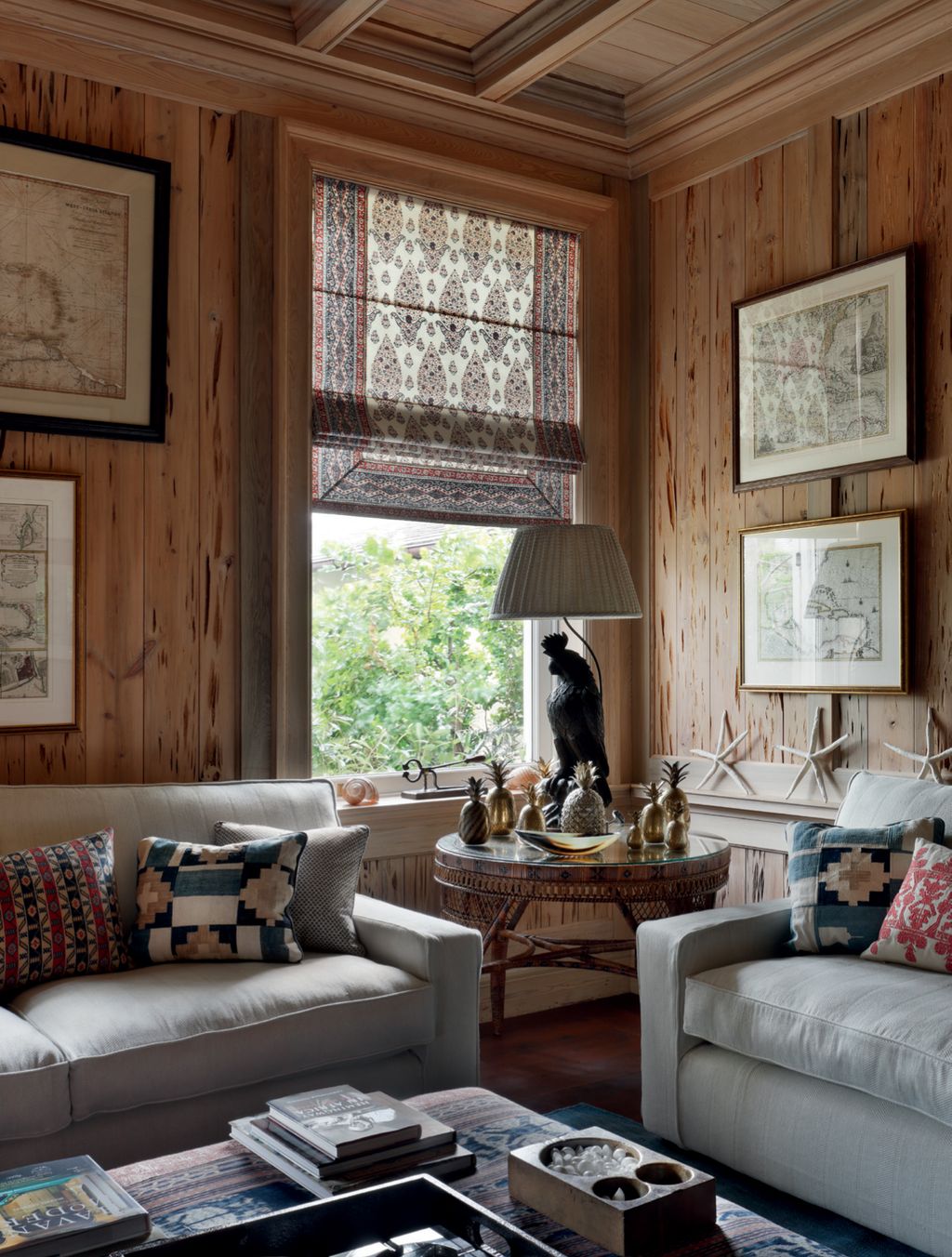
The delicate pattern of a cotton blind, custom-made to fit the shape of the window, stands out against cypress-panelled walls in this project in the Bahamas by John McCall. “I used the printed border on the fabric to frame the sides and base of the blind,” he says.


 Simon Brown17/24
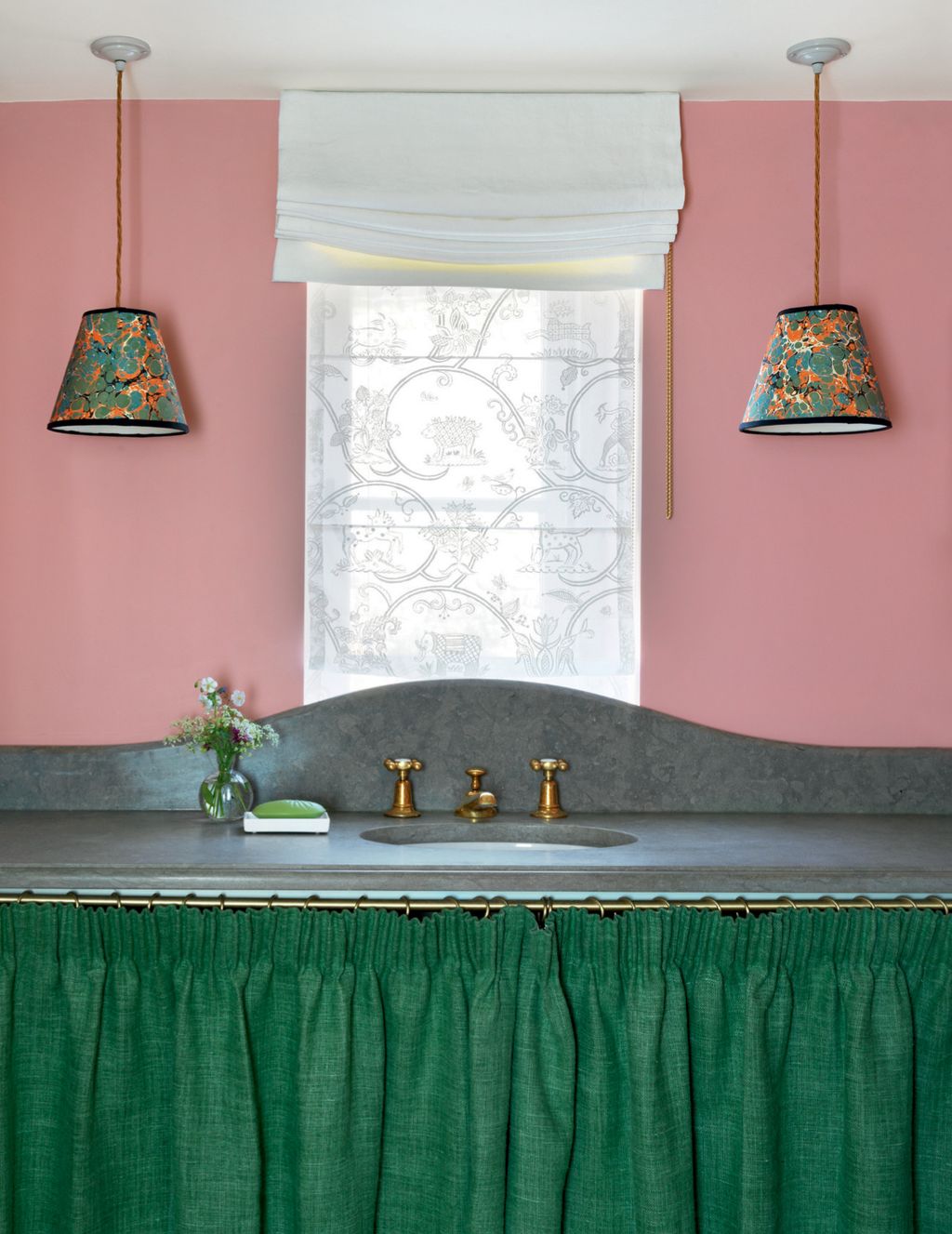
Beata Heuman has used ‘Little Animals’, a cotton by Celia Birtwell that has since been discontinued, as a sheer behind the main blind in this pantry. “We wanted to offer some privacy,” says Beata, “but also let the daylight glow through in a gentle way – the motif on the fabric shines beautifully when the light hits it.” She has also positioned the blind so that it sits above the top of the window to increase the sense of space.
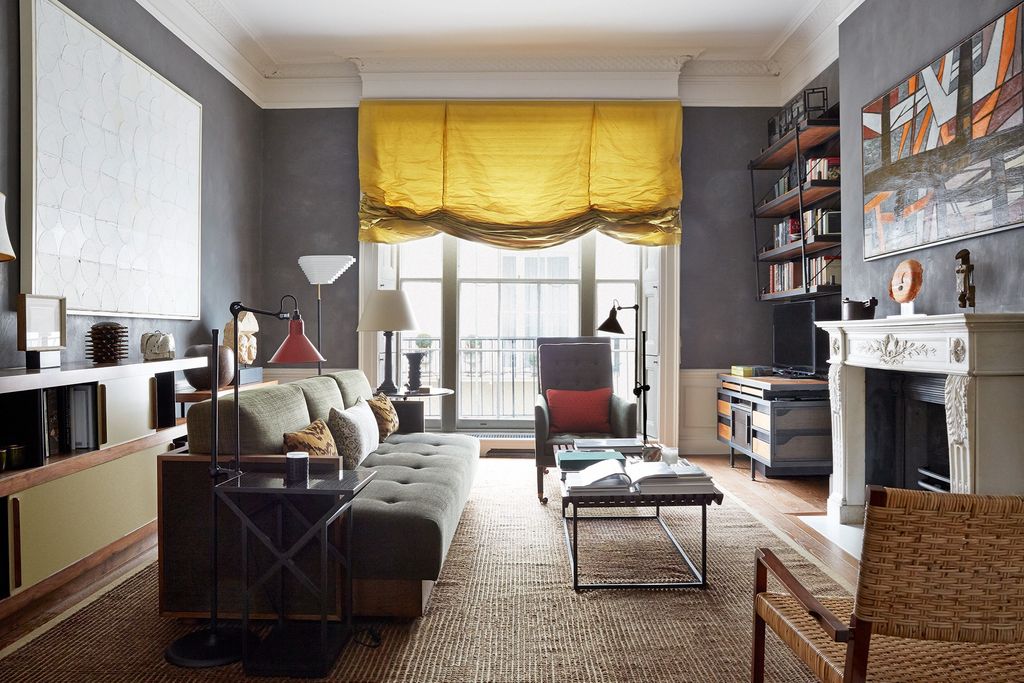 Paul Massey18/24
There are many reasons why this silk taffeta blind is so successful in this Mayfair flat. The yellow adds punch to the room, and designer Chester Jones points out that “the unlined fabric allows light to filter through for warmth during the day, yet is sufficiently opaque for privacy at night.”
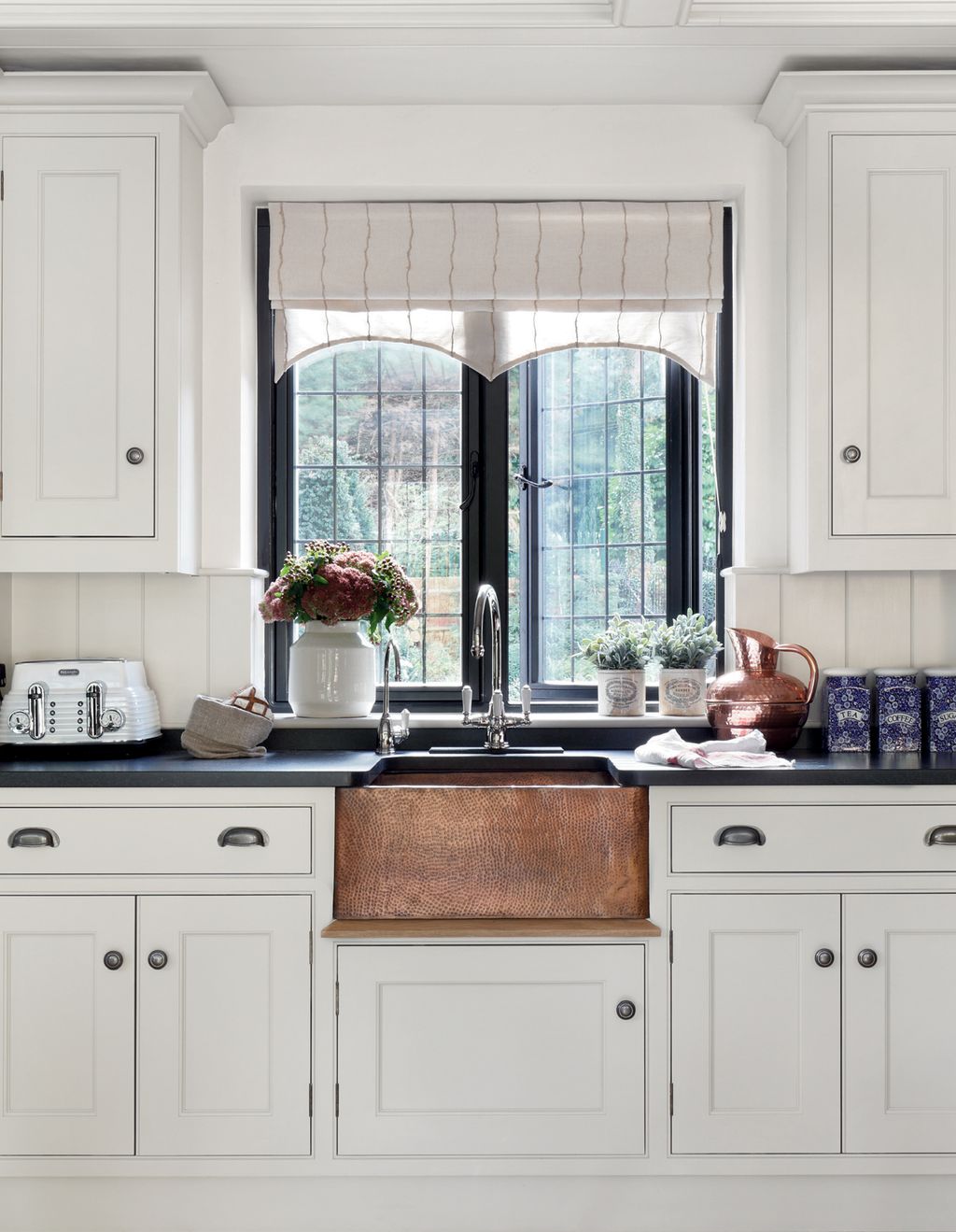 Alexander James19/24
A reverse scallop at the bottom of the blind creates an architectural effect in this kitchen by Studio Duggan. The firm’s director Tiffany Duggan explains: “The design does mean that a small gap is left exposed when the blind is down, but as it was only required to filter direct sunlight and add a decorative touch, this was not of concern.” Indeed, in a space like a kitchen it’s less common to need total darkness than it would be in, say, a bedroom, so there might be more scope for creativity with blinds.
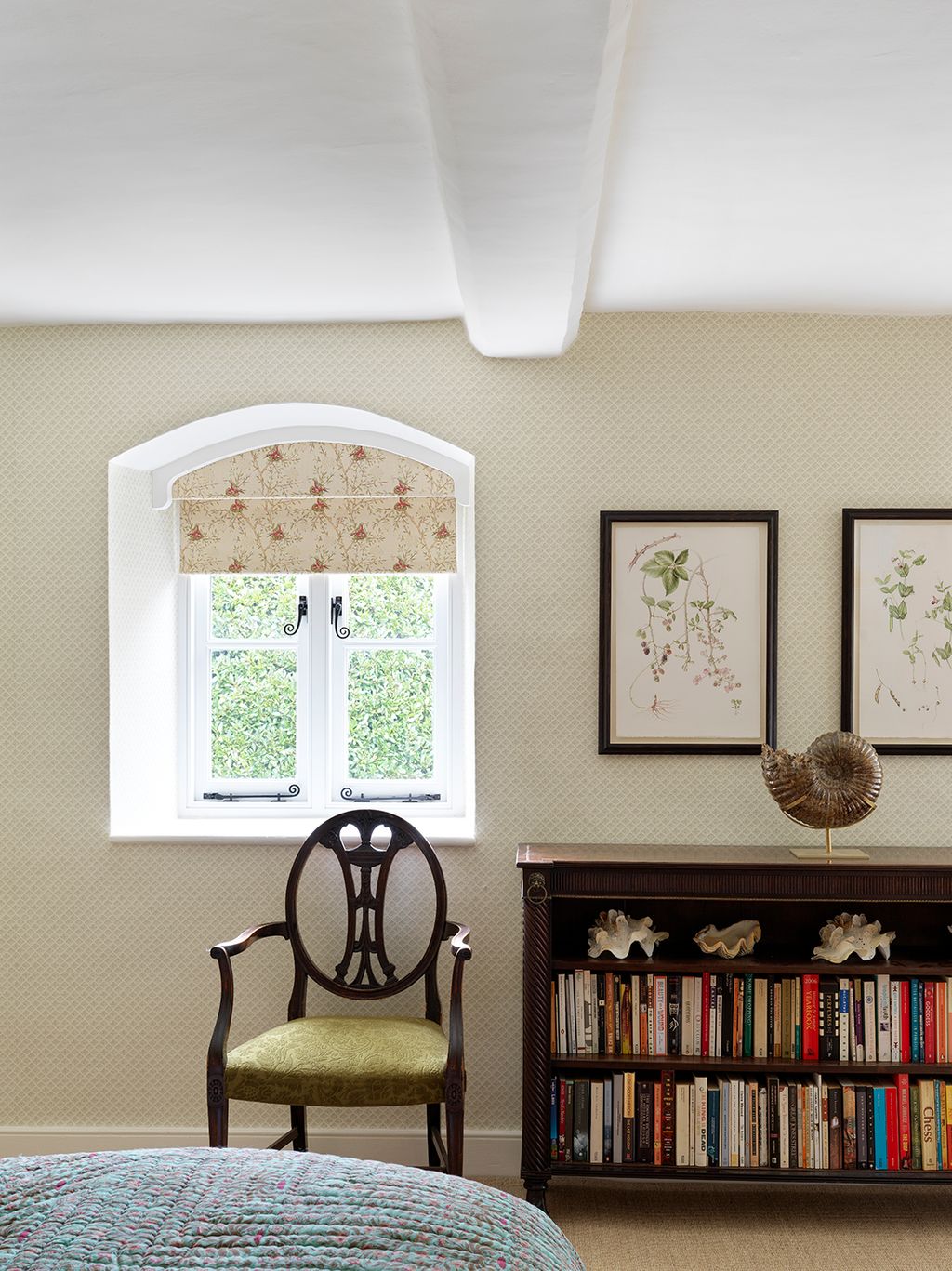 Simon Brown20/24
Here, the reverse of Studio Duggan’s scoop-scallop (above) has been implemented: this blind in an 18th-century Dorset dairy has an extra section a little like a pelmet to allow it to fit the arched window shape. The fabric is Robert Kime’s “Ardagh”.


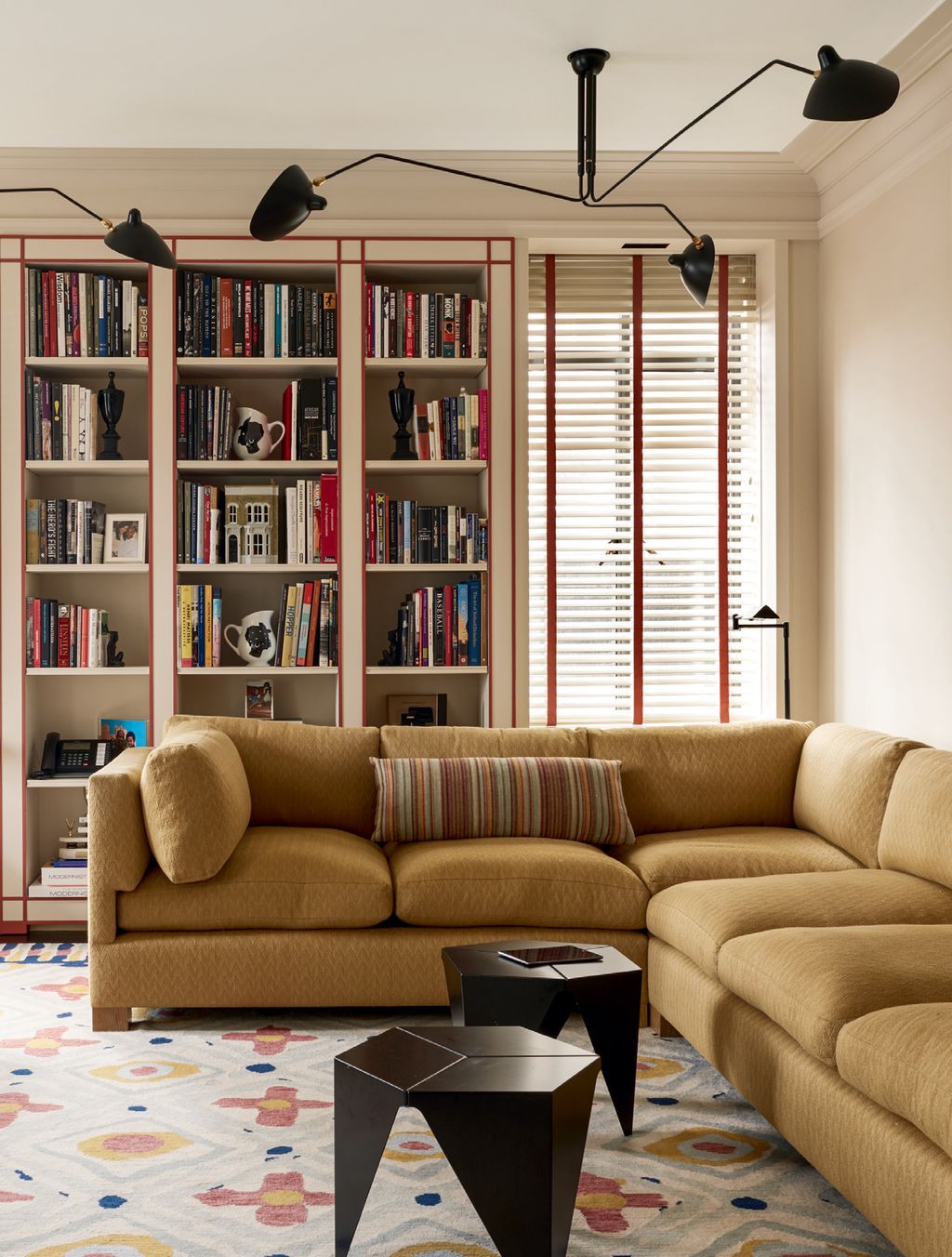 Simon Upton21/24
Venetian blinds with red detailing provide a smart backdrop to this room by Mlinaric, Henry and Zervudachi. The red is picked up in the lines of the bookshelf, giving a sense of structure to the back wall. The otherwise neutral tones of the room are brought into focus by this punctuating dash of colour.
 Radu Palicia22/24
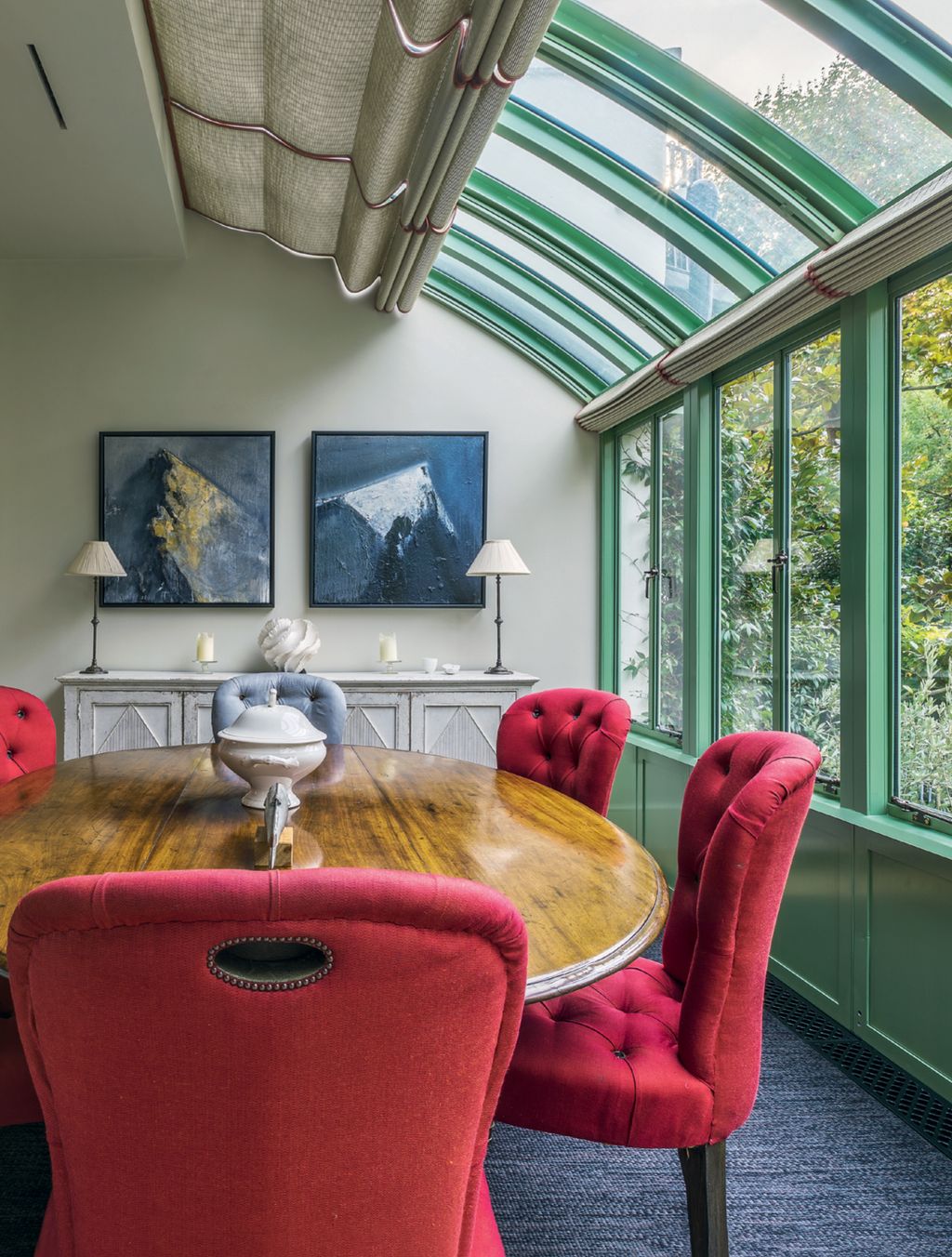
Charlotte Crosland worked with the specialist blindmaker Grants to produce bespoke tracks that were attached to the walls of this kitchen extension while it was being built. As Charlotte says, “We wanted to add a touch of elegance to the room, but keep out the bright overhead sun when necessary.” The blinds have a subtle red trim, which picks up on the vivid red upholstery of the dining chairs and contrasts with the green-painted panelling that frames the windows.
 Natalie Dinham23/24
When Victoria Stainow’s London flat needed a revamp, the furniture and lighting specialist called on the expertise of interior designer Tara Craig. The wallpaper is Pierre Frey’s “Sans Papillons”, with a bedcover, blind and Ensemblier “Selton” sofa in the matching cotton/viscose fabric. A plain curtain fabric, by O Ecotextiles from MM Design, offsets the pattern and frames the windows.
 24/24
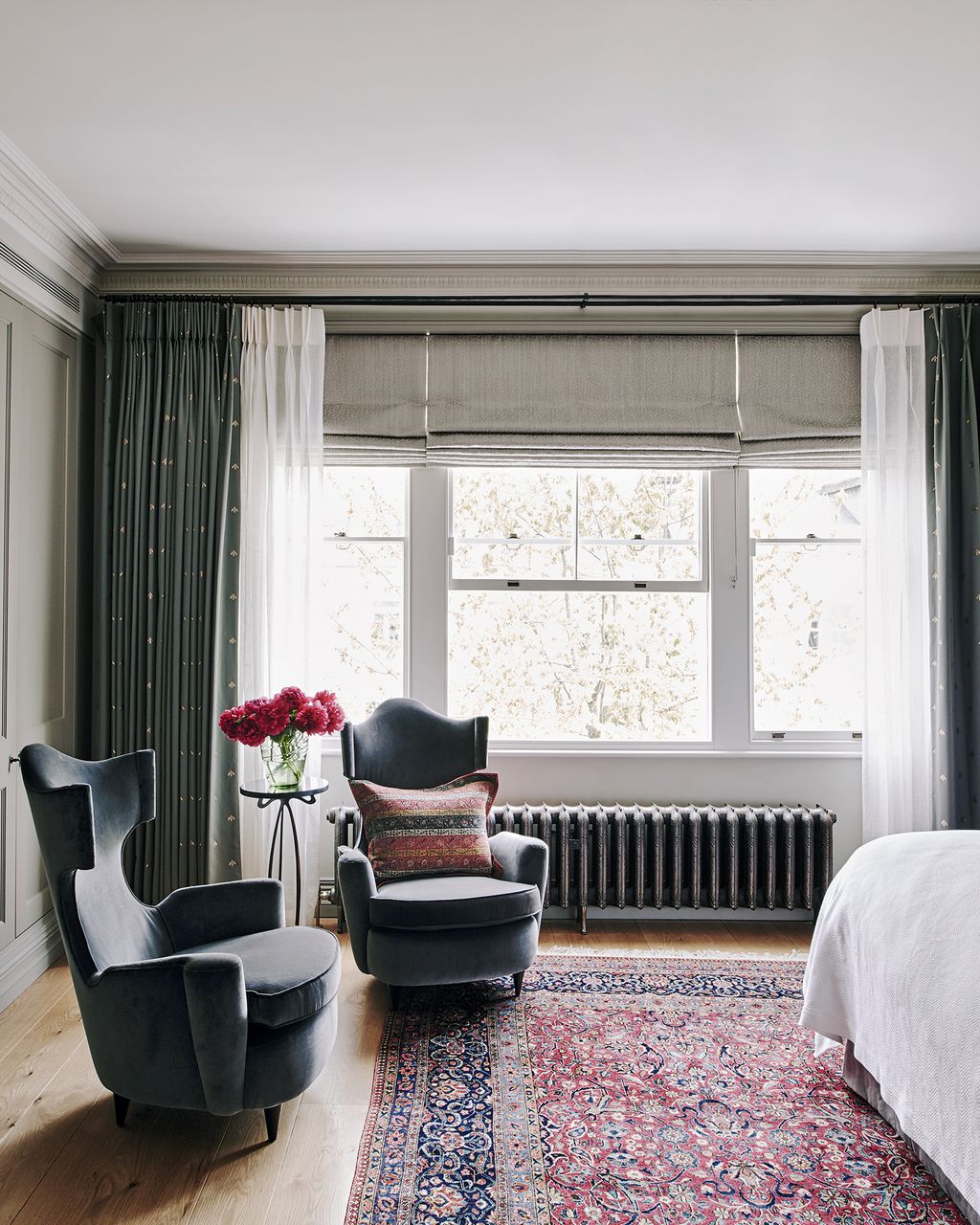
24/24Three sets of Roman blinds prevent the windows in the bedroom of Jane Gowers' London house from looking bare when the curtains are open. She has combined the blinds with two sets of layered pinch-pleat-headed curtains, which hang from simple double curtain poles.


