
A farmhouse perched on the heights of Exmoor with elegant interiors by Charles O'Connor
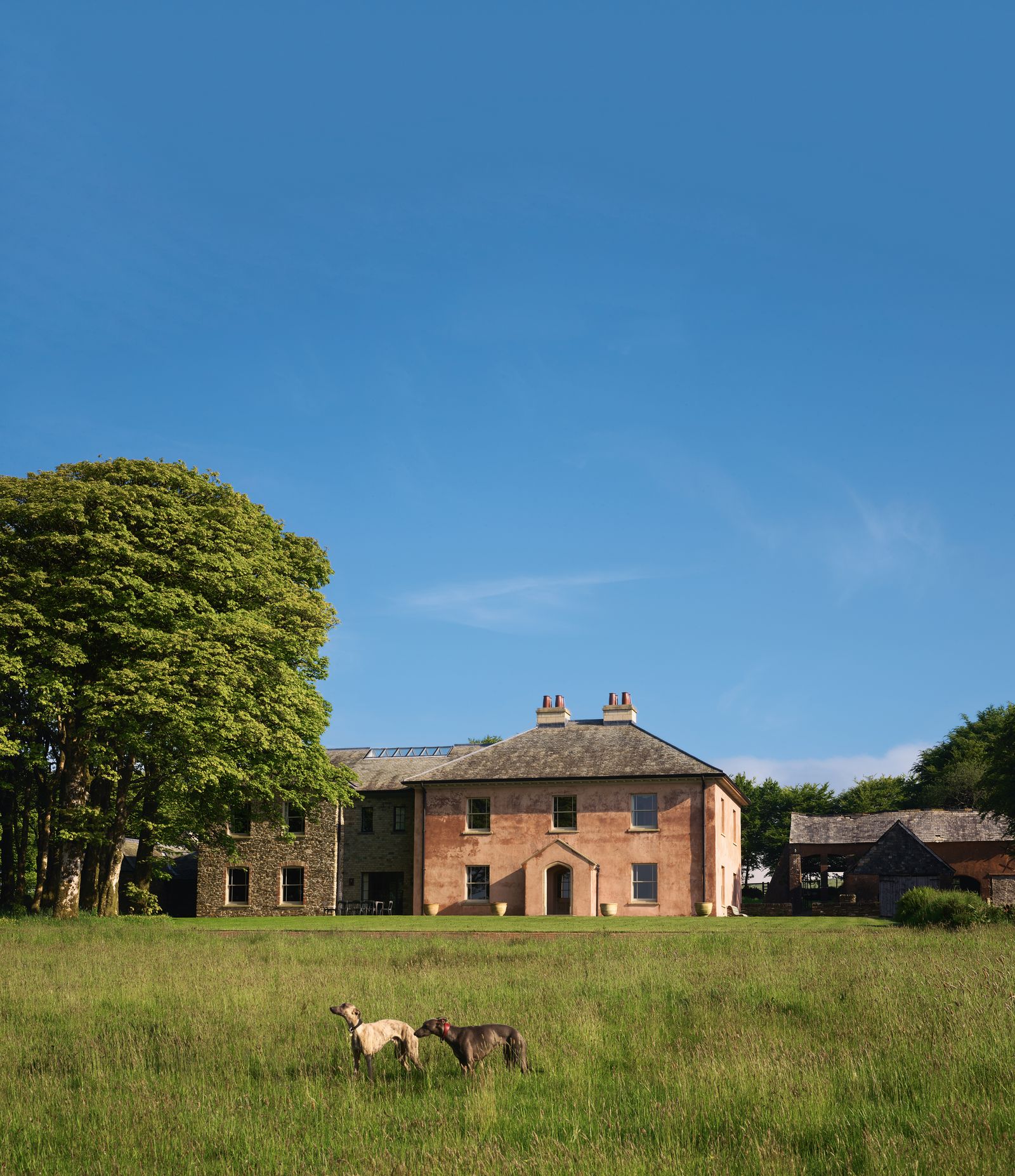
'There are times when cloud covers the whole valley below and we’re in sunshine up here,’ says Charles O’Connor, who, with his partner Edward Greenall, has built a house high up on Exmoor. ‘Exmoor is very damp – it’s a hyper-oceanic maritime climate,’ explains Edward, a consultant A&E doctor. ‘You can see the Atlantic from the top of the farm.’
For centuries, Exmoor was a royal hunting chase, until, in need of money after the Napoleonic Wars, the Crown sold the Exmoor Forest Estate in 1818 to John Knight, a Midlands industrialist. There was just one existing house on Exmoor when Mr Knight built 12 model farmsteads beside the River Barle, laid 22 miles of road on the estate and planted thousands of beech trees in the 1830s and 1840s. But the parts of the moor Mr Knight transformed for farming remain his lush and beautiful legacy. Edward’s father, Gilbert Greenall, bought most of the Exmoor Forest Estate in 2006 and, in 2017, he acquired Duredon Farm at the centre of the estate that he and Edward farm together. From the start, they have farmed the land organically, with traditional breeds of cattle and sheep, and with biodiversity of flora and fauna as their guiding principle.
The farmhouse was not so susceptible to improvement, however. ‘When the previous owner tarmacked over the yard, which lies higher than the house, rain poured into the side of the house and it began to rot. It made more sense to rebuild than repair,’ says Edward.

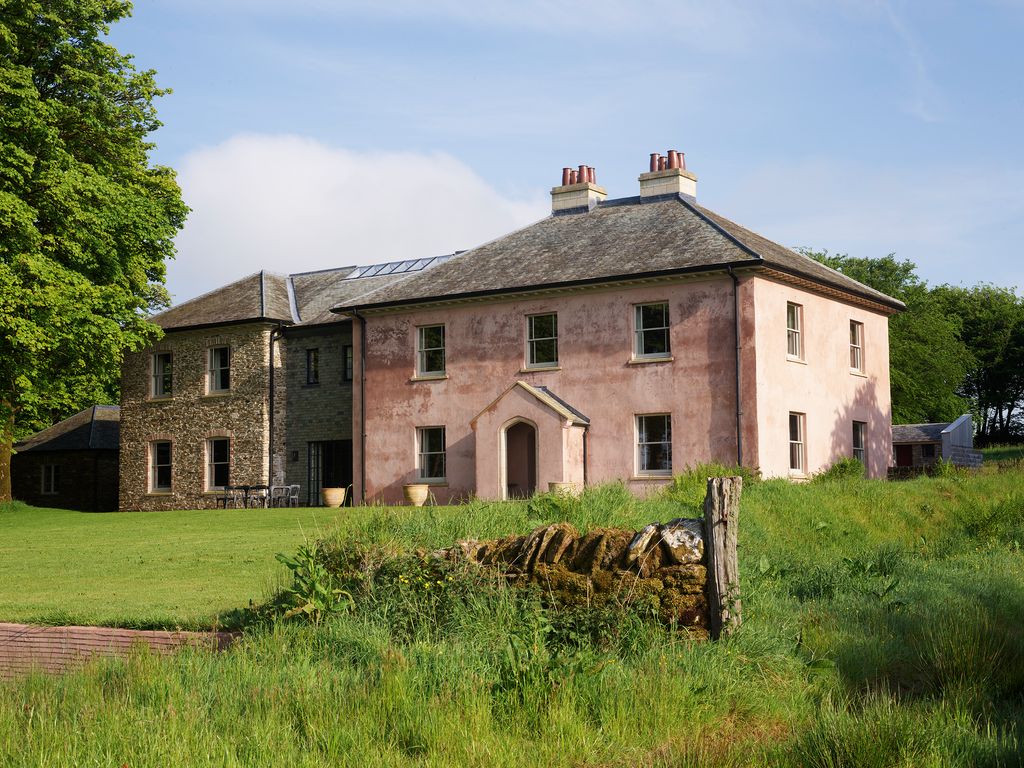
They had to follow the footprint of the original house due to the strict planning permission, and many of its materials have been reused – flagstones, building stone, floorboards and even the roof slates, which are now on their third usage. ‘You can tell this from the number of fixing holes in them,’ explains Charles. The newbuild has been faced with three different exterior finishes. The apricot pink of the render on the main part derives from the local red sand, and looks wonderful against the tawny browns and golds of the moor in autumn. ‘And it doesn’t need any maintenance,’ he adds. Next to this, a recessed central part is faced with local slates, and, at the end, near a spinney of sycamores, the surface is of stone reclaimed from the original house and laboriously cut down to size. The pair worked with the architect Martin Llewellyn (since retired) of Llewellyn Harker Lowe.
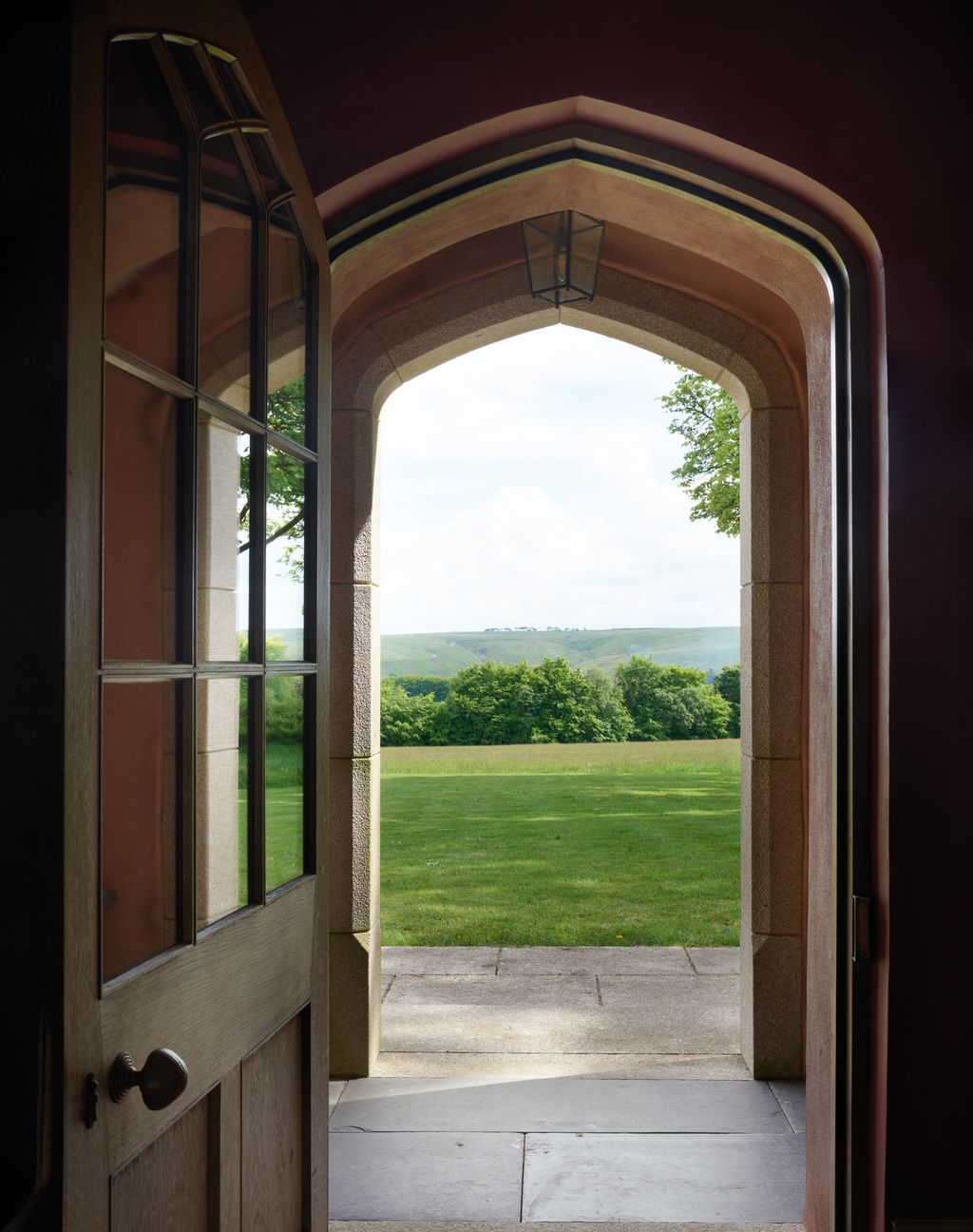
Walk into the hall and there is a long view through the house out to the moor on the opposite side of the valley. The floor, of salvaged antique Cornish slate flagstones (the pair collected 250 square metres of these), has been laid in straight courses. Charles devised the handsome, deep panelling here with their contractor, Ulrik Lawson.
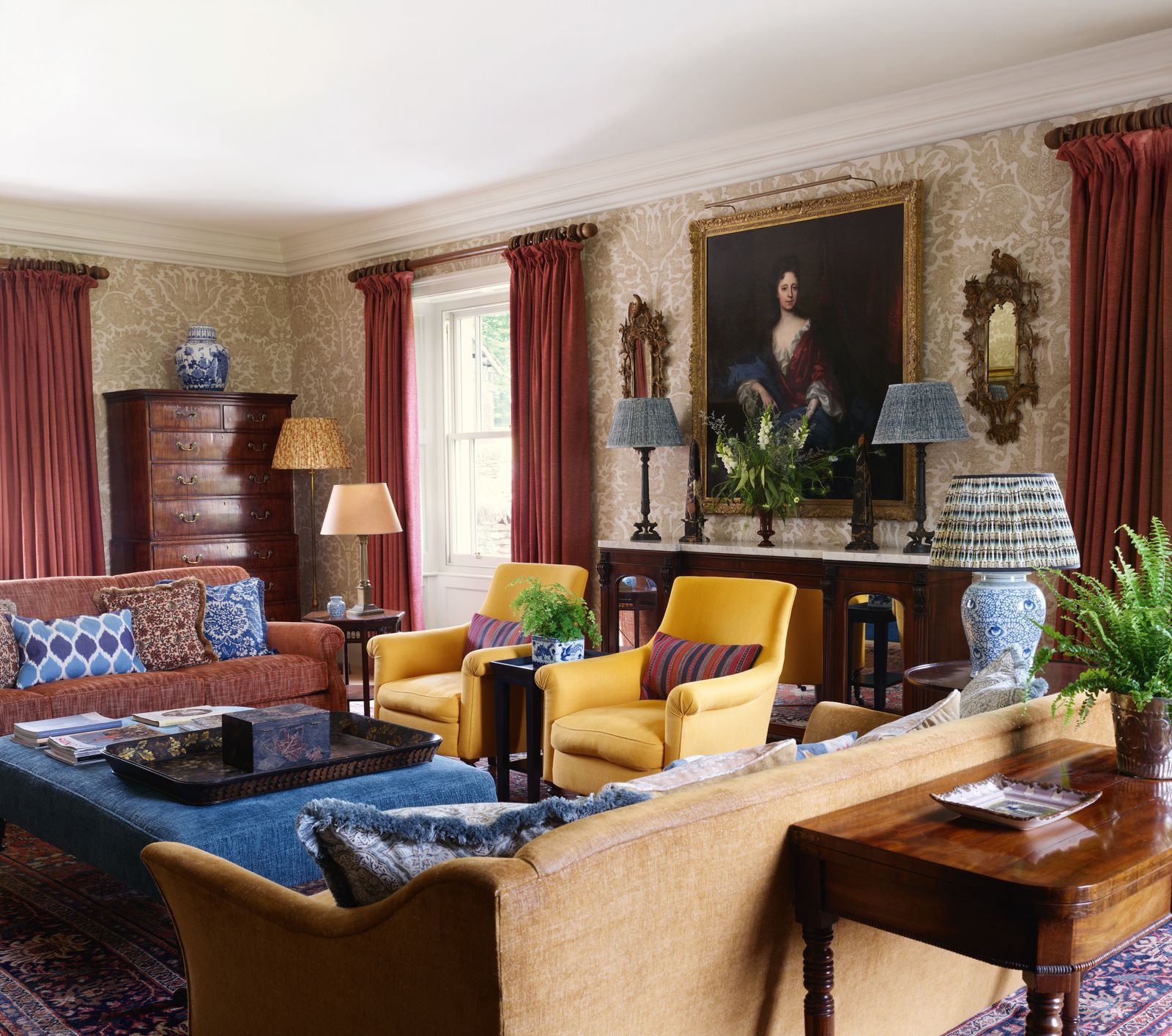
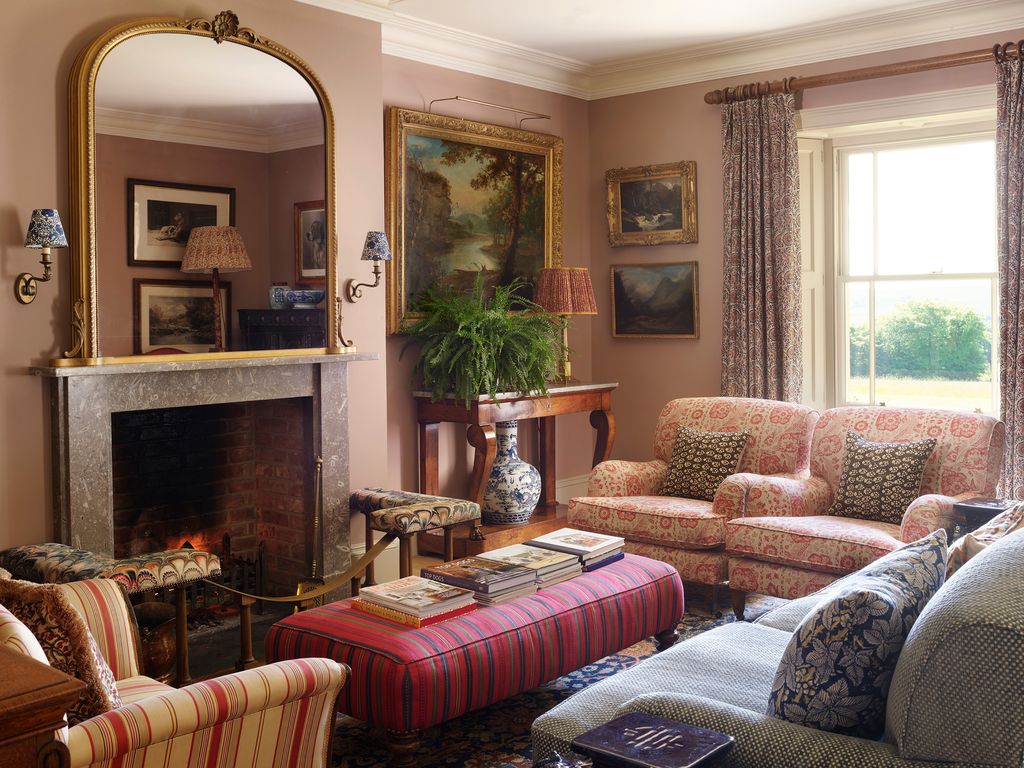
It is a left turn to the drawing room, where the colours are derived from the rug. ‘The whole world owes a debt to Robert Kime,’ says Charles, referring to Robert’s decree to always start with the rug. Indeed, the house Robert designed for Edward’s father has provided more than just inspiration, as some paintings and furniture from it have been reused here, along with curtains and other pieces from Charles and Edward’s previous house. Totty Lowther’s ‘Pomegranate’ wallpaper provides a decisive background for sofas in tan and gold, a pair of buttercup-yellow chairs and raspberry-red curtains – echoing the rug – along with mahogany furniture, 19th-century prints and portraits.
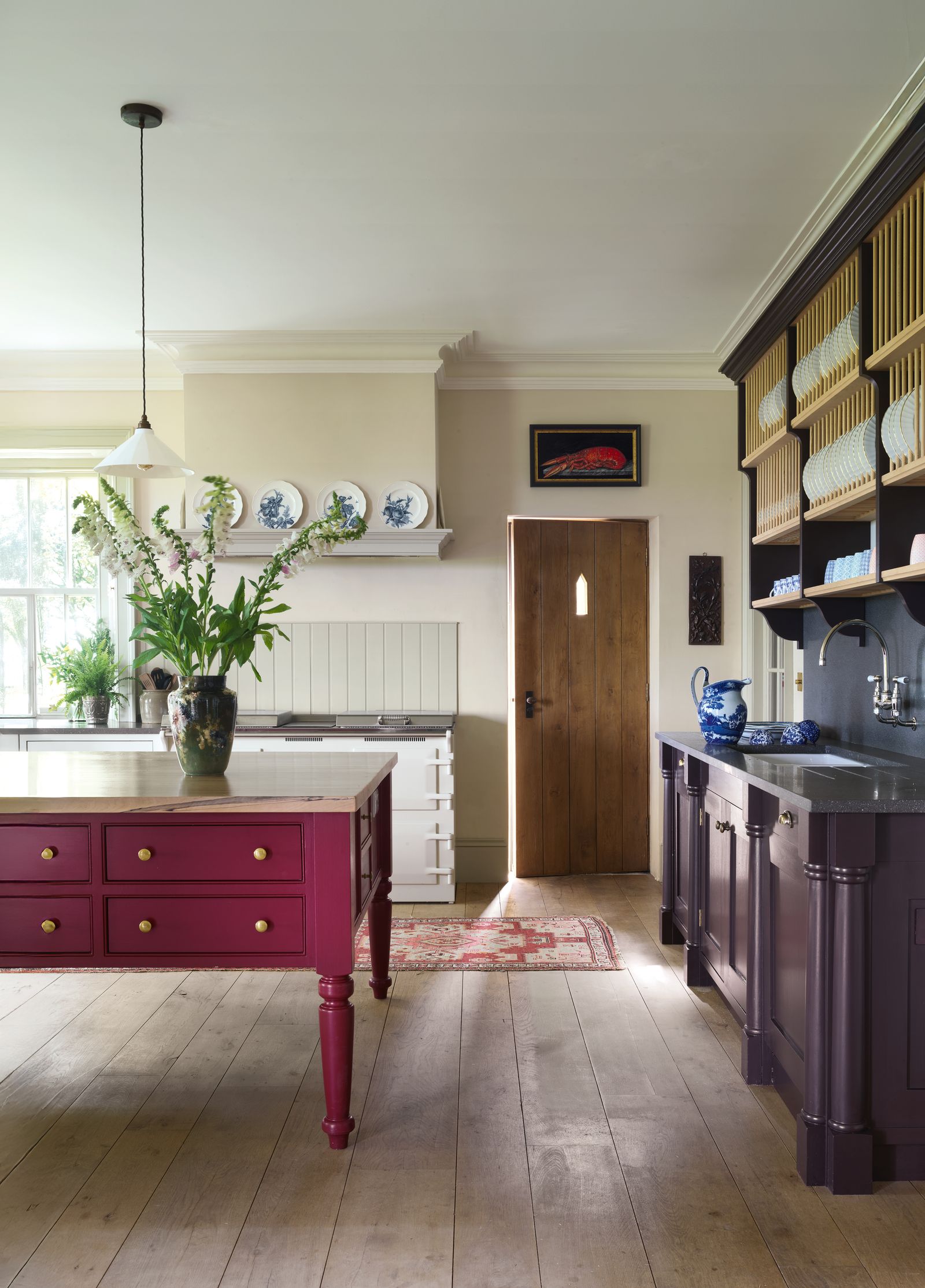
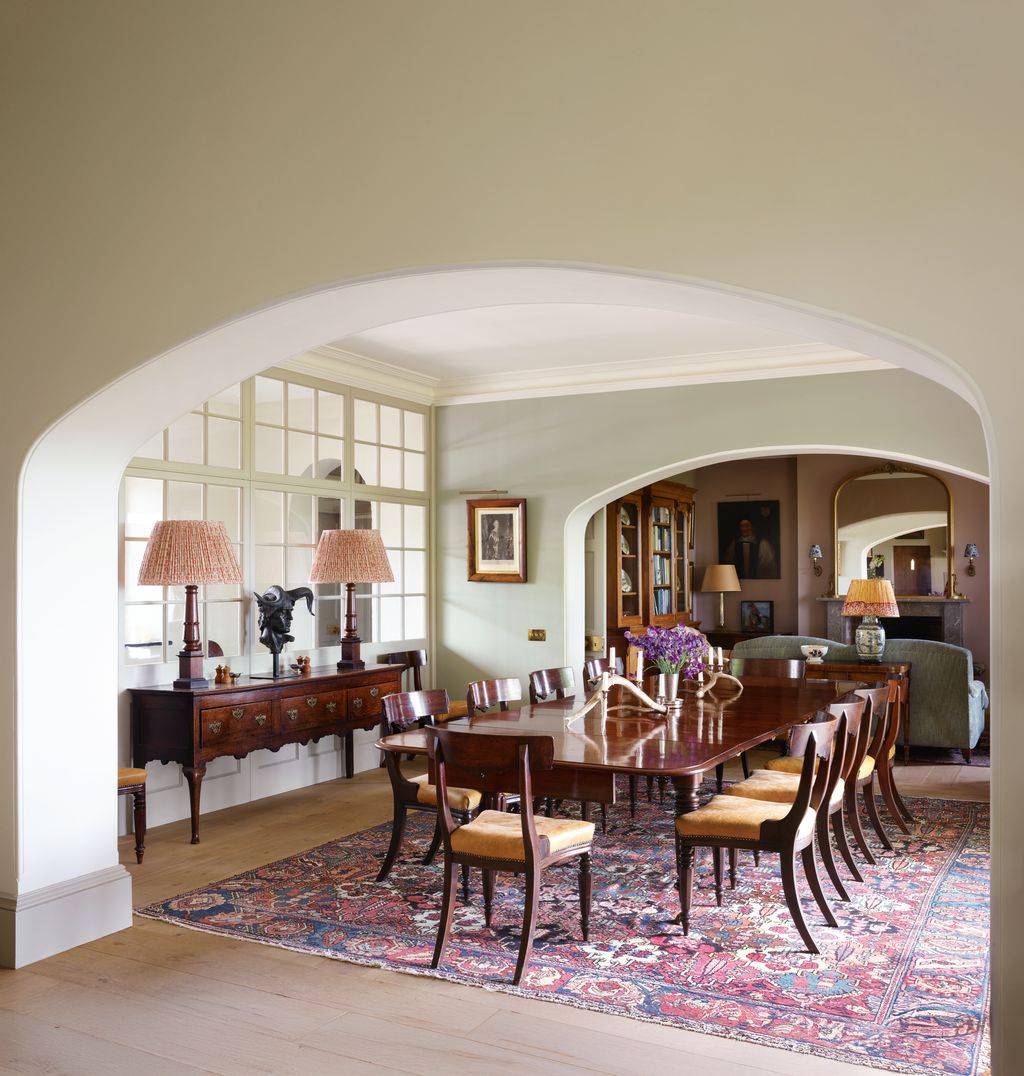
The kitchen, dining room and library all run together, separated by broad arches, and have proved popular when the house is let out from time to time during the winter. ‘We thought big groups might like privacy, but they love seeing the chef at work,’ observes Charles. He and Ulrik designed the large kitchen work table and plate rack, inspired by those at the Cornish National Trust property Lanhydrock, and made from beech grown on the estate.
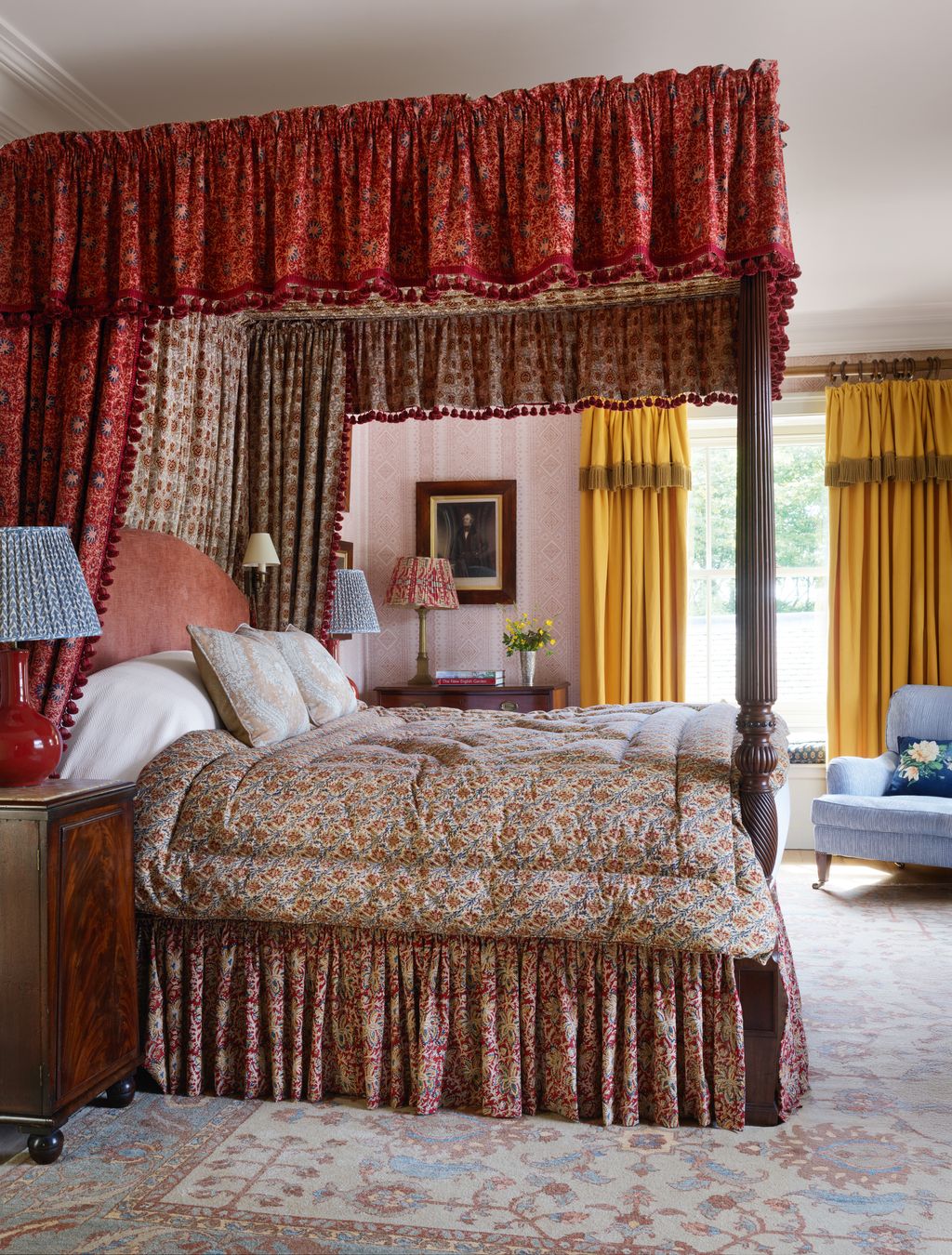
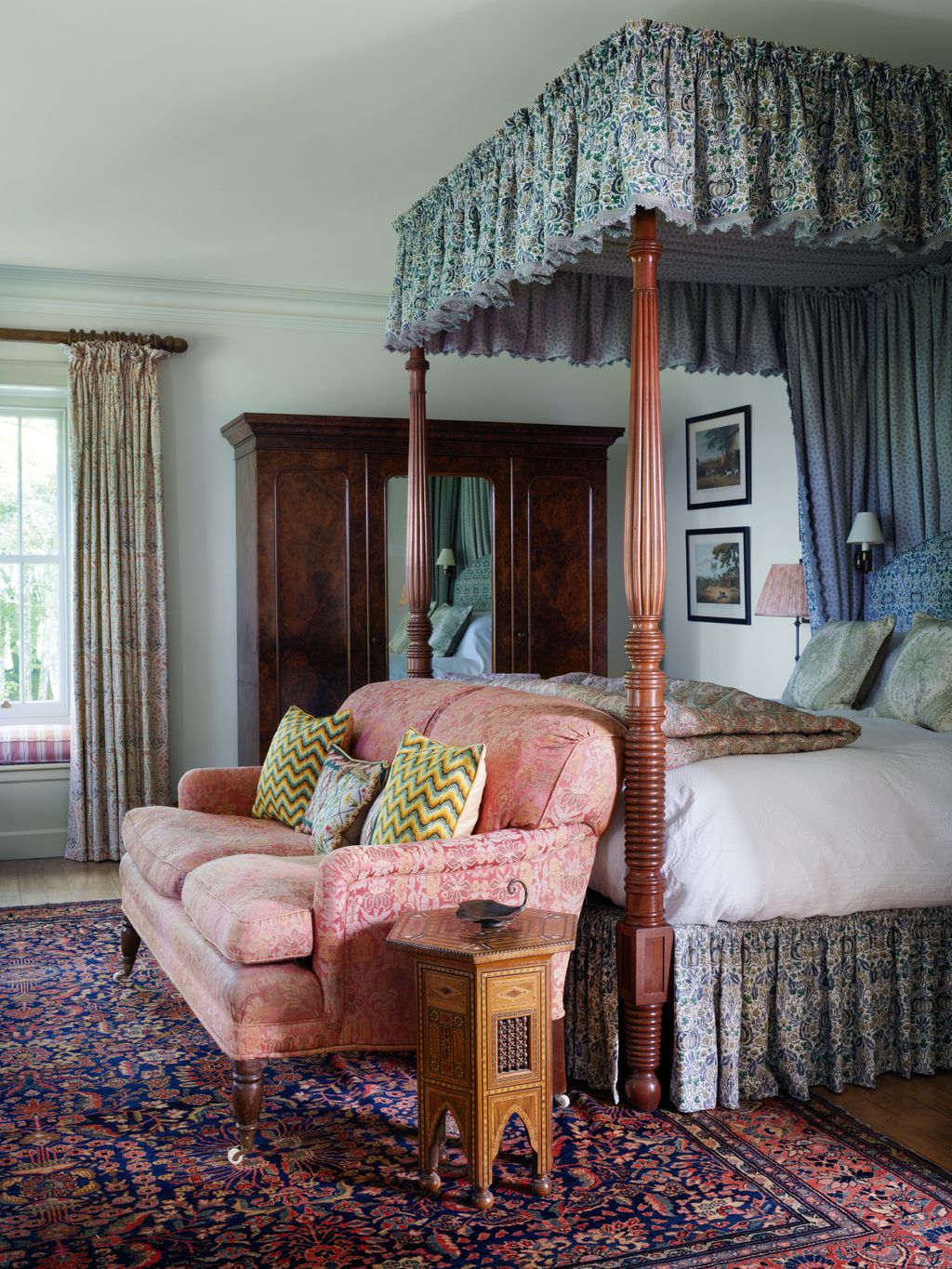
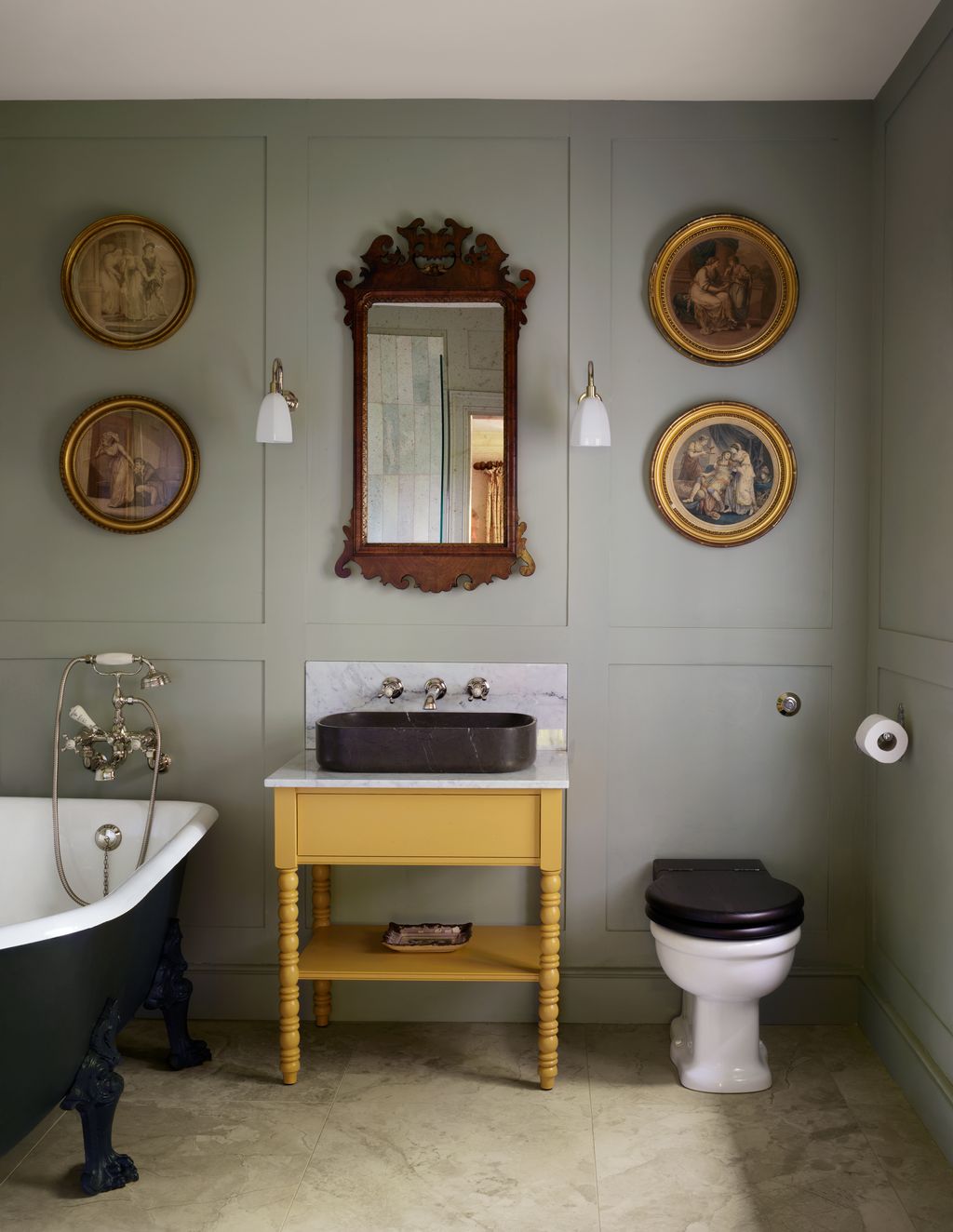
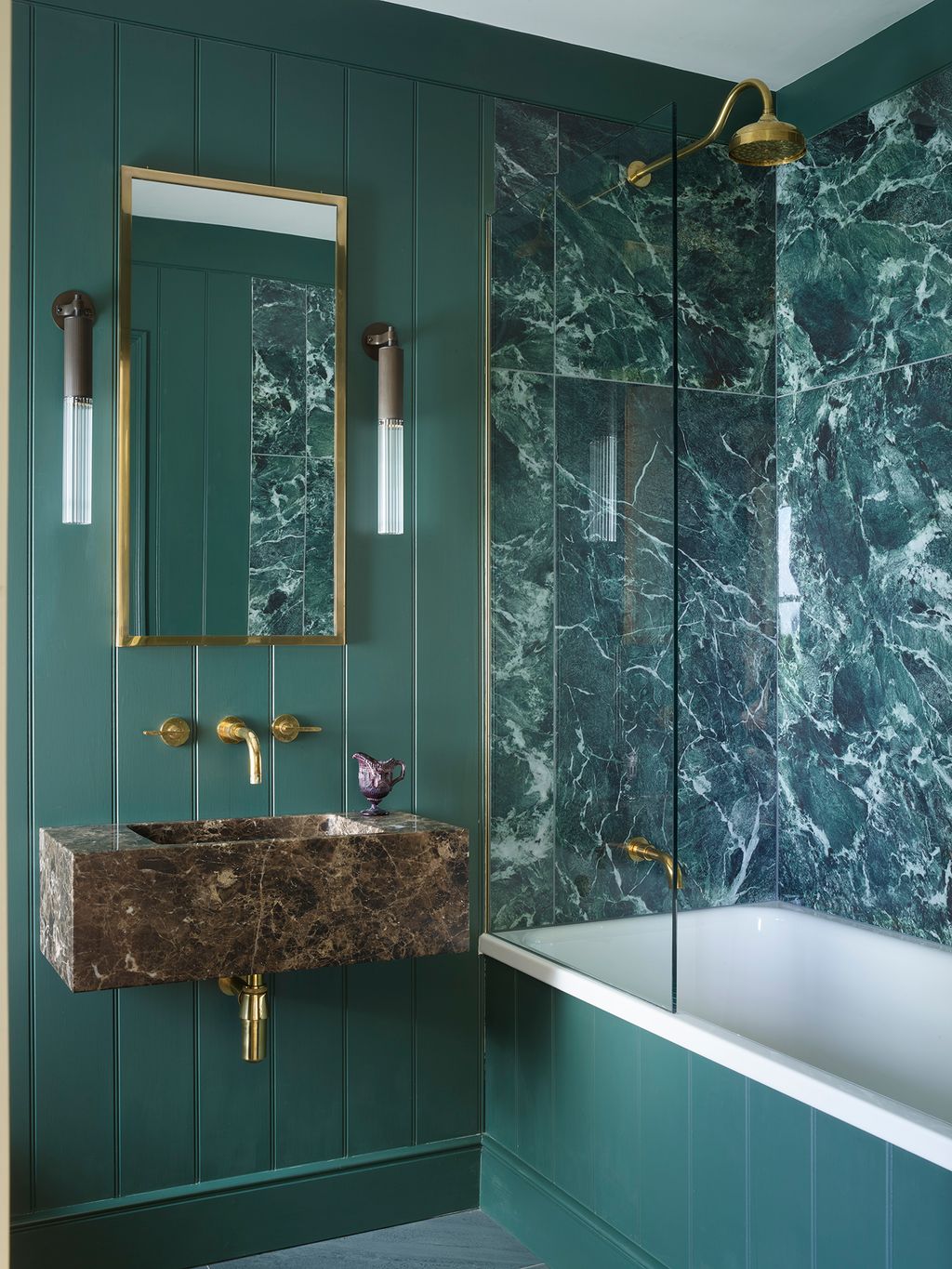
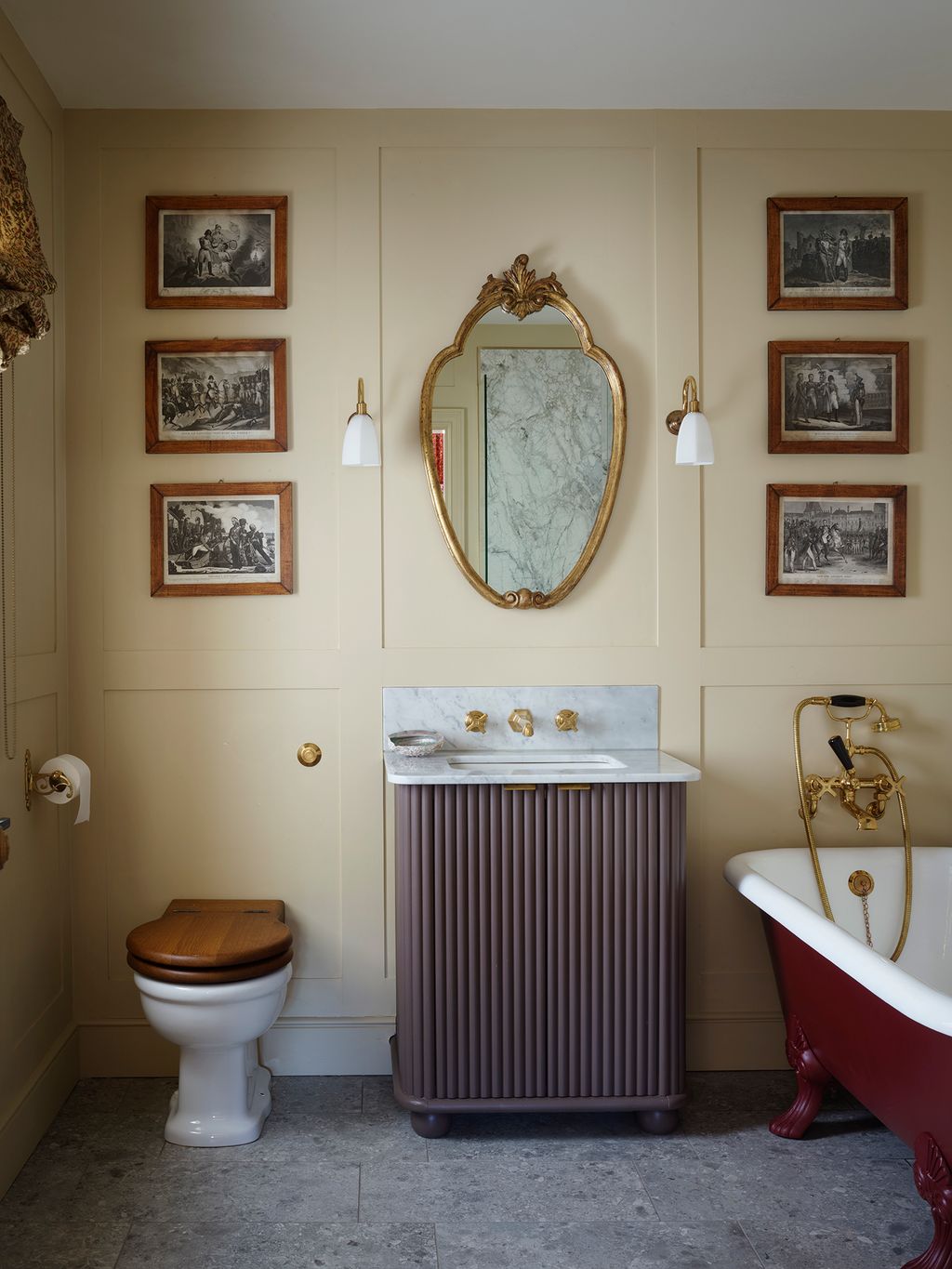
There are six bedrooms upstairs at Duredon, with four-poster beds hung with curtains in delicious flowery fabrics and deep eiderdowns to match. The bathrooms combine a mixture of traditional and modern fittings with antique shelving, mirrors and pictures.
Edward and Charles also own and run the village pub, The Exmoor Forest Inn, where Rowley Leigh is consultant chef, and which has recently won a Michelin Green Star for sustainability. Their farm produces the beef and lamb for the pub, with venison coming from the moor and their kitchen garden supplying many of the vegetables it uses. ‘What with the pub busy between Easter and October, the winter visitors staying here at the house, and the staff who work on the farm, we provide 22 full-time jobs in this small village,’ observes Edward.
So taken was one of their winter visitors by Charles’s interior design at Duredon that he asked him to design his own country house. This is how Charles came to change course from being a partner in a London law firm to his new life as a – now very busy – interior designer. He has joined forces with his friend Olivia White-Hamilton of the Dorset-based studio Olpol & Co.
The panorama from the top of the moor behind the house is exhilarating on a sunny day, but when the weather turns ‘hyper-oceanic’ and the rain lashes down, there is something to be said for underfloor heating, deep sofas and plump eiderdowns.
Olpol & Co: olpol.co.uk | Duredon Farm: duredon.com
 Simon Upton1/12
A George IV mahogany table and leather-upholstered Gillows dining chairs, all from the Wormington Grange sale, stand on an antique rug from Christie’s South Kensington, bought for the owners’ previous house. Beside the glazed corridor, designed to bring light into the room, a Georgian oak dresser base from Rebecca Christie Miller holds a contemporary resin sculpture and an antique lamp with an Indian cotton shade. The candlesticks on the table are made from the cast antlers of wild red deer on the estate.
 Simon Upton2/12
 Simon Upton3/12
Looking through the front door across the lawn and hay meadow to the Exmoor landscape.
 Simon Upton4/12
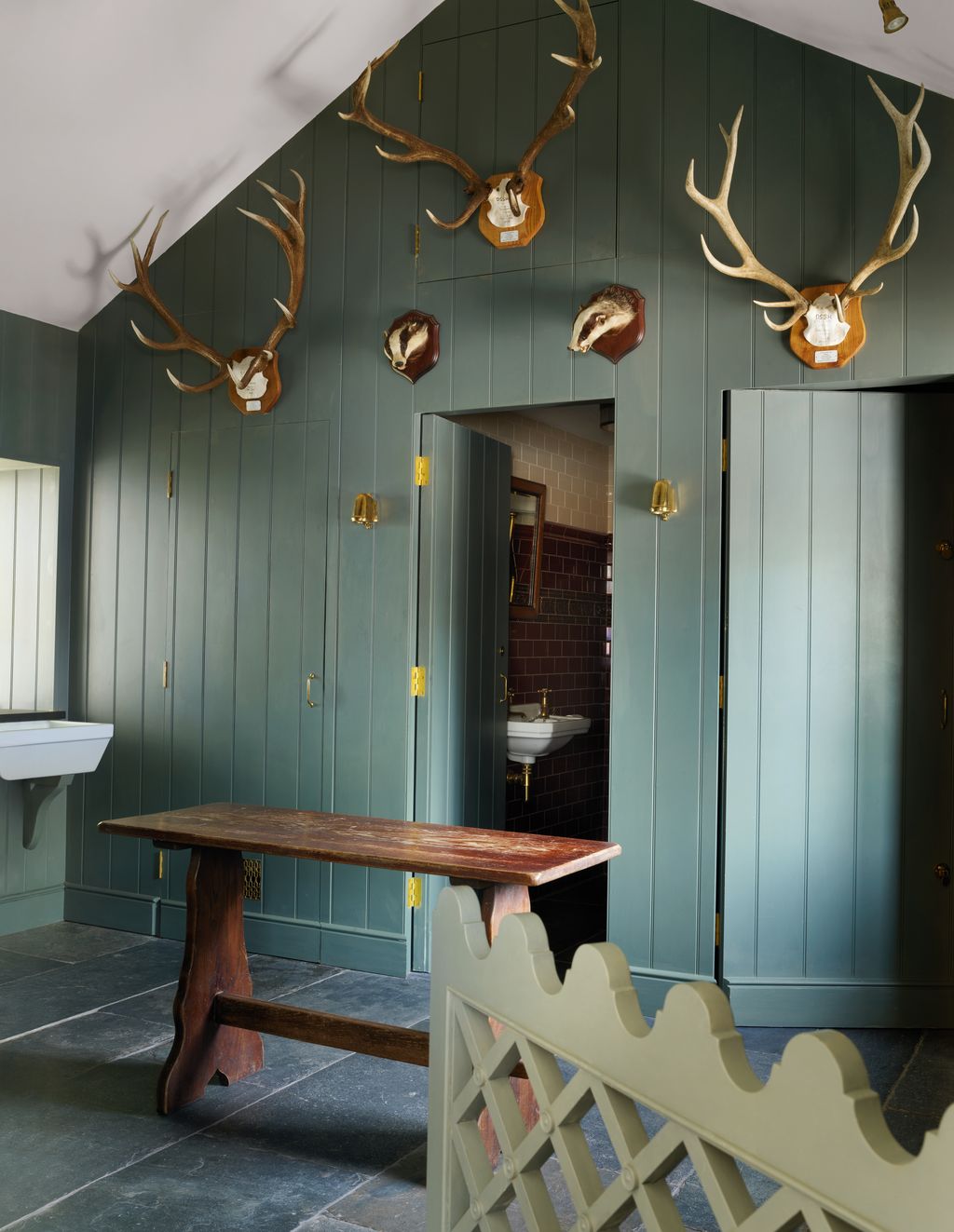
In the boot room, panelling in ‘Plume’ by Atelier Ellis is the backdrop for vintage trophies and small brass wall lights from Holloways of Ludlow. The fretwork dog gate was designed by Charles.


 Simon Upton5/12
 Simon Upton6/12
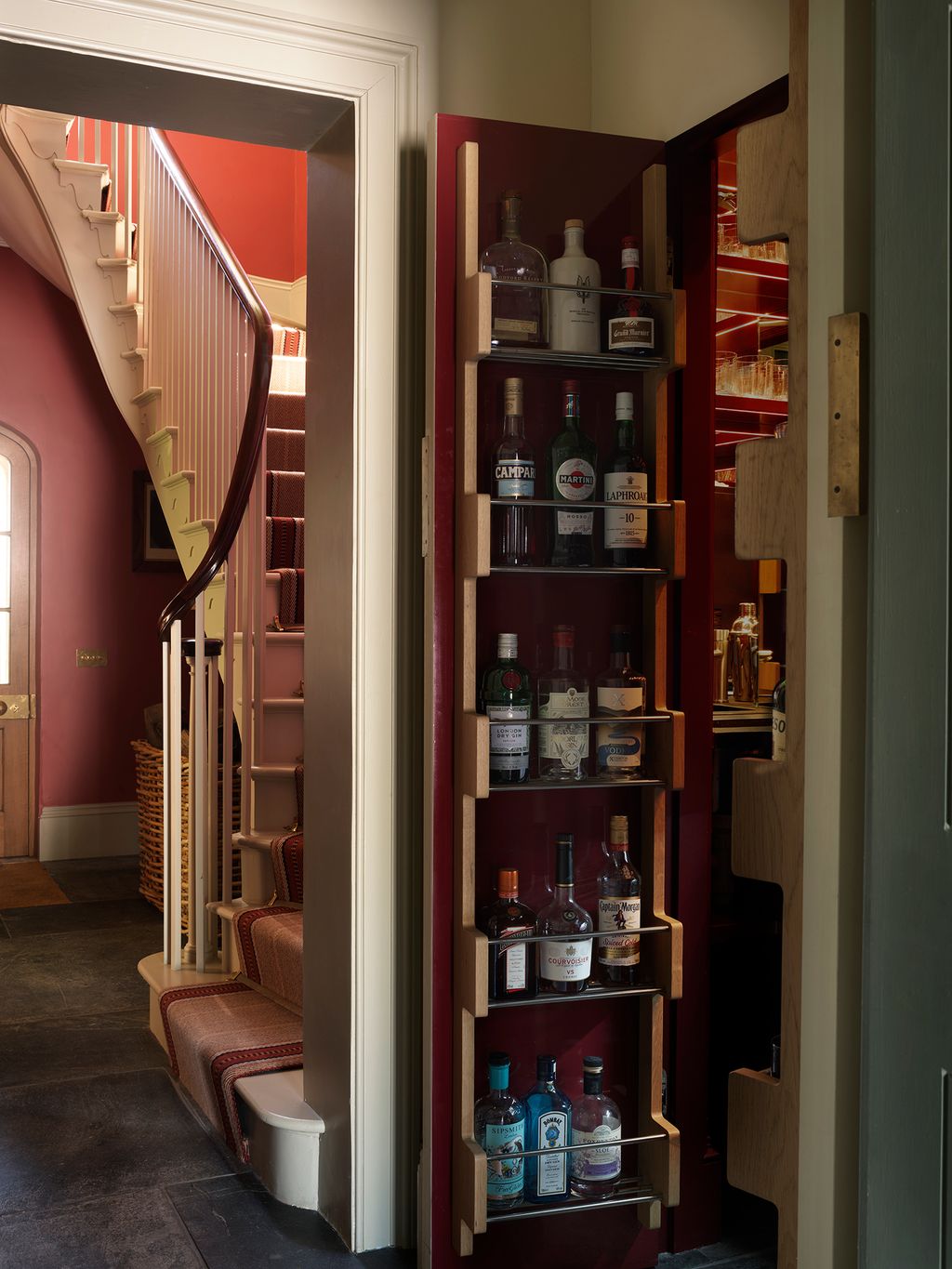
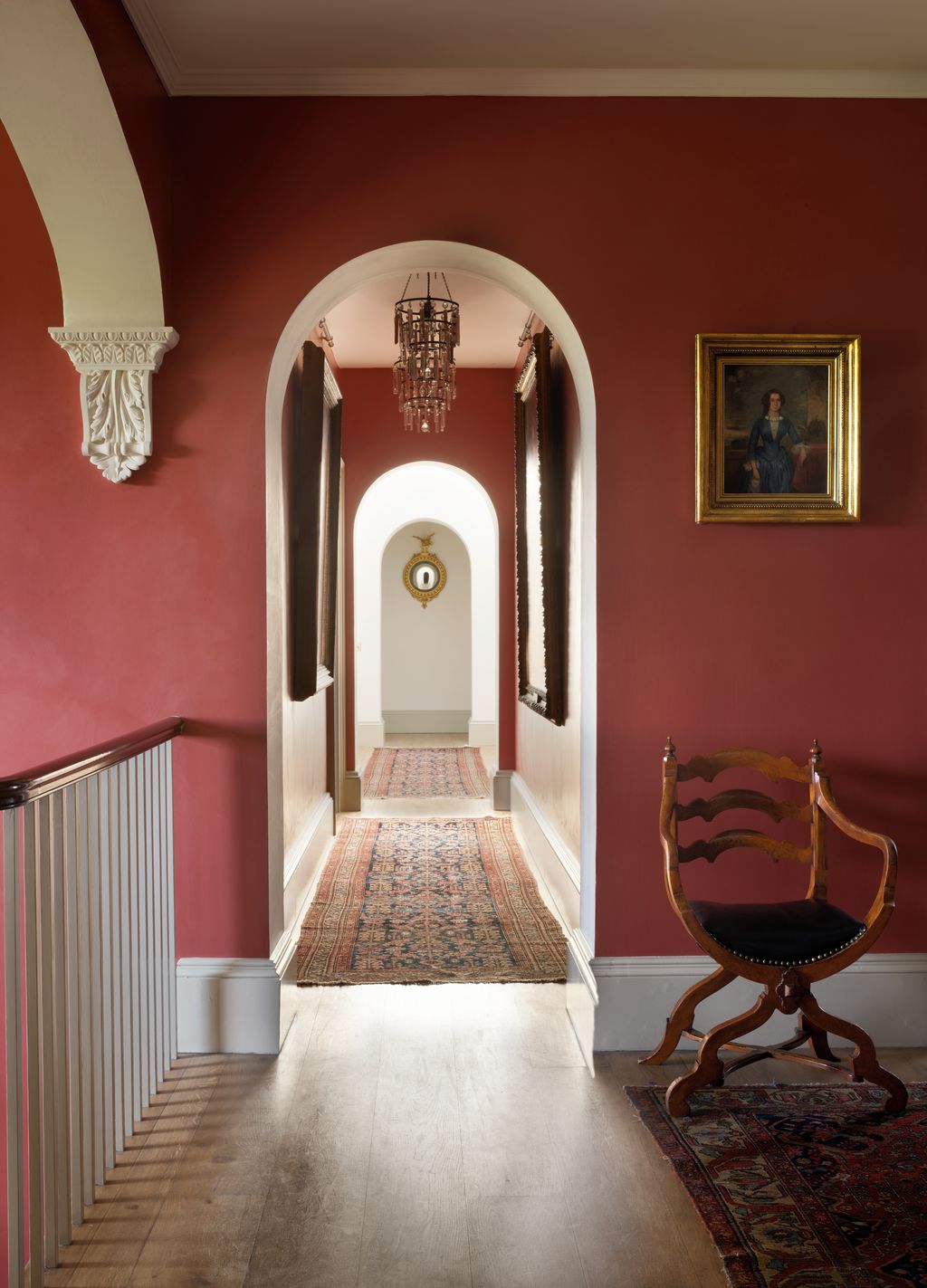
Arches and corbels added during the build are showcased by walls on the landing in ‘Mid Egyptian Red’ by Papers and Paints.
 Simon Upton7/12
The spare room features curtains in a yellow Tinsmiths linen, with a Houlès bullion fringe, balance bed curtains, a valance and an eiderdown in hand-blocked Indian cottons.
 Simon Upton8/12
In the main bedroom, at the foot of an antique Irish four-poster bed with hangings in Morris & Co’s ‘Little Chintz’, needlepoint cushions enliven a Victorian sofa from Woolley & Wallis on an Edward Marnier rug.


 Simon Upton9/12
Farrow & Ball’s ‘Blue Gray’ on the panelling and ‘India Yellow’ on the bespoke basin stand set off a Georgian mirror and prints above a Lusso black marble basin in the main bathroom.
 Simon Upton10/12
 Simon Upton11/12
 Simon Upton12/12


