
23 charming cottages from the House & Garden archive

‘We are predisposed towards the English country cottage even before we cross the threshold.’ This was a quote from our September 1959 issue but it rings true today. Witness the obsession with Kate Winslet's English country cottage in the film The Holiday if you don't believe us. It's particularly intriguing, as most cottages started life as humble agricultural workers' dwellings that would have been peculiarly uncomfortable, but now their low ceilings, quirky proportions and uneven walls and floors are what we love about them. Plus they usually start with a sizeable advantage over most houses: their settings are often more beautiful and invariably more appealing. To satisfy your appetite, we present cottaging: the House & Garden way. Take a peek at the most beautiful of British country cottages below (and wait until you see inside)…
MAY WE SUGGEST: How to get the look of a classic English country cottage
The most charming country cottages from the House & Garden archive
 Tom Griffiths1/23
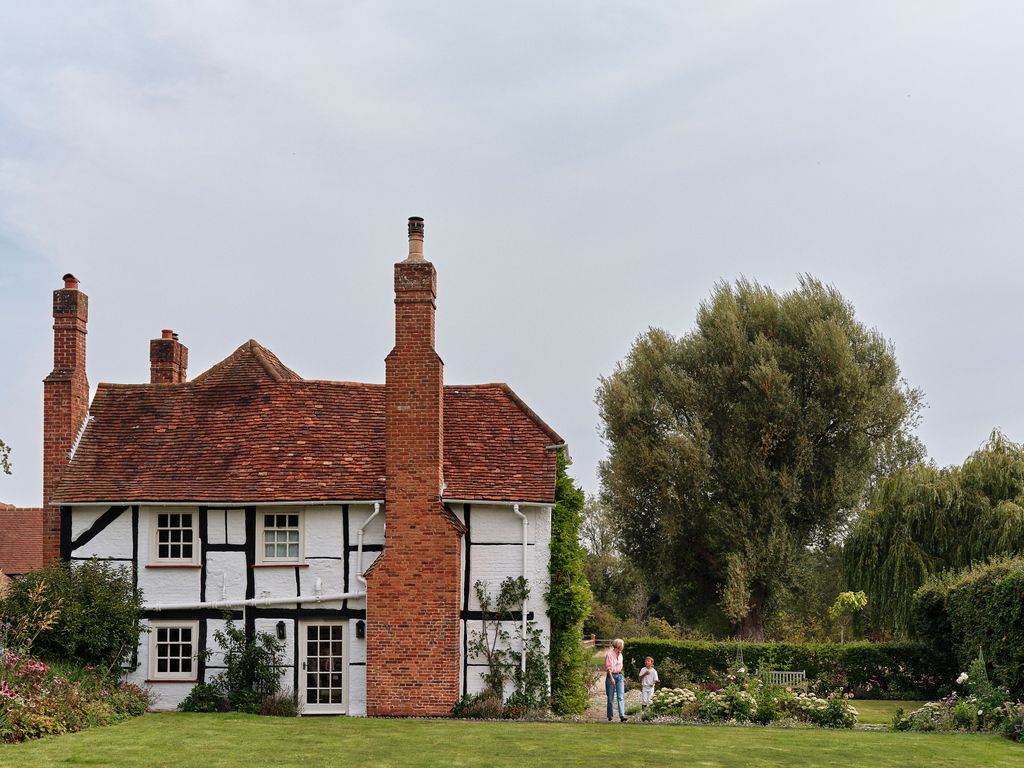
‘I always feel a bit like I'm on holiday,' says food writer Juana Pepa of her move from London to this Tudor cottage in Berkshire. 'I'm super happy having a slower life. Being here makes you take the time to enjoy things.’ It was originally meant to be a weekend house, ‘but a couple of months after we bought it, my children started to say that they didn’t want to leave and we decided to move here full-time.’
 Dean Hearne2/23
‘With everything I do, I strongly believe it’s about creating a feeling, rather than just a look,’ says botanical artist and set designer Tattie Isles, standing in the garden that surrounds the 18th-century house in west Dorset that she shares with her husband Fred and their four young children. With its pleasing palette of earthy tones inside and the menagerie of peacocks, chickens, guineafowl and Shetland ponies roaming around outside, her charming cottage certainly looks the part. But it is about much more than the aesthetic.
 Boz Gagovski3/23
“It had a few original features, like the lovely fireplace in the sitting room, but a lot less than you find in slightly older properties. It didn’t have any of those higgledy-piggledy walls–and it is definitely harder to make places charming when they don’t have any period features,” Angelica Squire explains of this 300-year-old country cottage in the South Downs. Still, the team were keen to make the most of what was there and, ultimately, the end goal was to “make it feel like a refresh of the house it could have been.”
 Dean Hearne4/23
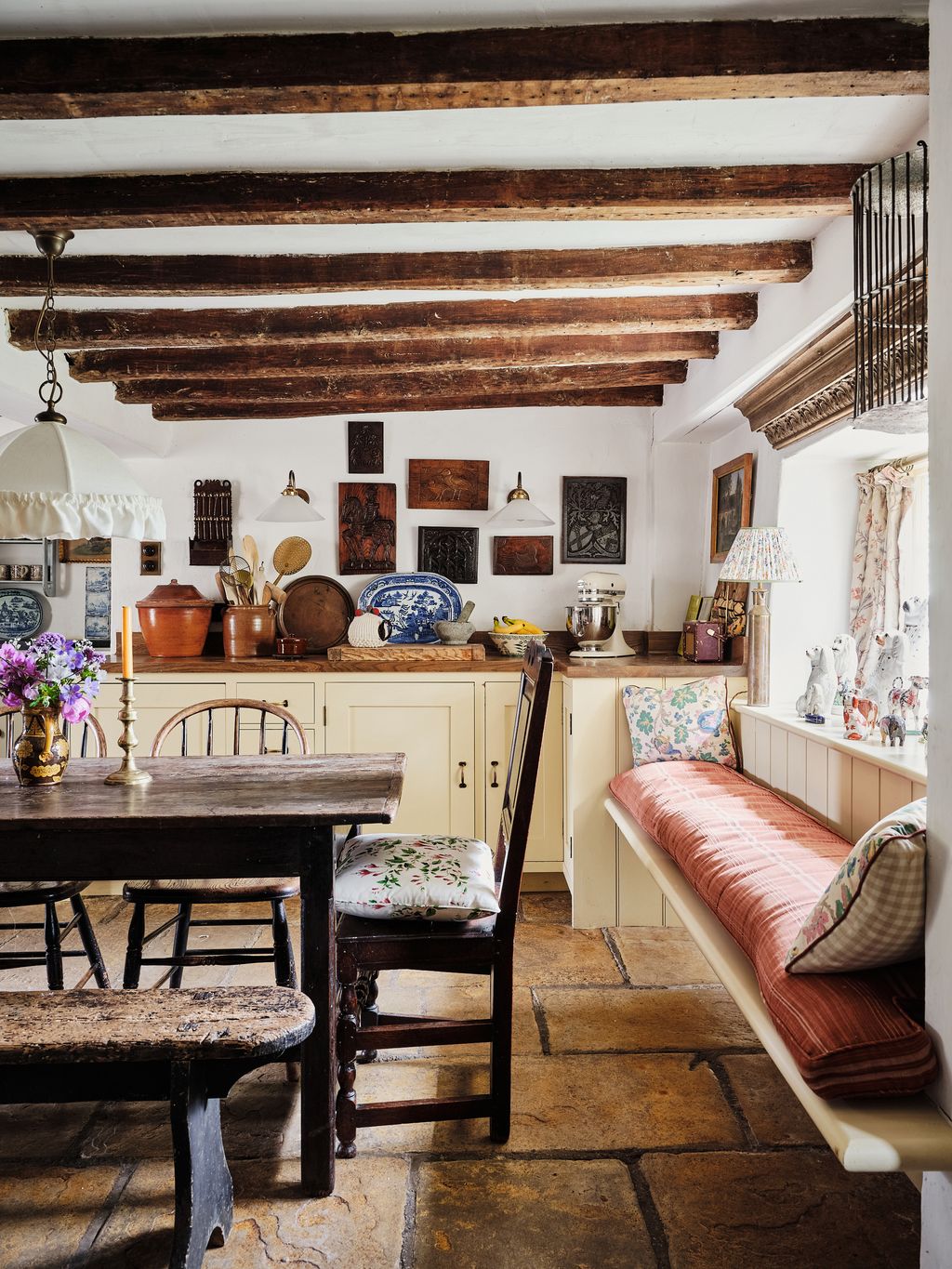
"I am a firm believer that you should not kowtow to practicality. Decoration should always come first,” says Alexandra Tolstoy, surveying her tiny cottage in Oxfordshire. Liberally bedecked with chintz, Staffordshire pottery, embroidery samplers, lustreware and willow pattern ceramics, it could easily be the ur-cottage of all English cottages. Yet in many ways, it is supremely practical–very much a “dogs on the bed, children running in and out of the garden in wellies” house–and also incredibly personal, scattered with the artefacts of a life spent adventuring in Russia and Central Asia.


 Mark Anthony Fox5/23
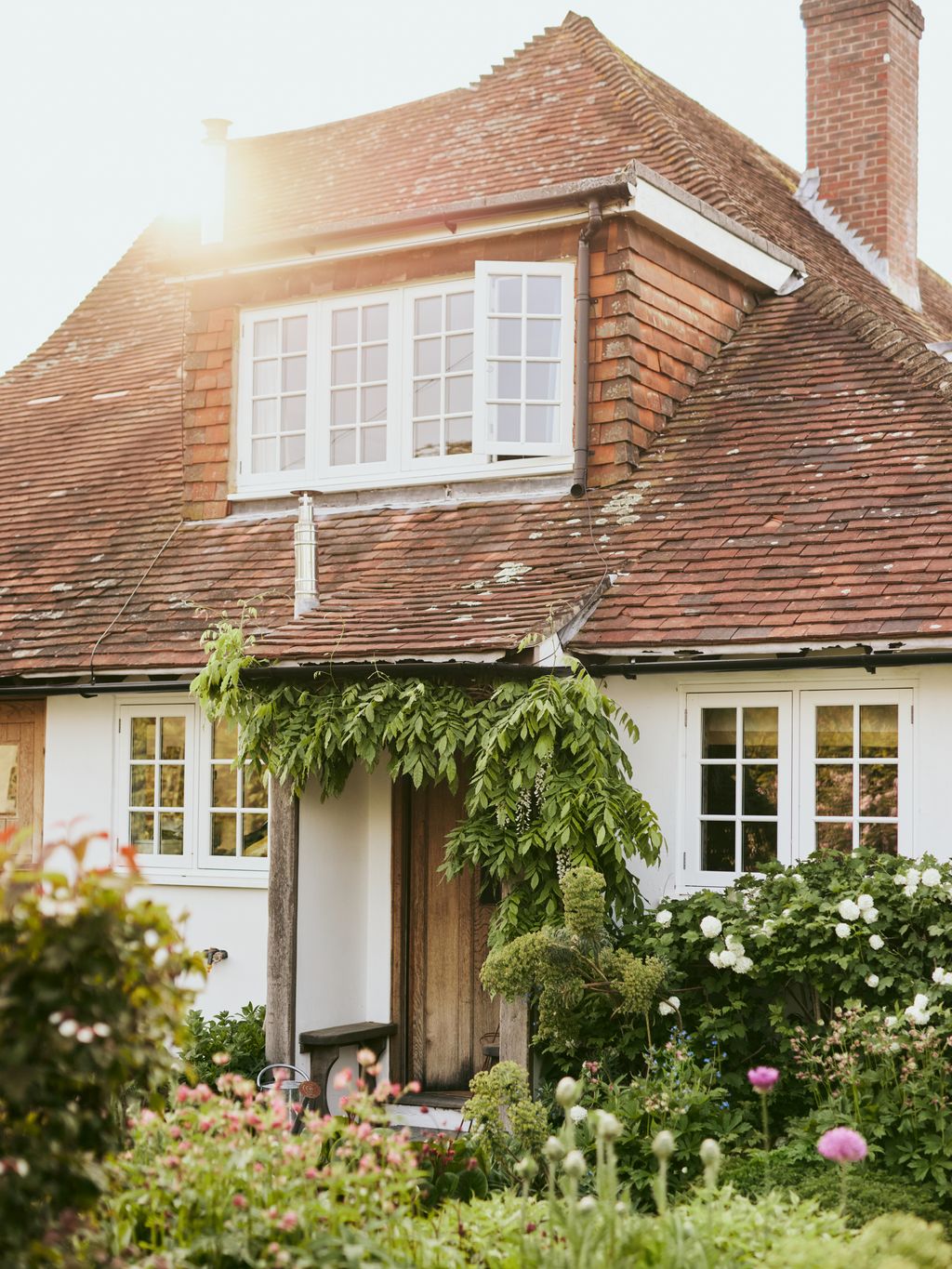
With her signature approach to layering and clever use of colour, Lucy Cunningham has injected personality into her idyllic cottage. After a few months of hunting, she and her husband found the perfect spot in the form of an early Victorian cottage. Nestled in a small Hampshire village, the cottage is one of four originally built for those working on the surrounding hop fields. Little by little, it had been renovated and modernised over the years. ‘A lot of the grotty bits and hard graft had already been done,’ explains Lucy. ‘I think it originally had a tin roof, so it's come a long way!'
 Simon Brown6/23
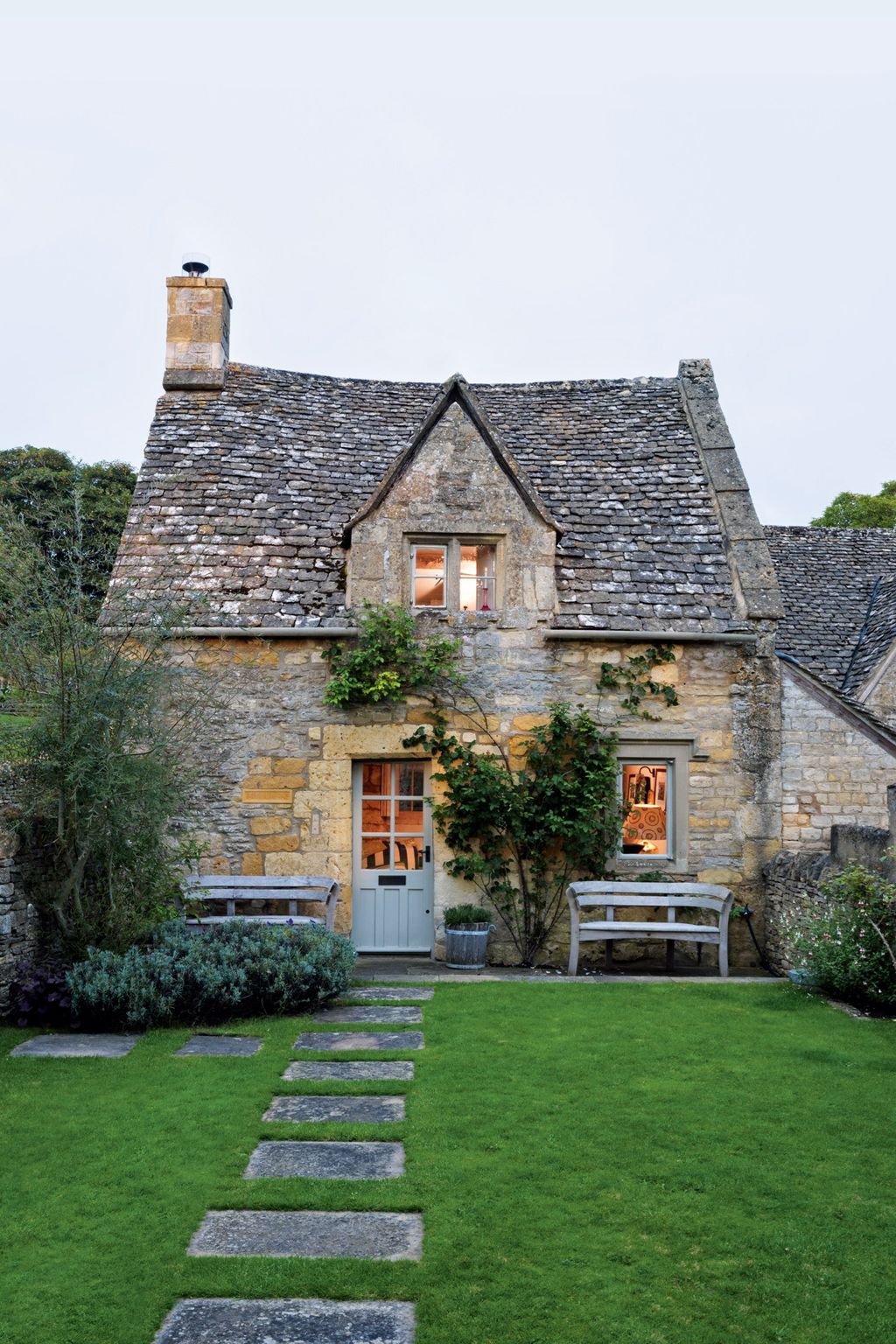
Needing a weekend escape from their busy lives and stressful careers in London, designer Caroline Holdaway and her photographer partner, Fatimah Namdar, relish the peace and quiet of their eighteenth-century cottage in the Cotswolds.
“I am excited every time I leave London with the thought of being here,” says Caroline. “It is a very welcoming cottage and very giving. When we are really busy at work, it becomes more important to be here and I sleep here so well; it is dark and totally quiet. This cottage is now a part of us, an effortless comfort blanket.”
 Mark Anthony Fox7/23
With 16th-century origins, the timber-framed cottage was in good nick when Phoebe came to it. Spreading across two floors, it consists of a barrel-roofed sitting room, a kitchen with a dining area, a tiny bedroom on the upper floor, and a larger bedroom and bathroom on the ground floor. ‘All I really had to do was bring in the pieces I’d spent the past 30 or so years collecting,’ recalls Phoebe. That said, the kitchen became the subject of a more significant intervention. Phoebe zhuzhed up the beige rental-appropriate units with ‘Invisible Green’ from Edward Bulmer Natural Paint on the cupboard fronts and the addition of a playfully shaped pediment that almost gives the guise of a dresser.
 James McDonald8/23
Having found and bought this 17th-century Cotswold cottage in the space of a week, former Sotheby’s specialist James Mackie has created a charming art-filled home that reflects the interior-design skills he is now capitalising on.
Arts and Crafts references are subtly woven throughout, with a handsome sawn-oak dining table, a pair of Godwin-style side tables and a resplendent mix of patterns, from curtains in Sibyl Colefax & John Fowler’s ‘Strawberry Leaf’ to a chair in GP & J Baker’s floral ‘Rockbird’. ‘I wanted to create a series of jewel-box spaces that flow into one another, but also feel like entities in their own right,’ he explains.


 Eva Nemeth9/23
When florist Milli Proust and Mumford & Sons bassist Ted Dwane first saw their magical, early 17th-century cottage, they fell for it instantaneously. ‘I had literally dreamed of this house,’ says Milli. ‘As a child, I had nightmares and was encouraged to do visualisations to calm me down before going to sleep. In my mind, I used to create a field with a tiny house that had a wooden staircase and, when I got here, I knew it was exactly the place I had imagined.’ Tour the two-up, two-down half-timbered cottage that's straight out of the pages of a Grimms’ fairy tale.
 Paul Massey10/23
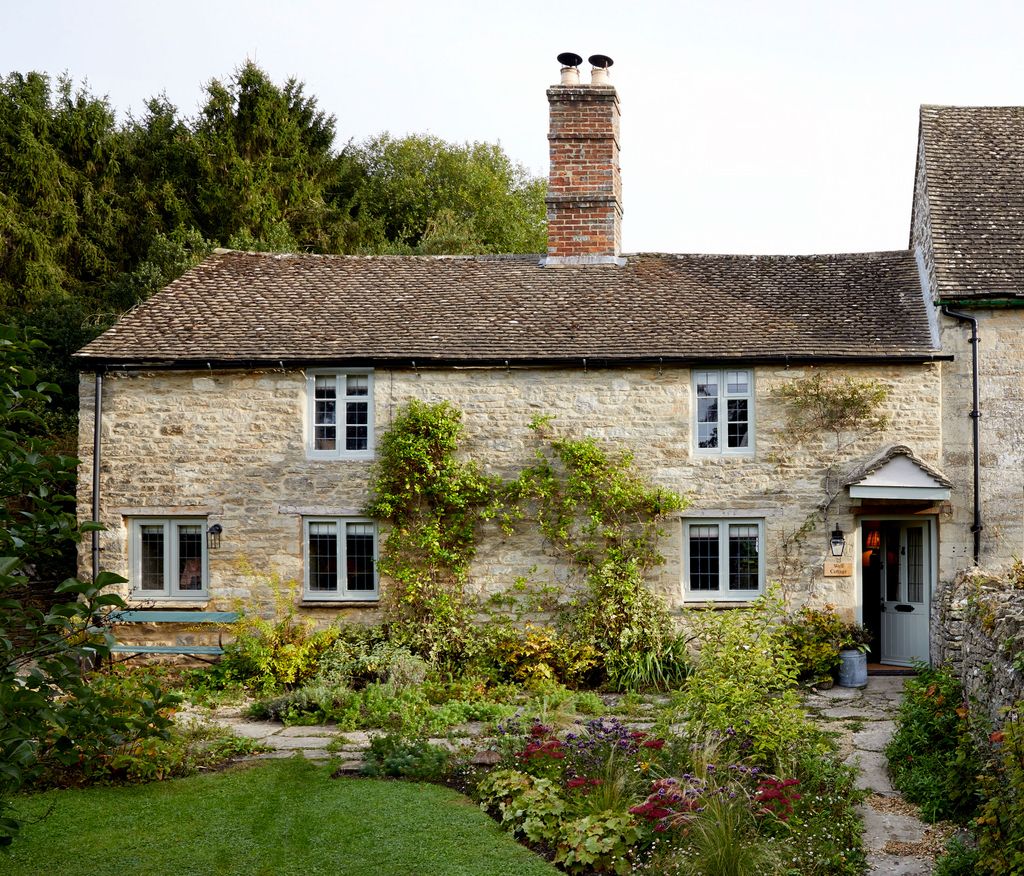
Well Cottage was once two cottages, turned into one larger abode and extended (very sympathetically) to allow for the ample kitchen and dining space and add on the master bedroom. The result is a cottagey feel in the two living rooms: one functions as a welcome area with a fireplace and panelled boot room off to the side, as well as a dresser full of glassware and games, while the other is a snug with another fire, squashy corner sofa and large ottoman, as well as lots of books and local literature to curl up with. This cosy atmosphere extends to two of the bedrooms, while things feel more spacious and generous in the master bedroom and kitchen. It's the best of both worlds.
 Chris Horwood11/23
Stepping into the 18th-century workers’ cottage in Greenwich that belongs to Anna Rhodes and Fred Scott is much like stepping back in time. With its working fireplace, period-appropriate palette and narrow staircase, you would be forgiven for assuming the house has been brilliantly preserved, handed down from one conscientious custodian to another. Yet, when this creative couple first moved in, the cottage was almost unrecognisable from its current state.
 Brent Darby12/23
Nestled deep in the hills of rural Carmarthenshire, under skies unsullied by light pollution and buffered from the ingress of global news in its WIFI-free location, this diminutive Welsh cottage is an atmospheric example of the homesteads hand-built by rural farm workers in the 18th century. Created from hand-hewn branches and scavenged coarse rubble, few properties exist in such an authentic form and those that remain are mostly in terminal decay. A family home until 1965 when it was abandoned, along with most of its original furnishings, the dwelling stood unoccupied and therefore preserved from unsympathetic restoration for almost 40 years until current owner Dorian Bowen discovered it and sensitively brought it back to life. The former chartered surveyor was looking to move from London back to the locality of his birth, seeking reconnection and a slower pace of life. In many ways the cottage's remote location, rudimentary structure and lack of modern essentials, including electricity and plumbing, were its saving grace.


 Mark Anthony Fox13/23
Drawn to this cottage in the Cotswolds by the charming additions made by its previous interior-designer owner, the current custodian was keen to make her own mark with a sympathetic extension and interiors that reflect elements of her life in Portugal and her Scandinavian roots.
What had initially endeared the originally 16th-century house to the new owner were turrets and gables apparently inspired by Craigievar and Brodie Castles in Scotland, antique rim locks on the doors, wooden panelling and elm flooring, as well as the romantic garden with its outdoor rooms inspired by those at nearby Hidcote.
 Helen Cathcart14/23
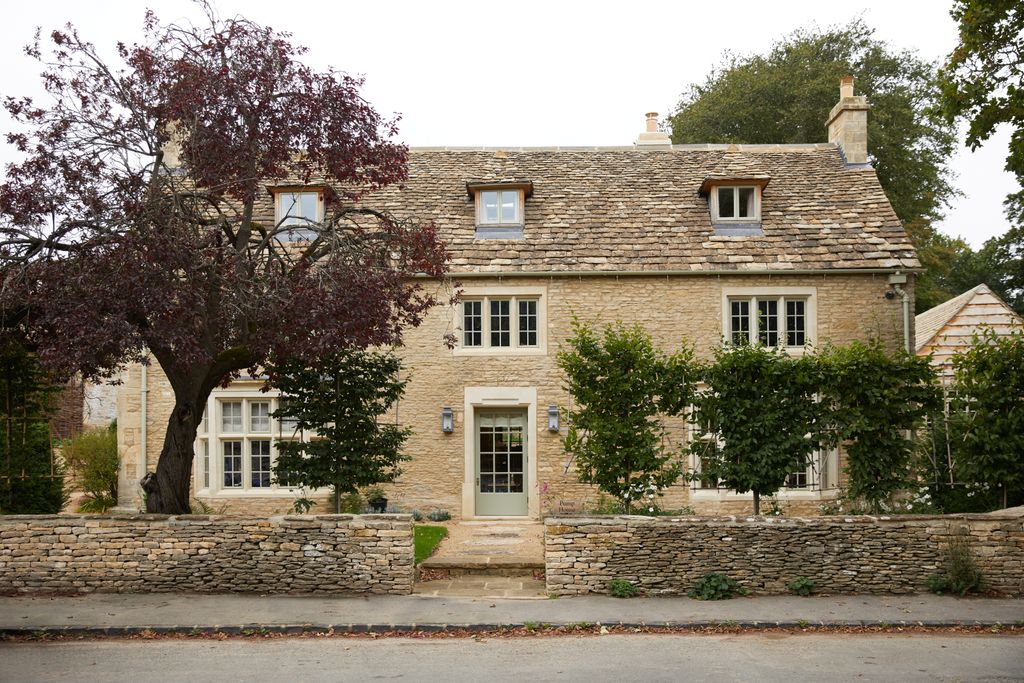
There is a constant tension between the undeniable charm of a country cottage and the equally undeniable difficulties of living in one. Their disjointed layouts, low ceilings and modest footprints make them tricky backdrops for modern family life. That was the essential problem that Isabella Worsley's clients had with this appealing Oxfordshire house. Built in the unmistakable Cotswold vernacular with a pleasingly symmetrical façade, the cottage has a perfect combination of convenience and privacy, being comfortably located within a village but with open expanses of fields at the back. But with all its outward appeal, it wasn't going to work for a family with two young boys in the long term, and Isabella's brief was to future-proof the house and make it as adaptable as possible.
 © Rachael Smith Photography Ltd15/23
Tasked with combining two 18th-century cottages to create a coherent property, architect Kathryn Manning devised a contemporary extension to join them, while designer Anna Haines introduced a harmonious mix of colours, set off by antique and bespoke furniture.
When interior designer Anna Haines first visited this house in north Norfolk, it was not the coherent home it is today. In fact, it was two separate 18th-century brick and flint cottages, staggered one in front of the other, with a shared bathroom outside as the only spot for daily ablutions. The cottages, in the village of Burnham Thorpe, had for decades provided a happy holiday home for Anna’s cousin-in-law Richard Haines, who lives mainly in London with his wife Kate and family.
 Martin Morrell16/23
Faced with the daunting task of reviving this 17th-century cottage in the Cotswolds, Ben Adler and Pat Llewellyn enlisted the help of historic building consultant Hilton Marlton. Together, they restored its original features without losing sight of the need to make it a comfortable weekend base.
Almost everything in the house is bespoke and, in their devotion to ensuring each is detail correct, they have created an interior true to the period of the house. Every element is beautifully crafted to offer comfort without losing character.


 Tom Griffiths17/23
Having found this tiny cottage in Oxfordshire five years ago, Victoria Barker has reversed the effects of a characterless renovation to create an irresistibly pretty interior.
The cottage is an idyllic spot in both winter and summer. In the warmer months, there is a tiny garden on the other side of the path, where a pretty table and chairs allows for eating in the sun, and fruit and vegetables spill out of the beds. In winter, the vast inglenook fireplace, squashy chairs and piles of cushions beckon. You may have to be prepared to bump your head a few times, but it's a price well worth paying for cottage heaven.
 Christopher Horwood18/23
Decorator Victoria von Westenholz, working with her longtime friend Xenia Buckhurst, has infused the interiors of the cottage where Xenia lives with warmth and a welcoming atmosphere.
The family have lived in the house for a year now, enjoying it throughout the seasons in various ways. In the summer they ‘open up all the external doors, and the children can run all the way around the house.’ It sounds almost too idyllic to be true, Victoria continues, ‘you can always see them…You’re at the sink and they’ll be feeding the chickens out the window.' In the winter, the house is perfect for ‘curling up with a book, sun streaming in’ as the wood fire roars in that cosy sitting room.
 Jonathan Bond19/23
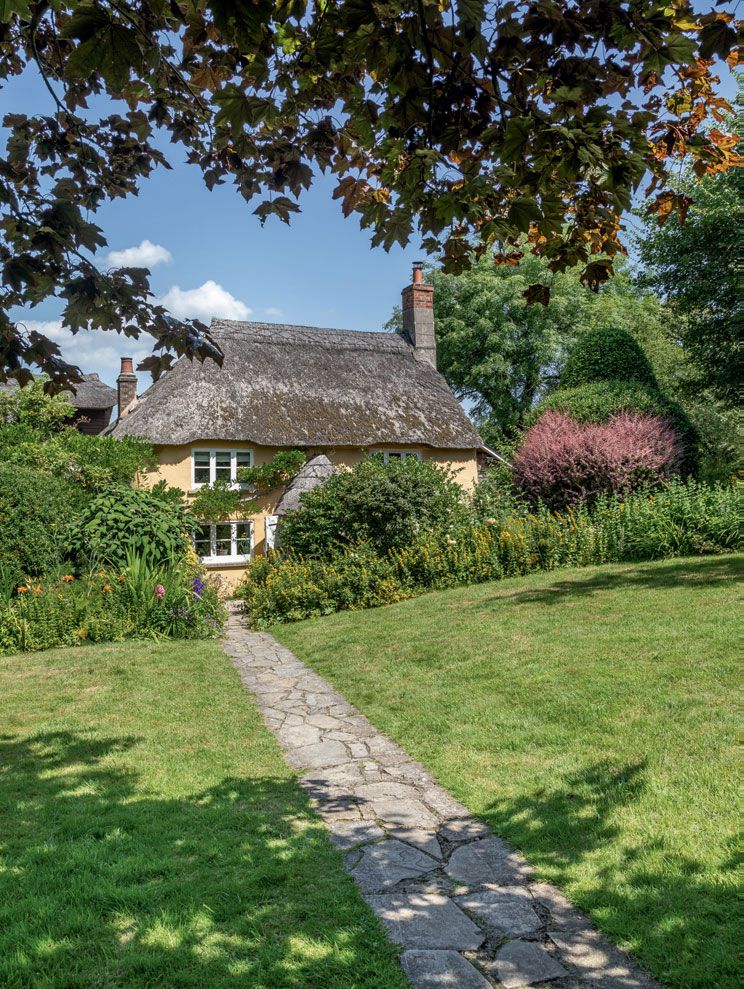
On torrid days in Singapore, the mercury can rise to 40°C. This is when interior designer Elizabeth Hay, who relocated to the tropical city-state in 2013, dreams of home. She pictures the whitewashed kitchen of her thatched cottage, tucked into the quiet green fold of an isolated Devon valley. Lawns tumble down to a brook and blossom drifts across the orchard in spring – an idyllic vision of England that might have come from a Thirties guidebook.
It is the garden she pines for most when she is abroad: ‘I imagine the children rolling down the cool grassy slopes without fear of biting ants. Or paddling in the shallow river at the end of the garden. That’s what I dream about.’
 James McDonald20/23
Gallerist Tobias Vernon’s cottage in Somerset is a study in juxtaposition, with white walls throughout providing a background for his creative arrangements of art and eclectic pieces.
Tobias has succeeded in retaining the cottage’s simple rustic character, while at the same time making it feel spontaneous and contemporarily nostalgic. ‘I like the contrast of a West African ashanti stool with a green Ikea tray table,’ he says.


 Michael Sinclair21/23
This idyllic cottage in Oxfordshire was looking rather tired until a trio of creatives - designer Sarah Delaney, architects Barnaby Gunning and garden designer Butter Wakefield - gave it a characterful update, both inside and out.
The whole house is an object lesson in bringing a rural cottage up to date without stripping out its soul or falling back on chintzy country-house clichés.
 Michael Sinclair22/23
Tasked with decorating this nineteenth-century stone cottage on the Pembrokeshire coast, John McCall made use of an unusually creative method to conceive its understated and eclectic look.
‘I like to come up with a back story for a new project,’ explains John, who imagined a history for the house, which was built as a farm dwelling in the nineteenth century. ‘I came up with the idea of a slightly bohemian family who moved here from St Ives after the war. They were of modest means, having some family furniture – Edwardian and Victorian – with Cornish and Welsh pictures on the walls.’
 Ngoc Minh Ngo23/23
When interior designer Harriet Anstruther took possession of her run-down Sussex farmhouse, she put her eclectic mark on it, while keeping its original features.
"There is nothing designer-y about it. The house is mostly filled with junk, but it is the most enormous luxury to escape from London to a place that doesn't have to serve multiple purposes.' Harriet is married to photographer Henry Bourne and has a grown-up daughter, Celestia. This is where they come to decompress as a family. 'As a house, it doesn't have to work very hard,' she says.


Comments
Back to Top


