
An ebullient thatched cottage where pattern and colour reign

It was Elizabeth Hay’s mother, who lives nearby, who found out that the house was for sale seven years ago. ‘The property market down here is word of mouth – everyone knows everyone,’ says Elizabeth, who grew up locally. The two-up, two-down down core of the 16th-century cottage, with its wide inglenook fireplace and a bread oven, survives. Over the centuries, various occupants had put their mark on the house, but in the nicest possible ways – bedrooms were bolted on and an old lean-to stretched to become the light-filled kitchen. The last owner, an engineer, upgraded everything to ‘impeccable’ standards, according to Elizabeth.
‘Even now, former residents turn up at the gate and share their memories of being here,’ she says. ‘Once people heard we’d bought the house, my mother had lots of letters from other residents. One said they had spent the happiest time of their life living here.’
When lockdown hit in 2020, her mother stepped in to project manage the redecoration. ‘Until then, we had rented the house out, but there came a point when I wanted to put my own mark on it,’ says the designer, who has a knack for colourful but practical interiors. Remote design is nothing new for Elizabeth, who began her career at Veere Grenney. ‘At any one time, I could be working on an apartment in New York or a beach house on Mustique,’ she explains. ‘So this house didn’t phase me. We’d send each other photos of samples or paint colours. My mother visited the site at least once a week. Being busy at a time when she couldn’t see friends was a sort of godsend actually.’
The cob-built architecture is the antidote to the crispness of Singapore new builds and she has embraced its idiosyncrasies: ‘I wanted everything to be sympathetic to its history, with a cosy cottage atmosphere. But also a bit quirky, with fun modern twists, not endless layers of chintz – though there is some of that, too.’

A parade of antique plates on one wall of the guest bathroom was inspired by a similar display in Veere’s home in Tangier. She wonders what her former employer, with his classical leanings, might make of the rambling, up-and-down cottage vernacular. Elizabeth, of course, loves its ‘wonky ceilings and floors, where nothing is quite straight’. She and her husband, who are both tall, have learned ‘to instinctively duck and dive’ to avoid the forehead-grazing lintels and beams.
Elizabeth has picked out the shutters in bucolic green paint and turned deep windowsills into inviting reading nooks. She has extended bookshelves and restored a charming painted frieze (another legacy) in the sitting room. She was pleased to have the chance to hang the watercolours by her great-great-grandmother – delicate glimpses of early-20th-century Scotland or Italy. ‘They would never have survived the humidity in Singapore,’ she says.
But being an expatriate has plenty of advantages for Elizabeth, who has projects in the US, UK and Switzerland: ‘There are almost no antique shops in Singapore. And no version of Design Centre, Chelsea Harbour. But it’s pushed me to find my own suppliers and get things made. It’s added multicultural layers to the way I work.’
She has forged close links with craftsmen and makers – weavers, metalworkers and rattan specialists – in both Singapore and India. Almost all the upholstered furniture, such as the neat sofas and fringed slipper chairs, was made to her designs. The dhurries, which bring colour and warmth to the original Tudor flagstones, were also bespoke. The palette is very different from the one she uses in Singapore. ‘Muted colours don’t work well in the strong sunlight,’ she explains. ‘Here, I’ve used use sludgier tones, which suit the English light without looking drab.’
Bedrooms are something of a speciality: ‘It’s where I can let loose with my passion for fabrics and pattern.’ The house has five and each one has a distinct personality. She is fond of the wisteria-festooned Pierre Frey wallpaper that clambers across a ceiling in one spare room and the brightly painted wooden bobbin beds – also a Hay design – in another. A folkish end-of-bed bench was hand painted by her mother, who also stencilled the bathroom floor. These remind Elizabeth of her childhood. ‘My mother encouraged us to be creative,’ she says. ‘We went through a découpage phase. And I remember painting a watercolour of the fish we had seen while snorkelling on holiday off the coast of Kenya.’ The surplus bedrooms come into their own when the house is rented out because, as she puts it, ‘It has to breathe, the heating has to be turned on, it needs to be lived in.’
Downstairs, the wide window in the kitchen is the family’s television onto local wildlife. ‘I’ve become quite used to snakes and scorpions, so spotting a family of weasels one morning felt rather exotic,’ she says. It is the garden she pines for most when she is abroad: ‘I imagine the children rolling down the cool grassy slopes without fear of biting ants. Or paddling in the shallow river at the end of the garden. That’s what I dream about.’
Elizabeth Hay: elizabethhaydesign.com
 Jonathan Bond1/12
Little Greene’s ‘White Lead’ paint on the walls, beams and ceiling enhances the bright, airy feel of this open plan space, which was converted from an old outbuilding by a previous owner. Elizabeth updated the existing cupboards and shelving with Edward Bulmer Natural Paint’s ‘Invisible Green’. Hungarian folk plates on the wall, and a vintage marbled tole vase and Quimper candlesticks on the Indian tablecloth add colourful accents
 Jonathan Bond2/12
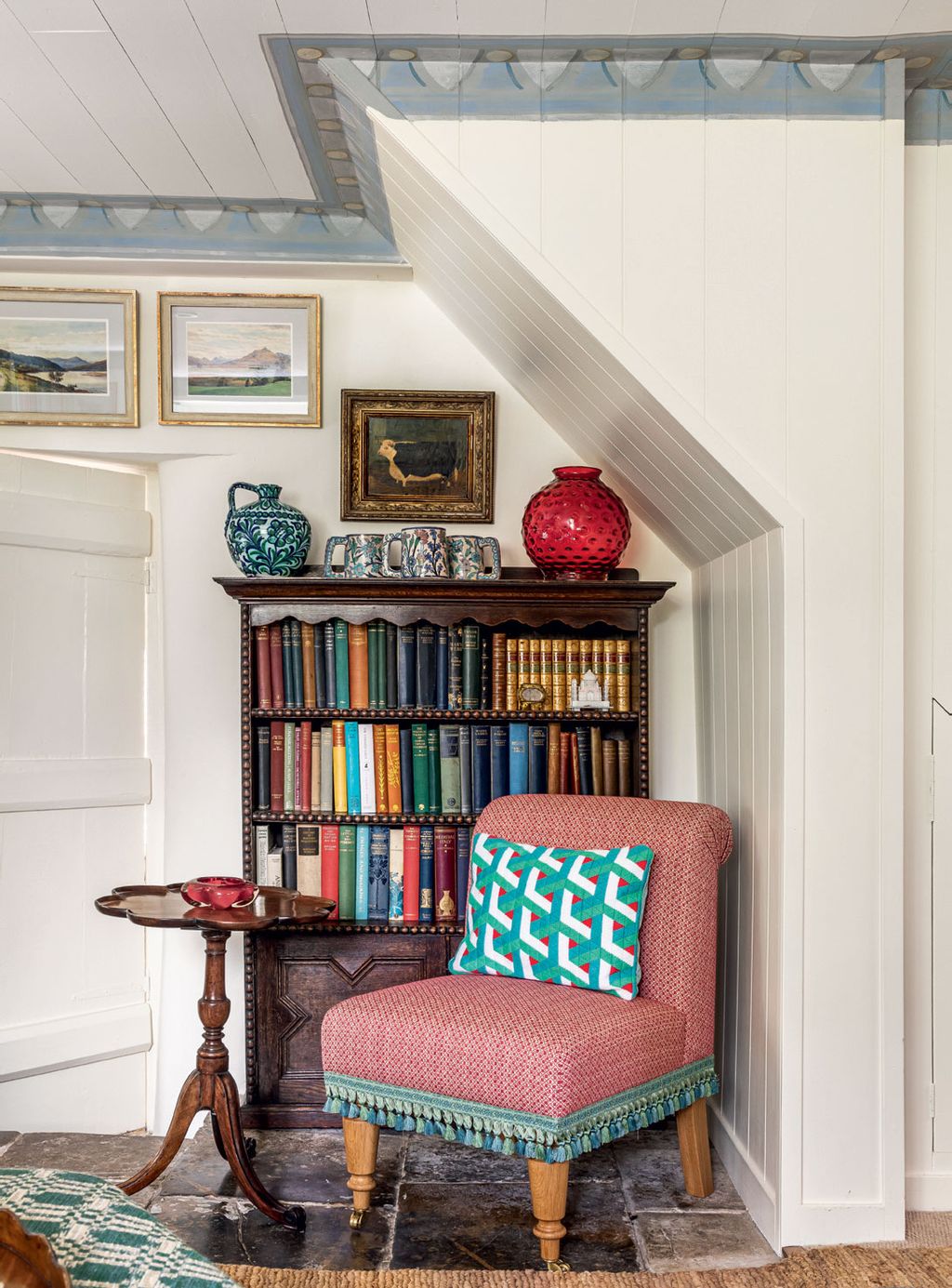
A cushion found on Etsy picks up on the trim of a custom slipper chair, upholstered in Soane’s ‘Old Flax’ in watermelon, and a bespoke ottoman with turned oak legs, in ‘Auvergne’ in peacock from Nicole Fabre Designs, stands on a rug from Oka
 Jonathan Bond3/12
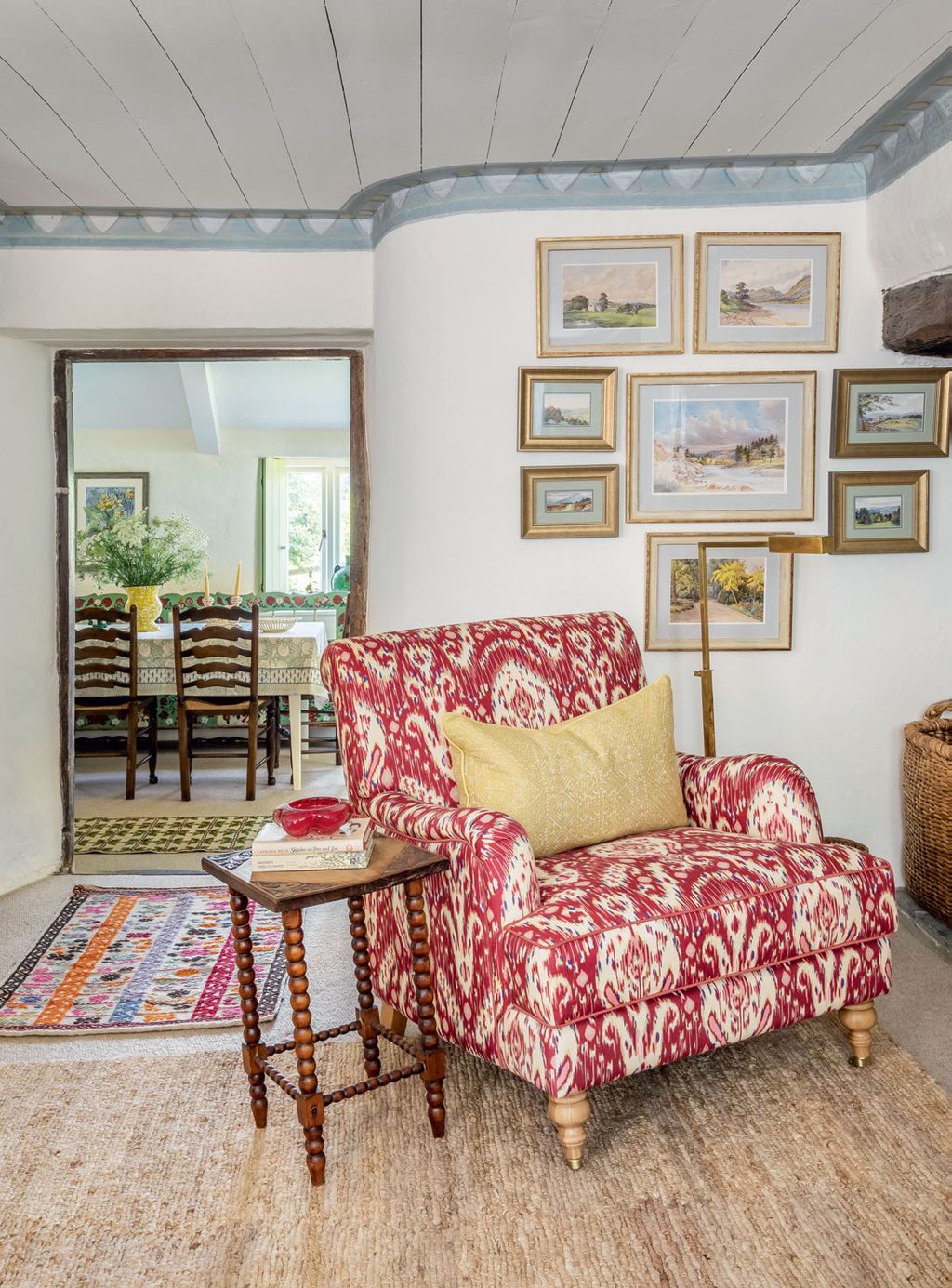
Elizabeth restored the frieze around the top of the walls, which was painted by a previous owner who was an artist. A bespoke armchair, covered in ‘Sadko’ linen in red by Décors Barbares, is positioned beside watercolours by Elizabeth’s great-great-grandmother.
 Jonathan Bond4/12
The existing bookshelves were repainted in Edward Bulmer Natural Paint’s ‘Aquatic’, which complements the sofa upholstered in Le Manach’s ‘Mortefontaine’ cotton in bleu vert from Pierre Frey. Above it, antique brass sconces flank a landscape painting by William George Gillies from Jenna Burlingham


 Jonathan Bond5/12
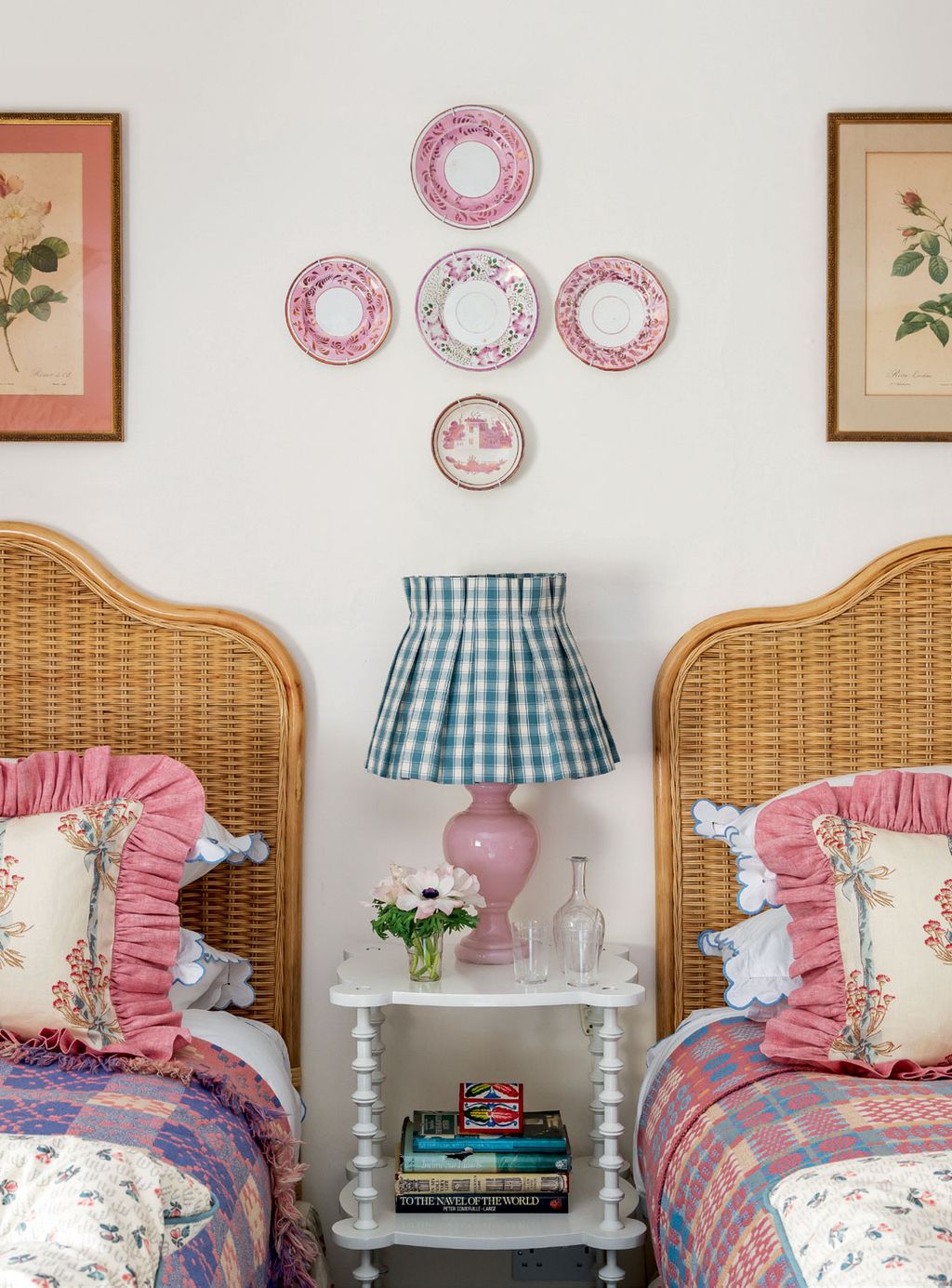
Wicker headboards made to Elizabeth’s design are teamed with bed linen from Pushpanjali
 Jonathan Bond6/12
This has ‘Pise’ wallpaper in cream from Aleta; the bench at the end of the bed was painted by Elizabeth’s mother
 Jonathan Bond7/12
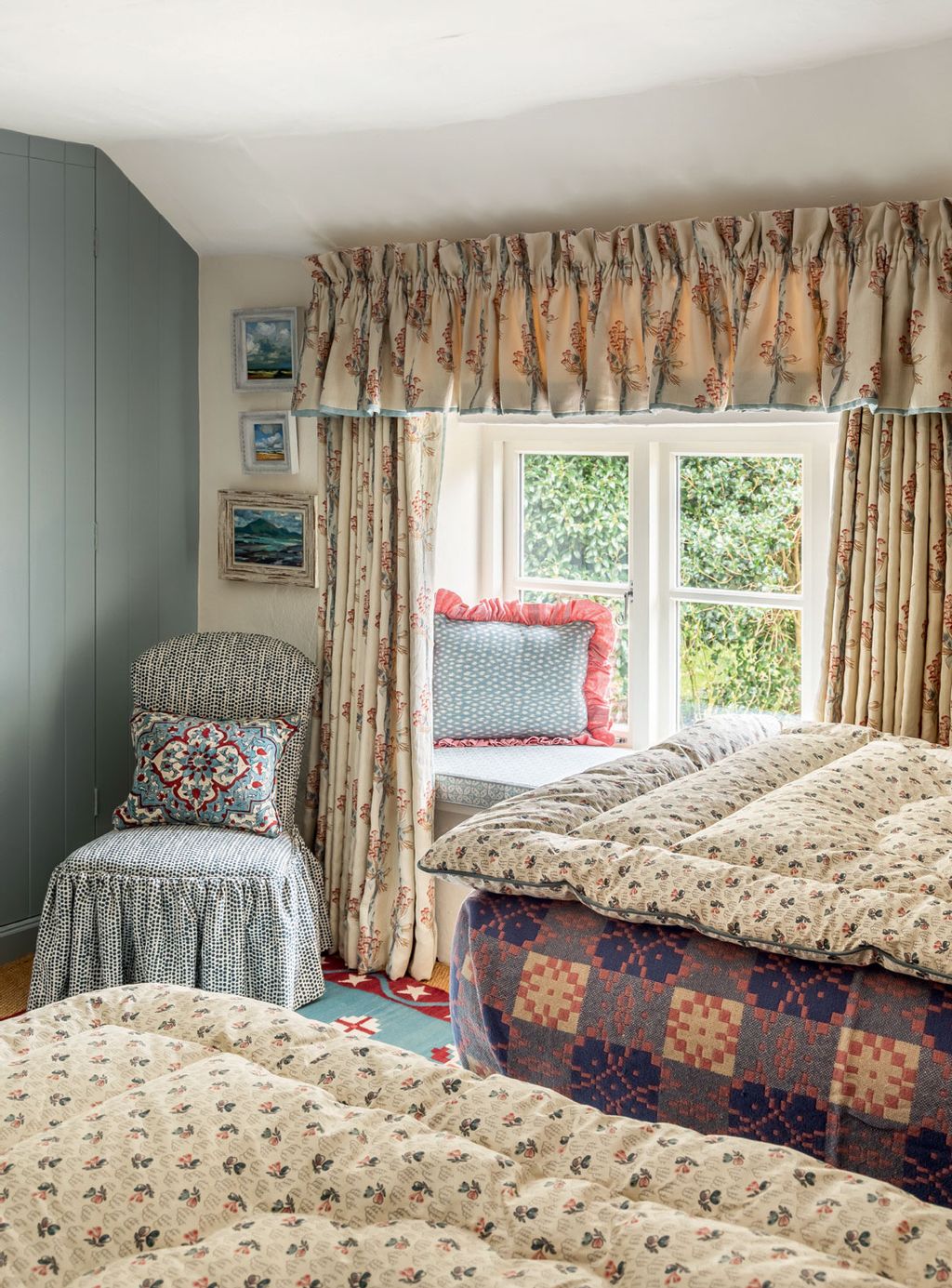
Eiderdowns in ‘Fleurs de Jouy’ cotton from Fleurons d’Hélène evoke a nostalgic charm
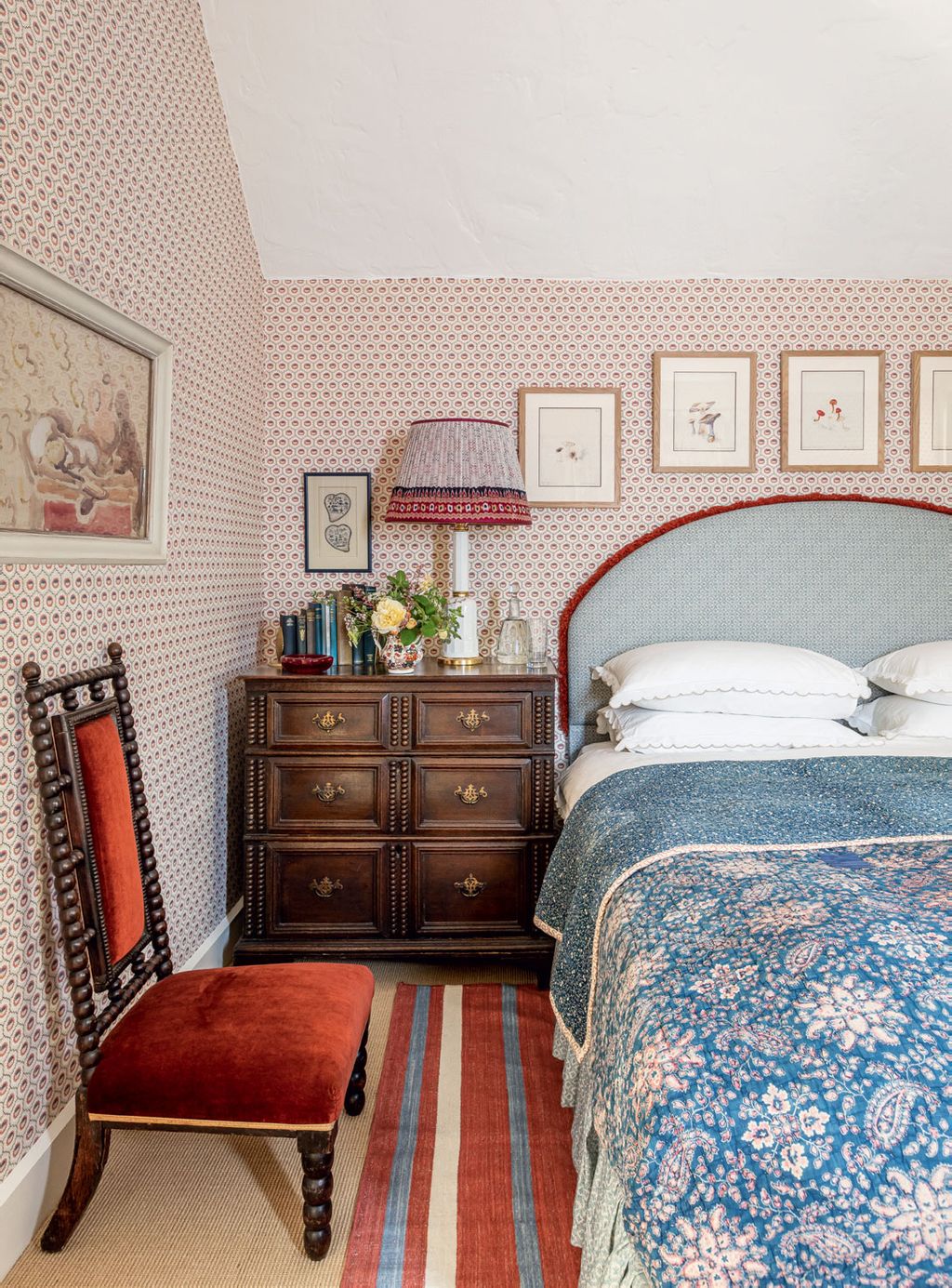 Jonathan Bond8/12
A small-print Robert Kime wallpaper in terracotta is teamed with a blue antique French bedcover


 Jonathan Bond9/12
Pierre Frey’s ‘Fleurs de Mai’ wallpaper tones with a quilt in Ian Mankin’s ‘Suffolk’ large gingham check
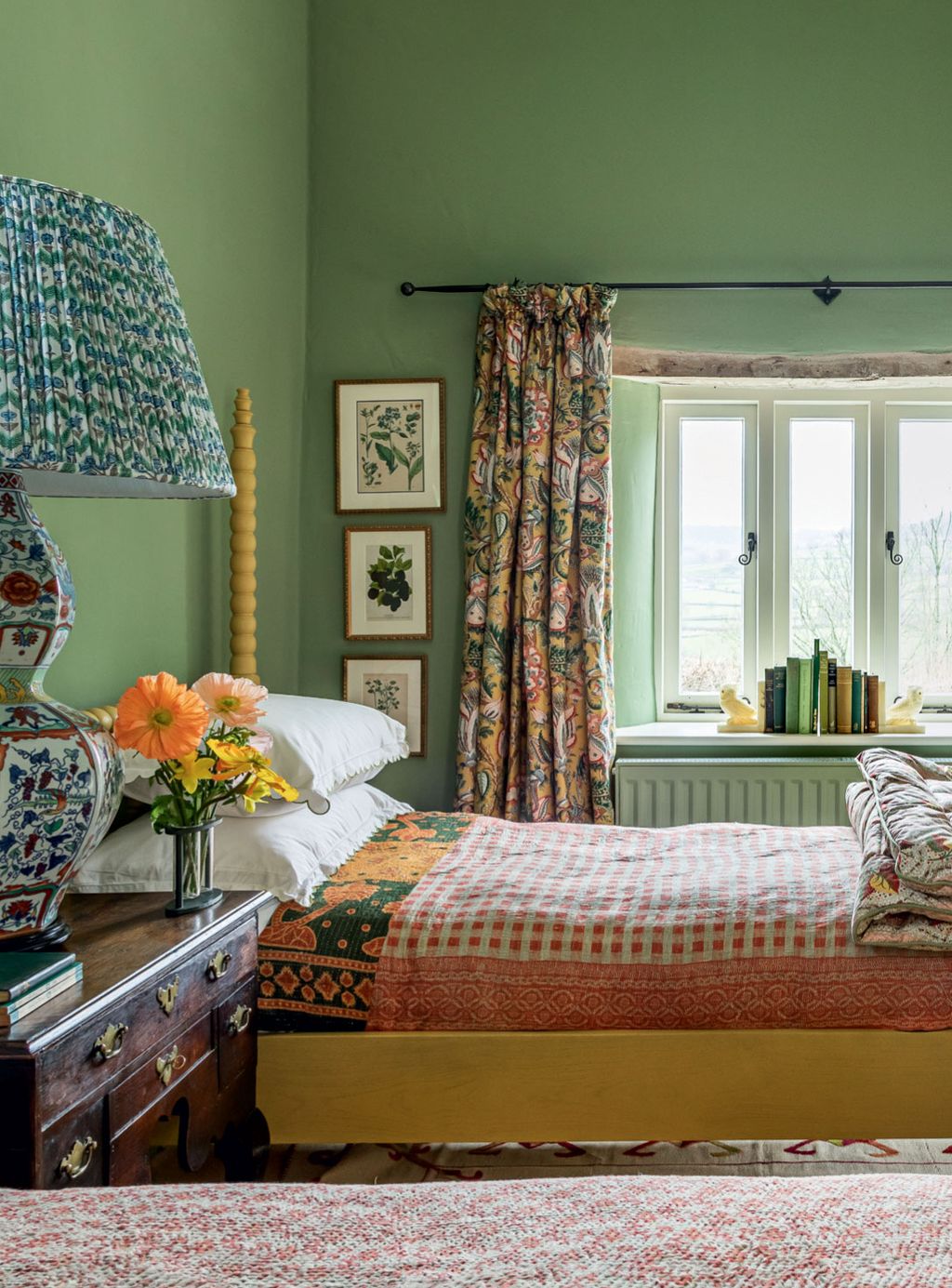 Jonathan Bond10/12
Elizabeth designed the yellow-painted bobbin beds
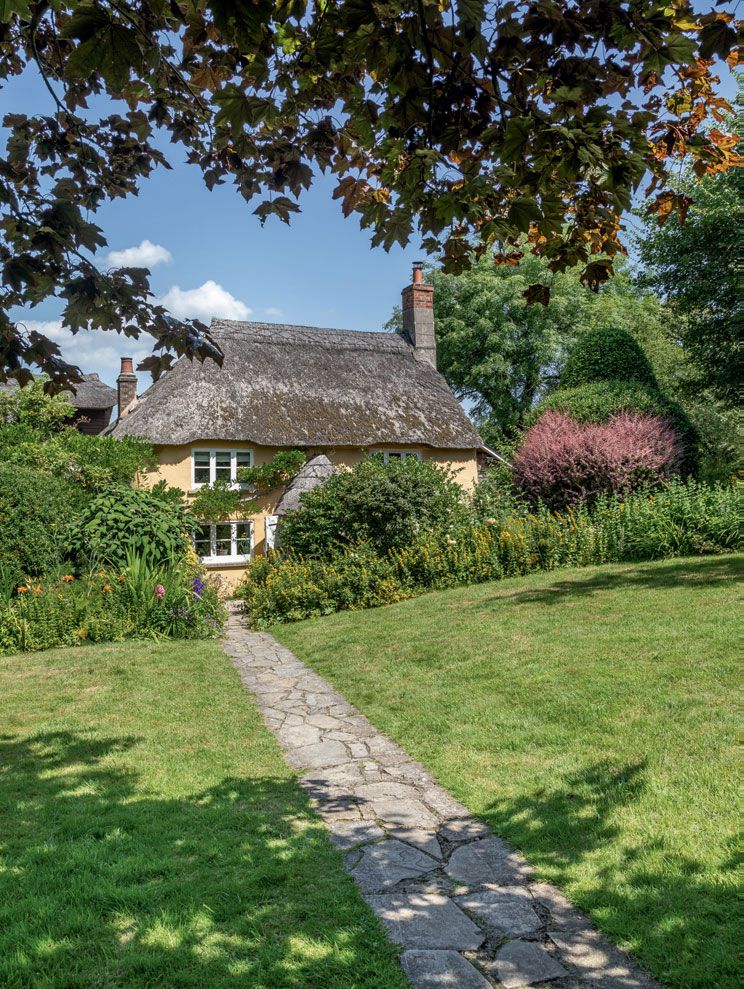 Jonathan Bond11/12
 Jonathan Bond12/12
Elizabeth sits beside a collection of ironstone china displayed in a bespoke dresser, with an interior in Edward Bulmer Natural Paint’s ‘Pea Green’


