
A 17th-century Cotswold cottage with a distinctly Welsh aesthetic

To describe this as a Welsh cottage in the Cotswolds would not be too far off the mark. For Ben Adler and proud Welshwoman Pat Llewellyn, both successful television producers of programmes such as Two Fat Ladies, The Naked Chef, Kitchen Nightmares, Great British Menu and Mary Queen of Shops, it was a bolthole in which they could relax away from their high-pressured life in London.
Having seen the cottage mentioned in Country Life, Pat drove to take a look. On entering the village, she passed 10 immaculate allotments on the gently sloping field that formed the centre of a hamlet. Finding the cottage tucked into a rose-covered corner with a small stream running through the garden, she fell in love with it.
It seemed idyllic, but the reality was far from perfect. For four years, they would arrive to a stone-cold house for the weekend, leaving again when it had just began to warm up on the Sunday evening. An unappealing Fifties lean-to building contained oil tanks, log storage and a downstairs loo. Pat loved to cook, but it had a tiny narrow kitchen. It was time to do something about it. Pat tracked down Hilton Marlton, a historic house consultant specialising in the design and restoration of old buildings, whom Ben calls ‘an unbelievably talented artist with a wonderful eye’. Hilton agreed wholeheartedly with the couple’s plan to restore the cottage using authentic methods. As work started, Pat was diagnosed with the cancer that would eventually take her life. Such was her dedication to the project she wanted to go ahead nonetheless.
Researching the property’s history, they found it was one of the few buildings in the area erected in the mid-17th century, and the oldest in the village. They hired local architect David Newton and both he and the conservation officers were brilliant: planning permission was granted within six weeks. The roof was retiled, the front door moved back to the centre of the main building and the unsightly lean-to replaced by a more substantial extension to provide a larger kitchen, pantry and loo, with a generous bathroom above. Crittall windows had been inserted at some point into the stone mullions, so new metal casements were designed by David and fitted with lead-lights using antique Welsh glass. He was also responsible for configuring the guest bathroom and stairs.

The ceilings had been covered with matchboarding, but once this was removed, the original beams were revealed – as was a modern steel beam running the width of the dining room. This was replaced by a huge oak beam, supporting the floor above. Many of the original elm floorboards on the two top storeys had rotted or been replaced with inferior wood. Hilton drove to Aberdeenshire and bought a large quantity of new elm planks, some 14 inches wide. These were planed and sanded and, when laid, were stained with Van Dyck crystals – a traditional wood dye made from walnut shells – then finished with wood ash and linseed oil.
Downstairs, the carpets were removed from the concrete floors so underfloor heating could be installed. Hilton sourced large reclaimed York flags for the sitting room and laid new Cotswold stone flags from Syreford Quarries in the kitchen and dining room. Initially, Pat hated these, saying they looked far too modern and more Pizza Express than 17th-century cottage, so Hilton spent hours distressing them until they matched the antique slabs.
A sincere believer that vernacular buildings look the way they do because local materials have been used, Hilton brought back a load of soil from a ploughed field nearby. He slaked and sifted it to create the base colour for the limewash used throughout the replastered house, so ‘it becomes part of the landscape’.
A new kitchen and pantry (complete with antique Delft tiles and a stone sink found on Ebay) were created in the new extension. Here, an Aga with brick piers and Welsh slate on either side and a splashback of oxidised steel were installed. Ben had found a yellow housekeeper’s cupboard online and, determined to make it fit, sawed off a section of the top so it would fit under the beams.
As the garden had been largely destroyed by the building work, Hilton introduced the couple to Jess Jones, a wonderful garden designer based at Little Barn Nursery in Llandeilo. Pat asked her to ‘plant a garden that my aunt might have designed’, resulting in the ultimate cottage garden with wisteria, catmint, yarrow, salvia, plume thistles, irises, lavender and foxgloves. (Pat and Ben’s London garden is just as lovely and can be seen here.)
Almost everything in the house is bespoke and, in their devotion to ensuring each is detail correct, they have created an interior true to the period of the house. Every element is beautifully crafted to offer comfort without losing character. An achievement indeed.
Hilton Marlton Design: hiltonmarlton.com
 Martin Morrell1/10
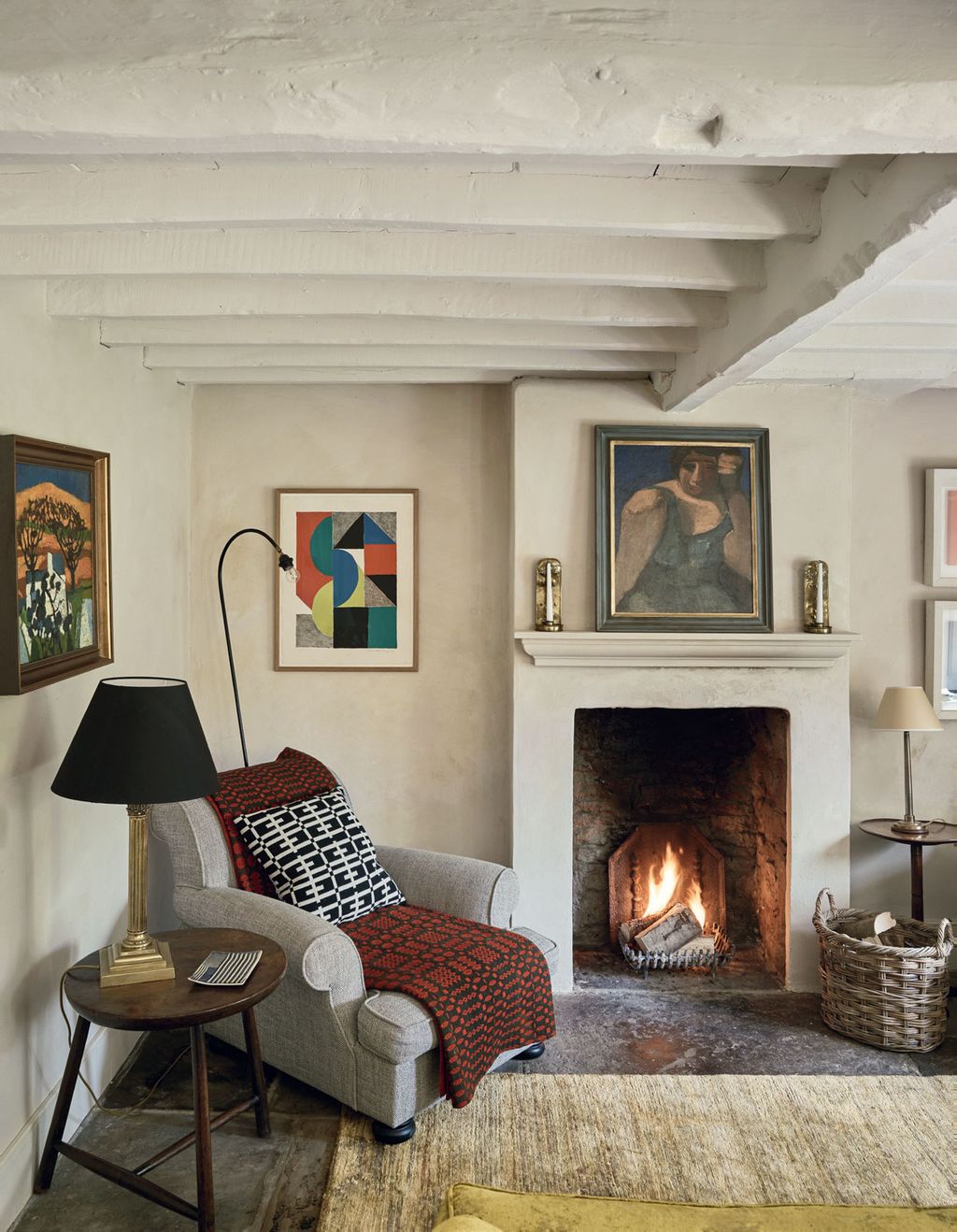
Beside the EQ Nicholson painting above the fireplace hangs a small watercolour of poppies by Mary Fedden. The mid-18th-century French brass sconce and andirons were bought at Bonhams. An antique Welsh blanket from Jane Beck brightens up the leather armchair found on Ebay. The oak settle is from Welsh Vernacular Antiques.
 Martin Morrell2/10
A painting by Welsh artist Will Roberts rests on the mantel shelf with a geometric artwork by Sonia Delaunay to the left. The Melin Tregwynt cushion and vintage Welsh blanket from Jane Beck enliven an armchair from Sofa.com.
 Martin Morrell3/10
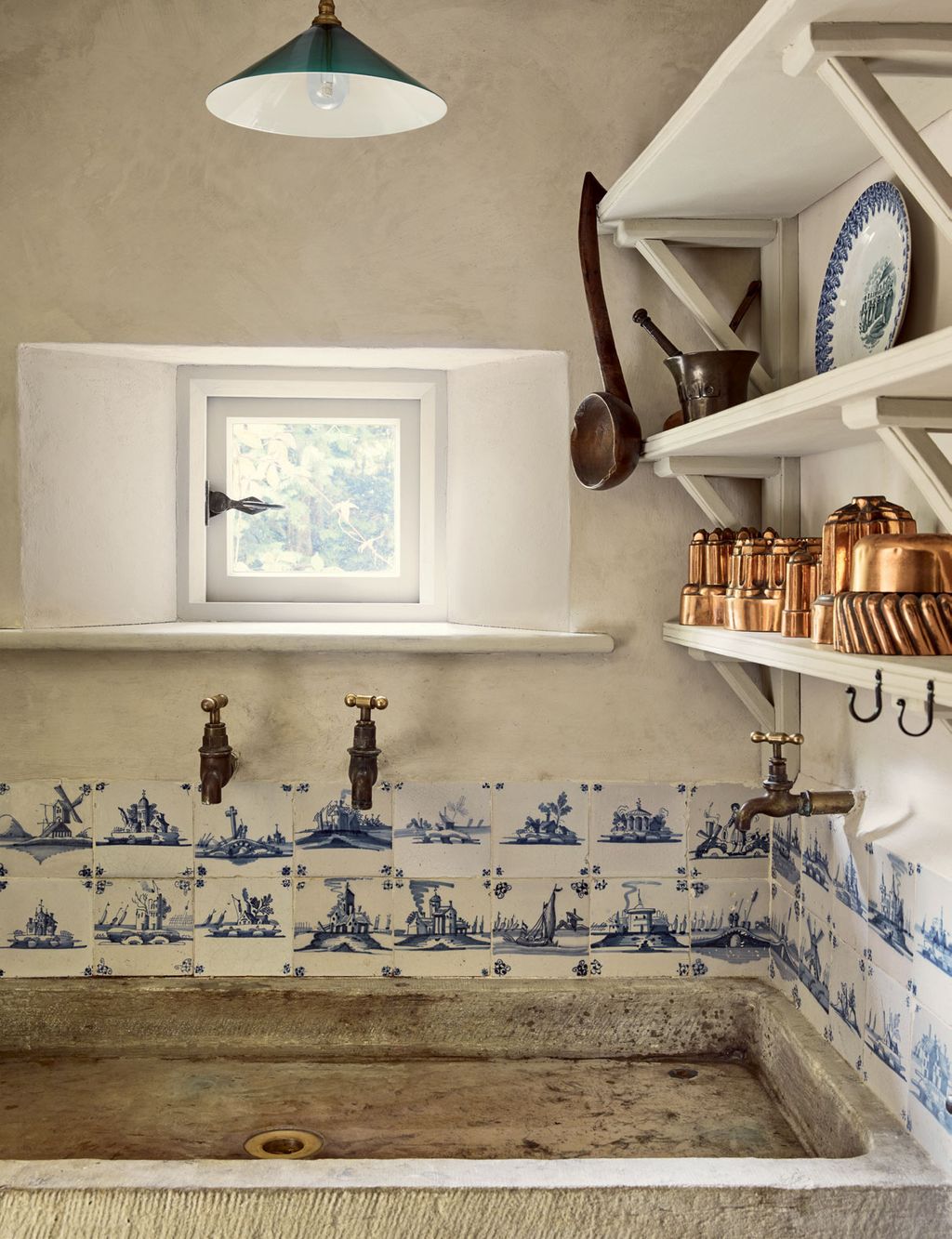
In the new extension, handmade shelves hold a collection of Victorian copper jelly moulds above a stone sink and a splashback created with antique Delft tiles – all sourced from Ebay.
 Martin Morrell4/10
A housekeeper’s cupboard from Miles Griffiths Antiques is the backdrop for the Welsh oak table made as a housewarming present by Hilton. Working with Syreford Quarries, Hilton laid the new floor of Cotswold stone slabs, rubbing in wood ash and linseed oil to age it. A portrait of Jennifer Paterson, one of the stars of the BBC cookery show Two Fat Ladies, which was produced by Pat, hangs beside a Regency barrel back chair in what is known as the ‘cock corner’ after the subject of the painting there.


 Martin Morrell5/10
A Dutch 18th-century brass chandelier hangs over a George III farmhouse table, both from Bonhams. The 1770 oak and pine dairy dresser, with a space below for milk churns, was the first antique Ben and Pat bought together. It holds an array of blue and white china inherited from Pat’s beloved aunt. Part of the couple’s collection of carved Welsh love spoons, given as symbols of love and devotion, is displayed over the door.
 Martin Morrell6/10
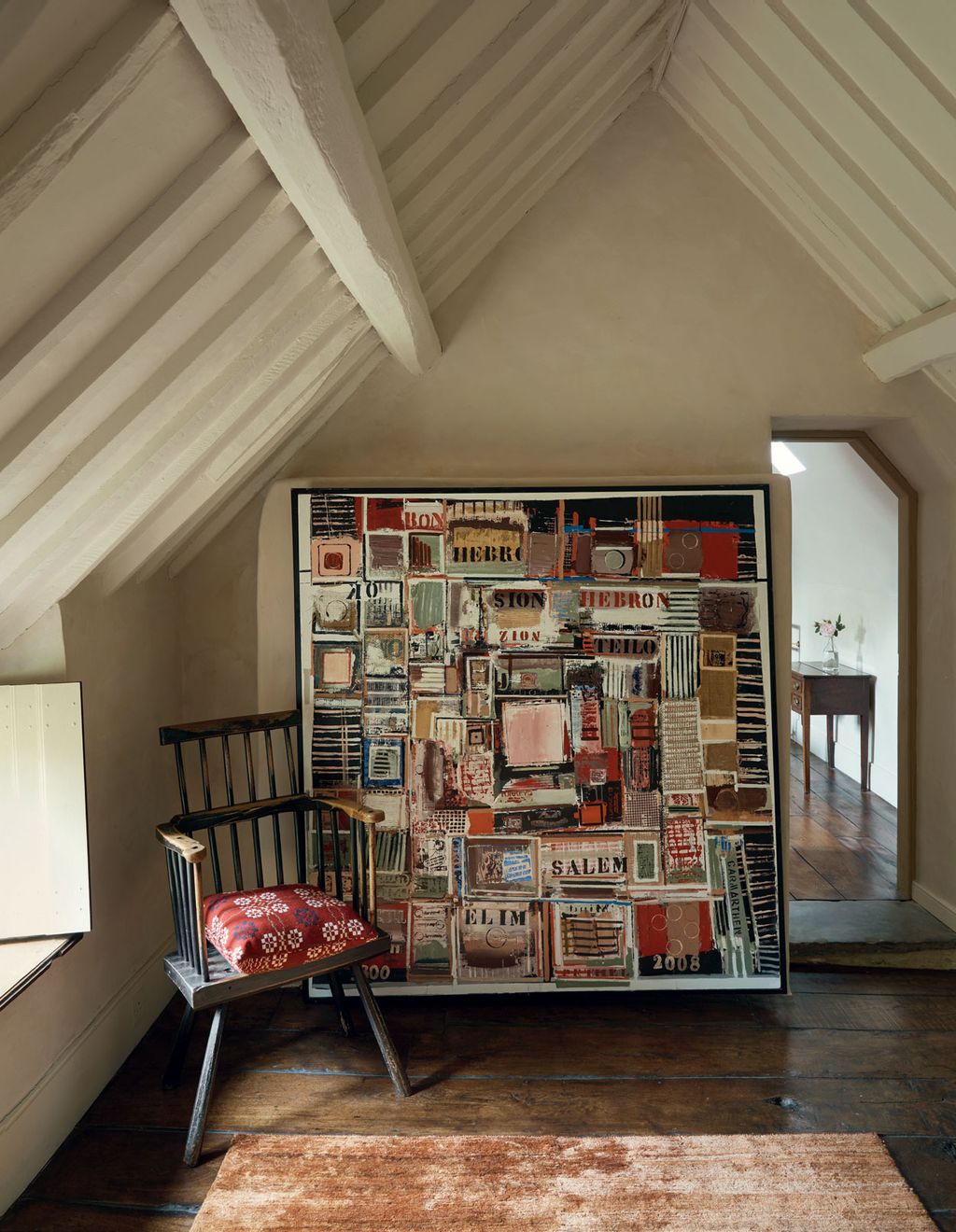
The colours in a painting by John Uzzell Edwards are picked up by the Melin Tregwynt cushion on an antique Welsh stick chair.
 Martin Morrell7/10
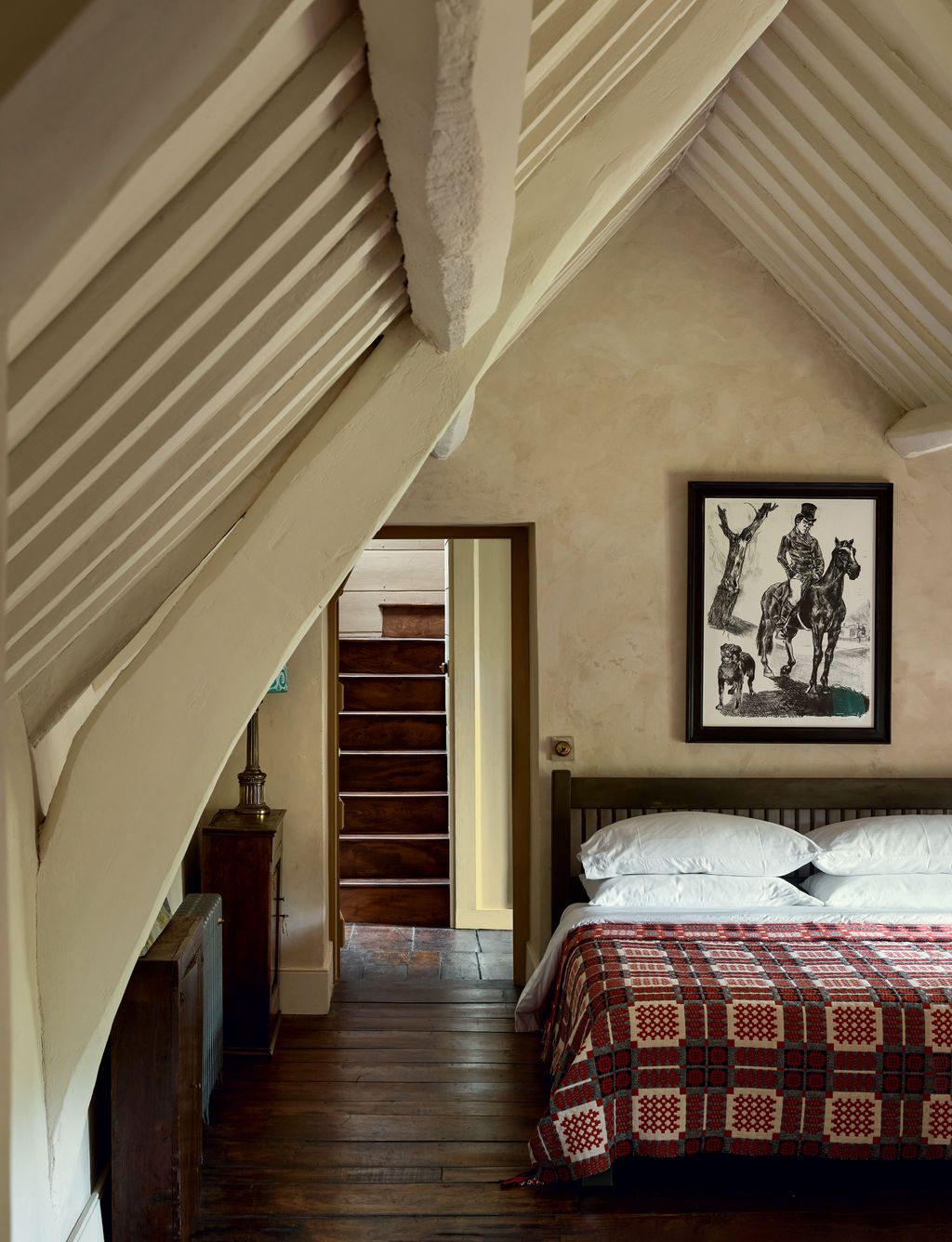
A Paula Rego lithograph hangs above a bed from Alphabeds, with a vintage Welsh tapestry bedcover from Jane Beck.
 Martin Morrell8/10
Traditional pieces, including the yoke back chair were sourced from Welsh Vernacular Antiques. The Welsh wool blanket is from Jane Beck.


 Martin Morrell9/10
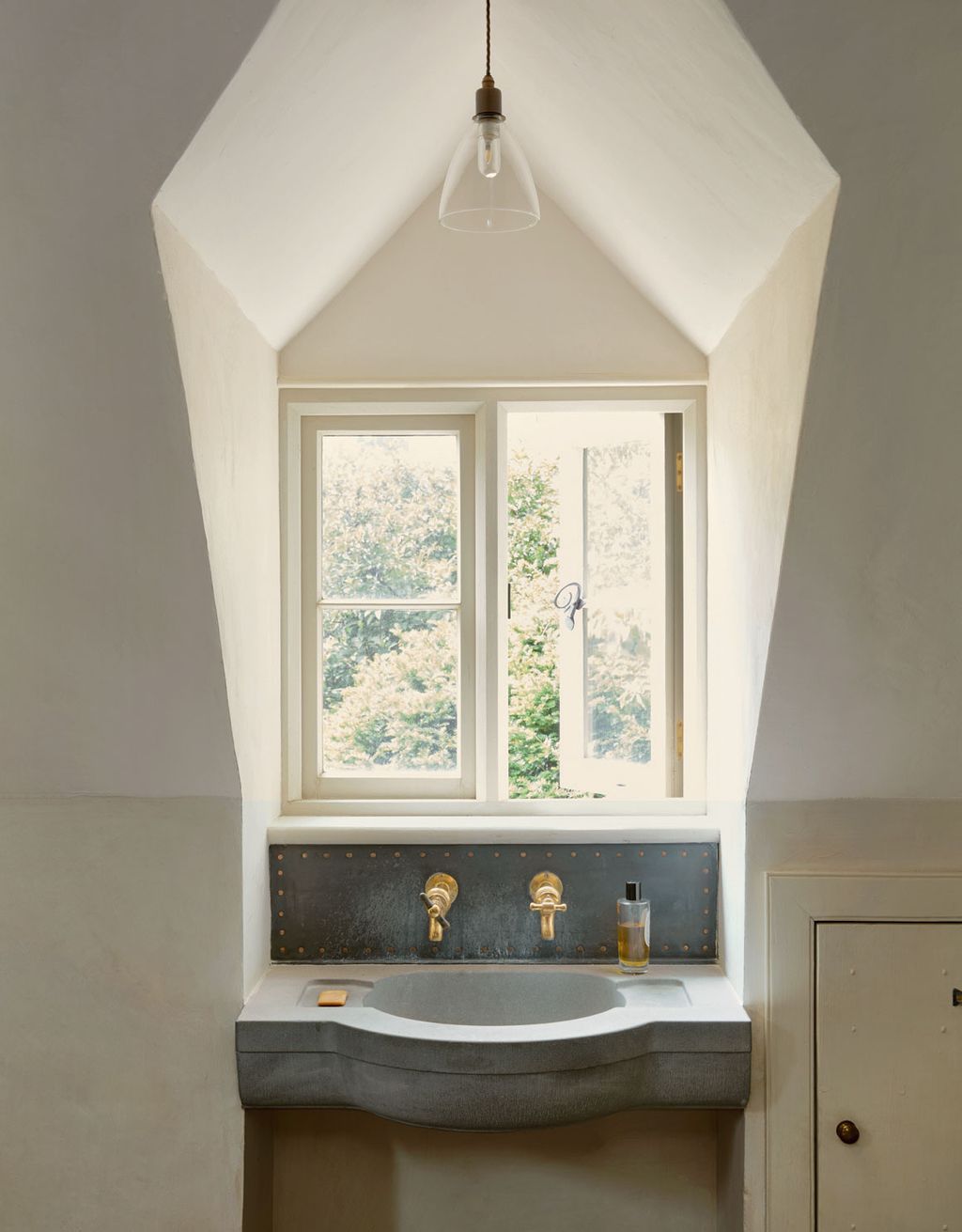
Vintage taps found on Ebay are teamed with a new handmade stone basin and a metal splashback.
 Martin Morrell10/10
A cottage garden scheme, in mostly soft blues and purples with pale yellow accents, was devised by Jess Jones of Little Barn Nursery.


