
A beguiling nursery of witch hazel, flooded with colour and fragrance
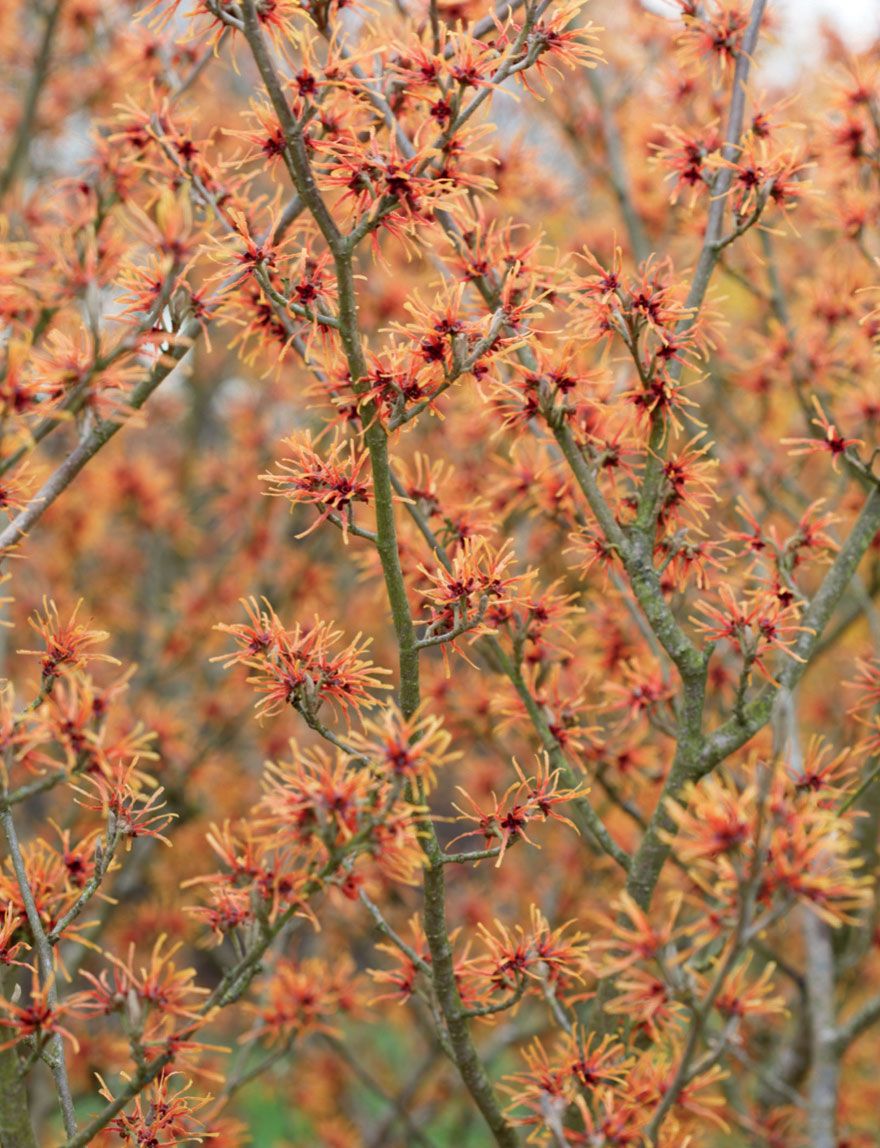
At their zenith during the bleakest point of the year, witch hazels bring subtle colour and spicy scent to the garden when you need it most. Those post-Christmas weeks can feel long and dark, and to have something to remind you that spring is around the corner can be a lifeline. These hardy shrubs are built for cold climates, their spidery flowers emerging from bare branches in January, furling back into themselves when the temperature dips below freezing. It was this curious and almost animalistic behaviour that first convinced nurseryman Chris Lane to start a collection in 1979.
‘I was teaching at Hadlow College in Kent at the time and there was a specimen of ‘Ruby Glow’ in the nursery,’ he says. ‘There were two consecutive nights when it got down to -18°C and, in the morning, the plant looked as if it had succumbed as its flowers were brown and crumpled. But by lunchtime the temperature had risen to just below freezing and the flowers had unfurled and popped open, completely unaffected by the frosts. That was the moment I decided I had to grow more of them.’
Chris bought 15 specimens for the Hadlow nursery – and so began a passion that would span more than four decades. Today, he has the largest National Collection of hamamelis in the UK, with around 150 cultivars and all four known species: H. virginiana and H. vernalis from North America, H. japonica from Japan and H. mollis from China.
While H. virginiana is used in cosmetic witch hazel products, it is the two Asian species that have been hybridised to produce the range of cultivars that we grow in temperate climate gardens. Known as H. x intermedia, they flower for around six weeks between December and early March, growing into medium-sized, multi-stemmed shrubs that have distinctive clusters of flowers with narrow, ribbon-like petals.
In 1995, Chris left Hadlow and set up his own nursery, with his beloved witch hazels at the core of his stock. Many of his cultivars come from the renowned Kalmthout Arboretum in Belgium, at that time run by the late Jelena de Belder, including ‘Jelena’, ‘Frederic’ and ‘Ruby Glow’ – the cultivar that first sent Chris on his lifelong quest.
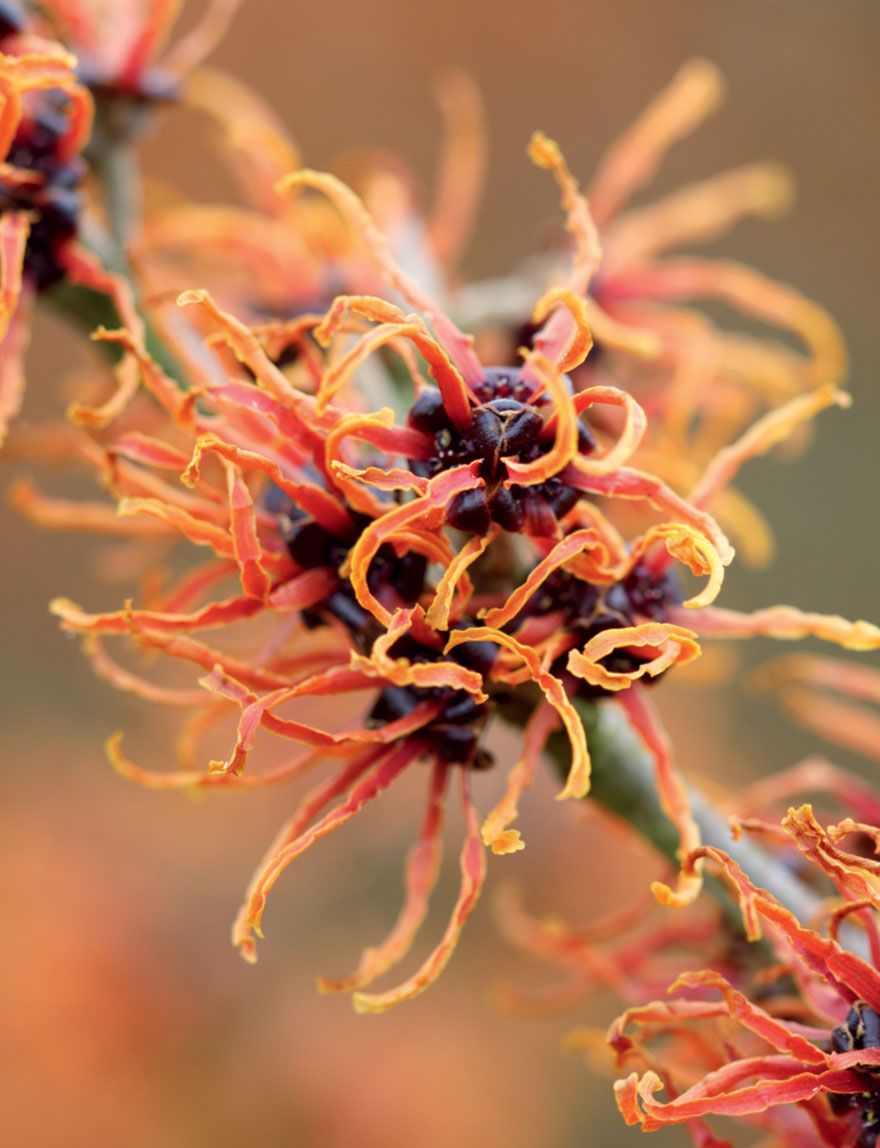
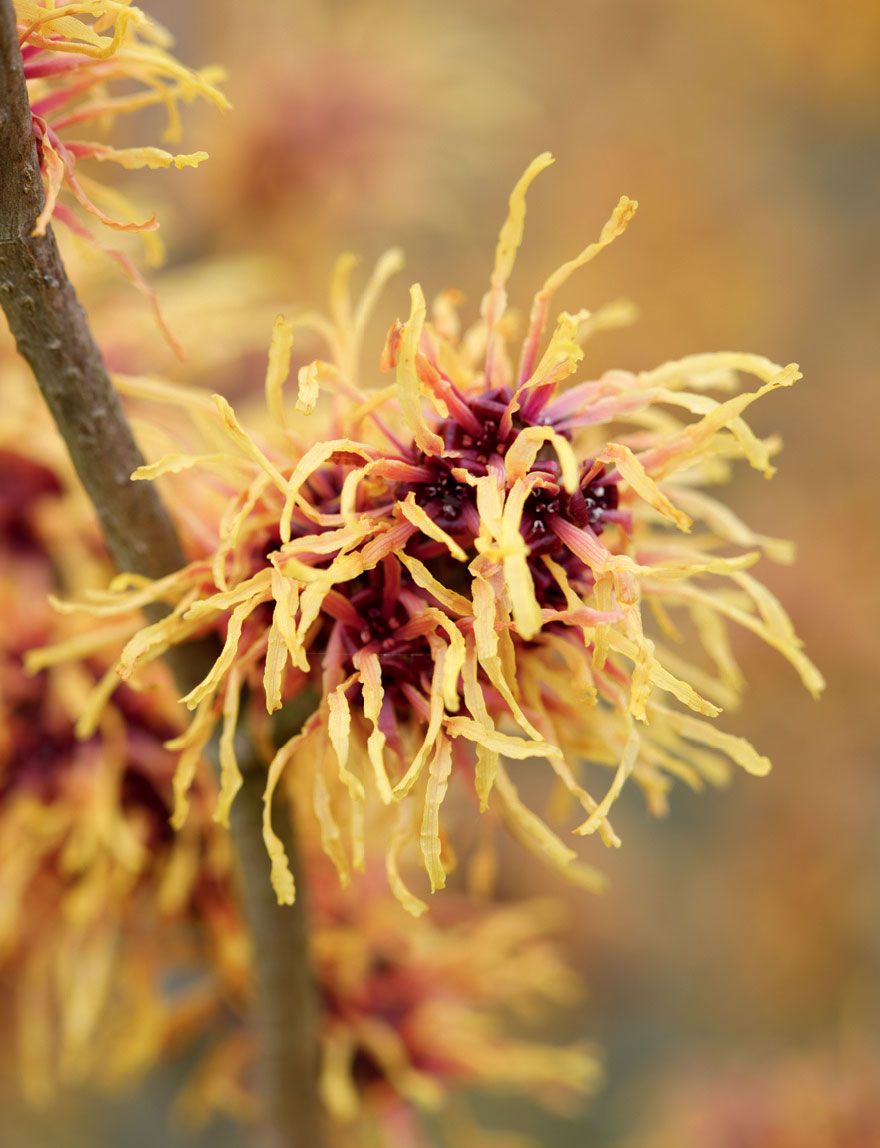
‘When I went to visit Jelena, she grabbed my hands and told me I was welcome to take any propagation material,’ Chris remembers with fondness. ‘I think I brought back about 40 varieties from that visit. There was one that I spotted as we walked round and I commented that it was the colour of gingerbread – later I was very pleased to see she had given it the name ‘Gingerbread’ when her next list appeared.’ There is also a cultivar called ‘Chris’ that Jelena’s son Daniel named after him, a beautiful, floriferous cultivar with golden yellow flowers suffused with red.
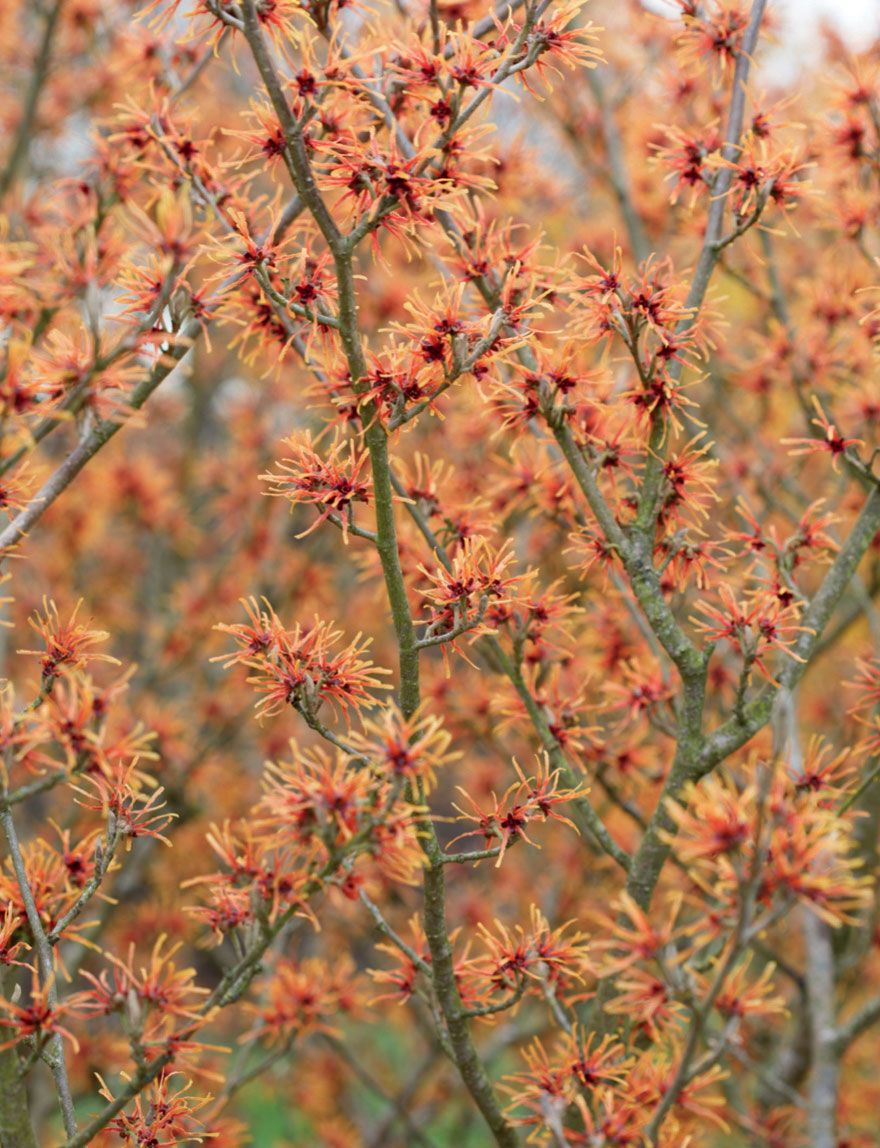
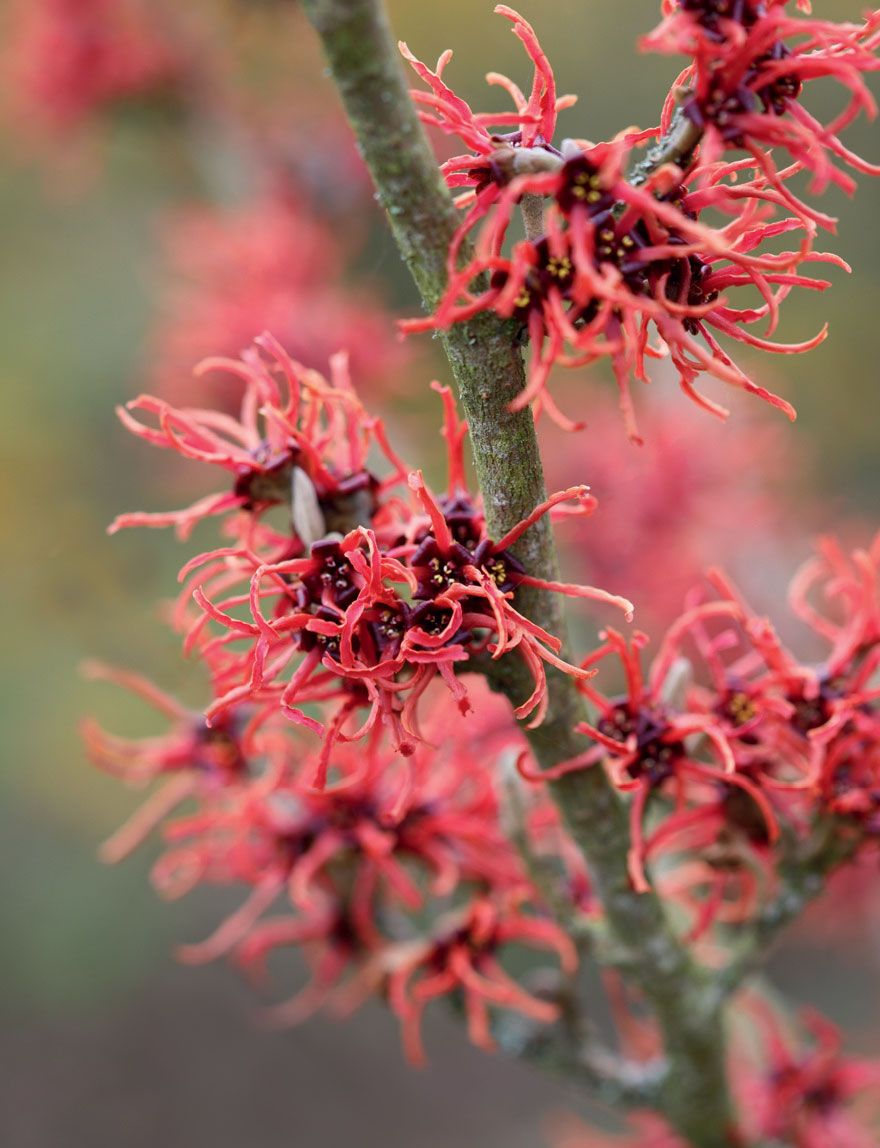
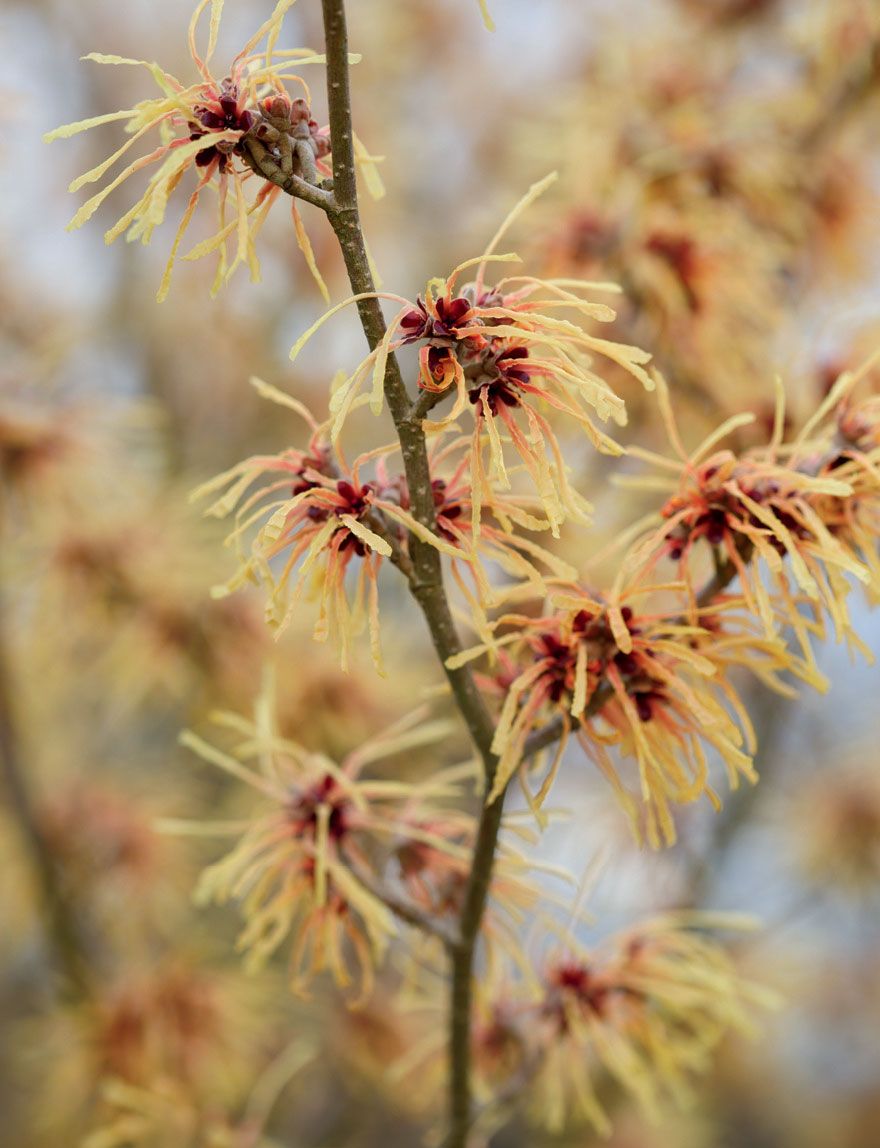
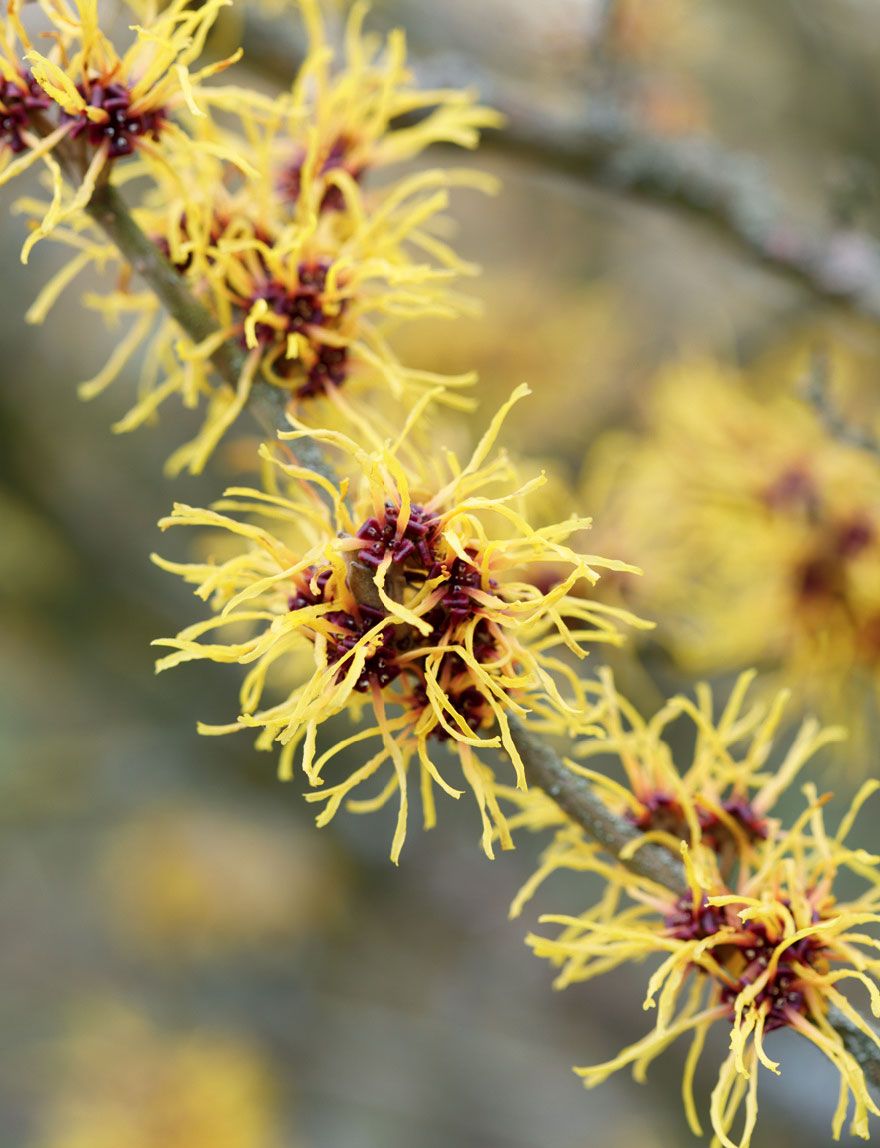
The best hamamelis for scent, says Chris, is ‘Aurora’, which has a rich, sweet and spicy scent. It also has larger-than-average flowers with a striking bicoloured effect of pale yellow and rusty red. ‘Rubin’ and ‘Foxy Lady’ are two deep red cultivars that Chris recommends, and he advises planting them where the winter sun can reach them. ‘Never plant them against a dark background, otherwise they will get lost,’ he says. ‘Barmstedt Gold’ is another favourite. ‘It’s a vigorous plant in a really good, golden yellow and it stands out in the landscape well,’ he explains. Over the years, Chris has selected his own cultivars from seedlings, which requires patience and dedication, as it can take up to 20 years to produce enough stock to introduce them commercially. ‘Foxy Lady’ is one of his introductions, as is ‘Burning Desire’. The latter, not often found for sale, is vigorous with sweetly scented orange flowers.
The length of time taken to propagate and grow these plants is one of the reasons why they are so expensive to buy. They have to be grafted onto H. virginiana rootstock as rooting cuttings or layering is not commercially viable. This can explain the strange appearance of autumn-flowering stems suddenly appearing in the middle of the plant. ‘These suckers must be pulled or cut out right at the base, otherwise they will start to take over,’ says Chris.
Witch hazels are easy to grow in most soils, but they will not thrive in shallow chalk or heavy clay. ‘They like moisture in summer, but need to be able to drain freely in winter,’ says Chris. ‘Any waterlogging at this time of year will lead to root death, so good soil preparation is vital. Most people assume that witch hazels are best planted in a woodland situation, but they grow quite happily in the open and will actually flower better in full sun.’ They thrive when planted fairly shallowly, as they are surface-rooting, so dig a hole the size of the container and do not add organic matter, as the roots need to ‘search out into the soil’. Feeding the plant from above with a mulch of garden compost is preferable, advises Chris.
Visiting the collection in January and February is an uplifting experience. Rows of blooming shrubs give a subtle glow to their field setting, and the scent draws you in: citrus-sharp for yellow cultivars; richer and spicier for darker-flowered ones. Whether you have room for a whole grove of witch hazels or just a single one, they are guaranteed to bring cheer to the darkest winter months.
For details of open days at Chris’s nursery, visit witchhazelnursery.com
 Annaick Guitenny1/9
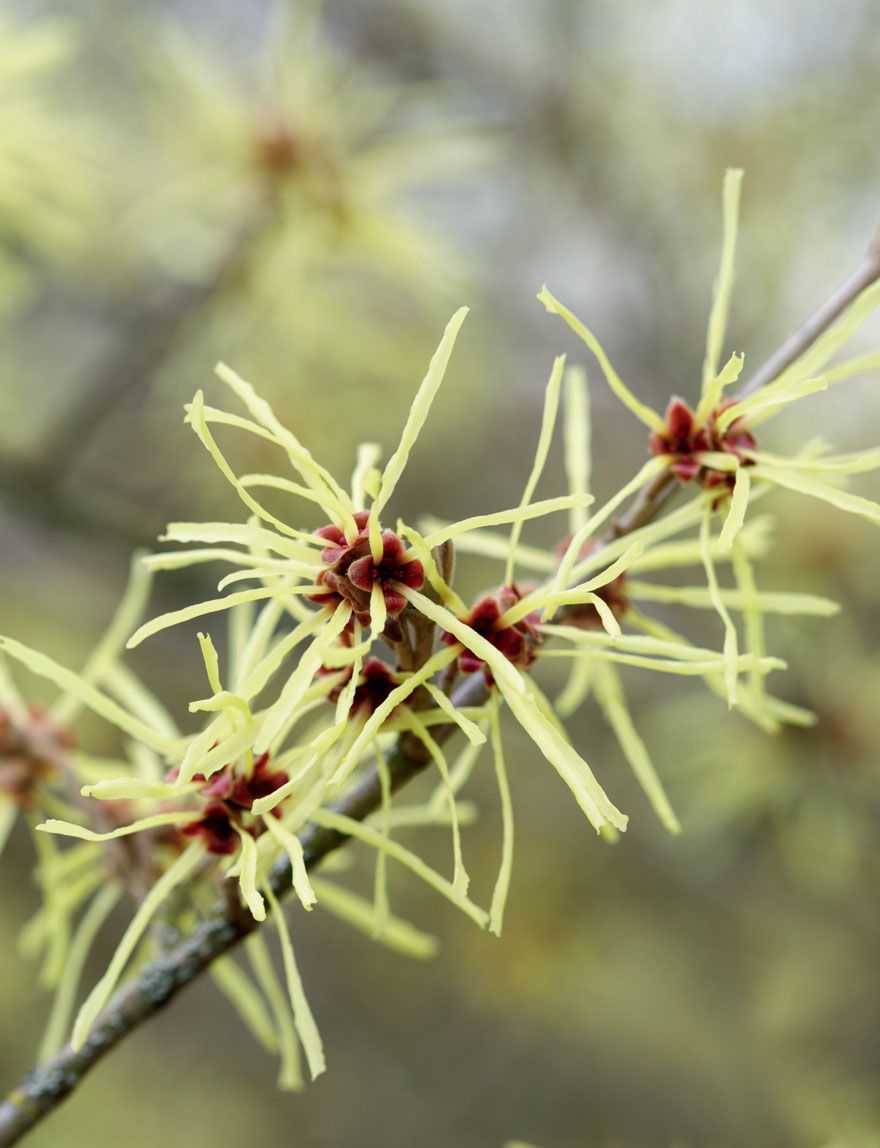
H. x intermedia ‘Anne’ has fragrant yellow-to-red flowers.
 Annaick Guitenny2/9
‘Burning Desire’ was introduced by Chris.
 Annaick Guitenny3/9
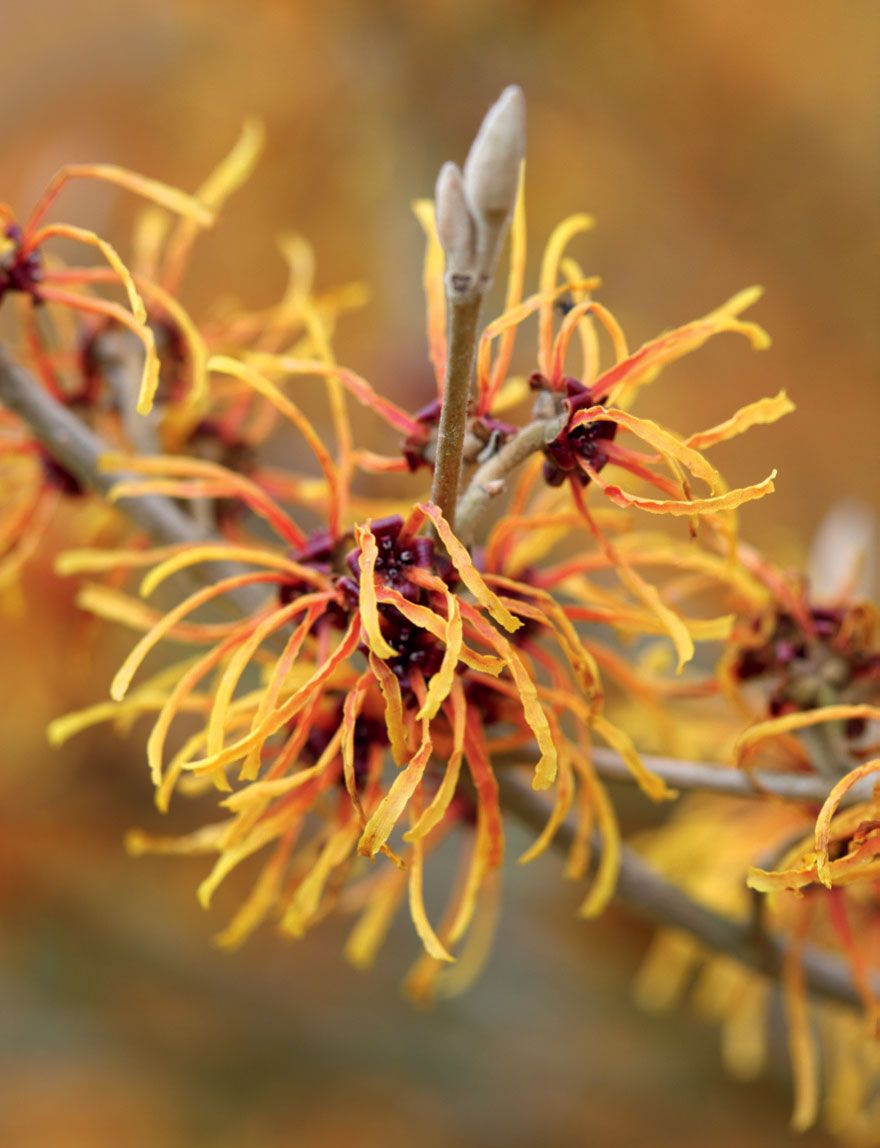
‘Frederic’ was among the cultivars he brought back from Belgium.
 Annaick Guitenny4/9
‘Rubin’ has deep red blooms.


 Annaick Guitenny5/9
‘Aurora’ is one of the best for scent.
 Annaick Guitenny6/9
The colour of ‘Gingerbread’ is reminiscent of the sweet treat.
 Annaick Guitenny7/9
‘Barmstedt Gold’ is a particularly vigorous grower.
 Annaick Guitenny8/9
His namesake, ‘Chris’.


 Annaick Guitenny9/9
Chris at his nursery.


