
Design ideas for trompe-l’oeil
 Rhapsody1/13
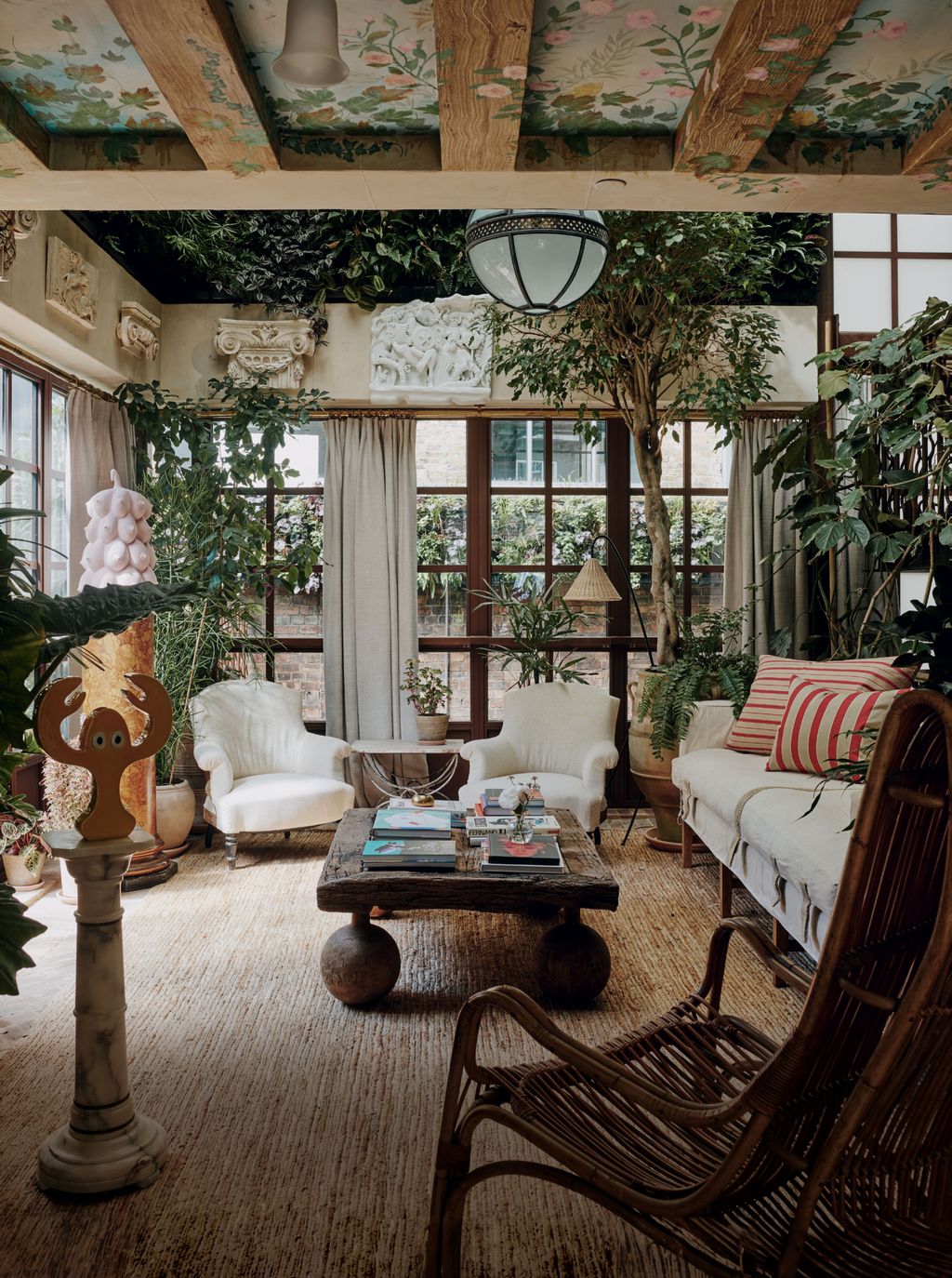
In this Spitalfields project by Maison Colbert and Buchanan Studio, a ceiling painted by artist Ian Harper depicts flowers and trails of ivy, which blend with the house plants and the greenery outside. The illusion extends to the faux-wood beams and water stains on the walls, including those mimicking tarnish below the Rose Uniacke sconce. This gives the room the atmosphere of an overgrown jungle temple.
 Rhapsody2/13
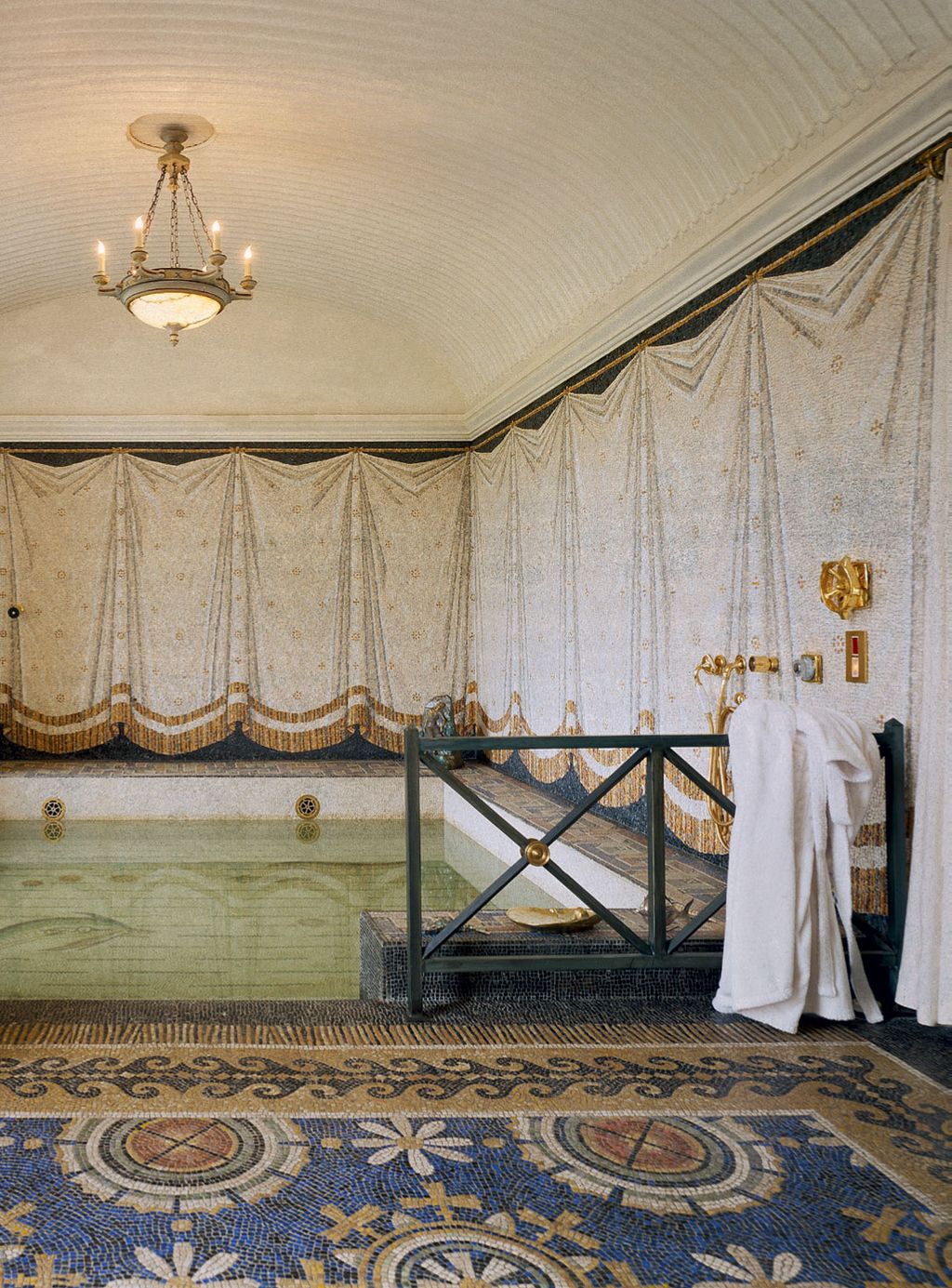
The decorator Renzo Mongiardino was known for the crossover between his set-design work and his interiors schemes, creating elaborate and artistic designs for the walls of projects he was involved in. In his own Milan bathroom, decorated in the 1950s, he commissioned the mosaic workshop Novamosaici to create these mock-fabric swags on the walls, complete with trims and tassels, in a black, white and gold scheme.
 Rhapsody3/13
In this project by the New York-based interior design studio Redd Kaihoi, a plain vaulted ceiling just ‘cried out for play’, says Miles Redd. The team worked with the skilled decorative painter Agustin Hurtado to create the illusion of a tassel-edged tented fabric effect across the ceiling. As David Kaihoi explains, the mock-tented treatment ‘took the room from tired catacomb to timeless chic’.
 Rhapsody4/13
Muralist Paul Czainski painted stylised, detailed tassels on the risers of the stairs in his former home in Halifax, pairing these with a wall design reminiscent of medieval church decoration. The intention is not to trick the eye entirely, but to reference the stone blocks of a building in a playful way.


 Rhapsody5/13
In his farmhouse, the antique dealer Tarquin Bilgen introduced trompe-l’oeil panelling on the walls in a variety of styles, and commissioned mural specialist Alan Dodd to create the painted details.
 Simon Brown6/13
In contrast to the neutral shade used above in the dining room, faux panelling in green and red makes a dramatic statement in the front hall.
 Rhapsody7/13
This detailed mural in the hallway of the London flat of Luke Edward Hall and Duncan Campbell was painted by Magdalena Gordon of Atma Decorative. The bust depicts the Roman emperor Antoninus Pius and Magdalena’s elaborate trompe-l’oeil work extends onto the skirting boards and architraves of the room, which look as though they are made from veined marble.
 Rhapsody8/13
A fervent fan of the Georgian Gothic style as well as being a talented trompe-l’oeil artist, Alan Dodd is the creator of this immersive mural in the dining room of a London terraced house. The scheme was inspired by the owner’s set of Augustus Pugin dining chairs and incorporates a verre églomisé triptych above the fireplace. The background is faux marbling and the stone-effect ornamented niches contain statues of saints and views of famous Gothic buildings.


 Christopher Horwood9/13
Farrow & Ball colour specialist Patrick O’Donnell painted a pedimented door frame around an otherwise ordinary door in his own 1930s house, ornamenting it with Victorian miniatures. The colour combination he chose feels both original and correct for the silhouette style of the mural: Farrow & Ball’s archive colour ‘Cola’ for the pediment and ‘Cane’ for the walls. The painted line between the wall and ceiling represents a cornice in a way that suits the simplicity of the room.
 Rhapsody10/13
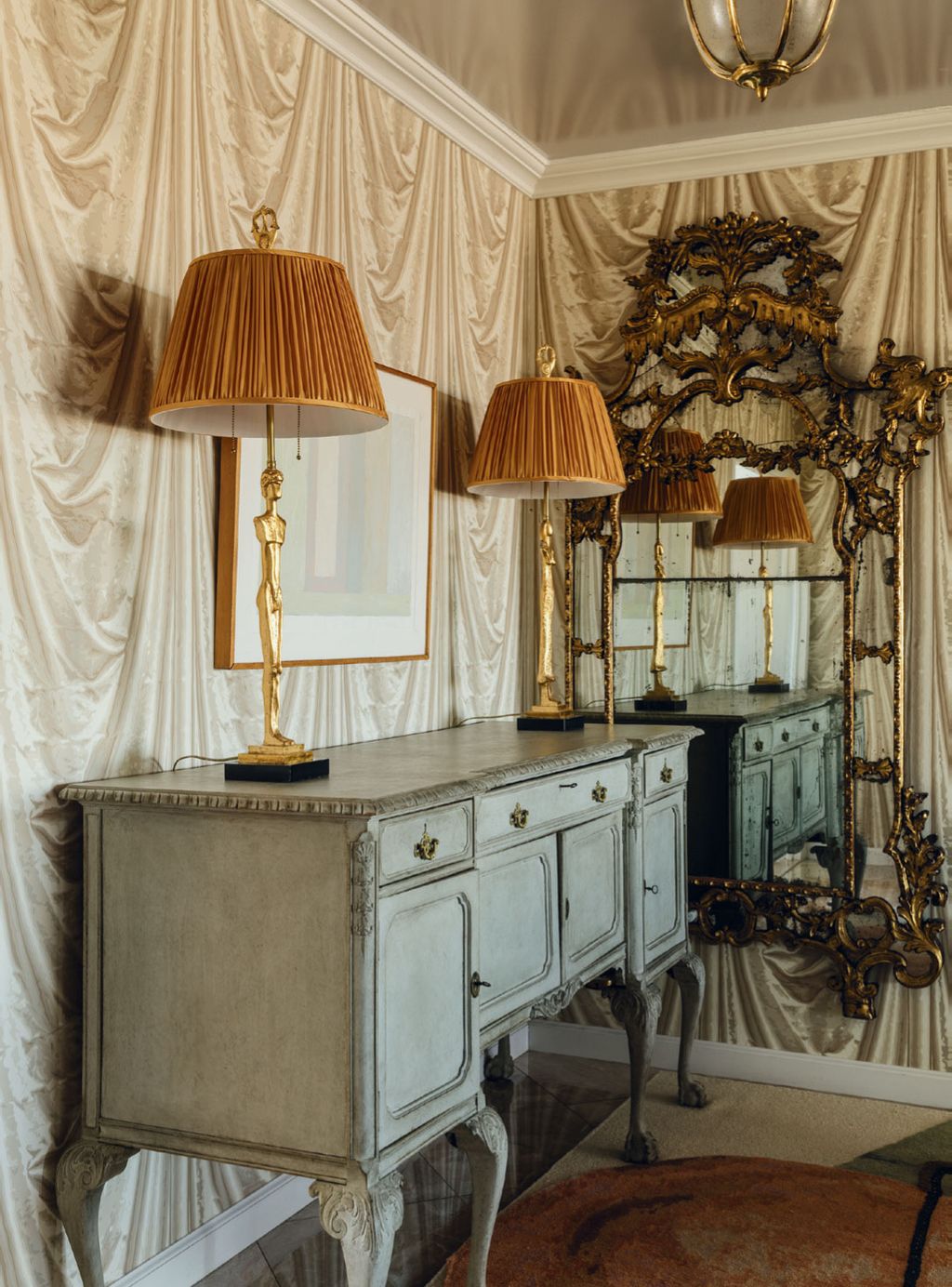
Interior designer Rachel Chudley has brought her trademark pizzazz to the hallway of this apartment in New York. She chose a golden trompe-l’oeil-fabric wallpaper by Zuber – ‘Draperie Napoléon III’ in the vert bronze colourway (now an archive design) – as the backdrop. This lends the space a shimmering drama and counteracts the straight-line boxiness that can often typify modern apartments.
 Rhapsody11/13
Ascott House has, over the years, received the decorative touch of Renzo Mongiardino, Peter Marino and Robert Kime – always under the direction of Victoria de Rothschild. In the 1980s, Renzo designed these painted panels for the dining room, which appear to be traditional Delft tiles and imitate the dados found in 17th-century Dutch interiors.
 Rhapsody12/13
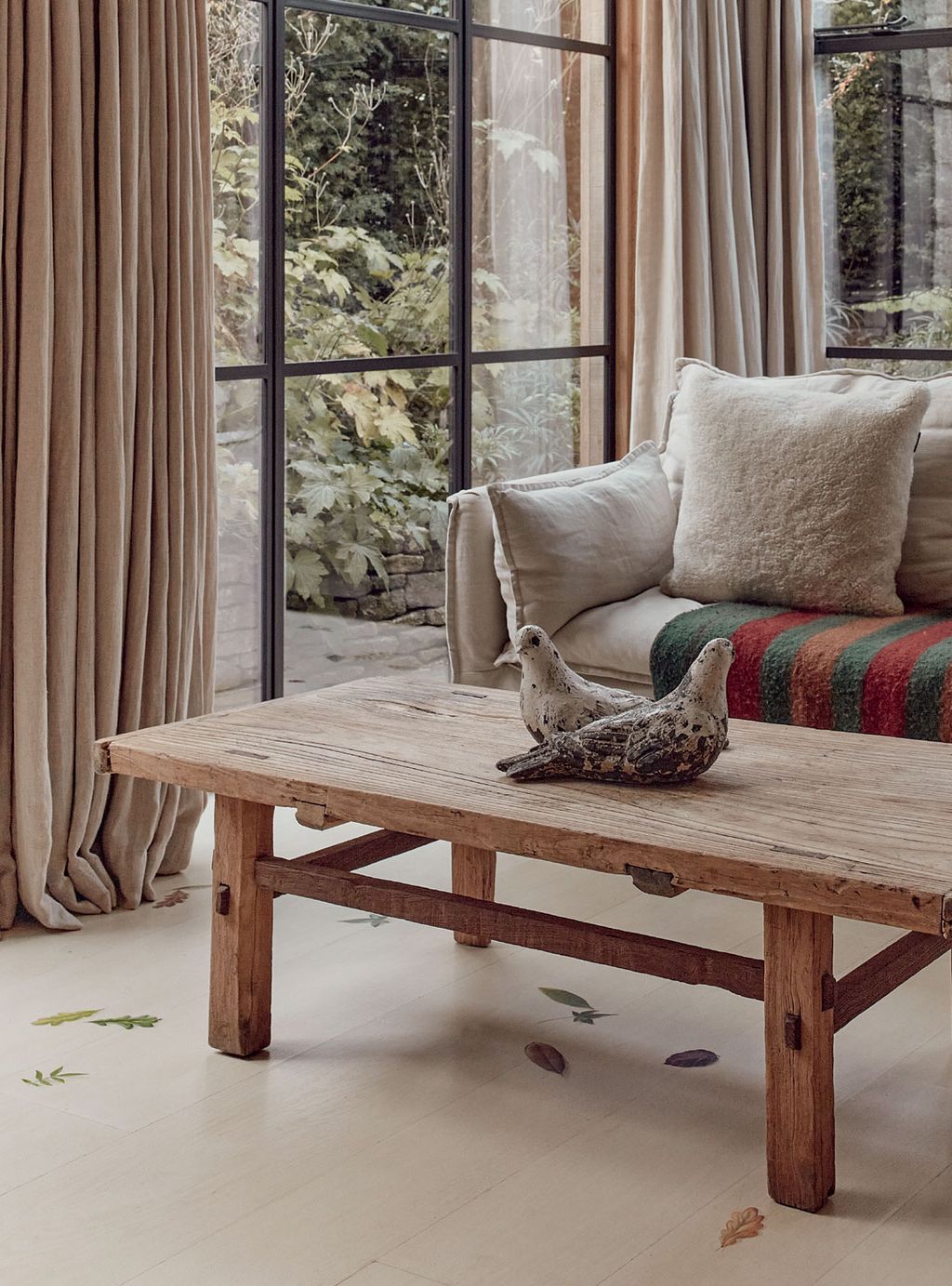
At The Fox inn in Oddington, Lizzi Porter has painted a scattering of leaves leading to the bath on the floor of one of the bedrooms – decorated by Lady Bamford’s interior design team. This is a classic case of trompe-l’oeil trickery, encouraging a double-take in which guests might be tempted to reach down and try to pick up the leaves.


 Rhapsody13/13
The style of this mural by Tess Newall, in a bedroom designed by Amanda Austin, is not in the realist tradition of trompe-l’oeil. Yet the wild roses and peonies have a naturalistic style and follow the contours of the ceiling as if they are growing there. In fact, they mimic the flowers flourishing outside the windows of the room, causing perception to flit playfully between the real and the rendered.


