
Emma Bridgewater's Oxfordshire farmhouse is as lovely as her pottery

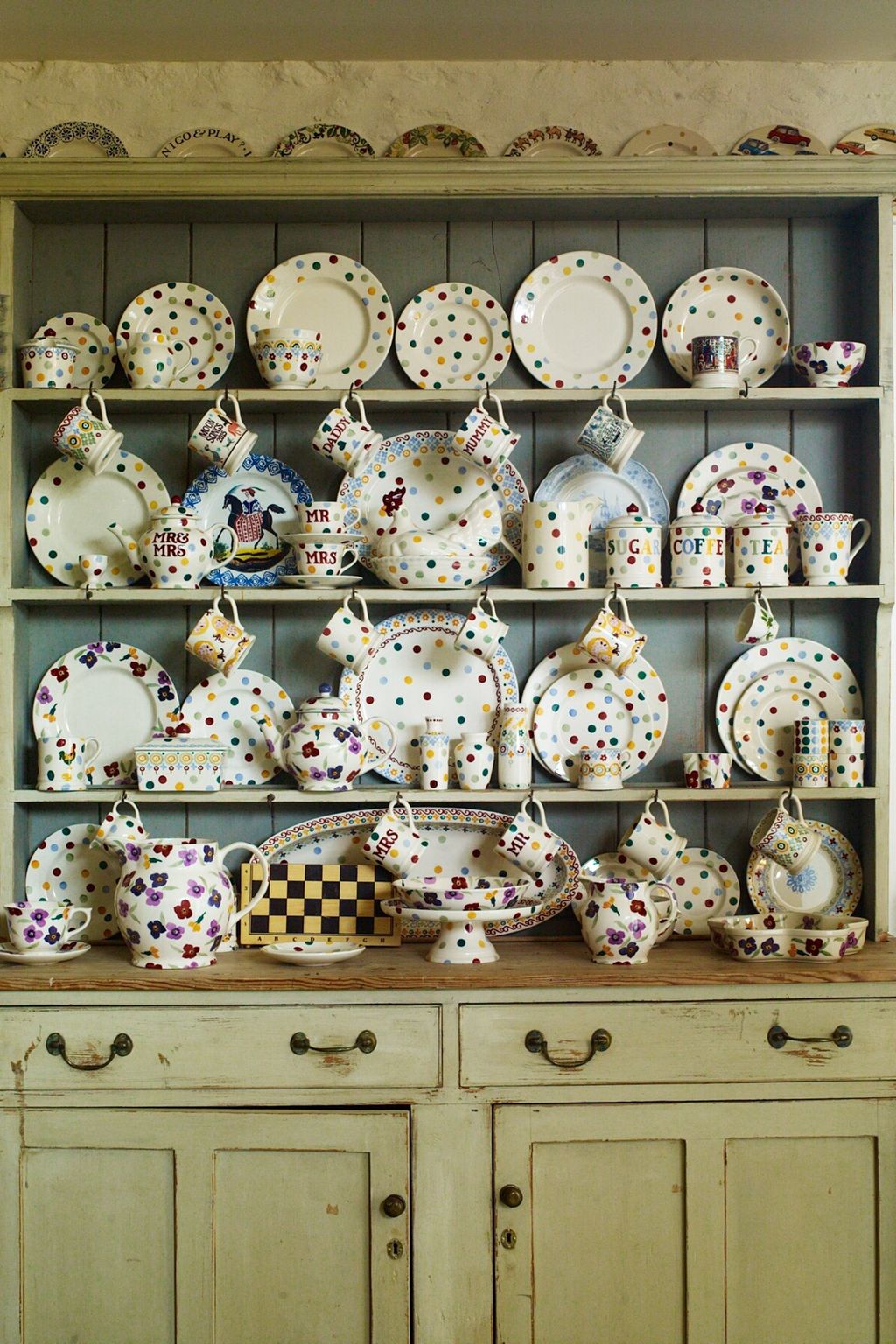
I first met Matthew Rice and Emma Bridgewater almost 30 years ago. They were living in a terraced house near their first shop in London, at the less fashionable end of Fulham Road, and I particularly remember a large Gloucester Old Spot pig snuffling around in the garden. Emma's eponymous business began in 1985 when, unable to find any mugs she liked enough to give her mother, she decided to make her own. Her mother's kitchen was the inspiration for a revival of the English spongeware tradition. Today her products are sold in the likes of John Lewis and Fortnum & Mason, as well as two Emma Bridgewater shops in London, and hundreds of shops worldwide.
When she married and began working with designer, artist and writer Matthew Rice, their partnership set a pattern that celebrates family life, craftsmanship and a community-minded working practice. For some years, they lived in London, but now have moved to Oxfordshire. 'We wanted to be within easy train access of the factory in Stoke, our London office and schools,' says Matthew. They have four children; their eldest daughter Lil, 26, is a singer and circus performer, while Kitty, 25, is an illustrator. Margaret, 19, is reading Classics at Edinburgh and Mikey, 16, is a pupil at Bedales, where Matthew, a former pupil, is chairman of the board of governors.
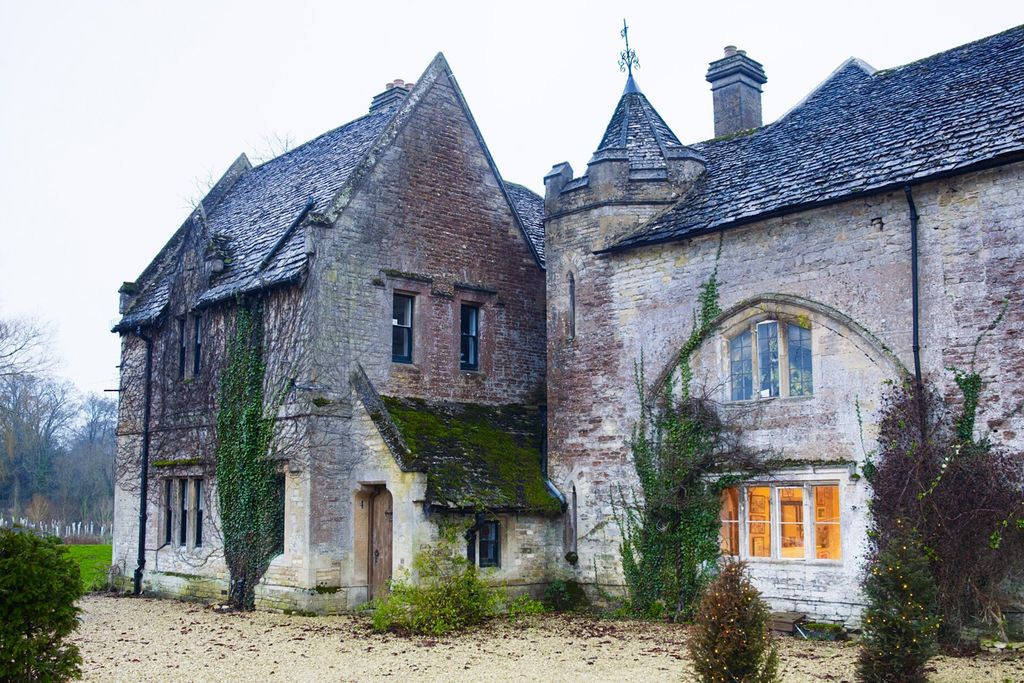
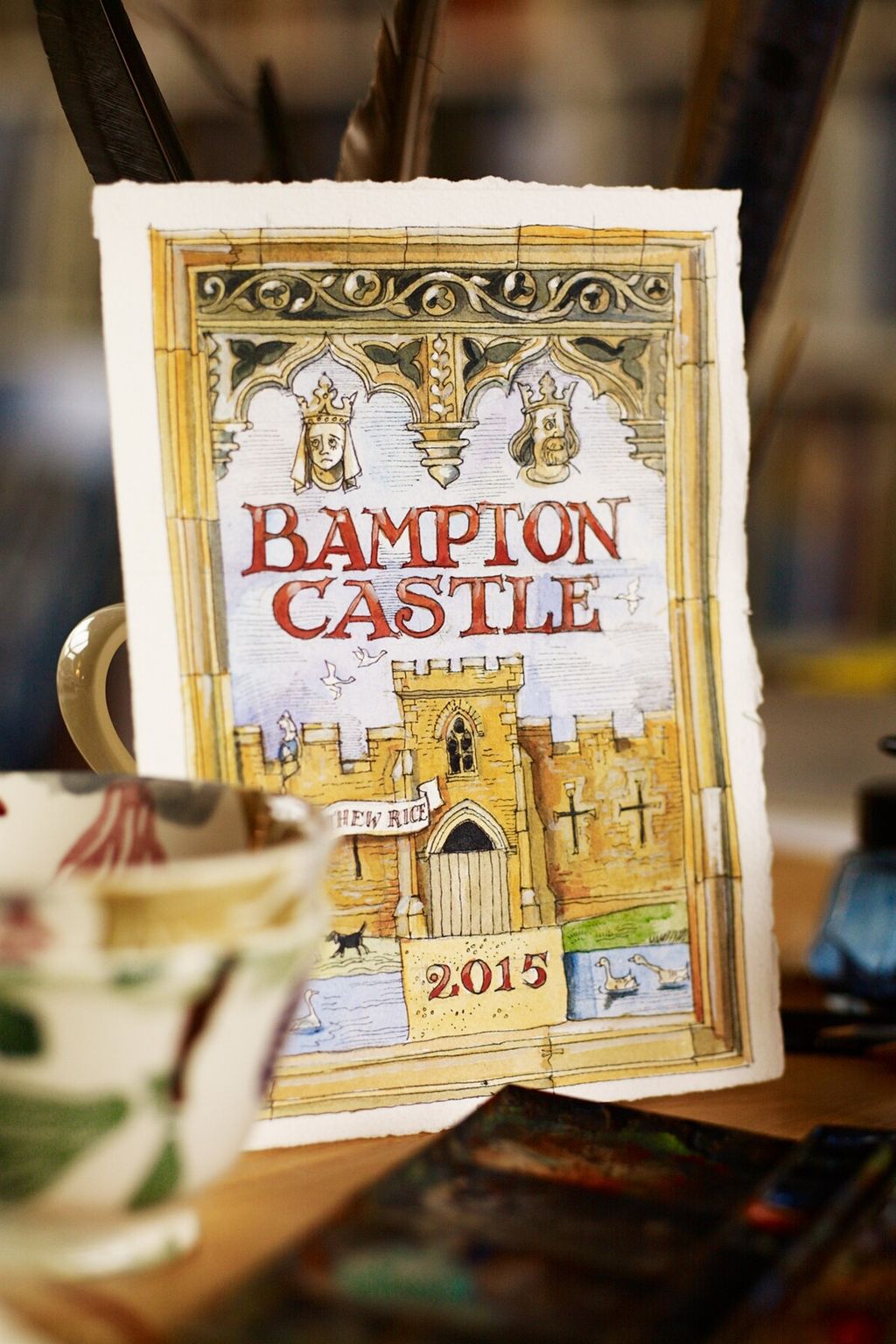
'We needed somewhere we could live and work, with undeveloped buildings in which we could photograph catalogues, and with land for animals and a potential for a garden,' says Matthew. In 2011, they found a rundown farmhouse, Ham Court, which had once been the gatehouse to Bampton Castle, built in 1320 by the Earl of Pembroke. The property, on the edge of Bampton village and surrounded by 30 acres of land, provided them with an irresistible opportunity to breathe romance back into a series of neglected and derelict buildings.
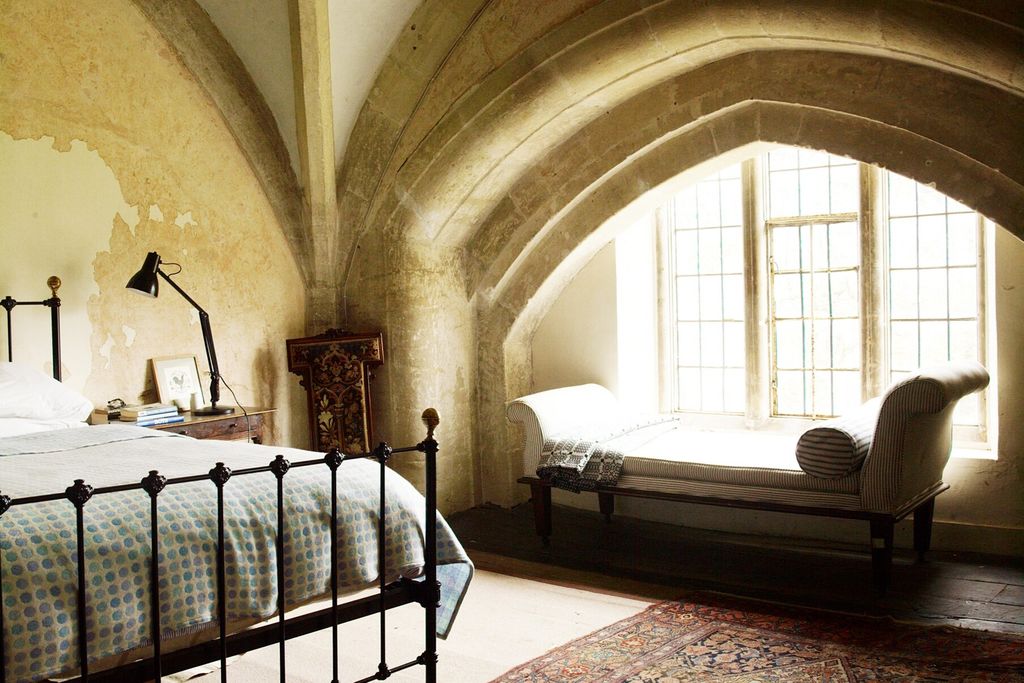
They tackled the barn first so that they would have somewhere to live and work when the restoration of the gatehouse began. 'While the barn was made ready, we camped among the medieval vaults from May until Christmas,' Matthew says. 'Although lovely in its Gothic splendour, there was no heating or loos. And when the builders finished work on the barn the day before Christmas 2012, it proved so comfortable that we were sidetracked from restoring the gatehouse and started instead on the garden.' They still live in the barn, which is decorated for Christmas with foliage from the garden.
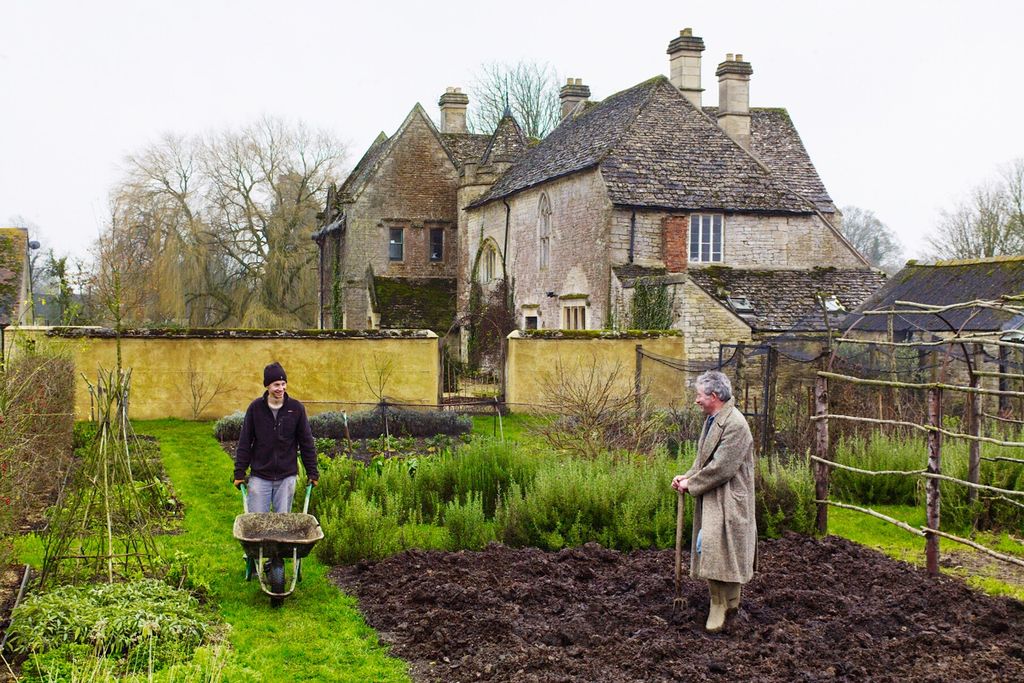
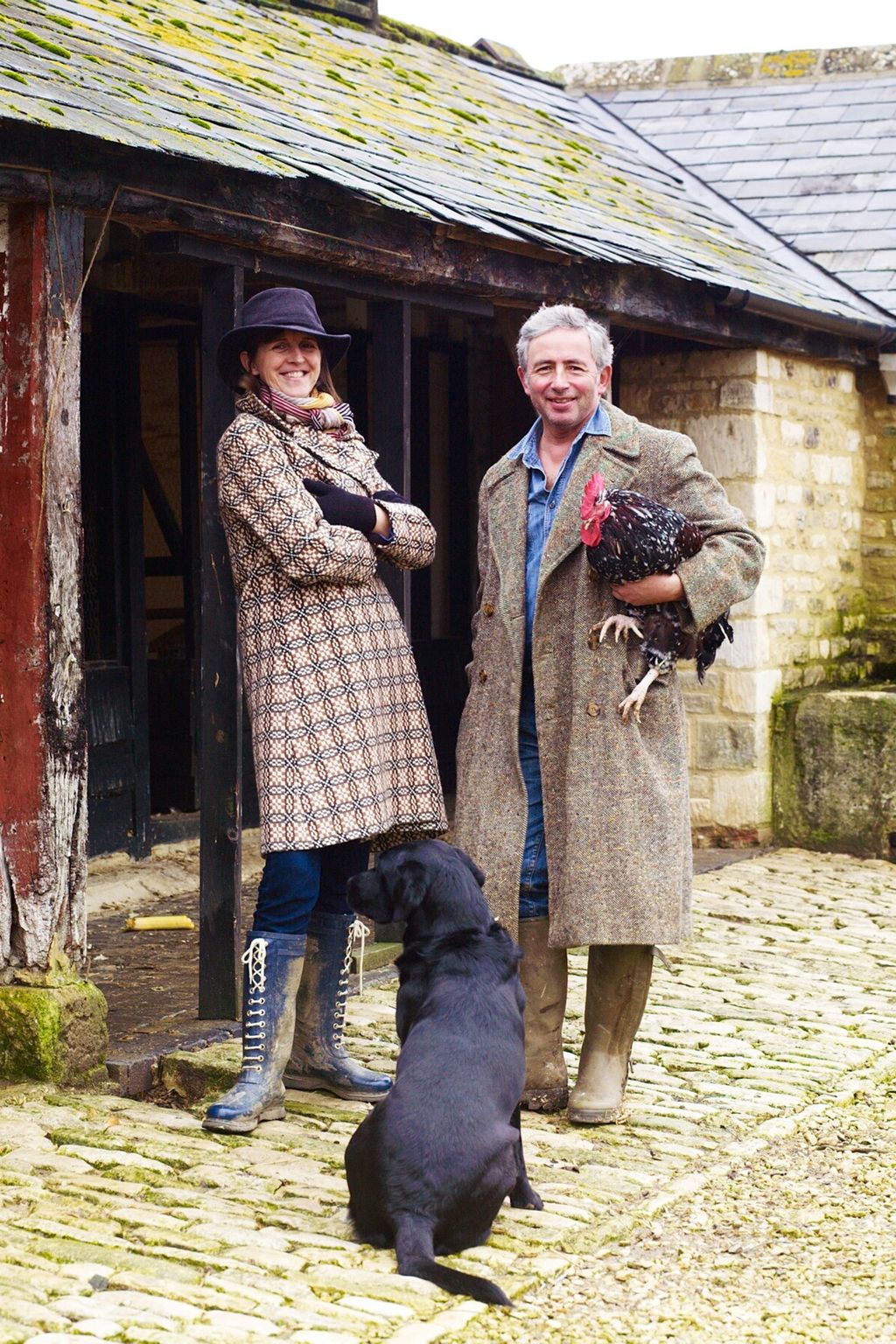
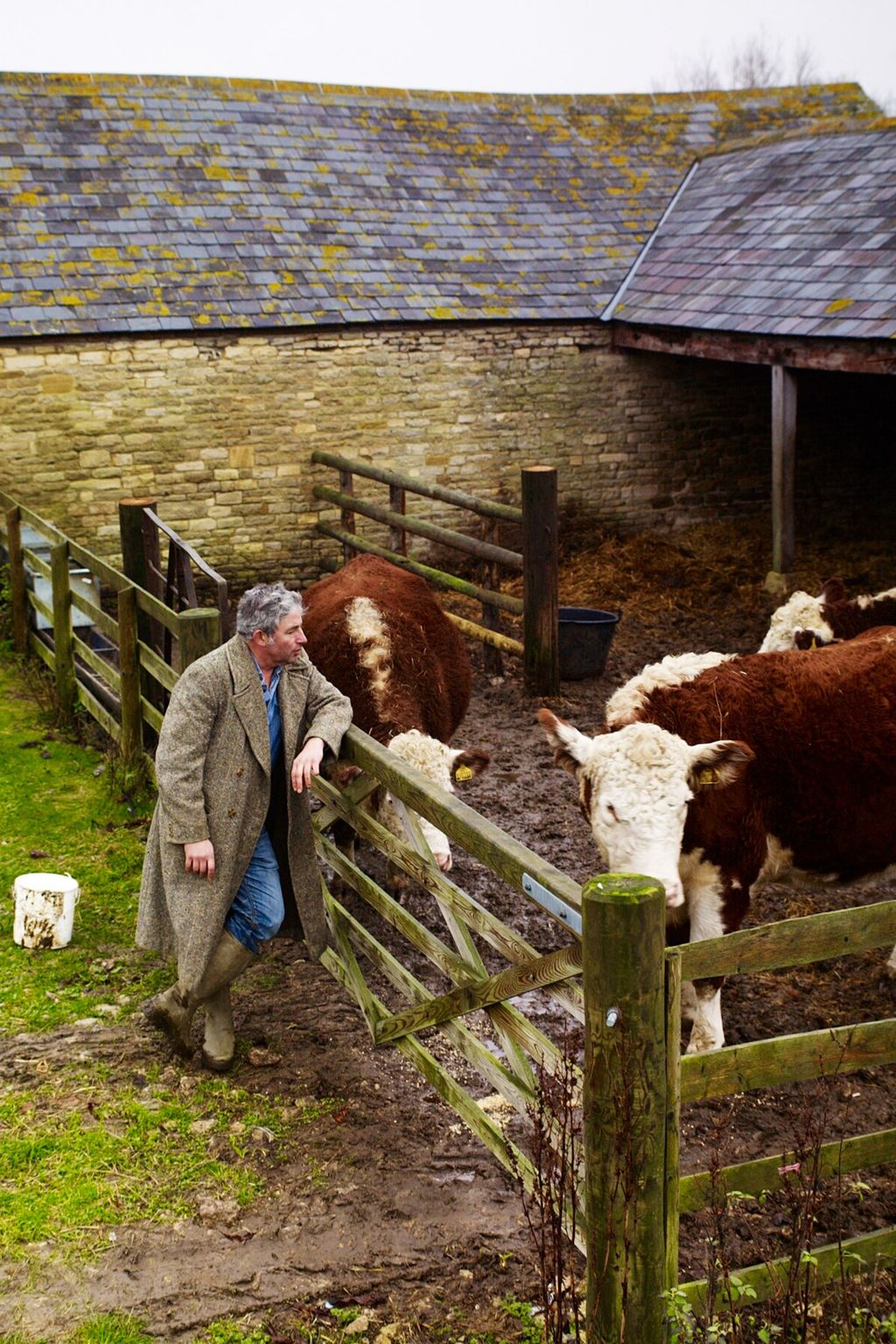
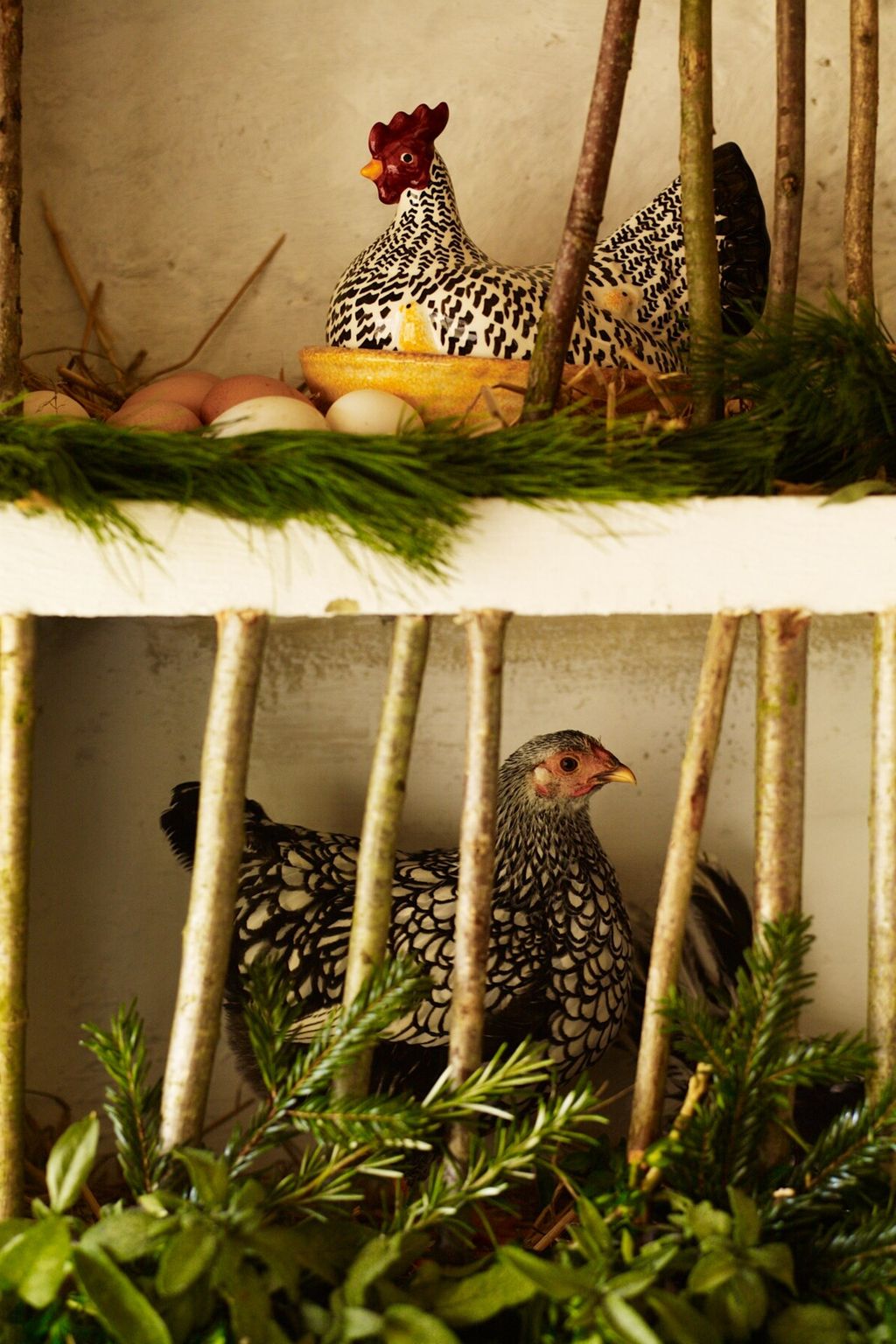
Matthew and Emma have now reinstated the moat and planted thousands of trees, which have attracted kingfishers, goldfinches, flycatchers and many other songbirds to what was once a barren field. There is a huge and productive vegetable garden, as well as a farmyard menagerie, which includes pigs, four heifers, flocks of Jacob and Hebridean sheep and the numerous hens that feature on the pottery.
The barn has three upstairs bedrooms, while the gate-house (a work in progress) acts as overflow for visitors with a hardy temperament, happy to withstand rather spartan conditions and primitive plumbing. Matthew and Emma each have an office at either end of a vast design studio that has been built in an adjacent barn. They work alongside a team of five assistants and designers. As well as their work for the pottery, Matthew has written five books (all centred on English architecture) and Emma two, and they come together on all original designs. Matthew is currently the chairman of the company, while Emma, as founder, has, 'an endlessly roving brief' to further its interests. Recently, they appointed Julia Cove-Smith as MD.
Emma visits Stoke-on-Trent two or three times a month. Recently she bought a flat in the area known as The Villas - stucco Italianate regency buildings built by nineteenth-century pottery owners for their top managers. Stoke is made up of six towns, built up piecemeal during the Industrial Revolution. It accommodated three great industries: coal, steel and pottery. When, in 1984, Emma first came to Stoke, she found a blighted cityscape. The closure of coal mines and steel mills was followed by a reduction in the number of pottery workers from 60,000 to 6,000. 'No one thought it a great idea when I decided to buy a factory. But I thought, as we design and do our own marketing, why not manufacture as well?'
The converted Victorian factory now houses around 270 workers, many of whom are descendants of a previous generation of pottery workers. The earthenware is still made with minimum mechanisation and decorated skilfully by hand in long workrooms. On site, there are two shops, (one of which sells seconds), a lively café and a design studio for 'trying your own hand'; there is also a successful apprenticeship scheme. A place of pilgrimage for the many Emma Bridgewater collectors, the factory has tours that attract 30,000 visitors a year.
Today, the number of pottery workers nationally remains a stable 6,000. Two vibrant universities, colleges and a football club in the Premier League have helped fuel Stoke's regeneration. The Hot Air Literary Festival, the brainchild of Emma and the local MP Tristram Hunt, is held at the factory each June. In 2016, the authors included Nick Hornby, Edmund de Waal and Kirstie Allsopp. 'Emma and Matthew have made a huge difference in terms of the identity and reputation of the city,' Tristram says. 'They make a proud and conscious commitment to its heritage. Emma is a great role model for young women. She makes Stoke stylish, which is important.'
They are also involved, along with the Historic Chapels Trust, in saving from closure the Bethesda Methodist Chapel. 'As a southerner who's seen the success of areas like King's Cross, I hope that old buildings like this will be preserved and used as the cornerstones for a new city,' says Tristram. The Prince of Wales has visited Bethesda and has visited the factory with the Duchess of Cornwall. The Duchess of Cambridge has also been to the factory.
'We are a small factory, but a business with a clear voice. It is essential to use this to attract attention to the city,' says Emma. 'People come out of design training programmed to look overseas for employment. I have no idea why; I am personally much too lazy to go to China. I never cease to be astonished by what is possible and how wonderful it is here. It is a powerful city with a tough and funny population of proud potters.'
Emma is the current president of the Campaign to Protect Rural England, following in the footsteps of poet Andrew Motion and writer Bill Bryson. She accepted the position, she says, because it is run in local branches and focuses on using brownfield sites instead of green-belt land. Let us hope she does the same thing for the countryside that she has done for Stoke.
 Andrew Montgomery1/15
The exterior of Ham Court.
 Andrew Montgomery2/15
Matthew working in the vegetable garden.
 Andrew Montgomery3/15
Emma and Matthew with one of the resident hens.
 Andrew Montgomery4/15
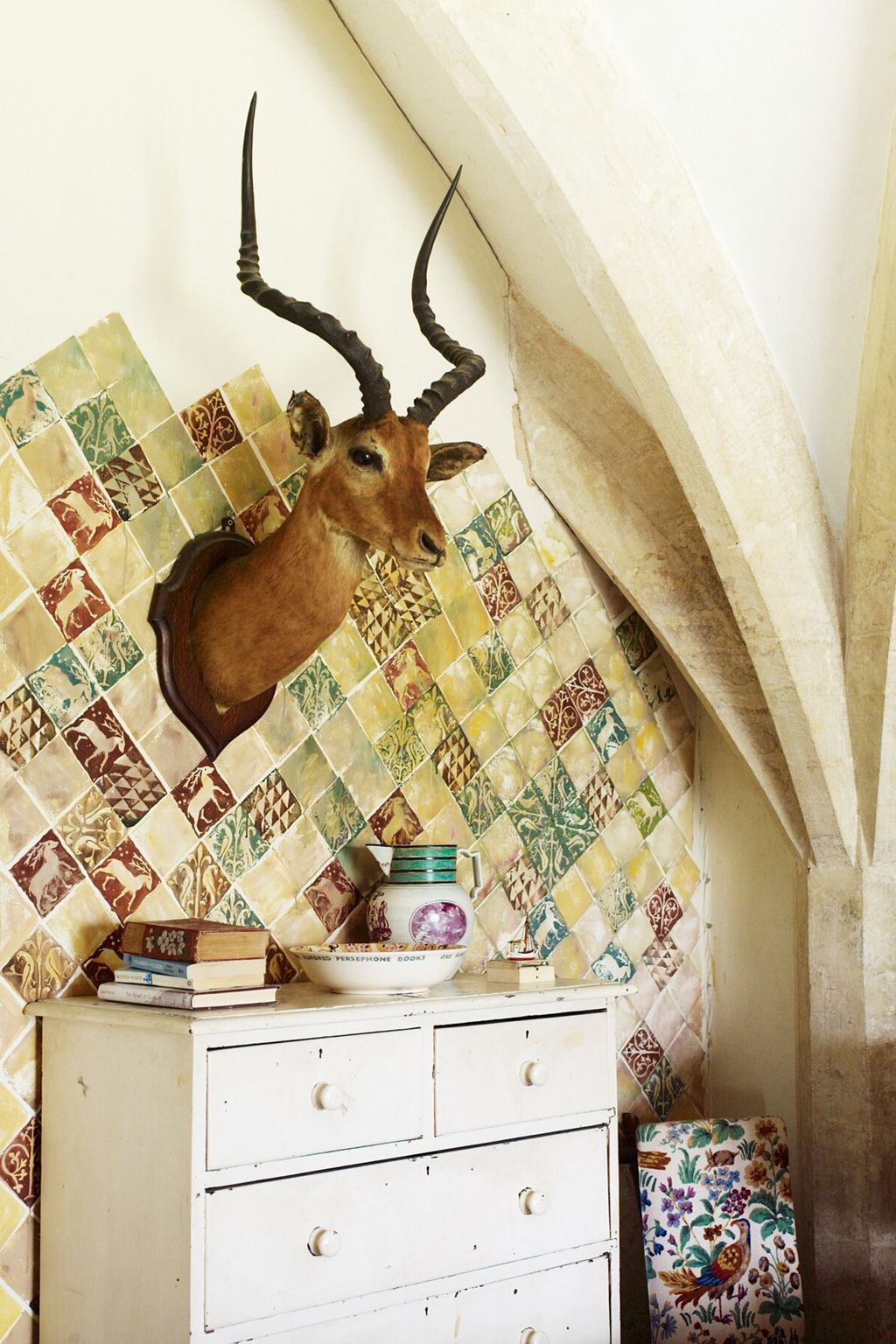
A bedroom retains the original stonework.


 Andrew Montgomery5/15
A corner of a bedroom in the gatehouse, where an antelope head is mounted on the wall beneath the medieval vaulted ceiling; a chair covered in a vintage Sanderson fabric featuring hares, hounds and pheasants sits beside the chest of drawers.
 Andrew Montgomery6/15
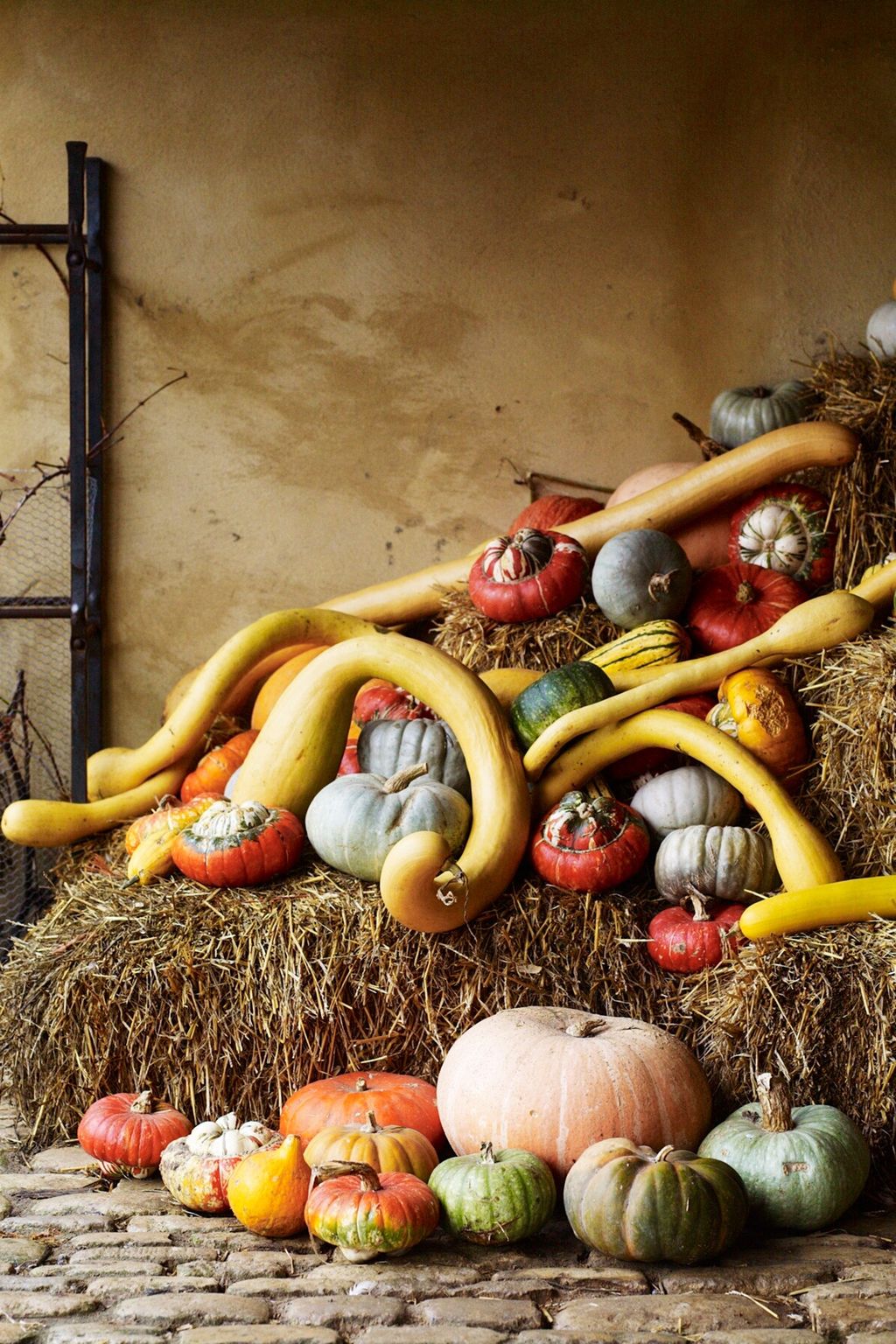
Harvested gourds.
 Andrew Montgomery7/15
Matthew tends to some of the cattle.
 Andrew Montgomery8/15
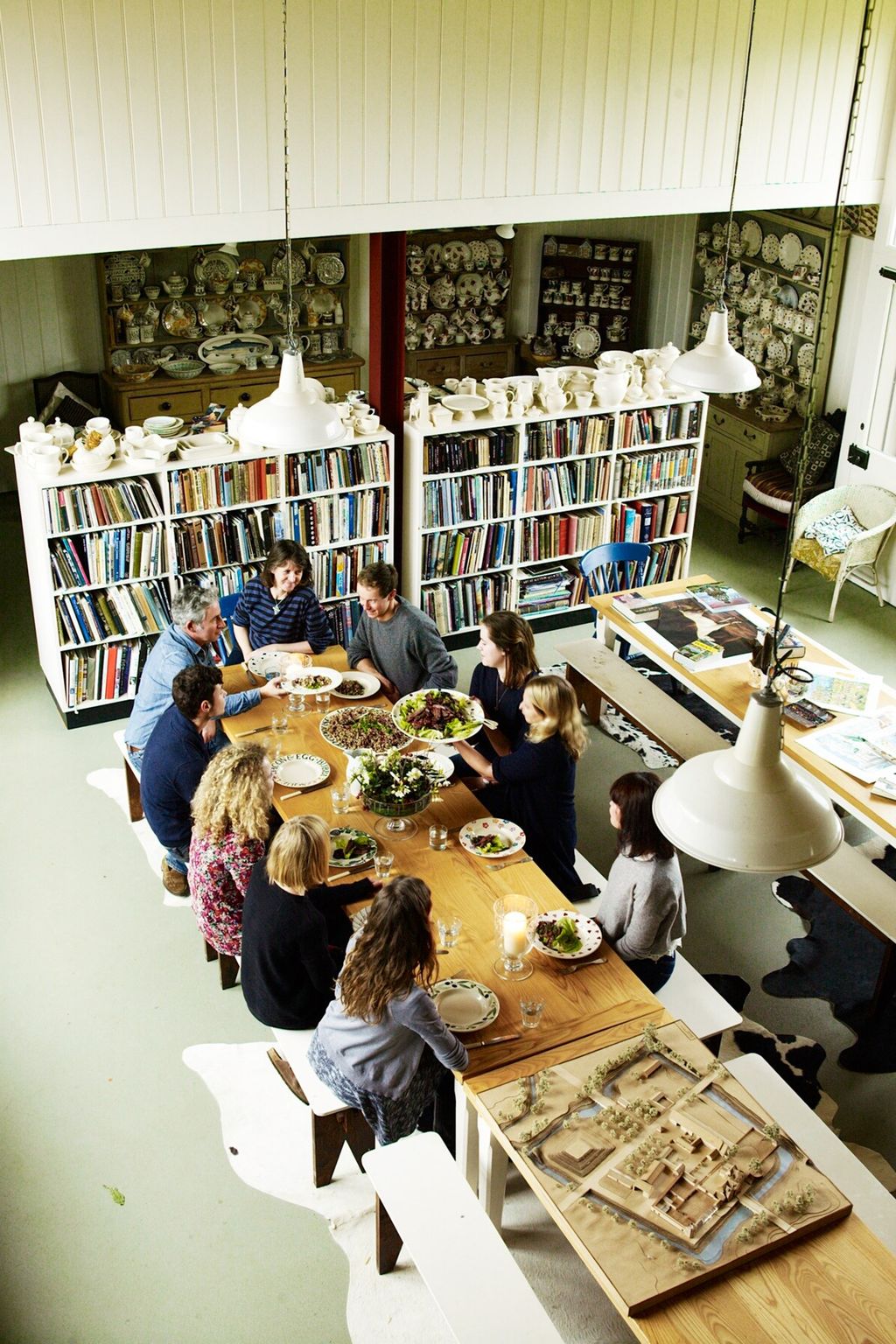
Emma and Matthew have lunch in the design studio with team members.


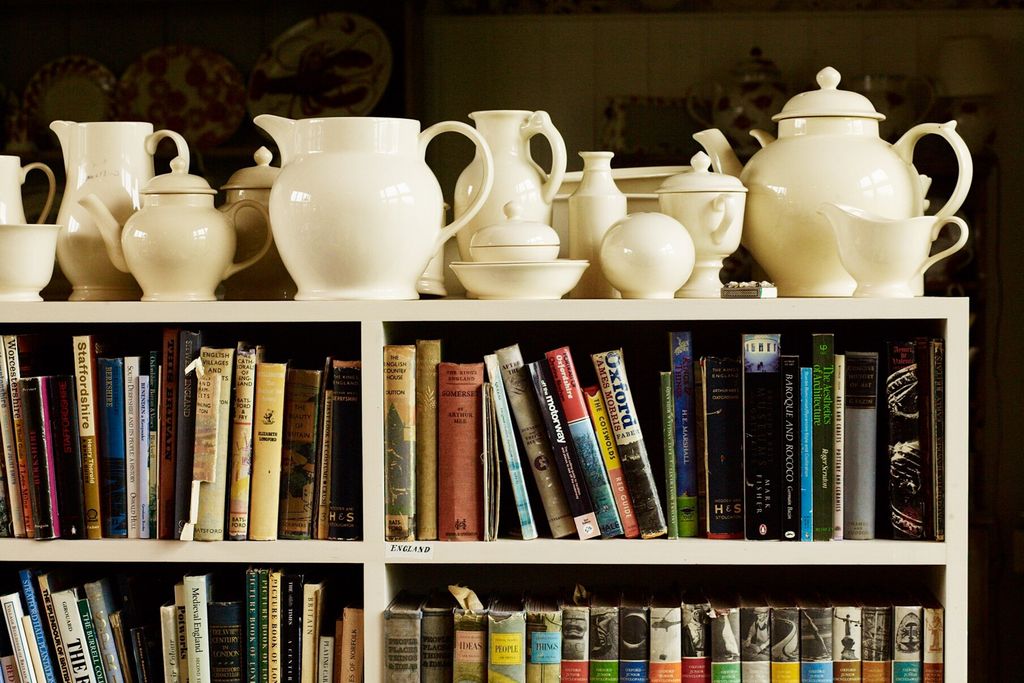 Andrew Montgomery9/15
Books on design and the English countryside for inspiration in the design studio.
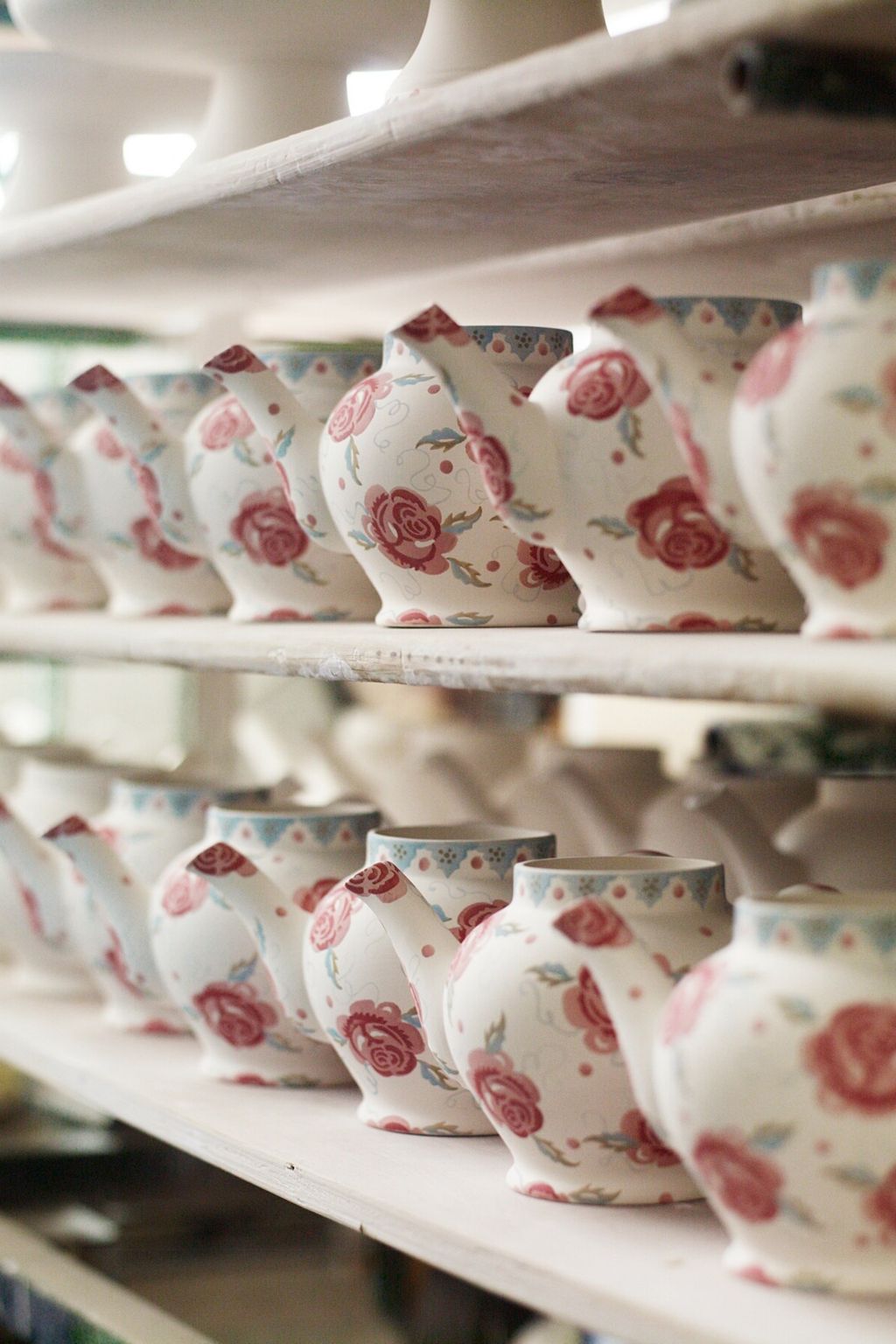 Andrew Montgomery10/15
Completed teapots on a shelf in the factory.
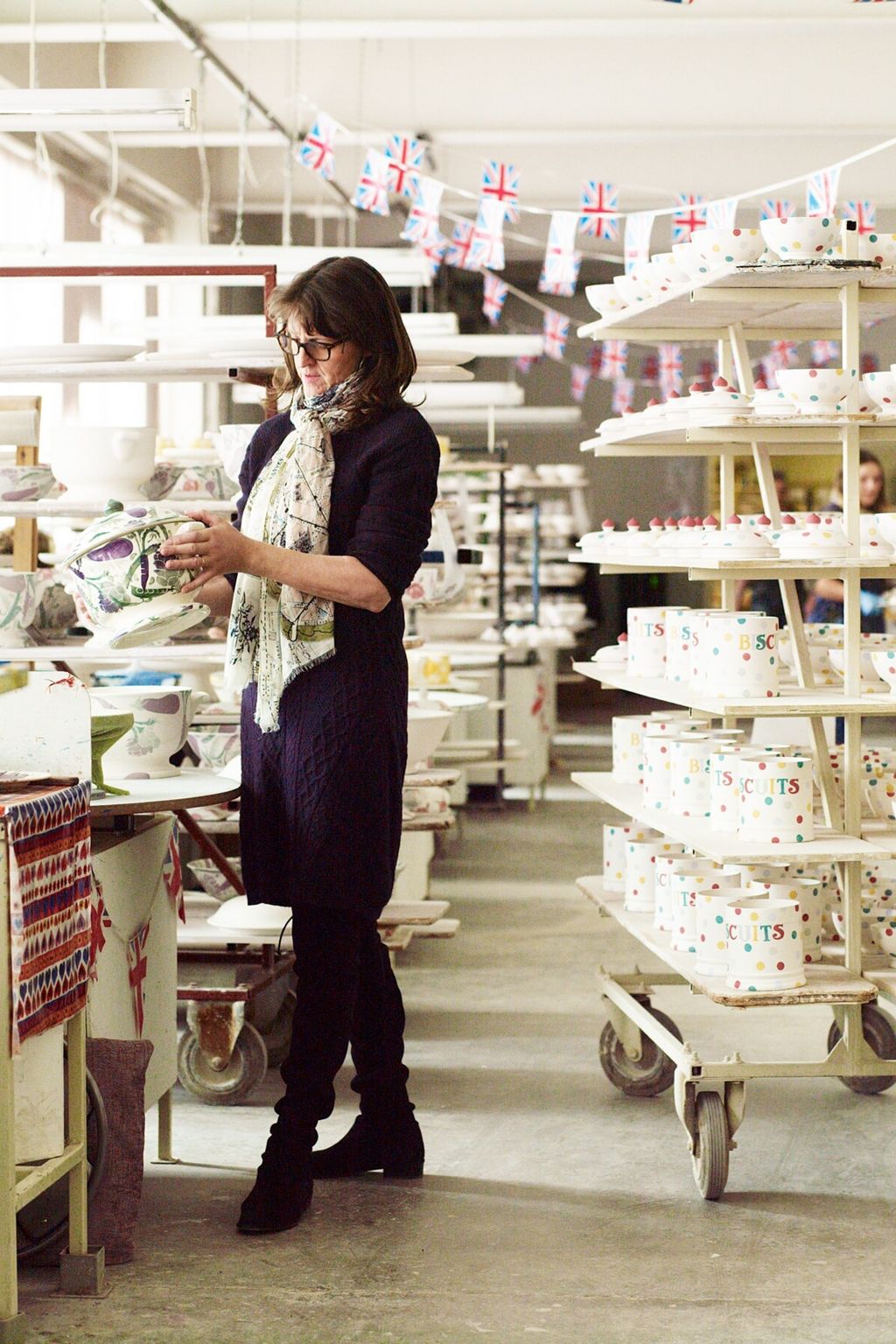 Andrew Montgomery11/15
Emma inside her factory in Stoke-on-Trent.
Like this? Then you'll love
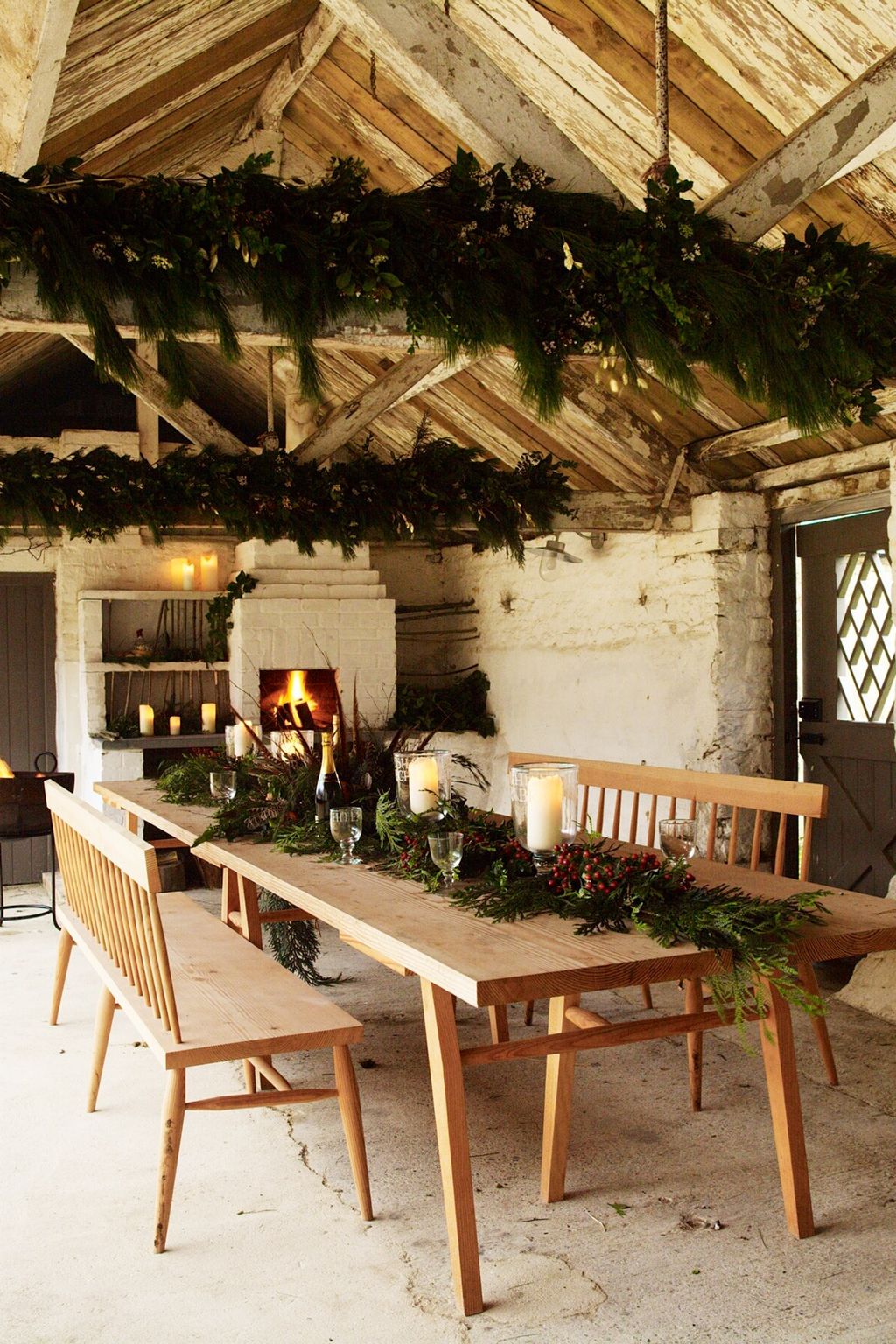 Andrew Montgomery12/15
The dining room is decorated with foliage and Emma Bridgewater glassware.


 Andrew Montgomery13/15
A hen-shape egg container with one of the hens that inspired it.
 Andrew Montgomery14/15
Emma Bridgewater spongeware on a dresser.
 Andrew Montgomery15/15
An illustration by Matthew of Bampton Castle - Ham Court was once the gatehouse to the castle.


