
A medieval Highland castle and foundry of pop artist Gerald Laing, kept alive by his son

When the Scotland-based artist and sculptor Gerald Laing died in November 2011 and a newspaper journalist came knocking on the door of his son Farquhar Ogilvie-Laing, Farquhar summed up his father with the following words: ‘He painted and sculpted, rebuilt motorcycles and cars and castles, and wrote books. But his biggest talent of all was he was a fantastic father.’
This touching relationship between father and son remains central to Farquhar, himself a father of three, and now, as founder and director of the Black Isle Bronze foundry, one of Europe’s foremost bronze casters. It is also palpable at Kinkell Castle on the banks of the River Conon in Inverness-shire, where Farquhar and his wife Jill – whom he met in a bar appropriately enough called The Foundry – live with their children, Madeleine, 12, Fergus, 10, and Jemima, 7.
The story begins with John Osborne’s era-defining play Look Back in Anger and its staging at the Royal Court Theatre in 1957. At the time, Gerald was a subaltern in the Royal Northumberland Fusiliers, having followed his father into the army and his regiment. But he was clearly not standard army material, and when he saw Osborne’s play as a member of that angry post-war generation, he found himself forced to reflect. ‘It was a turning point in my life,’ Gerald later wrote. Realising he was a rebel and as such ill-suited to a military existence, at 24, he resigned his commission and enrolled at what was then Saint Martin’s School of Art in London. Gerald went on to become a leading light in the Pop art movement of the Sixties. Today, he is spoken of in the same regard as American artists such as Roy Lichtenstein, Robert Indiana and Andy Warhol, and Brits Peter Blake, Allen Jones and David Hockney.
While his paintings are probably his best-known works, the sculpture was one of Gerald’s regular mediums and it was an interest in this that was the first major legacy he passed on to Farquhar. As a child, Farquhar had helped his father in a small foundry at home. ‘I knew from the age of five or so that I wanted my work to be here,’ says Farquhar. The ‘here’ he refers to is Kinkell Castle, the second part of his father’s legacy.
The elder son from Gerald’s second marriage, Farquhar went from Gordonstoun School in Moray to a history of art course at London’s Victoria & Albert Museum. Work at an auction house followed, but it was when he started as an apprentice at the Morris Singer Art Foundry in Hampshire – where works of art have been cast in bronze since 1848 – that the young Scot rediscovered the métier introduced to him by his father.
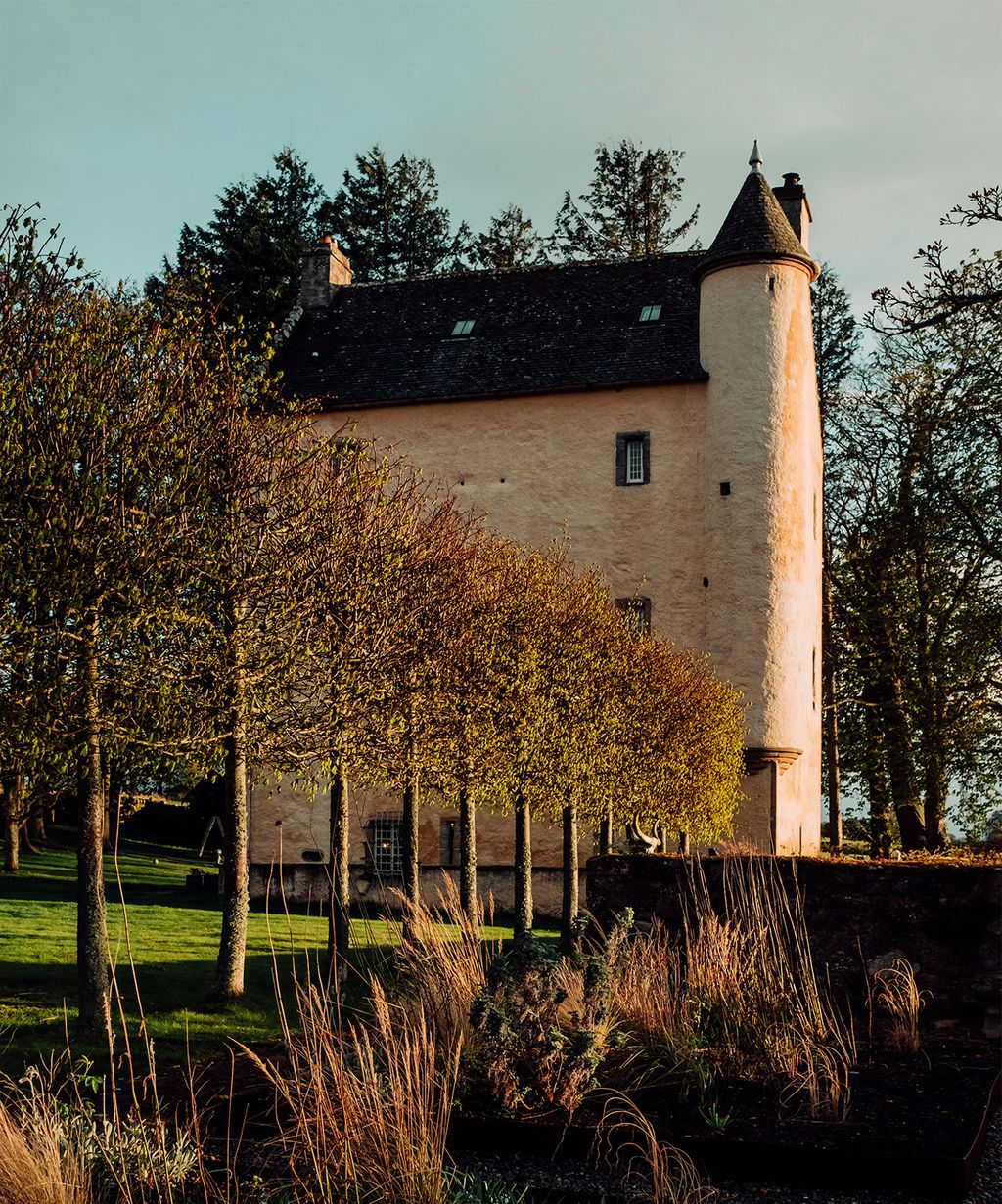
Although brought up in Newcastle-upon-Tyne, Gerald’s antecedents were Scottish, and from life as an artist in a New York garret, he decided he wanted a summer refuge. Europe beckoned, then Scotland and with Farquhar’s mother Galina, Gerald toured the Highlands in search of some medieval base to call their own. In 1968, they found Kinkell Castle, a Z-plan stronghold that was the former seat of the clan Mackenzie, ruinous and in the hands of local farmer Angus MacDonald. Gerald paid £5,000 for it and spent the remainder of his life nurturing it into a family home, studio and workshop. While the property’s fortified origins are evident in its gunholes, peepholes and turrets, Kinkell Castle is as contemporary today as it is historic. Inside, old walls sport dot paintings of Brigitte Bardot and Amy Winehouse; outside, the relative symmetry of lawns is broken up by a sculpted torso, a nude and a modernist pyramid.
In 1994, aged 24, Farquhar founded the Black Isle Bronze foundry. Initially, the foundry was based at the castle, in that same garden shed. Although his early work was for his father, ‘within a few weeks, I was doing heads for other sculptors,’ he says. When the new, all-seated Twickenham Stadium was being constructed, Farquhar wrote a letter to the Rugby Football Union (RFU) asking whether it wanted some bronzes outside the stadium. The answer was yes and this led to a series of commissions.
After two years at Kinkell, Farquhar and his work outgrew the garden shed. He moved to a steading in Nairnshire and, in 2002, moved again, creating a bespoke foundry on an industrial estate in Nairn. At his new premises, Farquhar made sure that lost wax and sand casting were both on offer – the former being an ancient technique that achieves greater and more subtle detail. His first major international commission was called Mare and Foal; they now stand at the Chukyo Racecourse in Japan. Should you find yourself sauntering down Piccadilly, you will find plentiful evidence of the foundry’s work. All 66 bronze capitals, columns and urns that grace the Robert Adam-designed 198-202 Piccadilly were cast by Black Isle Bronze.
Black Isle Bronze is now a star in the foundry firmament and a source of considerable pride to the Scottish government. Sixteen employees are on the books, with a wealth of commissions in prospect. A Joan of Arc will go to a university in the States; a War Horse monument by Susan Leyland will go to Ascot; and works by Carolyn Morton, Alexander e Stoddart, Laurence Broderick and James Butler are all on the cards. ‘The relationship between sculptor and foundry is fundamental,’ says Farquhar, gratified to work with the best.
Asked what his mantra is for his creative and working life, Farquhar does not hesitate. ‘It’s a family effort,’ he says. His children and wife stand very much at his side. ‘In my book, survival is success. I am proud to stand on my father’s shoulders and move forwards.’ And if Kinkell Castle and all it represents are not testimony enough to that, it might be worth paying a visit to Twickenham Stadium, for the culmination of the Laing relationship with the RFU was a bronze named Core Values. It is an eight-metre, five-tonne sculpture of rugby players in a line-out. The work was part of the £140 million redevelopment of the south stand. Gerald sculpted it, Farquhar cast it and it was unveiled in May 2010, 18 months before that rebel soldier moved aside permanently to make way for his son.
Black Isle Bronze: blackislebronze.co.uk
 Greg Funnell1/14
Kinkell Castle
The exterior of Kinkell Castle.
 Greg Funnell2/14
Study
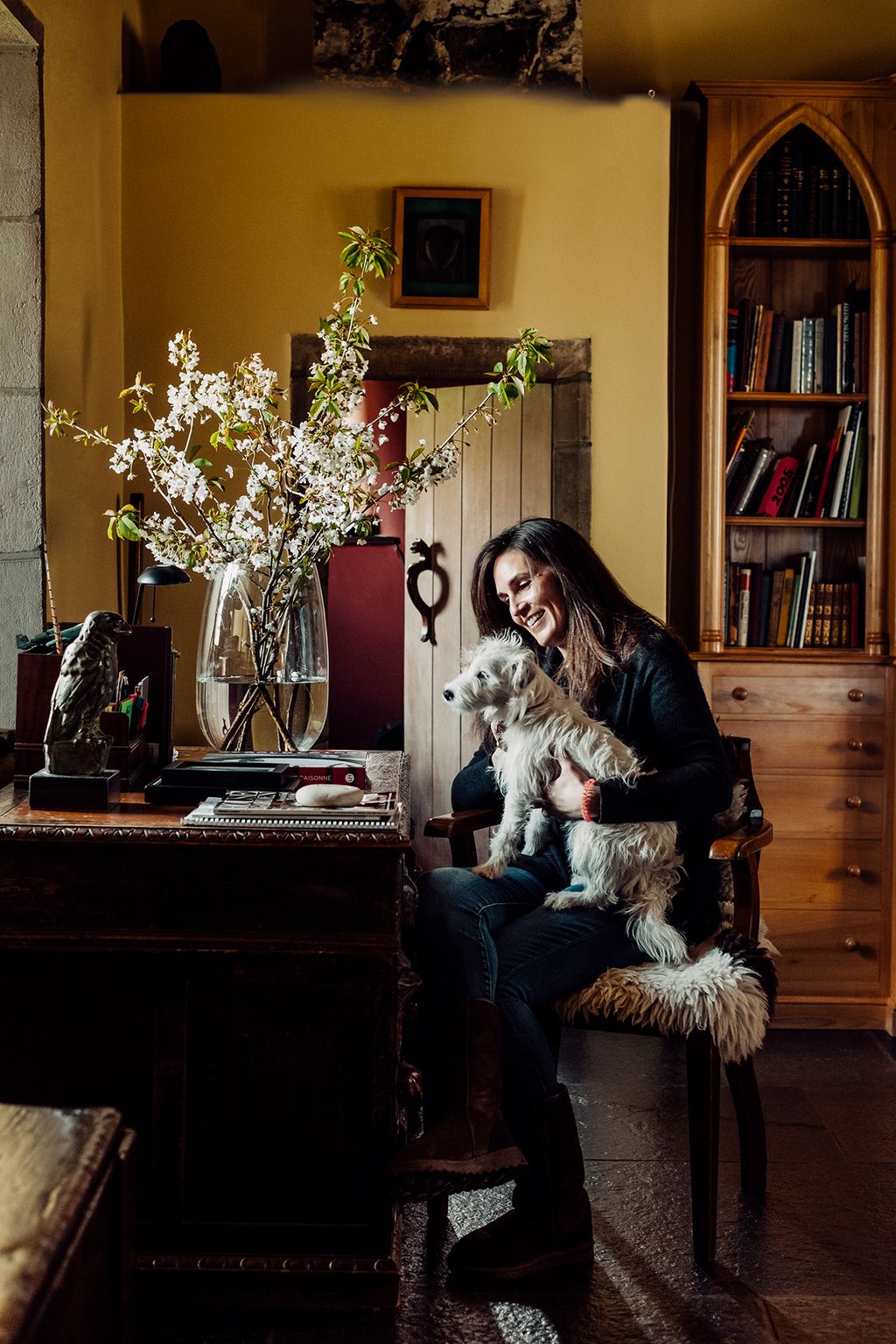
Jill with the family’s Parson Russell terrier Abby. Farquhar in the studio
 Greg Funnell3/14
Main Bedroom
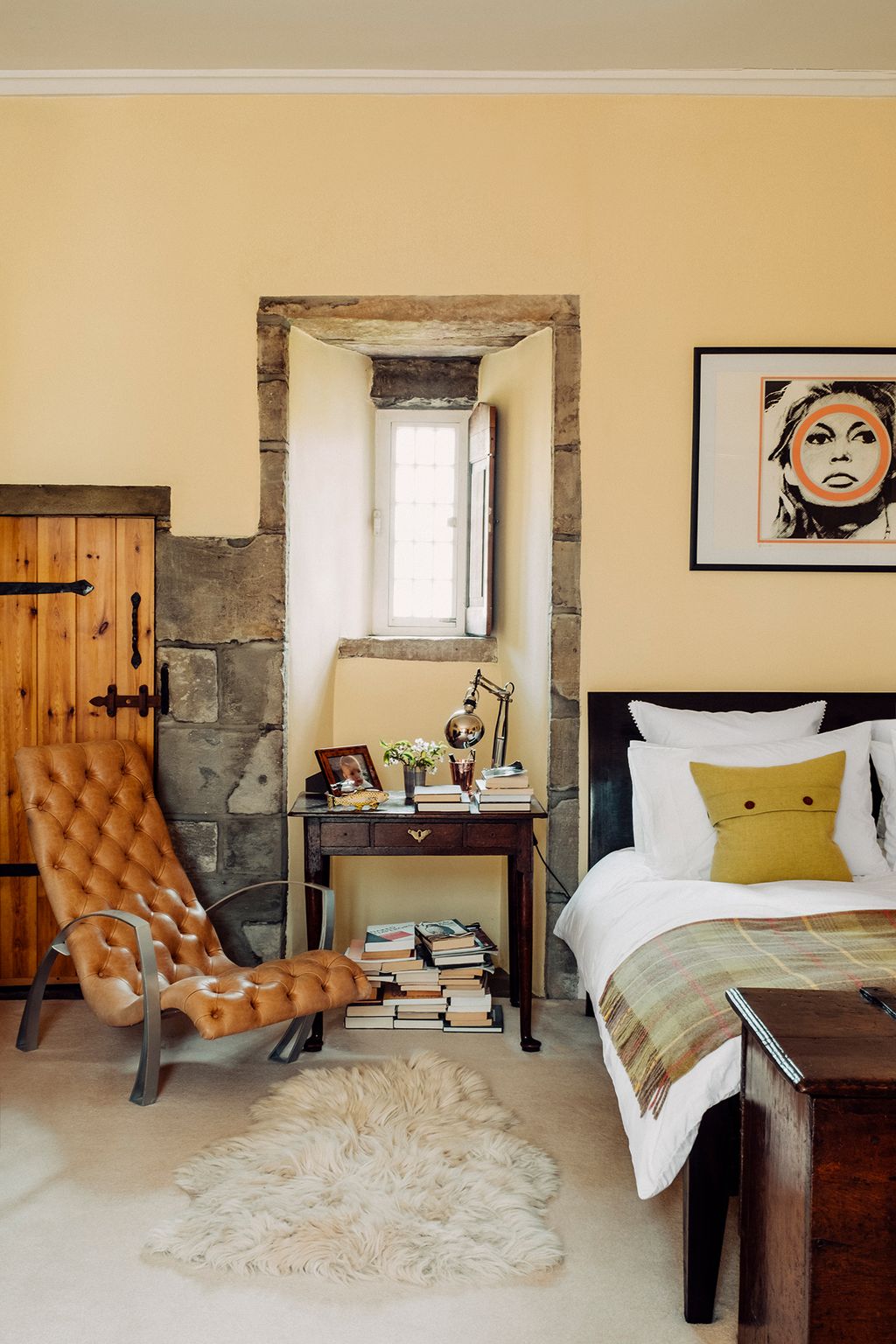
A Gerald Laing dot painting of Brigitte Bardot hangs above the bed in the main bedroom, with a ‘Flair Chair’ by Ogilvie Design Studio to the left.
 Greg Funnell4/14
Great Hall
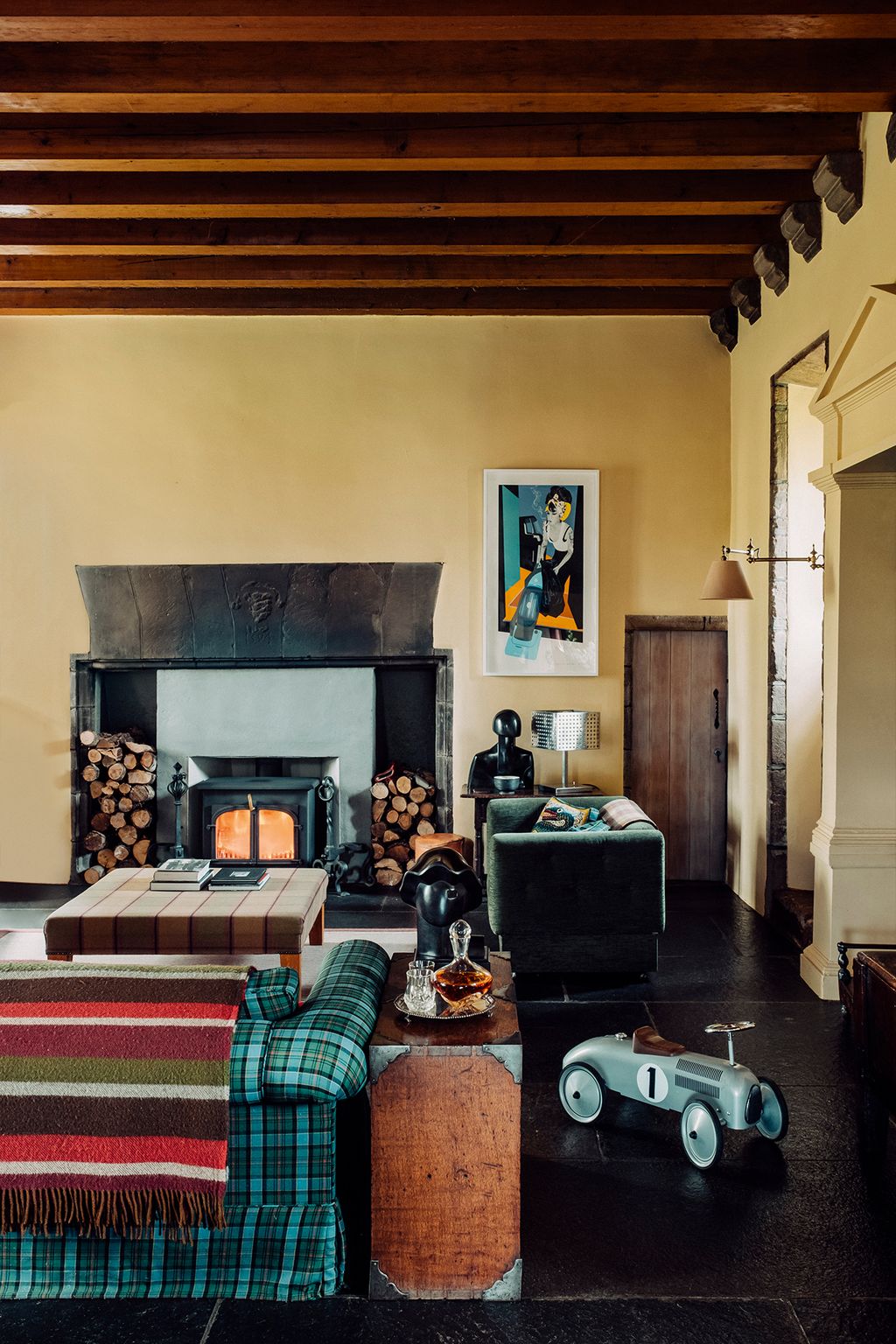
Artwork in the great hall includes the screenprint Domestic Perspective and the bronze Galina VI on the table underneath, both by Gerald Laing. Beside the latter is a powder-coated steel and glass marble ‘Bumbo Lamp’ by Farquhar’s brother Sam Ogilvie’s company Ogilvie Design Studio.


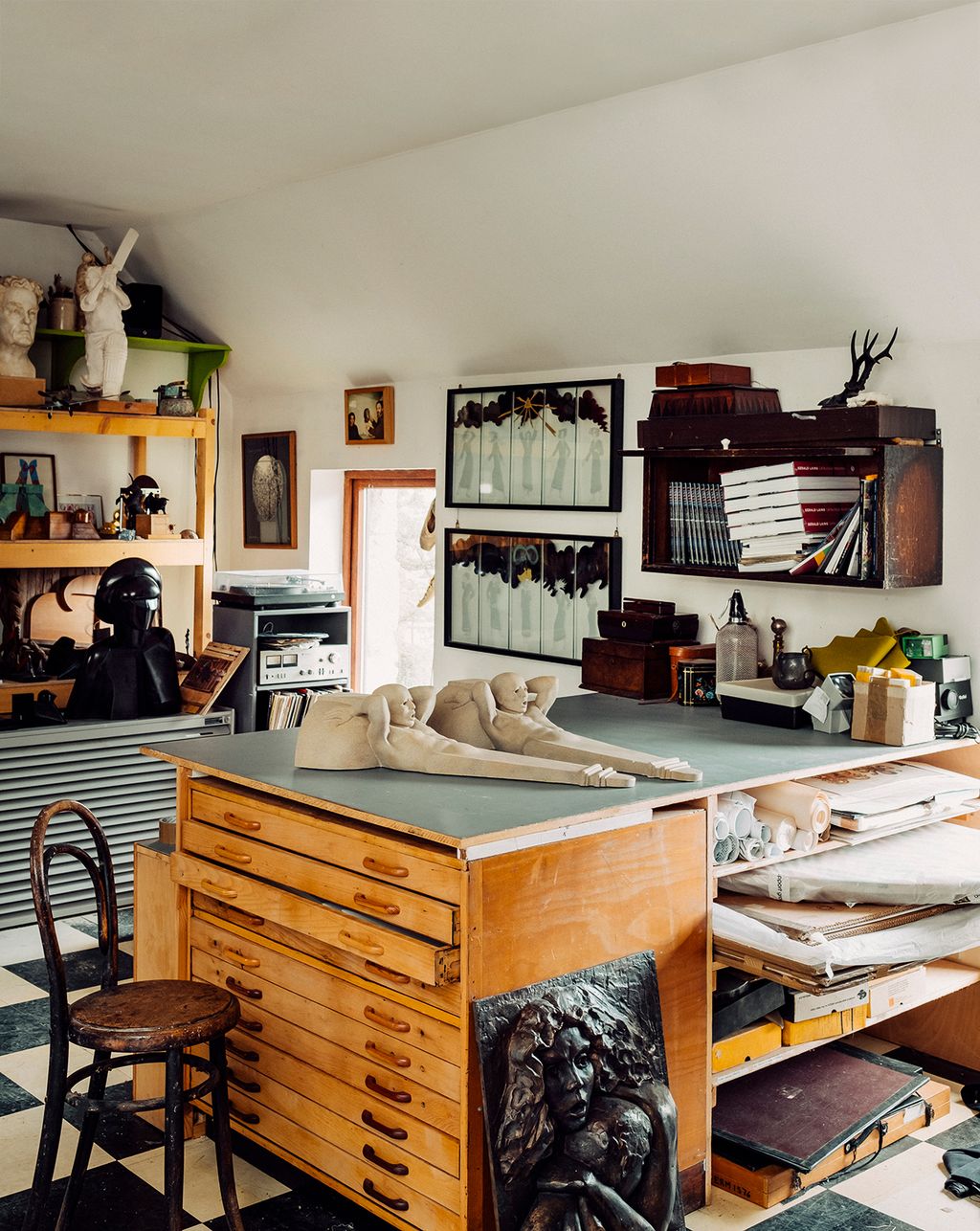 Greg Funnell5/14
Studio
Farquhar's studio is situated in the castle garden.
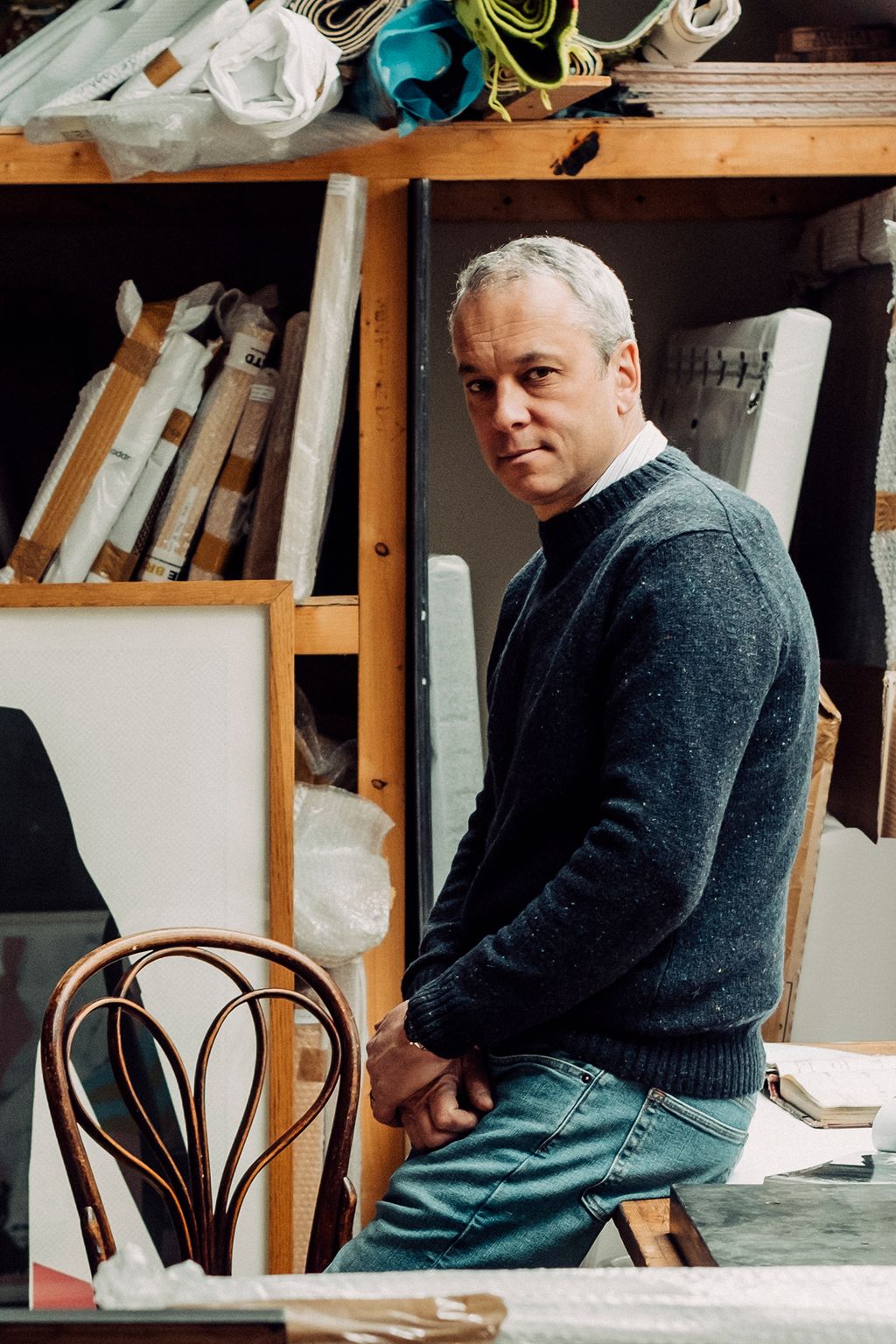 Greg Funnell6/14
Studio
Farquhar in the studio.
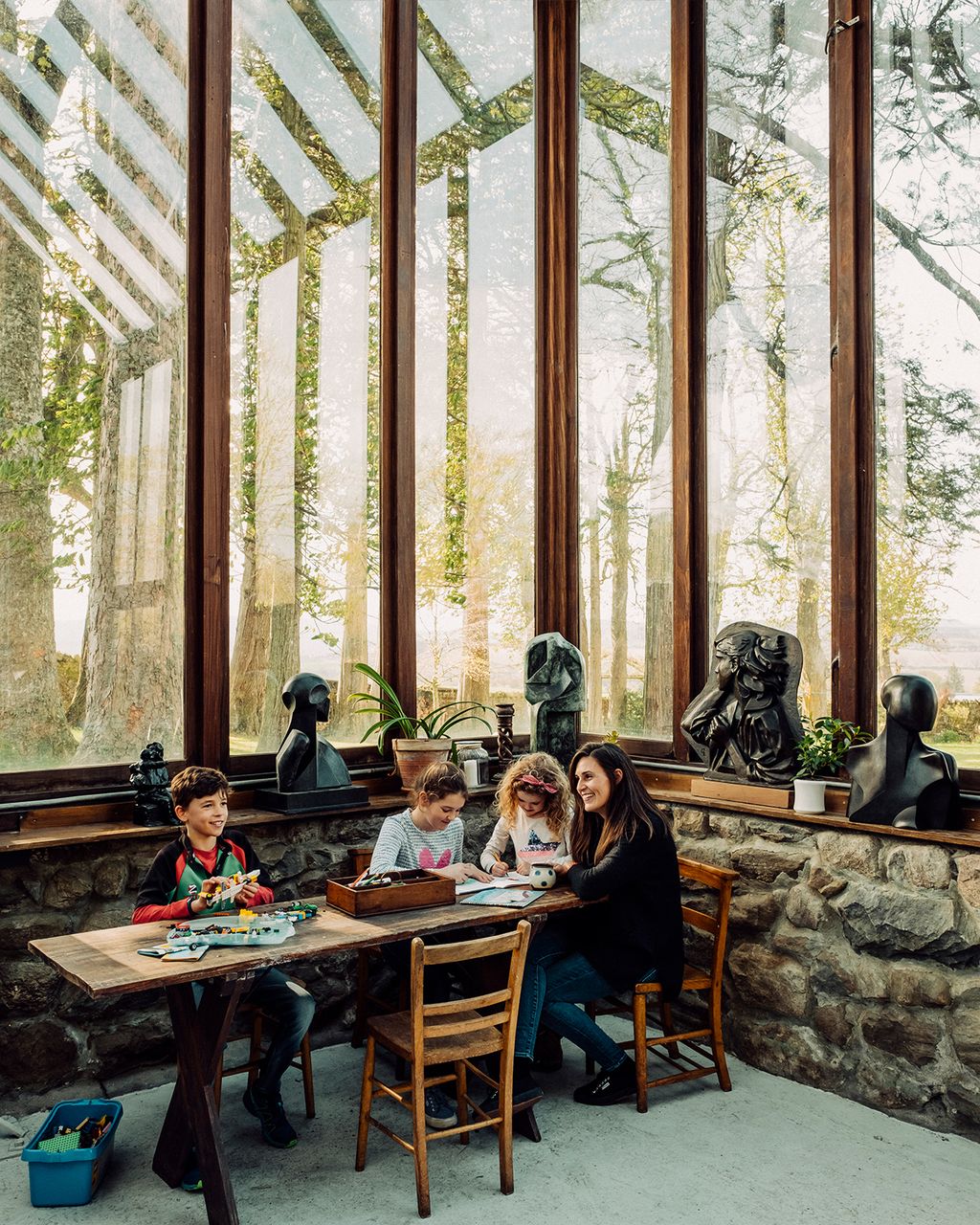 Greg Funnell7/14
Studio
Fergus, Madeleine and Jemima with Jill in the studio at the castle drawing and building models.
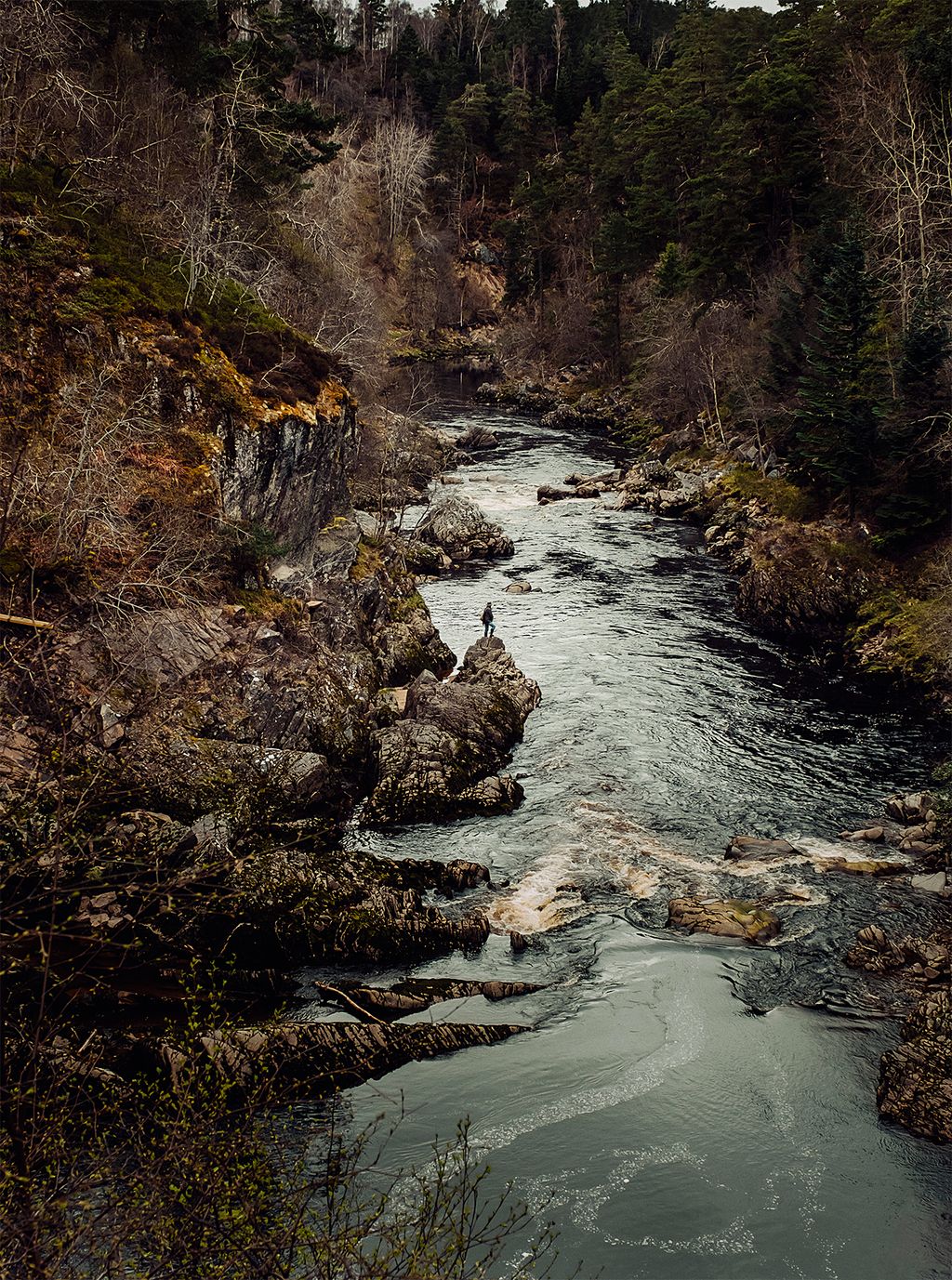 Greg Funnell8/14
Fishing
Farquhar fishing in the Englishman’s pool at the Altnaharra Beat on the Lethen Estate in Nairn.


 Greg Funnell9/14
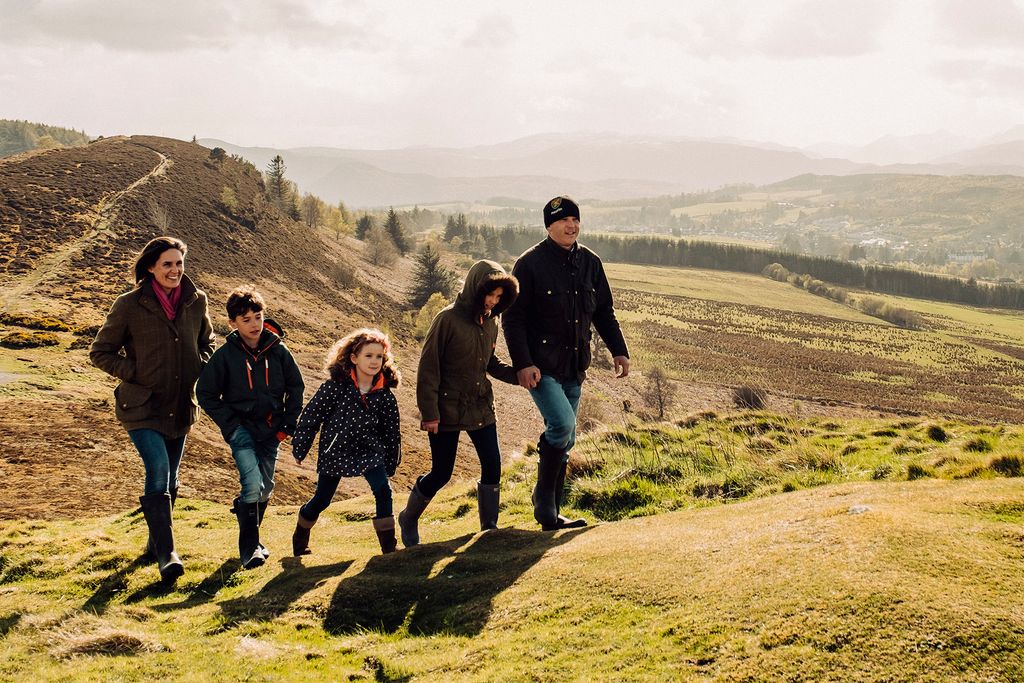
Knockfarrel
A family walk in Knockfarrel.
 Greg Funnell10/14
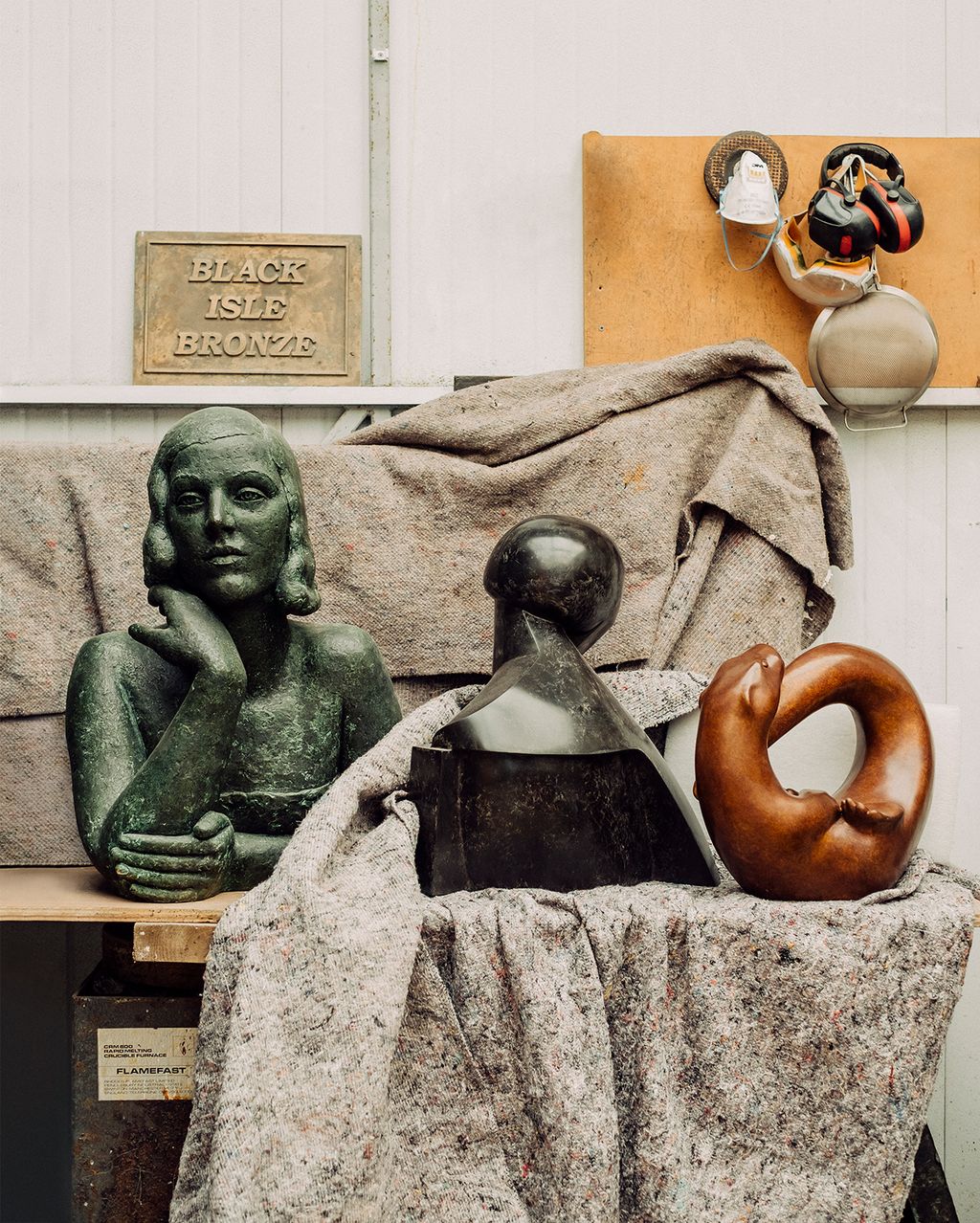
Sculptures
From left: Lady Dorothea Ashley Cooper, by Frank Dobson; Galina VIII, by Gerald Laing; Maxwell Otter II, by Laurence Broderick.
 Greg Funnell11/14
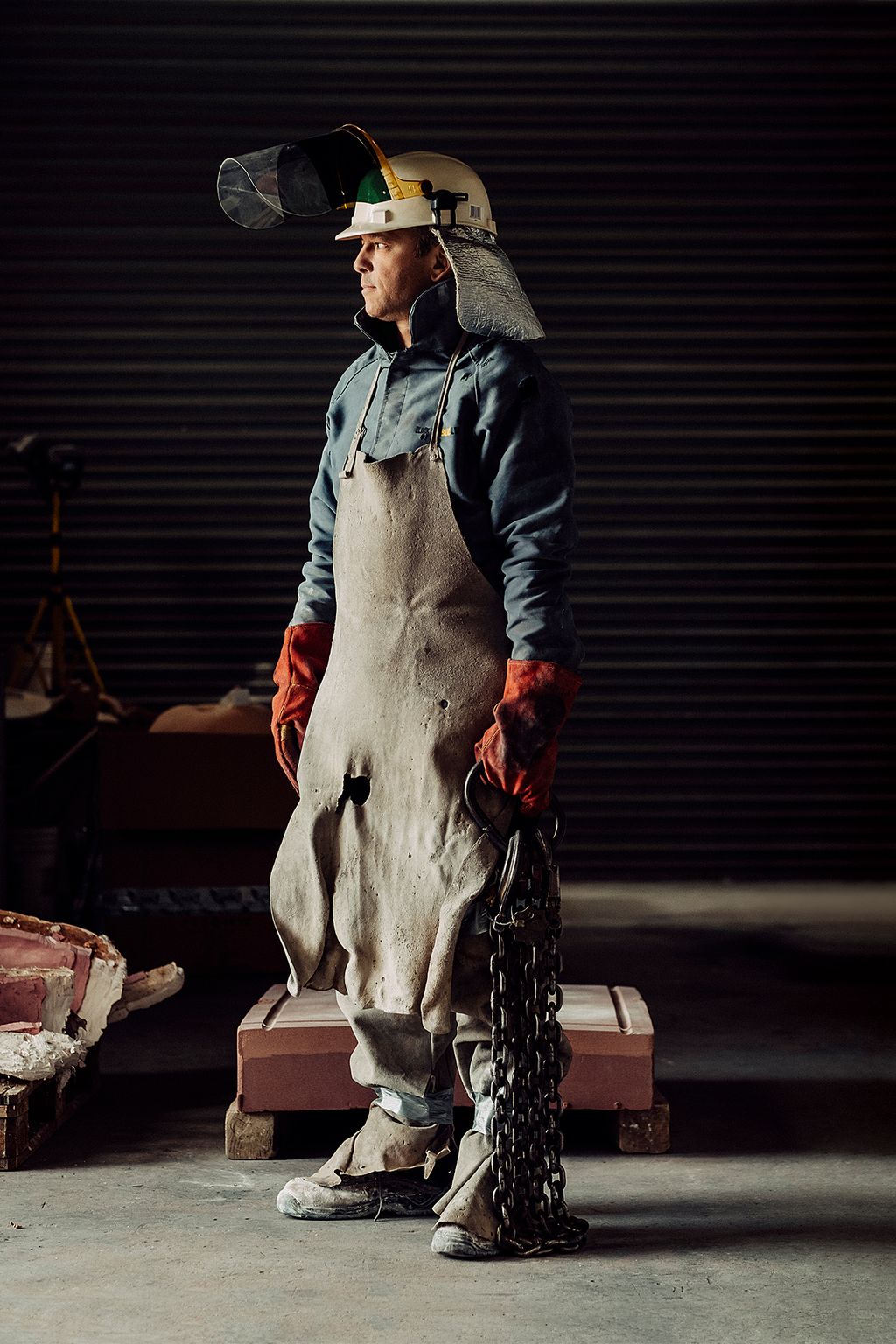
Foundry
Farquhar in his foundry in Nairn wearing metal splash protective equipment, with a lifting chain.
 Greg Funnell12/14
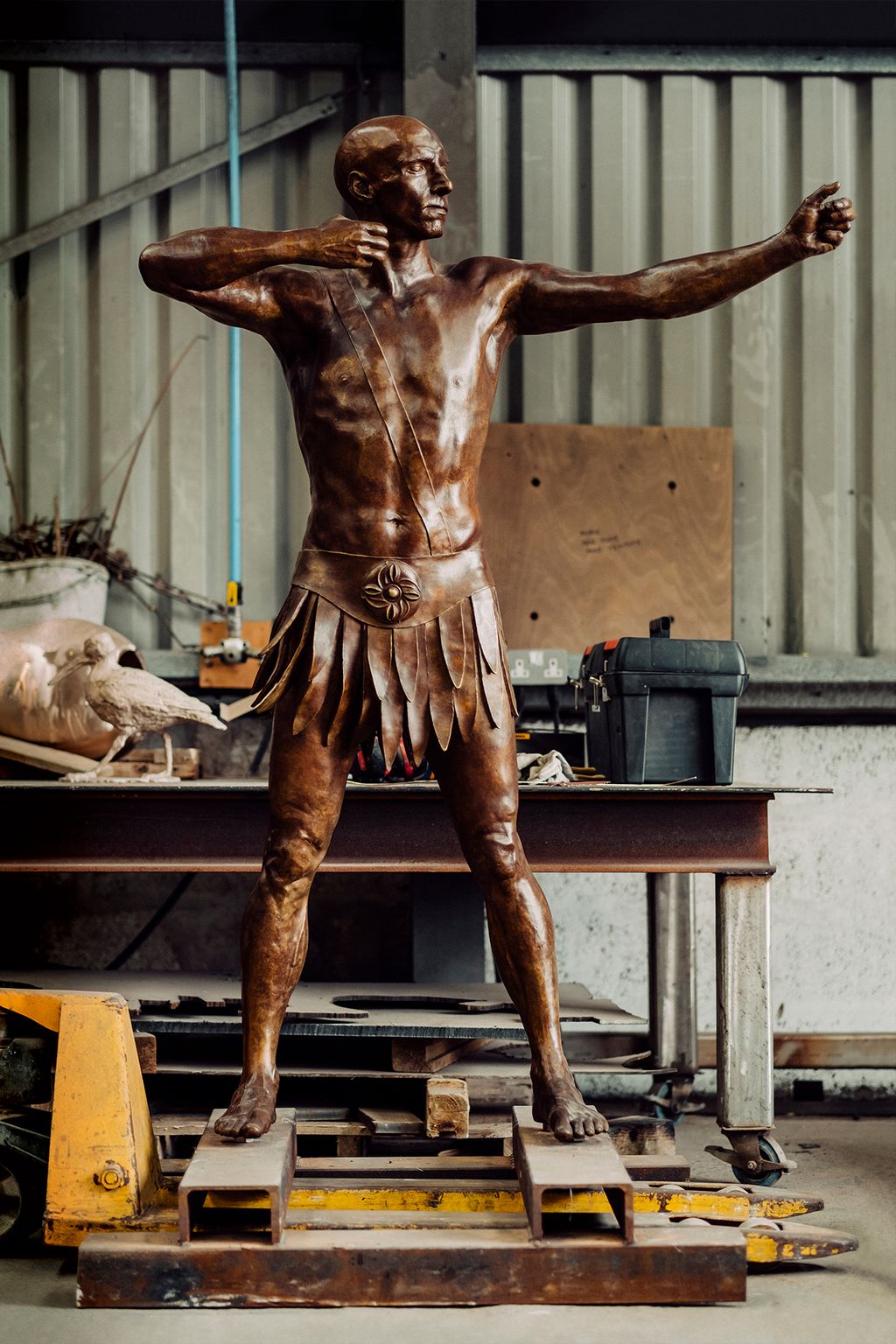
The Archer
The Archer by Maja Quille.


 Greg Funnell13/14
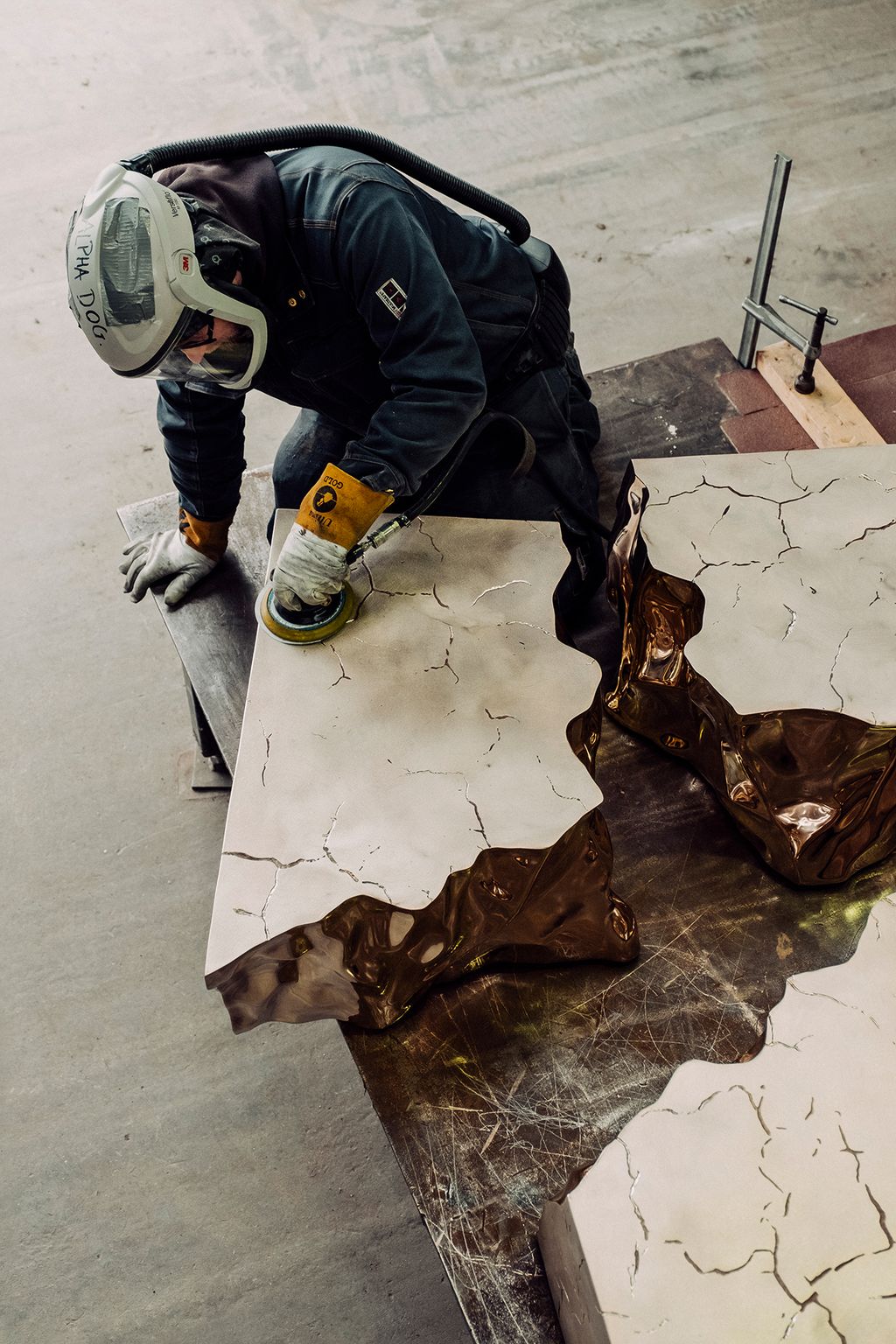
Fragmented table
Sanding a ‘Fragmented Crack’ table for London company Based Upon.
 Greg Funnell14/14
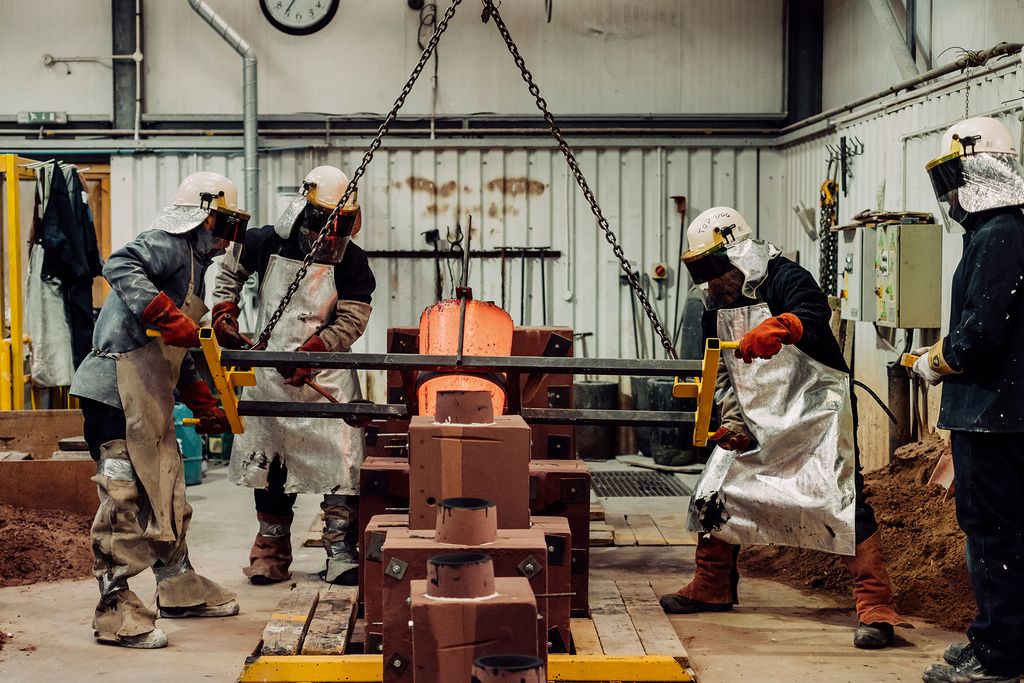
Pouring bronze
Farquhar with Black Isle Bronze employees Piotr and Robin pouring bronze.


